Win vs ChanceIV (703)
| Opening: Colle-Zukertort | Result: 1-0 (Checkmate) | Time Control: 10 min Rapid | Unrated |
Game Overview
A clean win with the white pieces against a lower-rated opponent. I played the Colle-Zukertort, navigated some early piece trades, and ended up winning a rook after my opponent made a critical mistake in the middle game. From there it was about converting the advantage, and some recent puzzle training helped me spot a checkmate pattern with doubled rooks and advanced pawns.
The Colle-Zukertort Setup (Moves 1-7)
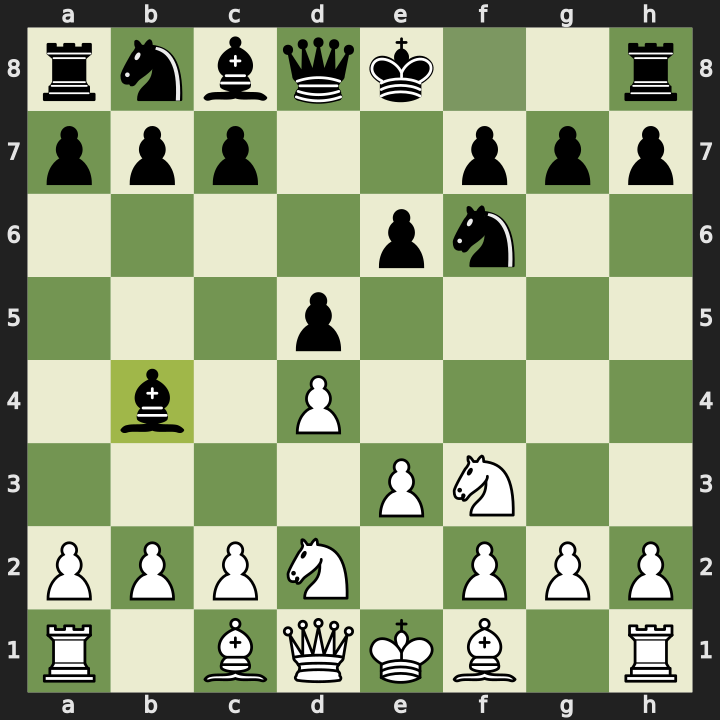
1. d4 d5 2. Nf3 e6 3. e3 Nf6 4. Nbd2 Bb4 5. Bd3 Bxd2+ 6. Qxd2 O-O 7. O-O Qd6
My opponent is rated 703, a bit lower than me, and I have the white pieces so I’m hoping for a win. I go with my current favourite opening for White, d4 into a Colle-Zukertort.
We play fairly normal developing moves and then my opponent brings out their bishop to b4, pinning my knight to my king. I did consider whether I needed to attack this bishop with a3 or c3, but then I figured if my knight gets taken by the bishop, I can always recapture with my queen. So I basically ignored it and continued setting up the Colle system.
My opponent traded their dark-squared bishop for my knight. I recaptured with the queen.
Knights and Bishops (Moves 8-12)
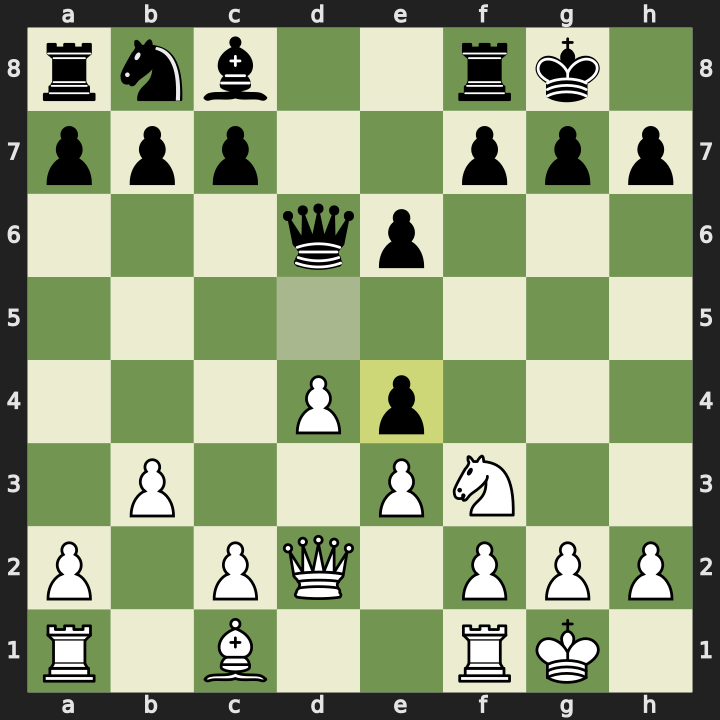
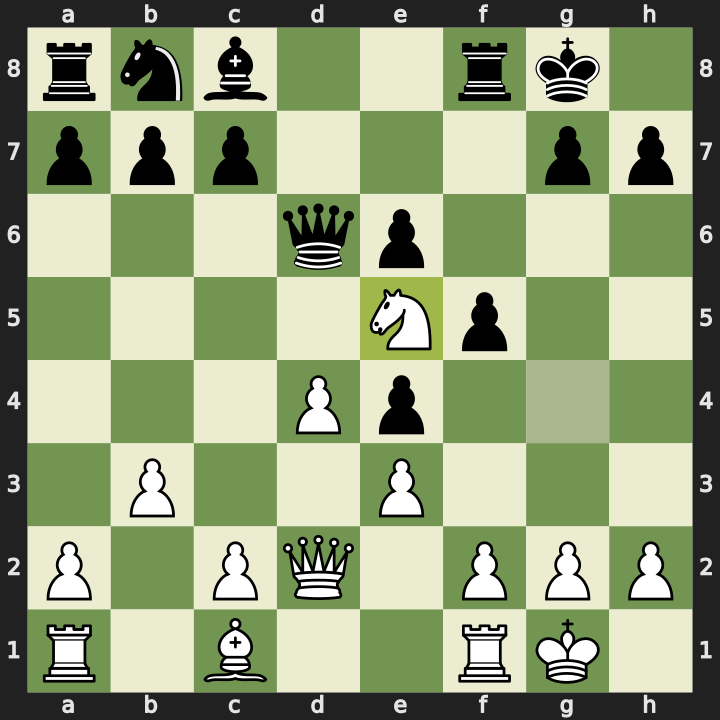
8. b3 Ne4 9. Bxe4 dxe4 10. Ne5 f6 11. Ng4 f5 12. Ne5
My opponent hopped their knight into e4. Normally I like to take back with my knight from d2 when that happens, but since that had just been traded I had to take back with my bishop. That’s not ideal because that bishop is really important for the attack later, but it eliminates another one of my opponent’s pieces so I’ll take the trade.
I got my knight up to e5 which is a key square in this setup. My opponent kicked it out by pushing their f-pawn. I hopped away, then by continuing to push it they allowed me to hop right back in to e5. Good to be back.
The f-file Opens Up (Moves 13-20)
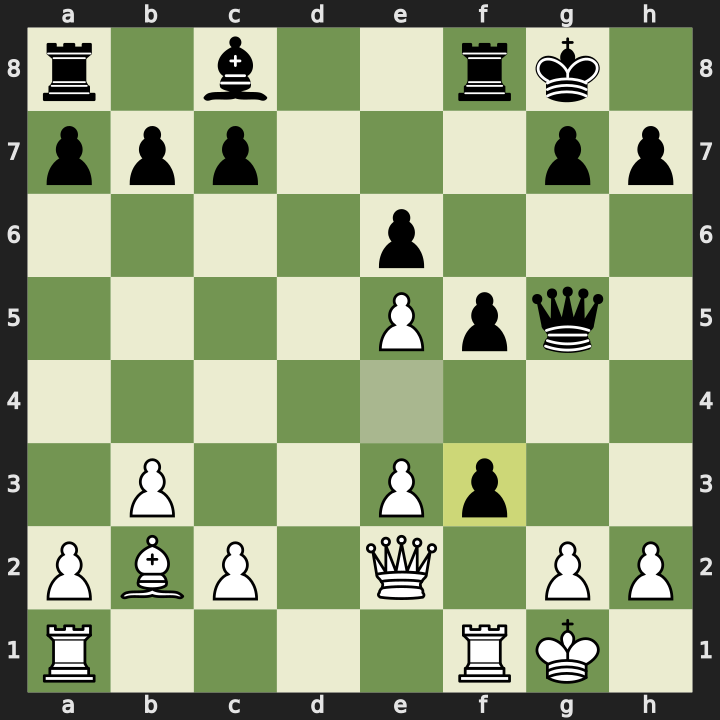
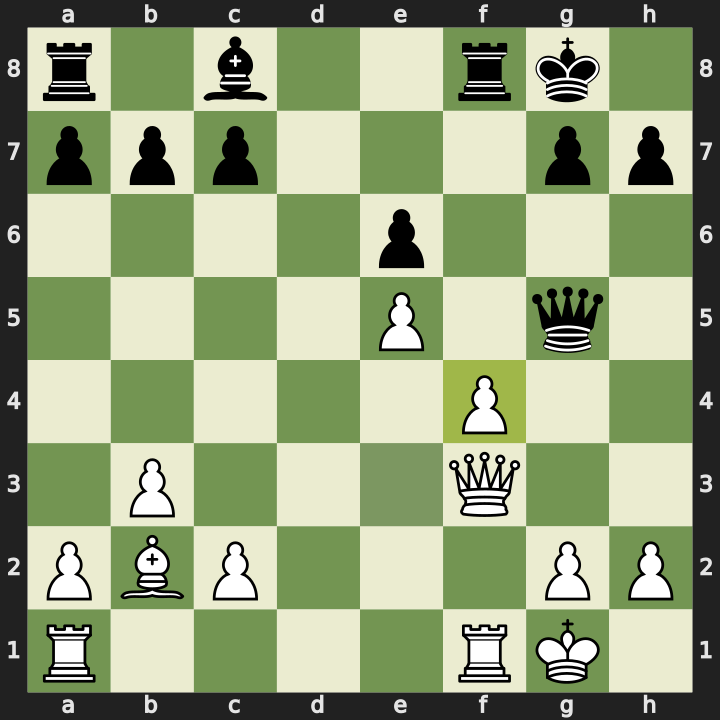
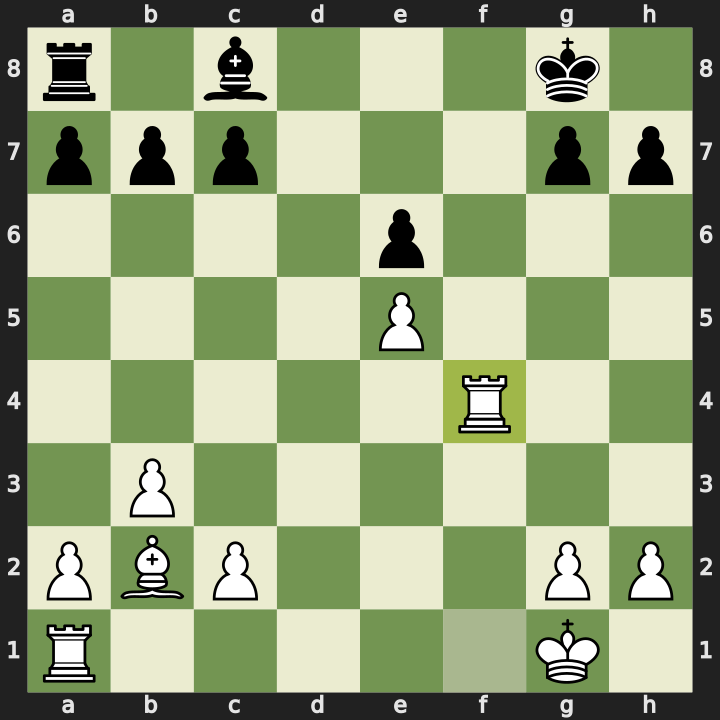
13. Bb2 Nc6 14. Qe2 Nxe5 15. dxe5 Qg5 16. f4 exf3 17. Qxf3 f4 18. exf4 Rxf4 19. Qxf4 Qxf4 20. Rxf4
My opponent traded knights and then brought their queen out to the g-file. I pushed my f-pawn and the position was looking somewhat symmetrical with the centre fairly locked up. It was looking like we were going to be attacking each other, opening up the f-file for our rooks.
I suspected my opponent would take en passant. There’s a joke that en passant is forced, and I liked the look of it because it would undouble my e-pawns.
I’m not quite sure what my opponent was thinking here, because after I attacked their queen with 18. exf4, they took the pawn with their rook. That allowed me to take the rook with 19. Qxf4 and attack their queen. At this point I think they should have aborted the mission and retreated their queen, but instead they traded queens and I took back with my rook, leaving me up a full rook after the exchange.
Converting the Advantage (Moves 21-31)
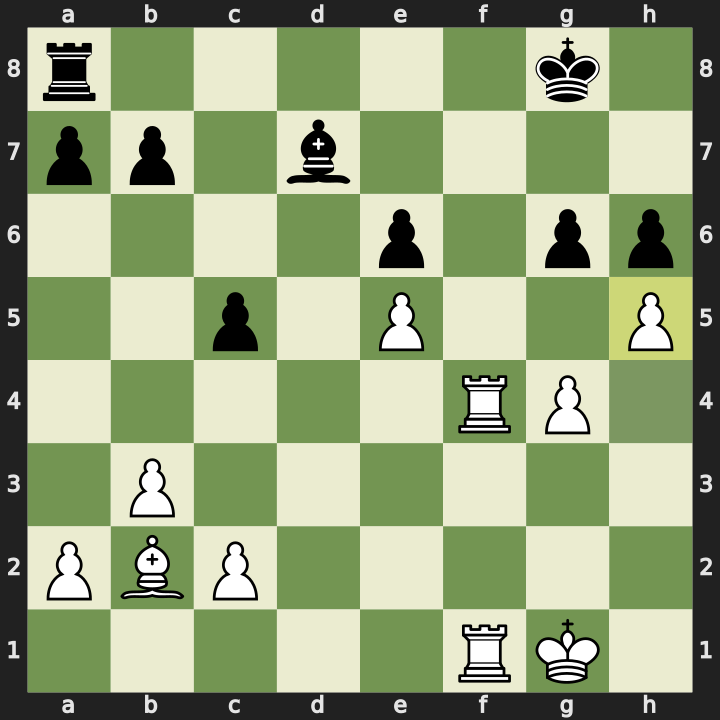
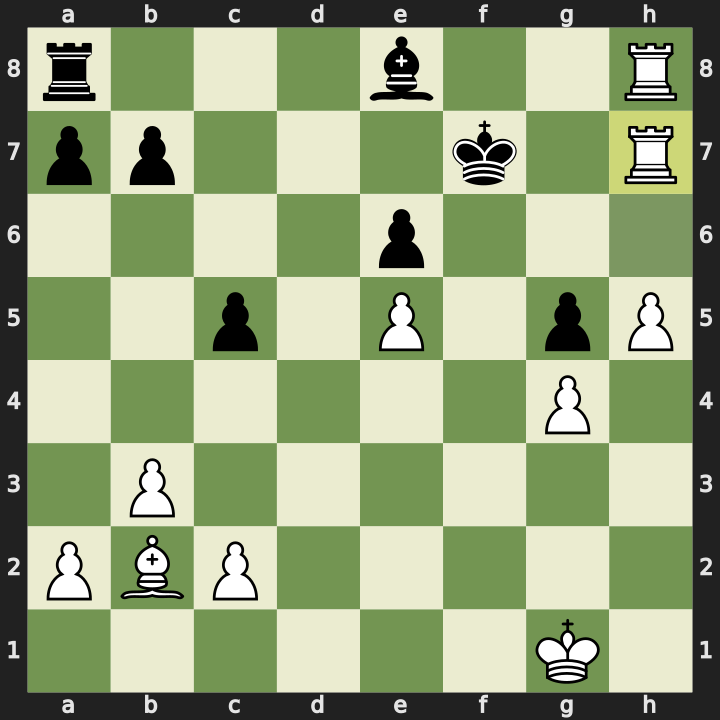
21. Raf1 h6 22. g4 c5 23. h4 g6 24. h5 g5 25. Rf6 Kg7 26. Rg6+ Kh7 27. Rf7+ Kh8 28. Rxh6+ Kg8 29. Rfh7 Be8 30. Rh8+ Kf7 31. R6h7#
From here I knew I just had to convert this into a win. Black’s king was on the back rank behind some pawns with a rook on a8. I decided that the strategy would be to double up my rooks on the f-file and launch my pawns forward on the g and h files. Between those pieces I should be able to break through and checkmate.
My recent puzzle training really paid off here. Black managed to lock up the pawns on the g and h files and get their king off the back rank, but I saw a path to checkmate just using the rooks, with my pawns on the fifth rank covering some key escape squares.
Engine Review
11. Ng4 was a mistake. The engine gives Black a big advantage here because the knight can be trapped by pushing h5. If that had happened in the game I might have tried to get some compensation by checking on e6 or hopping back to e5, causing triple pawns. One to watch out for. The best move was actually to hop in the other direction to c4, attacking the queen and getting the knight to safety.
Black’s late inaccuracies made the checkmate easier. Locking up the pawns allowed my rooks to slide past without any worries. When my opponent moved their bishop back to e8, it sealed their fate. Rather than trying to block my rook with the bishop, they should have brought their rook closer to their king. That would have required a few more moves from me, but the engine shows it’s mate in nine anyway.
No blunders. According to the evaluation, there was only one time where I wasn’t at least equal or ahead, and that was the potential knight trap. I’ll keep an eye on that in the future, but otherwise very happy with this game.
Reflections
I was really happy with this game. There were some trades that I didn’t love as they were happening, but I came out equally or better at each stage. When my opponent left me a rook up it was just a matter of converting the win. I hope I get more games like this.
What went well:
- The Colle-Zukertort setup continues to feel comfortable. Even without the light-squared bishop, the structure held up well.
- Recognising the en passant opportunity and seeing how it undoubled my pawns was good positional awareness.
- The endgame conversion was clean. Doubling rooks on the f-file, pushing the g and h pawns, and finding the checkmate pattern all came together.
- No blunders in the whole game.
What to work on:
- Watch out for knight traps after Ng4. The knight can be caught by h5 and I need to be aware of that. Nc4 was the better retreat.
- I lost my light-squared bishop early, which is a key piece in the Colle-Zukertort attack. I should look for ways to avoid trading it, or adjust my plan when it’s gone.
Full PGN:
1. d4 d5 2. Nf3 e6 3. e3 Nf6 4. Nbd2 Bb4 5. Bd3 Bxd2+ 6. Qxd2 O-O 7. O-O Qd6 8.
b3 Ne4 9. Bxe4 dxe4 10. Ne5 f6 11. Ng4 f5 12. Ne5 Qe7 13. Bb2 Nc6 14. Qe2 Nxe5
15. dxe5 Qg5 16. f4 exf3 17. Qxf3 f4 18. exf4 Rxf4 19. Qxf4 Qxf4 20. Rxf4 Bd7
21. Raf1 h6 22. g4 c5 23. h4 g6 24. h5 g5 25. Rf6 Kg7 26. Rg6+ Kh7 27. Rf7+ Kh8
28. Rxh6+ Kg8 29. Rfh7 Be8 30. Rh8+ Kf7 31. R6h7# 1-0
Further Reading
- Colle System: Rubinstein Opening - The opening I played as White
- How To Convert An Advantage - Converting a material advantage into a win