Loss vs clamslayer21 (731)
| Opening: King’s Indian Defense | Result: 1-0 (Checkmate) | Time Control: 10 min Rapid | Unrated |
Game Overview
A heartbreaker. I played the King’s Indian as Black and pounced on an early opportunity to win a piece. By move 10 I was up material with a knight in a dangerous position on the third rank, and I could smell checkmate nearby. But I lost my nerve. Rather than calculating harder to find the right moves, I settled for a queen trade and went into an endgame. From a completely winning position, I blundered mate in one due to a back rank threat I completely missed. Two big lessons from this game: don’t trade queens when you’re in a strong attacking position, and never overlook back rank threats.
The Opening (Moves 1-7)
1. d4 Nf6 2. e3 g6 3. Nf3 Bg7 4. c3 O-O 5. Bd3 d6 6. e4 Nc6 7. e5 dxe5
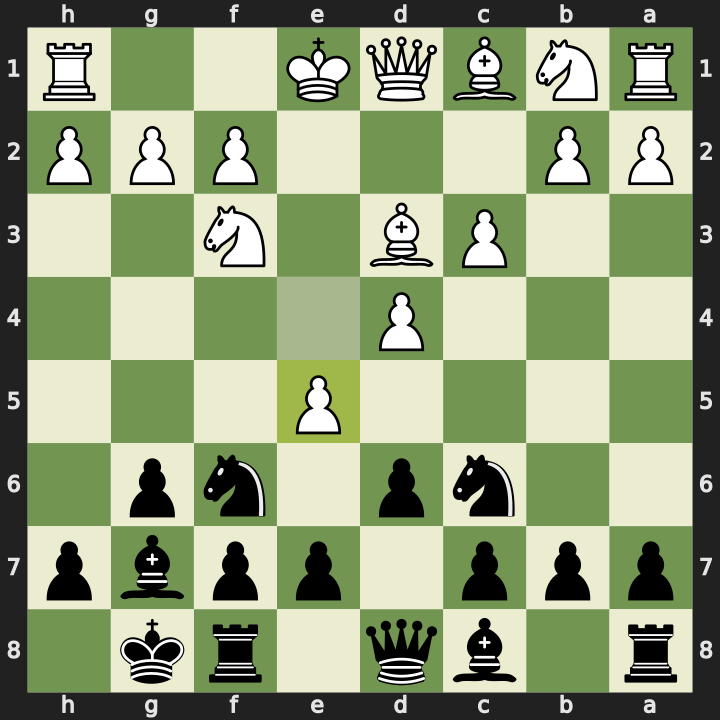
The opening was pretty standard. My opponent used some sort of Colle system and I played the King’s Indian as Black. We traded some centre pawns and my knights were attacked.
Winning a Piece (Moves 8-13)
8. dxe5 Nd5 9. c4 Ndb4 10. Bd2 Nxd3+ 11. Kf1 Ncxe5 12. Nxe5 Bxe5 13. Bc3 Bxc3 14. Nxc3
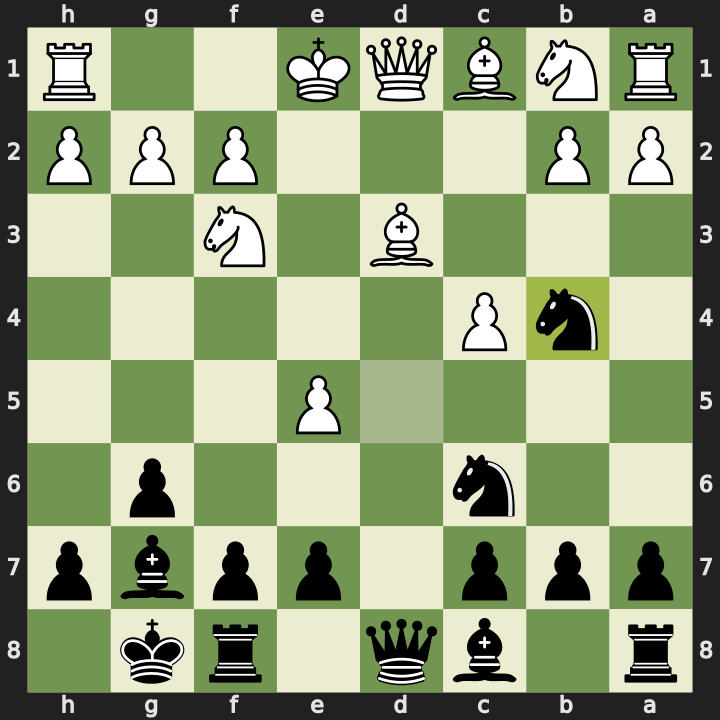
I thought about retreating my knight and then saw that it was an option to hop forward to b4, attacking the light-squared bishop while getting away from the pawn. This is where White made a pretty serious mistake. They moved the dark-squared bishop to d2, in between the queen and light-squared bishop, cutting off its only defender. I was able to grab a piece on d3 with my knight on move 10.
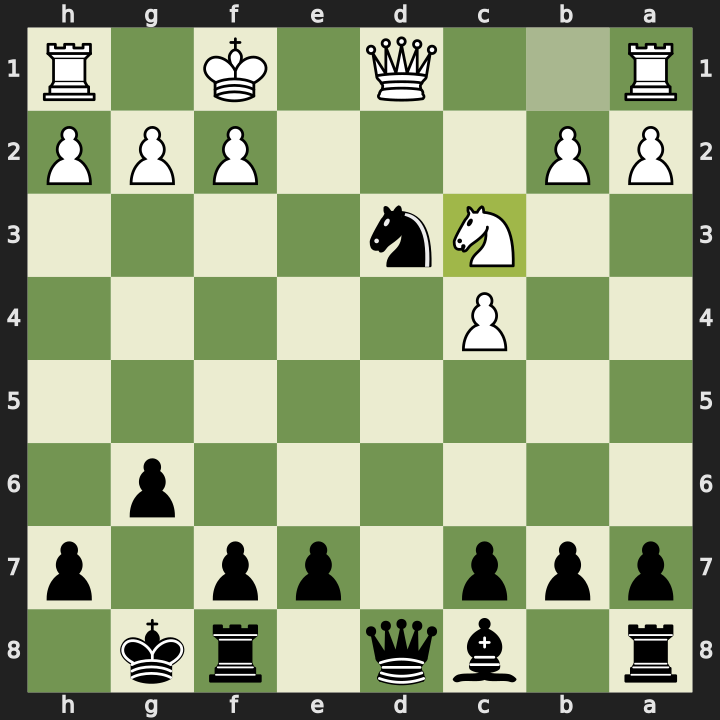
I was feeling really good at this point. I had a King’s Indian setup, up a piece with a knight in a really dangerous position on the third rank. We traded a couple more pieces and I was able to eliminate the pawn that had advanced to the fifth rank.
The Missed Checkmate (Moves 14-16)
14…Qd4 15. Ke2 Nf4+ 16. Kf3 Qxd1+
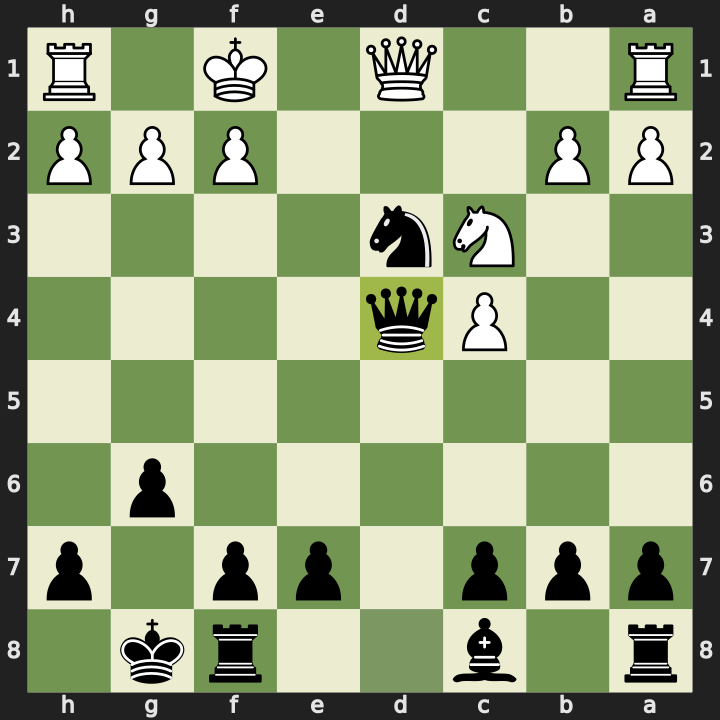
I decided to bring my queen up because queen and knight can be a very powerful combination in attack. I saw what I initially thought of as a forking pattern where the rook on the h-file, king on the f-file, and queen on the d-file could set up a nice knight fork. Then I realised I was actually threatening mate in one with Qxf2# supported by the knight. I was in a really great position here, with White having to move their king to avoid checkmate.
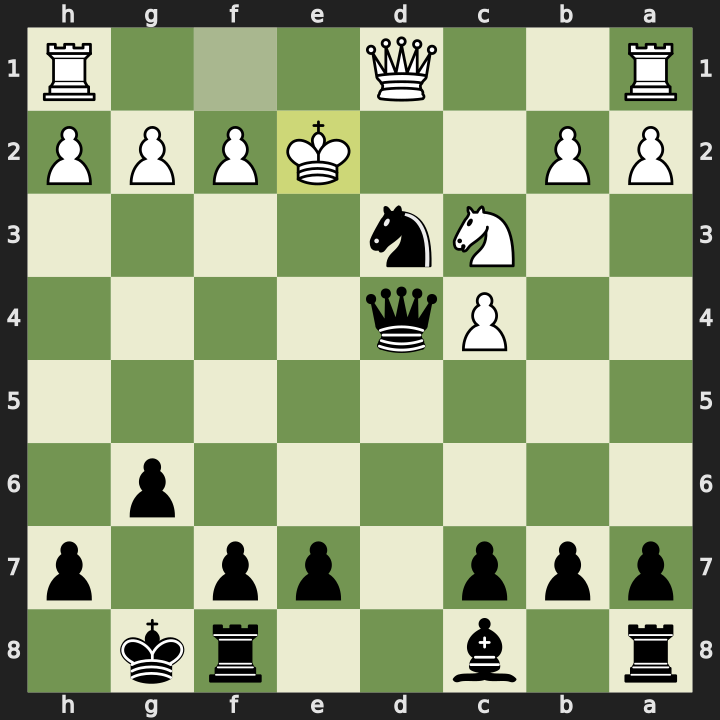
White saw the threat and moved their king out from behind their pawns to e2. I spent nearly two minutes trying to find the best move. I was considering either Qxf2+ or Nf4+ and I originally excluded Qxf2+ because I saw that the king could move again, taking my knight, and I worried about losing my material advantage. This was really shortsighted of me because that line actually leads to checkmate in nine. I’m not skilled enough to necessarily see a nine-move-deep checkmate in the middle of a game, but I should not have been so concerned about sacrificing back some material when it forces the king right into the middle of the board. The other really obvious tactic is it puts the king on the same file as the queen, so I could have checked the king in front of the queen and then taken the queen on the next move using my rook.
Moving the knight to f4 kept the material advantage but reduced the pressure on the opponent. The king walked out threatening my knight and offering a queen trade. I looked for the best move, thought for about a minute, and decided to just go into the endgame. I had the material advantage, up a piece and a pawn. I should win this.
The Endgame (Moves 17-37)
17. Raxd1 e5 18. Nd5 Nxd5 19. Rxd5 Be6 20. Rxe5 Bxc4 21. b3 Bd3 22. Rc1 c6 23. Re7 b5 24. Rxc6 Bb1 25. a4 b4 26. Rc4 a5 27. g4 Ba2 28. Re3 Rfe8 29. Rxe8+ Rxe8 30. Rc5 Bxb3 31. Rxa5 Be6 32. h3 b3 33. Rb5 Rc8 34. a5 Rc2 35. a6 Ra2 36. Rb6 b2 37. a7 Rxa7 38. Rxb2
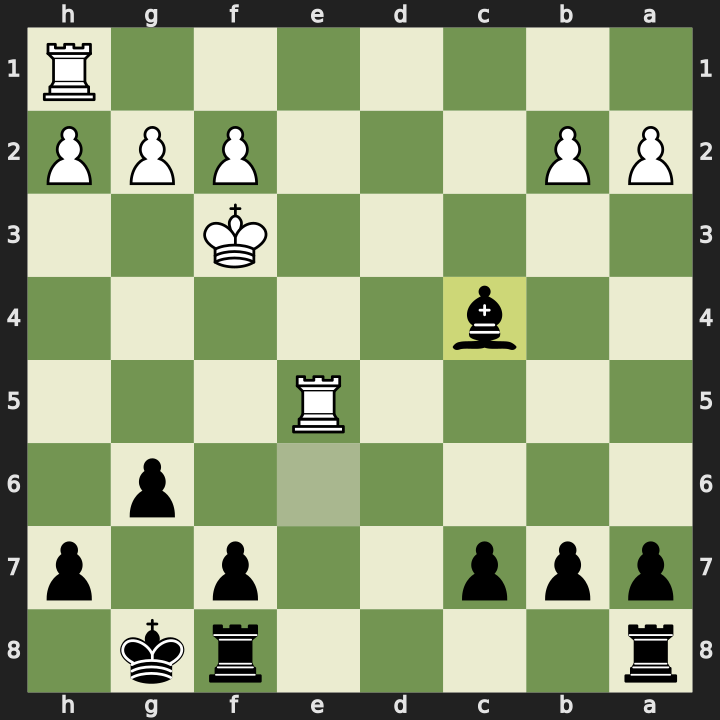
We exchanged queens and knights and it was down to rooks and pawns with me having the extra bishop. White picked up a pawn. We traded rooks and I lined up my bishop so that I could grab a pawn or two from White, hopefully looking to promote on the a or b file.
I think I wasted a turn going rook to c2 and then over to a2. I should have just moved my rook to a8, stopping any chance of White’s promotion while my bishop protected my pawn. That would have moved all the action over to the kingside, and then as soon as White moved their rook I’d be able to promote.
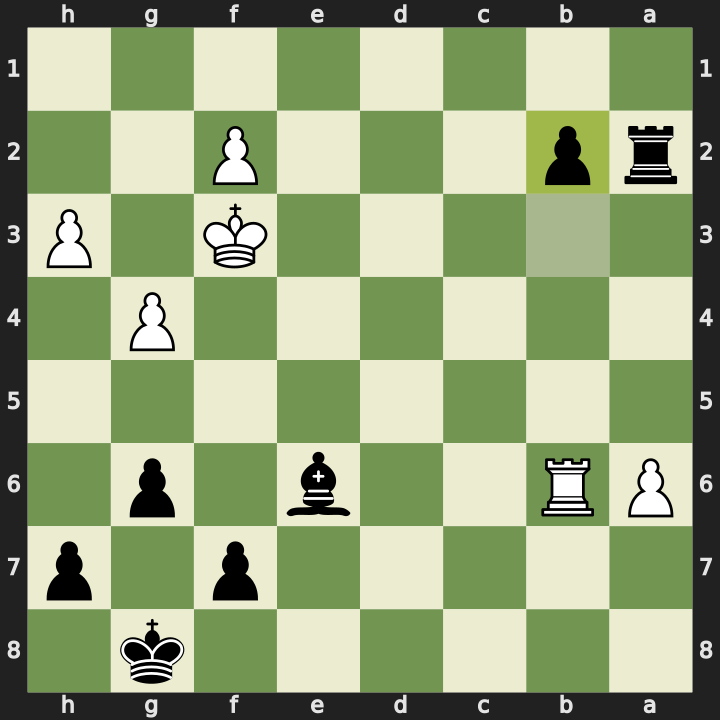
We traded each other’s passed pawns so now it was just kingside pawns, three each, a rook, with me having the extra bishop. I saw there was a chance to grab a pawn or two on the light squares.
Back Rank Mate (Moves 38-42)
38…Bd5+ 39. Kf4 Ra4+ 40. Ke5 Bg2 41. Kf6 Bxh3 42. Rb8#
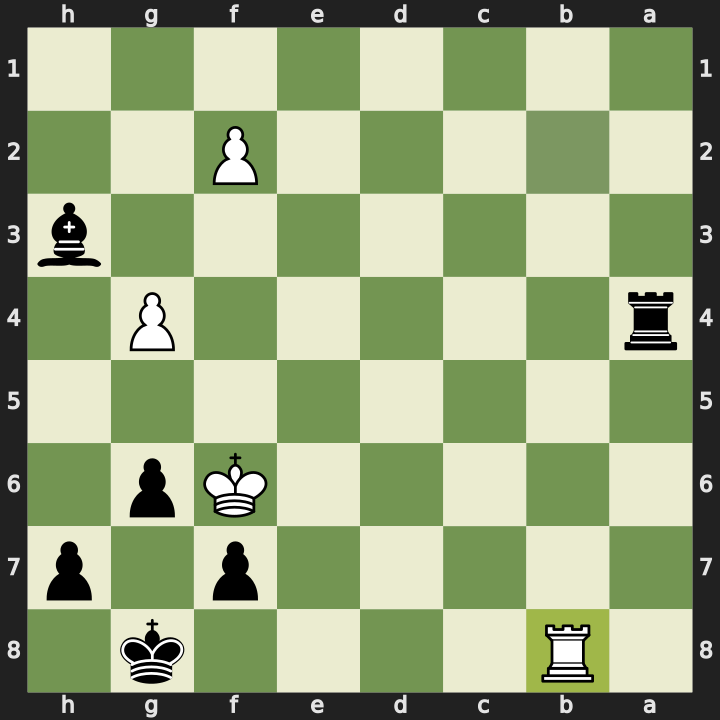
White moved the king towards my king and I completely missed the back rank checkmate threat. I took a pawn on h3 and then it was game over. 42. Rb8#. I lost from a completely winning position, with a chance of checkmate out of the opening just nine moves earlier. Definitely some room to improve. I think the ideas were good but the execution needs practice. A very good lesson game.
Engine Review
By move 10 the engine had my opponent at three mistakes while I’d played excellent moves with one inaccuracy. The eval bar at move 10 showed a 6.8 advantage to Black. Can’t ask for better than that out of the opening.
15…Nf4+ was a miss. It gives up the chance to checkmate. The engine shows that 15…Qxf2+ leads to checkmate in nine. Even without seeing the full line, the key idea is that sacrificing back some material to drag the king into the centre was worth it. The king ends up on the same file as the queen, allowing a discovered check to win the queen.
41…Bxh3 was a blunder leading to mate in one. I completely overlooked the back rank threat with my king stuck on g8 behind the pawns.
Reflections
I lost from a completely winning position. The ideas were good but the execution needs practice. A very good lesson game.
What went well:
- The opening was solid. Noticing the attacking opportunity after White’s Bd2 mistake and winning a piece on move 10 was good tactical awareness.
- Seeing the mate threat with Qxf2# supported by the knight. I recognised the pattern even if I didn’t follow through.
What to work on:
- Don’t trade queens when you’re in a strong attacking position. I had a queen and knight combo bearing down on an exposed king. Trading that away for a slightly better endgame was the wrong call.
- Back rank awareness. Having one advanced pawn in front of my king wasn’t enough protection. I was overconfident that I’d always be able to escape. Can never overlook that one.
- I’m not too upset about missing checkmate in nine, but I should have been less afraid of sacrificing material when it forces the king into the open. Even without seeing the full line, keeping the attacking pressure was clearly better than bailing into an endgame.
Full PGN:
1. d4 Nf6 2. e3 g6 3. Nf3 Bg7 4. c3 O-O 5. Bd3 d6 6. e4 Nc6 7. e5 dxe5 8. dxe5
Nd5 9. c4 Ndb4 10. Bd2 Nxd3+ 11. Kf1 Ncxe5 12. Nxe5 Bxe5 13. Bc3 Bxc3 14. Nxc3
Qd4 15. Ke2 Nf4+ 16. Kf3 Qxd1+ 17. Raxd1 e5 18. Nd5 Nxd5 19. Rxd5 Be6 20. Rxe5
Bxc4 21. b3 Bd3 22. Rc1 c6 23. Re7 b5 24. Rxc6 Bb1 25. a4 b4 26. Rc4 a5 27. g4
Ba2 28. Re3 Rfe8 29. Rxe8+ Rxe8 30. Rc5 Bxb3 31. Rxa5 Be6 32. h3 b3 33. Rb5 Rc8
34. a5 Rc2 35. a6 Ra2 36. Rb6 b2 37. a7 Rxa7 38. Rxb2 Bd5+ 39. Kf4 Ra4+ 40. Ke5
Bg2 41. Kf6 Bxh3 42. Rb8# 1-0
Further Reading
- King’s Indian Defense: Complete Guide - The opening I played as Black
- Back Rank Mate - The pattern that caught me out