Win vs lekan846 (544)
| Opening: Nimzowitsch-Larsen Attack: Indian Variation (A00) | Result: 0-1 (Checkmate) | Time Control: 5 min Blitz | Rated |
Game Overview
After playing bullet all weekend I thought I’d try a slightly slower time control: 5 minute blitz. My blitz rating is a bit higher than my bullet rating, but still in the range where we’re both making plenty of blunders. This game was interesting because there were many opportunities to exploit that we both missed, but it was my opponent’s blunders that ultimately got me the win.
The Double Fianchetto vs King’s Indian (Moves 1-8)
1. g3 Nf6 2. Bg2 g6 3. b3 Bg7 4. Bb2 O-O 5. d3 d6 6. Nf3 Nc6 7. O-O e5 8. Nbd2 Ne8
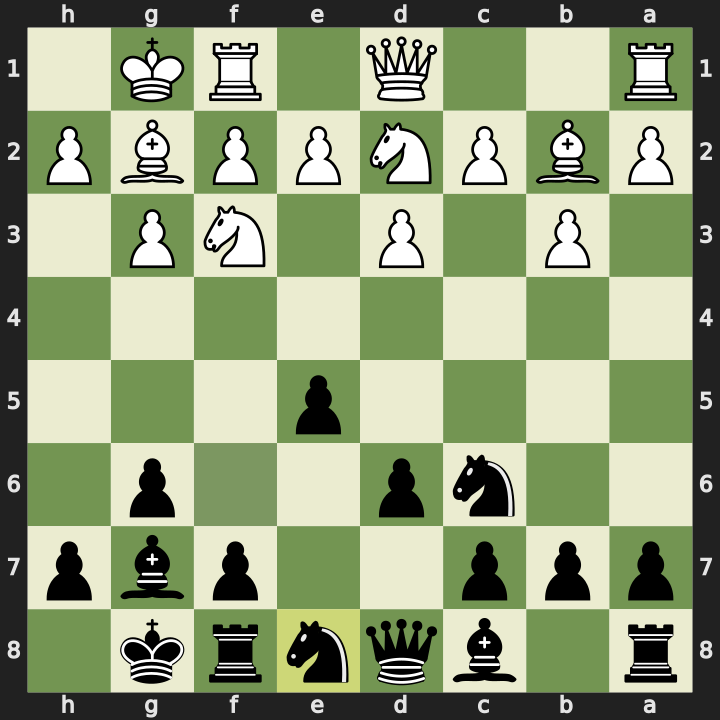
The first ten moves were fairly calm. I played a King’s Indian Defence against my opponent’s double fianchetto setup. Chess.com refers to this as the Nimzowitsch-Larsen Attack: Indian Variation. Aren’t opening names great.
Both sides have fianchettoed their bishops and castled kingside. My knight reroutes to e8, getting out of the way for the f5 pawn break.
Bd5+ and the Missed Fork (Moves 9-13)
9. Ng5 f5
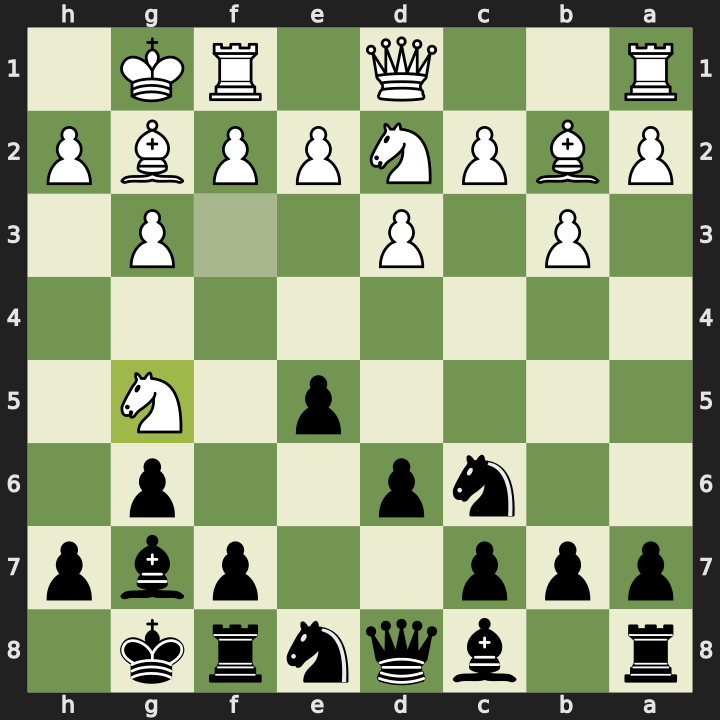
Things started to heat up here. White’s knight jumped to g5, but I was so eager to get the f5 pawn break in that I didn’t notice the knight was completely undefended. I could have just taken it with my queen.
10. Ngf3 Nf6 11. Ng5 Nh5 12. Bd5+ Kh8
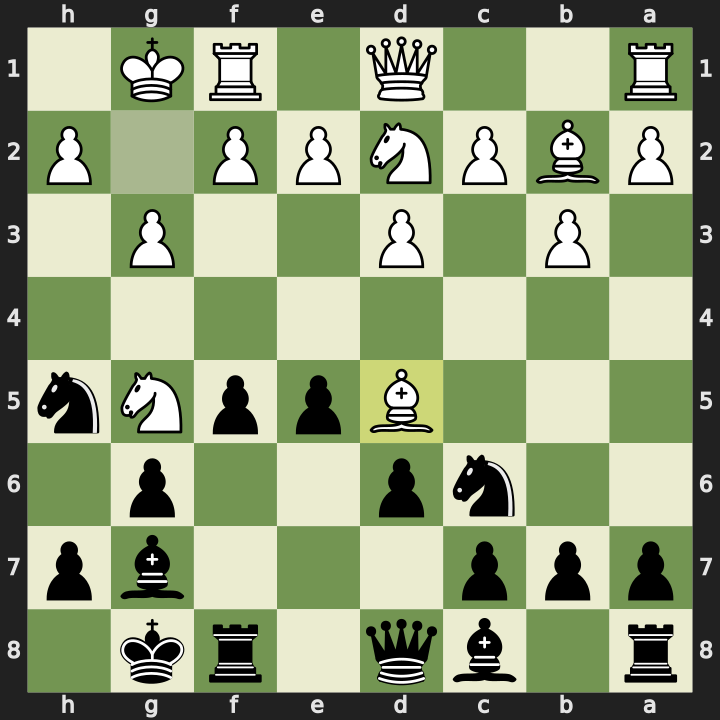
Things got tense around move 12 with Bd5+. I moved my king to h8, and my opponent had an opportunity to win the exchange with Nf7+, forking king and queen. The rook would have to take the knight to save the queen, then Bxf7 picks up the rook. But instead they played Be6, attacking my bishop on c8.
13. Be6 Qxg5
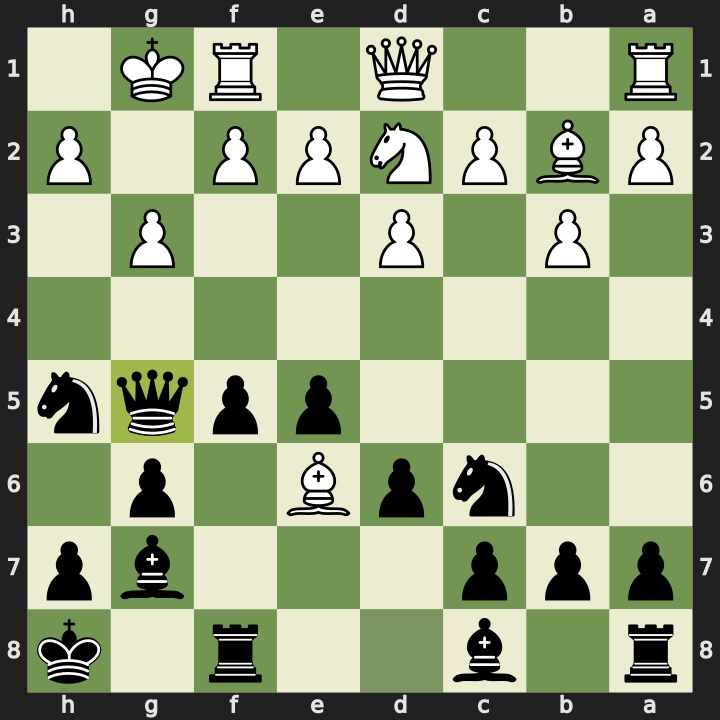
They miscalculated. I was able to take the knight with my queen, and retake the bishop with my rook. I was up a piece.
Pressing the Attack (Moves 14-25)
14. Bxc8 Raxc8 15. Nf3 Qg4 16. Qd2 Nf4 17. Nh4 Nxe2+
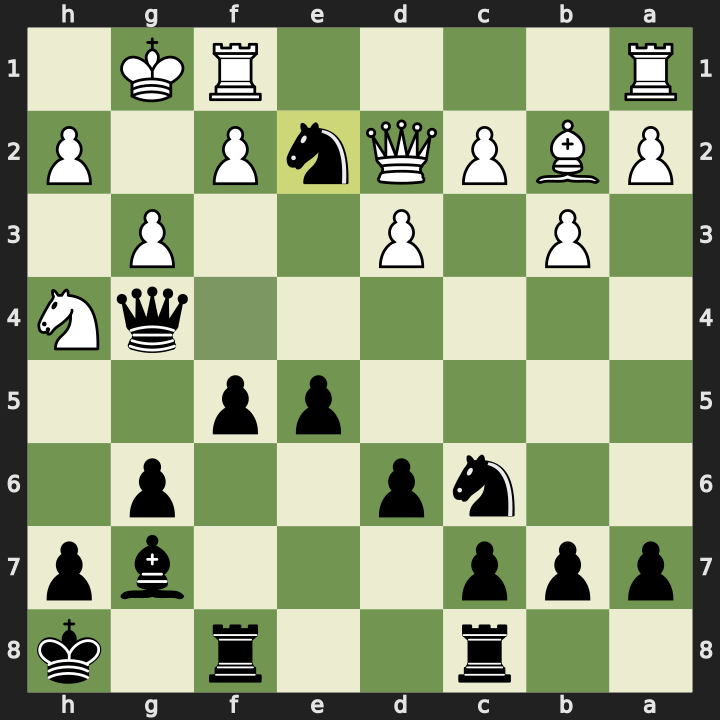
I pressed the attack with my knights and queen, looking for a chance to break open the pawn chain and make room for a rook to join in. The knight landed on e2 with check, forking the king.
18. Kg2 Ncd4 19. Bxd4 exd4 20. Rfe1 Rce8 21. Qb4 Nf4+ 22. Kf1 Qh3+ 23. Kg1 Ne2+ 24. Kh1 Re6 25. a4 Rfe8
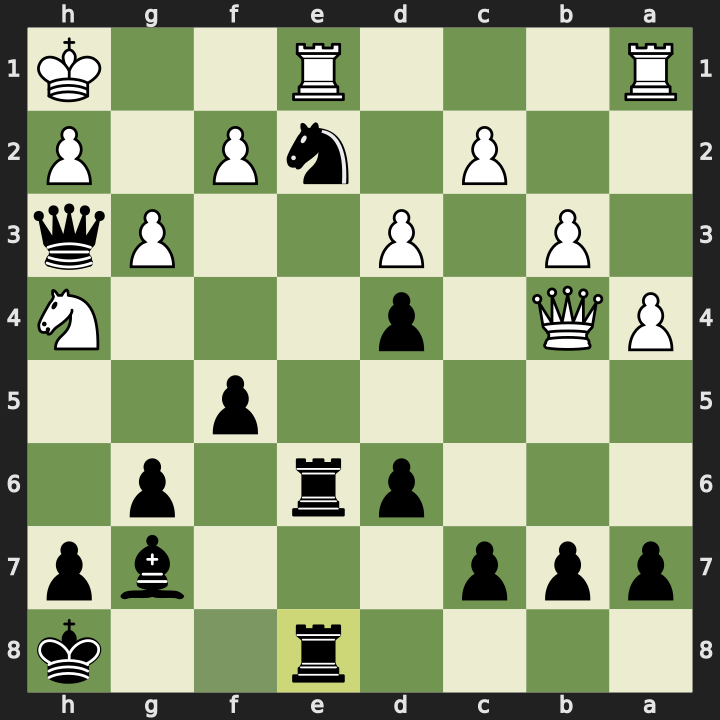
By move 25 I’d opened up the e-file and doubled my rooks. The opponent’s king was stuck in the corner on h1, cut off by my queen and knight.
The Dubious Rook (Moves 26-29)
26. Reb1 Nc3 27. Re1 Re3
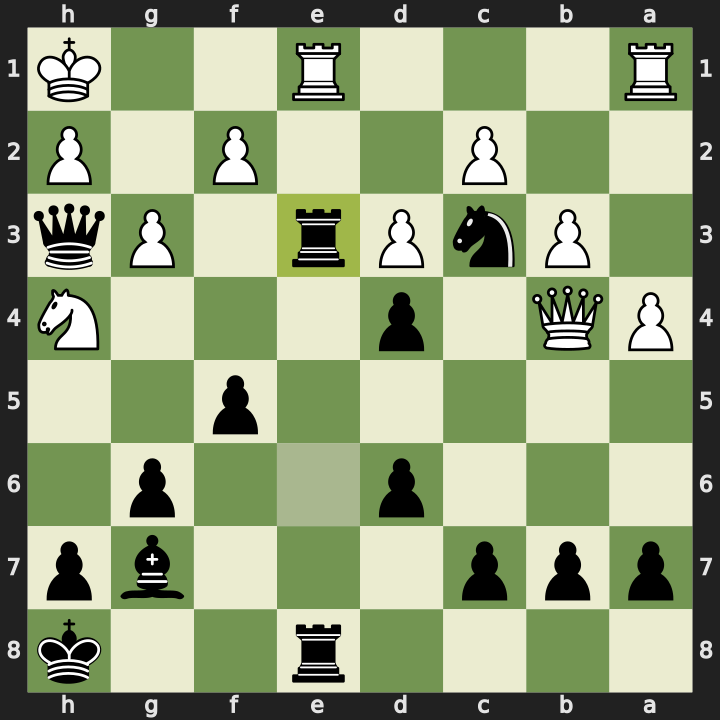
On move 27 I made a very dubious move. I can’t recall if it was a mouse slip or just a mistake, but I put a rook on e3, right where it could be taken by a pawn. Luckily my opponent traded their rook for it instead.
28. Rxe3 dxe3 29. fxe3 Rxe3
After the exchanges, White’s king was even more exposed. The f-pawn had been pulled away from the king, and my rook was sitting on the third rank with my queen still in the attack.
Queen Blunder and Checkmate (Moves 30-35)
30. Qxc3 Bxc3
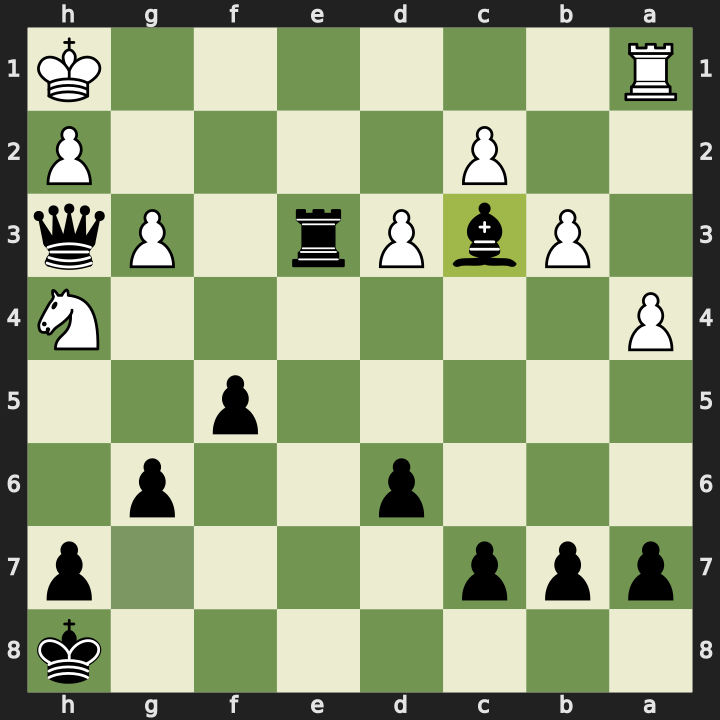
Then on move 30, White blunders the queen. They took my knight on c3, but my bishop recaptured. Material advantage is now overwhelming.
31. Rg1 Re1 32. Nf3 Rxg1+ 33. Kxg1 f4 34. gxf4 Qxf3 35. d4 Bxd4#
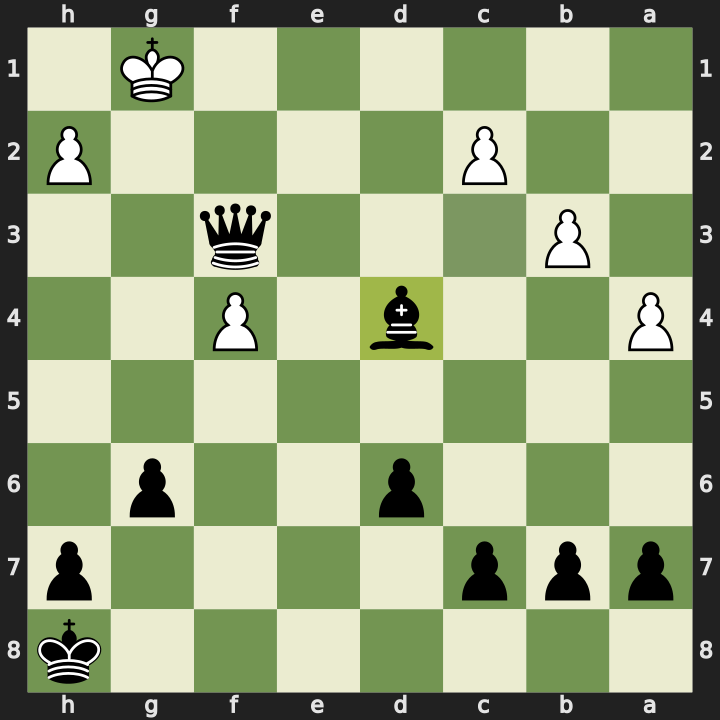
I traded off the rooks, then a few moves later the bishop delivered checkmate on d4, supported by the queen.
Engine Review
White’s knight on g5 was hanging on move 9. When the knight first jumped there it was completely undefended. I was too eager to get the f5 pawn break in and didn’t notice. A free piece just sitting there.
Nh5 was a mistake. My knight move to h5 on move 11 allowed Bd5+, which almost left me exchange-down had my opponent followed up with Nf7+, forking king and queen. The rook has to capture, then the bishop takes on f7.
exd4 was inaccurate. On move 19, 19…exd4 allowed f3, which would have attacked my queen and cut off my knight on e2’s defence. Luckily my opponent missed the tactic.
Nc3 was a miss on move 26. Instead, Nxg3+ leads to mate in 7. If White does the natural looking response of recapturing the knight with the f-pawn, then Re2 followed by Qh2# is mate in 2.
Reflections
A messy game with opportunities flying past on both sides. The material advantage from move 13 onwards was decisive, but the conversion was far from clean. Still, a win’s a win.
What went well:
- Time management. My practice with bullet chess has me making moves quickly and following my attacking plans without overthinking.
- Openings. The King’s Indian Defence and Colle-Zukertort both lead to fun kingside attacks once the pieces are arranged. I recently played as White against a King’s Indian and experienced first-hand how thorny it is, particularly against 1. d4.
What to work on:
- Awareness of opportunities and threats. I missed a hanging piece on move 9 and failed to see the weakness I’d created in my own position with Nh5. The learning for me is that the King’s Indian setup really works best with a locked-up centre. In this game White made no attempt to take the centre, instead preferring to snipe at it from the corners of the board with bishops. In the entire game, White only got one pawn past the third rank.
- Calculating forcing moves. Missing Nxg3+ on move 26, which was mate in 7, shows I need to look harder for knight sacrifices when the king is cornered.
Full PGN:
1. g3 Nf6 2. Bg2 g6 3. b3 Bg7 4. Bb2 O-O 5. d3 d6 6. Nf3 Nc6 7. O-O e5 8.
Nbd2 Ne8 9. Ng5 f5 10. Ngf3 Nf6 11. Ng5 Nh5 12. Bd5+ Kh8 13. Be6 Qxg5 14.
Bxc8 Raxc8 15. Nf3 Qg4 16. Qd2 Nf4 17. Nh4 Nxe2+ 18. Kg2 Ncd4 19. Bxd4 exd4
20. Rfe1 Rce8 21. Qb4 Nf4+ 22. Kf1 Qh3+ 23. Kg1 Ne2+ 24. Kh1 Re6 25. a4 Rfe8
26. Reb1 Nc3 27. Re1 Re3 28. Rxe3 dxe3 29. fxe3 Rxe3 30. Qxc3 Bxc3 31. Rg1
Re1 32. Nf3 Rxg1+ 33. Kxg1 f4 34. gxf4 Qxf3 35. d4 Bxd4# 0-1
Further Reading
- Nimzowitsch-Larsen Attack - The opening White played
- King’s Indian Defence - Black’s setup
- The Importance of the Centre - Why White’s lack of central control was a problem