Win vs Keerthan0404 (525)
| Opening: Englund Gambit (A40) | Result: 1-0 (Checkmate) | Time Control: 3 min + 2 sec increment (Blitz) | Rated |
Game Overview
The Englund Gambit did not work out well for my opponent. After some early trades I play a sneaky discovered attack to win the queen, then spot a checkmate on c7. I leave pieces hanging to distract my opponent, and it works. A dubious but fun win.
The Englund Gambit (Moves 1-7)
1. d4 e5 2. Nf3 Nc6 3. Nxe5 Nxe5 4. dxe5
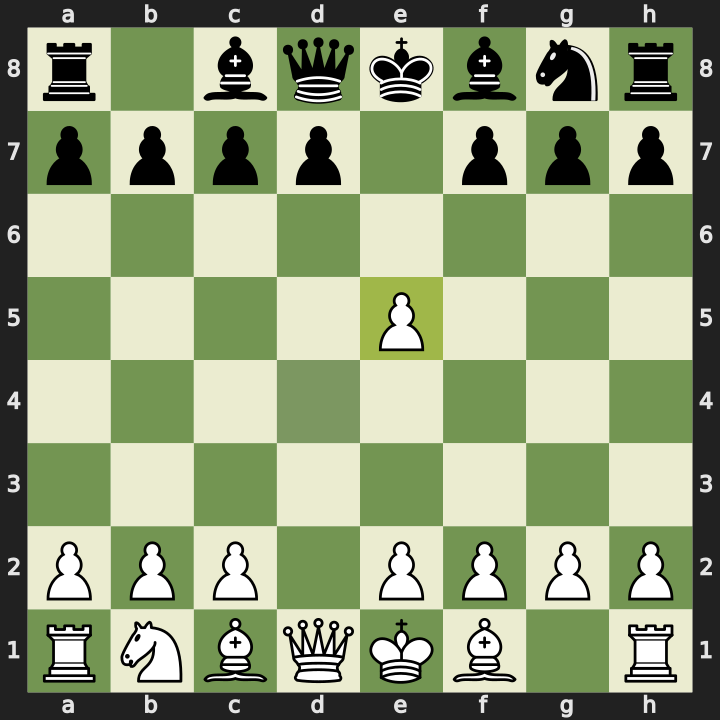
The first few moves involve trading pawns and knights and I’m left with a pawn on e5. My opponent didn’t get much out of the gambit.
4…Qe7 5. e3 Qb4+ 6. Nd2 Qc5 7. Bd3 Qxe5
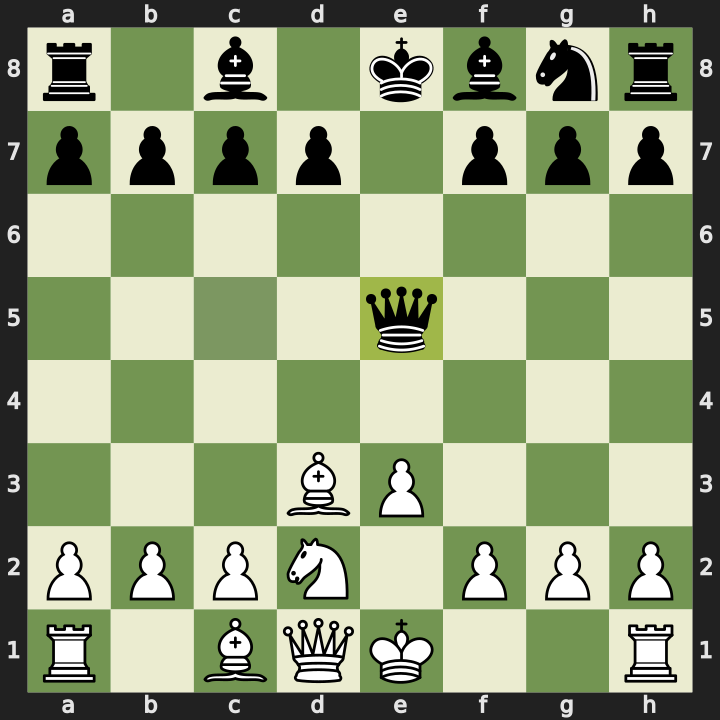
Black gets the pawn back with the queen, but the queen has moved four times already. Not great development from my opponent.
Development and the Discovered Attack (Moves 8-17)
8. O-O d5 9. Nf3 Qe7 10. b3 Be6 11. Bb2 O-O-O
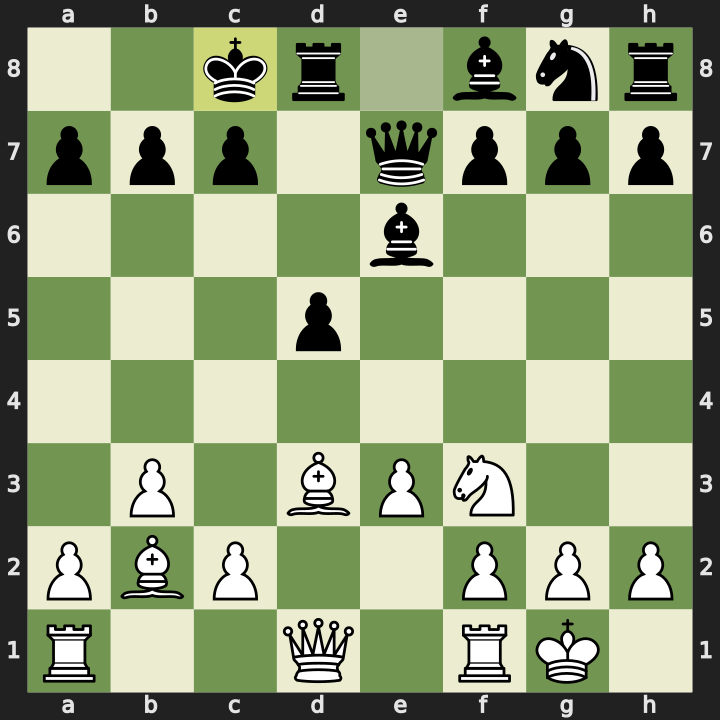
After some typical developing moves, both sides castle. My bishop is sitting on b2, which is going to be important.
12. Nd4 Nf6 13. c4 dxc4 14. bxc4 Qd6 15. c5 Qe5 16. Nc6
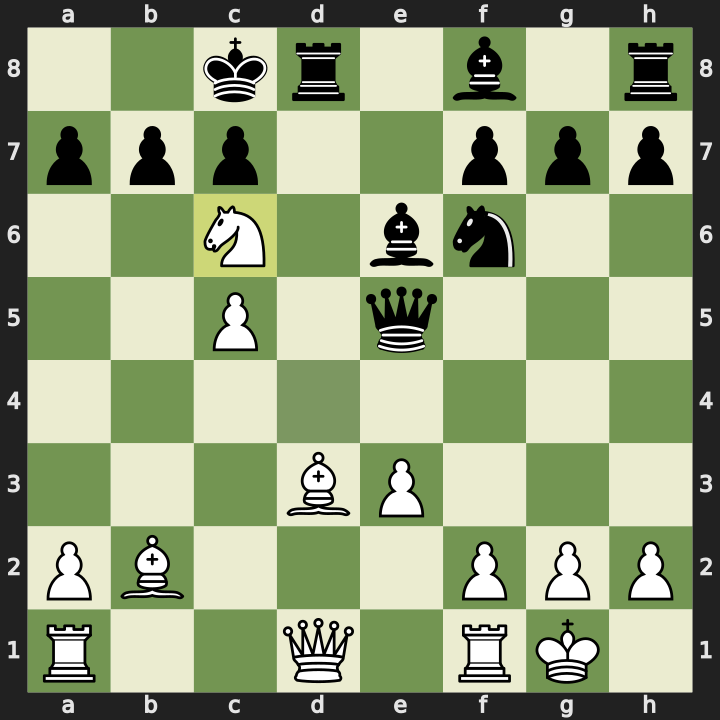
This is the sneaky move. Knight to c6 is a discovered attack on the queen. The knight attacks the queen from c6, and the bishop on b2 that was sitting there quietly is now also pointing at e5. It’s a double attack. My opponent may not have noticed the bishop was there, because they took the knight with a pawn rather than moving the queen.
16…bxc6 17. Bxe5
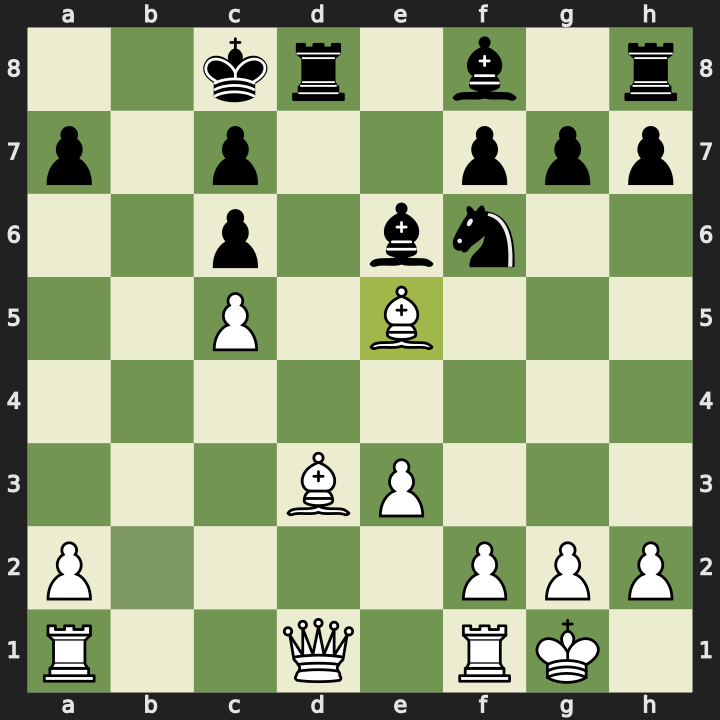
In the end, I get a queen for a knight. Huge advantage.
The Checkmate Plan (Moves 18-21)
18. Qa4
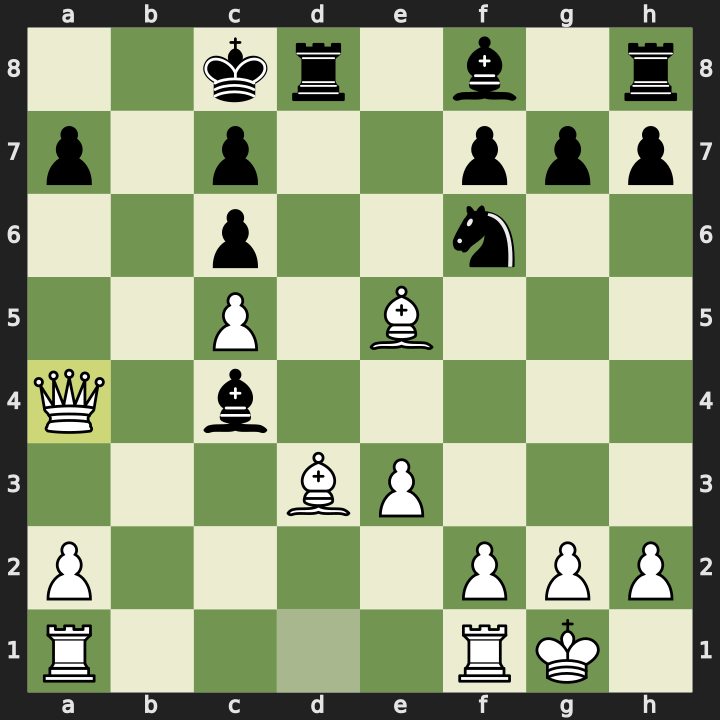
I see a checkmate opportunity on c7. My dark square bishop is already pointing at that square. If I can get the queen onto c7, that’s checkmate. So to somewhat distract my opponent, I just leave the bishop on d3 hanging. My opponent can take it with the rook or the bishop. Either way, it’s not needed for my checkmate idea.
18…Bxd3 19. Qa5 Rd7
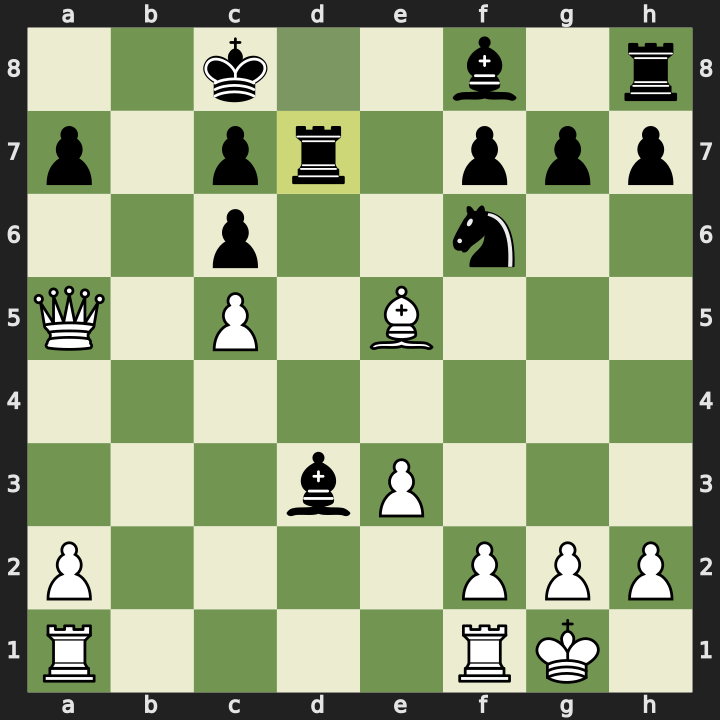
My opponent takes the bishop and I move my queen to a5, putting it on the right diagonal to take on c7. Black initially does the right thing, defending c7 with the rook.
20. Qxa7
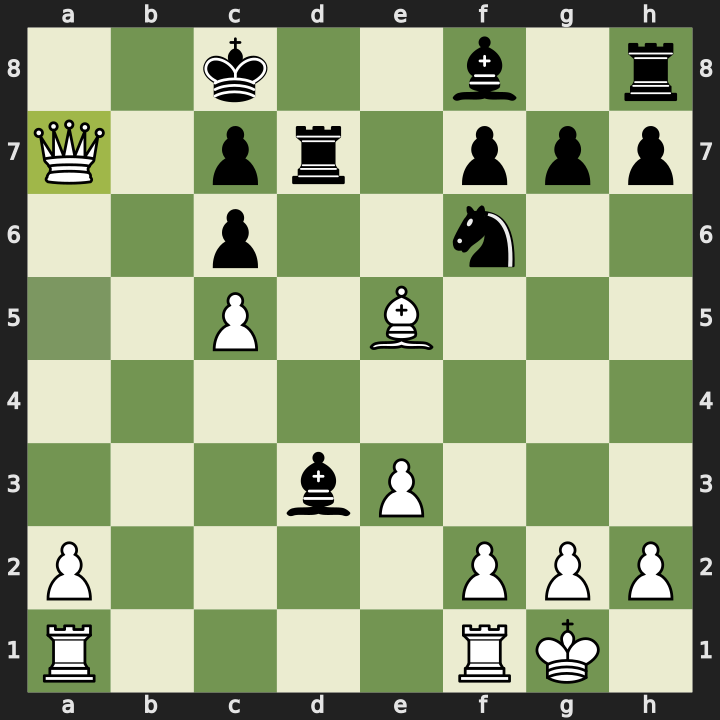
I essentially play a waiting move with queen to a7. The threat is still there, just passing it over to Black to decide what they’re going to do.
20…Rd5
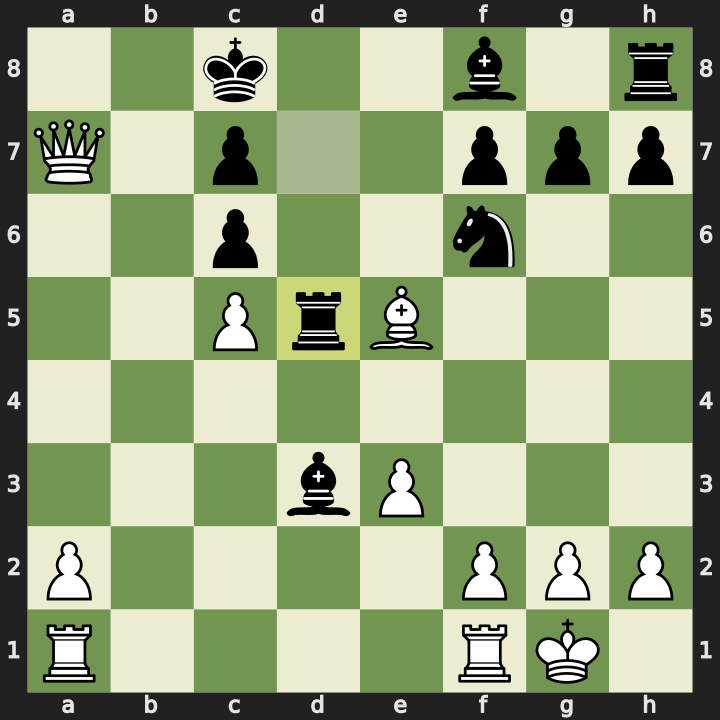
They blunder with Rook to d5, forgetting that they just moved their rook to defend the key square.
21. Qxc7#
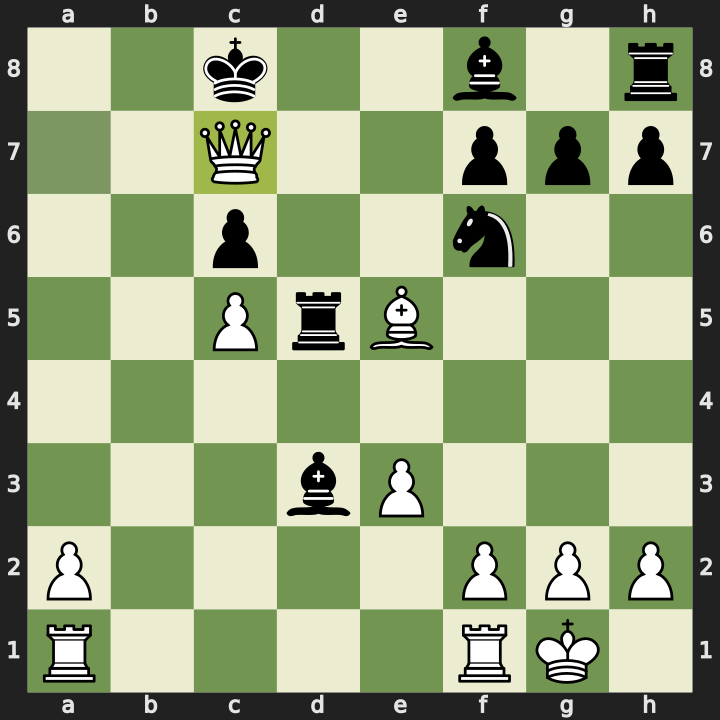
Checkmate. This was a very dubious win. I left pieces hanging with the hope that my opponent would focus on those instead of defending. It’s fun to play like this, but it only works out occasionally.
Engine Review
The computer analysis agrees that this is pretty dubious play, giving me a 150 game rating. That might be the lowest rating I’ve ever received, especially for a checkmate win. At least it didn’t count any of my moves as blunders.
The engine highlights that my knight attack on c6 was technically a mistake. If Black had played accurately, they could have avoided the double attack by simply taking my bishop on b2. It only worked because Black failed to see it. The better moves were to just push the pawn to c6 to break open the defence around the king, or take the bishop on e6, exchanging the knight for a bishop.
Interestingly, there’s an even better continuation to checkmate after Black fails to defend their queen. It’s simply to play Ba6+, the king has to move to b8, then Qxd8+. The only move is Bishop to c8 to block, and then Qxc8#. That would’ve been a really nice way to utilise the now open diagonal from a6 to c8 and infiltrate on the back rank with the queen. I’ll keep an eye out for that pattern in the future.
Reflections
Overall a messy game, but a win is a win.
What went well:
- Spotted the discovered attack on the queen with Nc6, even if it was technically inaccurate according to the engine.
- Identified the checkmate pattern on c7 and played towards it.
What to work on:
- Look for stronger continuations before settling on a plan. The Ba6+ line was much cleaner than leaving pieces hanging and hoping.
- The engine rating tells the story. Even when winning, I should aim for cleaner play.
Full PGN:
1. d4 e5 2. Nf3 Nc6 3. Nxe5 Nxe5 4. dxe5 Qe7 5. e3 Qb4+ 6. Nd2 Qc5 7. Bd3 Qxe5
8. O-O d5 9. Nf3 Qe7 10. b3 Be6 11. Bb2 O-O-O 12. Nd4 Nf6 13. c4 dxc4 14. bxc4
Qd6 15. c5 Qe5 16. Nc6 bxc6 17. Bxe5 Bc4 18. Qa4 Bxd3 19. Qa5 Rd7 20. Qxa7 Rd5
21. Qxc7# 1-0