Win vs manosai_7 (562)
| Opening: Englund Gambit (A40) | Result: 1-0 (Checkmate) | Time Control: 3 min + 2 sec increment (Blitz) | Rated |
Game Overview
Immediately things get interesting with Black playing the Englund Gambit on move 1. I don’t accept, letting Black take my d4 pawn and looking to recapture with my knight. I blunder a knight early on and lose a rook to a battery later, but Black leaves their queen hanging and I grab it. From there it’s a long king hunt, picking off pieces along the way to a checkmate on move 40.
The Englund Gambit (Moves 1-6)
1. d4 e5
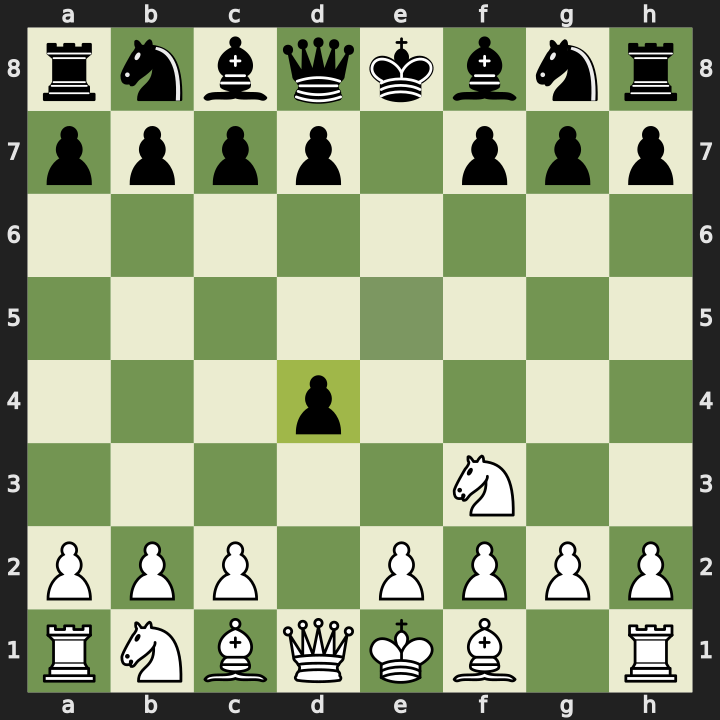
Things get interesting immediately with Black playing the Englund Gambit. I don’t accept it. Instead I play 2. Nf3, allowing Black to take my pawn on d4, looking to take back with my knight. I figured this leaves Black’s king exposed with my knight developed. Just better. I’ll check with the engine what the eval looks like on move 3.
2. Nf3 exd4 3. Nxd4 d5 4. e3 Nf6 5. Bd3 Bc5 6. O-O O-O
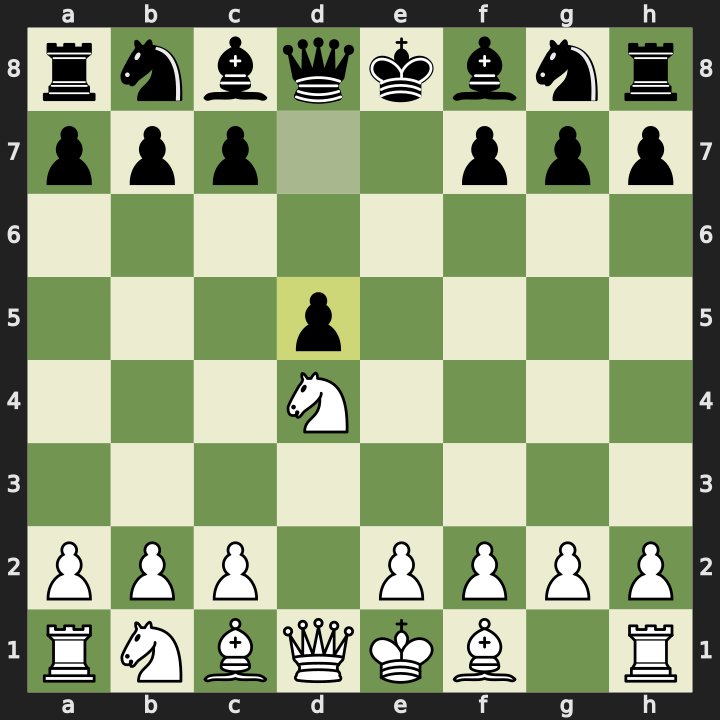
Pretty normal developing moves. I’m trying to get my usual setup and I completely miss that I’ve got a knight on d4 instead of my pawn. That’s going to cause me problems shortly.
The Knight Blunder (Moves 7-12)
7. b3 b6 8. Bb2 Qd6 9. Nd2 b5 10. N2f3 Bb6 11. Ne5
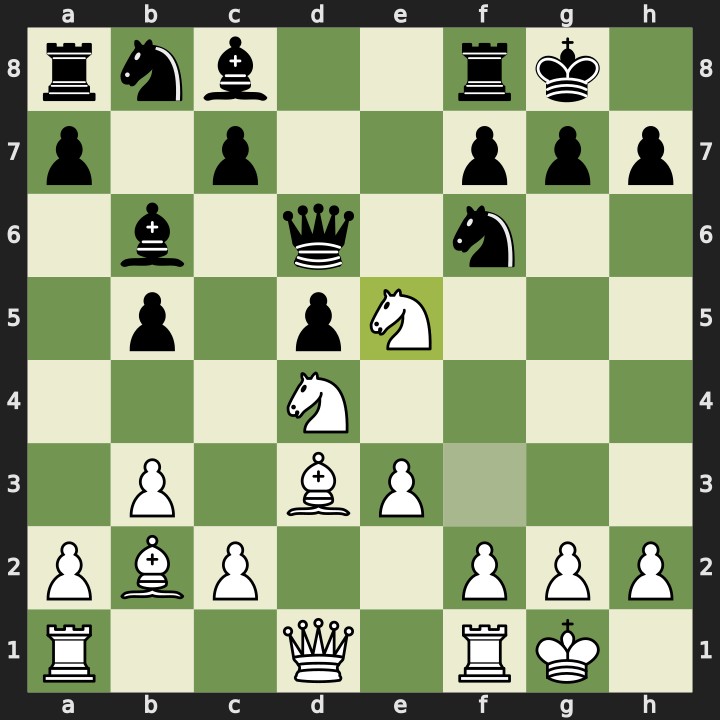
I make a mistake by going out to e5, completely missing that I’ve got a knight on d4 instead of my pawn. The knight is on a completely undefended square where it can be picked up immediately by the opponent’s queen.
11…Qxe5
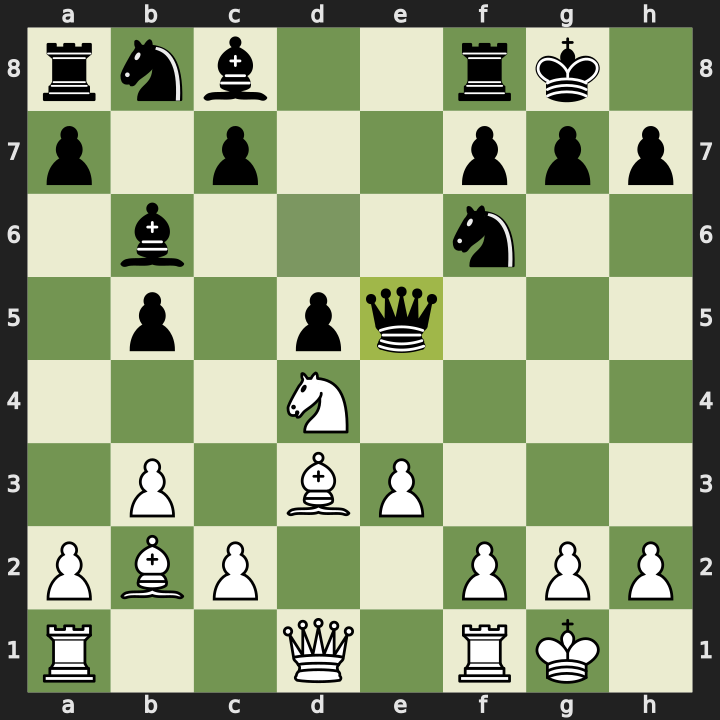
Not a good way to start. But it’s just a knight and it’s early days. The purpose of my setup is to attack the kingside with bishop, rooks, and queen, so I’ll keep going.
12. f4 Qd6
Doubling Pawns and Losing a Rook (Moves 13-18)
13. Nxb5 Qd7 14. Rf3 a6 15. Bxf6 gxf6
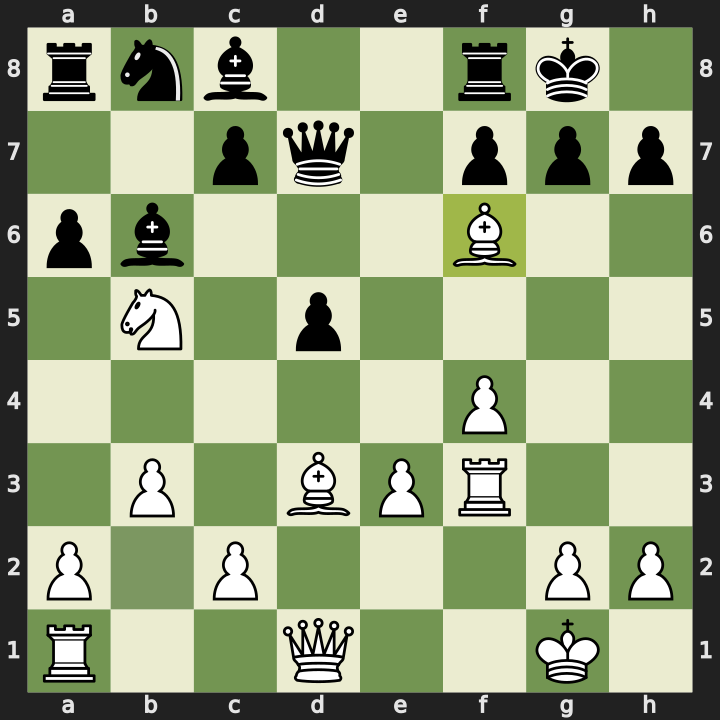
I see an opportunity to grab the knight on f6 with my dark-squared bishop. That will cause doubled pawns on the f-file for the opponent and expose that king. That’s gotta be good for me, so I go for it.
16. Rh3
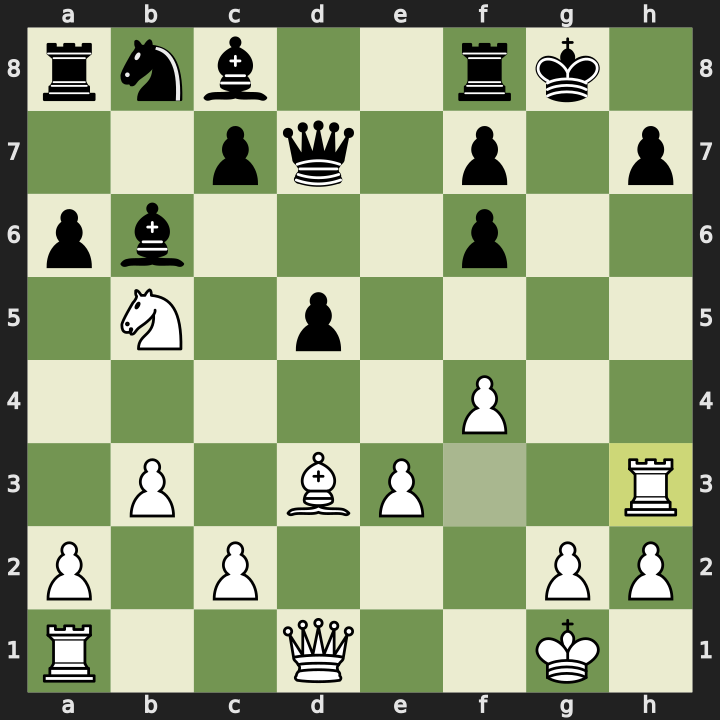
I slide my rook over to h3. I basically put it directly in line of a battery that Black has set up with the bishop and queen.
16…Qd6 17. Qf3 Bxh3
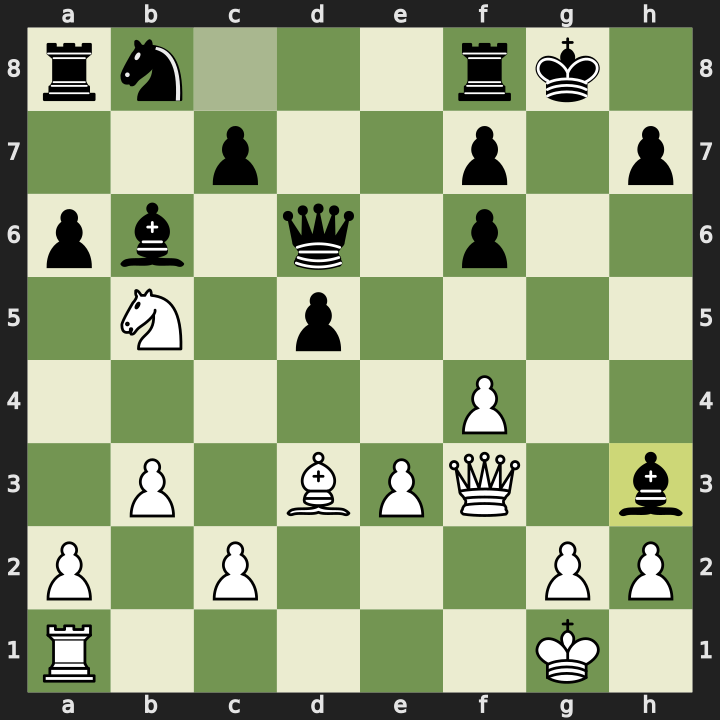
Black blunders by moving their queen to d6, and then I miss that I could take it! I allow Black to take my rook for a bishop before realising that Black had left their queen hanging.
18. Qxh3
Winning the Queen (Moves 18-21)
18…f5 19. Nxd6
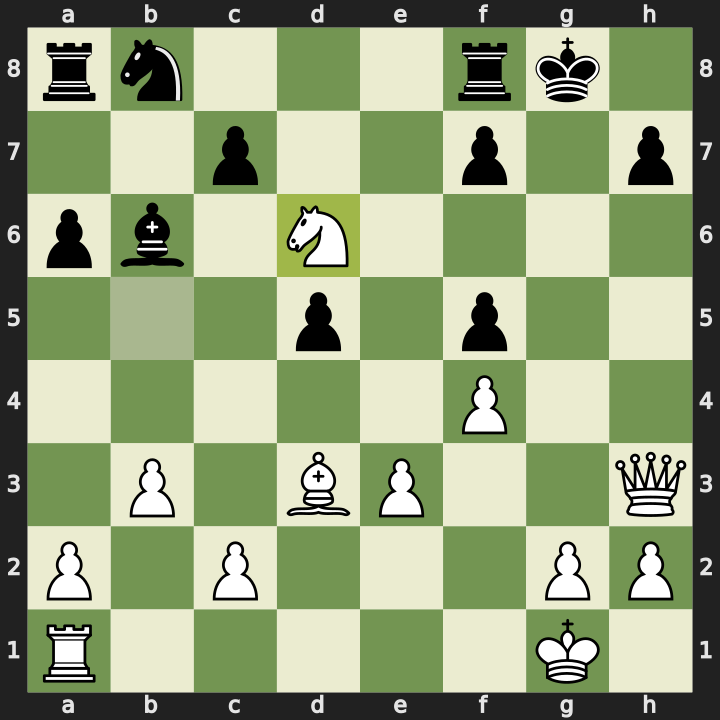
So I take a material lead: up a queen for a rook and knight, with Black’s king exposed. I feel like I’ve got a chance here.
19…cxd6 20. Bxf5 Re8 21. Qxh7+
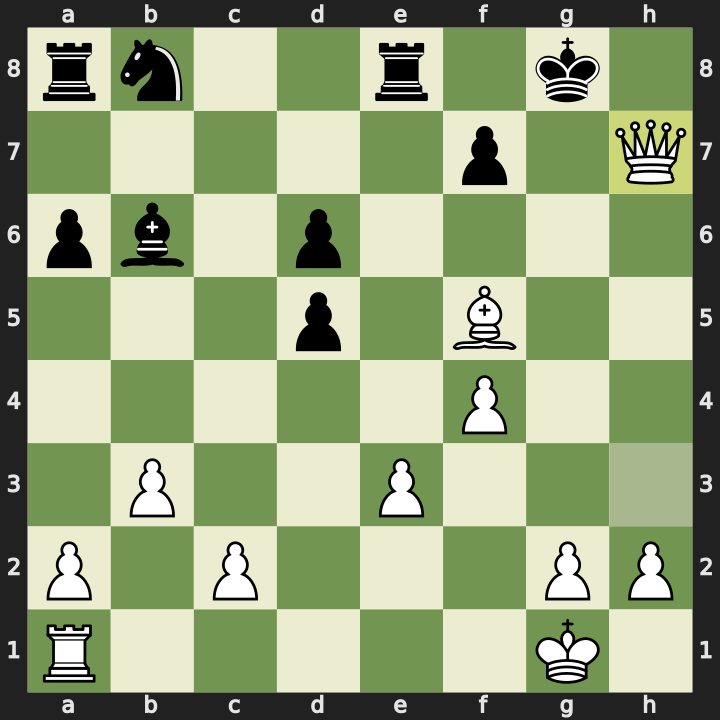
Before Black played Re8, there was a mate in one threat on g8. Black’s rook move covered that, but the king is still in trouble.
The King Hunt (Moves 22-40)
21…Kf8 22. Qh8+ Ke7 23. Qh4+ Kf8 24. Rf1 Nc6 25. Rf3 Ne5 26. Rg3 Bxe3+ 27. Rxe3 d4 28. Rg3 Re7 29. Bh7
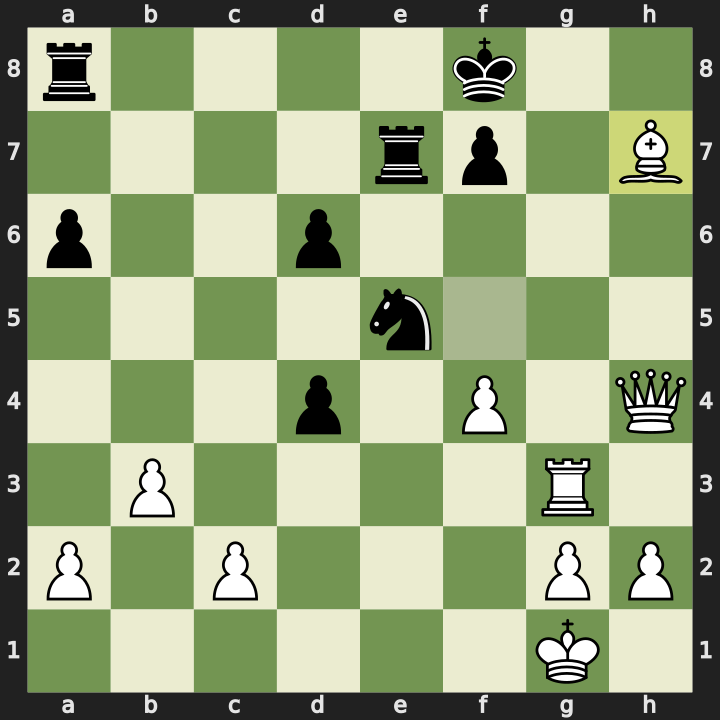
Black does the right thing, allowing the king to escape. I chase the king around a bit but I suspected I missed an earlier checkmate here.
29…Ke8 30. Rg8+ Kd7 31. Rxa8
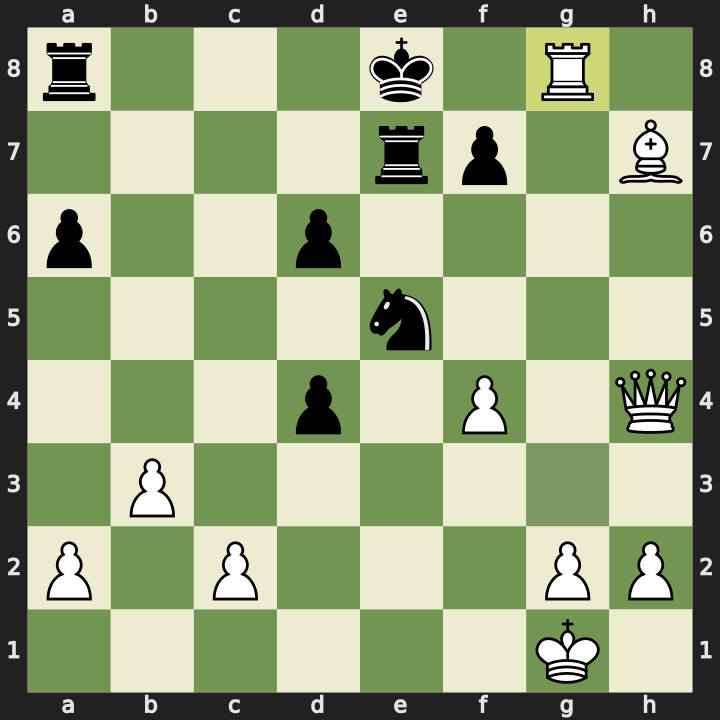
I pick up the a8 rook and then chase the king around the board, picking off the remainder of Black’s pieces.
31…Nc6 32. Qg4+ Kc7 33. Qc8+ Kb6 34. Qxa6+ Kc7 35. Rc8+ Kd7 36. Qxc6+ Ke6 37. Qe4+ Kd7 38. Bf5+ Re6 39. Bxe6+ fxe6 40. Qb7#
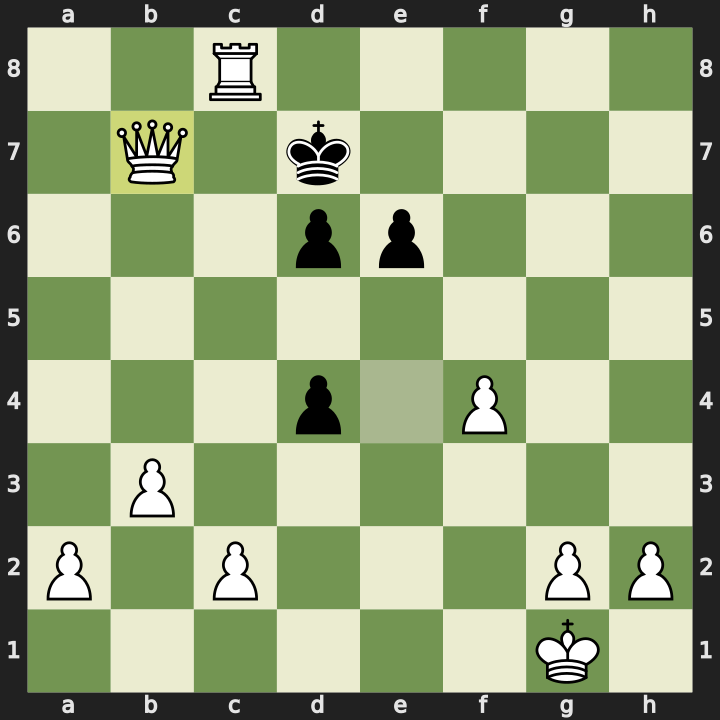
I bet the engine will tell me there was an earlier mate, but in a blitz game I’m kind of happy to know that I’m making good enough moves. If I can keep checking the king and pick off pieces at the same time, that’s fine by me.
Engine Review
Immediately on move 2, the engine suggests a miss and likes just picking up the free pawn on e5. The engine says the position is roughly equal with a very minor advantage to White.
The engine flags 9…b5 as a blunder for Black. I remember looking at this move and thinking I can take that pawn and threaten the queen at the same time, but I wondered if it wasn’t actually some kind of gambit or trap. I wasn’t really trying to attack on the queenside and I didn’t want to waste a move, so I just left it thinking if that pawn comes down to b4 then it isn’t a big deal anyway. So it’s a blunder for Black and a miss for White, but all that was at stake was a pawn. It would also have threatened Nc7, picking up the a8 rook. That could’ve been good.
On move 11, when I blundered my knight, it would’ve been a good chance to pick up the pawn on b5 instead. That would’ve opened up the diagonal, allowing me to bring my knight into e5 on the next move safely.
On move 13, when Black’s queen goes back to d7, the engine likes Bxf6. I do make that move later, but the engine says it’s a good time to do it now. That would’ve allowed me to follow up with something like Qh5 into Qxh7.
On move 16, I missed that Rh3 put my rook in danger. There was a better move: I could’ve simply checked the king on g3, forcing it into the corner, and then going for the Qh5 into h7 checkmate line.
On move 18, Qxh3 is good but not best. This is one of those places where an intermediate check that engines love to remind you of would’ve really simplified getting the checkmate. If I had first checked by going Qg3+, that pushes Black’s king into the corner on h8, meaning after taking the bishop on h3 we’re threatening mate in one and Black can’t escape so easily.
I suspected I did miss an earlier checkmate: on move 29 I could’ve gone Qh8# and it would’ve been a back-rank checkmate with no escape for the king.
Reflections
What went well:
- Focusing on the mating attack. I plan to attack the kingside with bishop, rooks, and queen, and despite losing material early I kept going with that plan and it paid off.
What to work on:
- Blundering the knight on e5 out of the opening wasn’t great. I was on autopilot with my usual setup and didn’t notice the knight was undefended.
- Carelessly placing my rook where it could be taken by a bishop was also not great.
- Not pouncing on the opportunity to grab Black’s queen when it was hanging. I think this all points to me being so focused on my own attack that I’m not taking the time to appreciate my opponent’s moves, including any new mistakes they’ve made. I can probably get away with it at this 500 Elo range, but it won’t work in my rapid games which are at a higher level.
Full PGN:
1. d4 e5 2. Nf3 exd4 3. Nxd4 d5 4. e3 Nf6 5. Bd3 Bc5 6. O-O O-O 7. b3 b6
8. Bb2 Qd6 9. Nd2 b5 10. N2f3 Bb6 11. Ne5 Qxe5 12. f4 Qd6 13. Nxb5 Qd7 14.
Rf3 a6 15. Bxf6 gxf6 16. Rh3 Qd6 17. Qf3 Bxh3 18. Qxh3 f5 19. Nxd6 cxd6
20. Bxf5 Re8 21. Qxh7+ Kf8 22. Qh8+ Ke7 23. Qh4+ Kf8 24. Rf1 Nc6 25. Rf3
Ne5 26. Rg3 Bxe3+ 27. Rxe3 d4 28. Rg3 Re7 29. Bh7 Ke8 30. Rg8+ Kd7 31.
Rxa8 Nc6 32. Qg4+ Kc7 33. Qc8+ Kb6 34. Qxa6+ Kc7 35. Rc8+ Kd7 36. Qxc6+
Ke6 37. Qe4+ Kd7 38. Bf5+ Re6 39. Bxe6+ fxe6 40. Qb7# 1-0