Win vs wigertoods21 (741)
| Opening: Krause Variation, Queen’s Pawn | Result: 1-0 (Checkmate) | Time Control: 10 min Rapid | Rated |
Game Overview
This was a really fun game. We were both attacking and I think my opponent was really in a winning position, but they had to defend accurately and made a fatal mistake at the end giving me the checkmate. I really enjoyed these kinds of games and hope to learn something from this one so that I can play a little more safely than I did this time around.
Opening and Development (Moves 1-9)
1. d4 d5 2. Nf3 c5 3. b3 Nc6 4. Bb2 Bf5 5. Nbd2 e6 6. e3 Nf6 7. Bd3 Bxd3 8. cxd3 Be7 9. dxc5
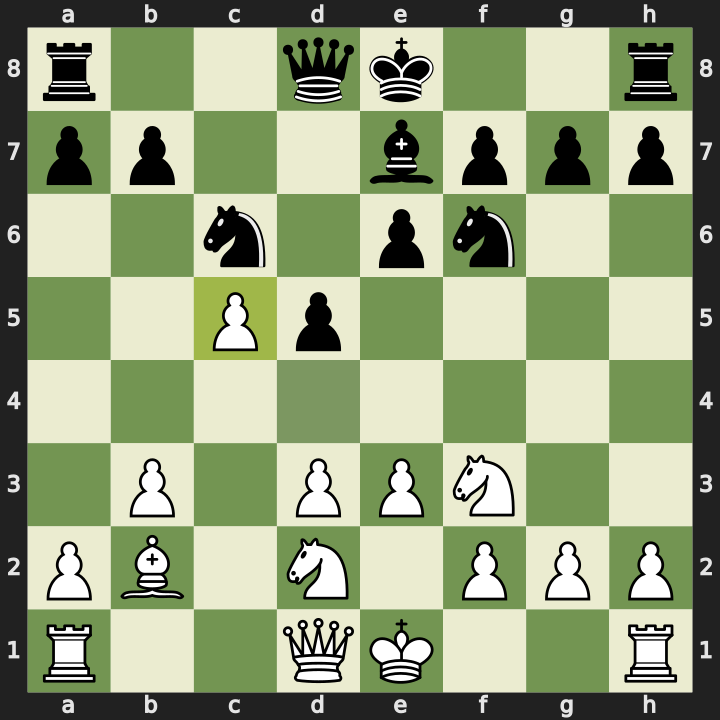
The opening was a little different to what I normally get. The early c5 from my opponent is apparently called the Krause Variation of the Queen’s Pawn opening. I’m not too worried because I can defend the pawns using the bishop and knight, so I focus on development. On move 7 Black trades their light-squared bishop for mine and I take back with the pawn, giving me some doubled pawns on the d-file. I fix up my pawn structure by taking the c5 pawn.
Knight to e5 (Moves 9-13)
9…Bxc5 10. d4 Bb4 11. O-O O-O 12. Ne5
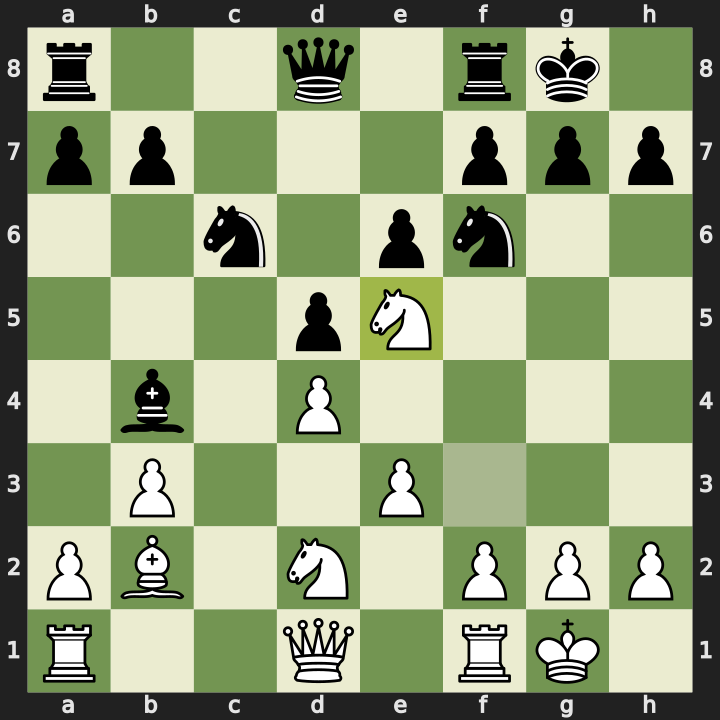
I get the important knight to the e5 square and Black brings their bishop into the corner to attack mine.
12…Qd6 13. f4 Ba3
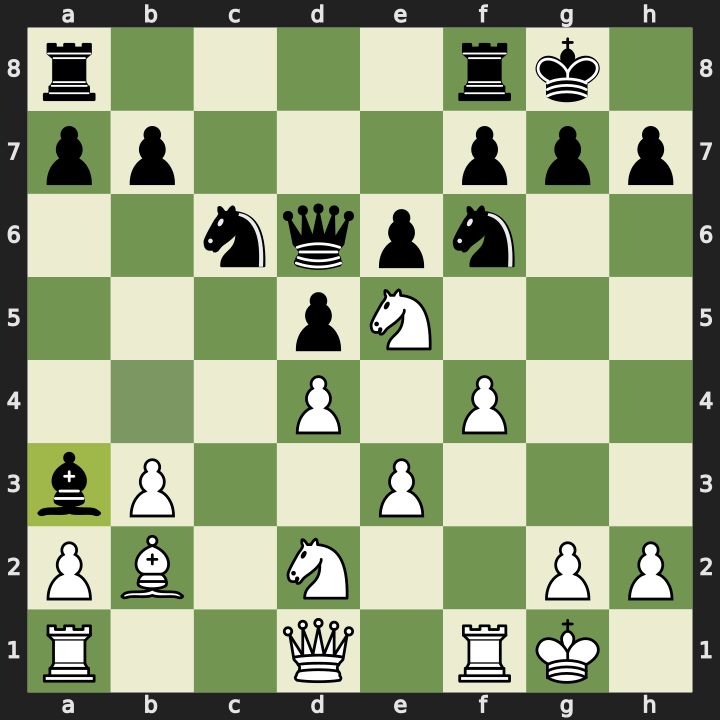
I can see Black is trying to attack on the queenside and I want to focus my moves on getting my pieces out to the kingside.
Trading Pieces (Moves 14-20)
14. Bc3 Rac8 15. Rf3 Nb4 16. Nb1 Ne4 17. Bxb4 Bxb4 18. Rh3 Nc3
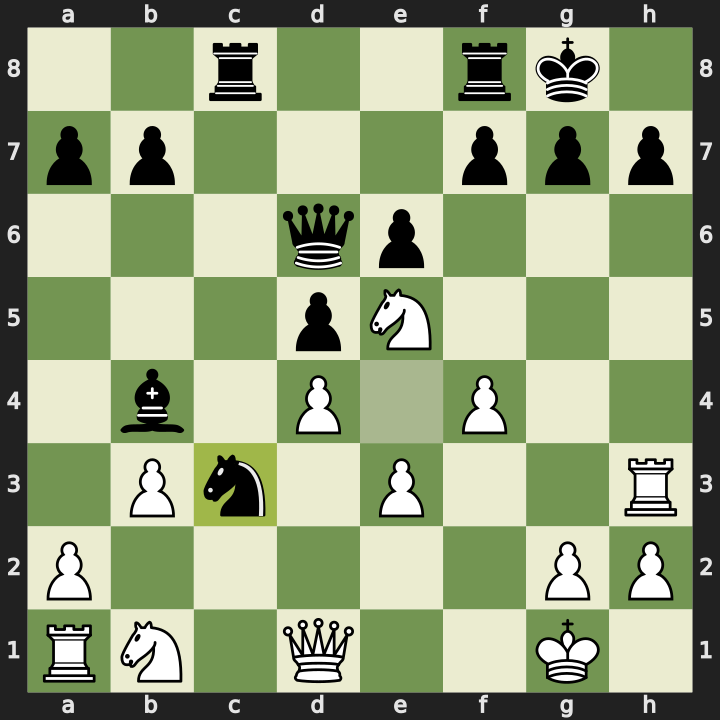
We traded several pieces and Black’s queenside attack is depleting my material. I know I’ve got to try and get something going.
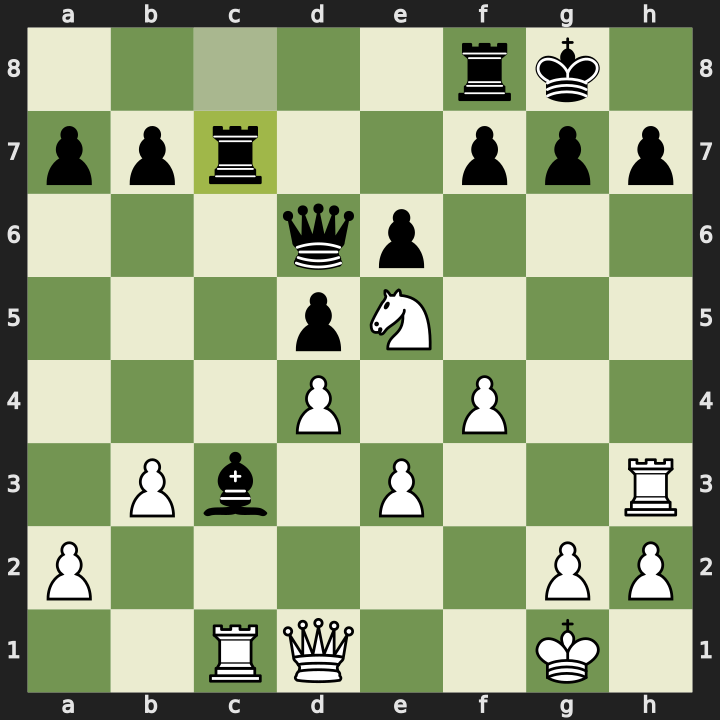
19. Nxc3 Bxc3 20. Rc1 Rc7
The Kingside Attack (Moves 21-25)
21. Qh5
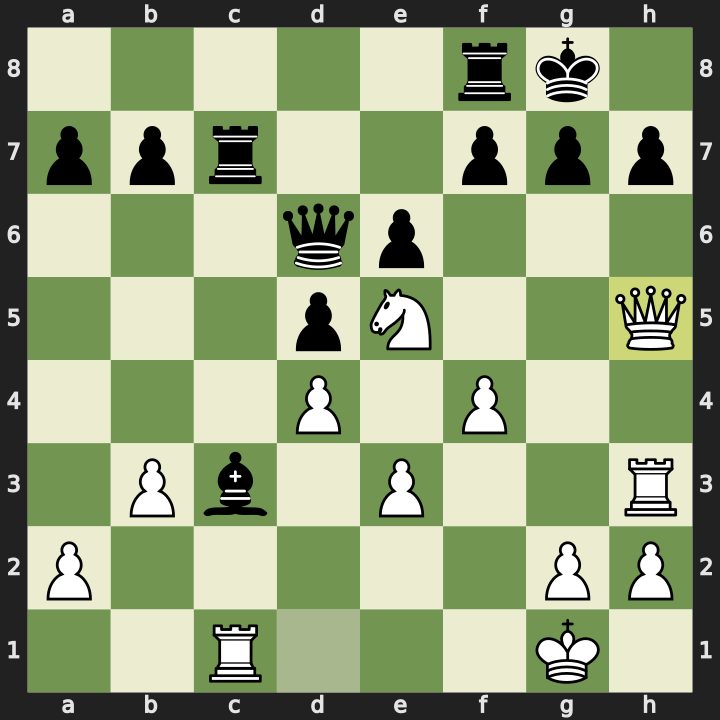
I go for a knight sacrifice in front of the king. If Black takes back with their f-pawn, I can see a way to pin the g-pawn and open up the h-file, taking the pawn with my rook.
21…h6 22. Ng6
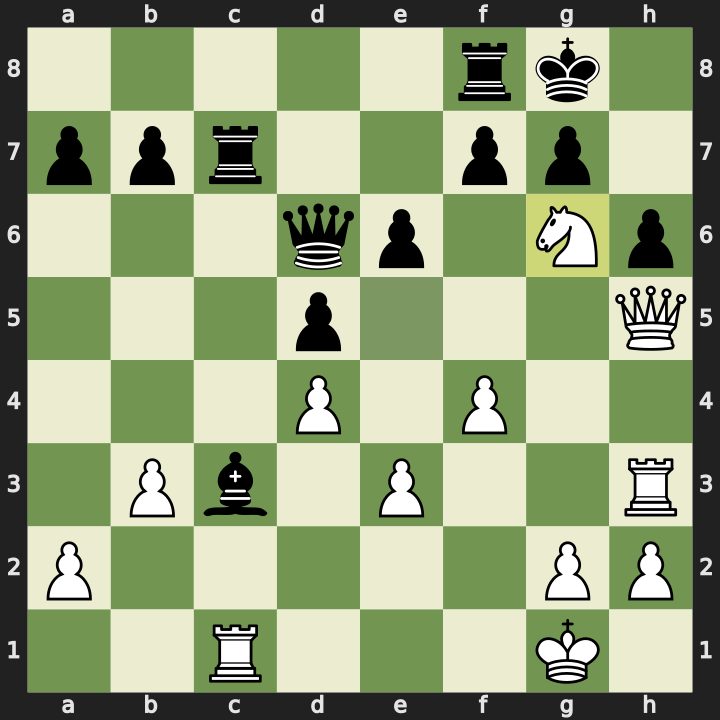
Interestingly, Black doesn’t accept the sacrifice and instead moves their rooks over to focus on their own attack. I come up with a plan B: push my g-pawn and try to open up the h-file that way.
22…Rfc8 23. g4 Qa3 24. Rf1 Qxa2 25. g5 fxg6
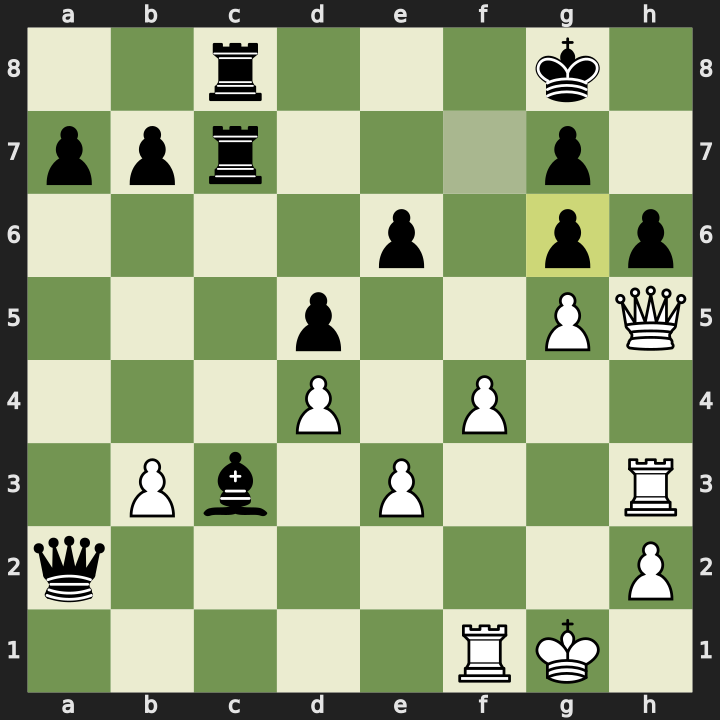
Black eventually sees my plan and takes the knight. I take back with my queen. Now that pawn in front of the king is pinned and I can take the one on the h-file with my rook.
The Final Attack (Moves 26-30)
26. Qxg6 Bxd4 27. Rxh6
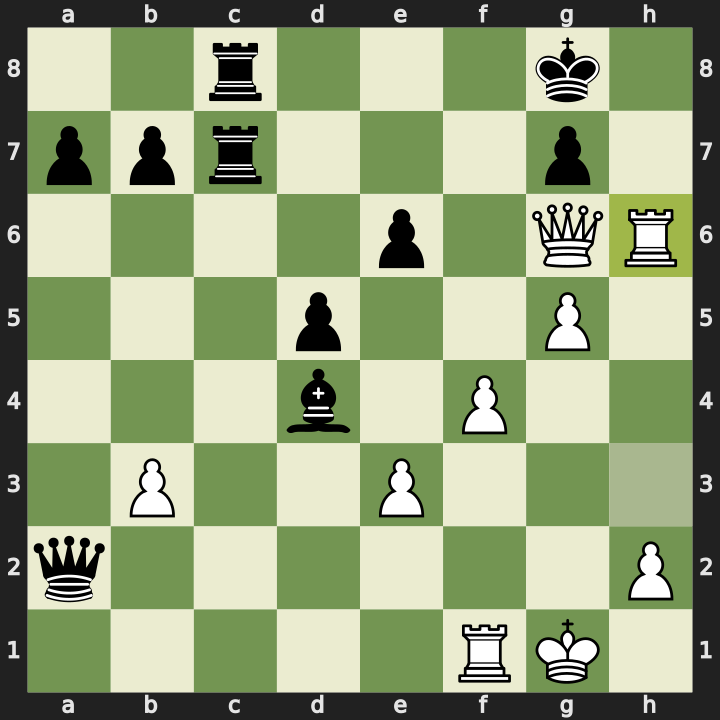
27…Bxe3+ 28. Kh1
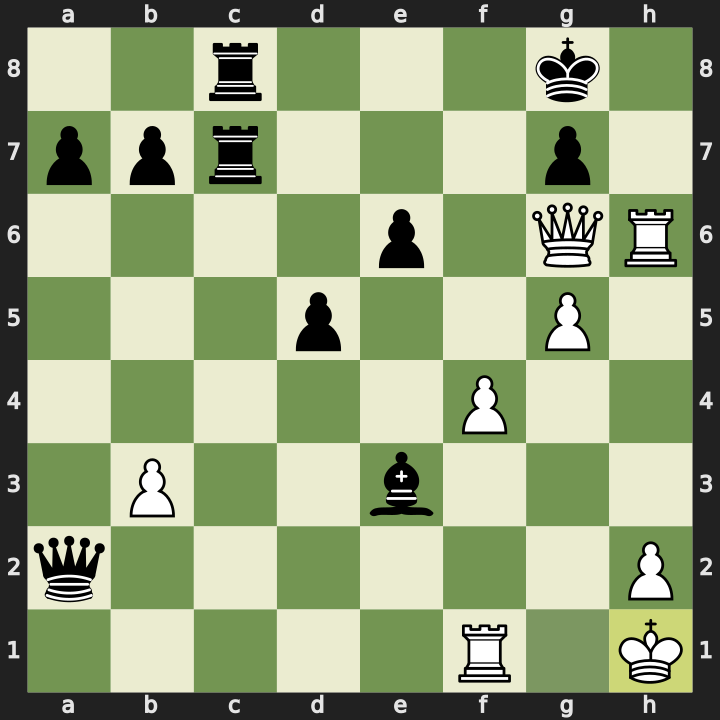
Black gives a check with the bishop and I can move the king over. It’s getting pretty risky at this point. I’m not sure who’s gonna win, but I do see that I’ve got two paths forward: I can either go Qh7 to check the king, or what looks even better is Qxe6+ check.
28…Rc1 29. Qxe6+
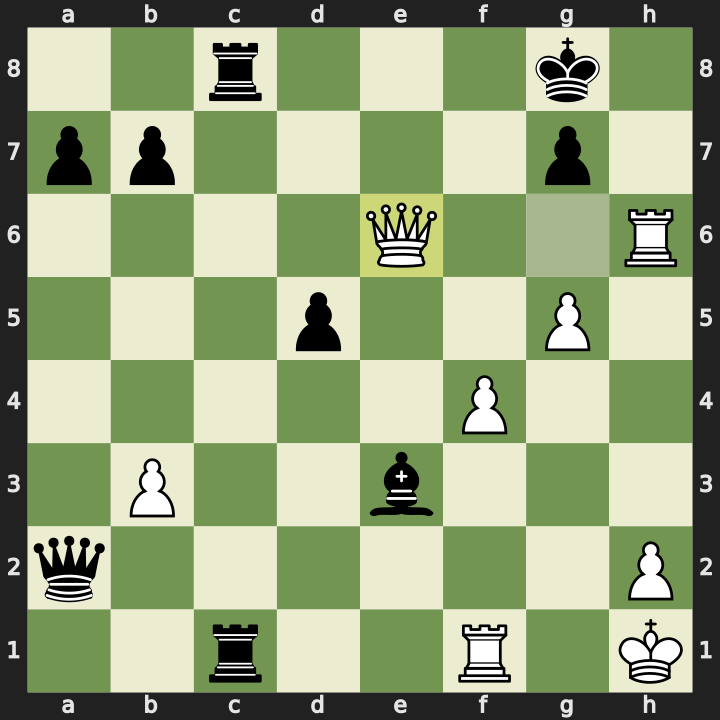
Black brings down their rook with a very solid battery hoping to checkmate me, but they are ignoring their own king’s danger. After Qxe6+ the only move for Black is Kf8, allowing me to finish the game.
29…Kf8 30. Rh8#
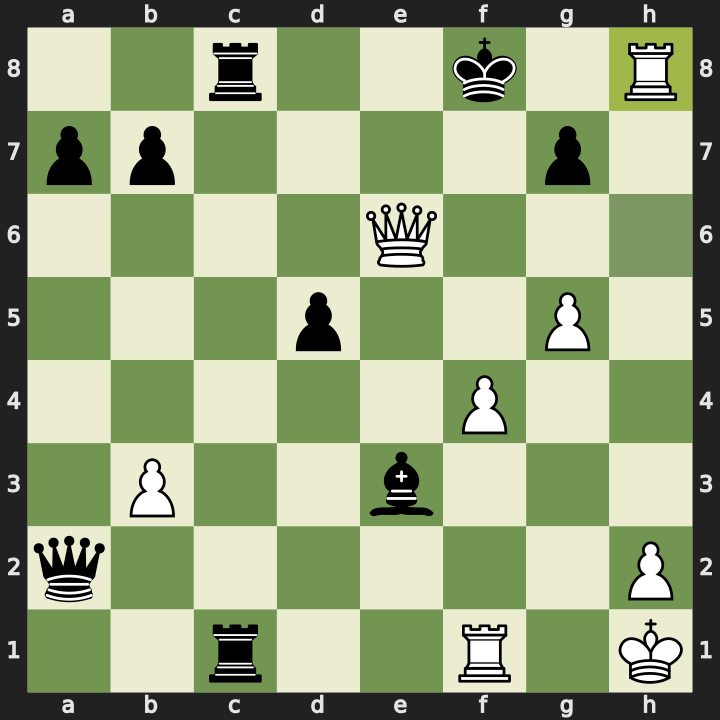
What a relief to win that game. A knight sacrifice in a very tense simultaneous attack on both sides.
Engine Review
The engine agrees that this was a very scrappy game, rating my play at 550 and my opponent at 300. 60% accuracy for me, 55% for my opponent. Two blunders each, one mistake from me and three from my opponent.
13…Ba3 was a mistake from my opponent, although I wasn’t able to exploit it. The best follow-up was actually to temporarily sacrifice a knight with Nd2-c4, pawn takes, then Ne-d4 forking the queen and bishop. Black’s queen would have to move and then I can pick up the bishop with my own bishop. A neat little tactic that leaves White up a piece.
There was a chance to win a piece on move 20 after Black played Rc7. I could have threatened mate in one by going Qd3 with my queen and rook both pointing at h7, while my queen and rook also pointed at the bishop sitting on c3. Black would have to guard against the checkmate by pushing their h-pawn, allowing me to pick up the bishop for free.
The engine scores my knight sacrifice Ng6 as a blunder. There’s a fairly straightforward defence for Black: they take with their pawn, then after I take back with my queen on g6, they bring their rook down to f6 attacking my queen. Completely safe and White’s attack has to fizzle out. Luckily for me, rather than defend the king, my opponent was focused on their own attack.
The engine also doesn’t like my Rxh6 move. Even though it opens up the king, it gives time to Black to defend. Black had Qa6 which would have prevented the checkmate after Qxe6. But instead Black played Rc1, pushing their own attack and failing to notice the checkmate threat.
Reflections
What went well:
- Getting the knight to the strong e5 square early on and building a kingside attack around it.
- Spotting the knight sacrifice idea and having a backup plan when Black didn’t take immediately.
- Seeing the Qxe6+ and Rh8# finish in a tense position.
What to work on:
- I had chances to win a piece cleanly (Qd3 on move 20) but missed them, resorting to a risky sacrifice instead.
- The Ng6 sacrifice was objectively a blunder. I need to check whether my opponent has a simple defence before committing to a sacrifice.
- Playing more safely when ahead. Both of us were throwing punches and it could have easily gone the other way.
Full PGN:
1. d4 d5 2. Nf3 c5 3. b3 Nc6 4. Bb2 Bf5 5. Nbd2 e6 6. e3 Nf6 7. Bd3 Bxd3 8. cxd3
Be7 9. dxc5 Bxc5 10. d4 Bb4 11. O-O O-O 12. Ne5 Qd6 13. f4 Ba3 14. Bc3 Rac8 15.
Rf3 Nb4 16. Nb1 Ne4 17. Bxb4 Bxb4 18. Rh3 Nc3 19. Nxc3 Bxc3 20. Rc1 Rc7 21. Qh5
h6 22. Ng6 Rfc8 23. g4 Qa3 24. Rf1 Qxa2 25. g5 fxg6 26. Qxg6 Bxd4 27. Rxh6 Bxe3+
28. Kh1 Rc1 29. Qxe6+ Kf8 30. Rh8# 1-0