Win vs Etika600iQ (738)
| Opening: Pirc Defence | Result: 0-1 (Checkmate) | Time Control: 10 min Rapid | Rated |
Game Overview
This was a fun one. It felt like we were pretty equal throughout the game and then my opponent blundered harder than I did, letting me get the back rank checkmate. Playing as Black, I went for the Pirc Defence and focused on simplifying the position early. The game came down to who made the last big mistake.
Opening and Castling (Moves 1-5)
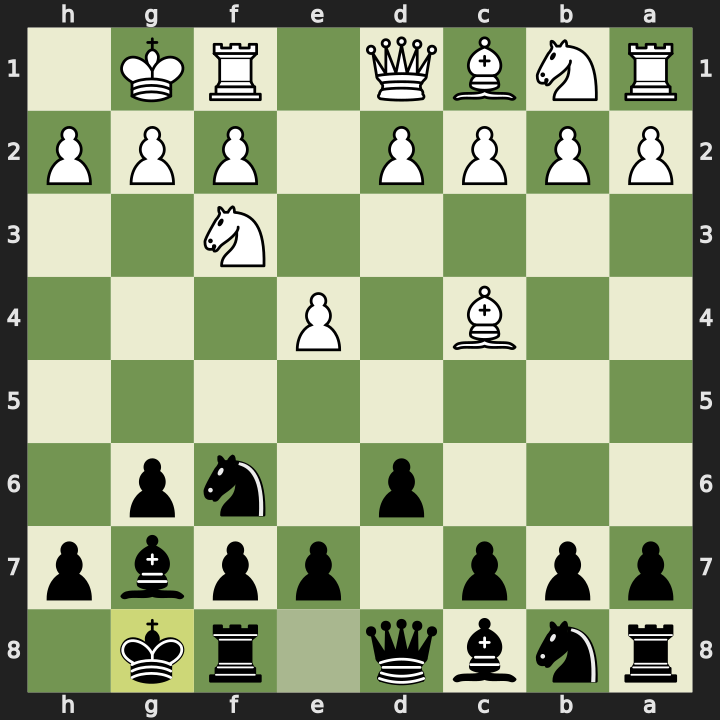
1. e4 d6 2. Bd3 Nf6 3. Nf3 g6 4. O-O Bg7 5. Bc4 O-O
I play a Pirc Defence against e4. The first five moves are pretty standard. We both castle kingside and I’ve got my bishop fianchettoed on g7.
Wasted Tempo and Simplification (Moves 6-10)
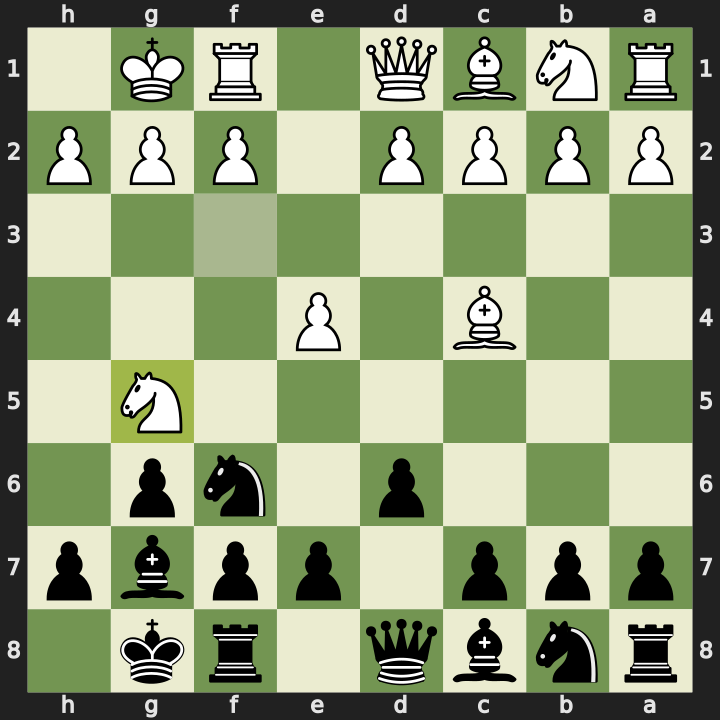
6. Ng5 h6 7. Nf3 d5
White hops the knight into g5 and I kick it away by playing h6. They’ve wasted a move. I take the chance to push d5 and challenge the centre.
8. exd5 Nxd5 9. Nc3 Nxc3 10. dxc3 Qxd1
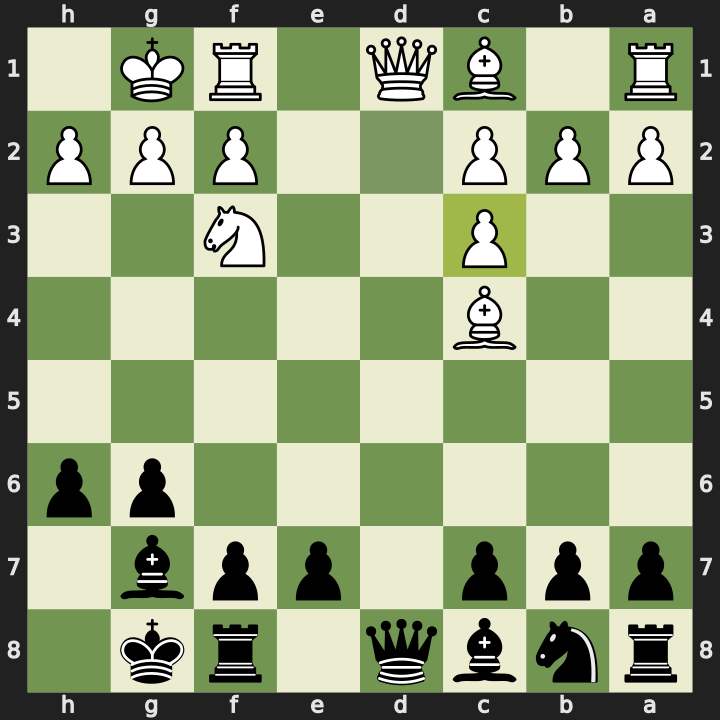
I take the pawn on d5, exchange knights, then exchange queens. In these games when I’m playing as Black with an open centre, I find it’s easier to just simplify and take the sting out of White’s potential attacks.
Doubled Pawns and Open Files (Moves 11-15)
11. Rxd1 Be6 12. Bb3 Nc6 13. a4 Rad8 14. Be3 a5 15. Bxe6 fxe6
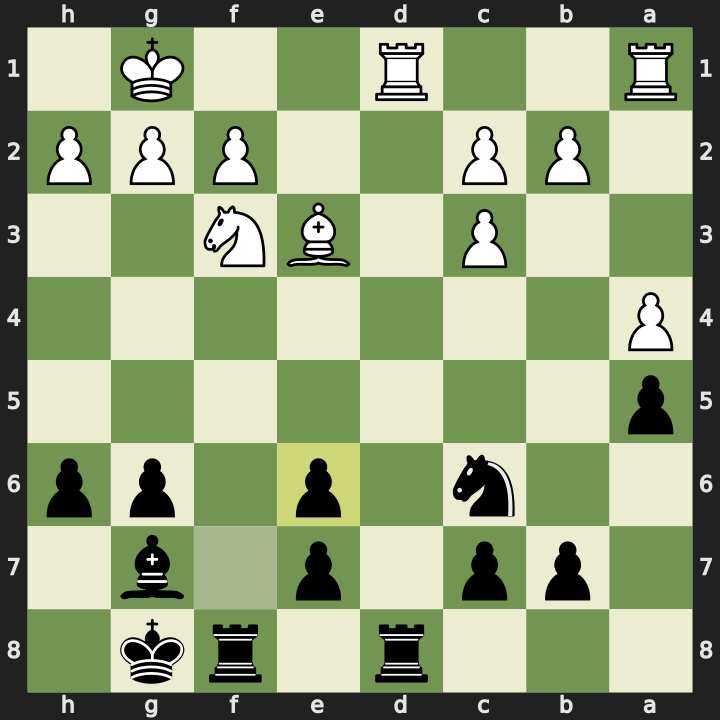
After White takes my bishop on e6, I take back with my pawn, giving me two rooks on open files on the f and d files. My bishop is sitting pretty nicely on g7 and my knight’s in a good spot on c6. It’s all fairly equal. We each have doubled pawns but I’m not losing, so that’s pretty good.
Knight Exchange and White Doubles Rooks (Moves 16-19)
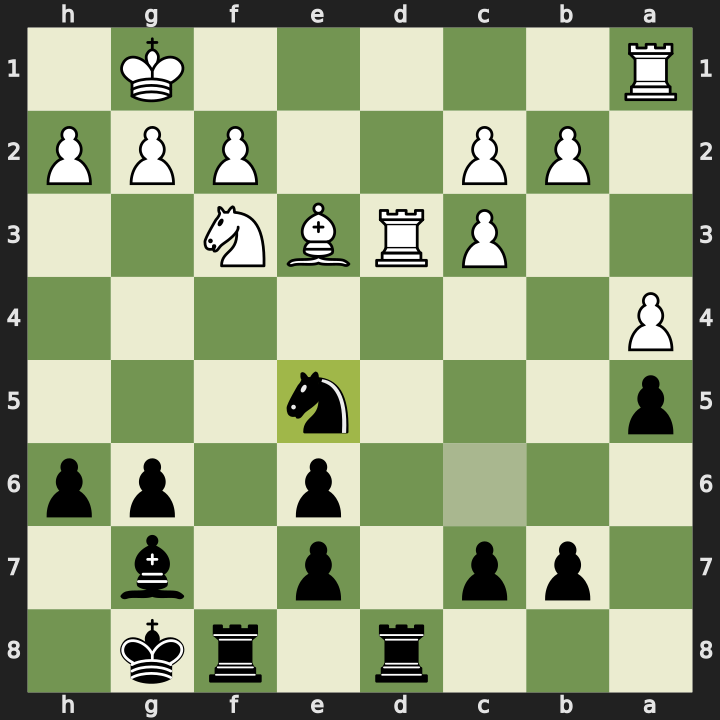
16. Rd3 Ne5 17. Nxe5 Bxe5 18. Rad1 Rd6
I trade the knights and White doubles up the rooks on the d-file. Pretty solid strategy from my opponent, but I’ve got pawns supporting on e and c so I can just bring my rook forward to d6 and it’s well defended.
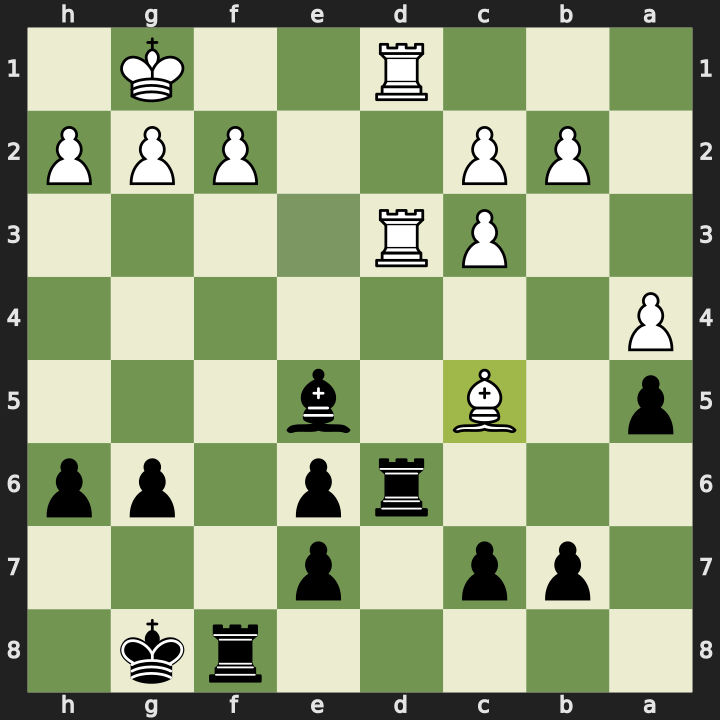
19. Bc5 Rxd3 20. Rxd3 Bd6
White threatens with their bishop on c5 so I take one of the rooks and then bring my bishop into d6, thinking that if White takes my bishop then I’ll be able to undo my doubled pawns and be slightly better.
Manoeuvring (Moves 21-24)
21. Be3 Kh7 22. Bd2 Rf5
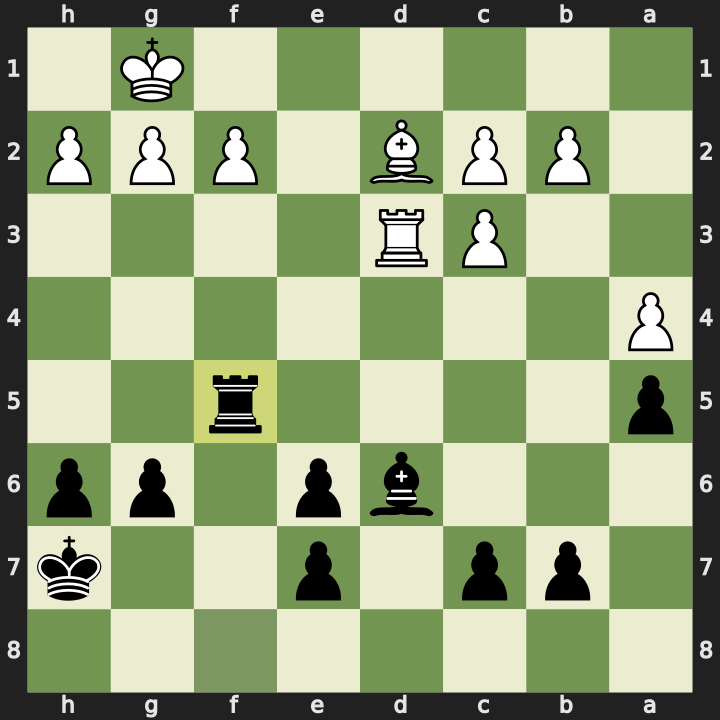
White retreats the bishop and I start manoeuvring my rook and king. White plays a few moves to threaten the pawns in front of my king so I manoeuvre my king and pawns to make sure they are defended.
23. Rf3 e5 24. Rh3 h5
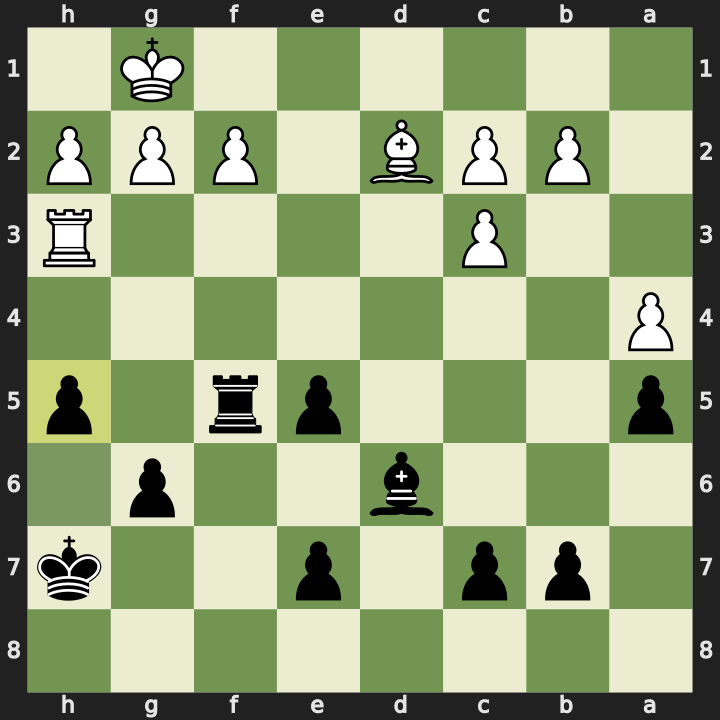
I push h5 to defend from the rook that is threatening check from h3.
The Blunder White Missed (Moves 25-26)
25. b4 axb4 26. cxb4 Rf4
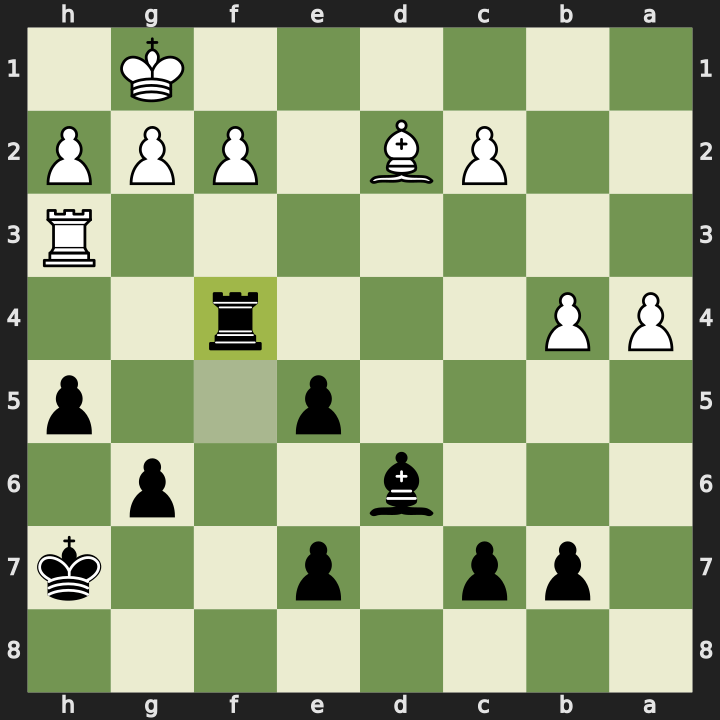
And then I make a huge blunder that my opponent doesn’t see. I move my rook to f4, threatening the pawns on the b and a-files, but neither of us realised that f4 was guarded by the bishop on d2. White could have just taken that rook and been up an exchange and won the game. They didn’t notice.
Winning Material (Moves 27-28)
27. Rf3 Bxb4 28. Bxb4 Rxb4
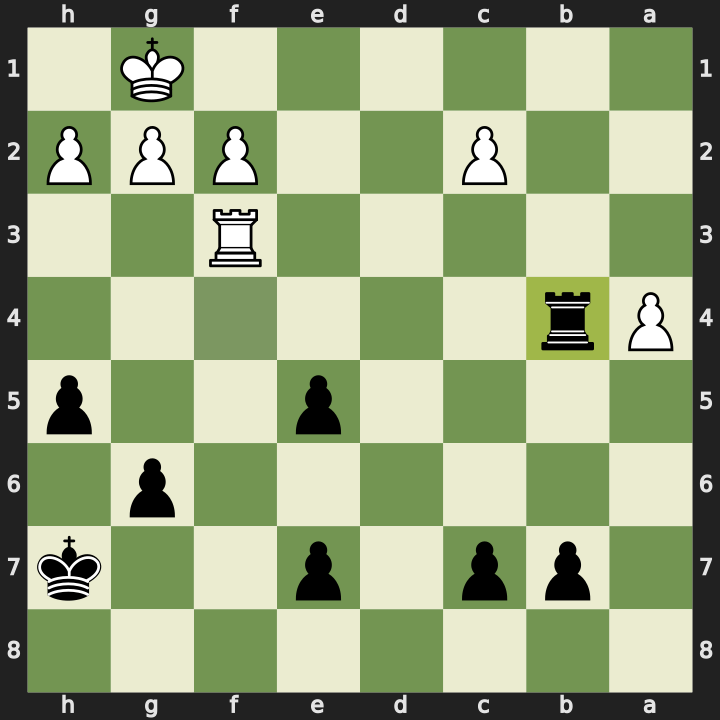
Instead White offered to exchange rooks on f3. I preferred the look of exchanging bishops by first taking on b4 and then taking back with my rook. That won me a pawn. The drawback was that it left the f-file open for White to attack my king.
Back Rank Checkmate (Moves 29-30)
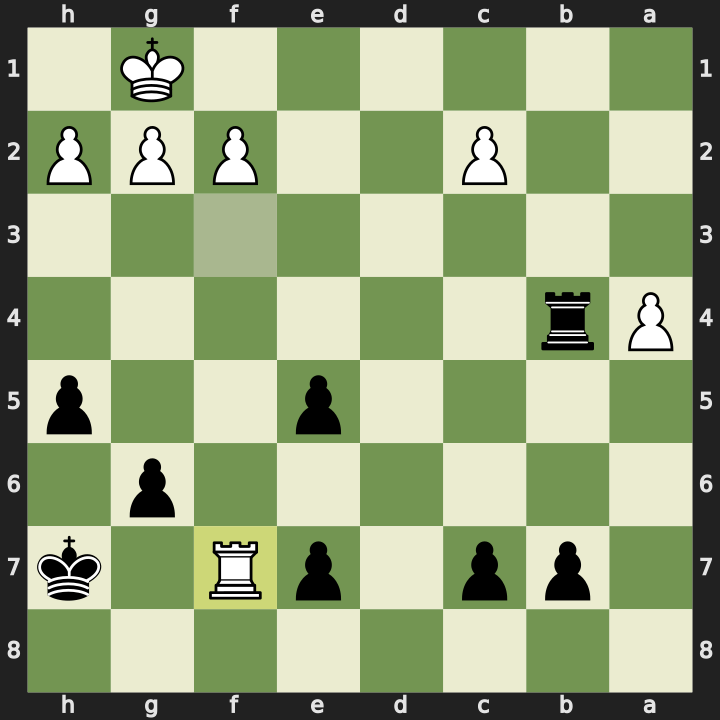
29. Rf7+ Kh6
I hid my king behind the pawn on h6, expecting White to see all the undefended pawns on the e and c files and start gobbling them up. But then I realised I had a rook with a clear path to the first rank and all of the pawns in front of White’s king were still on the second rank. Classic back rank checkmate.
30. Rxe7 Rb1#
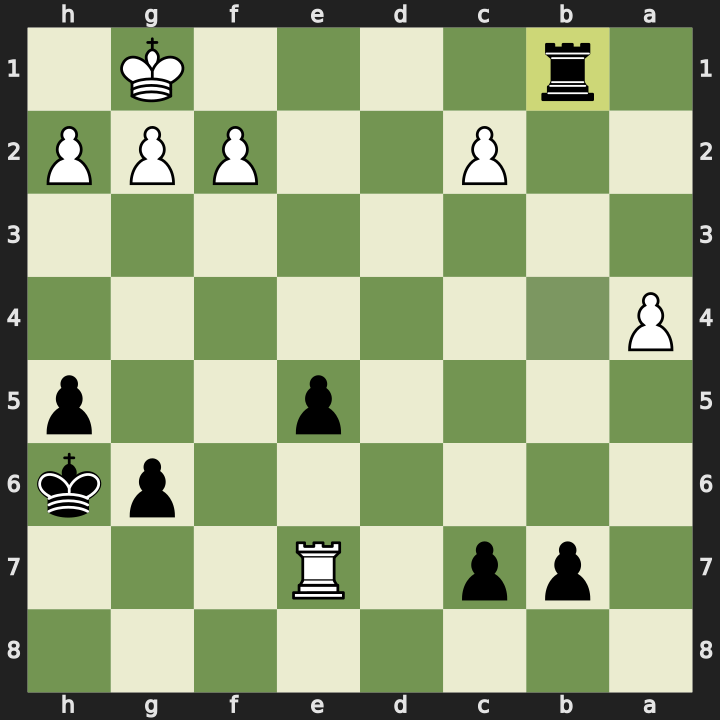
White grabs the e-pawn with the rook but my rook slides down to b1 and it’s checkmate. The pawns in front of White’s king are their own prison.
Engine Review
The engine scores our performance in this game quite poorly, with 58% accuracy for me and 52% accuracy for my opponent. The game rating for me was 450, for my opponent 250. I think the blunders and misses at the end of the game really had an impact on those scores.
On move 7, instead of pushing my pawn to d5, I should have just taken the pawn on e4 with my knight directly. It was undefended.
Move 16, Ne5 was a mistake because it overloads my bishop on g7. It can’t defend the pawn on b6 and the knight on e5 simultaneously.
Move 24, playing h5 to defend from the rook threatening check from h3 is a mistake because it allows White to play g4, forking the pawn and the rook on the h-file. The better move was to push g5 to block the diagonal of the supporting bishop.
Move 26, Rf4 was a blunder. The rook was just there for the taking. White would have been up an exchange and winning.
Move 29, Rf7+ by White was a blunder because with best play they lose their rook, and with not best play it’s a checkmate.
Reflections
What went well:
- Good time management. Still had plenty of time on the clock by the time we were down to just king, rook, and pawns.
- Spotting the back rank checkmate before my opponent did.
- Solid opening play. White didn’t have an advantage and was actually at a two-point disadvantage by move seven.
What to work on:
- Moving my rook into a vulnerable position on f4. I need to practise my blunder checking. I got away with it this time.
- My h5 move let White create threats I didn’t need to deal with. Need to think about pawn structure consequences more carefully.
Full PGN:
1. e4 d6 2. Bd3 Nf6 3. Nf3 g6 4. O-O Bg7 5. Bc4 O-O 6. Ng5 h6 7. Nf3 d5 8. exd5
Nxd5 9. Nc3 Nxc3 10. dxc3 Qxd1 11. Rxd1 Be6 12. Bb3 Nc6 13. a4 Rad8 14. Be3 a5
15. Bxe6 fxe6 16. Rd3 Ne5 17. Nxe5 Bxe5 18. Rad1 Rd6 19. Bc5 Rxd3 20. Rxd3 Bd6
21. Be3 Kh7 22. Bd2 Rf5 23. Rf3 e5 24. Rh3 h5 25. b4 axb4 26. cxb4 Rf4 27. Rf3
Bxb4 28. Bxb4 Rxb4 29. Rf7+ Kh6 30. Rxe7 Rb1# 0-1