Win vs Juggernaught654 (723)
| Opening: Pirc Defence | Result: 0-1 (Checkmate) | Time Control: 10 min Rapid | Rated |
Game Overview
This game was well fought and quite even right up until the end when it fell apart very suddenly. Another Pirc Defence where my opponent went for a quick attack on the f7 square. I neutralised it okay, traded some pieces, then found a nice attacking sequence with queen and rook to deliver checkmate.
Neutralising the f7 Attack (Moves 1-8)
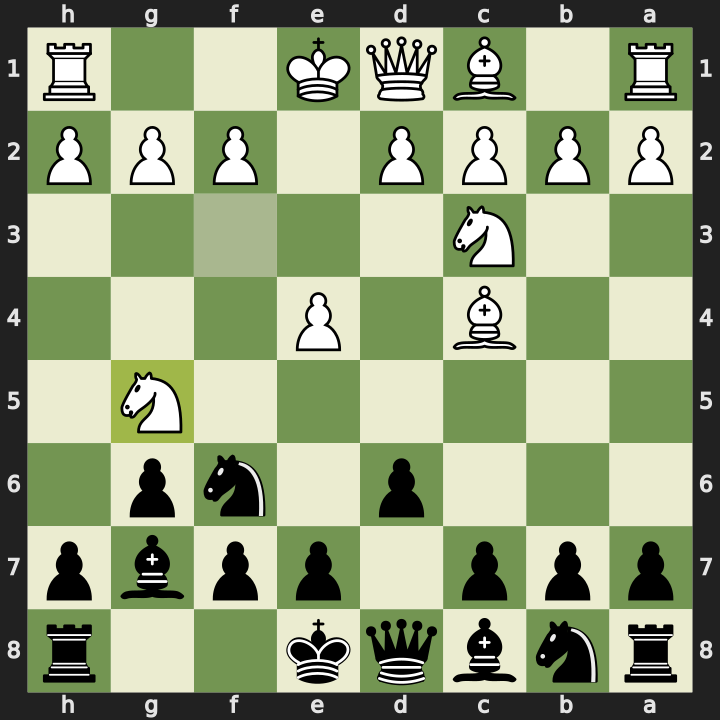
5. Ng5 d5 6. exd5 O-O 7. O-O h6 8. Nf3 Kh7
My opponent was going for a quick attack on the f7 square with the knight and bishop. The trick is not to try and attack the knight directly but to disrupt the bishop’s line to f7. I played d5, which cost me a pawn but meant that I was able to complete the opening with all my pieces intact.
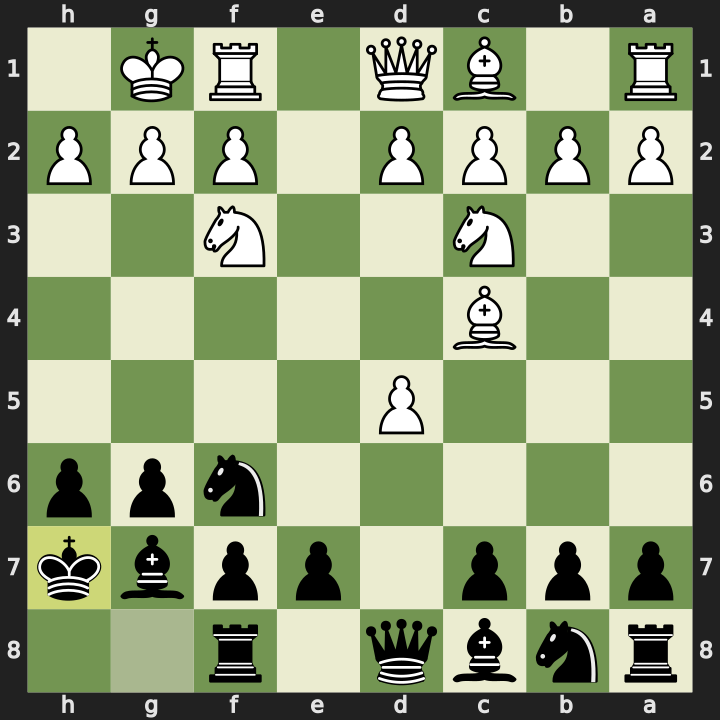
I kicked away the annoying knight on g5 and got my king tucked into h7. I find this setup helpful because it frees up the f-file and the king has full protection from two pawns in front and the bishop beside.
Regaining the Pawn and Trading Pieces (Moves 9-15)
9. d3 c6 10. dxc6 Nxc6
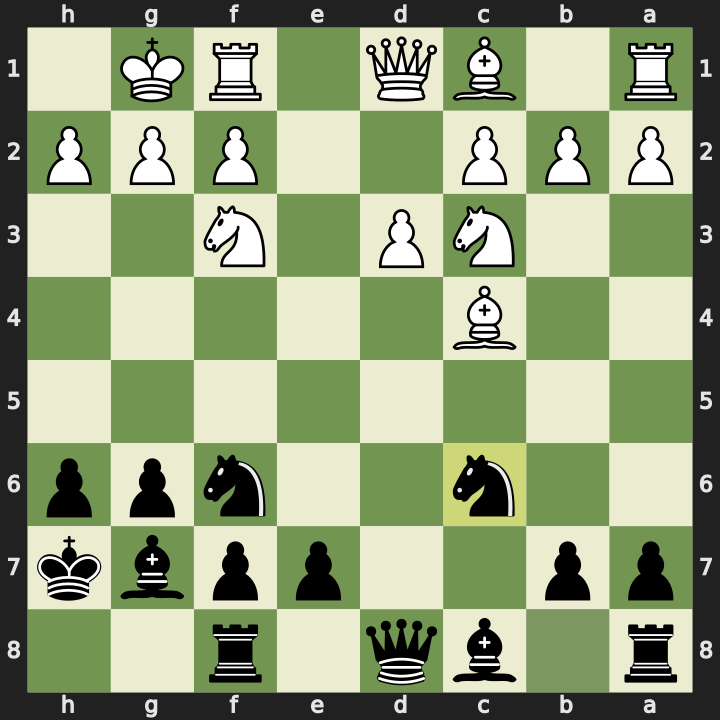
I recapture and now I’ve got all my pieces developed nicely. My opponent is still up just one pawn.
11. h4 Nh5 12. Nd5 e6 13. Nf4 Nxf4 14. Bxf4 Re8 15. c3 e5 16. Be3
We trade a couple of pieces and I’m looking for an attacking opportunity.
The Pin (Move 16)
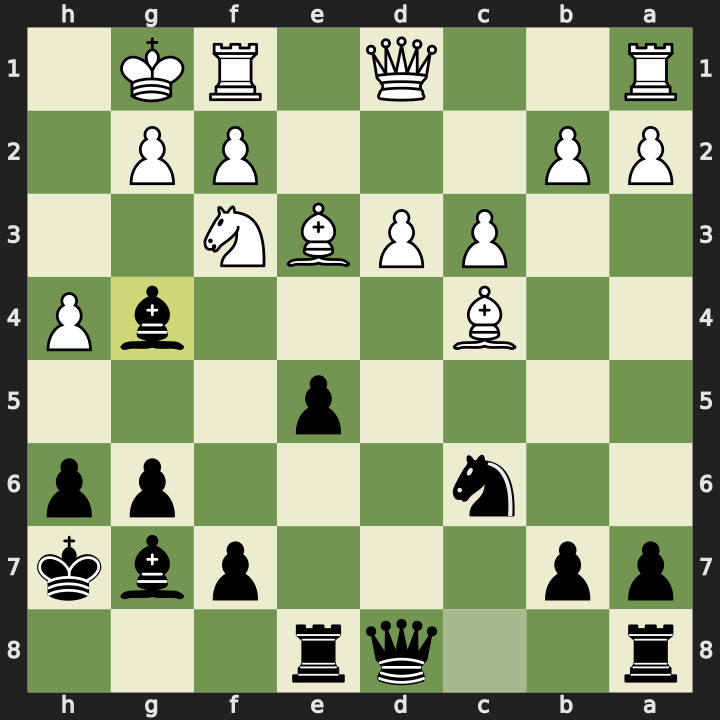
16…Bg4
I take my bishop and bring it to g4, pinning White’s knight to the queen. I’m thinking I can push my e-pawn to e4 and then bring my knight into e5 to put pressure on the pinned knight. If nothing else I’ll be able to take the knight with my bishop and maybe they’ll take back with the pawn in front of the king. I also noticed my queen is pointing at the pawn on h4, which is currently only defended by the knight. Eliminating that knight will be good.
Destroying the Pawn Shield (Moves 17-19)
17. Bxf7 Rf8
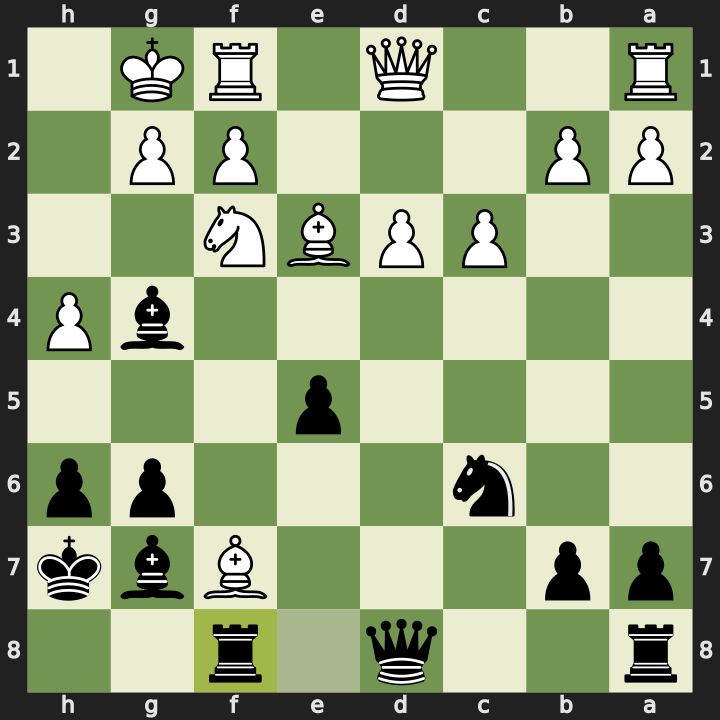
White plays a move that actually makes my attack stronger, eliminating the pawn on f7. I move my rook over to f8, so now it’s putting pressure on the knight on f3 as well. White has to retreat their bishop.
18. Bc4 Bxf3 19. gxf3 Qxh4
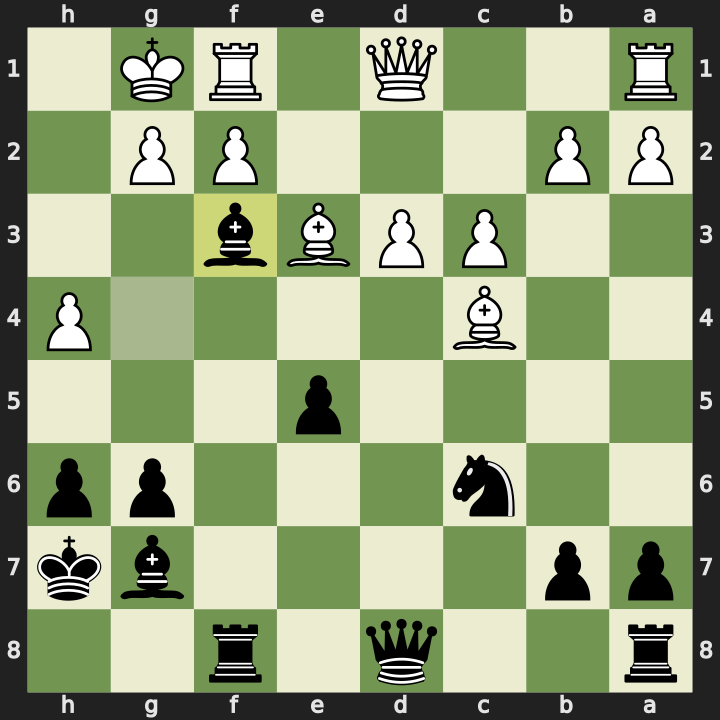
Now I can take White’s knight and White is forced to take back with the pawn. If they take with the queen, I’ll win the queen.
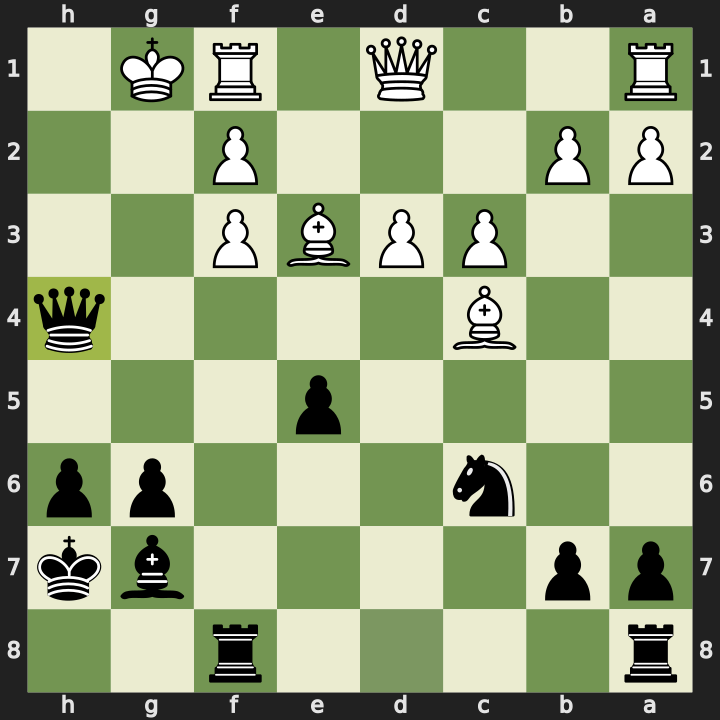
I grab the pawn on h4 with my queen. Now there are two files open in front of White’s king. Meanwhile my king is still feeling pretty safe with pawns and a bishop surrounding it.
The Mating Attack (Moves 20-22)
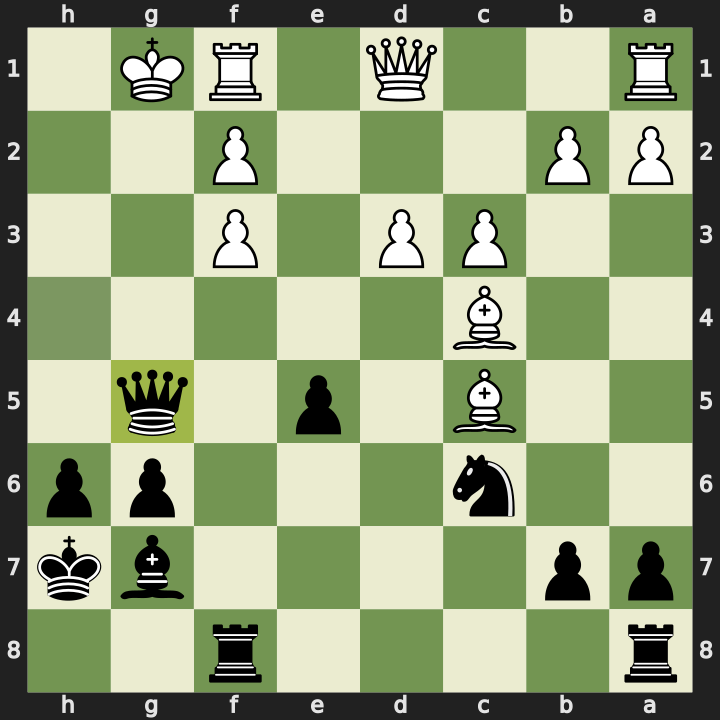
20. Bc5 Qg5+ 21. Kh1 Rf4
My opponent makes a critical mistake, moving the dark-squared bishop away from guarding g5. It threatens my rook, but it allows me to check the king with my queen. The checkmate is getting closer.
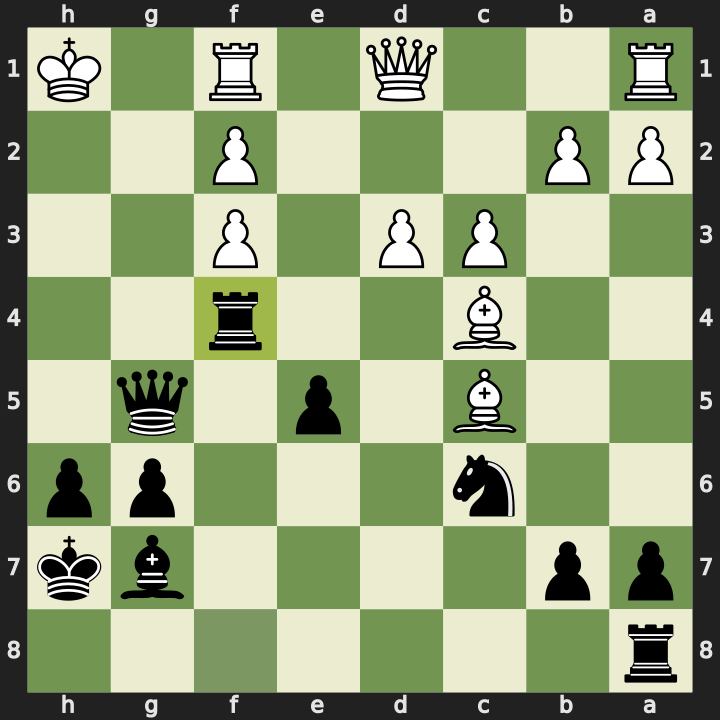
I bring my rook up to f4. I don’t see a way for White to save it.
22. Be7 Rh4#
White threatens my queen with their bishop, but it’s no use.
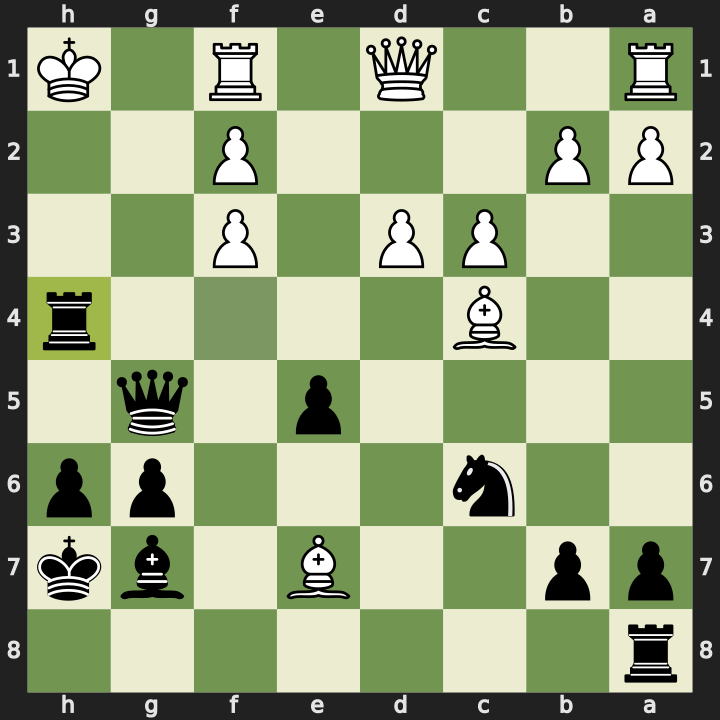
Rook to h4, checkmate. The queen covers g2 and g1, and the rook delivers the killing blow on the h-file.
Engine Review
Pretty good accuracy on this game. 83% for me and 74% for my opponent. Game rating 1400 for me and 1150 for my opponent. Only one blunder in the whole game, and the evaluation shows it was quite even right up until that point, and from there it was fatal.
The engine says I didn’t need to worry so much about f7. The best White would do if I’d just castled was trade two pieces for a pawn and a rook. I’m still glad that I didn’t have to give up my rook so early in the game, but according to the engine I would have had a 1.2 advantage had that happened.
Pushing h4 on move 11 was a mistake for White. It allows Bg4, pinning the knight to the queen, which is the move I ended up playing later in the game.
However, by the time I played Bg4 on move 16, the engine scores it as a mistake. There’s a really interesting line: that knight isn’t technically pinned because it can move to g5 with check, forcing me to take it or move my king, and then White can take my bishop with their queen next turn. So with best play this ends up trading a knight for a bishop and weakening the pawn structure in front of Black’s king. It wasn’t a mistake to play that move on turn 11 because my bishop would have been sitting on g4 also guarded by my knight on f6. I didn’t have the protection of the knight when I eventually played it on move 16.
It’s interesting that on move 19, even though White’s king looks very unsafe with no pawns in front, the engine actually gives White a 0.9 advantage. Then as soon as White plays Bc5 it’s mate in 10 for Black. I probably didn’t see the mate in 10, but my opponent also didn’t play perfectly, so I get a mate in 3. White could have stretched the game out a bit longer by playing Bg4+, and then after Black takes the bishop, Qa4 threatening the rook and giving up White’s queen. It only delays the inevitable though.
Reflections
What went well:
- Piece coordination worked really well. Using the bishop to take out the knight and damage the pawn structure in front of the opponent’s king, then the queen and rook delivering the checkmate.
- King safety. I don’t think I received any checks during the game.
- Time management was good. We both had five minutes on the clock when the game ended.
What to work on:
- Opening preparation. The combination of knight and bishop targeting f7 isn’t as dangerous as I was thinking, so I must have my lines a bit confused. I’ll go back and practise.
- The Bg4 pin was sound on move 11 but not on move 16 without the knight guarding. Need to check if pieces are defended before committing to pins.
Full PGN:
1. e4 d6 2. Nf3 Nf6 3. Nc3 g6 4. Bc4 Bg7 5. Ng5 d5 6. exd5 O-O 7. O-O h6 8. Nf3
Kh7 9. d3 c6 10. dxc6 Nxc6 11. h4 Nh5 12. Nd5 e6 13. Nf4 Nxf4 14. Bxf4 Re8 15.
c3 e5 16. Be3 Bg4 17. Bxf7 Rf8 18. Bc4 Bxf3 19. gxf3 Qxh4 20. Bc5 Qg5+ 21. Kh1
Rf4 22. Be7 Rh4# 0-1