Win vs Dieguisili (885)
| Opening: Trompowsky Attack | Result: 0-1 (Checkmate) | Time Control: 1 day/move (Daily) | Rated |
Game Overview
This was a really satisfying victory because it was a tricky game to play. A daily game where my opponent had a better position for a significant portion of the middlegame, but missed a key tactic in the endgame that swung the evaluation completely. I managed to shepherd a passed c-pawn to promotion and deliver checkmate. No blunders for either player, which makes the win feel that much more earned.
Opening (Moves 1-7)
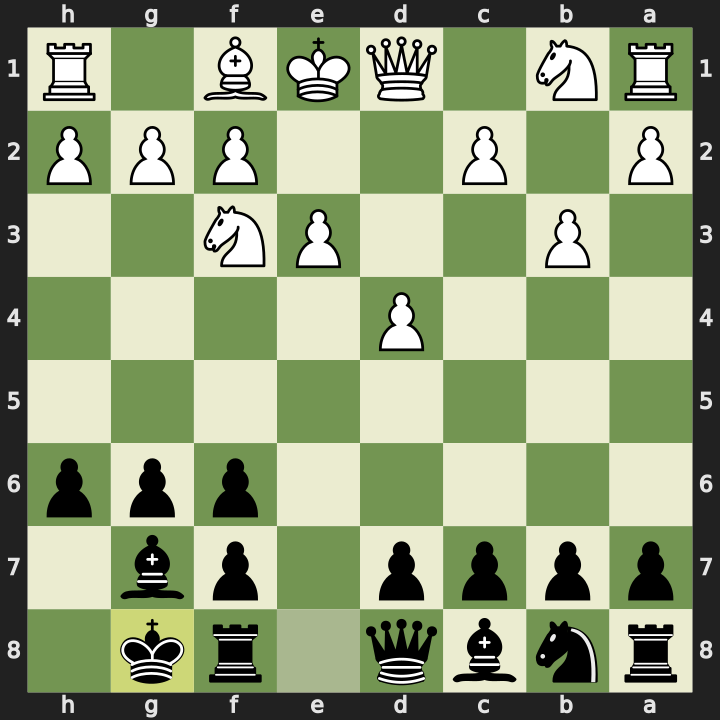
1. d4 Nf6 2. Bg5 h6 3. Bxf6 exf6 4. e3 g6 5. Nf3 Bg7 6. b3 O-O 7. c4 d5 8. cxd5 Qxd5 9. Nc3 Qa5 10. Qd2 Nc6 11. Bb5 Rd8
The opening was a little unusual. By move 7 I’ve castled my king with a pretty serious defensive barrier, however my dark-squared bishop is blocked in and I’ve pushed to d5 which isn’t a setup I typically use. Meanwhile White’s got quite a nice position with a well organised pawn structure, maybe a little undeveloped in terms of pieces, but I think I’d prefer to be White in this situation.
Bishop Pair vs Knight Pair (Moves 12-14)
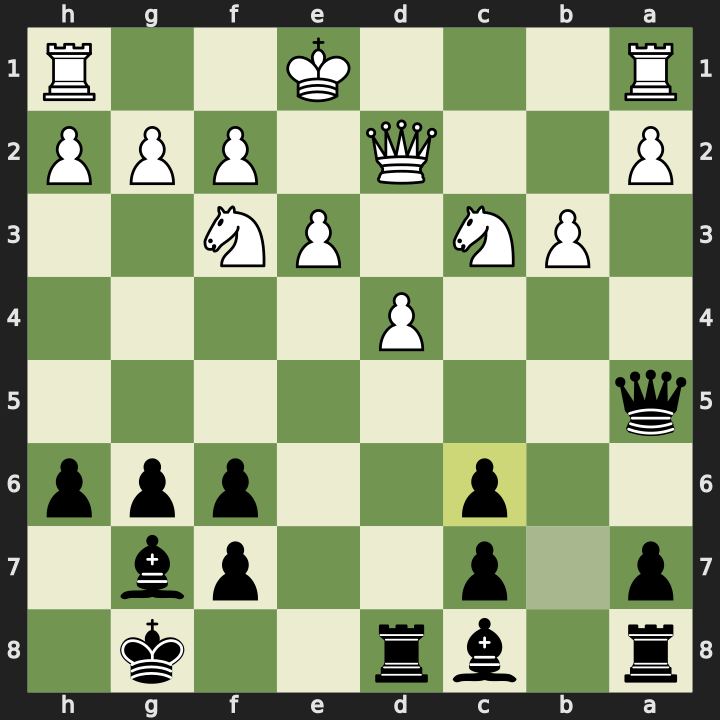
12. Bxc6 bxc6 13. O-O Bg4 14. Ne1 Qg5
On move 12 White exchanges a bishop for a knight, so now interestingly it’s Black’s bishop pair against White’s knight pair. I have doubled pawns on the f and c files. I’m not too concerned because my king is castled and I can use those files for my rooks. My queen is a little precariously placed on a5 but I think it’s got enough room to slide along the fifth rank to get out if it needs to.
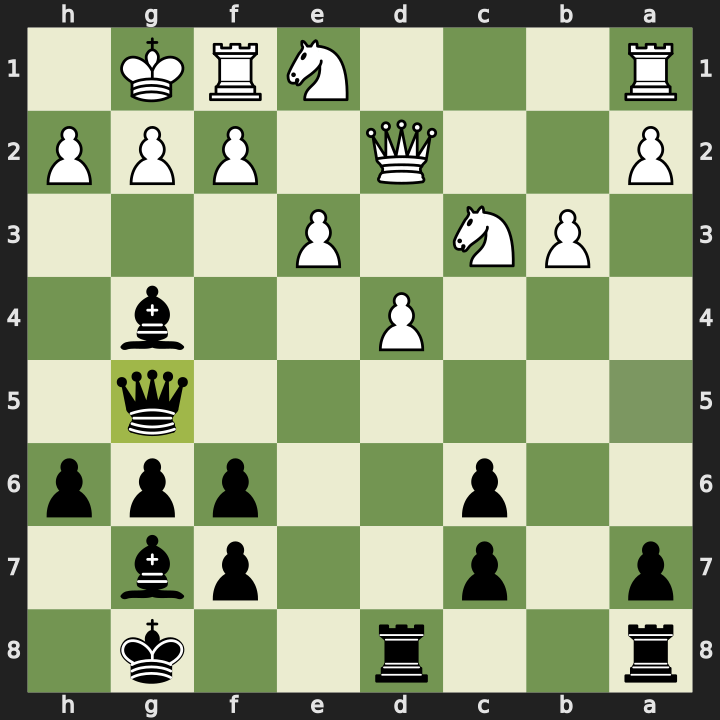
I’ve got my queen and bishop close to the king but it’s fairly well defended with two knights and a queen all nearby, so I’m not quite sure what the plan is other than just to be annoying and maybe pick off a pawn if I can.
The Bishop Blockade (Moves 15-19)
15. Ne4 Qh4 16. f3 Bf5 17. Nc5 Bc8
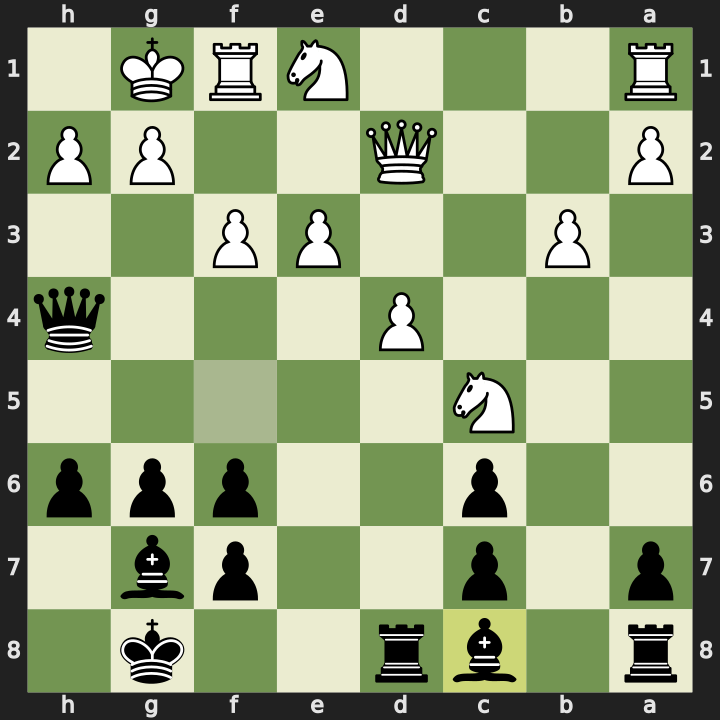
I drop my bishop back to c8, which is a trick I’ve picked up where a bishop two squares away from a knight prevents that knight from making any forward progress. It does block my rook from getting over to the kingside, but I’m happy to not need to worry about the knight for now.
18. Ned3 Rd5 19. Qf2 Rh5 20. Qxh4 Rxh4
My rook on h5 is lined up behind my queen threatening mate in one with Qh2. We exchange queens and I need to get my bishops active. Particularly my dark-squared bishop, which is doing nothing for me.
Trying to Break Out (Moves 21-28)
21. g3 Rh5 22. e4 g5 23. g4 Rh4 24. Kg2 f5
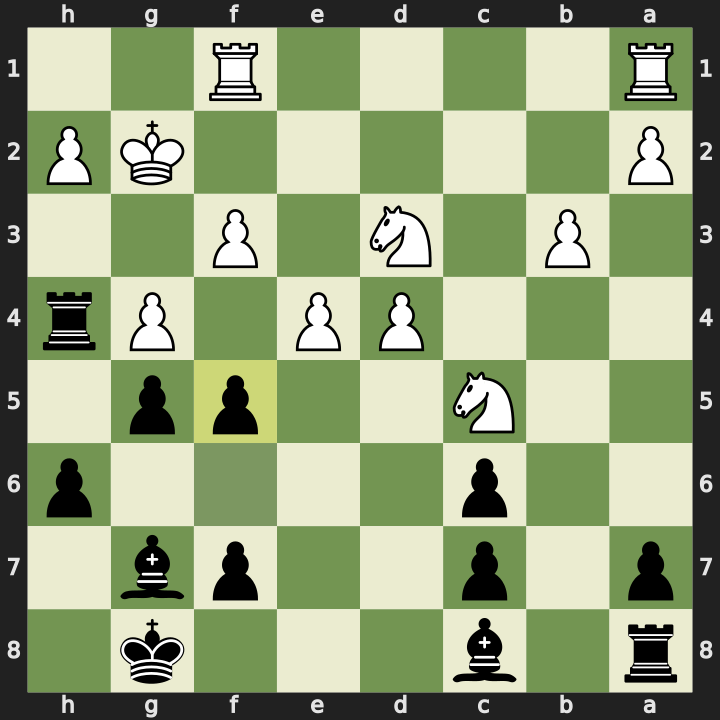
I push the pawns in front of the king hoping to open up a bit of space. My rook on h4 is a little boxed in but it’s still keeping an eye on the h3 square, preventing White from pushing a pawn there.
25. exf5 Bxd4 26. Rad1 Rb8 27. Rfe1 Kf8 28. Re4 Bxc5 29. Nxc5
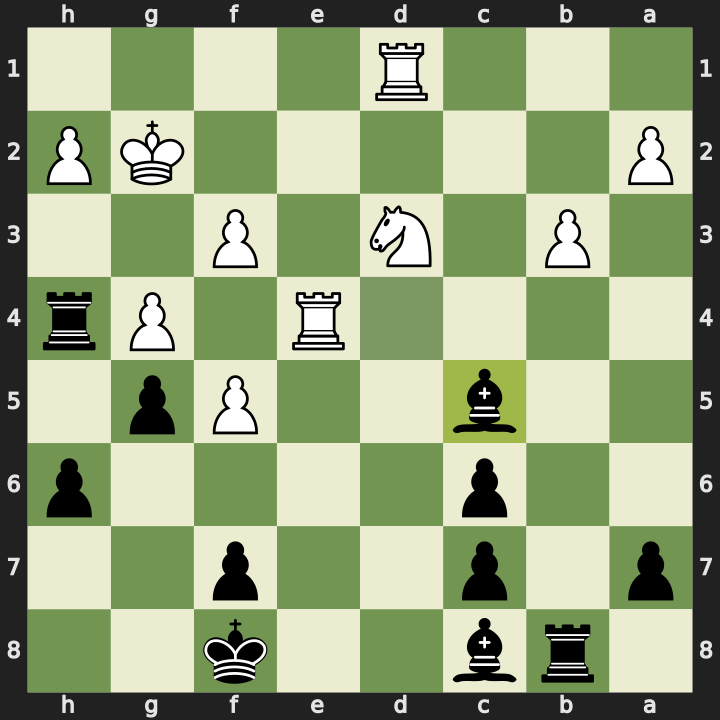
I trade my dark-squared bishop for one of White’s knights. White’s rooks are looking very nice on the e and d files. At this point I’m not super confident that I can win. My rook on h4 isn’t really posing much of a threat, there’s a clear escape path for the White king. My plan is to get the rook on b8 into the game by attacking the knight on c5.
Simplification and the Endgame Race (Moves 29-36)
29…Rb5 30. Na4 Rd5 31. Nc3 Rxd1 32. Nxd1 h5 33. Kg3 hxg4 34. Rxg4 f6 35. Rxh4 gxh4+ 36. Kxh4 Bxf5
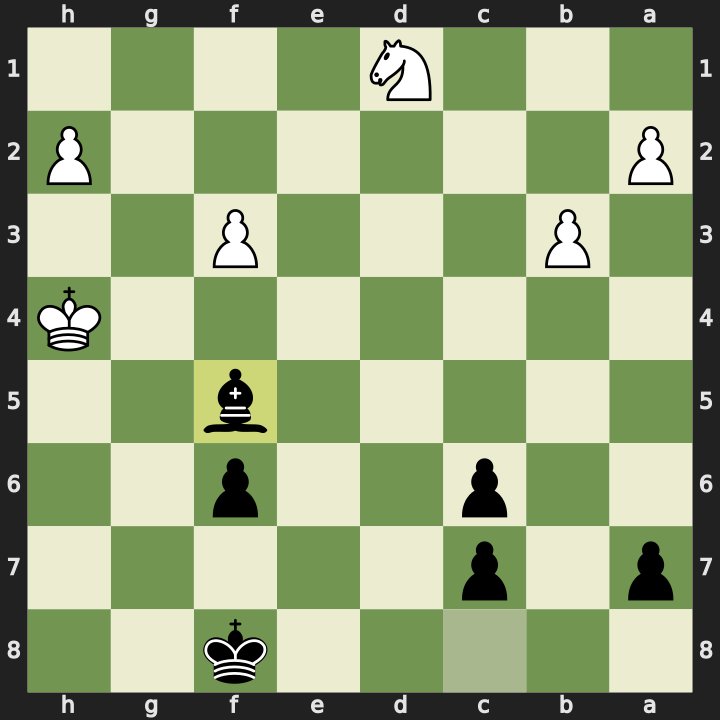
The knight retreats and on move 31 we exchange rooks on d1. White trades pawns and at this stage it’s my light-squared bishop versus White’s knight. Our pieces are on opposite ends of the board and it’ll really come down to who can clear a path to promote a pawn and win.
I see I can pretty quickly grab the pawn on f5, and then the pawns on a2 and b3 are also both on light squares so there’s a chance I can pick off a few of them. One strategy I’ve learned recently is that a passed pawn far away from the opponent’s king is usually a good candidate for promotion.
The Missed Tactic (Moves 37-44)
37. Ne3 Be6 38. Kg3 Ke7 39. h4 Bg8 40. f4 c5 41. Kg4 a5 42. Nf5+ Ke6 43. Nh6 Bh7 44. f5+ Kd5
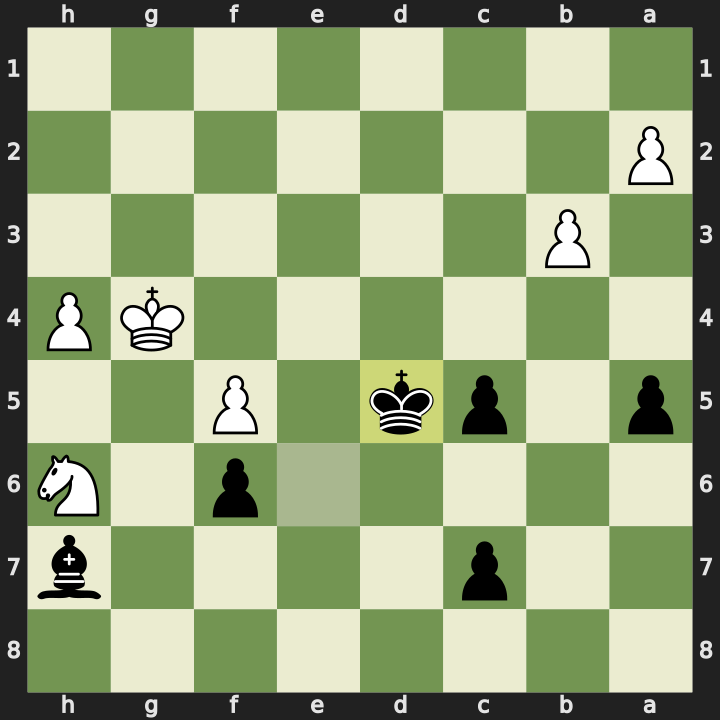
After some manoeuvring I park my bishop on h7 to prevent White’s h-pawn from getting to the promotion square. I can see a path forward using the a-pawn to deflect White’s b-pawn, clearing a path for my c-pawn. I can shepherd it to the back rank with my king and try to keep White’s knight away using my bishop.
This is the critical moment. On move 44 White has a +3.3 advantage even though the material is equal. My opponent could have trapped my bishop on h7 by moving the king away from g4 and then going Ng4 into Nh6. However after missing the tactic, the evaluation swings to 1.9 in my favour. It’s amazing how one missed tactic can totally change the game.
Promotion and Checkmate (Moves 45-60)
45. Kh5 a4 46. bxa4 c4 47. Ng4 Kd4 48. Kh6 Bxf5 49. Nxf6 c3 50. Kg5 Bb1 51. h5 c2 52. h6 c1=Q+
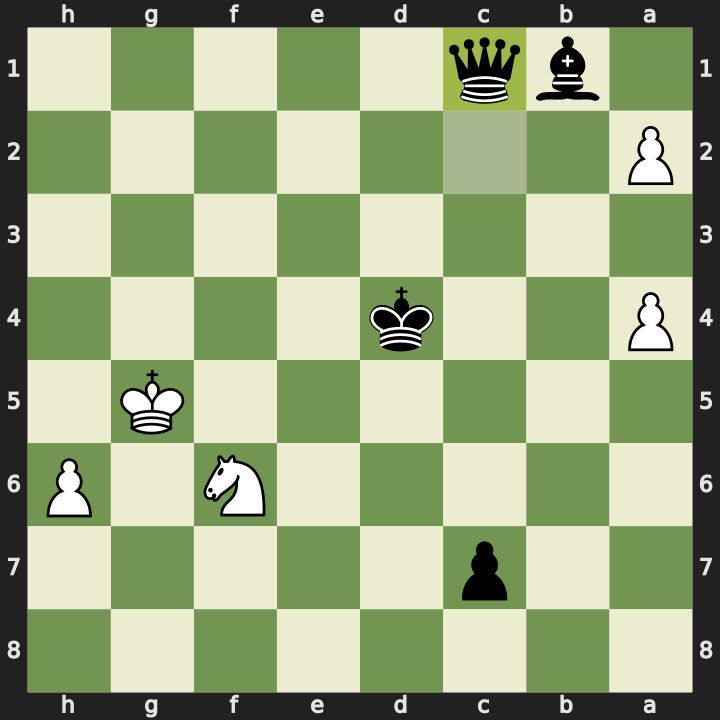
White’s Kh6 really cemented their fate. My bishop can escape and I’ve got a passed pawn three squares away from promotion. I promote before White does and it comes with check. I’ve got my bishop on the adjacent diagonal to my queen. This is looking pretty good for me.
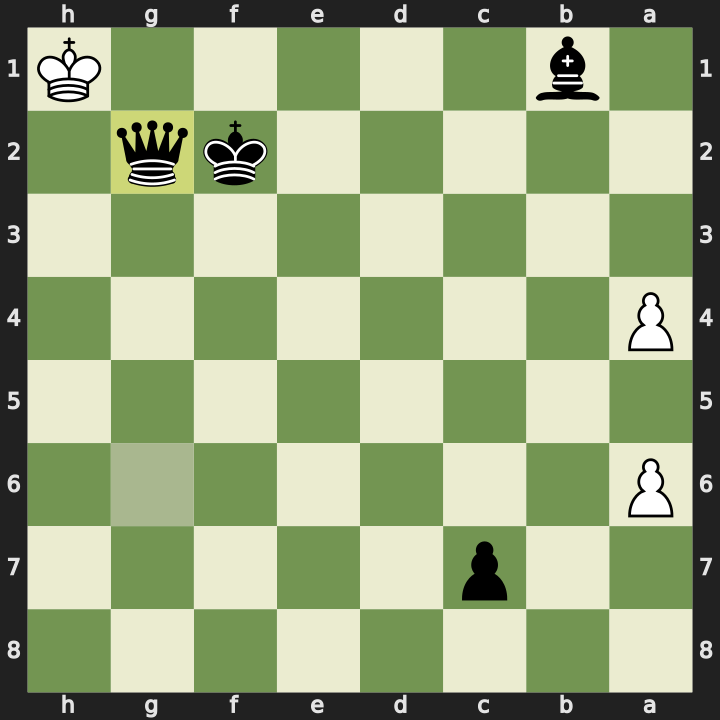
53. Kh5 Qc5+ 54. Kg4 Qf5+ 55. Kg3 Qxf6 56. a5 Qxh6 57. a4 Ke3 58. a6 Qg6+ 59. Kh2 Kf2 60. Kh1 Qg2#
After some checks on move 55 I take White’s knight. White doesn’t resign. There’s still a chance they could promote if I make a serious mistake. But White’s king gets pushed into the corner and I deliver checkmate with king and queen.
Engine Review
78.4% accuracy for me and 72.8% accuracy for my opponent. Game rating 1400 for me and 1000 for my opponent, so apparently I did play more accurately when it counted, even though my opponent was in a better position for a significant portion of the game.
On move 14, Qg5 was a mistake. The engine likes putting pressure on the d4 pawn which is pinned to the queen on d2. Alternatively I could have dropped my bishop back to e6, allowing an f5 pawn push to open up the diagonal of my dark-squared bishop. That would also target d4.
On move 16, Bf5 was a mistake. With precise play White can trap the queen, forcing Black to sacrifice the bishop to let the queen escape. The best move was to drop the bishop back to e6 or even right back to c8.
On move 24, f5 was a mistake. After bringing out the bishop to the centre, White can get a rook onto the eighth rank and cause trouble. It was better for Black to push the h-pawn and free up some space rather than trying to activate the dark-squared bishop.
White’s Kg3 was a mistake as it opens up the path to the rook trade, simplifying the position and losing the advantage. The better move was to push the h-pawn to h3, supporting the pawn chain and keeping the king back on g2.
On move 44, Kd5 was a mistake. White could have trapped my bishop on h7 with Kg4-Ng4-Nh6. At this point White has a +3.3 advantage. After missing the tactic the evaluation swings to -1.9.
White’s Kh6 cemented their fate. The evaluation drops to -5.8 in Black’s favour.
I was really happy with how accurately I played at the end. It’s mate in 24 from move 52 where I promoted, however since White didn’t play perfectly it was mate in 8. The last seven moves were all best move according to the engine, which is a really nice feeling. Since this was a daily game format I wanted to make sure I was playing accurately at the end because I could tell I would win and was keen to get the game wrapped up.
Reflections
What went well:
- Finding a path forward in tricky positions. The daily format gave me plenty of time to really think through the options and avoid blundering. There were some mistakes but no blunders in this game for either player.
- The endgame play. Using the a-pawn to deflect the b-pawn, clearing the way for the c-pawn to promote.
- Accurate play from move 52 onwards, with the last seven moves all scored as best.
What to work on:
- The attack with the queen on the kingside was premature. My pieces weren’t coordinated. I had really awkwardly placed bishops and a rook with no activity at all on a8. Need to consider how many pieces I can actually get into the attack and how many defenders are there before launching in.
- Had my opponent played very accurately they would have won. On move 29 there was a +4 advantage for White even though material was equal. My position was a mess.
Full PGN:
1. d4 Nf6 2. Bg5 h6 3. Bxf6 exf6 4. e3 g6 5. Nf3 Bg7 6. b3 O-O 7. c4 d5 8. cxd5
Qxd5 9. Nc3 Qa5 10. Qd2 Nc6 11. Bb5 Rd8 12. Bxc6 bxc6 13. O-O Bg4 14. Ne1 Qg5
15. Ne4 Qh4 16. f3 Bf5 17. Nc5 Bc8 18. Ned3 Rd5 19. Qf2 Rh5 20. Qxh4 Rxh4 21. g3
Rh5 22. e4 g5 23. g4 Rh4 24. Kg2 f5 25. exf5 Bxd4 26. Rad1 Rb8 27. Rfe1 Kf8 28.
Re4 Bxc5 29. Nxc5 Rb5 30. Na4 Rd5 31. Nc3 Rxd1 32. Nxd1 h5 33. Kg3 hxg4 34. Rxg4
f6 35. Rxh4 gxh4+ 36. Kxh4 Bxf5 37. Ne3 Be6 38. Kg3 Ke7 39. h4 Bg8 40. f4 c5 41.
Kg4 a5 42. Nf5+ Ke6 43. Nh6 Bh7 44. f5+ Kd5 45. Kh5 a4 46. bxa4 c4 47. Ng4 Kd4
48. Kh6 Bxf5 49. Nxf6 c3 50. Kg5 Bb1 51. h5 c2 52. h6 c1=Q+ 53. Kh5 Qc5+ 54. Kg4
Qf5+ 55. Kg3 Qxf6 56. a5 Qxh6 57. a4 Ke3 58. a6 Qg6+ 59. Kh2 Kf2 60. Kh1 Qg2#
0-1