Win vs Darth0ma (1049)
| Opening: Colle-Zukertort (D02) | Result: 1-0 (Checkmate) | Time Control: 1 day/move (Daily) | Rated |
Game Overview
A daily game where I got to play as White with my current favourite opening, the Colle-Zukertort. Black played very aggressively in the opening and I didn’t really punish their mistakes, but it worked out fine because I eventually found a devastating knight fork on f7, won the exchange, and converted a huge material advantage into a checkmate.
The Colle-Zukertort and the Bg4 Pin (Moves 1-7)
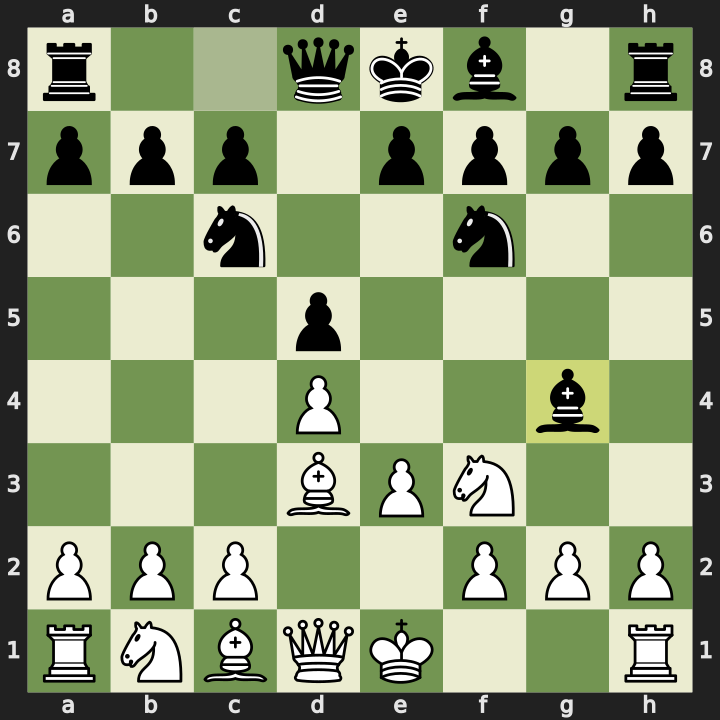
1. d4 d5 2. Nf3 Nc6 3. e3 Nf6 4. Bd3 Bg4 5. O-O e6 6. Nbd2 Bd6 7. h3 Bh5
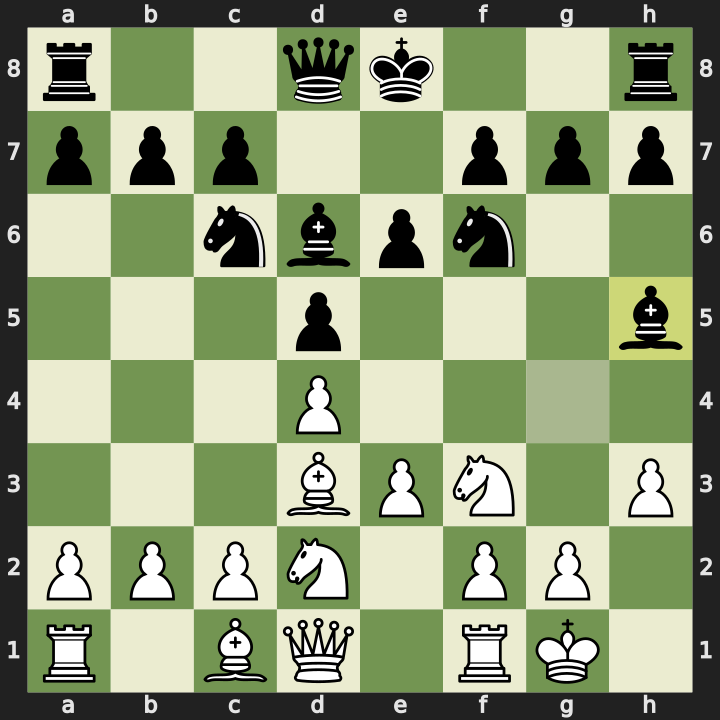
I started with the Colle-Zukertort setup but didn’t quite complete it because Black had developed a bishop to g4 pinning my knight on f3. I played h3 to kick it away. The bishop dropped back to h5, maintaining the pin on my knight, so I broke that pin by dropping my light-squared bishop back to e2. This is something my chess coach had pointed out to me: while the bishop is very active on d3, sometimes it just needs to be on e2 to deal with pins.
Black’s Aggressive Play (Moves 8-12)
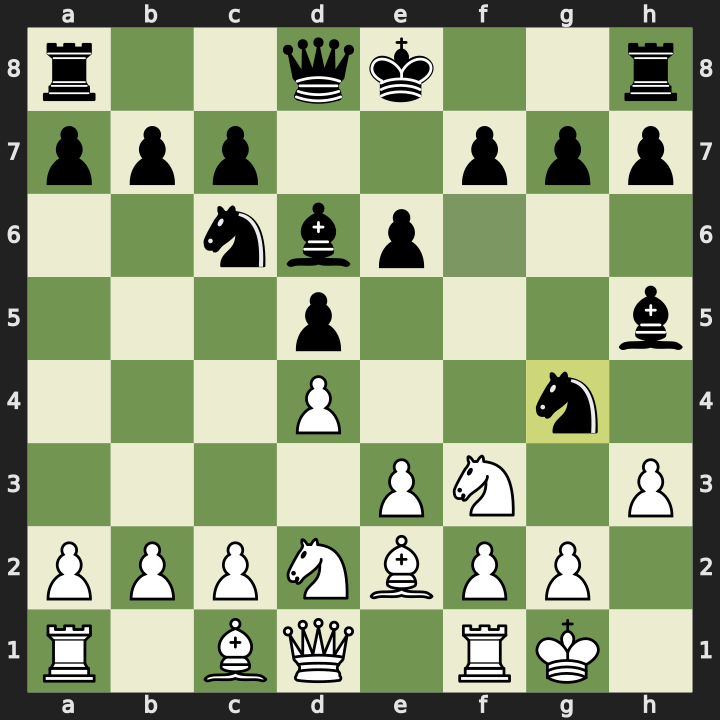
8. Be2 Ng4 9. Ne5 Ngxe5 10. Bxh5 g5 11. Nf3 g4 12. Nxe5 gxh3
Black played an interesting move with Ng4, putting the knight directly where I could have taken it with hxg4. For some reason I didn’t like the look of taking the knight and leaving the h-file open. Or maybe I just didn’t consider it at all. Sometimes I can be blind to my opponent’s blunders. Instead I played Ne5 which is a very thematic move for this opening. Black took my knight with theirs, which allowed my bishop to capture their now-undefended bishop on h5.
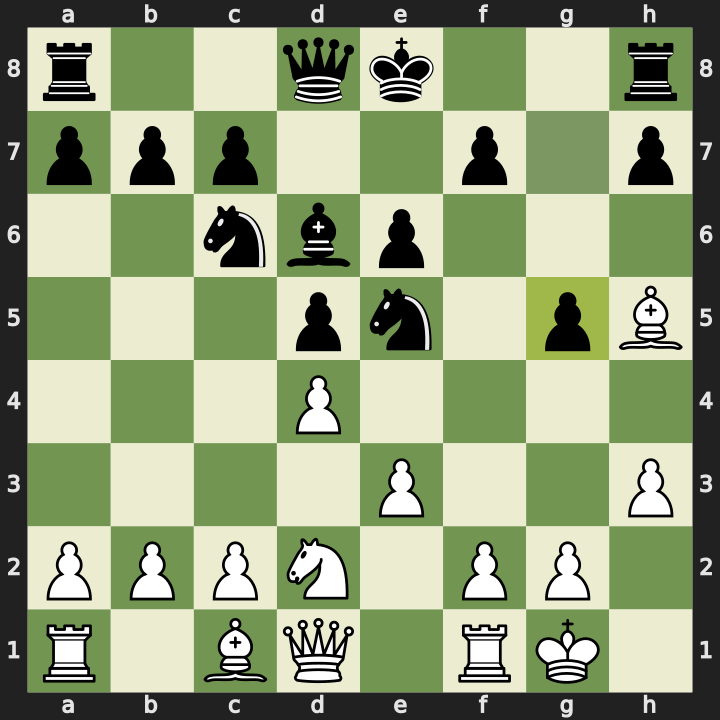
Interestingly, Black didn’t move their knight out of danger. I could have taken it with dxe5. Instead they went on an aggressive pawn push with g5, trying to open up my king. Again I think I played an inaccuracy here. Rather than just taking the knight with the pawn, I kept my pawns in place and developed my own knight to f3, inviting Black to trade. Rather than trade knights, Black pushed their pawn to g4 threatening my pawn on h3 and looking to open up my king.
The Fork on f7 (Moves 13-14)
13. Nxf7 Qh4 14. Nxh8+ Kd7
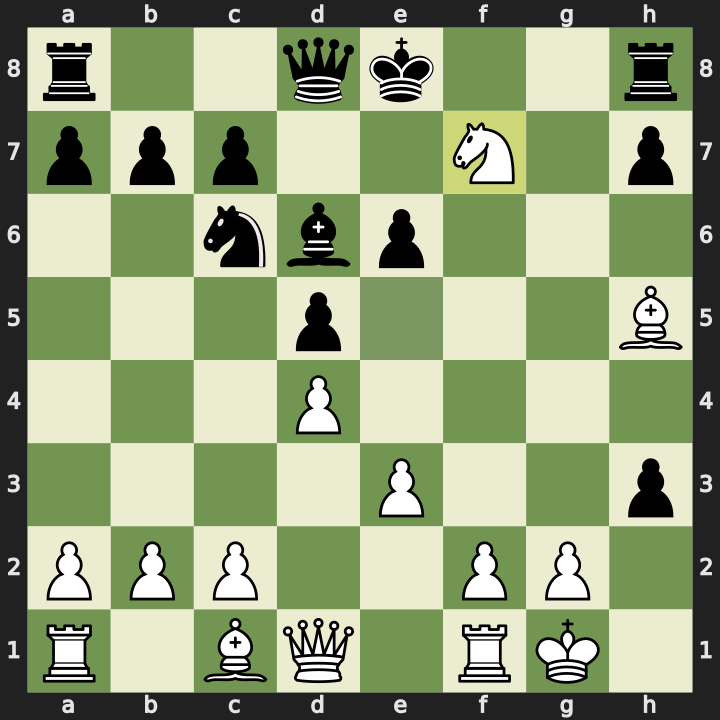
Black failed to see a very powerful fork was available to me. Nxf7 attacks the queen, the rook, and the bishop all at once, and it can’t be taken by the king thanks to the support of the bishop on h5. Black saved the queen with Qh4. Perhaps they had predicted the fork because it was starting to look a little dicey with Black’s queen, bishop, and pawn all close to my king.
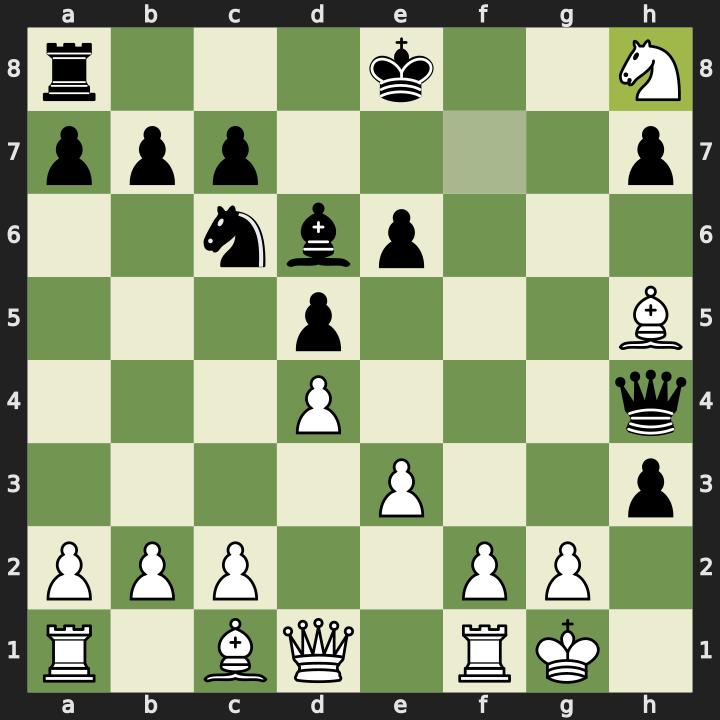
I thought I’d take the rook. I’ll be up eight points in material and it comes with check, so that can’t be bad.
Calming Things Down (Moves 15-18)
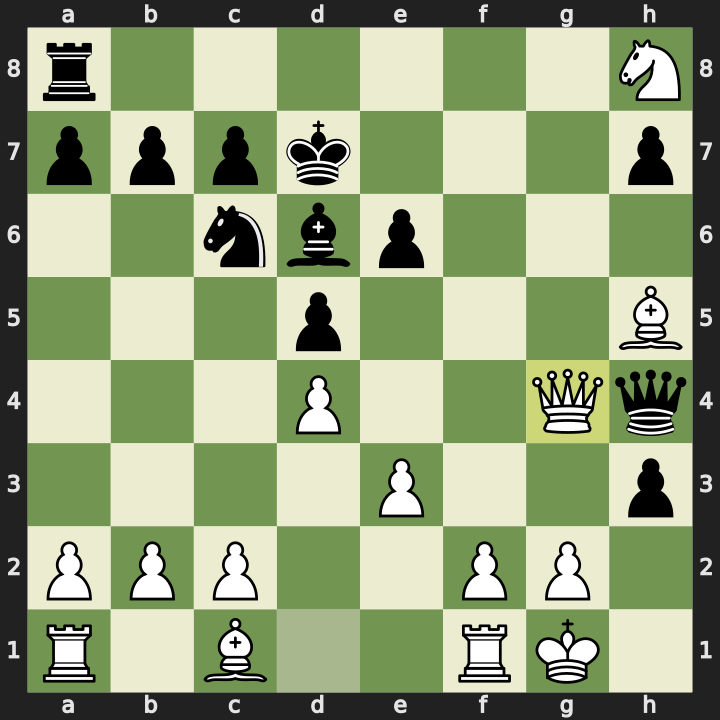
15. Qg4 Qf6 16. Qxh3 Rxh8 17. Bd2 Nd8
Then I had a tough decision to make after Black moved their king. Would I try and save the knight or should I be satisfied with being up five points for a rook instead of eight for rook and knight? I decided the attack on my king was too dangerous and I was already up so much material that the best move was Qg4, inviting a queen trade and just calming things down.
Black was down material and had no intention of trading queens, so they retreated their queen back to f6. That allowed me to take out the pawn that had marched down the board to h3. My king was feeling a bit safer now. I still needed to activate my rooks and get my dark-squared bishop into the game. So far it hadn’t even been developed off its starting square and was blocked in by the pawn on e3.
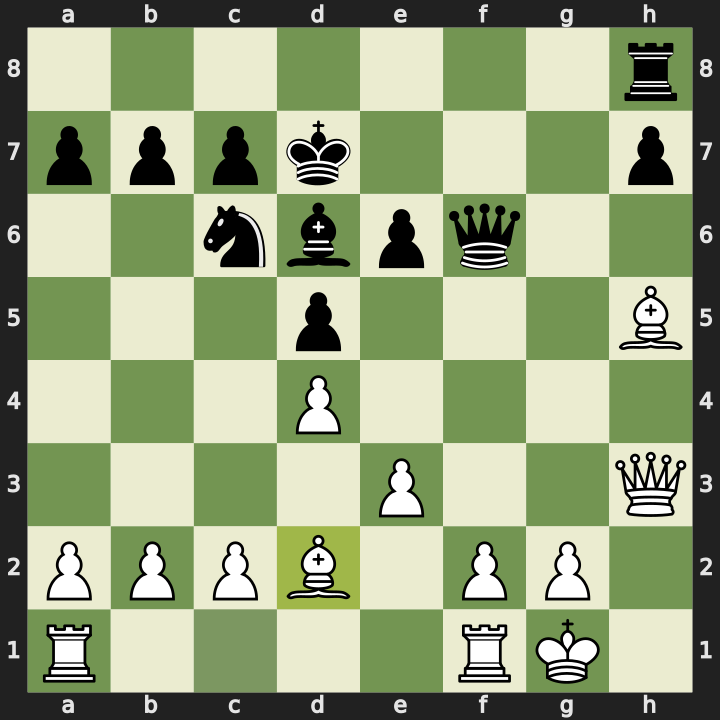
I brought the bishop up to d2. At first this doesn’t look like a very powerful move, but one thing my chess coach had reminded me is that sometimes developing bishops don’t need to immediately be attacking a piece. We need to think about their long-term, long-range x-ray capabilities, and also just getting them off the back rank allows the rooks to connect and get into the game. So d2 it was. I would eventually push e4 at the right time and open up a diagonal for the dark-squared bishop.
Winning More Material (Moves 18-21)
18. Rae1 Nf7 19. e4 Qxd4 20. Bxf7 dxe4 21. Qxe6+ Kd8
My plan was to put my rook on e1, push the e-pawn to break up the centre, then use my material advantage to trade down. I’d be up a rook in an endgame with an extra pawn. Shouldn’t be too hard to convert.
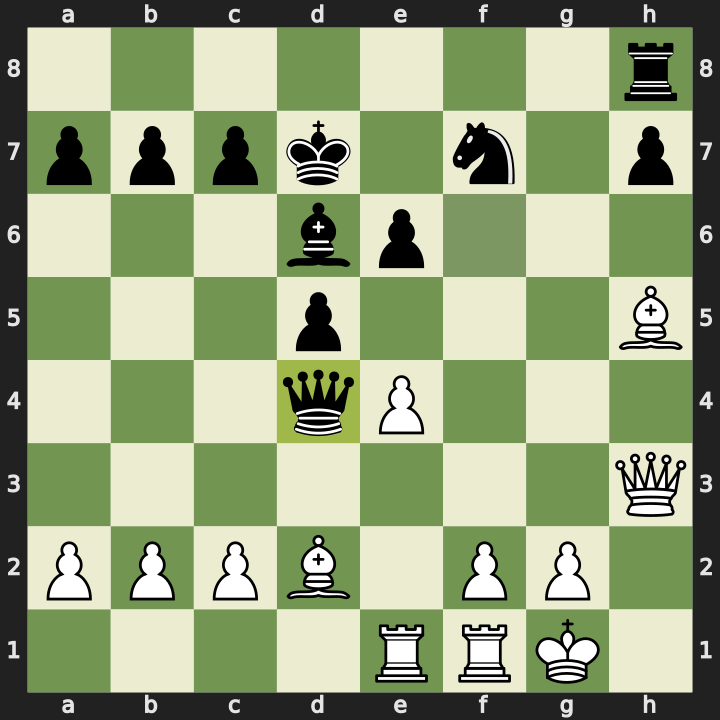
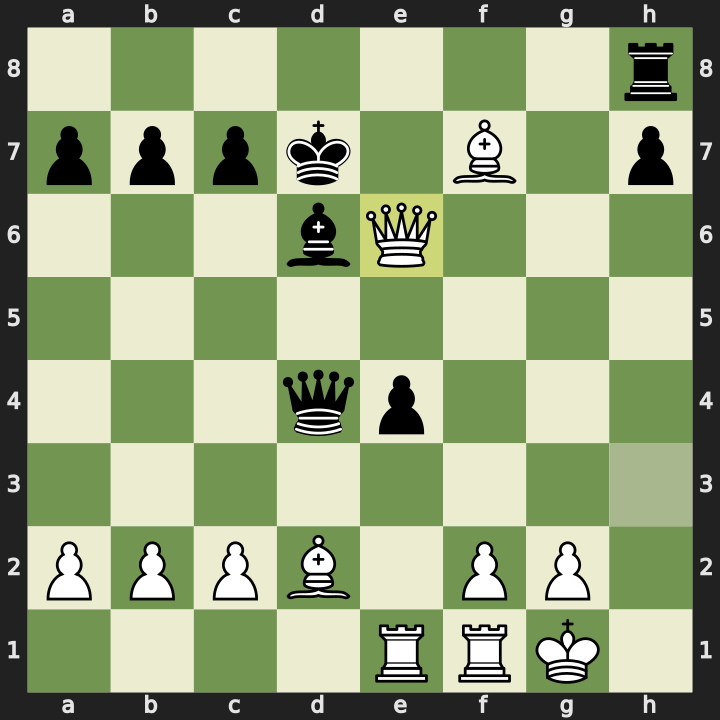
Black then played a surprising move, Qxd4, abandoning the defence of the knight they’d just spent three moves manoeuvring around the back of their king to f7. Another free piece. I took it with my bishop. Black played another interesting move, taking my e4 pawn with their pawn rather than grabbing the dark-squared bishop that was undefended on d2. They left the king on the same diagonal as my queen and I could safely take the pawn on e6 for a close-range check.
The X-Ray and Checkmate (Moves 22-28)
22. Bc3 Be5 23. Bxd4 Bxd4
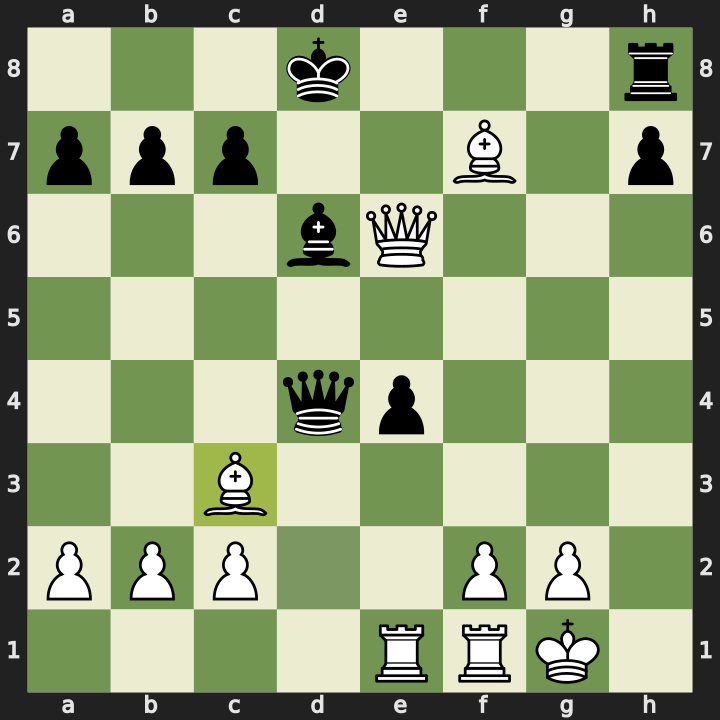
The king retreated back to the eighth rank and I saw an opportunity to x-ray attack the rook on h8 through the queen on d4 by moving my dark-squared bishop to c3. It turns out there was an even better move that would lead to checkmate: Bg5 with check. Black can first block with their queen and then with their bishop, but in each case my bishop takes the blocking piece and it’s checkmate. I probably should have found that. It wasn’t a particularly tricky line. It was just a check that I overlooked. I need to remember to check for checks before other material tactics.
Black didn’t save the queen this time, instead opting to give it up and save the rook by bringing a bishop to e5. I grabbed the queen. Black took back with the bishop. An overwhelming 14-point material advantage now. Just a matter of finding the checkmate.
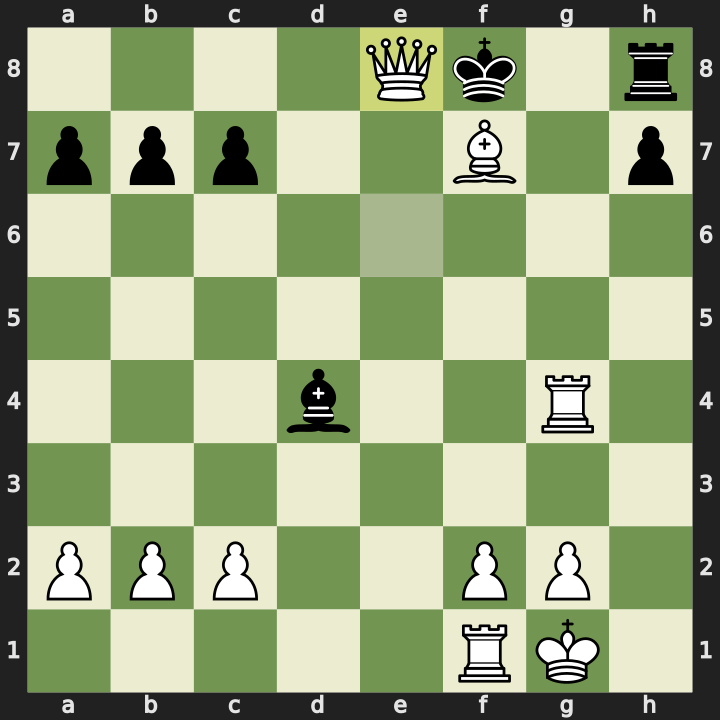
24. Qd5+ Ke7 25. Rxe4+ Kf6 26. Qe6+ Kg7 27. Rg4+ Kf8 28. Qe8#
I had a pretty good plan: queen to the d-file to either push the king behind its pawns on the a, b, and c files and possibly find a back-rank checkmate, or over to the e-file where I could take the pawn on e4 with check, having a queen, rook, and bishop all aimed at the king. After a few more checks the king was pushed back to f8 and I delivered checkmate with the queen on e8.
Engine Review
A pretty good result from the engine analysis: 79.9% accuracy for me and only 64.1% accuracy for my opponent. No blunders, no mistakes, and no inaccuracies on my side, with my opponent making three blunders, one mistake, and one inaccuracy. However, on my side there were apparently four misses where I didn’t effectively punish the blunders.
The engine thinks 8…Ng4 in the opening was a blunder where hxg4 is the correct response. That would have left me up a piece and a +3.5 evaluation advantage.
10…g5 is also scored as a blunder, and me failing to take the knight with dxe5 is scored as a miss. The evaluation keeps jumping up and down from +3.8 when there’s a piece hanging to just +0.9 when there’s a trade available instead. Another blunder for Black when they advanced their pawn, and this time I played the correct response Nxe5.
Interestingly, as Black plays gxh3, the evaluation continues in White’s favour. Now +4.3 with the fork available. Apparently taking the rook on h8 is not the best move here. The best is actually Nxd6, taking the bishop. However the follow-up is a little tricky because if you try to save the knight by hopping it back to f7 on the next turn, it’s a blunder. Black is able to execute their attack taking the pawn on g2 and completely opening things up for their rook and queen to attack the king. I’m pretty happy that I went with just grabbing the rook.
One thing I wasn’t sure about during the game is whether to try to provoke a queen trade after taking the rook or save it. Happy to see that Qg4 inviting the trade was the best move, and similarly taking the pawn on h3 after Black rejects the trade is also the best move. It’s now a +5 evaluation for White representing the material advantage.
I missed mate in three when Black played Kd8. It was fairly simple too. All I had to do was bring my dark-squared bishop up to g5 with check. Black can first block with their queen and then with their bishop, but in each case my bishop takes the blocking piece and it’s checkmate. I probably should have found that. It wasn’t a particularly tricky line.
There was actually another mate in three a move later, but that one was a little more subtle. It required moving the rook to e1 pinning the bishop, then queen over to d6, and bishop to e6 to deliver checkmate. At that point I knew I was winning and could see a path to checkmate anyway. I just didn’t find the shortest, most direct way to get there.
The remaining moves are all clean and it’s checkmate on move 28.
Reflections
What went well:
- Neutralised Black’s attack on my king and saw the attacking chances when it really mattered: getting the fork on f7, seeing the opportunity to take Black’s queen, calculating for checkmate towards the end of the game.
- Good calculation in the middlegame and endgame phases.
- The Bd2 development move, thinking about long-term bishop diagonals rather than immediate attacks.
What to work on:
- I was more focused on my own moves and blind to my opponent’s blunders in the opening. I need to slow down a little further and ask “has my opponent just blundered something?” every time they make a move. Sometimes it is a tactical sacrifice and other times it really is just a blunder.
- Missed a mate in three. I need to remember to check for checks before other material tactics. That’s a habit worth drilling.
Full PGN:
1. d4 d5 2. Nf3 Nc6 3. e3 Nf6 4. Bd3 Bg4 5. O-O e6 6. Nbd2 Bd6 7. h3 Bh5 8. Be2
Ng4 9. Ne5 Ngxe5 10. Bxh5 g5 11. Nf3 g4 12. Nxe5 gxh3 13. Nxf7 Qh4 14. Nxh8+ Kd7
15. Qg4 Qf6 16. Qxh3 Rxh8 17. Bd2 Nd8 18. Rae1 Nf7 19. e4 Qxd4 20. Bxf7 dxe4 21.
Qxe6+ Kd8 22. Bc3 Be5 23. Bxd4 Bxd4 24. Qd5+ Ke7 25. Rxe4+ Kf6 26. Qe6+ Kg7 27.
Rg4+ Kf8 28. Qe8# 1-0