Win vs keysamsi (750)
| Opening: King’s Indian Defence | Result: 0-1 (Checkmate) | Time Control: 10 min Rapid | Unrated |
Game Overview
It had been a couple of weeks since my last game because real life got in the way. I sold my house at auction, which was incredibly stressful and exciting, and then had to very quickly secure a new property to buy. Both went well, but there was no way I could play any good chess during all of that. My puzzle rating dropped from 2000 to 1900 over the course of a week. Once things settled down I got the puzzle rating back up over 2000 and decided it was time to play some games again. This was an unrated game to ease back in, and I’m very glad I played it. A solid, patient game where I traded queens early, ground out a positional advantage on the queenside, and found a nice knight fork to win the game.
Opening and the Queen Trade (Moves 1-8)
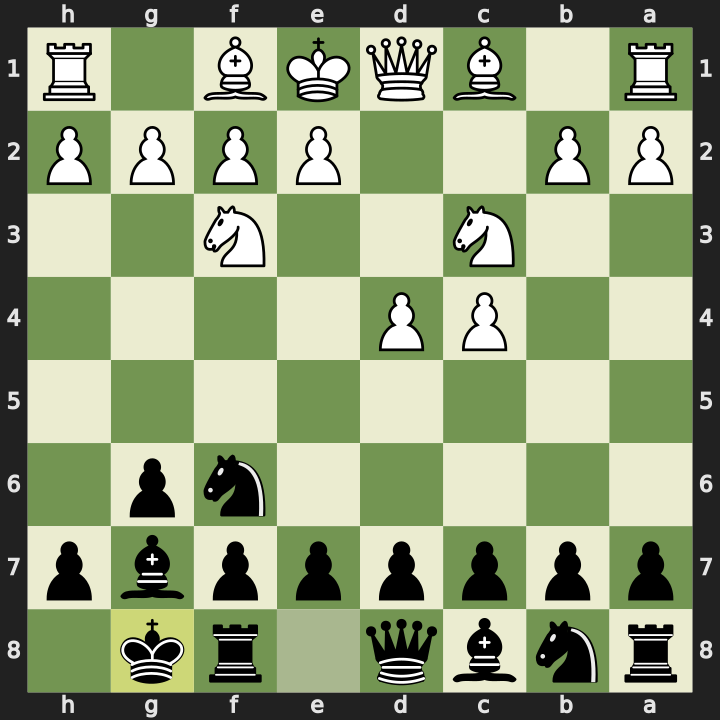
1. d4 Nf6 2. c4 g6 3. Nf3 Bg7 4. Nc3 O-O 5. e4 d6 6. Be2 e5
The first few moves were pretty standard. White went for a Queen’s Gambit style setup which pairs nicely with my favourite opening as Black, the King’s Indian Defence. Nothing too aggressive coming from White. I fianchettoed my bishop, castled, and waited for the right time to play the thematic e5 move.
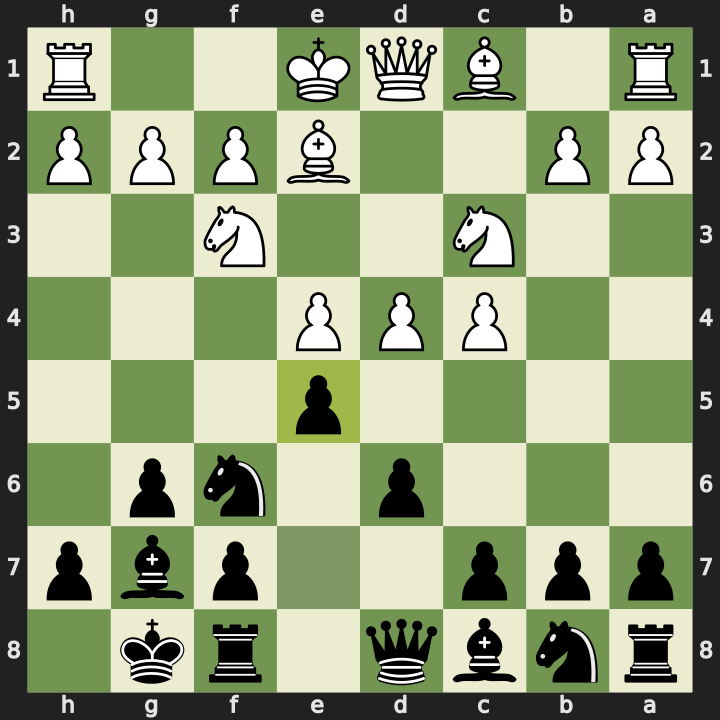
I played e5 on move 6. White had taken the big centre with pawns on e4, d4, and c4. I did consider first playing Nc6 to provoke a more closed position, which I find even more fun to play, but I wasn’t sure where I would move my knight after d5. I thought let’s not get too tricky on this first game back. Just play an exchange variation where we trade pawns in the centre and usually trade queens, then focus on playing accurately and waiting for my opponent to make a mistake.
7. dxe5 dxe5 8. Qxd8 Rxd8
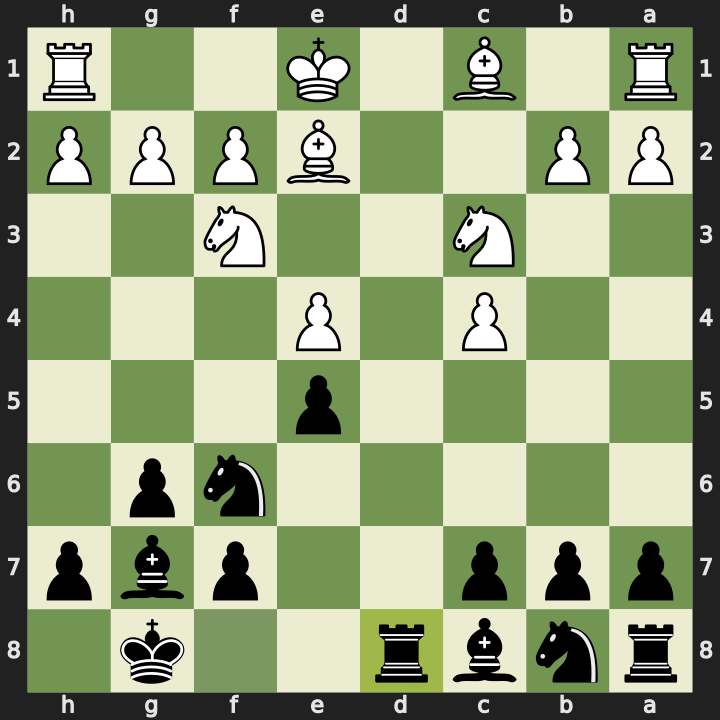
White was more than happy to trade queens. I think there is technically a way to play this for White that leads to a very bad position for Black, but it requires getting the king castled and taking Black’s second rook before Black has a chance to protect the d8 square. White wasn’t quite ready for that this time around because they’d developed their knights and pushed pawns, so it was a pretty calm position once the queens were traded.
Double Fianchetto and the Pin (Moves 9-13)
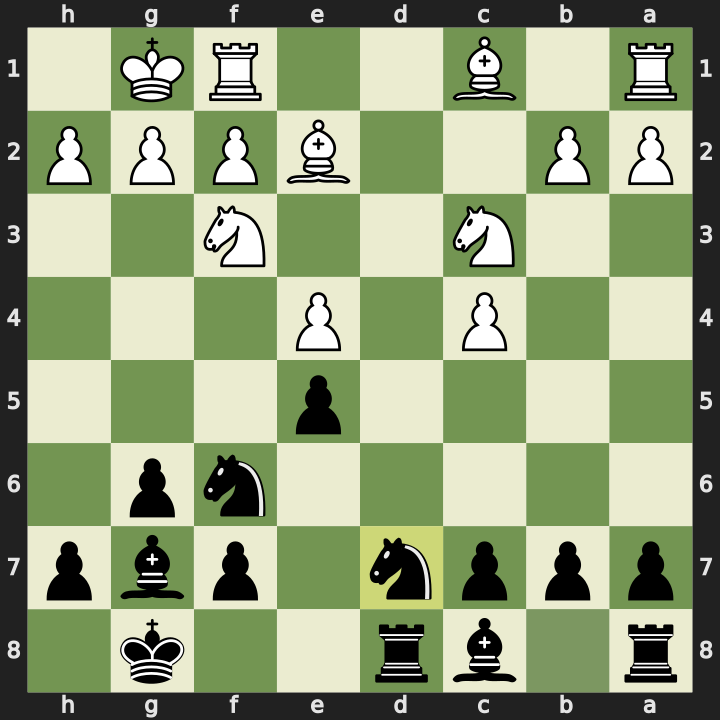
9. O-O Nbd7 10. Rd1 b6 11. Bg5 Bb7 12. h3 Nc5 13. Nxe5 Rxd1+
I brought my knight into d7 to give some extra defence to my knight on f6 and my pawn on e5, realising that this does self-pin my knight to my rook once White’s rook comes into d1. But I could see an opportunity to play a double fianchetto setup which would connect my rooks and give me a pretty solid defensive position.
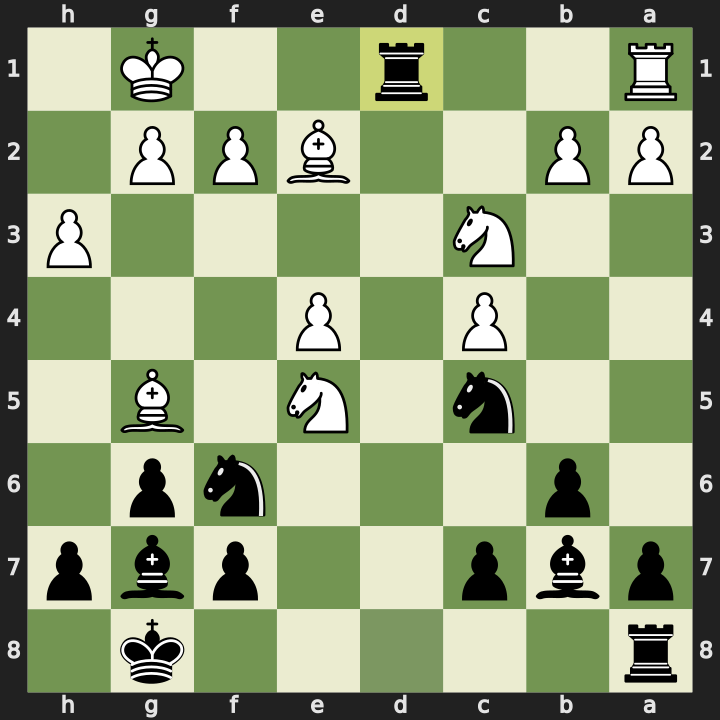
White exploited the pin on my f6 knight by taking on e5. Normally the move here would be to take the pawn on e4 with a discovered attack on the knight that’s currently on e5, but I couldn’t play that move because my knight on f6 was pinned by the bishop and I didn’t want to lose my rook on d8. So I decided to trade the rook first. That way I can’t lose it, and take it from there.
Trading Down (Moves 14-18)
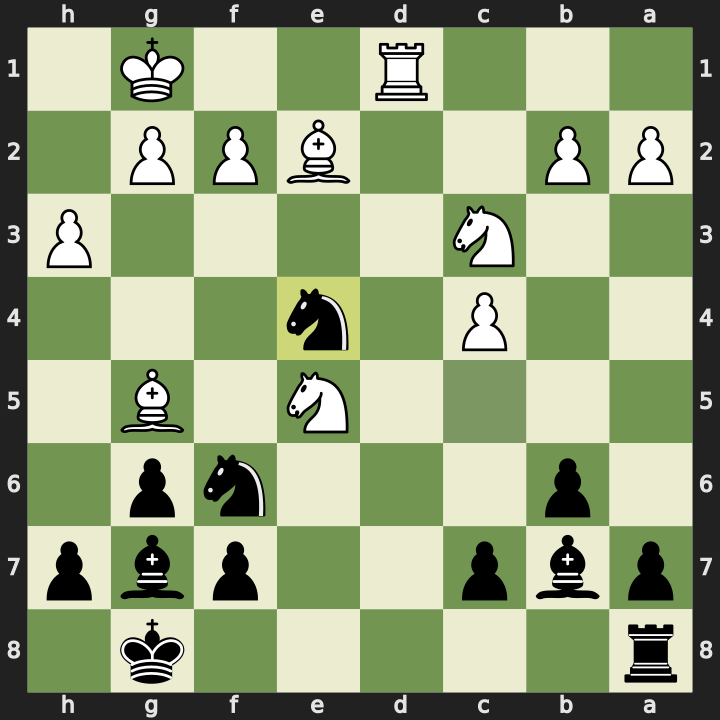
14. Rxd1 Ncxe4 15. Bf3 h6 16. Bf4 Nxc3 17. bxc3 Bxf3 18. Nxf3 Ne4
I grabbed the pawn on e4 with my knight which had two defenders, so it was feeling pretty comfortable. White pinned it to the bishop on b7, so while the bishop was doing a good job defending the knight, the knight couldn’t actually make any moves. As soon as I moved it, White’s bishop could take Black’s bishop. Since I was playing fairly defensively I didn’t mind trading pieces, trying to win a pawn here or there and see if I could win through a promotion. My double fianchetto was looking pretty good. I just had to watch out for White’s knights. I can be susceptible to walking into forks.
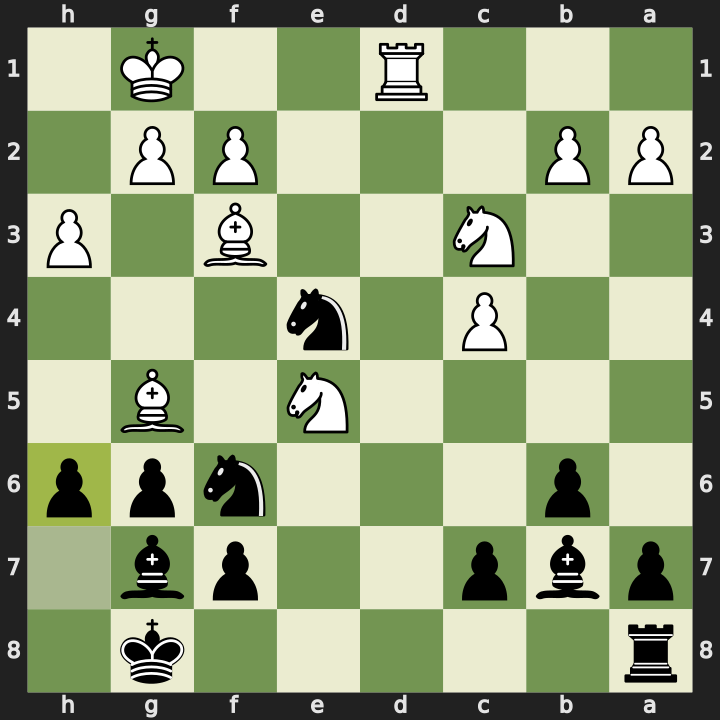
I decided it was time to kick out the bishop parked on g5. It could either take my knight or move away. The bishop moved away and I traded knights on c3. White had to take back with the pawn, giving them doubled pawns.
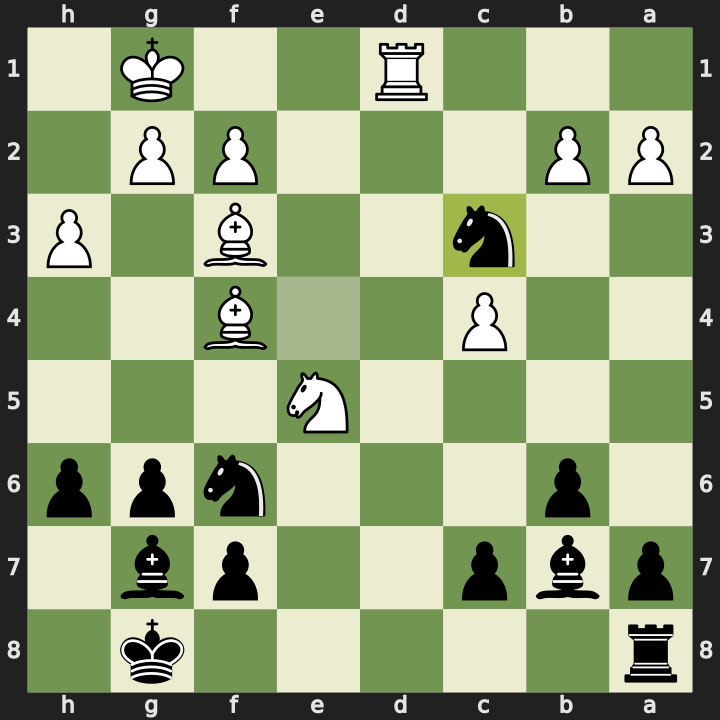
White didn’t have time to take my bishop on b7 because that knight also attacked White’s rook on d1. I was very happy to find this move. It neutralised the threat of the pin on my bishop and traded pieces. The doubled pawns set me up with a slight advantage over on the queenside to perhaps get a promotion.
Rook and Knight Endgame (Moves 19-28)
19. Bxc7 Rc8 20. Be5 Bxe5 21. Nxe5 Nxc3
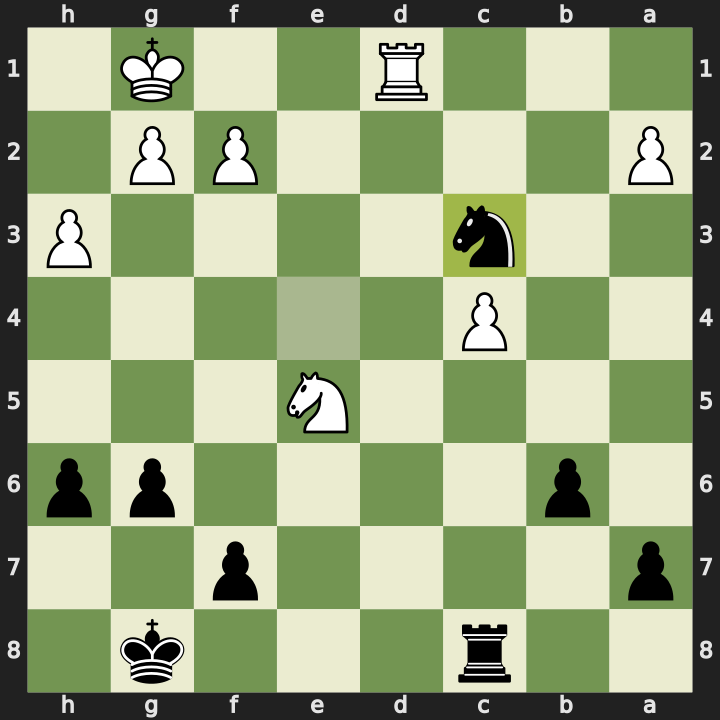
A couple more trades. Material was plus one for my opponent after they grabbed the pawn on c7, but I had my rook lined up against the doubled pawns on the c-file thinking I’d be able to grab at least one of them and clear the path for my b-pawn. We exchanged bishops and now it was a rook and a knight each.
22. Rd2 a6 23. f3 b5 24. Rc2 b4 25. Nd3 a5 26. Ne5 a4 27. Kf2 f6 28. Nxg6 Rxc4
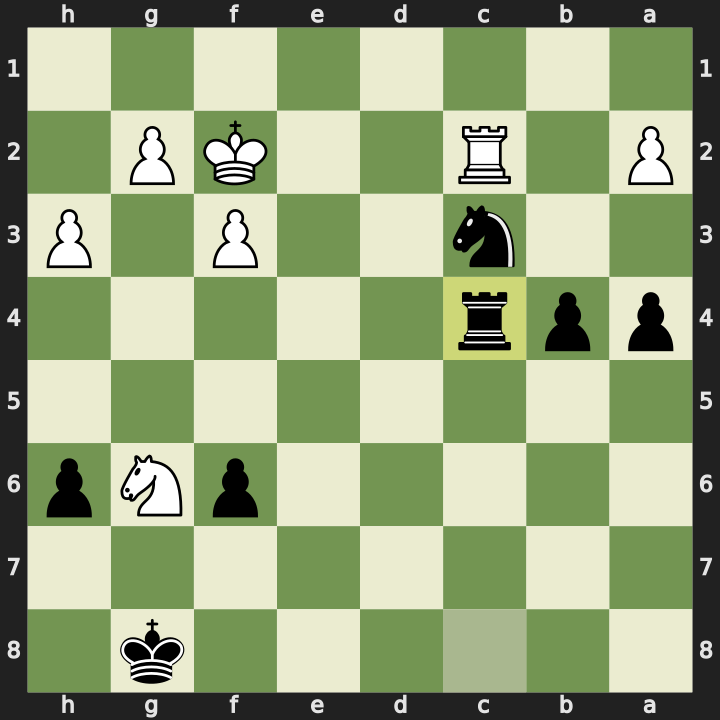
I started marching my pawns up the board with White’s rook lined up to attack my knight and defend its pawn. Should I move my knight out of the way? I’ve been practising in puzzles how to defend by attacking. Rather than move my knight away I saw I could just keep advancing my pawns, which defended my knight and put them a step closer to promotion. I’m glad that I’m out of the habit of immediately retreating my pieces as soon as there’s a threat.
White took on g6 allowing me to bring my rook up to c4 and grab the pawn. I had a pretty clear passed pawn on the b-file. I just needed to get to the first rank.
The Fork (Moves 29-32)
29. g4 b3 30. axb3 axb3 31. Rb2 Nd1+
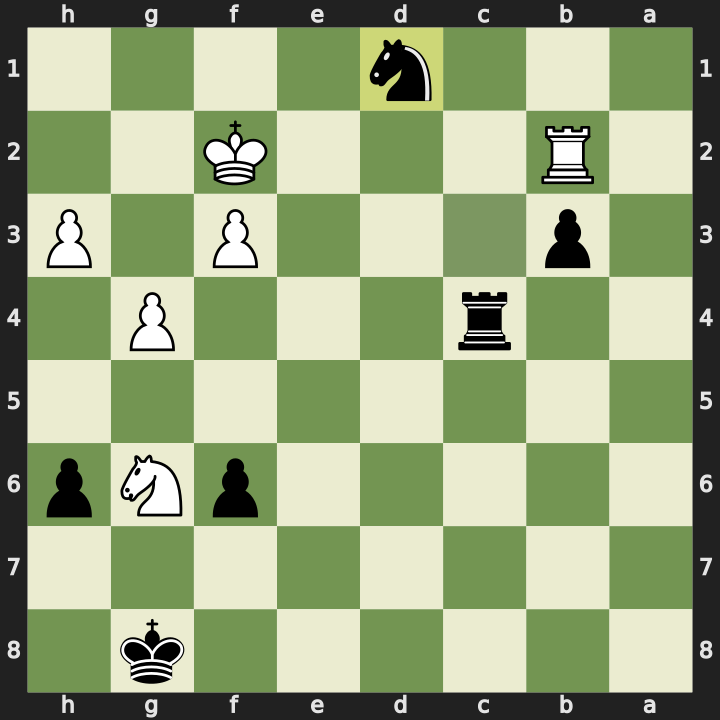
On move 31 White made a blunder, moving their rook to b2 which allowed me to fork with check and win the rook for free. I was very happy to see this move. I spotted it almost immediately with the rook and king on the same rank and a knight nearby. My puzzle training is paying off seeing these tactics.
32. Kg3 Nxb2
Promotion and Checkmate (Moves 33-42)
33. Ne7+ Kf7 34. Nf5 Ke6 35. Nxh6 Nd3 36. Nf5 b2 37. h4 b1=Q
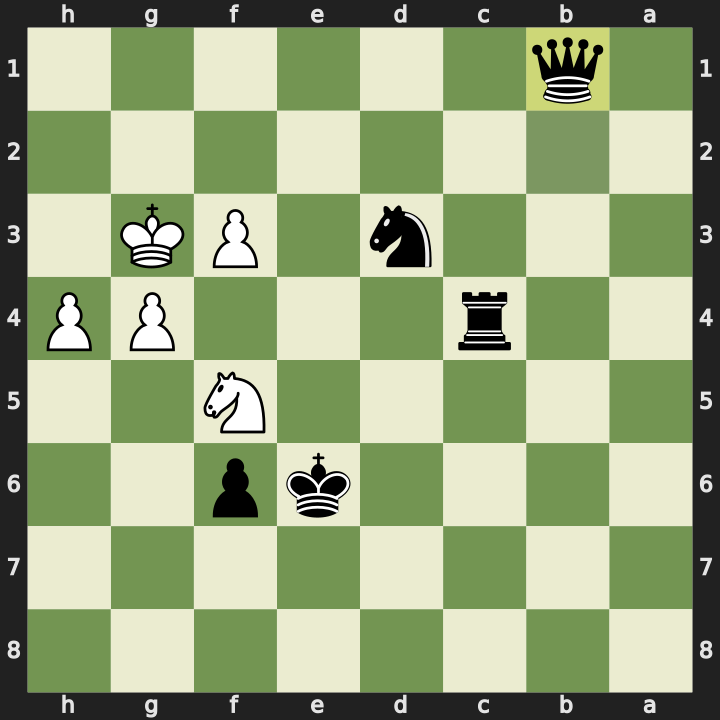
White threw in some checks with their knight, I suppose hoping to promote the h-pawn and maybe win back the rook. But I was paying attention and my b-pawn marched to the first rank and promoted. An extra queen and rook against a lone knight. From here it was about finding the checkmate.
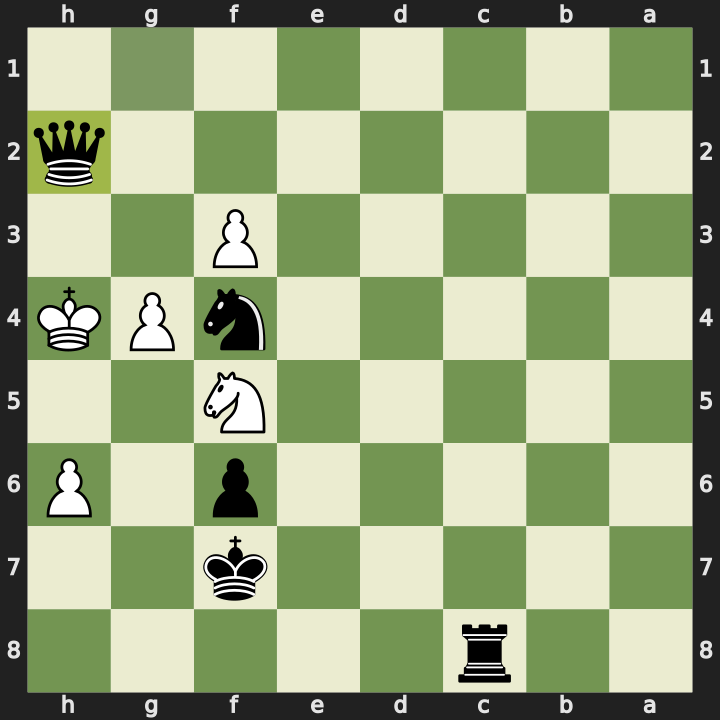
38. h5 Qg1+ 39. Kh4 Nf4 40. h6 Rc8 41. Ng7+ Kf7 42. Nf5 Qh2#
On move 39 I had my queen on g1 and brought my knight into f4. The king was looking pretty cornered on h4, surrounded by its own pawns. I missed that there was actually a checkmate here with Qh2. I thought I might have to bring my rook in from below, but I was pretty convinced that everything was winning. White managed to delay a little longer throwing a check with their knight, but on move 42 I found the checkmate.
Engine Review
Really happy to see a 90% accuracy for me and 81.3% accuracy for my opponent, with the game rating at 1500 for me and 1400 for my opponent. According to the engine I made no blunders, while White made two mistakes that cost them the game.
White’s first mistake was on move 26, Ne5, and apparently I missed the opportunity to punish it. I pushed the a4 pawn, more concerned with promoting. Stockfish likes bringing the rook up to c5 to attack the knight, but then the follow-up is simply to defend it with a pawn, so I don’t quite see where that line is going. I was pretty happy with the move I played.
White’s next mistake was abandoning the defence of their pawn on c4 and taking on g6 instead. My move Rxc4 was the best response.
Interestingly the move I thought was a blunder, Rb2, is only considered an inaccuracy by the engine. I guess at this point in the game the engine is so confident in Black’s position that it’s too late to blunder because it’s already lost. It’s fascinating because material is equal but the power of a passed pawn with two pieces protecting it is worth 3.7 points in evaluation.
A couple of inaccuracies from me towards the end. There was actually mate in one on move 39. White’s king was boxed in by its own pawns and its only escape was also guarded by my pawn, so the Qh2 move was sitting there ready to go three moves earlier.
Reflections
What went well:
- Accuracy. The only thing the engine complained about for me was not getting a checkmate a bit sooner. That’s a fantastic result.
- Not rushing or panicking. Just playing solid and waiting for the opponent to make a mistake.
- Time management was pretty good. The game ended with me having 30 seconds less on the clock than my opponent, but the time was well spent on the right moves.
- Puzzle training paying off. Spotting the knight fork almost immediately.
What to work on:
- Look into the opening again and see if there’s a way to keep the queens on the board and play more of an attacking style rather than a defensive setup. A really good player might not have made the same mistake, and the game could have ended as a draw rather than a win. Finding a way to grab the initiative and play more aggressively would be good.
Full PGN:
1. d4 Nf6 2. c4 g6 3. Nf3 Bg7 4. Nc3 O-O 5. e4 d6 6. Be2 e5 7. dxe5 dxe5 8. Qxd8
Rxd8 9. O-O Nbd7 10. Rd1 b6 11. Bg5 Bb7 12. h3 Nc5 13. Nxe5 Rxd1+ 14. Rxd1 Ncxe4
15. Bf3 h6 16. Bf4 Nxc3 17. bxc3 Bxf3 18. Nxf3 Ne4 19. Bxc7 Rc8 20. Be5 Bxe5 21.
Nxe5 Nxc3 22. Rd2 a6 23. f3 b5 24. Rc2 b4 25. Nd3 a5 26. Ne5 a4 27. Kf2 f6 28.
Nxg6 Rxc4 29. g4 b3 30. axb3 axb3 31. Rb2 Nd1+ 32. Kg3 Nxb2 33. Ne7+ Kf7 34. Nf5
Ke6 35. Nxh6 Nd3 36. Nf5 b2 37. h4 b1=Q 38. h5 Qg1+ 39. Kh4 Nf4 40. h6 Rc8 41.
Ng7+ Kf7 42. Nf5 Qh2# 0-1