Win vs AnandababuPonnusame (751)
| Opening: Colle-Zukertort (D02) | Result: 1-0 (Checkmate) | Time Control: 10 min Rapid | Rated |
Game Overview
A pretty decisive victory where my opponent blundered the queen on move 13 and the game was over six moves later. What I especially liked was the finishing sequence: my opponent tried to attack my queen but I continued finding checks until I delivered a very satisfying rook and knight checkmate.
Early Queen Check (Moves 1-4)
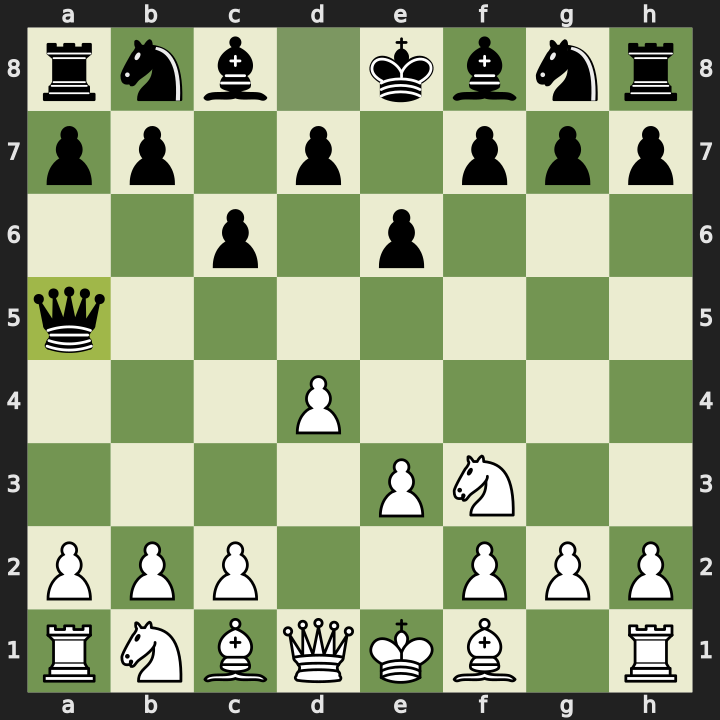
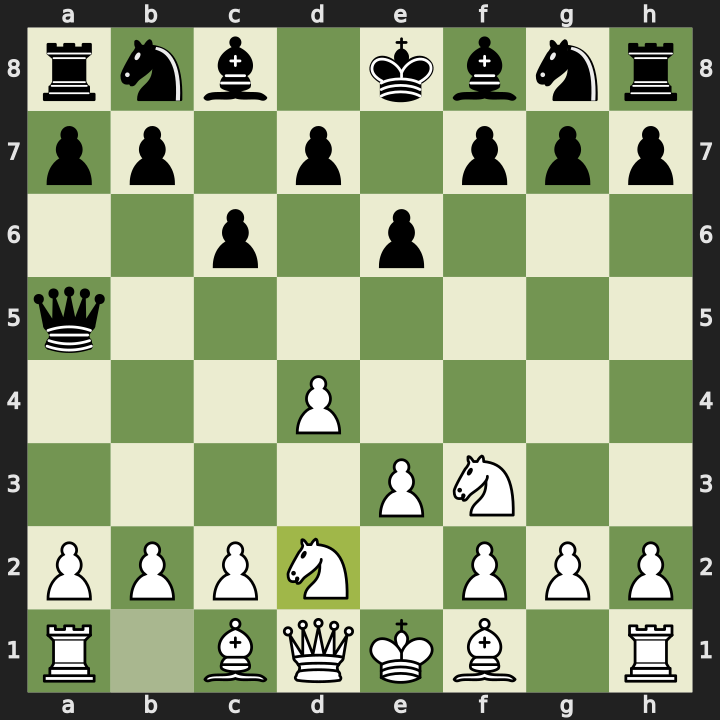
1. d4 e6 2. Nf3 c6 3. e3 Qa5+ 4. Nbd2 Na6
The game started with my typical queen’s pawn opening and Black played a very aggressive early queen check on a5. I’ve learnt not to fear these because there’s generally always some good response that involves developing pieces. Nbd2 blocks the check and it’s a move I was planning to make anyway, as it allows the knights to make their way over to the kingside. The queen is left out on the side of the board with no real targets.
Opening the Centre and Setting Up (Moves 5-10)
5. Bd3 c5 6. b3 cxd4 7. exd4 b6 8. Bb2 Bb7 9. O-O Qh5
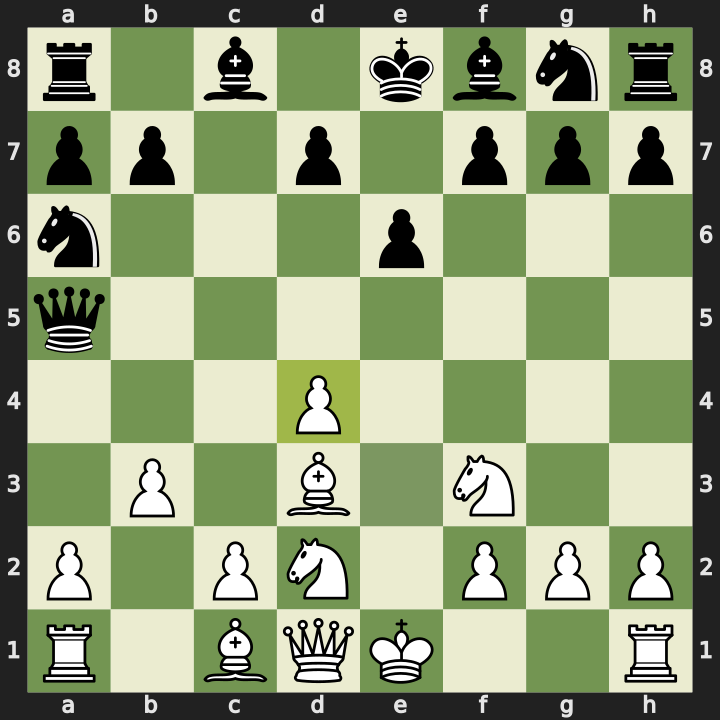
Black exchanged pawns in the centre but I was happy to take back with my e-pawn knowing that I’d castle kingside and the open e-file would give my rook or queen a line towards the king. I got castled and Black shifted their attack over to the kingside with Qh5.
10. Be2 Nf6
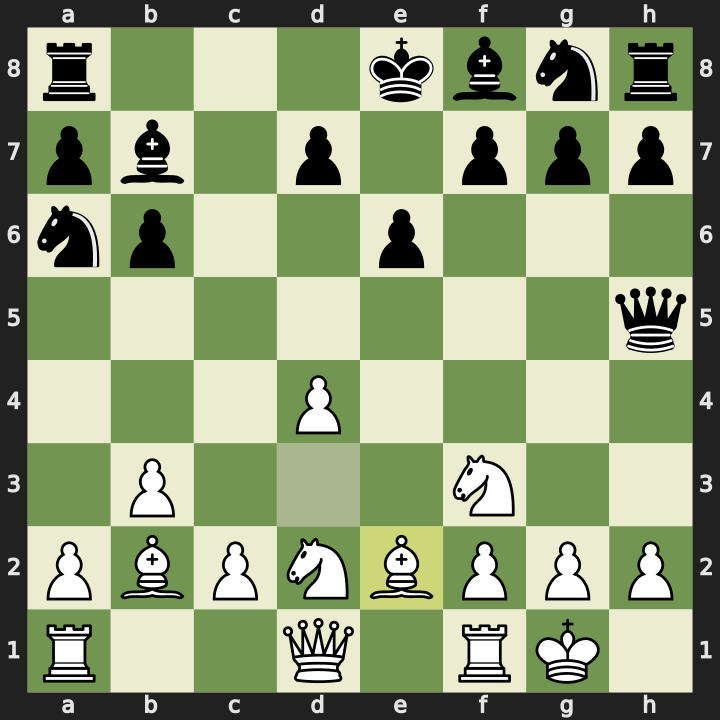
On the advice of my chess coach I moved my bishop to e2, setting up a discovered attack on the queen for when I later play Ne5. Just generally trying to use the long-range pieces for their x-ray capabilities, putting them on lines where they may not attack immediately but they’re set up to attack valuable pieces once the path is cleared.
Ne5 and the Queen Blunder (Moves 11-13)
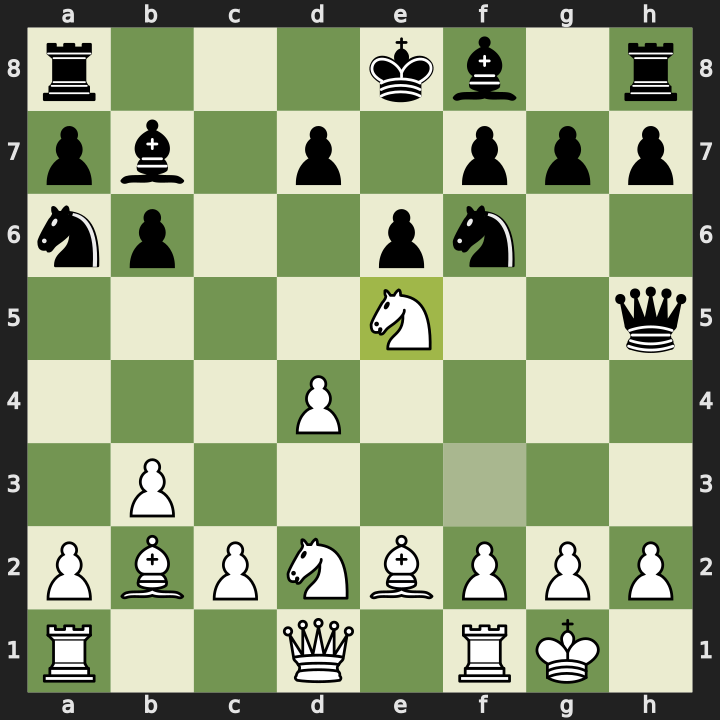
11. Ne5 Qh6 12. f4 Bd6 13. Ndc4 Qxf4
I got the knight to e5, the queen retreated back to h6, and I supported my knight with f4, opening up the way for my rook to get into the game. Black brought their bishop into d6 pointed at my knight, but it was heavily defended so it wouldn’t be going anywhere soon. I attacked it with Ndc4.
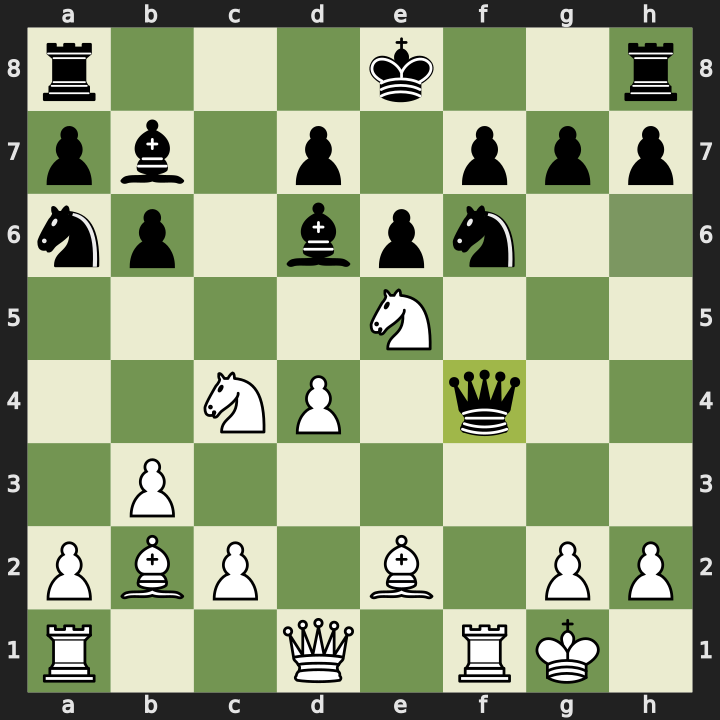
I was expecting Black to perhaps retreat their bishop or bring it into b4, but instead they blundered the queen with Qxf4, right in front of my rook. When there are multiple threats on the board opponents can lose sight of all of them and make a mistake.
Taking the Queen and Finding Checks (Moves 14-16)
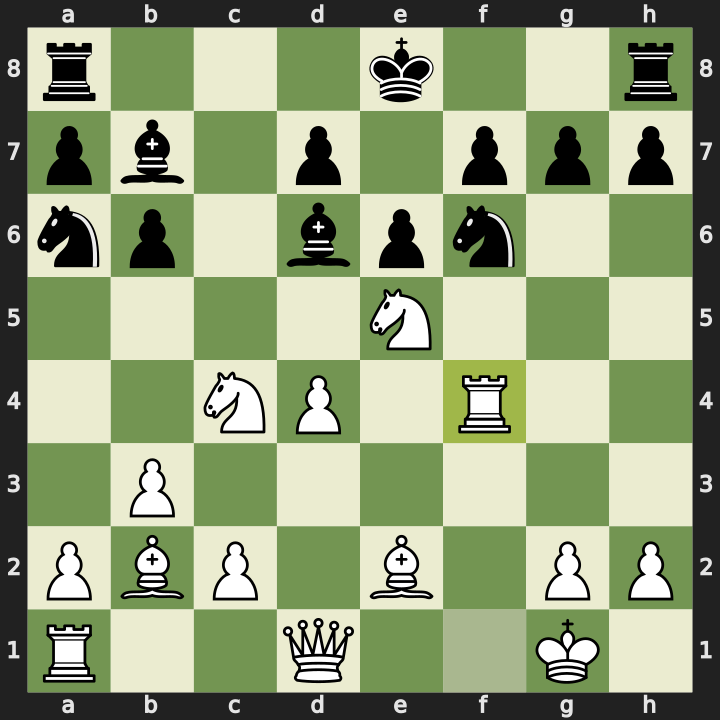
14. Rxf4 Nd5 15. Nxd6+ Ke7 16. Nxb7 Ne3
I took the queen and Black tried to get some compensation with Nd5, attacking the rook. Here’s where I found some great checking opportunities. I started with Nxd6+, taking the bishop I’d been threatening since the last move. That came with check, forcing the king to move. The king went to e7, attacking the knight.
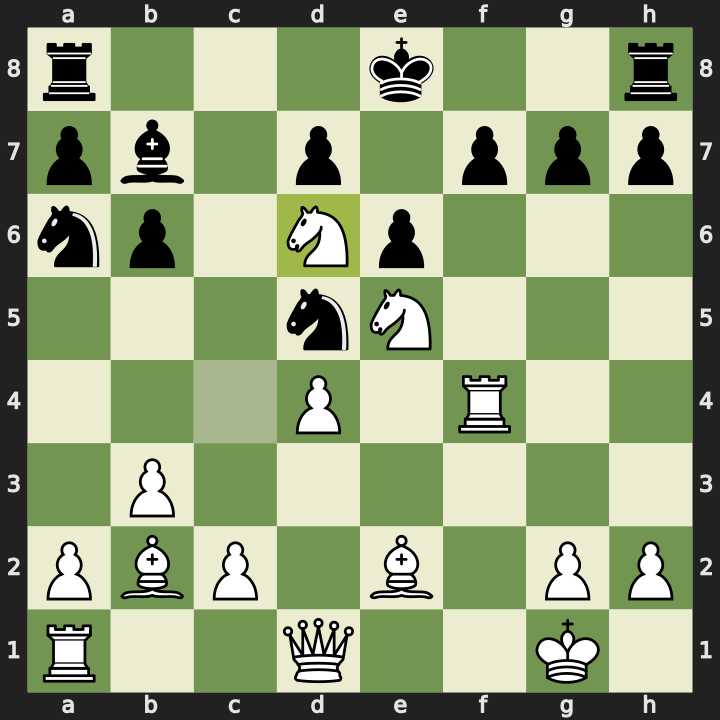
At this point I’m up so much material, a full 14 points, because I’ve captured two pieces and a queen while my opponent has only captured pawns. I decided to let the rook be captured and then focus on looking for checkmate with my knights, bishops, and queen. I could always bring my other rook into the game if needed. However, to my surprise, rather than just taking the hanging rook, Black played Ne3 threatening my queen.
The Checkmate Sequence (Moves 17-19)
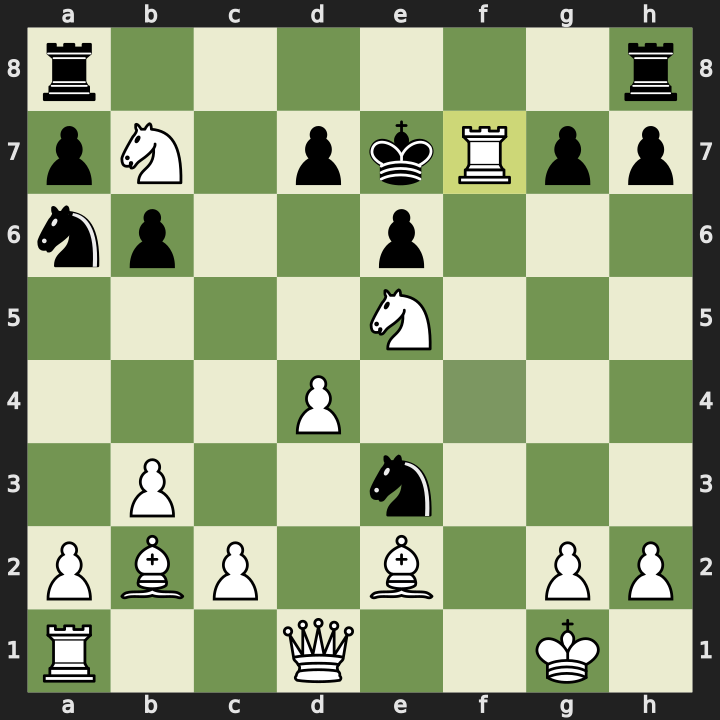
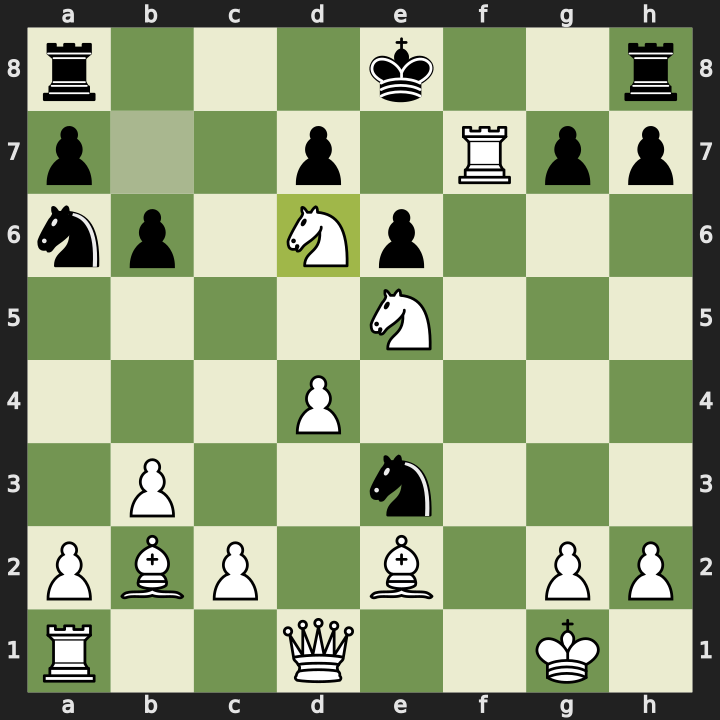
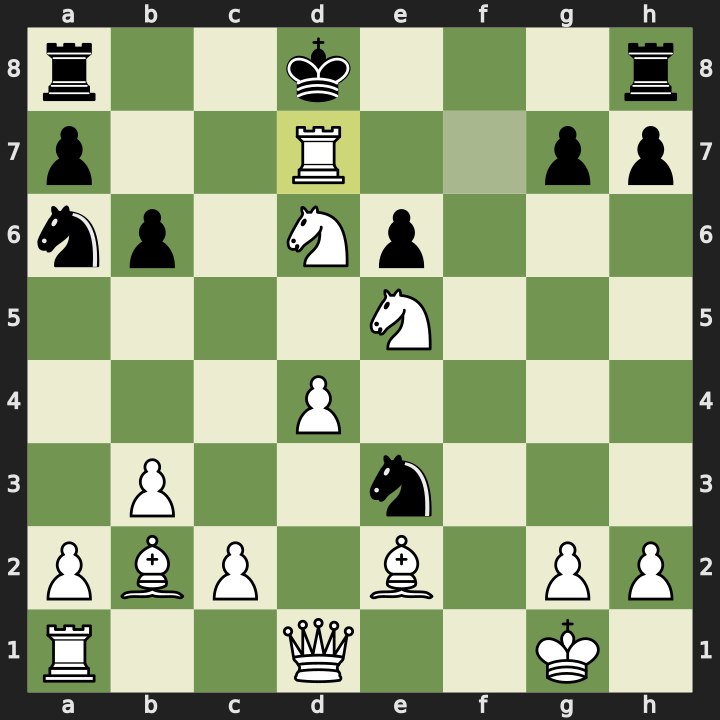
17. Rxf7+ Ke8 18. Nd6+ Kd8 19. Rxd7#
And this is where it got fun. The rook that I was willing to let die was now right in the attack. Rxf7+ with check. The king goes back to e8 and I hopped my knight back to the square it had occupied earlier, Nd6+, check. The king slides over to d8 and with my rook on the seventh rank I put it right in front of the king: Rxd7 checkmate.
In all honesty I didn’t realise this would be checkmate at the time. I was content with just cleaning up pawns and focusing on checks and captures. When the Chess.com interface notified me that it was checkmate I was delighted. I managed to defeat my opponent while only giving up two pawns.
Engine Review
80% accuracy for me and 53% accuracy for my opponent. One blunder, three mistakes, and four inaccuracies for my opponent, and no blunders, no mistakes, three inaccuracies for me, and one missed tactic.
Happy to see that after the early queen check, Nbd2 is the best move according to the engine. That’s a move I was planning to make anyway as part of the Colle-Zukertort setup.
The engine suggests playing b6 on move 7 was a mistake for the opponent, but I think it’s only because there was a more active move available. They could have got a knight off the side of the board with Nb4, attacking the bishop on d3. There wasn’t a particularly strong follow-up for White other than just castling and continuing with development.
Very happy to see that Be2, setting up the discovered attack on the queen, was the best move in that position on move 10. The evaluation is +1.7 for White even though material is equal. Black has neglected developing their pieces because they’ve been pushing pawns and playing with the queen.
After the blunder of Qxf4, immediately taking with the rook is surprisingly not the best move. White can take the bishop on d6 with check first and then take the queen. It didn’t end up mattering too much because Black didn’t get any compensation for the queen and I was able to take the bishop with check a move later anyway.
On move 16 I missed a tactic. Rather than Nxb7 winning a bishop, I could play Rxf7+ and after the king retreats, Nd6+ Rxd7# checkmate. The same mating pattern that I ended up finding anyway, just two moves earlier. I’m glad to see that after Black played Ne3, my final three moves were the best: mate in three. So my intuition wasn’t too far off. The mating pattern was similar, it could have just been a few moves earlier.
Reflections
What went well:
- Defending against an early queen attack by developing pieces naturally.
- Positional play: getting the bishop on a strong diagonal and using a discovered attack tactic on the queen. When there are multiple threats on the board, opponents lose sight of them and make mistakes.
- Focusing on checks and captures before worrying about defending or retreating pieces. It doesn’t matter that my queen is under attack if checkmate is on the board.
- The finishing sequence: three consecutive checks leading to a rook and knight checkmate.
What to work on:
- Spotting the earlier checkmate on move 16. At that point everything was winning so I’m not too upset it took two extra moves to end the game. But it’s the same pattern I ended up finding anyway, so I should have seen it sooner.
Full PGN:
1. d4 e6 2. Nf3 c6 3. e3 Qa5+ 4. Nbd2 Na6 5. Bd3 c5 6. b3 cxd4 7. exd4 b6 8. Bb2
Bb7 9. O-O Qh5 10. Be2 Nf6 11. Ne5 Qh6 12. f4 Bd6 13. Ndc4 Qxf4 14. Rxf4 Nd5 15.
Nxd6+ Ke7 16. Nxb7 Ne3 17. Rxf7+ Ke8 18. Nd6+ Kd8 19. Rxd7# 1-0