Win vs R3S99 (228)
| Opening: King’s Indian Defence (A45) | Result: 0-1 (Resignation) | Time Control: 2 min + 1 sec increment (Bullet) | Rated |
Game Overview
My bullet rating is very low at 319, but I chose the two-minute format with a one-second increment hoping it would give me just enough time to consider each move without leading to a time scramble by the end. I think it worked quite well in this game. My opponent made some mistakes by moving too quickly and I was able to capitalise on the position, getting a fairly good material advantage early on and then cleaning up from there. I won after 31 moves with 45 seconds left on the clock and 29 seconds for my opponent, so I managed my time well.
Opening and the e5 Break (Moves 1-7)
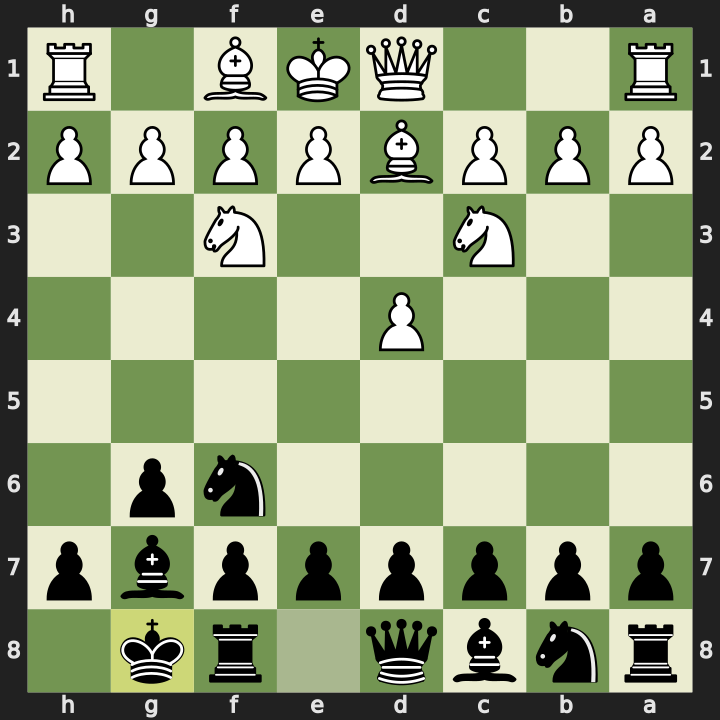
1. d4 Nf6 2. Nc3 g6 3. Nf3 Bg7 4. Bd2 O-O 5. e4 d6 6. h3 Nc6 7. Nb5 e5
The first five moves were pretty solid. I used my King’s Indian Defence setup, just focusing on bishop, knight, and castling, then played d6 on move 5.
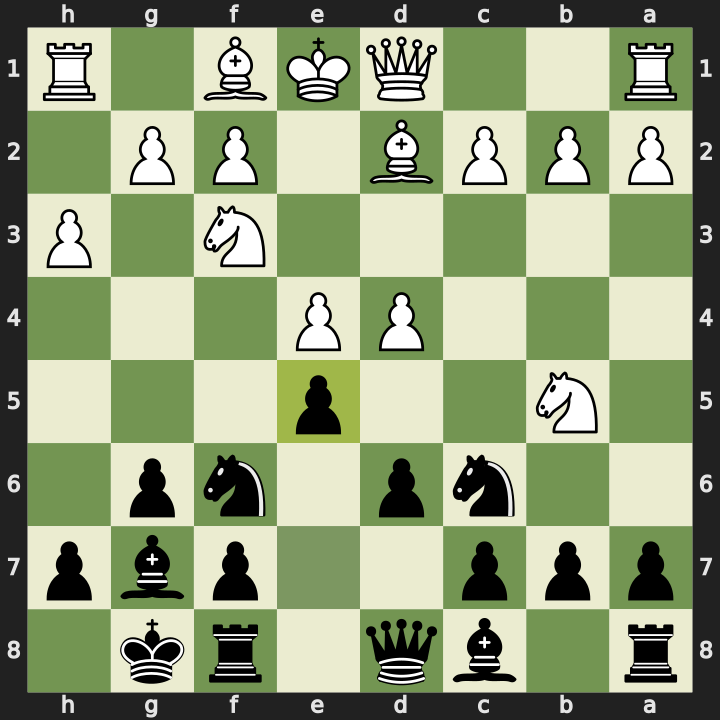
I went for the e5 pawn break. After an embarrassing loss in front of my chess coach earlier this week, I made sure it was safe to push e5 because it was attacked twice (by the knight and the pawn) but also defended twice (by my own pawn and my own knight). After the exchanges, White’s bishop is pinned to the queen so I think opening up the centre makes sense here. I should be able to pick up the pawn on e4 with my knight as it’s currently undefended.
Queen Trade and Picking Up Material (Moves 8-12)
8. dxe5 dxe5 9. Be3 Qxd1+ 10. Rxd1 Nxe4
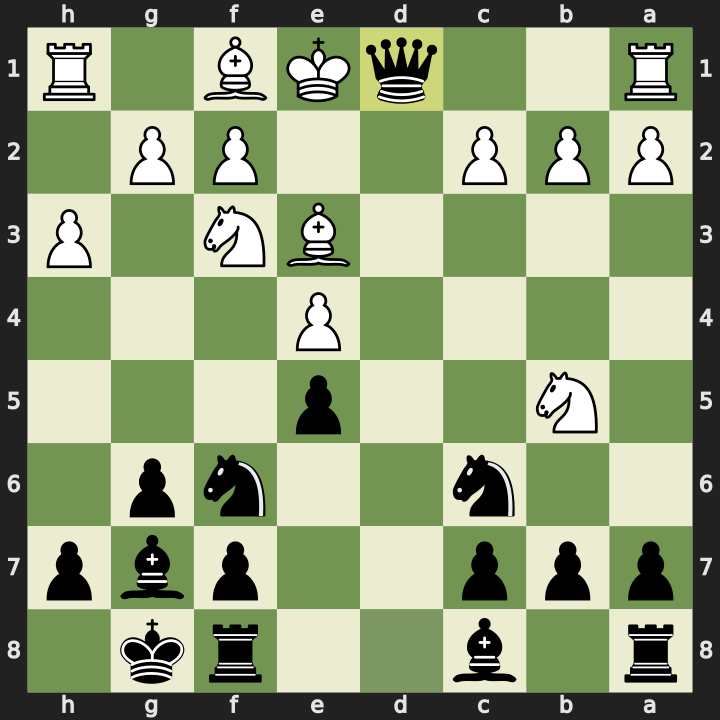
White invited a queen trade which I was happy to do in this position. I tend to win if I can get the queens off the board early and then just focus on solid positional play, look for tactics, and wait for my opponent to make a mistake. I’m not going for a quick checkmate. If anything I can always try and promote a pawn.
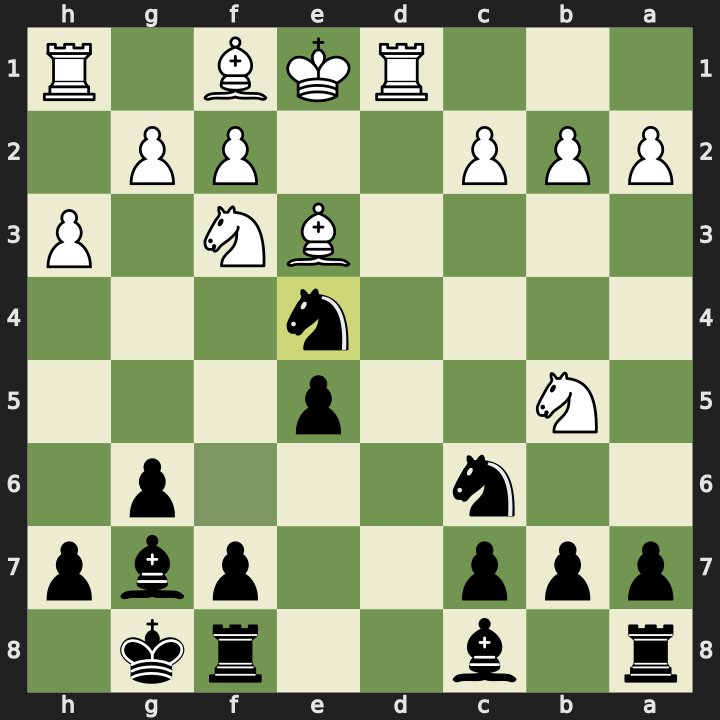
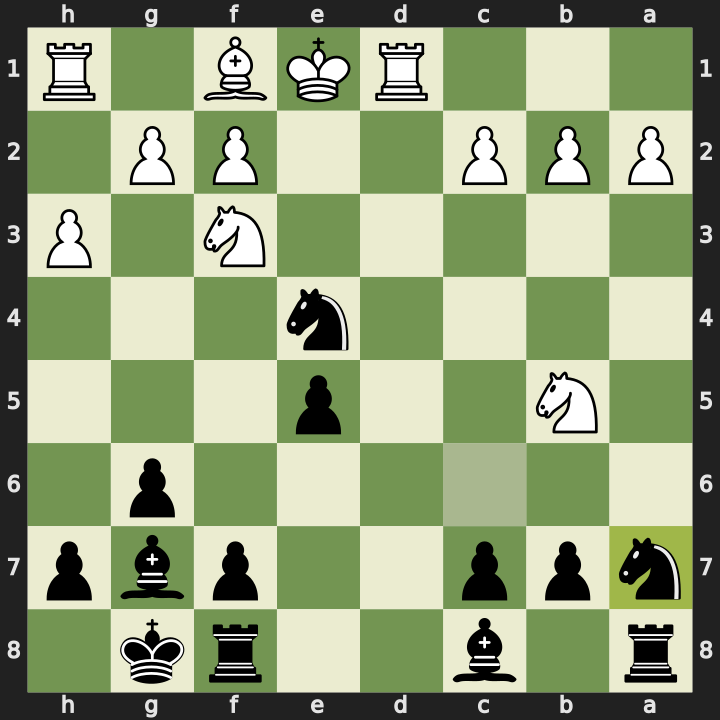
11. Bxa7 Nxa7 12. Nxc7 Rb8
After the queen exchange and picking up the pawn on e4, White grabbed a pawn on a7 with their bishop. I feel this was a mistake because it invited a trade of their bishop for my knight, and not only that it’s their dark-squared bishop which is incredibly important for attacking a fianchettoed castle. Without a queen or a dark-squared bishop that’s basically impossible. Interestingly my opponent didn’t even take back the knight. Instead they grabbed another pawn on c7 which also attacked my rook. I guess that makes sense: they would have been down a piece with less material had they taken on a7 and then my rook taken back. I slid my rook over to b8 away from the knight. Luckily there were no forks in play at the moment.
Winning Both Knights (Moves 13-16)
13. Bd3 Bf5 14. Nxe5 Bxe5 15. Rd2 Bxc7
White brought the bishop out to d3 and I wanted to activate my rooks so I developed my bishop to f5. The theme for this week has been about long-range x-ray capabilities for bishops, rooks, and queens, so this seemed like a good one. It supports my knight, it targets the bishop and pawn on the diagonal. However, looking at it now, I think it may have been susceptible to g4 attacking the bishop, so maybe not such a strong move after all.
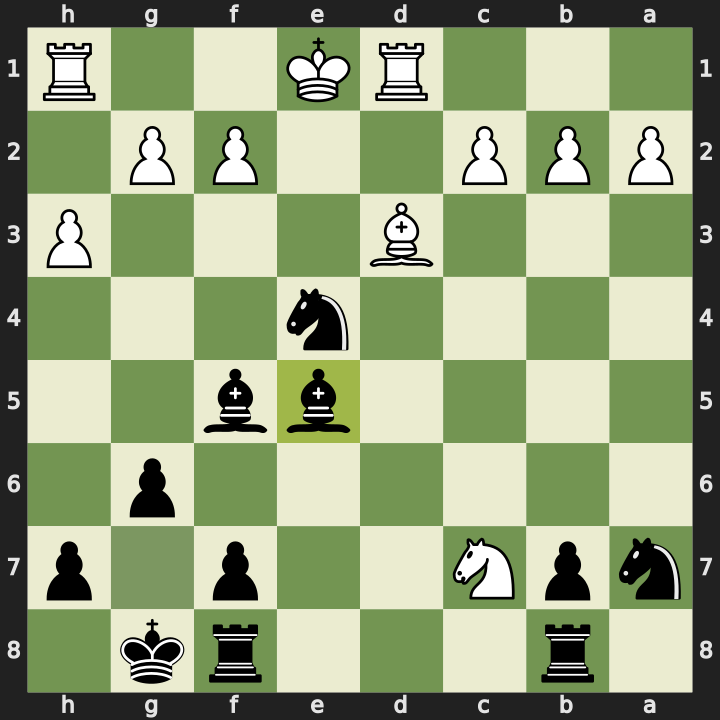
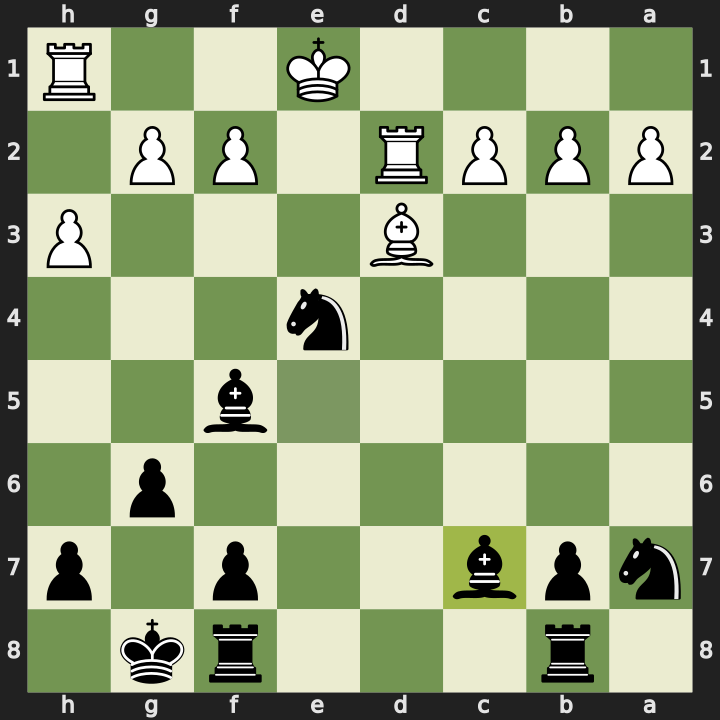
In the next two moves White blundered both their knights. First they hopped a knight to e5 and I took with my bishop. Then they played a rook move which I didn’t fully appreciate during the game. It moved their rook into a position where it could be exchanged, but a whole piece is better than an exchange, so I grabbed the knight on c7.
The Rook Fork (Moves 16-19)
16. Re2 Rbe8 17. f3 Ng3 18. Rf1 Nxf1 19. Kxf1 Rxe2
White put pressure on my knight with their rook and pawn. I reinforced with my rook, then saw a great opportunity to fork White’s rooks by going Ng3. I was pretty confident of the win at this stage. I’m up three pieces for two pawns, a +7 material advantage, and about to collect a rook.
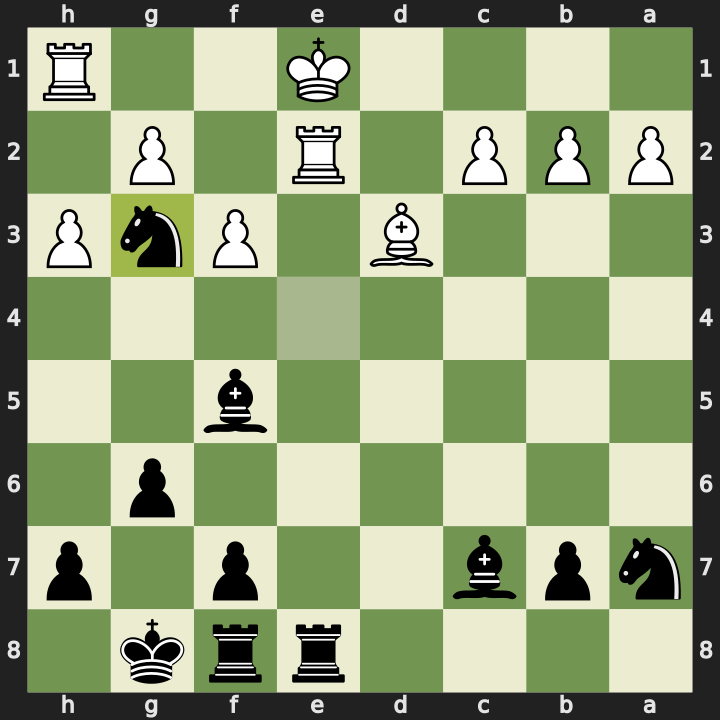
I eliminated both of White’s rooks: one with my knight and then exchanged rooks on the e-file. Now White was left with only their light-squared bishop and pawns.
Cleaning Up (Moves 20-31)
20. Bxe2 Rd8 21. Bc4 Rd2 22. c3 Rxb2 23. g4 Be6 24. f4 Bxc4+
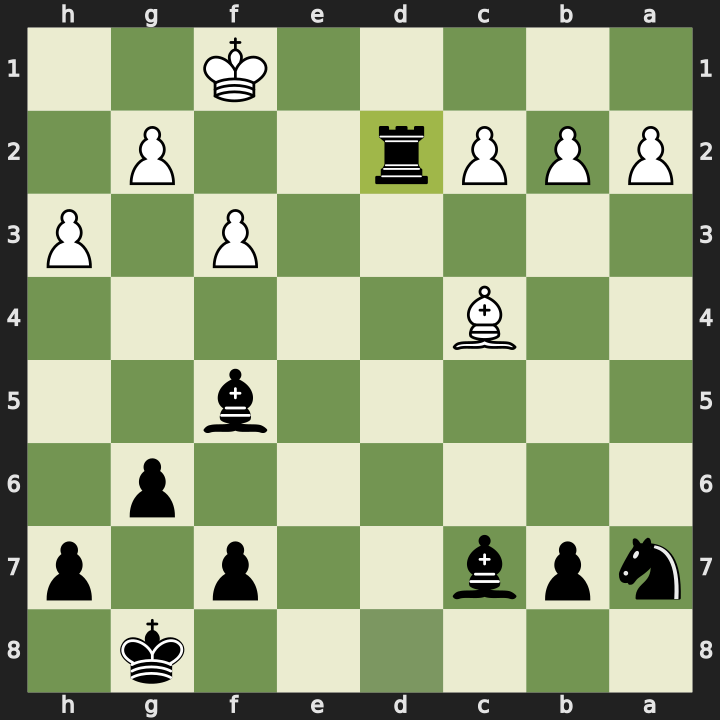
I went for the seventh rank looking to clean up some pawns, and eventually there would be a checkmate or perhaps a chance to promote. White blundered again, failing to protect their bishop on c4, so I took it with check. Now White was left with only a few pawns.
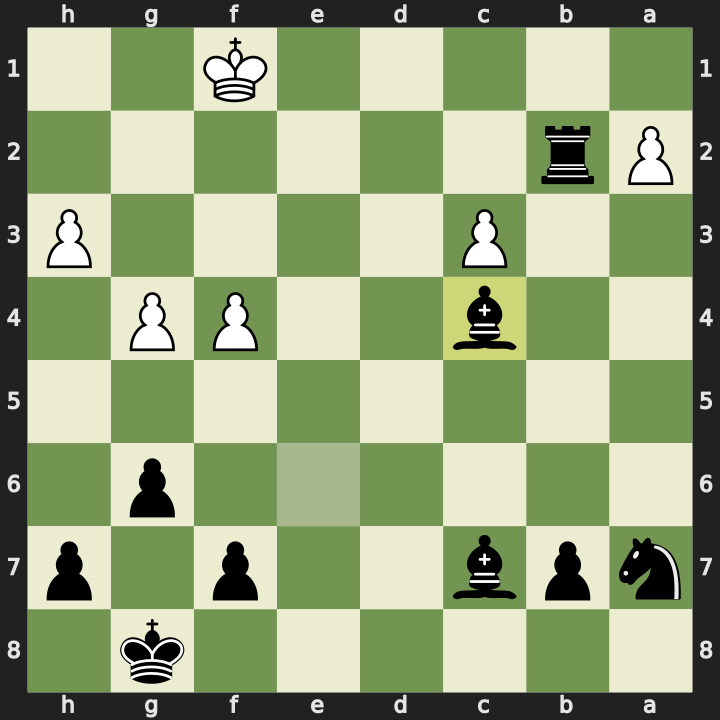
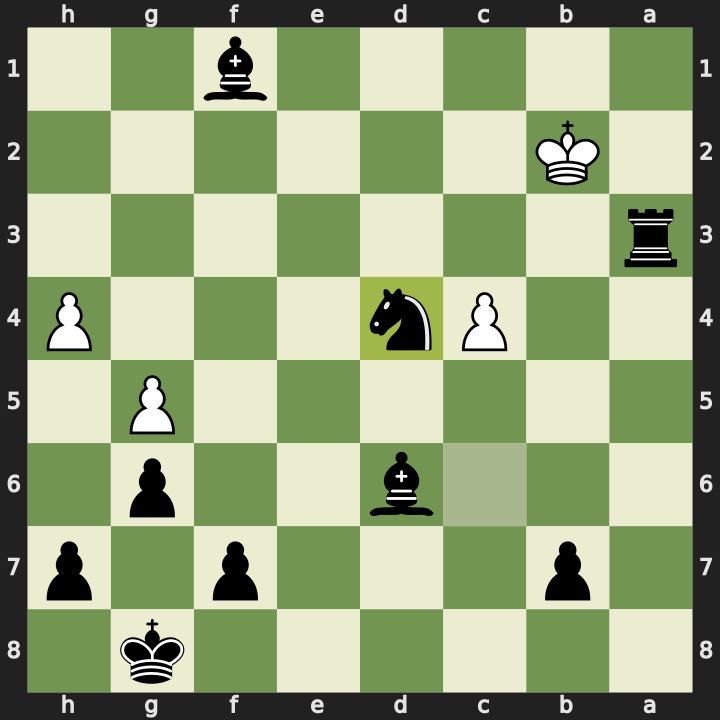
25. Ke1 Rxa2 26. Kd1 Ra3 27. Kc2 Bf1 28. h4 Bxf4 29. g5 Nc6 30. Kb2 Bd6 31. c4 Nd4
After a few more moves White resigned. I had two bishops, a knight, and a rook slowly closing in around the enemy king with no counterplay to be had.
Engine Review
Not a super high accuracy score in this game for me, but very happy to see zero blunders, zero mistakes, and zero inaccuracies, with two missed tactics. For my opponent: one blunder, one mistake, and eight inaccuracies. My game rating was scored at 750 and my opponent’s at 200.
On move 7, rather than opening up the centre by pushing e5, I could have just taken the e4 pawn with my knight because it was undefended. That is something I have to keep mindful of. I often autopilot these opening moves without looking out for cheap pawns I can just pick up. The same move was available next turn, although it gets a little messier. The engine still likes Nxe4.
Interestingly the engine prefers to allow White to initiate the queen exchange and take back with the rook, activating on the open file. That makes some sense. White still retains a 0.5 advantage if Black initiates the queen trade and White gets the open file with their rook instead. When White plays Bxa7 it’s a blunder. Maybe they didn’t recognise that the knight could move backwards to guard the a7 square.
With White’s king on f1 and my knight attacking both rooks, there was a better way to trade down the material. I should have taken the bishop first, because if White tries to take back with the pawn, Black gets to take White’s rook for free because the square is guarded by the knight, and there’s a mate in three from that position. So if White wants to avoid the mate, they have to not take back the bishop and instead bring their rook forward to e4, allowing Black to take that rook with the bishop. Even after that, White can’t take back with their f3 pawn, otherwise it’s mate in seven. The best move is actually to run the king over to the d-file. White is down 15 points of material but at least they’ve escaped forced checkmate. That’s probably a little bit too much deep calculation for a bullet game for me, but I think next time I should more carefully calculate the move order. Taking the bishop first does make a lot of sense.
I had wondered earlier whether Bf5 on move 13 would be considered a mistake by the engine. It turns out it’s an okay move, but it does get tricky if White responds with g4, attacking the bishop. The best move is actually not to retreat the bishop but rather to retreat the knight back to f6, allowing White to take the bishop with the pawn. Black then follows up with a pawn push to e4, forking White’s knight and bishop. They have to give up one of their pieces in exchange. A bit tricky to see, and I think I would hesitate to play Bf5 in future if White can easily play g4 to kick it away.
At the point where White resigned it was a forced mate in four. It was actually a mate in four back on move 25 as well, but when you’re up 13 points in material everything is winning, so I’m pretty happy with how I played.
Reflections
What went well:
- Handling the opening and spotting the blunders my opponent made.
- Playing cleanly: zero blunders, zero mistakes, zero inaccuracies.
- Time management in bullet: finished with 45 seconds on the clock.
- The Ng3 fork winning a rook was a nice find.
What to work on:
- Trade move ordering. If I’d had just another 10 seconds or so identifying that taking the bishop first before the rook would lead to a better outcome, that might have meant an even more precise result.
- Checking for free pawns in the opening instead of autopiloting thematic moves. The e4 pawn was hanging on move 7.
Full PGN:
1. d4 Nf6 2. Nc3 g6 3. Nf3 Bg7 4. Bd2 O-O 5. e4 d6 6. h3 Nc6 7. Nb5 e5 8. dxe5
dxe5 9. Be3 Qxd1+ 10. Rxd1 Nxe4 11. Bxa7 Nxa7 12. Nxc7 Rb8 13. Bd3 Bf5 14. Nxe5
Bxe5 15. Rd2 Bxc7 16. Re2 Rbe8 17. f3 Ng3 18. Rf1 Nxf1 19. Kxf1 Rxe2 20. Bxe2
Rd8 21. Bc4 Rd2 22. c3 Rxb2 23. g4 Be6 24. f4 Bxc4+ 25. Ke1 Rxa2 26. Kd1 Ra3 27.
Kc2 Bf1 28. h4 Bxf4 29. g5 Nc6 30. Kb2 Bd6 31. c4 Nd4 0-1