Win vs the_dices (511)
| Opening: A00 (King’s Indian setup) | Result: 0-1 (Time) | Time Control: 5 min (Blitz) | Rated |
Game Overview
This is a strange one. I was feeling completely tilted from trying to beat chess bots while lying in bed when I should have been asleep. In fact I had so little focus that instead of rematching against a bot I accidentally started a five minute blitz game. So this is that game.
The Opening (Moves 1-8)
1. d3 Nf6 2. c4 g6 3. a3 Bg7 4. Nc3 O-O 5. b4 d6
White had an interesting opening I was completely unfamiliar with, starting with d3. My simple approach is that when my opponents lead with e4 I respond with d6, and for anything else I respond with Nf6.
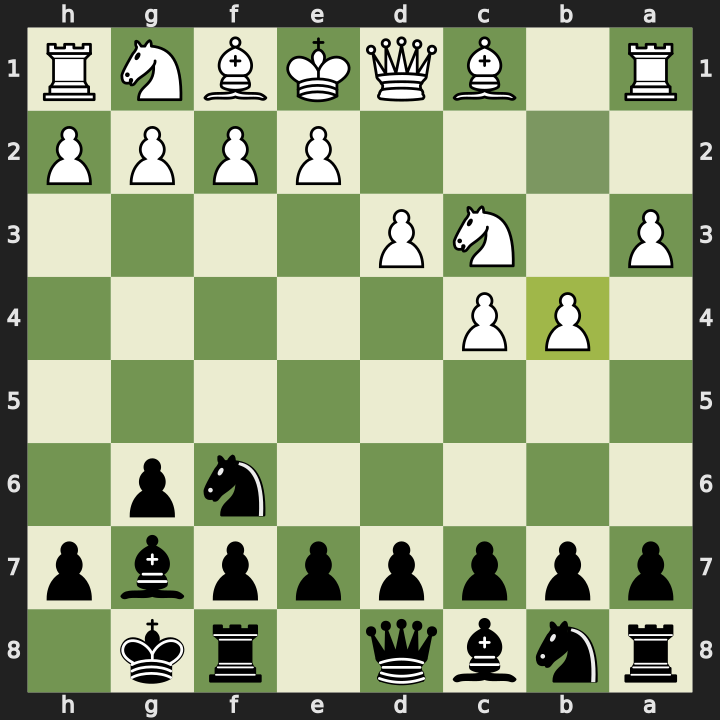
By move 5 I’ve got my typical King’s Indian setup. White has pushed a number of pawns on the queenside and only developed their knight, which looks a bit strange to me. Normally White wants to take at least some space in the centre. I’m going to play it like a typical King’s Indian where White attacks on the queenside and Black attacks on the kingside.
6. Bb2 Nbd7 7. Nf3 e5 8. e3 Ne8
Building the Pawn Storm (Moves 9-13)
9. Be2 f5
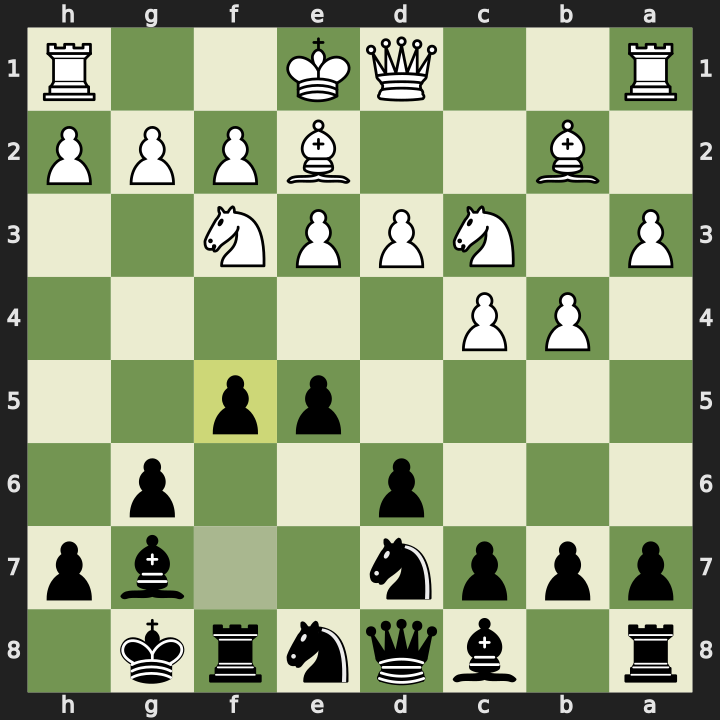
I get the f5 push in and there’s an interesting symmetry in the position when it comes to the pawn structure. It’s almost like there’s a mirror down the long diagonal from h1 to a8. Each of us is claiming space on different sides of the board.
10. O-O g5 11. Qb3 Kh8 12. e4 f4 13. Na2 Bh6
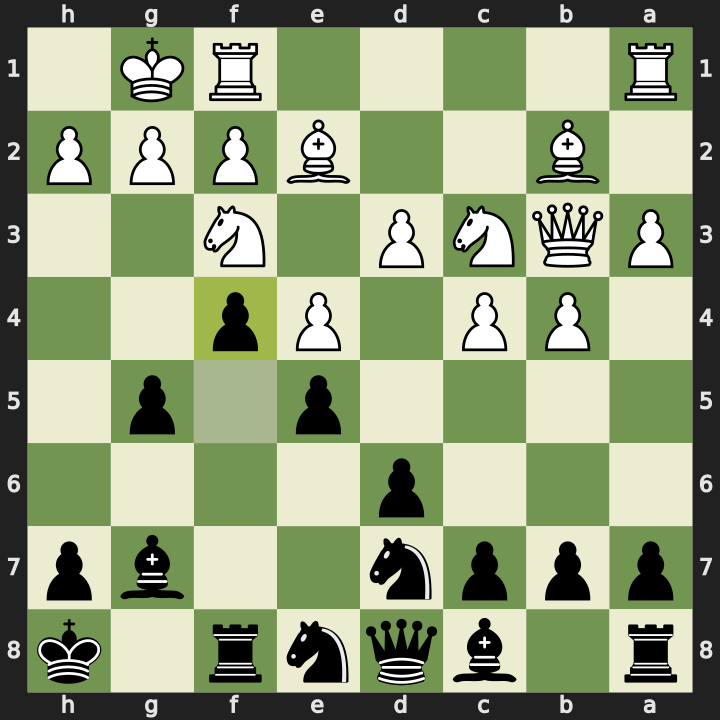
By move 13, White has castled kingside which is good for me. That gives me a clear target and I’ve got a nice pawn chain with four in a row from c7 to f4. That should give me some space to attack in front of the king. I think what possibly surprises some of my opponents about this setup is that it requires pushing the pawns in front of the Black king, which is normally a no-no in chess. But it can be effective as long as the centre is closed, and in this case the centre is partially closed. I’ve got a decent pawn chain on the black squares, but there’s still a chance for a pawn break on e5 for White.
The Centre Explodes (Moves 14-18)
14. d4 g4 15. dxe5 gxf3
White breaks open the centre which exposes my king. However I do have a pawn attacking the knight on f3, which is also diagonally connected to a bishop on e2 and a rook on f1, so I’m seeing an opportunity to collect some material here even if it means I need to survive a few checks.
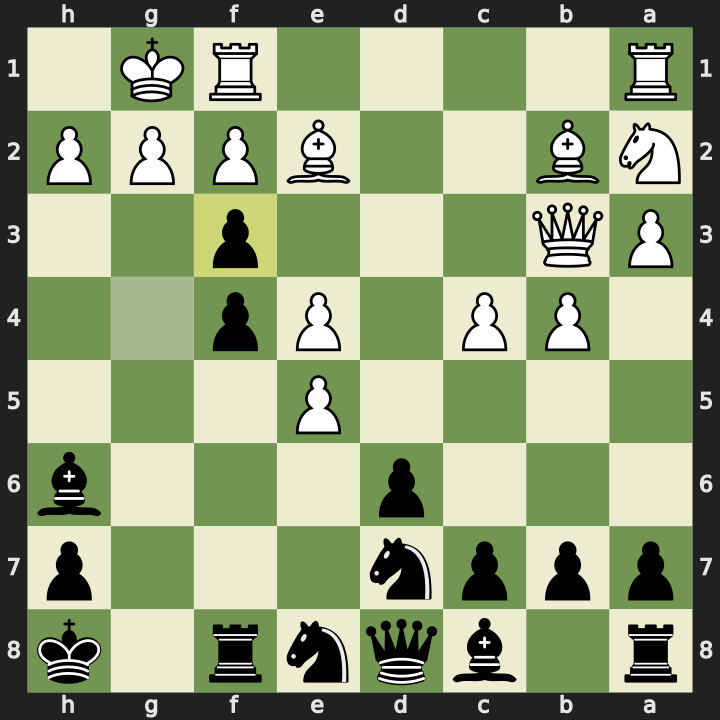
16. e6+ Bg7
White advances their pawn to e6, uncovering a discovered check from the bishop on b2 through to my king on h8. I block with my bishop.
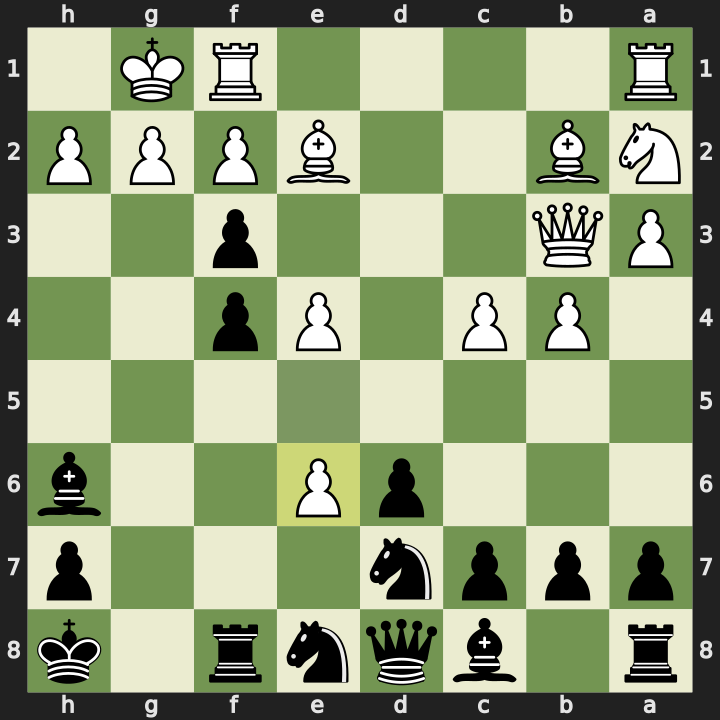
17. exd7 fxe2 18. dxe8=Q Rxe8
White also advances their pawn to collect a knight, and here I slightly miscalculated. We’re both going to pick up a piece in the next turn and when White promotes their pawn to a queen I take it immediately. I didn’t need to do that. If I had taken White’s rook on f1 with my pawn first, it would come with check, and then I’d be able to take White’s promoted queen on the next move. A bit of a miss there, and as a result we were fairly equal after all the trades.
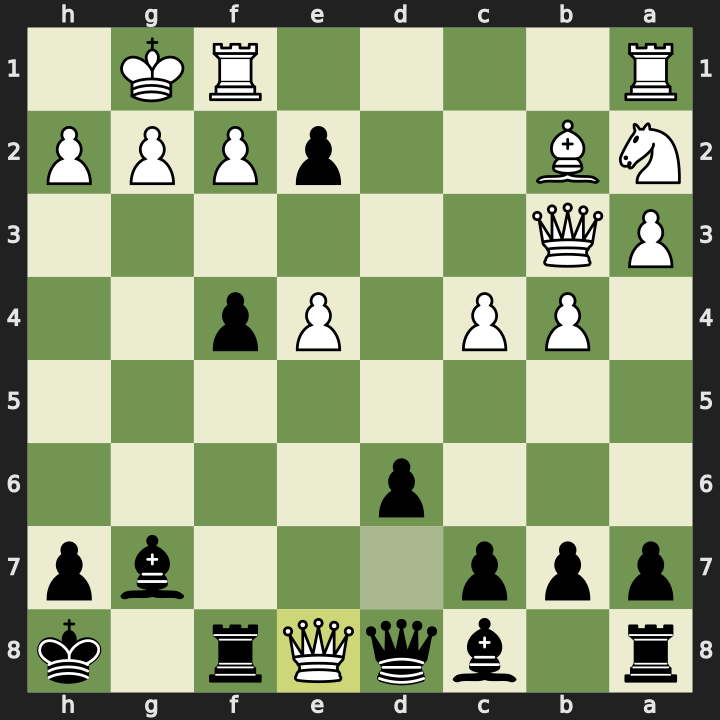
The Queen Blunder (Moves 19-25)
19. Bxg7+ Kxg7 20. Qb2+ Kf8 21. Qxe2 Re5 22. Qf3 Qg5 23. Nc3 Bg4
After all the trades things settle down. Then on move 23 I play Bg4, threatening the queen with my bishop.
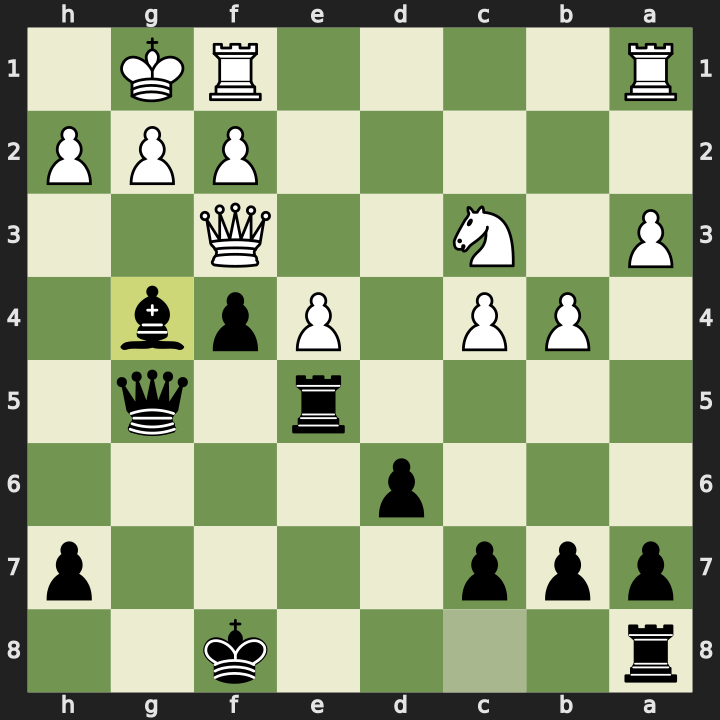
24. Qd1 Bxd1
I’m not sure what happened to my opponent here but they blundered their queen. They retreated back to d1, still on the line of my bishop. There was a completely safe square on d3, but maybe they thought the queen was trapped? That must be it: they missed there was a safe square. Time may have been a factor too, because I was up a full minute with my opponent down to 43 seconds after move 24.
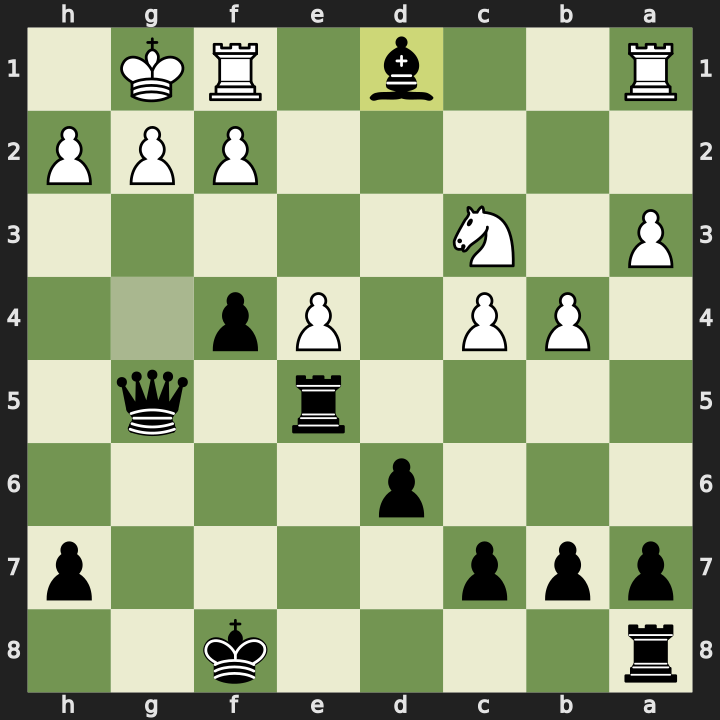
25. Raxd1 Rd8
Converting the Advantage (Moves 26-33)
26. Ne2 f3
I push the pawn to f3, attacking the knight on e2. White can’t take because the g-pawn is pinned to the knight by my queen on g5. So White hops the knight over to g3.
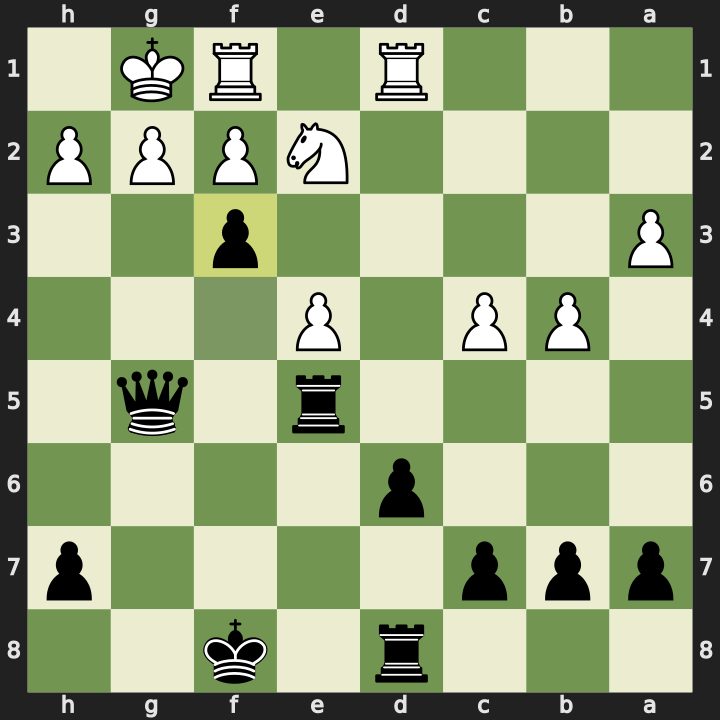
27. Ng3 fxg2 28. Kxg2 Rxe4
I take the pawn in front of the king, pinning the knight to its new home on g3.
29. f4 Re2+
When White pushed f4 to attack my queen, I got overconfident. I pushed my rook to e2 checking the king rather than simply taking the pawn with my rook, which would have invited a rook trade and simplified the position. Yes I was up in material, but there was no need to get fancy trying to exploit pins.

30. Kf3 Qe7 31. Nxe2 Re8 32. Rfe1 c6 33. Ng3 d5 0-1
The end result was that a simple pawn push from my opponent won them the rook. At this point I had a look at how much time was on the clock and I was up 45 seconds with my opponent down to just a few seconds. I didn’t make a very accurate final move. I just tried to keep their clock ticking, pretty confident I’d be able to flag them on time. On move 33 they ran out.
Engine Review
On move 5, White’s b4 was a mistake because it invites a tricky tactic: Black plays Nxe4, which opens up the bishop to target White’s knight on c3 and x-ray through to White’s rook on a1. In that position White’s best response is to take Black’s knight with White’s knight and give up the rook on a1, so White would be down an exchange after just five moves. I missed it, but I’m going to keep my eye out for that any time the pawns diagonally adjacent to the rooks are moved. I need to be thinking about whether it’s weakened the rooks.
By move 13 the engine gives a 2.6 evaluation in Black’s favour and it was the correct call to push the e5 and f4 pawns to attack White’s castled king. White doesn’t really have much initiative.
By move 18 the engine evaluation is 3.9 in Black’s favour, right up to the point where White promotes the pawn to a queen on e8. Then it swings to 0.8 in White’s favour when I failed to capture the rook on f1 first.
The evaluation recovered with the queen blunder, pushing it back to 4.6 in Black’s favour.
My last move was a blunder, but I could have played anything and my opponent would have run out of time. They had less than one second on the clock. The correct move was to take the rook with my queen and then exchange, leaving me up a rook versus a knight with a four pawn majority on the queenside. That should have been an easy endgame to win if there had been more time.
Reflections
What went well:
- The opening. I’m still very much enjoying playing the King’s Indian Defence, especially the closed centre variations that lead to attacks on the kingside.
- Time management. Being up a minute in a blitz game is a huge advantage.
What to work on:
- Looking for opportunistic tactics in openings, especially when they’re unfamiliar or offbeat. I missed the Nxe4 tactic on move 5 that would have won an exchange early.
- Playing solid when I’m in a winning position rather than trying to be clever or tricky. Being tricky makes sense when you’re in a worse position and trying to make life difficult for your opponent so they might make a mistake. When you’re in a winning position the best thing to do is play principled, solid moves and just convert the win.
Full PGN:
1. d3 Nf6 2. c4 g6 3. a3 Bg7 4. Nc3 O-O 5. b4 d6 6. Bb2 Nbd7 7. Nf3 e5 8. e3 Ne8
9. Be2 f5 10. O-O g5 11. Qb3 Kh8 12. e4 f4 13. Na2 Bh6 14. d4 g4 15. dxe5 gxf3
16. e6+ Bg7 17. exd7 fxe2 18. dxe8=Q Rxe8 19. Bxg7+ Kxg7 20. Qb2+ Kf8 21. Qxe2
Re5 22. Qf3 Qg5 23. Nc3 Bg4 24. Qd1 Bxd1 25. Raxd1 Rd8 26. Ne2 f3 27. Ng3 fxg2
28. Kxg2 Rxe4 29. f4 Re2+ 30. Kf3 Qe7 31. Nxe2 Re8 32. Rfe1 c6 33. Ng3 d5 0-1