Loss vs Rolosagit55 (759)
| Opening: Torre Attack / King’s Indian (A48) | Result: 1-0 (Resignation) | Time Control: 15 min + 10 sec (Rapid) | Rated |
Game Overview
This is a story about getting overconfident in a winning position. A completely crushing opening advantage, 99% accuracy in the opening phase, a 4.3 evaluation lead, and then one poorly calculated tactic threw it all away. This was my first game in the 15+10 rapid format and I really liked the pace. I finished the game with 17 minutes on the clock thanks to the 10-second increment, so time pressure wasn’t the issue. Overconfidence was.
The Opening (Moves 1-6)
1. d4 Nf6 2. Nf3 g6 3. Bg5 h6
White opens with what chess.com calls the Torre Attack: d4, Nf3, Bg5. I’d been looking at anti-King’s Indian attacks recently and saw that the best chance is to eliminate that bishop on g5 before White gets a chance to form a battery with the queen. So I went with an immediate h6, which forces White to either trade the dark-squared bishop for my knight or retreat.
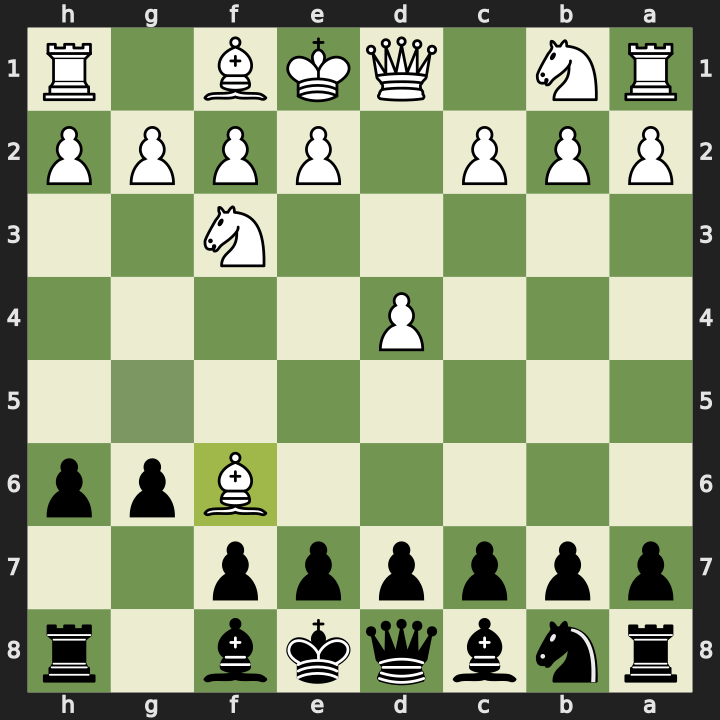
4. Bxf6 exf6 5. e4 Bg7 6. e5 fxe5
White takes more space in the centre, but this is good for me. It allows me to get rid of the awkward pawn on f6, undouble my pawns, and put a pawn back on the e-file.
The E-File Pin (Moves 7-9)
7. Qe2 O-O
This is where the tactics alert goes off. White’s queen is on the same file as their king on a semi-open file. If I can clear the e-file, there’s a very real possibility of pinning the queen to the king. I castle and prepare to get my rook into the action.
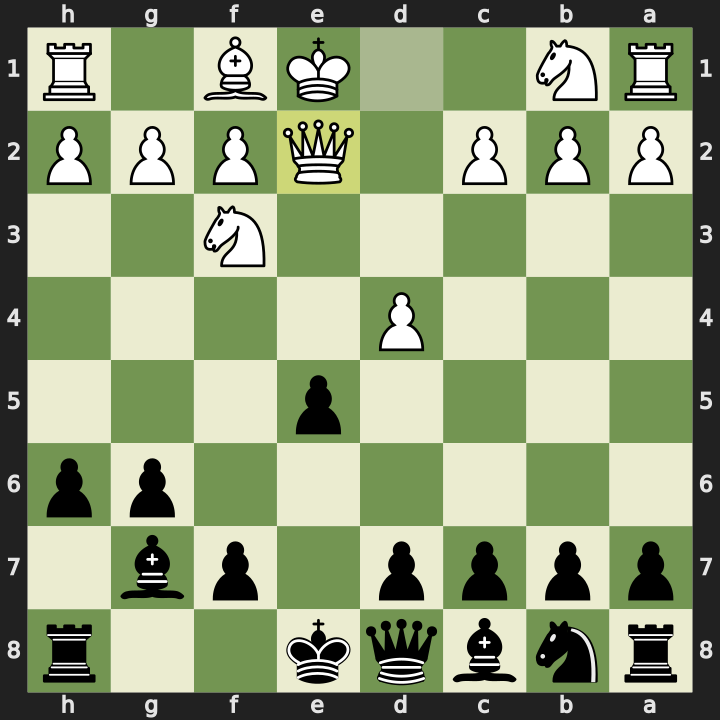
8. dxe5 Re8
White takes on e5, which means the only pawn blocking my rook’s vision of the queen is one I can capture. I came up with a bit of a devious trap here. White has two defenders of the e5 pawn and I only have two attackers, so I can’t win it directly. But if I take with my bishop, White has to retake with the knight, otherwise they’re trading their queen for a rook and bishop. Once the knight lands on e5, it’ll be pinned to the queen behind it, and I can attack the pinned piece by pushing d6.
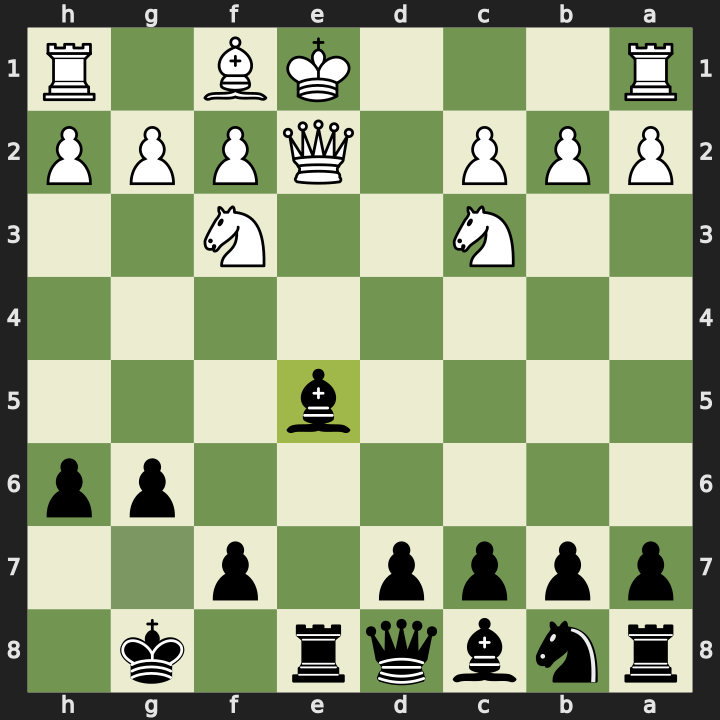
9. Nc3 Bxe5
Exploiting the Pin (Moves 10-13)
10. Nxe5 d6 11. f4 dxe5 12. fxe5 Nc6
The knight is pinned. I push d6 to attack it, White tries f4 to support it, but after the exchanges I win the knight. Black has castled with two strong pieces in the centre while White hasn’t castled and is about to lose more material.
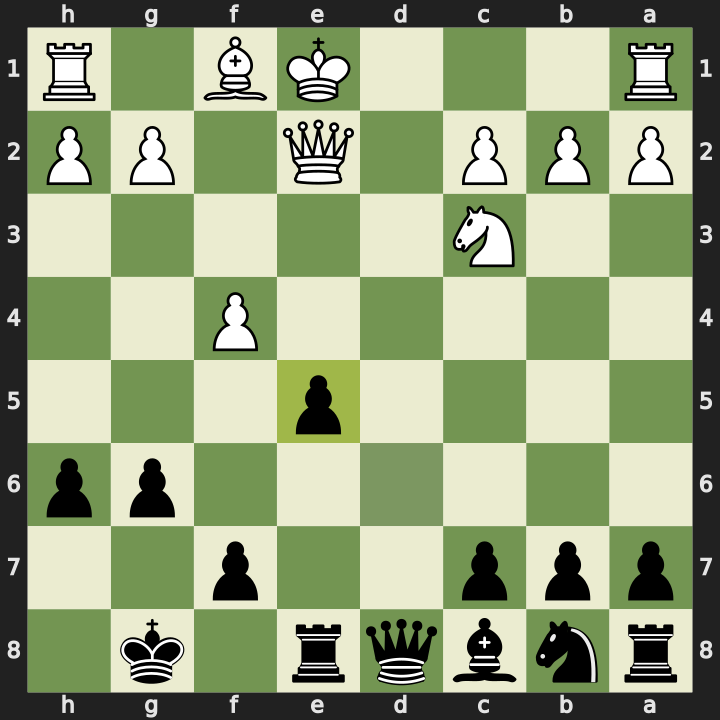
13. Qf2 Rxe5+
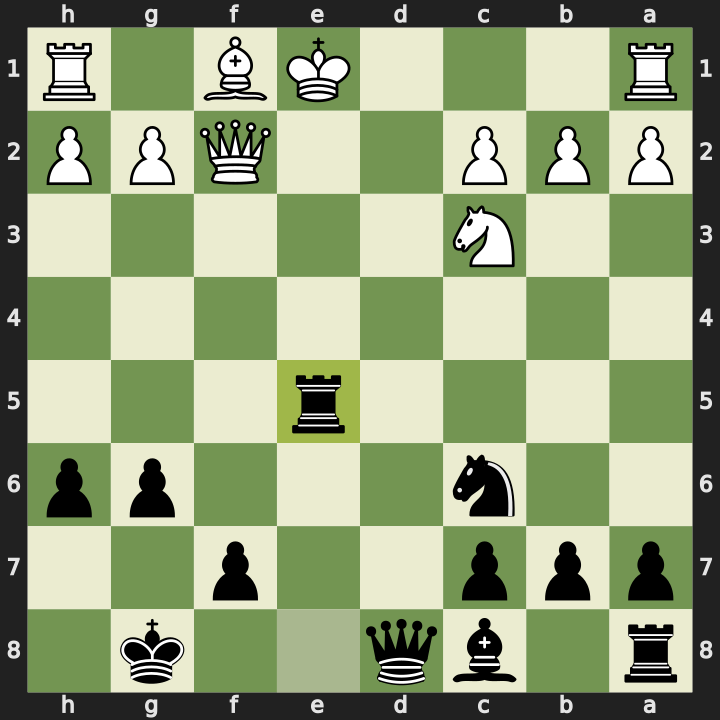
I take the last e-pawn with check. White blocks with the bishop, and now I can develop my knight to d4 targeting c2.
The Fork (Moves 14-16)
14. Be2 Nd4 15. Rd1 Nxc2+
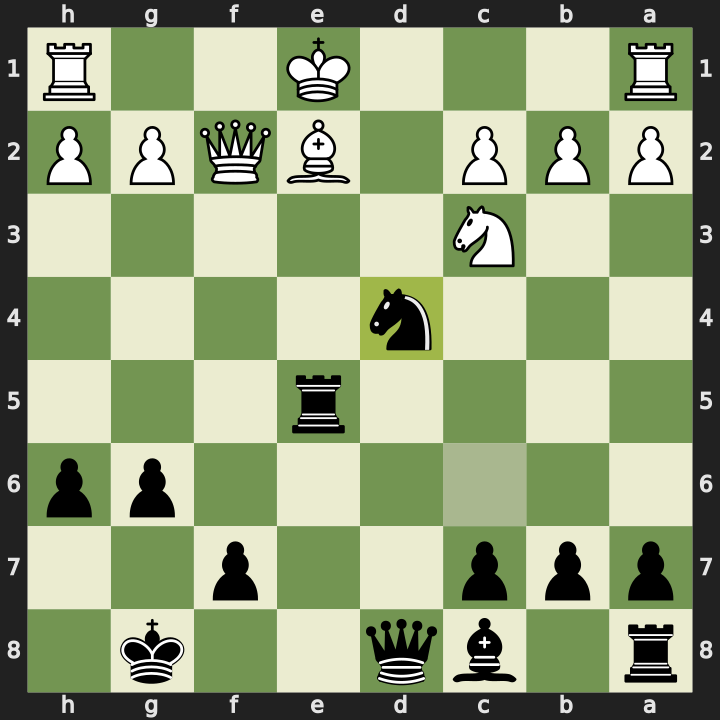
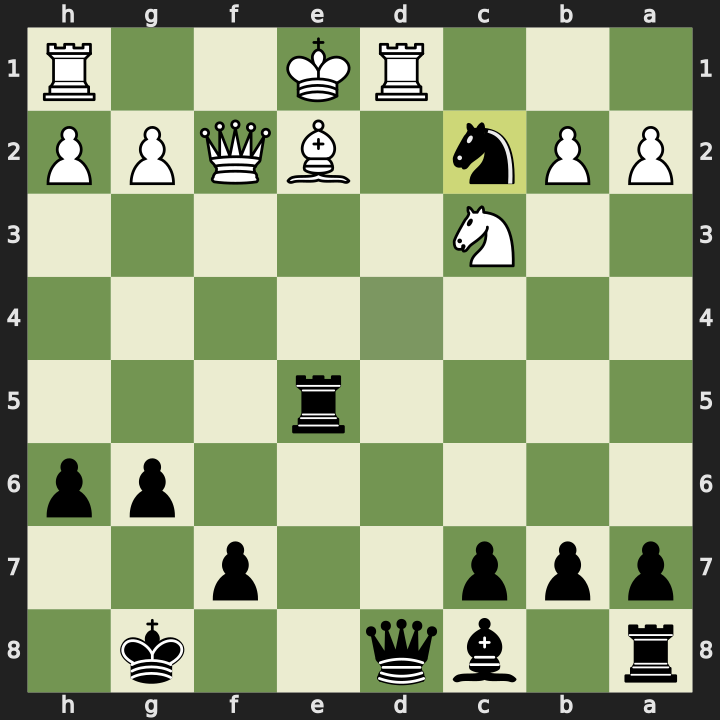
White tries to pin my knight to my queen with Rd1, but it’s not a real pin because moving the knight to c2 comes with check, forking the king and rook. White is forced to move the king and I’ve succeeded in preventing them from castling. The rook on h1 is stuck for several moves.
The Blunder (Moves 16-18)
16. Kf1
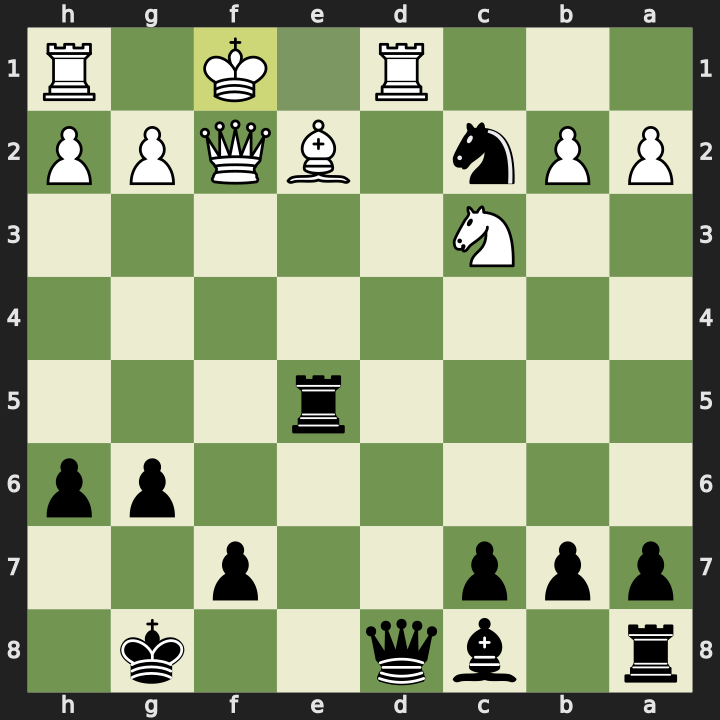
This is the position where I had a 4.3 evaluation advantage. Two extra pawns, a knight on c2 controlling the valuable e1 and e3 squares, a rook on e5 controlling the open file, and White’s king stuck on f1 blocking in the rook. I was completely winning.
And this is where I got overconfident. I saw that Ne3+ forks the king and rook. White’s queen has to take the knight. Then I play Qxd1+ taking the rook with check. White recaptures and I take the queen with my rook. I’d be up an exchange in a simplified position. Easy game.
The problem: I assumed White would recapture on d1 with the bishop. I didn’t check the other option. If White plays Nxd1, the knight defends e3. My rook can still take the queen, but it gets recaptured. I’ve traded a knight, queen, and rook for a rook and queen.
16…Ne3+ 17. Qxe3 Qxd1+ 18. Nxd1
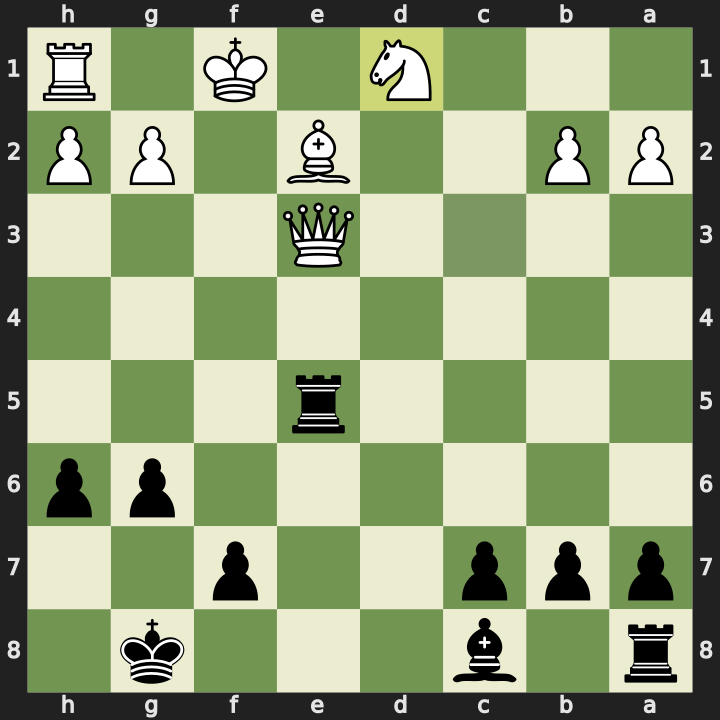
The mistake was already made. The knight on d1 now guards the queen on e3, so my rook can only capture the queen by giving itself up. I’ve thrown away a completely winning position.
18…Rxe3 19. Nxe3 Be6
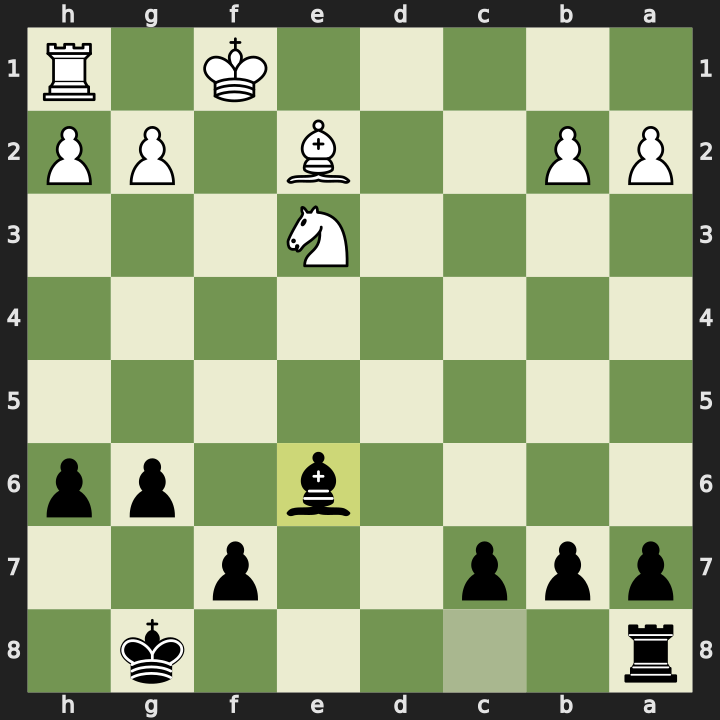
The engine says the right move after 16. Kf1 was simply to move the queen off the d-file. Qg5 is especially good: it guards e3 (preparing the knight to move there next turn), prevents Rd8+ check, and sets up a follow-up that wins White’s queen.
The Endgame (Moves 20-60)
The rest of the game was a long struggle down a piece. White played sensible moves, traded down material, pushed a passed pawn, and promoted. I tried to create counterplay with pawn pushes on the queenside but it wasn’t enough. White promoted on move 57 and I resigned shortly after.
Engine Review
Chess.com scored my opening at 99% accuracy. The first 15 moves were all good to excellent. White’s e5 push was a mistake and my reply was the best move. The Bxe5 trap to pin the knight, the d6 pawn push to exploit the pin, the Nc2+ fork. All correctly calculated.
On move 16, after Kf1, the engine confirms multiple good moves for Black: Qd5, Qg5, Qe7, Qe8 all maintain a massive advantage. Qg5 is especially strong, preparing to win White’s queen.
The Ne3+ blunder swung the evaluation from -4.3 to +2.1. One move, one incomplete calculation.
Reflections
What went well:
- The opening. 99% accuracy, correct recognition of the Torre Attack, and the right plan to eliminate the dark-squared bishop early.
- The Bxe5 trap to pin the knight to the queen was well spotted and correctly executed.
- The Nc2+ fork preventing castling was a clean tactical sequence.
- The 15+10 time format. I had 17 minutes remaining at the end. Plenty of time to calculate properly. I’ll definitely play this format again.
What to work on:
- When calculating a capture sequence, check every piece that can recapture on a square, not just the one you expect. Nxd1 vs Bxd1 made all the difference and I only considered one of them.
- When you’re in a winning position, play solid. Preparing a stronger attack with Qg5 would have won. Don’t get excited by clever tactics like the fork I jumped at.
- Calculate until the end of the exchange sequence. The line was Ne3+ Qxe3 Qxd1+ and I stopped there, assuming the result. One more move of calculation would have shown me Nxd1 guarding e3.
Full PGN:
1. d4 Nf6 2. Nf3 g6 3. Bg5 h6 4. Bxf6 exf6 5. e4 Bg7 6. e5 fxe5 7. Qe2 O-O 8.
dxe5 Re8 9. Nc3 Bxe5 10. Nxe5 d6 11. f4 dxe5 12. fxe5 Nc6 13. Qf2 Rxe5+ 14. Be2
Nd4 15. Rd1 Nxc2+ 16. Kf1 Ne3+ 17. Qxe3 Qxd1+ 18. Nxd1 Rxe3 19. Nxe3 Be6 20. Ng4
Kg7 21. Kf2 Bxa2 22. Ra1 Bd5 23. Ra3 a6 24. Rh3 h5 25. Ne3 Be6 26. Rg3 b5 27.
Bxh5 c5 28. Bf3 Rd8 29. Ke2 c4 30. Bg4 Re8 31. Bxe6 Rxe6 32. Kd2 a5 33. Kc3 a4
34. Nf5+ Kf8 35. Nd4 Rb6 36. Rg5 a3 37. bxa3 Ra6 38. Kb4 c3 39. Nc2 Rb6 40. Rxb5
Rxb5+ 41. Kxb5 Ke7 42. Kc4 f5 43. Kxc3 Kd6 44. Kd3 Kc5 45. h4 Kb5 46. Kd4 Ka4
47. Kc3 f4 48. Kb2 Kb5 49. Ne1 Kc4 50. Nf3 Kd3 51. a4 Ke3 52. Ng5 Kf2 53. a5
Kxg2 54. a6 Kg3 55. Ne4+ Kg4 56. a7 f3 57. a8=Q Kxh4 58. Nf2 g5 59. Qe4+ g4 60.
Kc2 1-0