Win vs BoikoIqor (720)
| Opening: Horwitz Defence (d4 e6) | Result: 1-0 (Abandonment) | Time Control: 10 min (Rapid) | Rated |
Game Overview
This was a tense game. I thought it was neck and neck right up until my opponent abandoned, and it wasn’t until I checked the evaluation with the engine that I saw I was in a pretty strong winning position. That was nice from a confidence-boosting perspective. I’ve been playing mostly daily games and haven’t had a chance to play much rapid, but I felt like my skill had been improving as a result of the daily games and puzzles lately. I wanted to see if that was translating to rapid.
The Opening (Moves 1-5)
1. d4 e6 2. Nf3 Qf6 3. e3 Bb4+
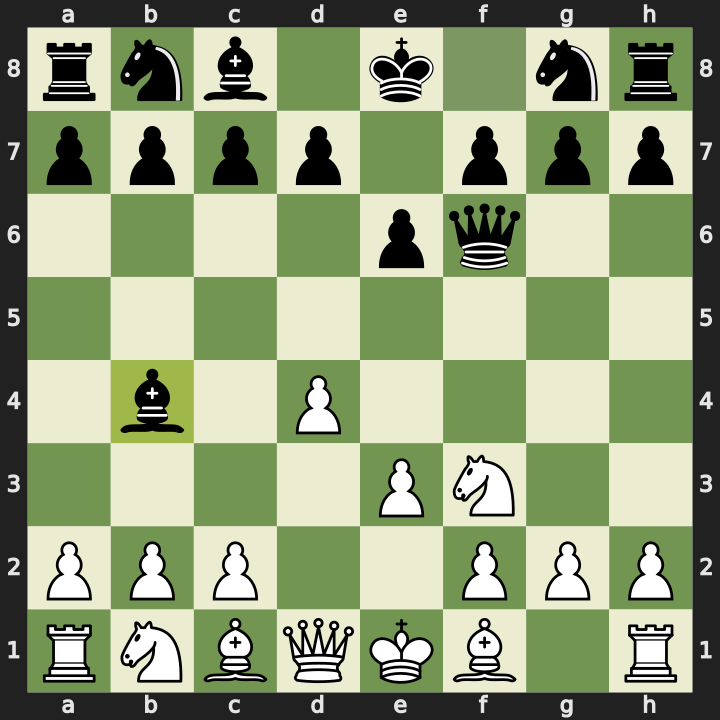
I start with the Queen’s Pawn opening, and my opponent plays a very aggressive response which chess.com is referring to as the Horwitz Defence. Qf6 and Bb4+ as their first developing moves. I like to use Nbd2 as a way to block those early checks on the king since that’s a move I tend to play anyway in this setup.
4. Nbd2 d6 5. Bd3 e5 6. dxe5 dxe5 7. e4
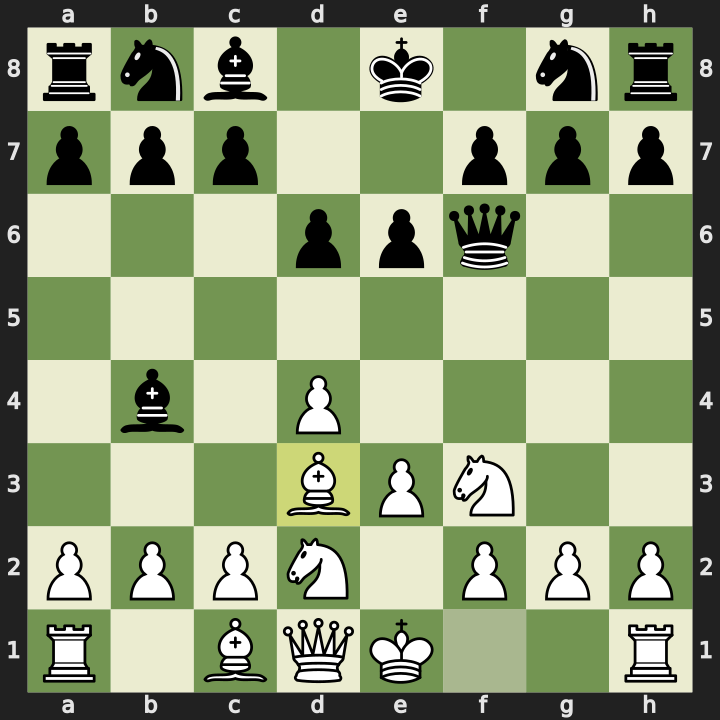
We trade some pawns in the centre and then I push e4 to prevent Black pushing to e4 forking my knight and bishop.
Kicking the Bishop (Moves 8-10)
8. a3 Ba5 9. b4 Bb6 10. Bb2
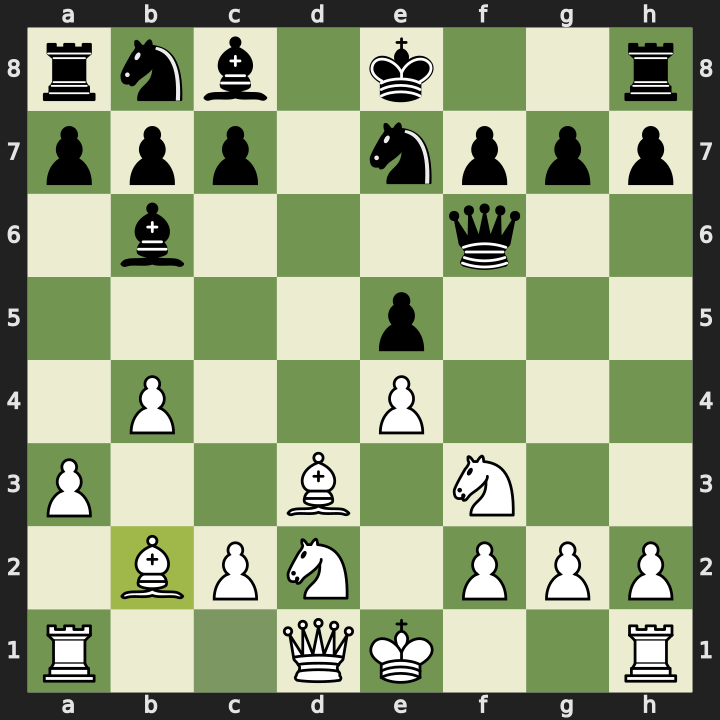
I kick Black’s bishop away with a3 and b4, pushing it all the way back to b6 where it still eyes the f2 square. I’ll be watching that key square. By move 10, I’ve got all my minor pieces developed and I’m ready to castle. Normally aggressive opening attacks are difficult for me, but I think because I’m quite familiar with this opening I know how to deal with most of them.
The Bishop Trade and e5 Push (Moves 11-15)
11. Nc4 Bd4 12. Bxd4 exd4
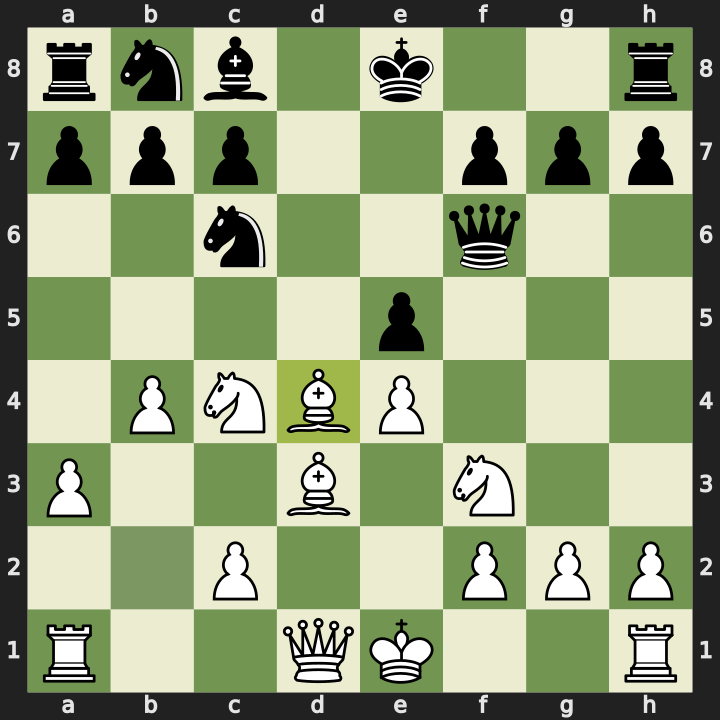
We trade bishops and Black gets a passed pawn on d4. Then comes the fight for the centre.
13. O-O O-O 14. e5 Nxe5 15. Nfxe5
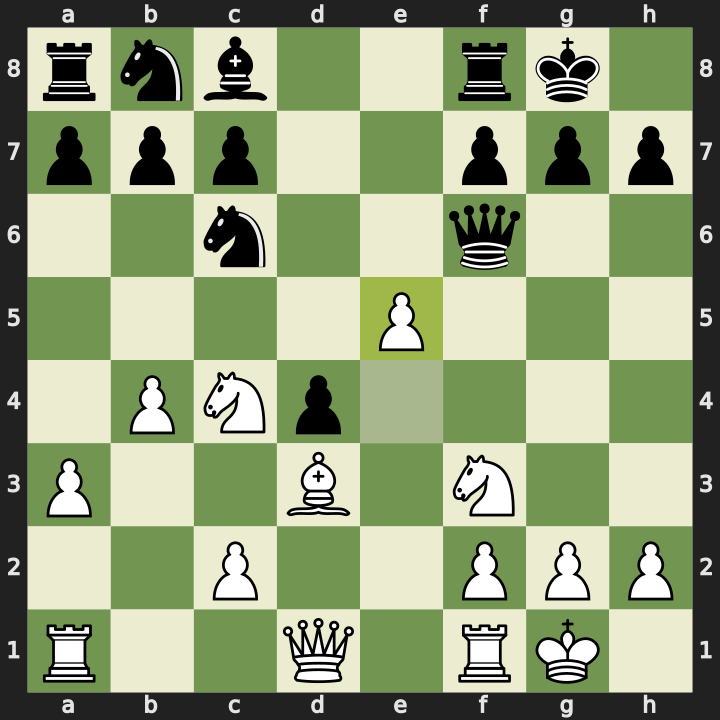
I push e5, attacking the queen that came out early to f6, supported by two knights on f3 and c4. Here Black makes a mistake. Rather than retreating the queen, they take the pawn on e5 with the knight. I can immediately take back with my own knight, and Black is just down a piece. It’s a simple counting error: I had two defenders of the pawn and they only had two attackers, so I was always going to have the last word.
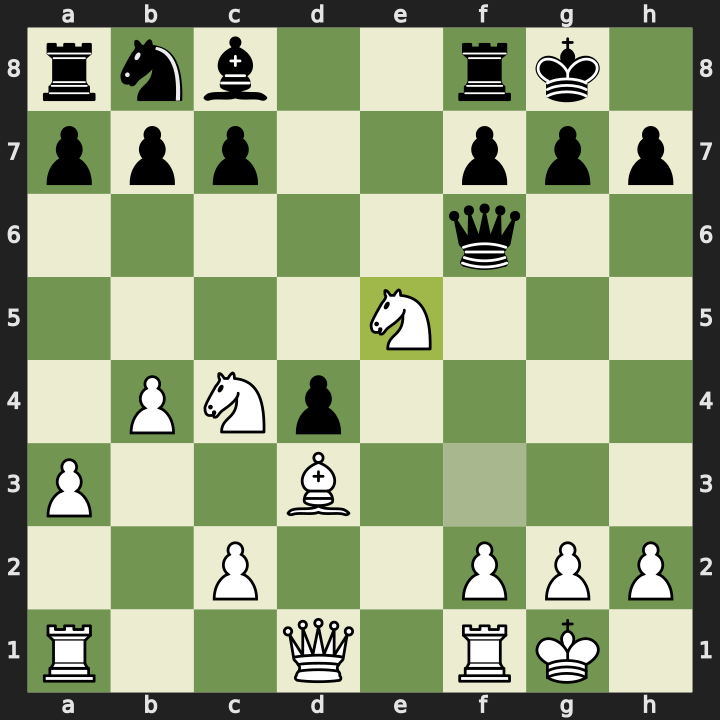
Consolidating (Moves 16-20)
15…Nc6 16. f4
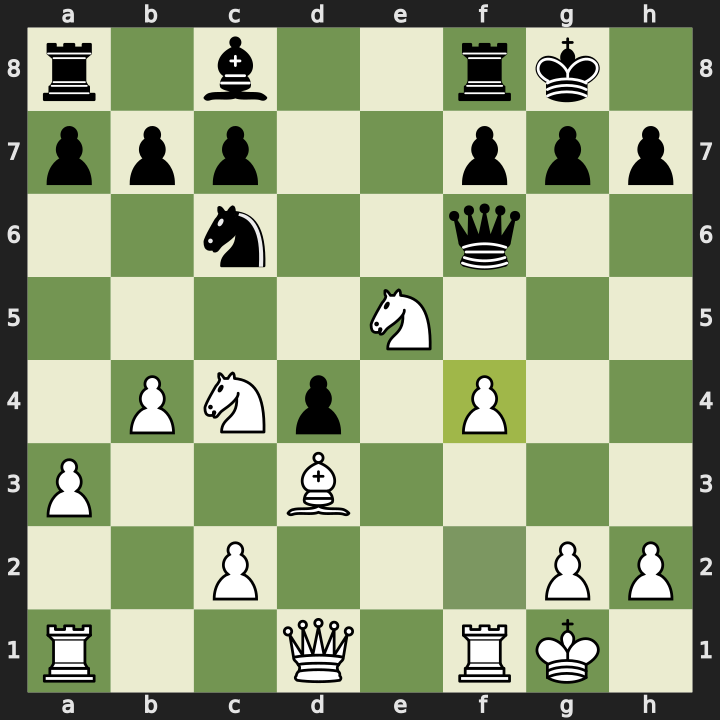
Black brings in their second knight, and I consider taking it but then realise I can push f4 to defend my knight on e5 instead. If Black takes the knight with theirs, I take back with the pawn revealing a discovered attack from the rook on f1.
16…b5 17. Nxc6 Qxc6 18. Ne5 Qf6 19. Qe2 h6 20. Rae1
Black counter-attacks with b5, a nice move attacking my knight on c4. I rotate my knights: the one on e5 takes on c6, then I shuffle the c4 knight over to e5 in that great central location.
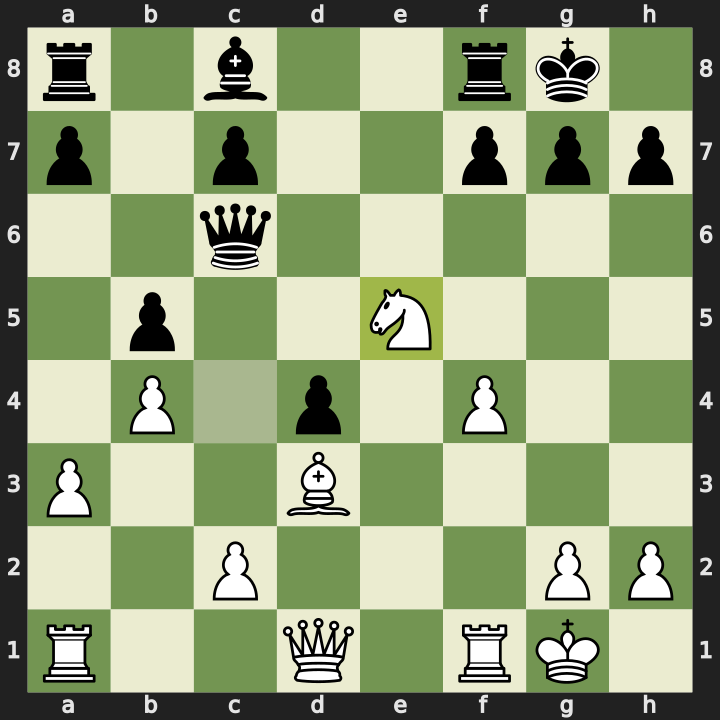
Black insists on keeping their queen on f6. I resist the temptation to sacrifice the bishop on h7 or bring the queen all the way out to h5 and decide to just bring my long-range pieces towards the e-file and f-file where I can control the space and then make a coordinated attack. I play Qe2, then Rae1, and at that point my opponent resigned.
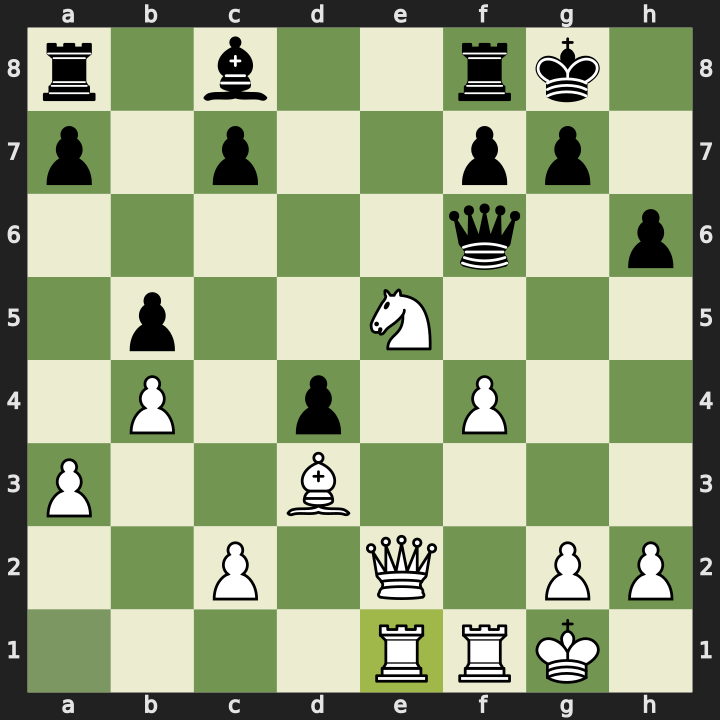
I was a little stunned because I thought it was a very even game. I hadn’t actually been counting the pieces and hadn’t realised that I was a piece up in a strong position. From here all I had to do was trade some pieces and win. Not a bad game, even if it did end a little abruptly. There were still plenty of chances for me to make a mistake.
Engine Review
A pretty messy game according to the engine: 64.2% accuracy for me and 52.7% for my opponent. Two missed tactics from me, although no blunders and no mistakes. Four mistakes from my opponent. Game rating of 700 for me and 250 for my opponent.
Right out of the opening, I missed a chance to capture Black’s bishop after d6 prevented it from retreating. Black’s key mistake was Nxe5 on move 14: a simple counting error where I had two defenders of the pawn and they only had two attackers.
After the trades, it’s mostly improving moves until there’s a +4.6 evaluation advantage for White, even though there’s only a two-point material advantage. I can see at least one simple threat: Qe4, making a diagonal battery with the bishop on d3, threatening mate on h7. That move also attacks the rook on a8, so Black wouldn’t have been able to deal with the checkmate threat and the attack on the rook at the same time. That’s possibly why they resigned. According to the engine, they would have had to sacrifice another piece to stay in the game, putting me up five points of material and completely winning.
Reflections
What went well:
- Dealing with the aggressive opening. Nbd2 to block the check, then a3 and b4 to kick the bishop, all while developing normally.
- Spotting that the e5 push was strong with two knights supporting it.
- Resisting the temptation to go for flashy sacrifices (Bxh7, Qh5) and instead building up with Qe2 and Rae1 to control the open files.
- Seeing enough tactical opportunities to get an advantage, even if the accuracy was lower than I’d like.
What to work on:
- Counting pieces during the game. I didn’t realise I was up a full piece until after the game ended. Awareness of the material balance would help with decision-making.
- The engine flagged two missed tactics. Looking for the pattern where a piece that comes out early in the opening gets all of its retreat squares cut off is something I want to keep practising.
Full PGN:
1. d4 e6 2. Nf3 Qf6 3. e3 Bb4+ 4. Nbd2 d6 5. Bd3 e5 6. dxe5 dxe5 7. e4 Ne7 8. a3
Ba5 9. b4 Bb6 10. Bb2 Nec6 11. Nc4 Bd4 12. Bxd4 exd4 13. O-O O-O 14. e5 Nxe5 15.
Nfxe5 Nc6 16. f4 b5 17. Nxc6 Qxc6 18. Ne5 Qf6 19. Qe2 h6 20. Rae1 1-0