Win vs Bradjay4567865433 (932)
| Opening: Colle-Zukertort | Result: 1-0 (Resignation) | Time Control: 14 days/move (Daily) | Rated |
Game Overview
A clean game without too much fancy tactics. My opponent played a Grunfeld-style defence with a kingside castle and fianchettoed bishop against my Colle-Zukertort as White. This can be a challenge because the dark-squared bishop on g7 is a strong defender of the castled king. But Black blundered a knight, and from there it was a matter of trading down and converting the advantage. A rook on the seventh, a queen invasion, and two passed c-pawns did the rest.
The Opening (Moves 1-7)
1. d4 Nf6 2. Nf3 g6 3. Nbd2 d5 4. e3 Bg7 5. Bd3 O-O 6. b3 c5 7. Bb2
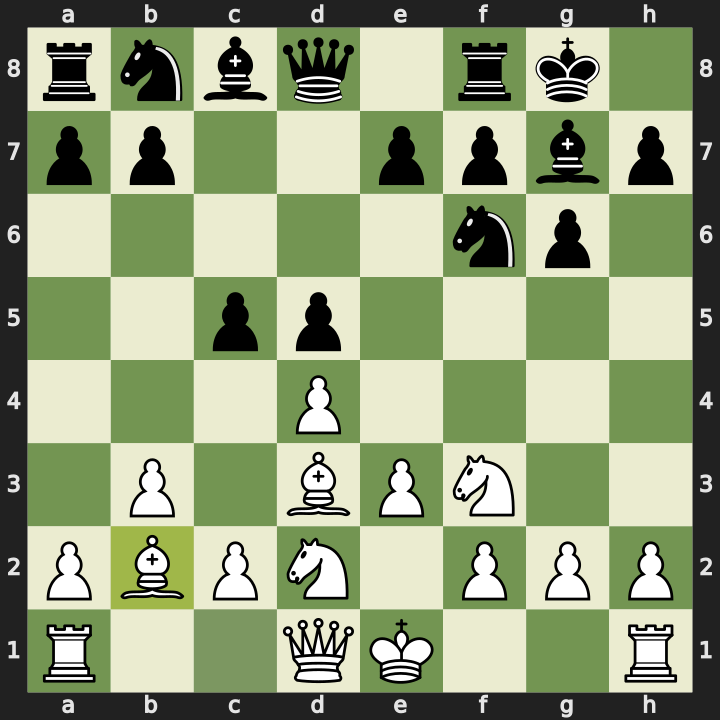
The first ten moves were pretty calm. Standard Colle-Zukertort development: d4, Nf3, e3, Bd3, b3, Bb2. Black went with a King’s Indian/Grunfeld structure with g6, Bg7, d5, and O-O.
The Bishop Trade (Moves 7-9)
7…Bg4 8. h3 Bxf3 9. Qxf3
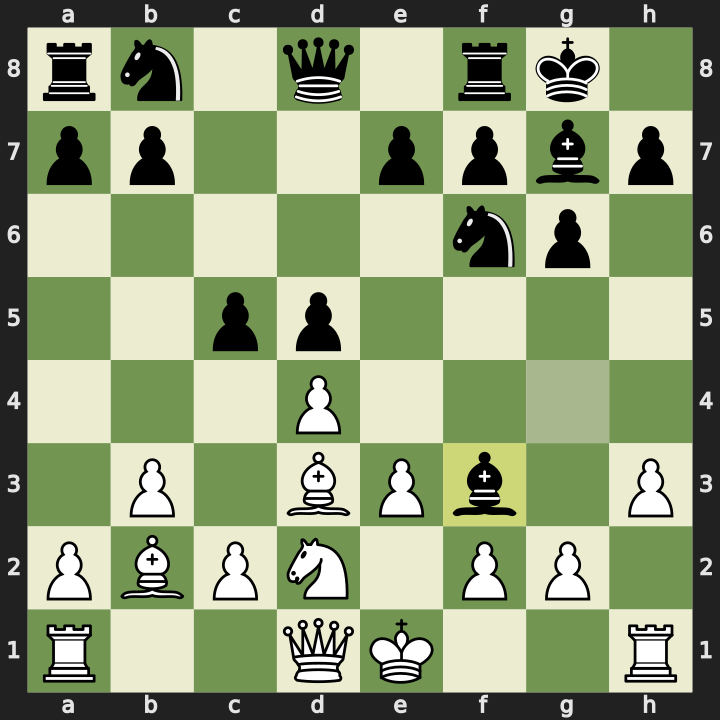
Black played Bg4 on move seven, pinning the knight. I kicked it with h3 and Black exchanged the bishop for the knight, drawing out my queen to f3. There’s a certain play style where Black trades the light-squared bishop for a knight early, and I think it’s kind of wasteful. That bishop is much more useful to save for later where it can be used to attack pawns in front of the king. One thing I did notice afterwards: I took on f3 with my queen rather than using the knight on d2. It worked out fine in this game, but taking with the knight would have kept my queen back until more pieces had been traded.
The Blunder (Moves 10-13)
10. dxc5 Ne5
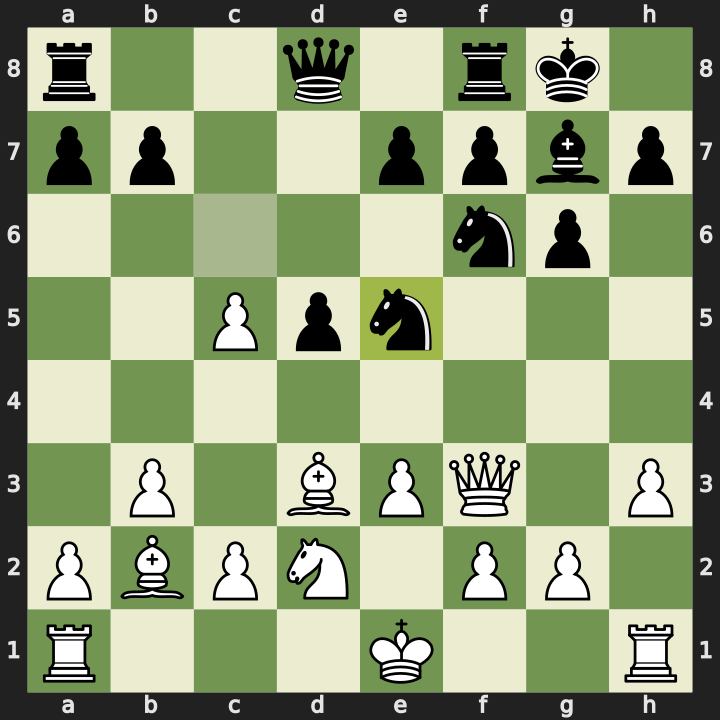
On move 10 I took on c5, which opened up the long diagonal for my dark-squared bishop on b2. This is important in the Colle-Zukertort because Black’s dark-squared bishop on g7 is the key defender of the castled king. If I can eliminate it with my own dark-squared bishop, that’s generally very good for me.
Black played Ne5, not noticing that the diagonal had opened up and there was no protection for the knight.
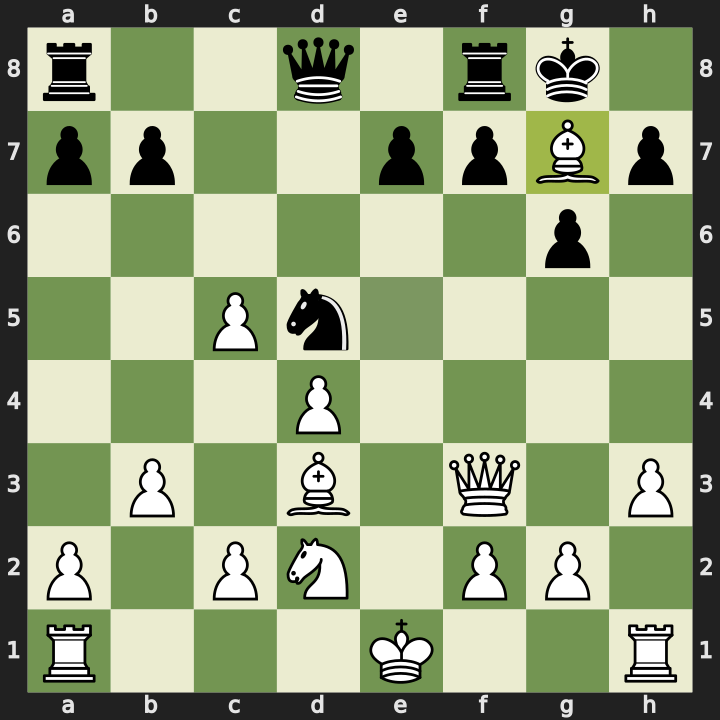
11. Bxe5 d4 12. exd4 Nd5 13. Bxg7 Kxg7
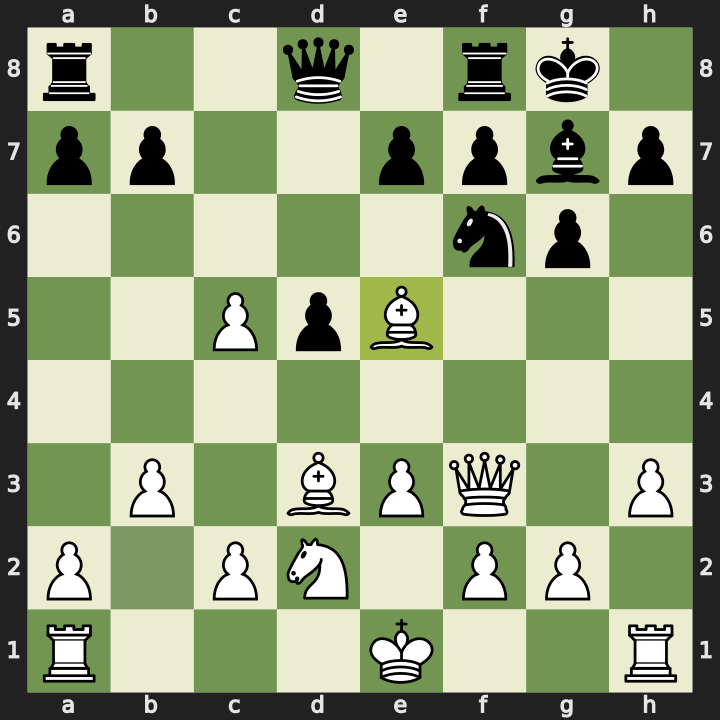
I grabbed the knight. Black offered a trade of the dark-squared bishops as well, which I was very happy to take. Being up material and knowing that the g7 bishop is a key piece for Black’s defence, I wanted it off the board.
Piece Trading (Moves 14-18)
14. c4 Nc3 15. Ne4 Qxd4 16. O-O f5 17. Nxc3 Qxc3 18. Rae1 Rad8
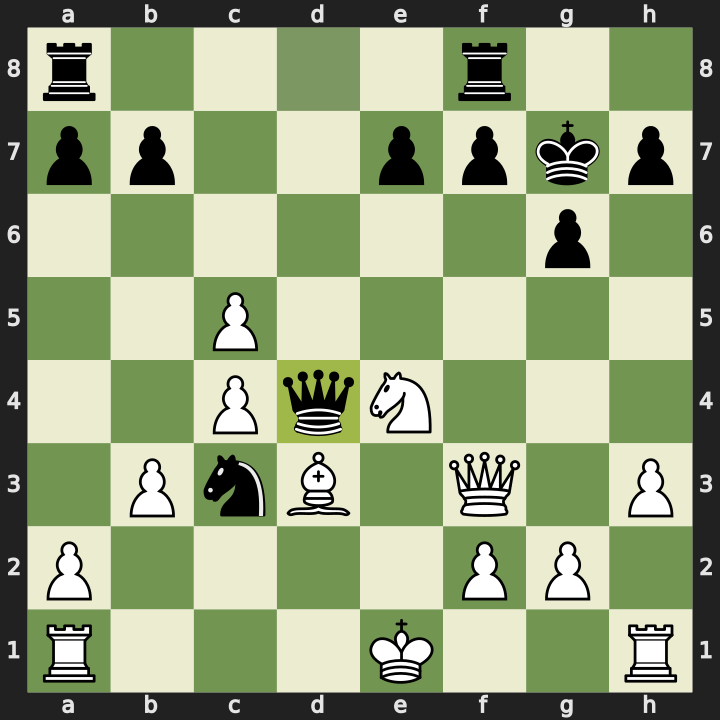
Some typical piece trading followed. Around move 16, the position does look a little more interesting with Black’s queen on d4 and a knight on c3 getting into my territory. But there are no real threats. The knights got exchanged and I brought my rook into the game with Rae1.
The Rook on the Seventh (Moves 19-22)
19. Rxe7+ Rf7 20. Rxf7+ Kxf7 21. Qxb7+ Ke8
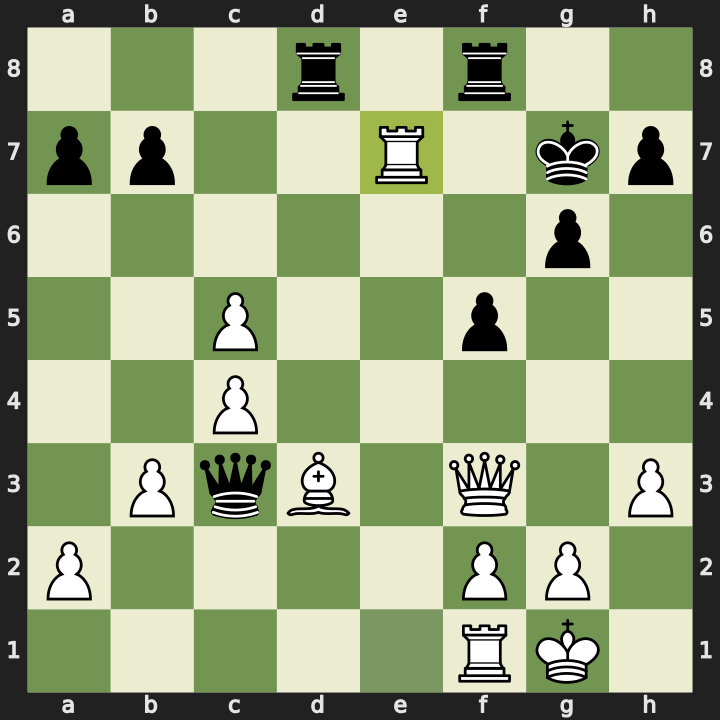
On move 19 I saw the opportunity to go for the win with Rxe7+. As the saying goes, a rook on the seventh is in heaven. Black blocked the check with the rook and I exchanged rooks, leaving the king exposed. Then Qxb7+ cleared the path for my c-pawn to run.
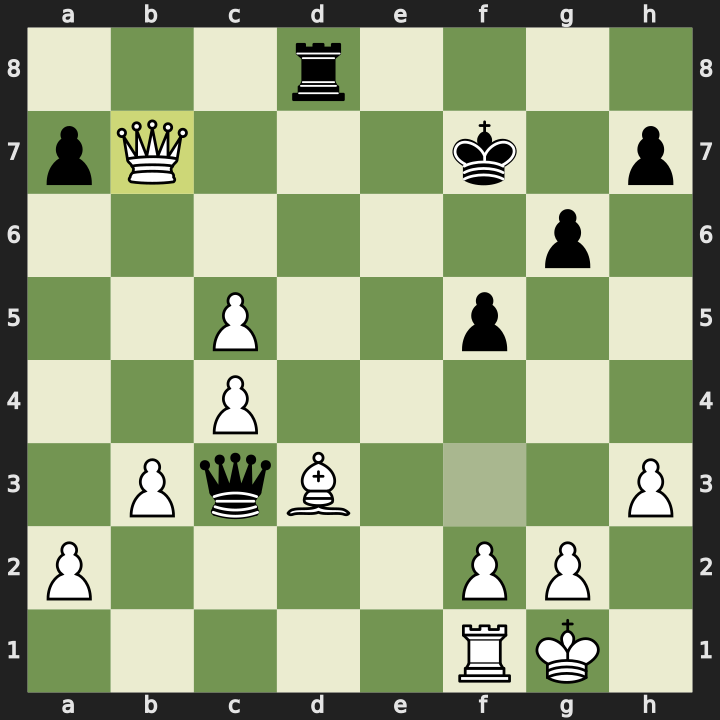
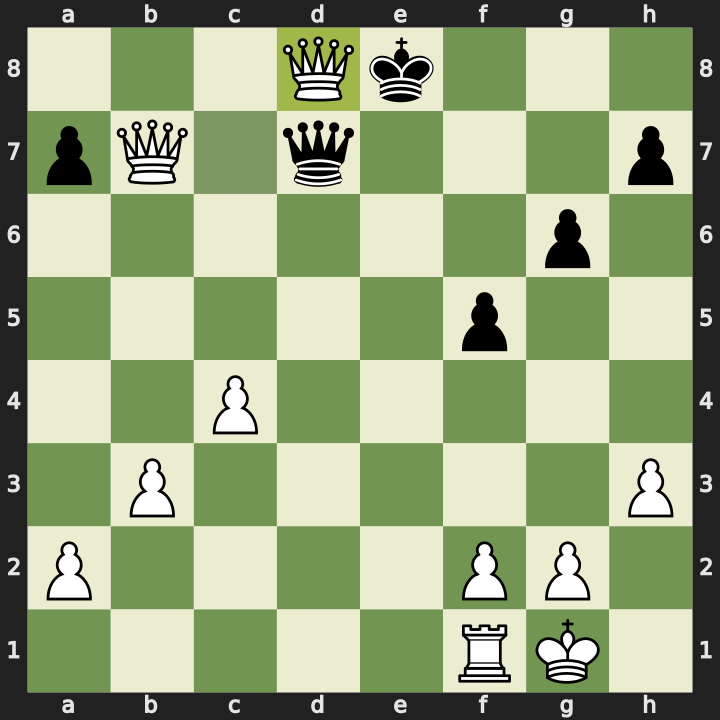
22. c6 Qxd3 23. c7 Qd7 24. cxd8=Q+ Qxd8
Black dropped the king back to e8 and from this position I didn’t even need to protect my bishop on d3. All I needed to do was push the c-pawn. Black sacrificed a rook to prevent the promotion, but it wasn’t enough.
The Second Pawn (Moves 25-27)
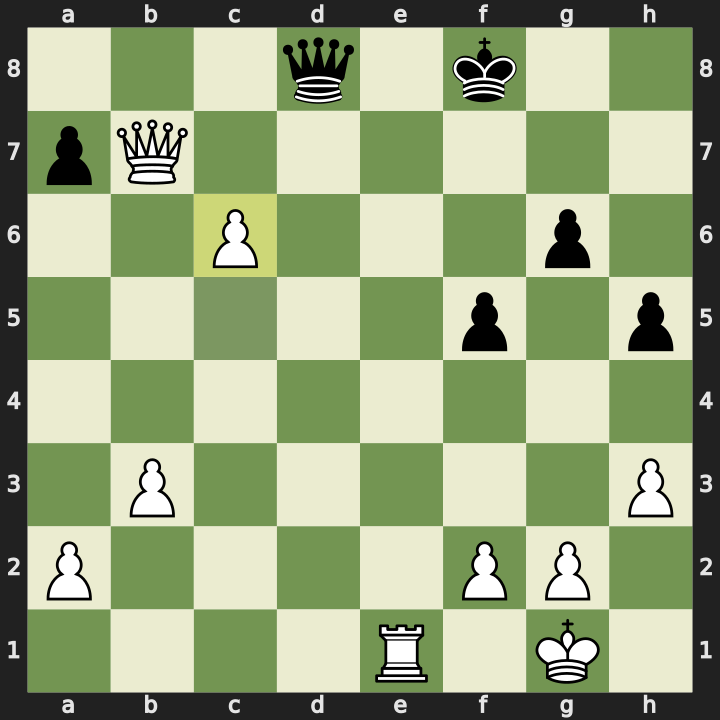
25. Re1+ Kf8 26. c5 h5 27. c6
I gave a check on the e-file with my rook to add some more activity, then started pushing the other c-pawn. With even less interference from Black this time, the second passed pawn was unstoppable. After c6, Black could see the writing on the wall and resigned. The engine calls it mate in eight.
Engine Review
Chess.com gave me 95.5% accuracy versus 82.8% for my opponent, with a game rating of 1900 for me and 1500 for my opponent. Only one blunder in the whole game, no tactical misses or mistakes.
As expected, the blunder was move 10: Ne5, stepping into the open diagonal. The evaluation jumps from about equal to +4.6 in White’s favour.
There’s not too much going on in the engine review otherwise. The idea of clearing out the pawns on the e and b files to make way for pawn promotions was the best plan at the time. The endgame technique was sound.
Reflections
What went well:
- Recognising the open diagonal after dxc5 and immediately exploiting it when the knight stepped into it.
- Being happy to trade off Black’s dark-squared bishop, understanding that it was the key defender of the castled king.
- The Rxe7+ combination to get a rook on the seventh, clear the b-file, and create a passed pawn. Seeing the whole plan before executing it.
- Ignoring the bishop on d3 when it didn’t matter and focusing on the c-pawn promotion instead.
What to work on:
- On move 9, taking on f3 with the knight (Nxf3) instead of the queen (Qxf3) would have been more accurate. Keeping the queen back until more pieces have been traded is generally a better approach.
Full PGN:
1. d4 Nf6 2. Nf3 g6 3. Nbd2 d5 4. e3 Bg7 5. Bd3 O-O 6. b3 c5 7. Bb2 Bg4 8. h3
Bxf3 9. Qxf3 Nc6 10. dxc5 Ne5 11. Bxe5 d4 12. exd4 Nd5 13. Bxg7 Kxg7 14. c4 Nc3
15. Ne4 Qxd4 16. O-O f5 17. Nxc3 Qxc3 18. Rae1 Rad8 19. Rxe7+ Rf7 20. Rxf7+ Kxf7
21. Qxb7+ Ke8 22. c6 Qxd3 23. c7 Qd7 24. cxd8=Q+ Qxd8 25. Re1+ Kf8 26. c5 h5 27.
c6 1-0