Win vs RodolfoAntoniazzi (1115)
| Opening: Indian Game with 2…b6 | Result: 0-1 (Resignation) | Time Control: 1 day/move (Daily) | Rated |
Game Overview
This was a fun game where I tried a different opening, caught my opponent off guard, and built a massive material advantage out of the opening. The challenge was converting that advantage without getting careless. White managed to create some real checkmate threats even while down material, but I spotted them and defended. Lots of tactical opportunities, and I’m happy with how I capitalised on them.
The Opening (Moves 1-4)
1. d4 Nf6 2. Bf4 b6 3. e3 Bb7
Instead of my usual King’s Indian setup with Nf6 and d6, I tried a queenside fianchetto: b6 followed by Bb7. The idea is to develop the bishop to the long diagonal where it puts pressure on g2 and the centre. I think this caught my opponent off guard.
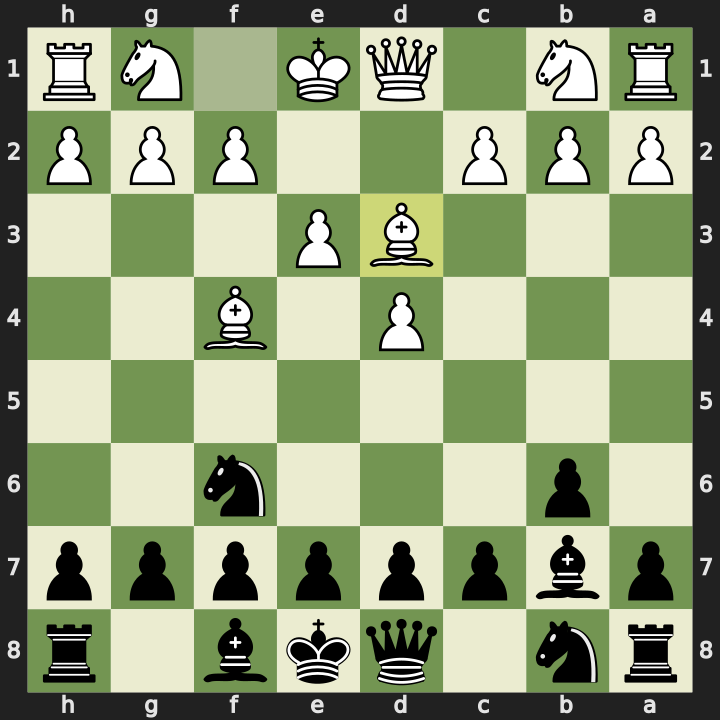
4. Bd3 Bxg2
White plays Bd3, which is a natural developing move but leaves g2 completely undefended. My bishop on b7 is staring right down the long diagonal at that pawn, and there’s nothing guarding it. I take it immediately.
The Raid (Moves 5-7)
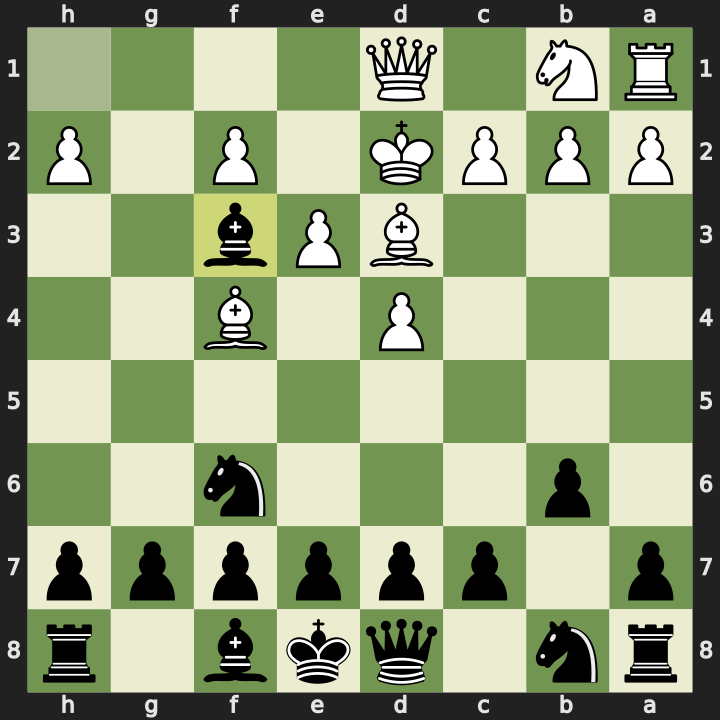
5. Nf3 Bxh1 6. Kd2 Bxf3 7. Qxf3
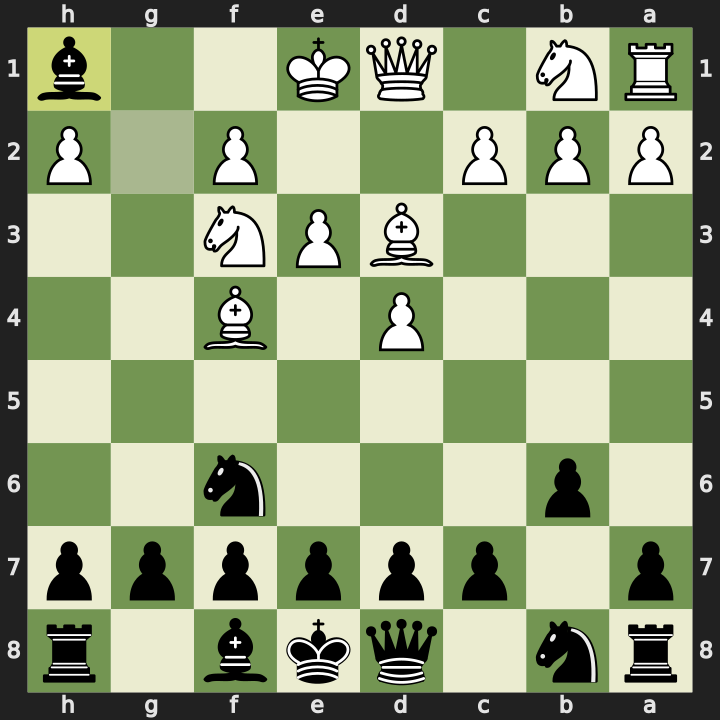
After taking the g2 pawn, the rook on h1 is next. White brings out the knight to f3 but my bishop grabs the rook first. White moves the king to d2 trying to trap my bishop, but I can take the knight on f3 on the way out. White recaptures with the queen, and I’ve come away with a rook, knight and pawn for a bishop. Six points of material up out of the opening. Can’t ask for much better than that.
Breaking the Pin (Moves 8-11)
7…Nc6 8. Nc3 e6 9. Bg5 Be7
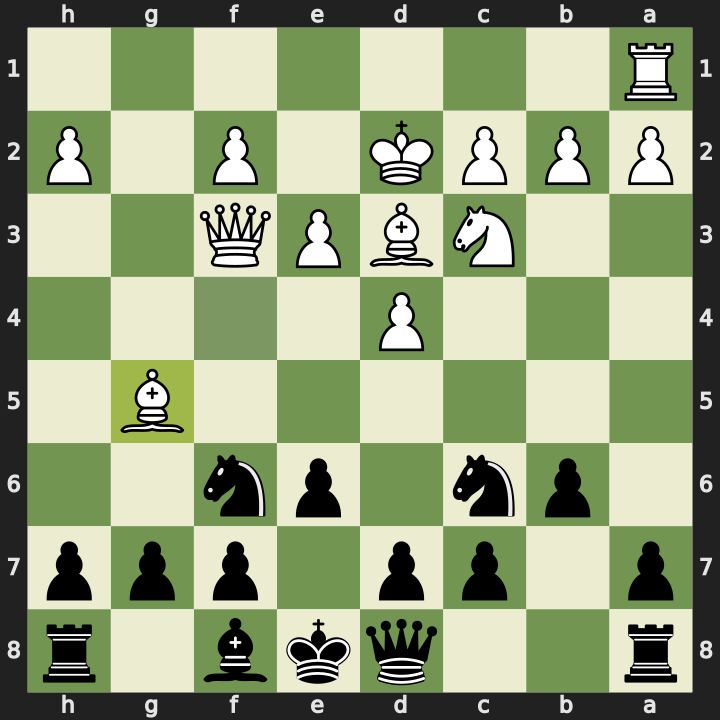
White brings the bishop to g5, pinning my knight to the queen. I break the pin with Be7.
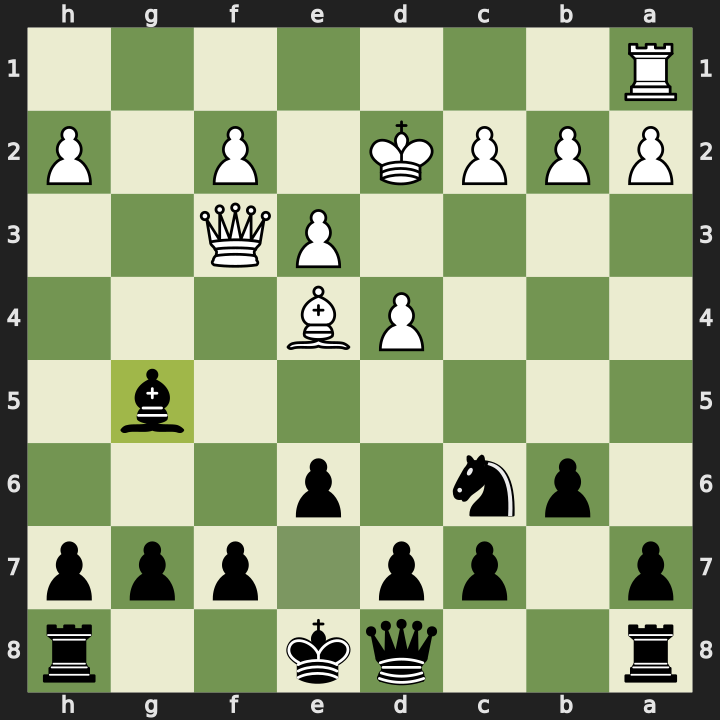
10. Ne4 Nxe4+ 11. Bxe4 Bxg5
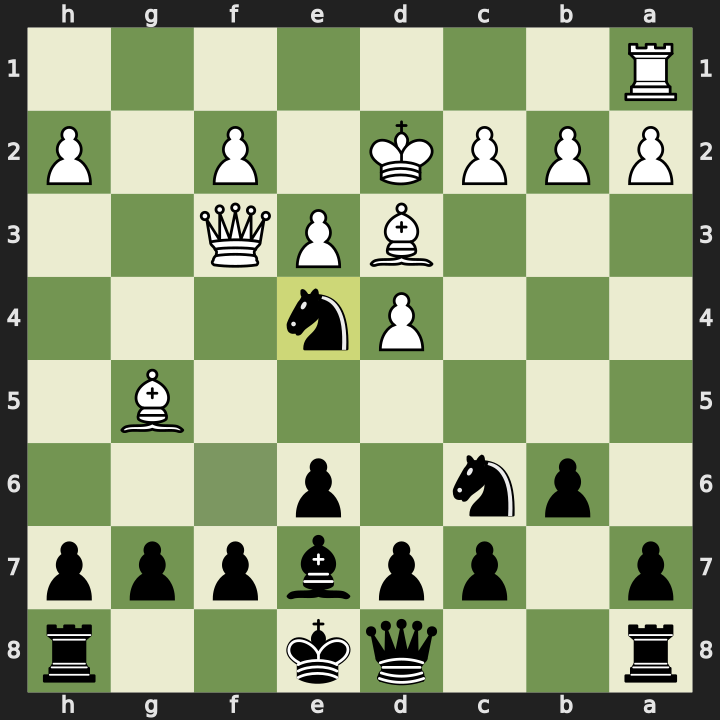
White tries to add pressure with Ne4. This is where I saw a chance to use a removing the guard tactic. I take the knight on e4 with check. White has to recapture with the bishop, but that leaves the bishop on g5 undefended. I grab it with my own bishop. Now I’m up 9 points of material.
Defending Checkmate Threats (Moves 12-15)
12. Rg1 O-O 13. Qh5
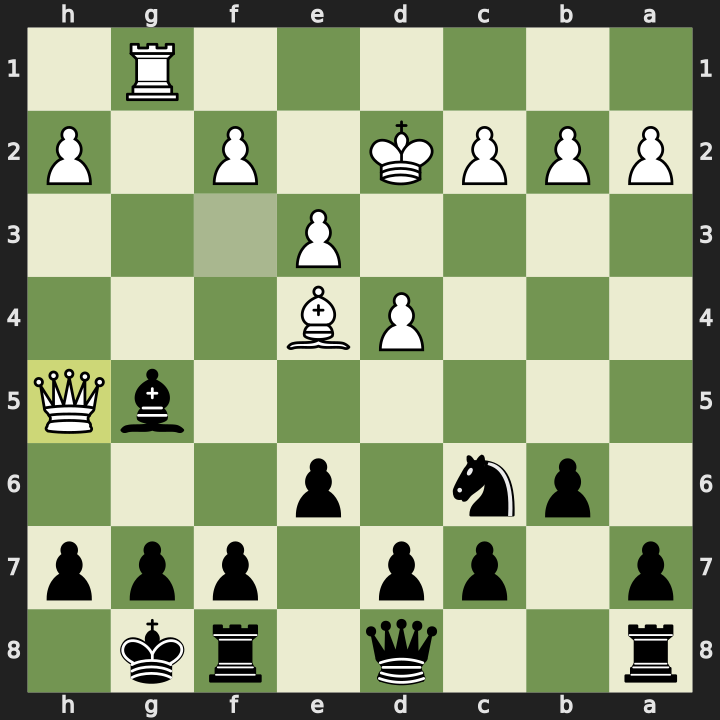
I have the material advantage, but that doesn’t mean I’ve won. White swings the queen over to h5, which combined with the bishop on e4 poses a checkmate threat: Qxh7#. It would have been very easy to get overconfident here, play some normal developing move, and lose the game immediately. I’m glad I didn’t get complacent. I saw the checkmate threat and blocked it with h6.
13…h6 14. Qg4 f5
White tries to set up another threat by lining up the queen and rook on the g-file, but they placed the queen two squares away from their bishop, giving me an easy fork with f5. The pawn attacks both the queen and the bishop on e4.
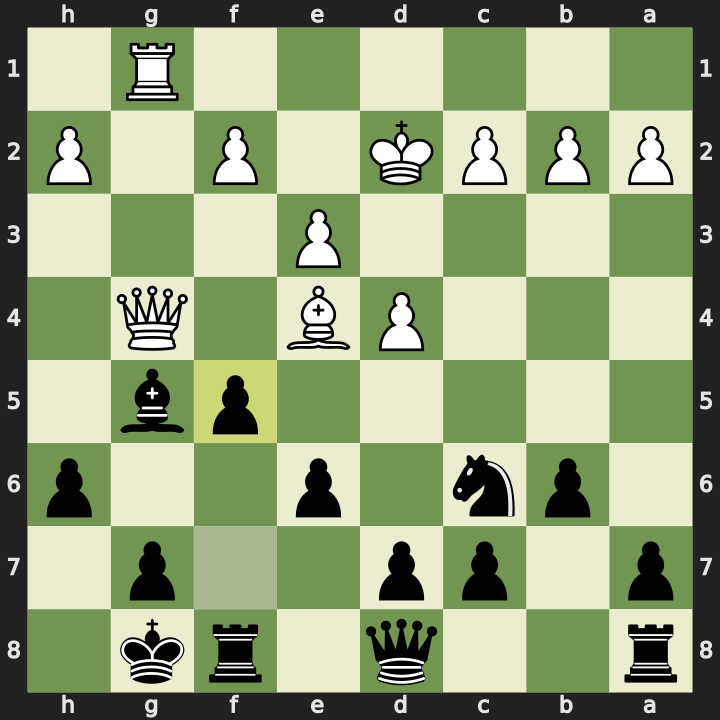
15. Qg3 fxe4
I grab the bishop and now I’m up 12 points of material. But the game still isn’t won. If I move my bishop carelessly, there’s a checkmate threat with Qxg7. I have to remain careful and find a way to convert.
The Battery (Moves 16-21)
16. h4 Rf3 17. Qg4 Bxe3+
My plan was to create a triple battery on the f-file, but I needed to deal with the pawn that was attacking my bishop on g5. I was up so much material that I didn’t mind giving back three points if it allowed me to set up my strategy. I went for Bxe3+, sacrificing the bishop to clear space on the f-file.
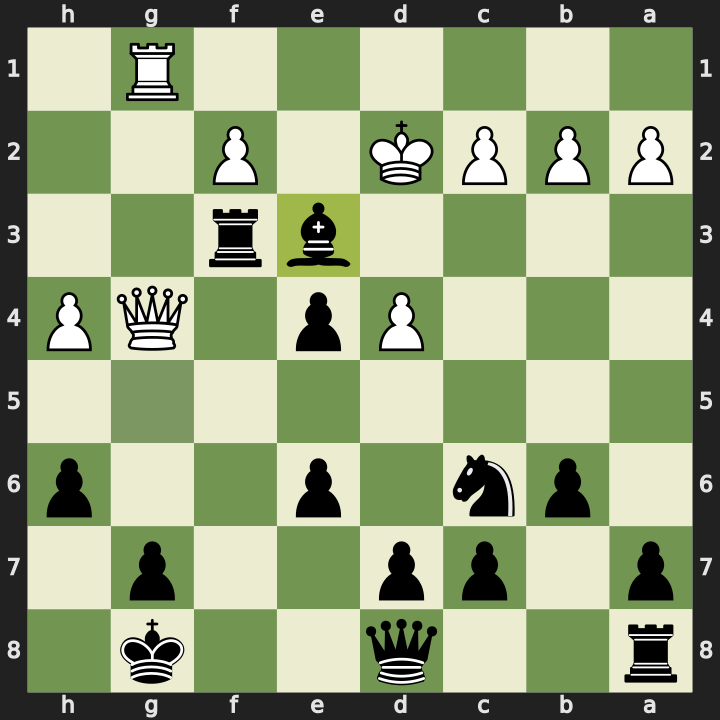
18. Ke2 Nxd4+ 19. Kd1 Qf6 20. Qxe4 Rf8 21. fxe3 Rf1+
My opponent didn’t take the bishop with their pawn. Instead they moved the king to e2, which actually allowed me to take another pawn with my knight on d4 with check. The king is pushed to the back rank. I bring my queen to f6 clearing the path for my other rook to join on f8, setting up the triple battery I had in mind. White sees the bishop can be taken with a pawn and goes for it, but that clears the path for my battery to attack the king.
The Finish (Moves 21-25)
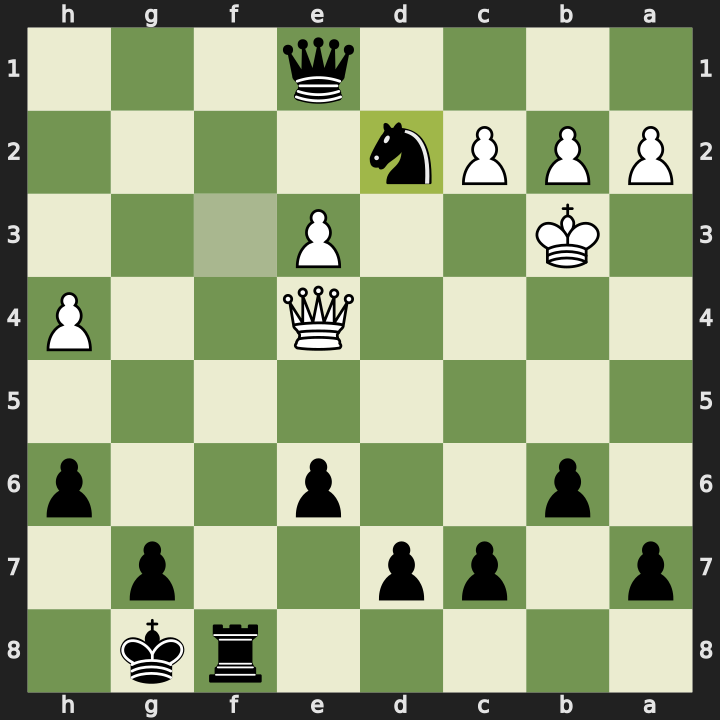
21…Rf1+ 22. Rxf1 Qxf1+ 23. Kd2 Nf3+ 24. Kc3 Qe1+ 25. Kb3 Nd2+
I exchange rooks, then check the king with my knight, then again with my queen, and finally again with my knight forking the king and queen. White resigns. At the point of resignation it’s a mate in six.
Engine Review
Chess.com scored my play at 92% accuracy versus 75.4% for my opponent, with a game rating of 1950 for me and 950 for my opponent. Only one blunder in the whole game, with no tactical misses or mistakes.
As expected, the blunder was on White’s side: move 4, Bd3, leaving g2 undefended in the line of sight of my bishop.
One interesting engine observation: castling on move 12 wasn’t the engine’s top choice. It preferred keeping the king on f8 and using the flank for pawn pushes instead. The engine’s reasoning is worth studying further, because my instinct is always to castle, but sometimes it’s not necessary.
Reflections
What went well:
- Trying a new opening. The queenside fianchetto caught my opponent off guard and led to an immediate advantage.
- Spotting the removing the guard tactic with Nxe4+, eliminating the defender of g5 and winning another piece.
- Staying alert to checkmate threats. Even up 9 points, I recognised Qxh7# and defended with h6 instead of playing a casual move.
- Converting the advantage patiently. I didn’t rush. I set up a plan (the f-file battery) and executed it.
What to work on:
- Ask myself: is it really necessary to castle? Usually the answer is yes, but in this game the engine preferred not castling and instead using the flank for pawn pushes. I’d like to study this kind of position more and understand when the king is already safe enough.
Full PGN:
1. d4 Nf6 2. Bf4 b6 3. e3 Bb7 4. Bd3 Bxg2 5. Nf3 Bxh1 6. Kd2 Bxf3 7. Qxf3 Nc6 8.
Nc3 e6 9. Bg5 Be7 10. Ne4 Nxe4+ 11. Bxe4 Bxg5 12. Rg1 O-O 13. Qh5 h6 14. Qg4 f5
15. Qg3 fxe4 16. h4 Rf3 17. Qg4 Bxe3+ 18. Ke2 Nxd4+ 19. Kd1 Qf6 20. Qxe4 Rf8 21.
fxe3 Rf1+ 22. Rxf1 Qxf1+ 23. Kd2 Nf3+ 24. Kc3 Qe1+ 25. Kb3 Nd2+ 0-1