Loss vs Bradjay4567865433 (924)
| Opening: Pirc Defence, Austrian Attack | Result: 1-0 (Resignation) | Time Control: 14 days/move (Daily) | Rated | Event: ForEverOne 2026, Round 1 |
Game Overview
This was the second game against this opponent in the tournament. I had won the first game as White and now it was my turn to play Black. A bit of a disappointing result because I managed to recover from some opening mistakes and build a strong position, but then miscalculated a critical line. Rather than accepting an exchange sacrifice and continuing on, I tried to recover and ended up being a full piece down.
The Opening (Moves 1-12)
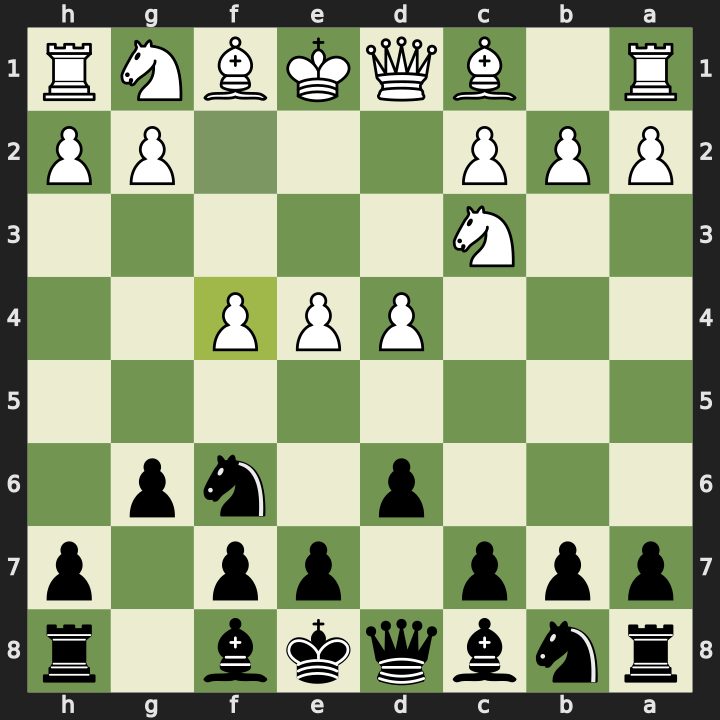
1. e4 d6 2. d4 Nf6 3. Nc3 g6 4. f4 Nc6 5. Nf3 e5
The first 12 moves were pretty standard. I got a Pirc Defence and White played the Austrian Attack. I pushed e5 on move 5 before finishing my piece development, which was a mistake. I must have been scared by the pawns on f4, e4 and d4, but the correct move was just to do the typical King’s Indian style fianchetto with Bg7 and castle.
6. d5 Ne7 7. Bb5+ c6 8. dxc6 bxc6 9. Bc4 d5 10. Be2 exf4 11. Bxf4 Bg7 12. O-O O-O
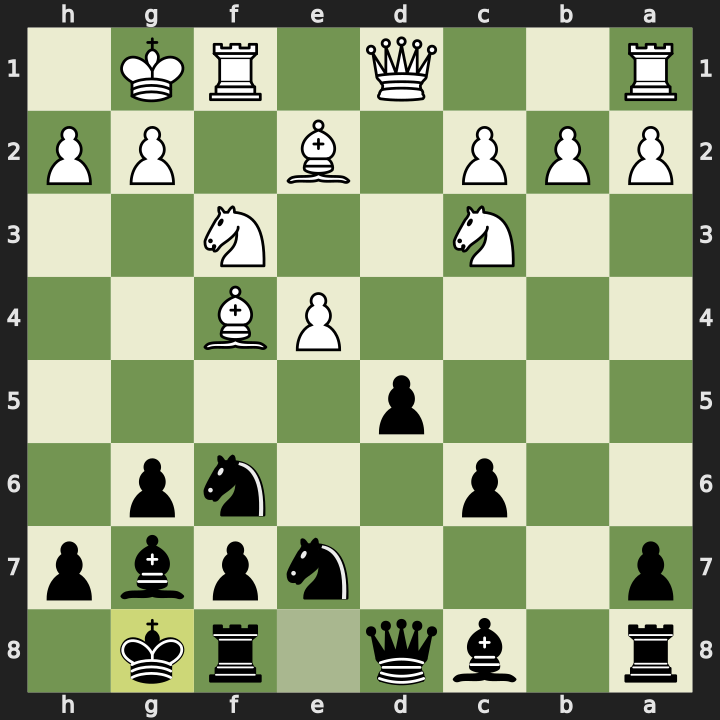
By move 12 we’ve both castled and I’ve recovered from the opening mistakes.
Queen Trade and the Tension (Moves 13-19)
13. Ne5 dxe4 14. Qxd8 Rxd8
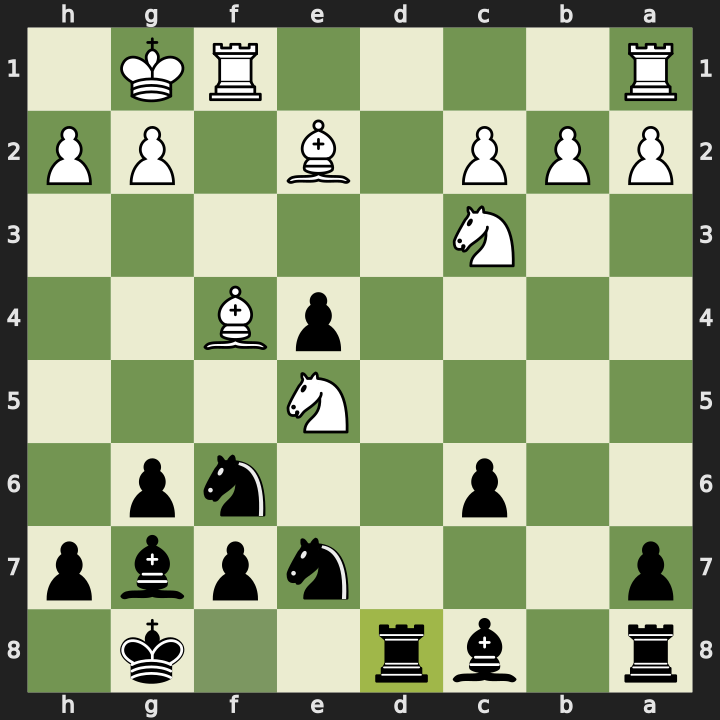
White decides to trade queens. I take back with the rook and the game goes on.
15. h3 Nfd5 16. Nxd5 Nxd5
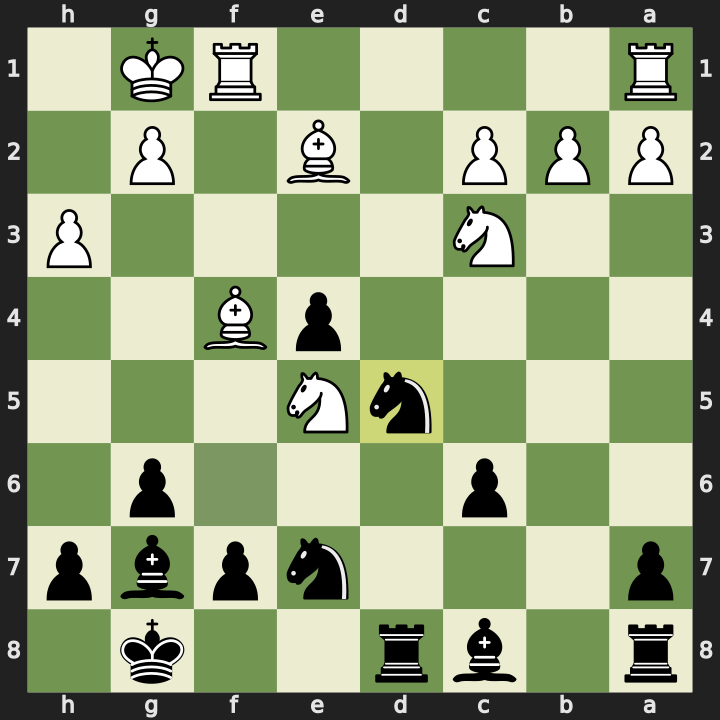
After the knight trades I’m in a really good position. I’ve got my knight threatening two pieces and my bishop threatening a piece. My rook is on a good file.
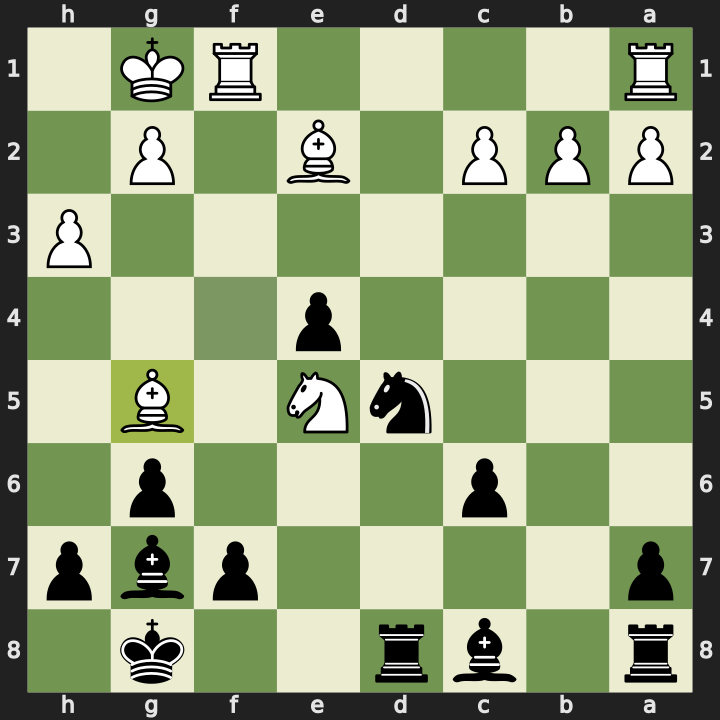
17. Bg5 f6
On move 17 I thought I had something. I pushed my pawn to f6, forking the bishop on g5 and the knight on e5. But White found a good response.
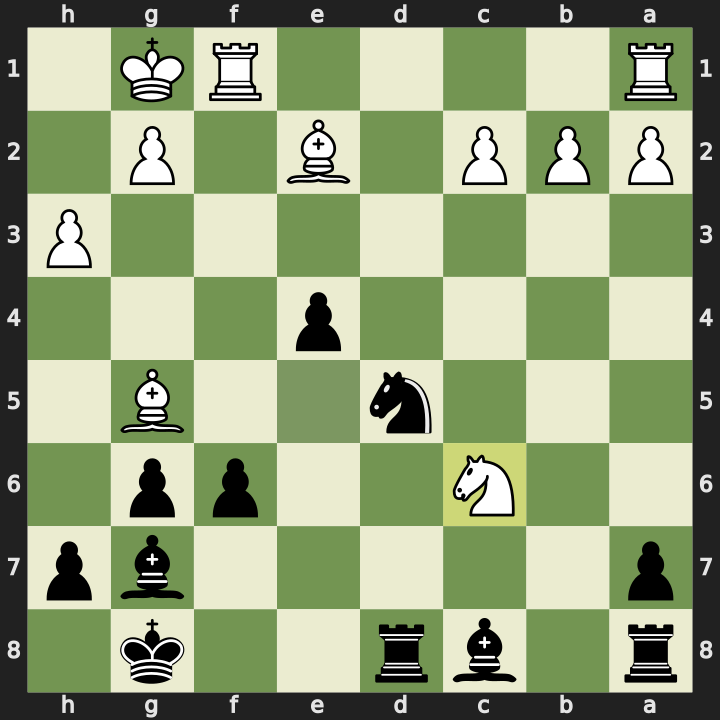
18. Nxc6 Rd6
White played Nxc6, attacking my rook. I wasn’t going to pick up a piece for free. I kept up the pressure with Rd6, still attacking two pieces: the bishop on g5 and the knight on c6.
19. Bc4 Be6
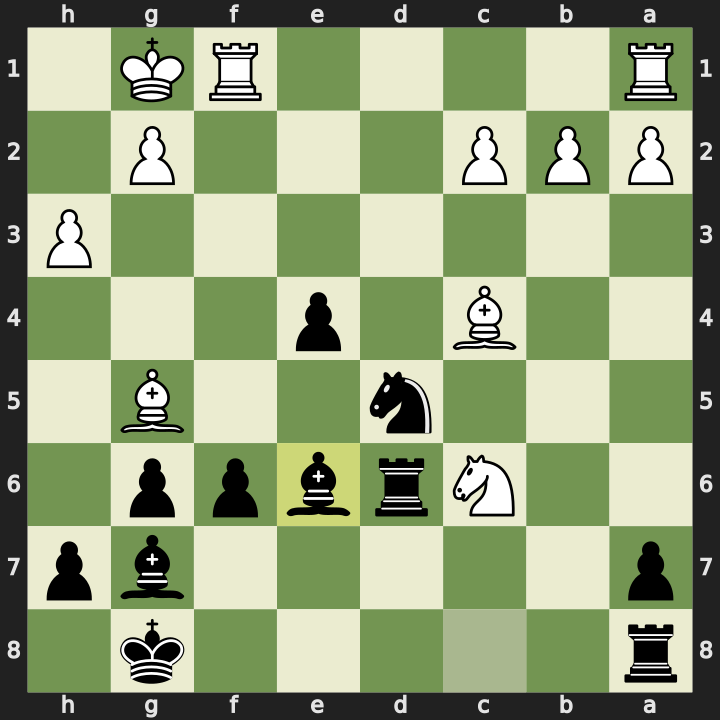
White pins my knight with Bc4 and I break the pin with Be6. Now instead of Be6 I could have simply taken the bishop on g5 or the knight on c6. What was I afraid of? If fxg5, then Bxd5+ check, Nxd5, and then Ne7+ forking the king and rook. White ends up a rook ahead at the end of that line. Similarly, if Rxc6, then Bxd5+ forks the king and rook. Re6 blocks the check, but then Bxe6, Bxe6, and White is up an exchange. So Be6 was actually the right move.
The Miscalculation (Moves 20-22)
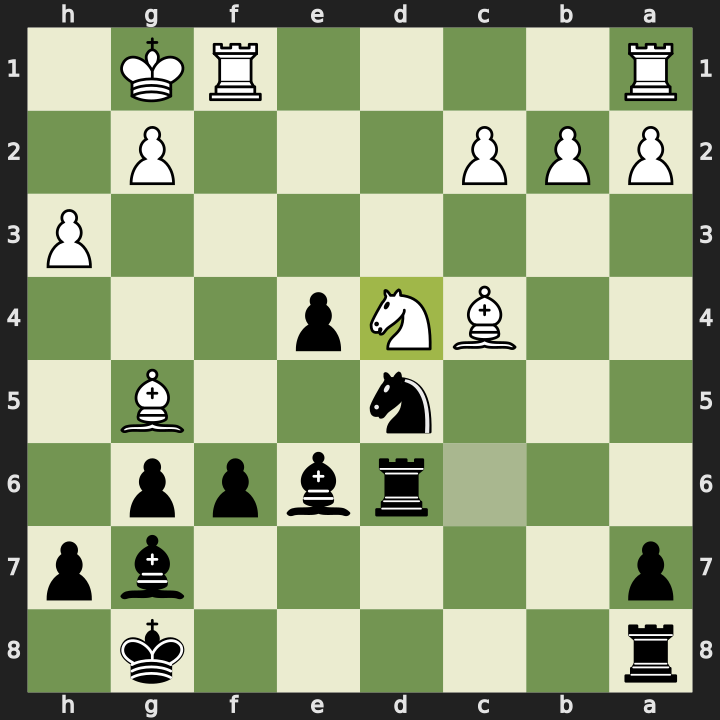
20. Nd4 Re8
White played Nd4, attacking the bishop I placed there to keep my knight from being pinned. This is where I made the mistake. I played Re8 thinking I’d be able to defend my bishop.
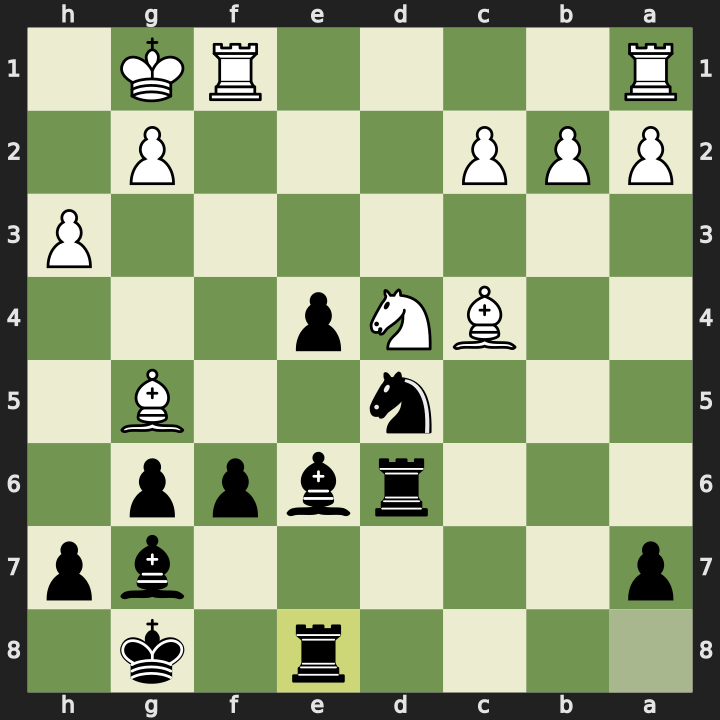
After White took on e6 I looked at the position more closely and realised that after Rexe6, White can bring in the second rook to d1, and then after fxg5, there is Bxd5 pinning the rook on e6. Rook takes on d5, White rook takes back, and White is up an exchange. So this position was also not ideal.
21. Nxe6 Rc8 22. Nxg7 Rxc4
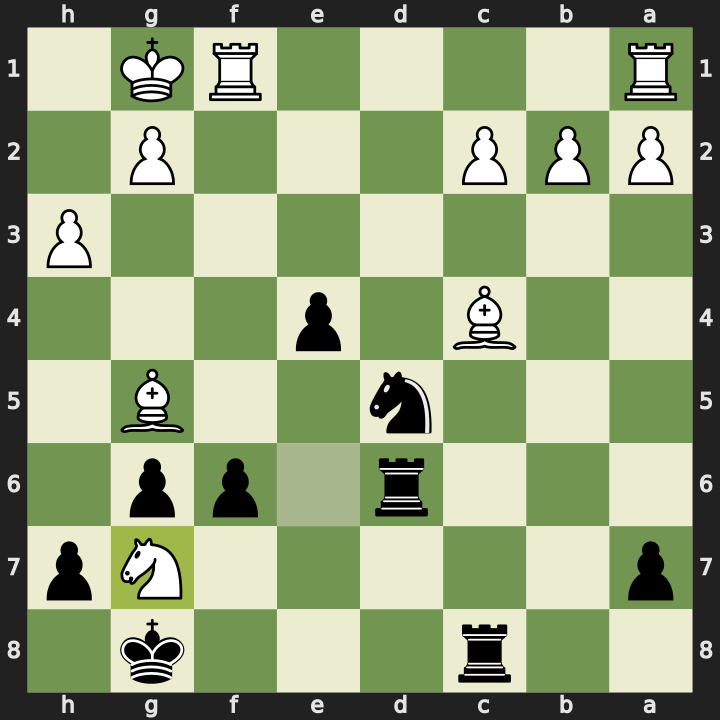
But the real mistake happened here. Rather than just accepting that I’d made a bad move and would be down an exchange, I repositioned my rook to the place I wished I had moved it in the first place: c8. But at this point I’d lost the tempo and lost the piece. The game went on but I was unable to recover.
The Endgame (Moves 23-41)
23. Ne8 Re6 24. Nxf6+ Nxf6 25. Rxf6 Rxf6 26. Bxf6 e3 27. Re1 Re4
We traded a few more pieces and White ended up ahead by a piece and a pawn. I had a passed e-pawn that made it all the way to e2, but it wasn’t enough.
28. c3 Kf7 29. Bd4 e2 30. b4 Ke6 31. a4 Kd6 32. b5 Kc7 33. a5 Kb7 34. a6+ Ka8 35. b6 axb6 36. Bxb6 Re6 37. Bd4 h6 38. a7
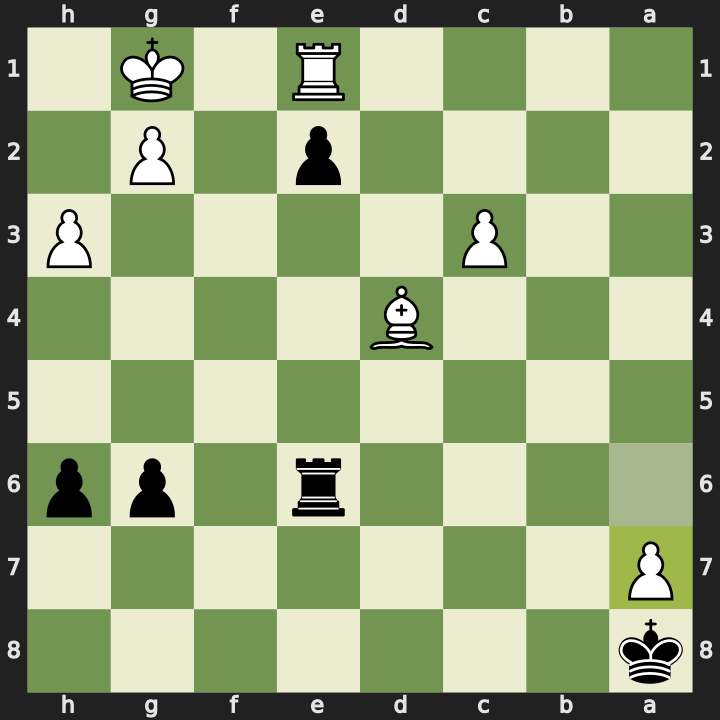
The three vs one pawn majority on the queenside was too much to deal with. White’s pawns marched up the board and after a7 the pawn is one square from promotion. I resigned a few moves later.
Engine Review
There was an opening mistake pushing e5 far too early. The correct move was just to do the typical King’s Indian style fianchetto and castle. Pushing d5 on move 9 was also a mistake because there was an opportunity to take on f4, meaning that in the subsequent trades White wouldn’t have been able to force the queen exchange.
By move 12 after castling I’d recovered and was in a good position with a 0.6 eval advantage. Not winning, but slightly better.
By move 15 the eval was 2.12 in Black’s favour. I’ve got my knight threatening two pieces and my bishop threatening a piece. My rook is on a good file. A pretty good position.
The move I thought was clever, f6 forking the bishop and knight, was actually a mistake. It makes sense: it allows the knight to take my pawn on c6 and threaten my rook. This isn’t the first time I’ve gotten overexcited by spotting a potential tactic and not thought through what the best move for my opponent is. Bringing the rook up to d6 was the best response after Nxc6, and there’s still a 0.5 advantage for Black at that point. Breaking the pin with Be6 on move 19 is also best move, increasing the advantage to 0.9 for Black.
And then in a single move on move 20, Re8 is a blunder, flipping the eval to 3.1 in White’s favour. What a shame.
With best play it turns out I never really had a chance to win a piece. There’s always a tactic that lets White get away, and if the game had gone on it may have ended up in a draw.
Reflections
What went well:
- Recovering from opening mistakes to get into a strong position by move 15.
- Breaking the pin with Be6 on move 19. The alternatives (fxg5 or Rxc6) both lose material to tactical shots, and I correctly identified those lines during the game.
- Keeping multiple pieces under attack at once to maintain pressure.
What to work on:
- Take more time in these positions with a lot of tension. In the daily format there is no time pressure to make a move. I should even consider saving my analysis and coming back a day later to see if there’s anything I’ve missed.
- Recognise that being down an exchange is preferable to being down a piece. After realising Re8 was a mistake, I should have just forged ahead with Rexe6 rather than trying to undo it with Rc8. I probably would have lost, but I would have had slightly more of a chance.
- Opening move ordering. Playing e5 so early didn’t do me any favours. In daily games I should be using the openings database.
Full PGN:
1. e4 d6 2. d4 Nf6 3. Nc3 g6 4. f4 Nc6 5. Nf3 e5 6. d5 Ne7 7. Bb5+ c6 8. dxc6
bxc6 9. Bc4 d5 10. Be2 exf4 11. Bxf4 Bg7 12. O-O O-O 13. Ne5 dxe4 14. Qxd8 Rxd8
15. h3 Nfd5 16. Nxd5 Nxd5 17. Bg5 f6 18. Nxc6 Rd6 19. Bc4 Be6 20. Nd4 Re8 21.
Nxe6 Rc8 22. Nxg7 Rxc4 23. Ne8 Re6 24. Nxf6+ Nxf6 25. Rxf6 Rxf6 26. Bxf6 e3 27.
Re1 Re4 28. c3 Kf7 29. Bd4 e2 30. b4 Ke6 31. a4 Kd6 32. b5 Kc7 33. a5 Kb7 34.
a6+ Ka8 35. b6 axb6 36. Bxb6 Re6 37. Bd4 h6 38. a7 h5 39. Kf2 Rf6+ 40. Bxf6 Kxa7
41. Rxe2 1-0