Win vs gmkenna1 (1061)
| Opening: Queen’s Pawn, Zukertort Variation | Result: 1-0 (Resignation) | Time Control: 3 days/move (Daily) | Rated | Event: 91st Chess.com Daily Tournament (1001-1200), Round 1 |
Game Overview
I’m really happy with this game. I punished an early mistake by my opponent and then saw a nice tactic to increase my lead. The opponent resigned on move 21 when their position was hopeless.
The Opening (Moves 1-6)
1. d4 d5 2. Nf3 f6 3. c4 Nc6 4. cxd5 Qxd5 5. Nc3 Qd8 6. e4
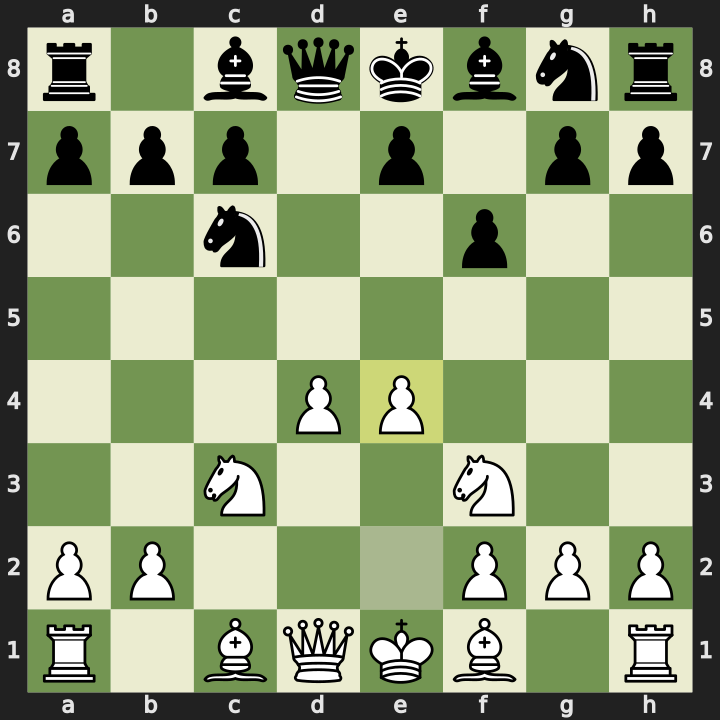
I’m trying a couple of different variations with my openings. This is the Queen’s Pawn Opening, Zukertort Variation. I’m learning how to play this early c4 move which invites Black to take a pawn in exchange for giving up control of the centre, where it’s fairly easy for White to win it back. This position can also transpose into a Catalan if you fianchetto on the kingside and castle.
In this game I was able to take Black’s d-pawn with my c-pawn, which is a very good exchange, and then also get e4. So now I have nice control of the centre with both knights developed, each defending a centre pawn. This isn’t a position I play very often but it felt fairly comfortable.
The Knight Blunder (Moves 6-11)
6…Bg4
Black played Bg4, pinning my knight on f3 to the queen. One thing I’ve been trying to focus on lately is to avoid playing defensive moves when there’s a more active option.
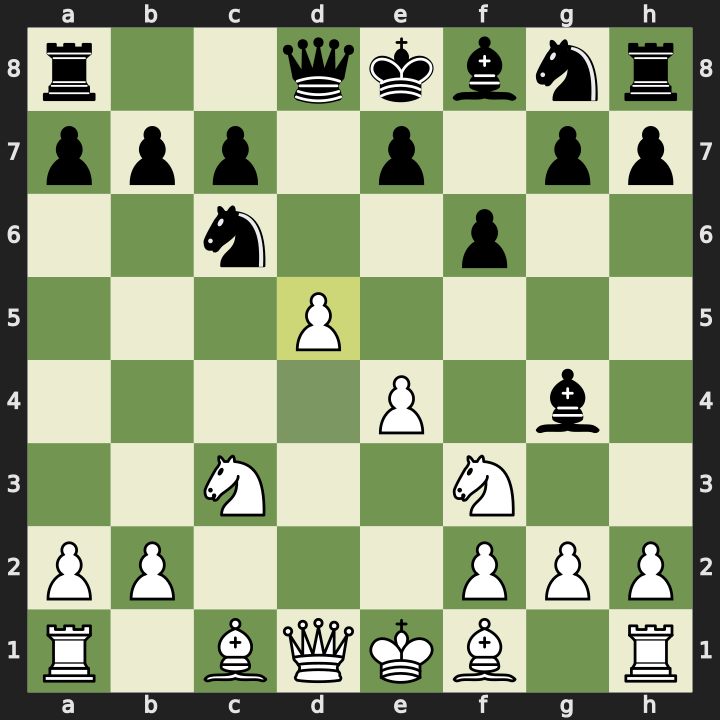
7. d5 Nd4 8. Qxd4
I saw an opportunity to push d5, attacking Black’s knight. If Black took the knight on f3 with the bishop I could always take back with my queen or pawn, so it wasn’t so urgent that I deal with that threat. Black hopped their knight forward to d4, miscalculating that I could simply take it with my queen. Just seven moves into the game I was up a piece.
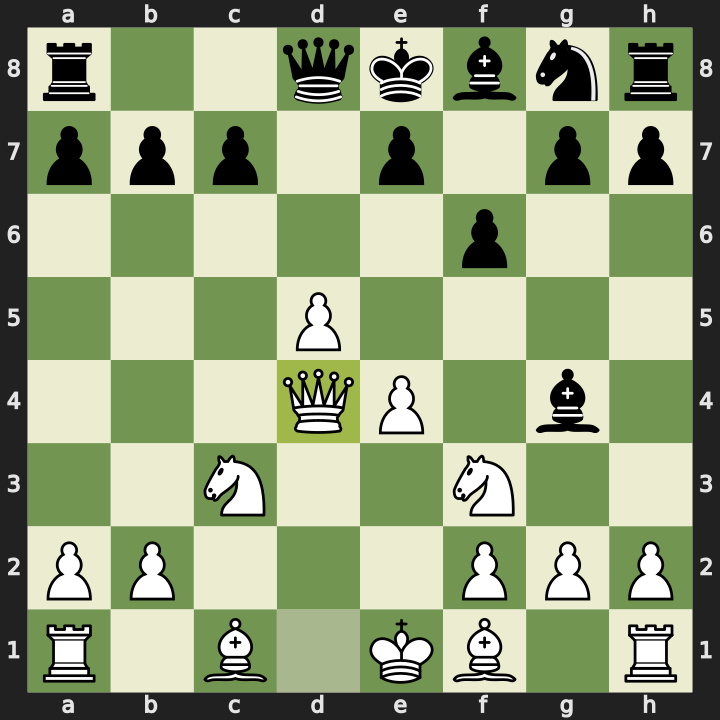
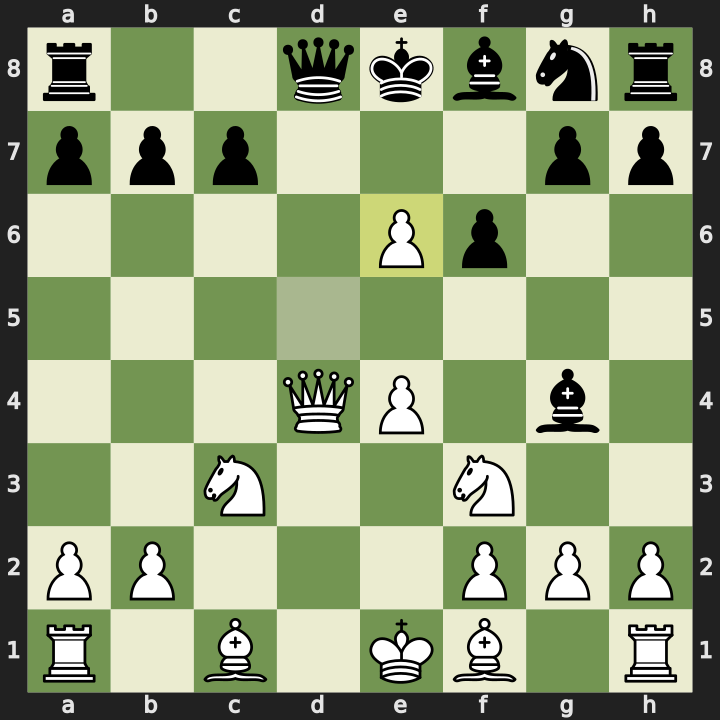
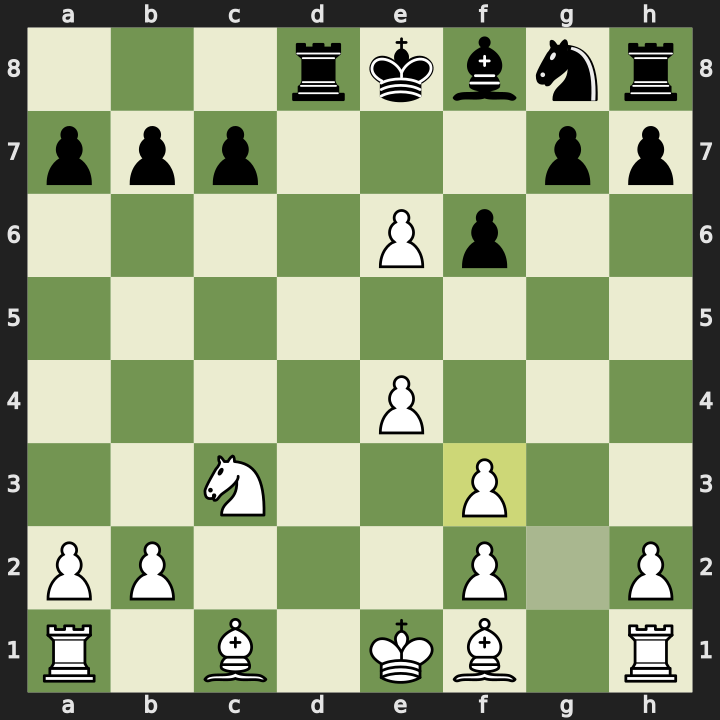
8…e5 9. dxe6 Bxf3 10. Qxd8+ Rxd8 11. gxf3
Black tried to attack the queen with e5 but I took en passant, creating a passed pawn on e6. Black took my knight on f3 but it’s very straightforward for me since I can take their queen with check and then recapture the bishop on f3 with my g-pawn. I now have a piece and a pawn up and Black’s not got a lot of development or activity.
Consolidating (Moves 12-17)
11…Bb4 12. Bd2 Ne7 13. O-O-O O-O
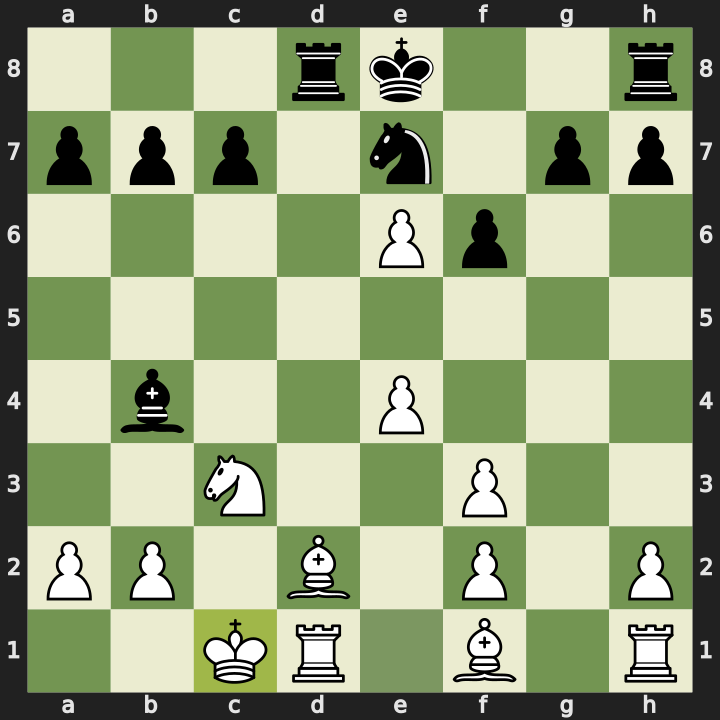
Black developed the bishop to b4. I developed my own bishop to d2 and then took the opportunity to castle queenside, putting my rook on the same file as Black’s rook. I was looking for an opportunity to activate it once I moved my bishop.
14. Nd5
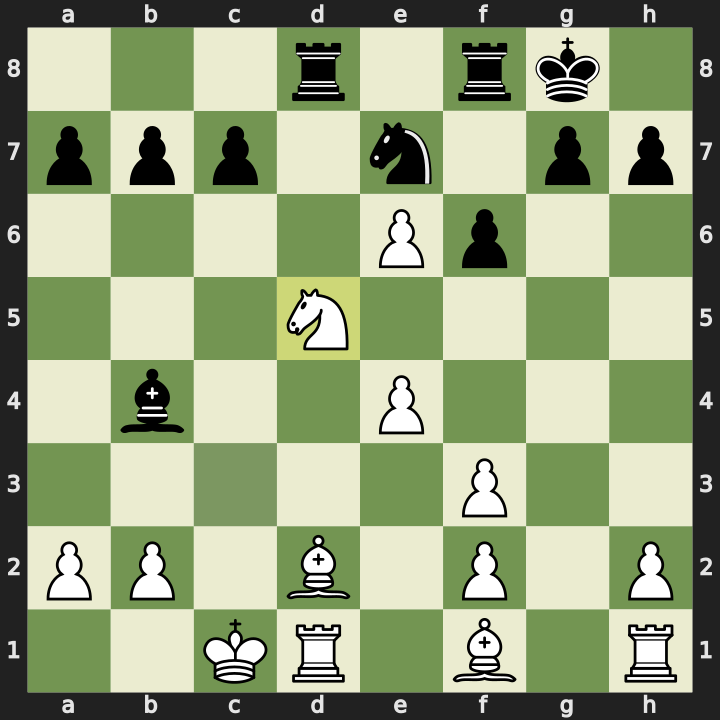
Black castled and I noticed an opportunity. If I play Nd5 I double attack the bishop on b4 and the knight on e7. No matter which way Black responds I’ll end up ahead.
14…Bxd2+ 15. Rxd2 Rd6 16. Nxe7+ Kh8 17. Rxd6 cxd6
Black decided to take the bishop on d2, which I retook with my rook. Black played the strange move Rd6, threatening the pawn on e6 I suppose, but either way it left their knight on e7 undefended and I could take it with check. The king slid into the corner and I traded rooks on d6.
The Promotion (Moves 18-21)
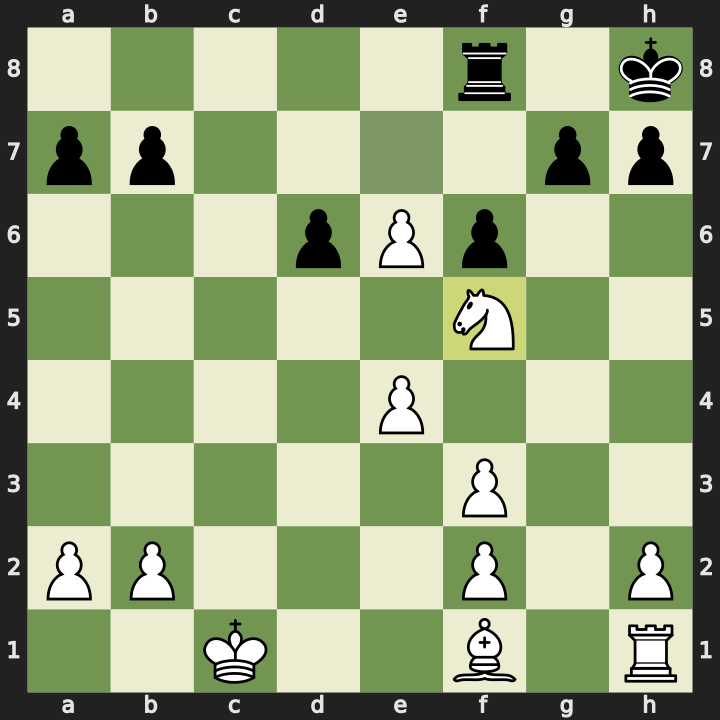
18. Nf5 Re8 19. e7
I saw another opportunity to push the pawn forward by placing my knight on f5. That would allow my pawn to get to e7 while being protected, and then I could bring my bishop up to promote the rest of the way. This was going to be a fairly clean win.
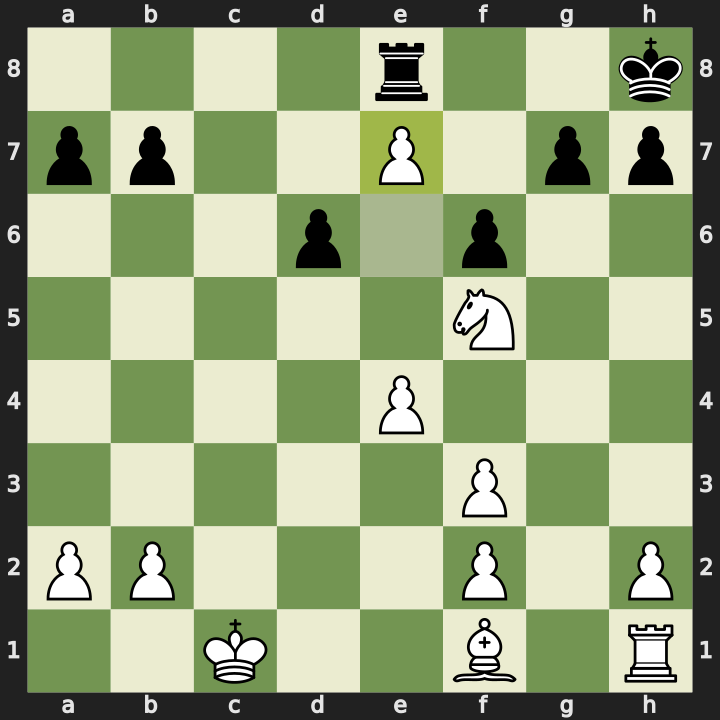
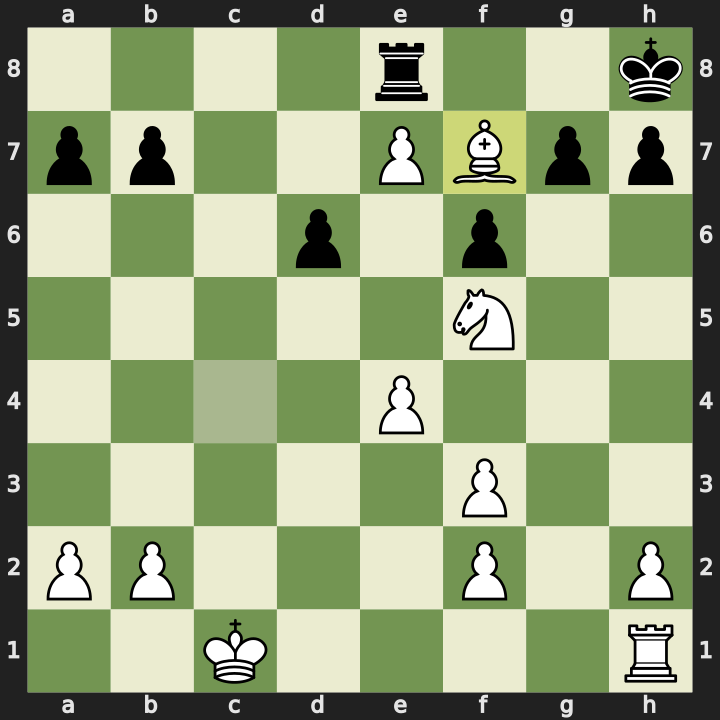
19…Kg8 20. Bc4+ Kh8 21. Bf7
After blocking my pawn with their rook on e8, Black made the curious move Kg8. Not sure what this was trying to achieve, but it allowed me to play Bc4+ check followed by Bf7, attacking the rook. Black has to sacrifice their last piece to prevent pawn promotion, so they resigned.
Engine Review
A highly accurate game for me with 91.4% accuracy versus 74.5% for my opponent. Neither of us blundered according to the engine but Black did make two mistakes. Game rating of 1850 for me versus 1000 for my opponent.
By move 6 it’s already a 2.9 evaluation in White’s favour even with equal material. When Black had to waste a move retreating their queen back to d8 and then played Bg4 rather than claiming control of the centre, they had already put themselves in a significant disadvantage.
Pushing d5 was the best move rather than getting too concerned about the pinned knight on f3. I’m going to remember that and look out for opportunities to play moves like that in the future.
There was an even better way to capture the knight on d4: throwing in the check Qa4+ first. Black would have likely blocked by retreating their bishop back to d7, after which I could have taken the knight and Black would have wasted a tempo.
Activating the light-squared bishop to target the rook at the end was the right idea. The engine also likes Bb5 followed by Bf7 with the same effect. The rook’s only option is to sacrifice itself for the pawn, after which Black is down 12 points of material with no hope.
Reflections
What went well:
- The opening went well. Finding solid moves that are active and getting the right balance of development, centre control, king safety and activity.
- Pushing d5 through the pin rather than getting defensive about the pinned knight on f3.
- Spotting the Nd5 double attack on the bishop and knight.
- Seeing the plan to support the e-pawn with Nf5 and then promote.
- Converting the advantage into a win cleanly.
What to work on:
- Look for checks first. There were a couple of times where throwing in a check in addition to the capture would have left me in an even better position. Qa4+ before taking the knight on d4 is the key example.
Full PGN:
1. d4 d5 2. Nf3 f6 3. c4 Nc6 4. cxd5 Qxd5 5. Nc3 Qd8 6. e4 Bg4 7. d5 Nd4 8. Qxd4
e5 9. dxe6 Bxf3 10. Qxd8+ Rxd8 11. gxf3 Bb4 12. Bd2 Ne7 13. O-O-O O-O 14. Nd5
Bxd2+ 15. Rxd2 Rd6 16. Nxe7+ Kh8 17. Rxd6 cxd6 18. Nf5 Re8 19. e7 Kg8 20. Bc4+
Kh8 21. Bf7 1-0