Loss vs OmarZLucero (725)
| Opening: Pseudo-Catalan (d4, Nf3, g3, Bg2, c4) vs King’s Indian | Result: 0-1 (Resignation) | Time Control: 15 min + 10 sec increment (Rapid) | Rated |
Game Overview
A really fun game and an unfortunate loss, but a thrilling position at times. I tried a pseudo-Catalan opening with a delayed c4 and got a strong space advantage out of the opening. Then I got greedy pushing e6 instead of retreating my bishop, gave away all my advantage, fought back from a losing position to a winning one, and then threw it all away with a queen blunder that I should have seen from a mile away.
The Opening (Moves 1-11)
1. d4 g6 2. Nf3 Bg7 3. g3 d6 4. Bg2 Nf6 5. Nbd2 O-O 6. c4
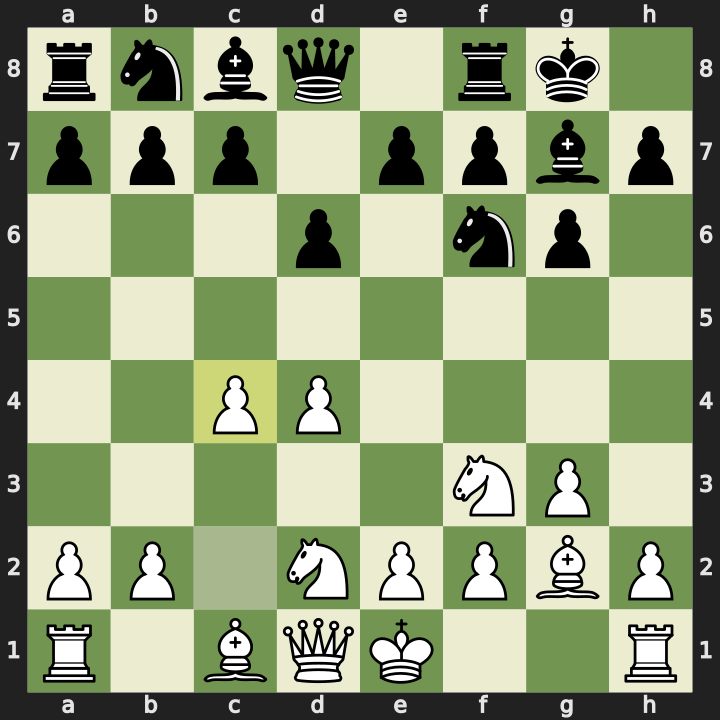
I tried a pseudo-Catalan opening where the c4 push is delayed until after a few pieces are set up. My opponent played a King’s Indian which is an opening I’m very familiar with from the Black side, but I’m actually not that good at playing against it as White. I know the general theme is to attack on the queenside while Black concentrates pieces on the kingside, so I tried to play very actively and be as annoying as possible.
6…Nc6 7. d5 Nb4 8. a3 Na6 9. Ng5 Bg4 10. h3 Bf5 11. Nde4 Nc5
Black’s knight came to c6 and I pushed d5 to kick it away. The knight bounced around to b4 and then a6 before eventually landing on c5. I was able to chase Black’s pieces around and prevent them from settling in the centre.
Building the Centre (Moves 12-17)
12. Nxc5 dxc5 13. Be3 Qd6 14. O-O a6 15. Qd2 b5 16. Bf4 Qb6 17. e4
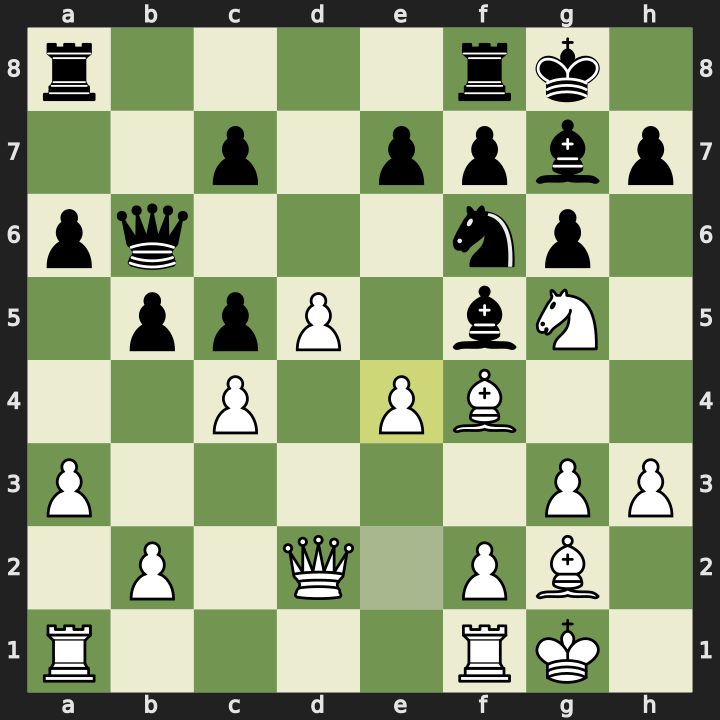
By move 17 I’m pretty happy with how things have gone. I’ve got three nice central pawns on c4, d5 and e4. I was able to kick away Black’s pieces that came close to my side of the board and stopped Black from solidifying in the centre or making much of an attack of their own.
The e6 Mistake (Moves 18-21)
18. e5 Nh5
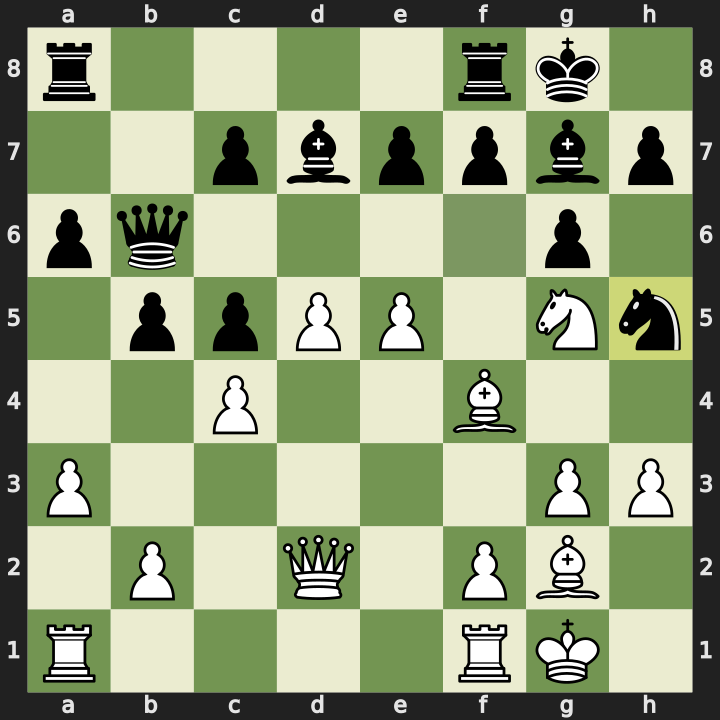
I pushed e5 kicking Black’s knight which hopped over to h5. In this position I couldn’t accept that it was time for me to give up the initiative. Black found a good response with Nh5 which attacked my bishop on f4. That’s an important bishop that needs to play the role of taking out Black’s dark-squared bishop on g7, so I wanted to relocate it and I didn’t want to make a backwards move.
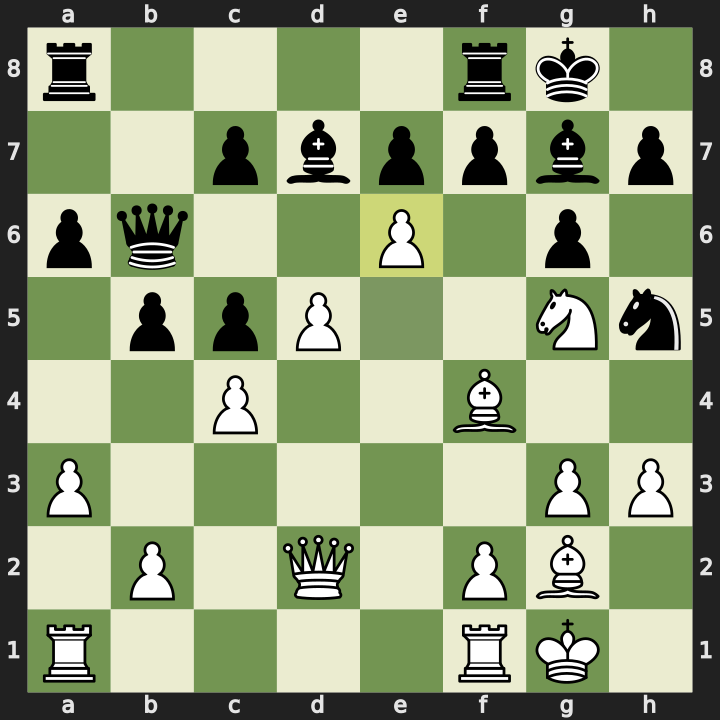
19. e6 fxe6 20. Nxe6 Bxe6 21. dxe6 Nxf4 22. gxf4
This was my mistake. I needed to simply drop the bishop back to e3 where it would continue to support the knight and control the same diagonal without being under attack. The knight on h5 wasn’t going anywhere and I could have relocated it later and then played Bh6, which is a really annoying move for Black because it forces their dark-squared bishop to be traded or moved away from the king.
Instead I played e6. As soon as I played it I realised it was a mistake because it just opens up Black’s f-file and invites Black to continue taking my centre pawns. I tried to make the most of it with Nxe6, double attacking the rook and bishop. After the trades the material is equal but Black is in a much better position. I have doubled pawns on the f-file, my king is exposed once I move my light-squared bishop, I have an undefended pawn on e6, and I’ve lost all the advantage I had out of the opening.
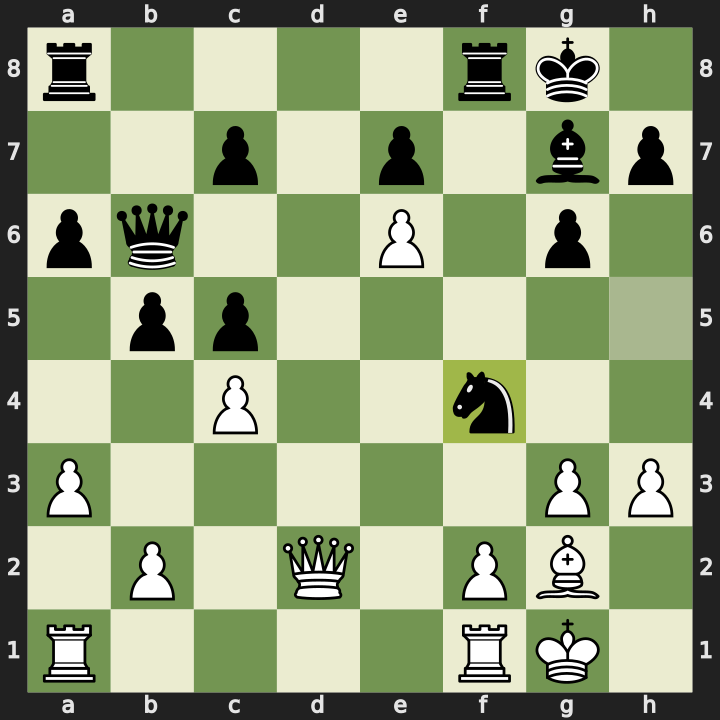
Fighting Back (Moves 22-30)
22…Rad8 23. Qe2 bxc4 24. Rab1 Rxf4 25. Rfd1 Rdf8 26. f3 R8f6 27. Rd8+
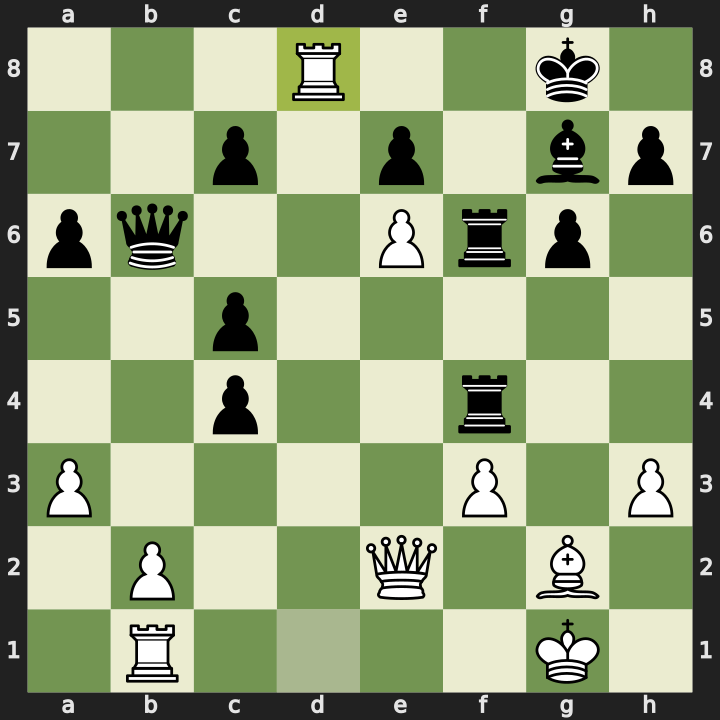
Black doubled up the rooks on the f-file and when they played Rf6 I saw an opportunity to try and get back into the game with Rd8+.
27…Bf8 28. Rbd1 Rxe6 29. Qd2 Kg7
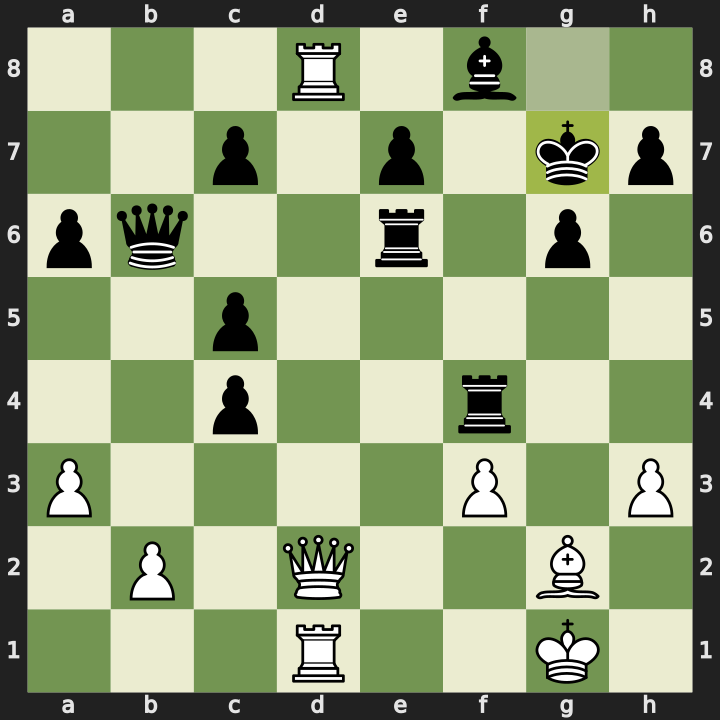
Black blocked the check with their bishop, pinning it in place. I doubled up my rooks on the d-file, seeing an opportunity to get my second rook onto the seventh rank and cause more problems for Black.
Black attacked my queen with Rxe6 and then I think Black made a mistake. They unpinned their bishop with Kg7 but the bishop has nowhere to go. It’s still trapped behind a pawn and a king. It’s amazing what happens to the evaluation here. It goes from -3.2 in Black’s favour to +4.4 in White’s favour. The tables completely flip with that one king move.
30. Qxf4
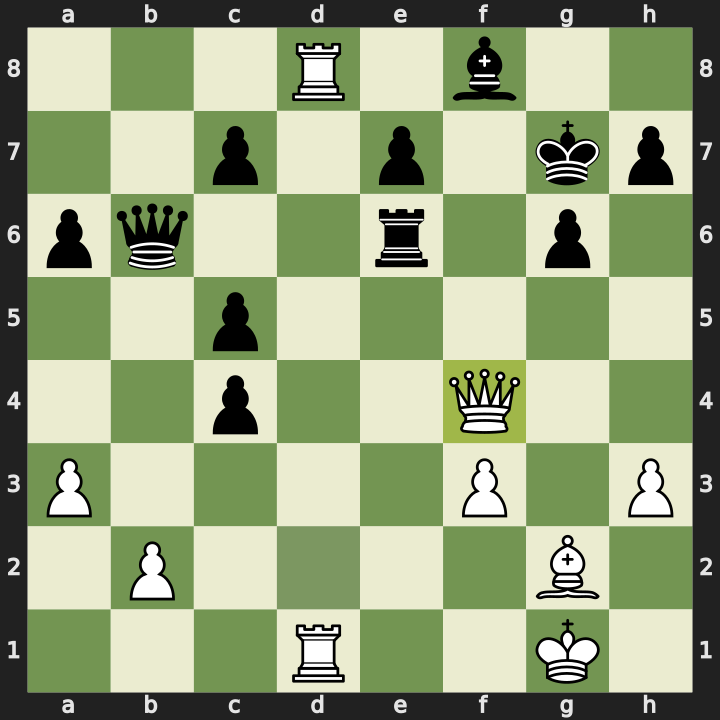
It allows me to take the rook on f4. Now I’m up material. I might even be winning this game. I just need to close in the net around Black’s king. I think I even have a mate-in-one threat on the board with Qxf8.
Closing In (Moves 30-35)
30…Rf6 31. Qe5 c3 32. bxc3 c4+ 33. Kh2 Qb3 34. R1d7
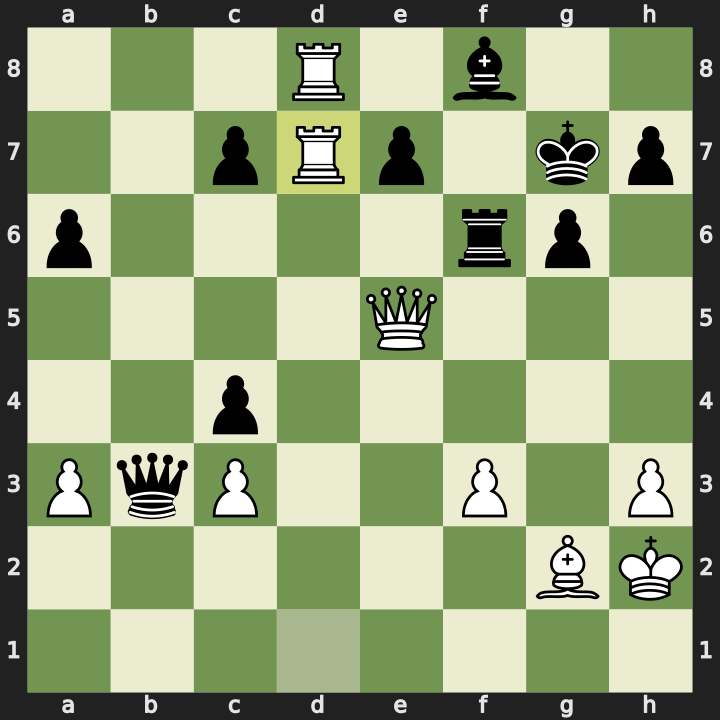
Black dealt with the threat by playing Rf6, blocking the path of my queen to the checkmate square. I pinned that rook with Qe5 and then used my rooks to deliver the pressure. Black pushed a pawn and gave a check but nothing really came of it and I was able to get my rook to the seventh rank. It feels like the mating net is closing in here. I’ve got three powerful pieces and just need to coordinate them properly to get the checkmate.
34…Qxa3 35. Rxf8 Kxf8
Black played Qxa3. I decided to sacrifice an exchange to get rid of the bishop on f8.
The Blunder (Move 36)
36. Qxe7+
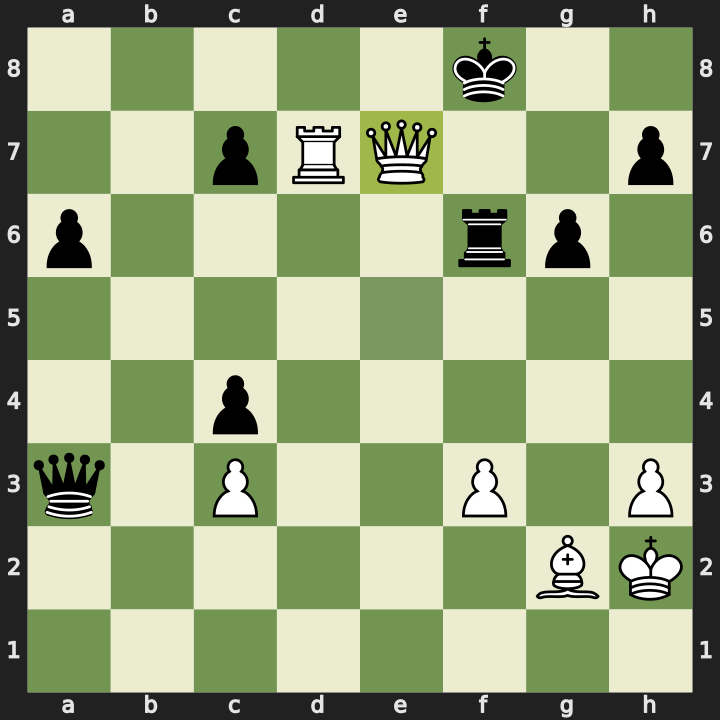
And in this position, with my eyes firmly focused on the king, the rook, and my own queen, I completely blundered playing Qxe7+. I put my queen directly in the path of the opponent’s queen on a3 where it can be taken. My only response is to take back with the rook, which then is lost to the king.
36…Qxe7 37. Rxe7 Kxe7
I’m now playing a bishop versus rook game with two pawns down.
The Endgame (Moves 38-57)
38. Bf1 Rc6 39. Kg3 Ke6 40. Bg2 Ke5 41. f4+ Kd6 42. Bxc6 Kxc6
I managed to check the king and pick up the rook, so now it’s a king and pawn game, but I’m still down two pawns. Black has an uncontested passed pawn on the a-file which is able to race to the first rank and promote.
43. Kg4 a5 44. Kg5 a4 45. Kh6 a3 46. Kxh7 a2 47. Kxg6 a1=Q
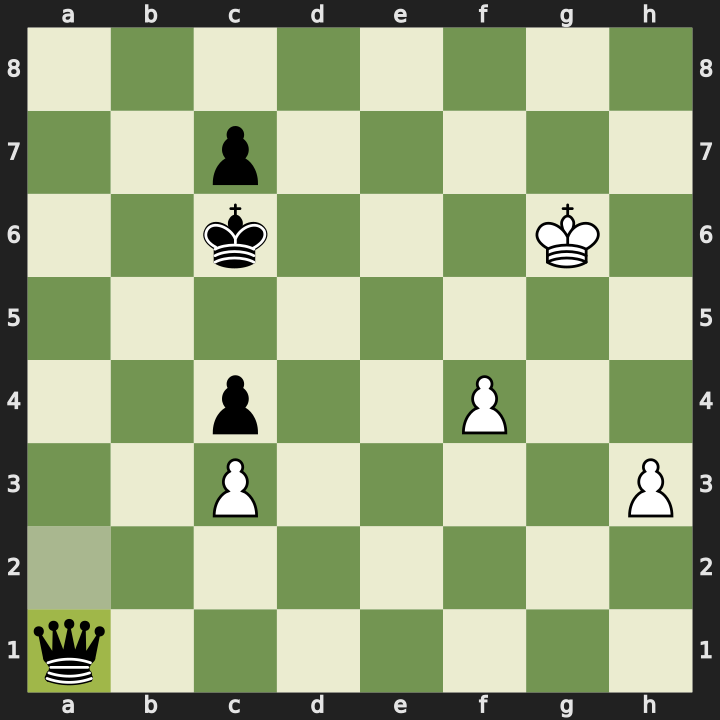
I let it gobble up my remaining pawns and then resigned.
Engine Review
The first mistake in the position came when Black played Nc5, allowing White to take on c5 and force Black into doubled pawns on the c-file with no central control.
According to the engine, my move Be3 was a mistake. My plan was to target the undefended pawn on c5. The engine really wants to see that bishop on f4 and push the pawn to e4 immediately, moves I did play later but they would have been even stronger if I had played them right away rather than trying to hunt down a single pawn that early in the game.
Once I got Bf4 and e4 in place to push Black’s pieces back I had a +2 advantage even with equal material, so the first 17 or 18 moves of the opening went quite well.
As expected, e6 is a mistake. I should have simply dropped my bishop back to e3 to get out of range of the knight that was now stuck on h5. It wasn’t going anywhere and I just needed to drop the piece back where it could still control the same diagonal without being under attack. Interestingly, the engine evaluates the e6 pawn push as a mistake, but the real blunder is Nxe6.
My opponent and I both missed a tactic on move 21. When Black played Nxf4, I was too preoccupied with taking the knight back to notice that the rook on a8 was now exposed to my bishop on g2. These long-range bishop attacks are one of the reasons I love fianchetto openings like this one, so I’m a bit disappointed that I missed it. Definitely a case of tunnel vision.
On move 35, taking the bishop was an inaccuracy. That bishop wasn’t doing anything. It was completely blocked in, so I really didn’t need to take it. It simplified the position somewhat, so not a complete mistake, but it would have been better to play Rxc7 and keep all my pieces for a checkmate attack.
Reflections
What went well:
- The first part of the opening went really well. Getting space, playing actively, and building three central pawns gave me a strong advantage.
- Seeing a chance to get back into the game from a losing position. After Rd8+ and doubling rooks on the d-file, the position swung back in my favour.
- I felt like I knew when I was winning and when I was losing, which is a good sign for my development.
What to work on:
- Opening up the position for my opponent rather than simply retreating the bishop was the big initial mistake. Sometimes the quiet move is the right move.
- After being given a second chance at winning, tunnel vision on my own attack caused me to miss something as simple as a square being guarded by the queen on the edge of the board. Before playing a move, say it out loud and check: what is the opponent’s best reply? Is that square actually safe?
- Consistency over 50 moves. I need to be able to play a full game without blundering if I want to convert winning positions. There was never any time pressure here. We ended with about eight minutes left each after 57 moves. My opponent took their time, often 20 seconds to a minute in the critical parts. I should do the same.
Full PGN:
1. d4 g6 2. Nf3 Bg7 3. g3 d6 4. Bg2 Nf6 5. Nbd2 O-O 6. c4 Nc6 7. d5 Nb4 8. a3
Na6 9. Ng5 Bg4 10. h3 Bf5 11. Nde4 Nc5 12. Nxc5 dxc5 13. Be3 Qd6 14. O-O a6 15.
Qd2 b5 16. Bf4 Qb6 17. e4 Bd7 18. e5 Nh5 19. e6 fxe6 20. Nxe6 Bxe6 21. dxe6 Nxf4
22. gxf4 Rad8 23. Qe2 bxc4 24. Rab1 Rxf4 25. Rfd1 Rdf8 26. f3 R8f6 27. Rd8+ Bf8
28. Rbd1 Rxe6 29. Qd2 Kg7 30. Qxf4 Rf6 31. Qe5 c3 32. bxc3 c4+ 33. Kh2 Qb3 34.
R1d7 Qxa3 35. Rxf8 Kxf8 36. Qxe7+ Qxe7 37. Rxe7 Kxe7 38. Bf1 Rc6 39. Kg3 Ke6 40.
Bg2 Ke5 41. f4+ Kd6 42. Bxc6 Kxc6 43. Kg4 a5 44. Kg5 a4 45. Kh6 a3 46. Kxh7 a2
47. Kxg6 a1=Q 48. f5 Qxc3 49. f6 Qg3+ 50. Kf7 Qf4 51. Ke7 Qe5+ 52. Kf7 c3 53.
Kg7 Qxf6+ 54. Kxf6 c2 55. h4 c1=Q 56. h5 Qh6+ 57. Kf5 Qxh5+ 0-1