Win vs gmkenna1 (1044)
| Opening: King’s Indian Defence | Result: 0-1 (Checkmate) | Time Control: 3 days/move (Daily) | Rated | Event: 91st Chess.com Daily Tournament (1001-1200), Round 1 |
Game Overview
This is the kind of game that I enjoy playing and it usually happens against slightly lower rated players who aren’t used to facing a King’s Indian Defence. I was able to get into a nice solid position, wait for my opponent to make a mistake, and then convert a winning advantage pretty cleanly from there. A nice tactical sequence with a fork and a check-before-capture left me up a rook and two pawns, and the d-pawn promotion followed by a checkmate pattern rounded things off.
The Opening (Moves 1-9)
1. d4 Nf6 2. c3 g6 3. f3 Bg7 4. e4 d6 5. Ne2 O-O 6. Bf4 Nc6 7. Na3 e5 8. Bg5 h6
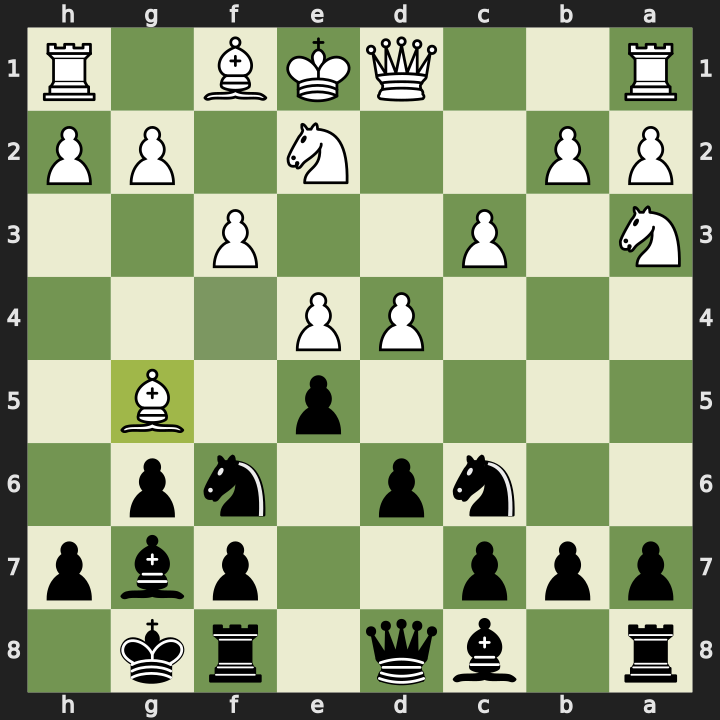
The first eight moves were pretty straightforward. White had central pawns on e4 and d4, I had e5 and d6 with knights on their natural squares of f6 and c6. I chose to poke the bishop with h6 and White traded it for the knight on f6.
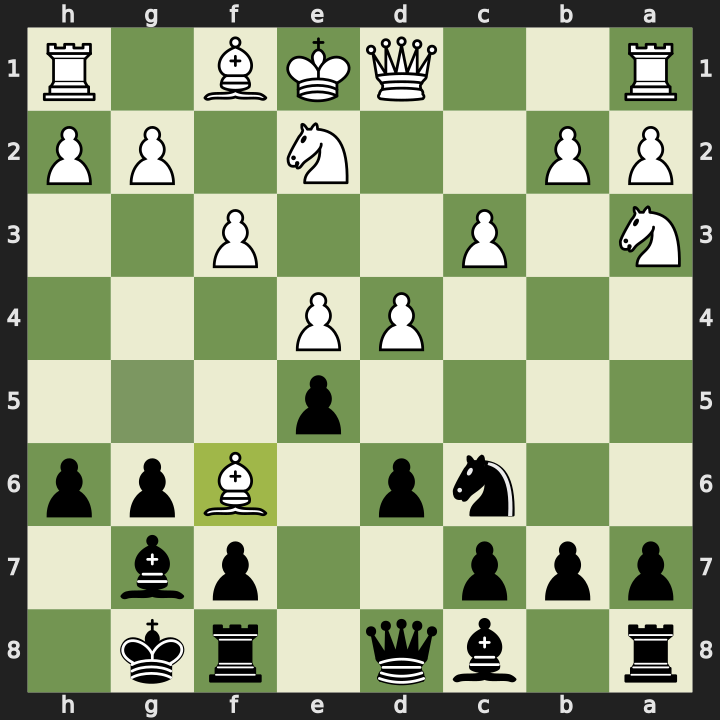
9. Bxf6 Qxf6
I think this shows a bit of lack of experience with this opening. The most annoying way to deal with h6 is actually to set up a battery with the queen and bishop on that diagonal, so that if Black plays h6 you can take with the bishop and Black can’t take back with their own bishop, otherwise it allows the queen to come in. Simply trading a bishop for a knight in this position, particularly the dark-squared bishop, isn’t doing White any favours.
Breaking Open the Centre (Moves 10-14)
10. Ng3 exd4 11. Ne2 dxc3
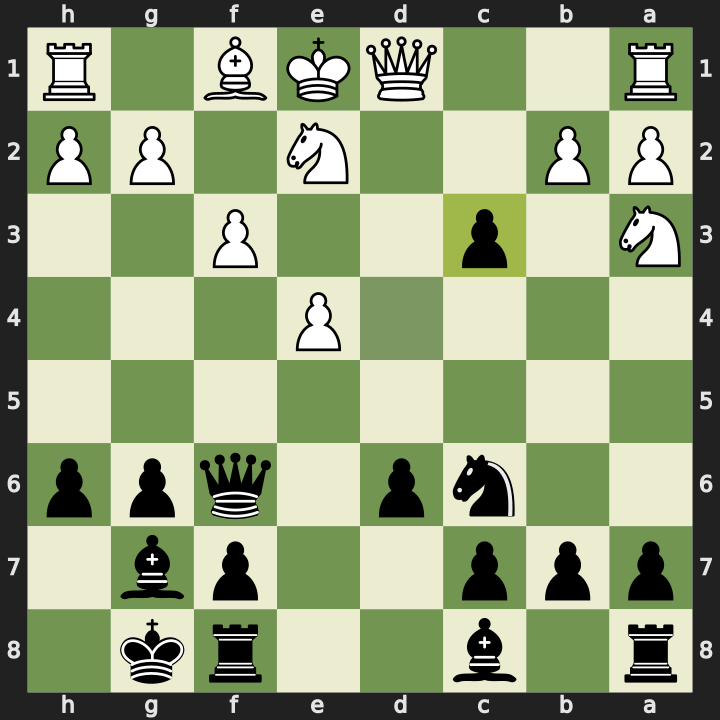
White had a nice pawn structure so I decided to break it open. The white king is still in the centre and they’ve used their opening tempo to push pawns rather than develop pieces and castle. If I can attack the king while it’s in the centre, that’s going to be good for me. I took on d4 with the pawn and then again on c3.
12. Nxc3 Be6 13. Nd5 Bxd5 14. Qxd5
I developed the bishop to e6 to connect the rooks and get the pieces out. White moved the knight to d5 attacking my queen and I decided to just trade it for the light-squared bishop.
The Fork and the Check (Moves 14-17)
14…Qxb2
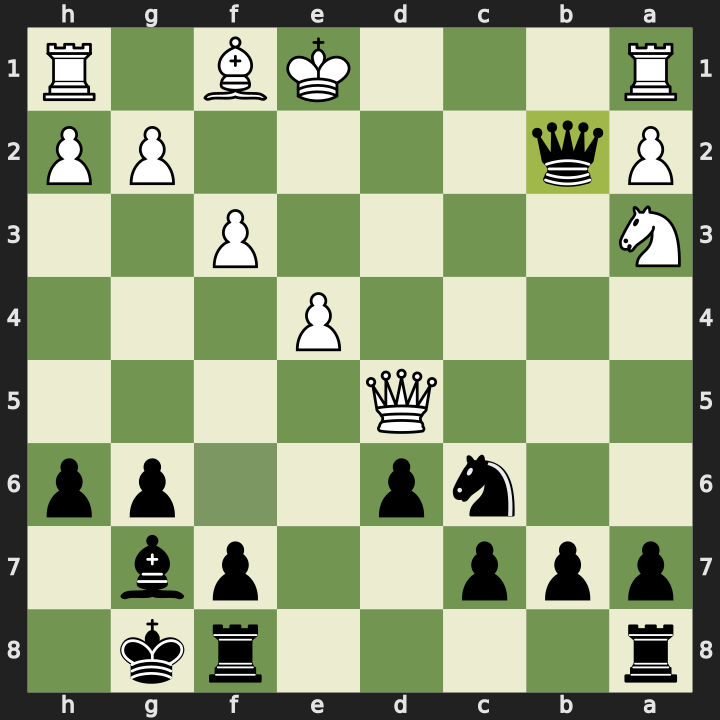
This also had a nice side effect. My queen on f6 could now take the pawn on b2, double attacking White’s rook on a1 and the knight on a3. White won’t be able to save them both.
15. Rd1 Bc3+
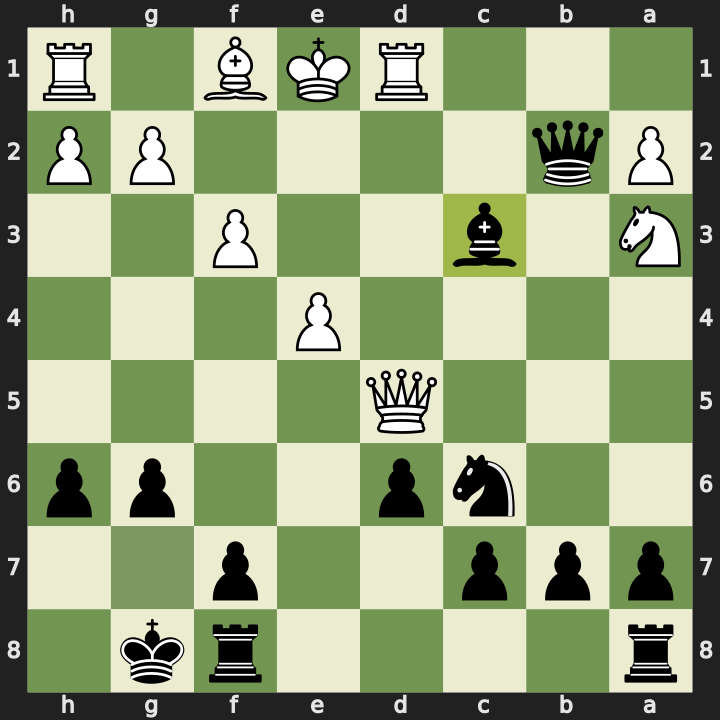
White saved the rook by moving it to d1. Then I remembered that in my recent games I should be looking for checks first before captures, because sometimes it can be even better to throw in a check. This was one of those cases. After checking with the bishop on c3, White has to defend with Rd2 to block the check, allowing me to win the exchange with check and then pick up the knight.
16. Rd2 Bxd2+ 17. Qxd2 Qxa3
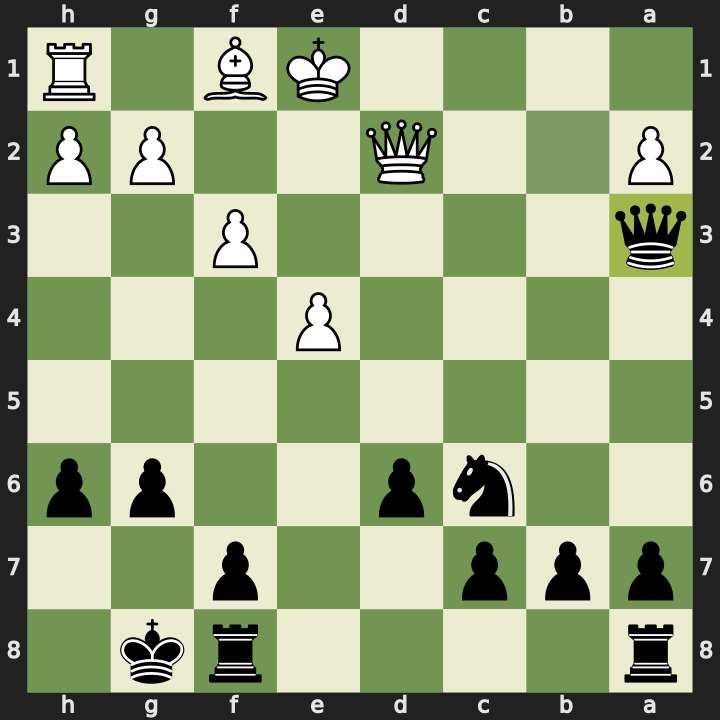
After all the action I’m up two pawns and a rook.
Converting the Advantage (Moves 18-28)
18. Bc4 Rad8 19. O-O Ne5 20. Qd5 Nxc4 21. Qxc4 c6 22. h3 d5 23. Qb3 Qc5+ 24. Kh2 d4
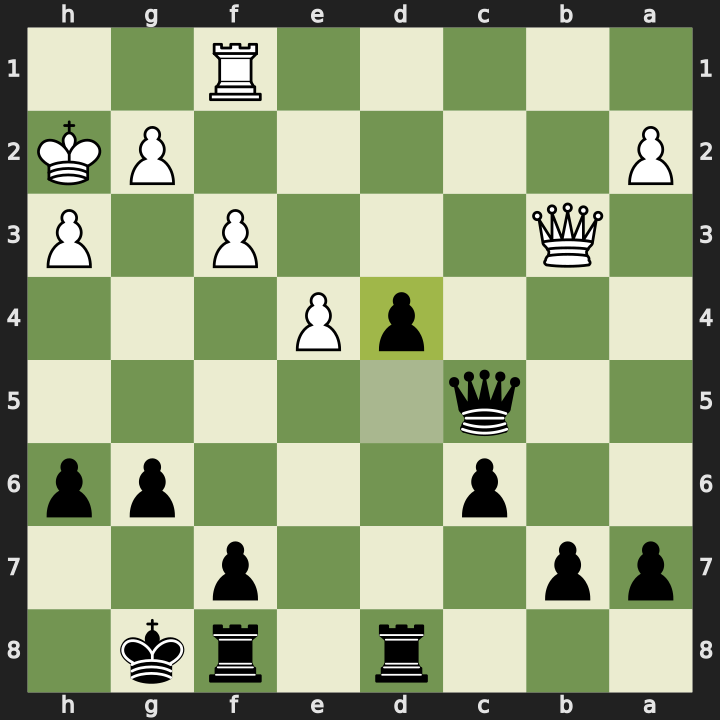
From here my plan was pretty simple. I’ve got three passed pawns on the b, c and d files, so I put my rook behind the d-pawn and looked to push it up the board, supported also by the c-pawn.
25. Qxb7 d3 26. Qb1 d2
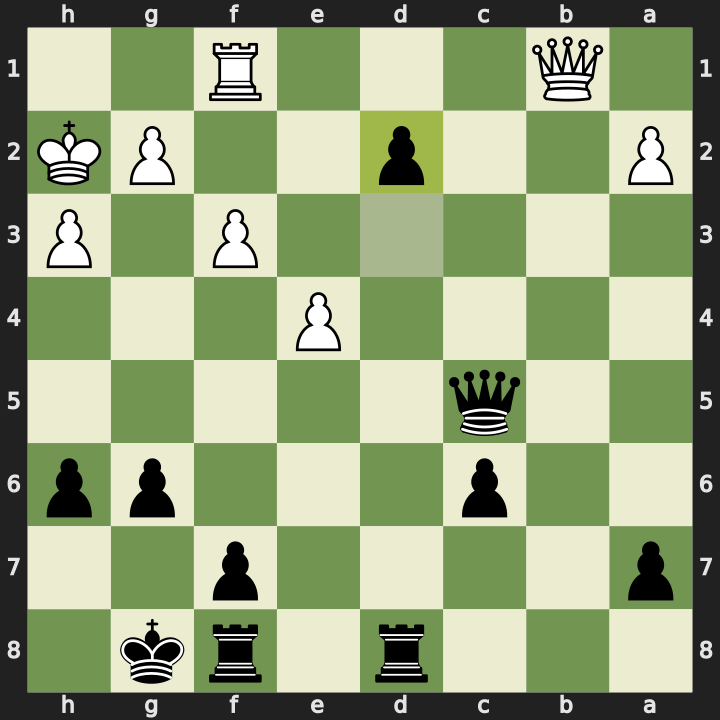
Once my pawn got to the second rank I could see it had a rook and a queen to deal with before it could promote, so I looked to double up my rooks on the d-file to give the pawn an additional defender: one for each of the attackers.
27. a4 Rd7 28. Qb2 d1=Q 29. Rxd1 Rxd1
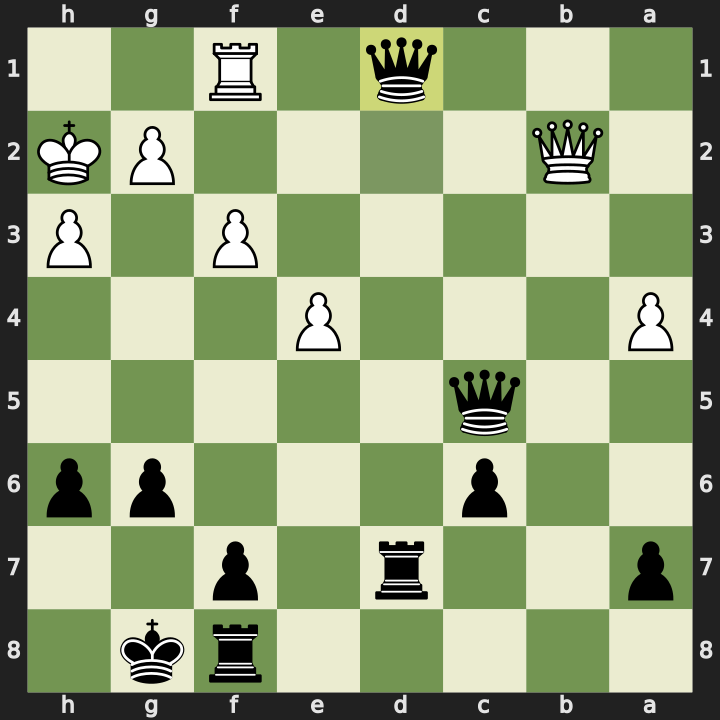
White made a mistake playing Qb2, allowing me to promote the pawn and then recapture with my rook. I’m now up two full rooks.
The Checkmate (Moves 30-33)
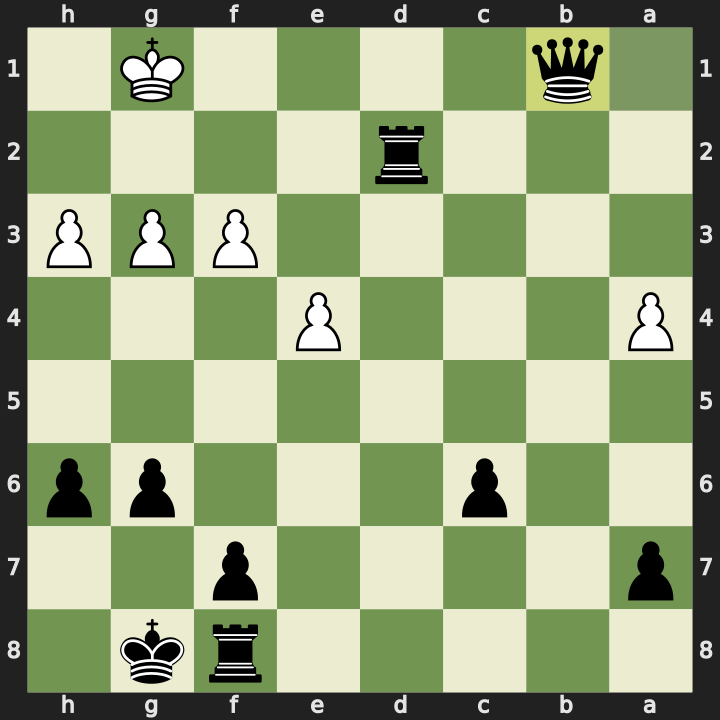
30. Qb7 Qe5+ 31. g3 Rd2+ 32. Kg1 Qa1+ 33. Qb1 Qxb1#
From here I could see a checkmate pattern. Checking with the queen diagonally on e5, which has to be blocked by one of the g or f pawns. Then moving the queen diagonally to a1. The only move is to block again, this time with the queen, which I can take and that’s checkmate. It was quite satisfying to program that as conditional pre-moves in the chess.com daily interface and then come back a few minutes later to see that the checkmate was successful.
Engine Review
An 89.2% accuracy for me versus 74.2% for my opponent. One blunder and one mistake for my opponent, no blunders or mistakes for me. Game rating of 1800 for me versus 1200 for my opponent.
Very interestingly, chess.com rates White’s g3 on move 10 as a blunder: the way it allows the centre to be opened up with all of that firepower from the bishop and queen on that diagonal means White was already in a losing position just by failing to support the centre.
White’s next mistake is playing g5, again failing to see the threat pointing on b2 from the long diagonal. After gaining the lead, the engine doesn’t even really consider any of White’s moves a mistake until they play Qb2 leading to the forced checkmate. I guess it’s one of those cases where everything is losing, so even giving up an additional rook to try and prevent a pawn promotion isn’t necessarily classified as a mistake. There wasn’t really much they could have done.
Interestingly, the engine thinks Bg7 in the opening was an inaccuracy. It didn’t lead to any issues with this move ordering, but I’ll have a look to see if there’s some advantage I can get as a result. The engine likes an immediate d4, but that’s a Grunfeld Defence rather than a King’s Indian, so I don’t mind that I didn’t play the engine’s move there.
Reflections
What went well:
- The opening was solid. Knowing when to trade, when to open up the centre, and spotting the fork tactic of Qxb2 hitting the knight and rook.
- Bringing in the bishop for an additional check with Bc3+ before capturing, leaving me up seven points of material after those moves. This is exactly what I’ve been working on: looking for checks first.
- Converting the advantage cleanly with the passed d-pawn and seeing the checkmate pattern at the end.
What to work on:
- The engine flagged Bg7 as an inaccuracy. Worth investigating whether there’s a better move order in the King’s Indian when White plays c3 and f3 early.
Full PGN:
1. d4 Nf6 2. c3 g6 3. f3 Bg7 4. e4 d6 5. Ne2 O-O 6. Bf4 Nc6 7. Na3 e5 8. Bg5 h6
9. Bxf6 Qxf6 10. Ng3 exd4 11. Ne2 dxc3 12. Nxc3 Be6 13. Nd5 Bxd5 14. Qxd5 Qxb2
15. Rd1 Bc3+ 16. Rd2 Bxd2+ 17. Qxd2 Qxa3 18. Bc4 Rad8 19. O-O Ne5 20. Qd5 Nxc4
21. Qxc4 c6 22. h3 d5 23. Qb3 Qc5+ 24. Kh2 d4 25. Qxb7 d3 26. Qb1 d2 27. a4 Rd7
28. Qb2 d1=Q 29. Rxd1 Rxd1 30. Qb7 Qe5+ 31. g3 Rd2+ 32. Kg1 Qa1+ 33. Qb1 Qxb1#
0-1