Win vs MartnCoronado (764)
| Opening: Pirc Defence, Lion’s Jaw Variation | Result: 0-1 (Checkmate) | Time Control: 14 days/move (Daily) | Rated | Event: ForEverOne 2026, Round 1 |
Game Overview
This game was pretty one-sided. My opponent blundered a queen in the opening and then didn’t put up too much resistance. After that I still tried to find nice tactics to win their pieces and get a clean checkmate, so I’m pretty happy with the result. I do feel sorry for my opponent. I believe they have lost all of their games in the current tournament group, although there’s still a few ongoing games so maybe they’ll be able to pick up a point or two.
The Opening (Moves 1-7)
1. e4 d6 2. d4 Nf6 3. f3 c5
The opening started with a Pirc Defence and then chess.com classifies it as the Lion’s Jaw variation when White pushes f3. I chose to play c5 because it’s an opening I need to practice. I’m much more familiar with the e5 variations, but against a lower rated opponent I felt I could come up with something with c5. The opening database shows that it’s one of the stronger replies at master level, which probably doesn’t apply to me and my opponent, but it’s still good to know it’s a solid option.
4. Bf4 cxd4 5. Qxd4 e5
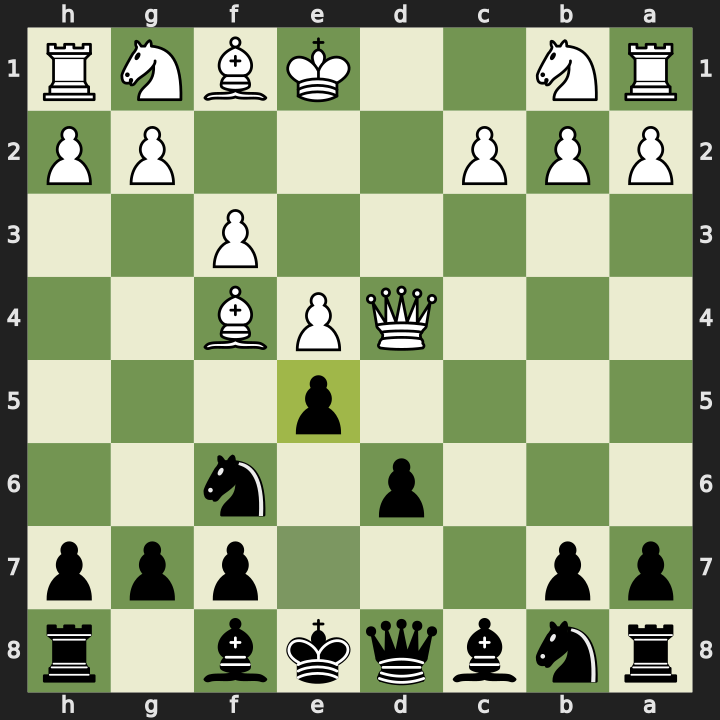
We were out of theory when my opponent played Bf4, which isn’t a great move because it allows Black to take a centre pawn with the c-pawn, which is favourable for Black. I played cxd4. White recaptured with the queen, but that invites a fork with e5, a nice move.
6. Qa4+ Bd7 7. Bg5 Bxa4
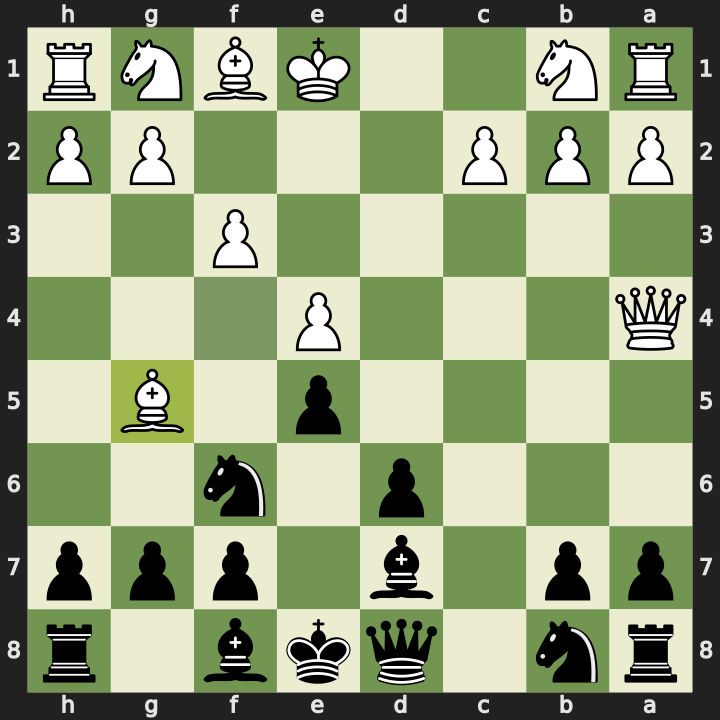
White escaped the fork by checking on a4 and I found a nice active way to counter that check with Bd7. The queen is now under attack. Unfortunately, my opponent was still fixated on the earlier fork attacking their bishop and played Bg5 rather than moving their queen out of danger. An epic blunder. I took the queen with Bxa4.
The Pin (Moves 8-15)
8. b3 Bd7 9. Nc3 Qa5
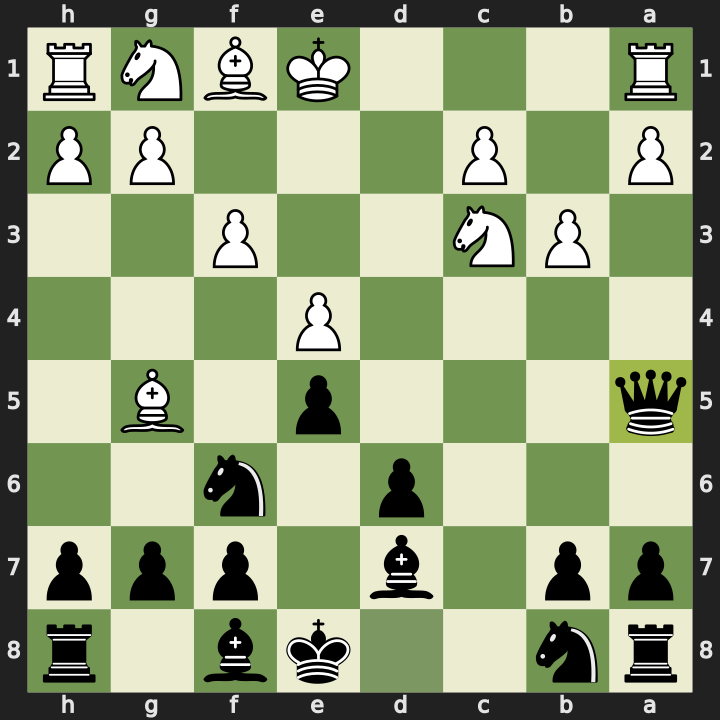
A couple of moves later White played Nc3 and I saw a chance to pin it with my queen on a5.
10. Ne2 d5 11. exd5 Nxd5 12. Kd2 Bb4
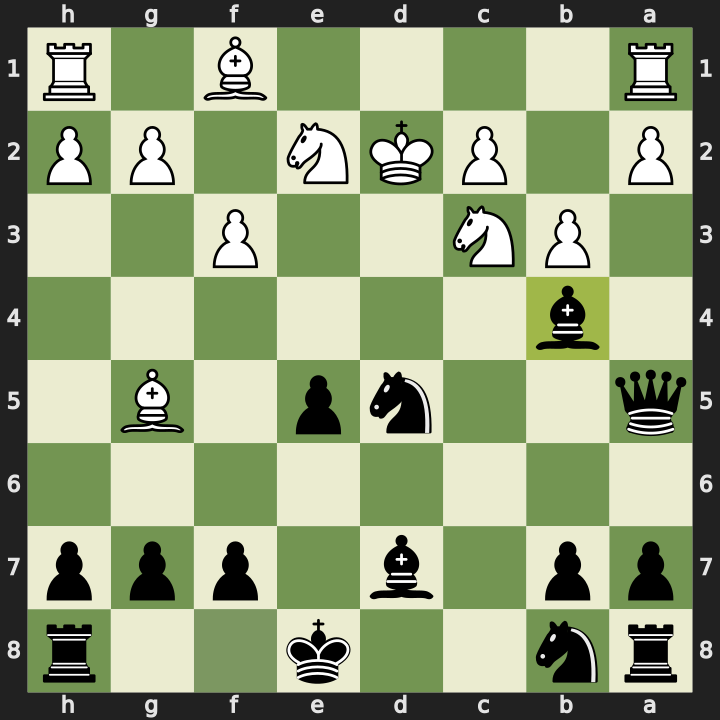
White defended with Ne2 and I looked to add more pressure to the pinned piece. I opened the way by pushing the d5 pawn. White took the pawn but that’s also good for me. I could play Nxd5 adding more pressure to the knight on c3. The last piece came in with Bb4 next move, ready to take the knight and then retake with check, winning the rook.
13. h4 Bxc3+ 14. Nxc3 Qxc3+ 15. Ke2 Qxa1
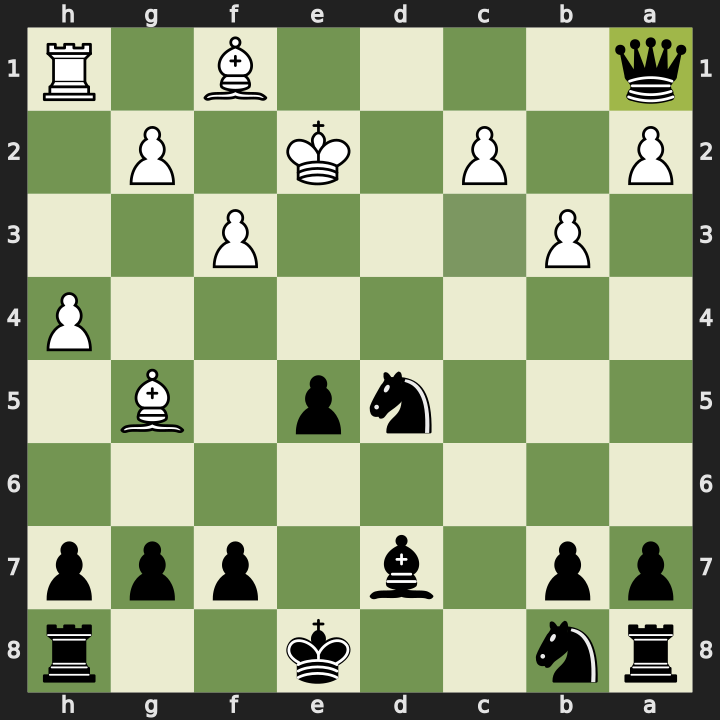
After winning the rook I had a massive material lead.
Simplifying (Moves 16-22)
16. Kf2 f6 17. Bd2 Qd4+ 18. Ke2 Nc3+
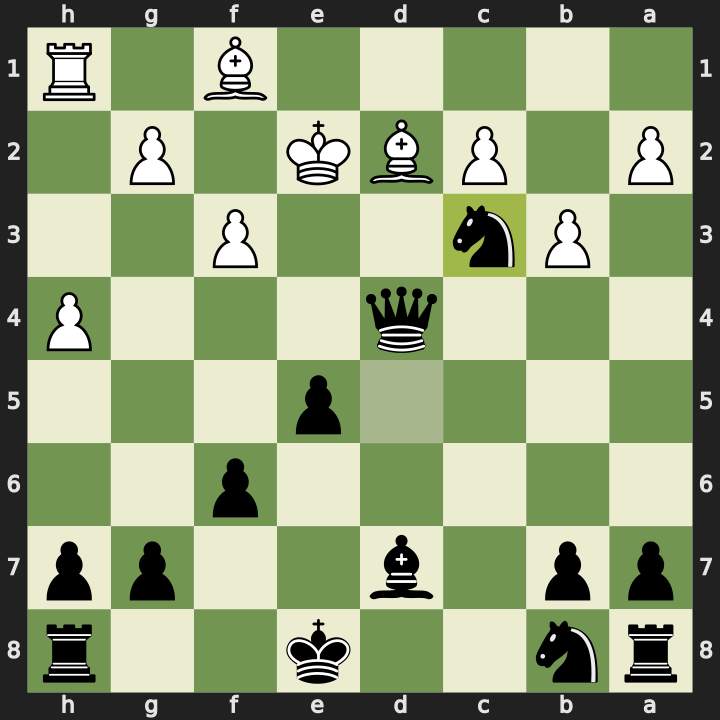
I saw another chance for a tactic. I played Nc3+ checking the king. White can choose to capture the knight with the bishop, but if they do, I’ll be able to capture both their bishops and simplify the game down. Before taking back with my queen I brought out my light-squared bishop to b5, giving the king another check.
19. Bxc3 Bb5+ 20. Ke1 Qxc3+
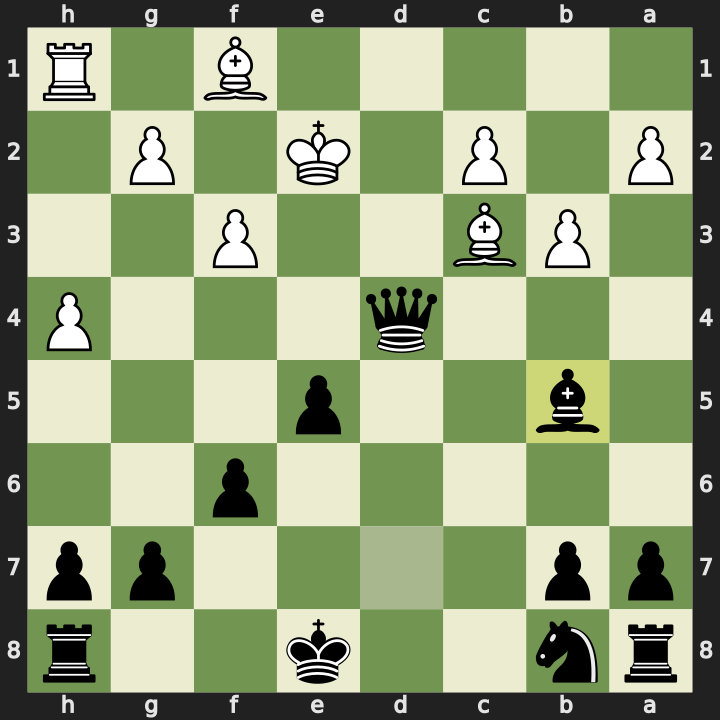
The only move is Ke1, and then when I take the bishop on c3 it comes with check, so I can also get the bishop on f1. It’s all just trading down but it simplifies and gets me closer to checkmate.
21. Kf2 Bxf1 22. Rxf1 Nc6
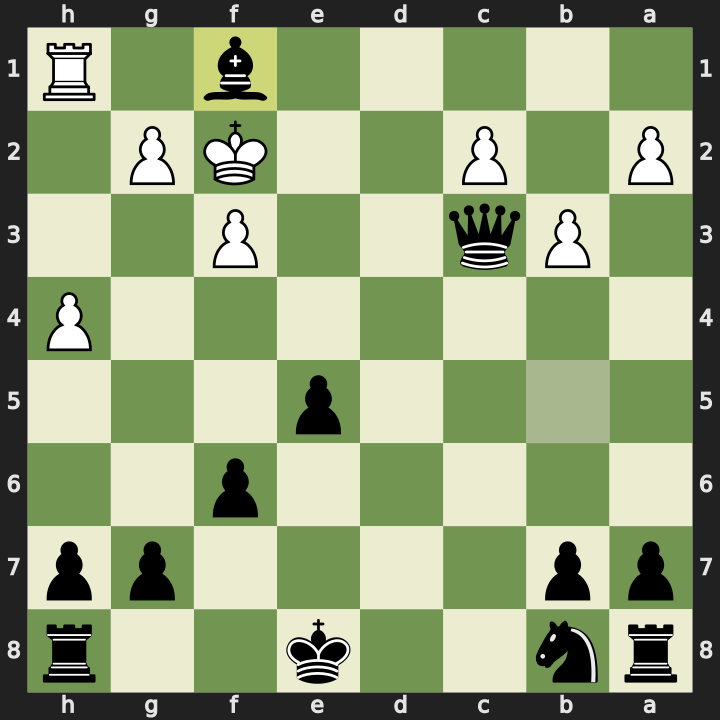
White now only has a rook and pawns while Black has a queen, two rooks and a knight. A completely crushing position.
The Checkmate (Moves 23-33)
23. Re1 Rd8 24. Re3 Qd2+ 25. Re2 Qd4+ 26. Re3 O-O 27. a4 Rc8 28. b4 Nxb4 29. c3 Rxc3
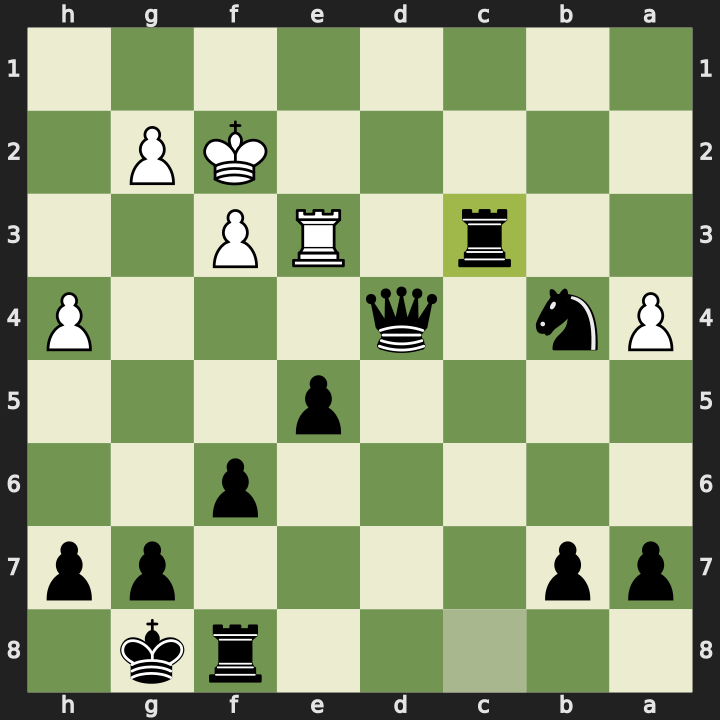
I developed my remaining pieces, castled, and then got the rook and queen on the third and fourth ranks supported by the knight on b4.
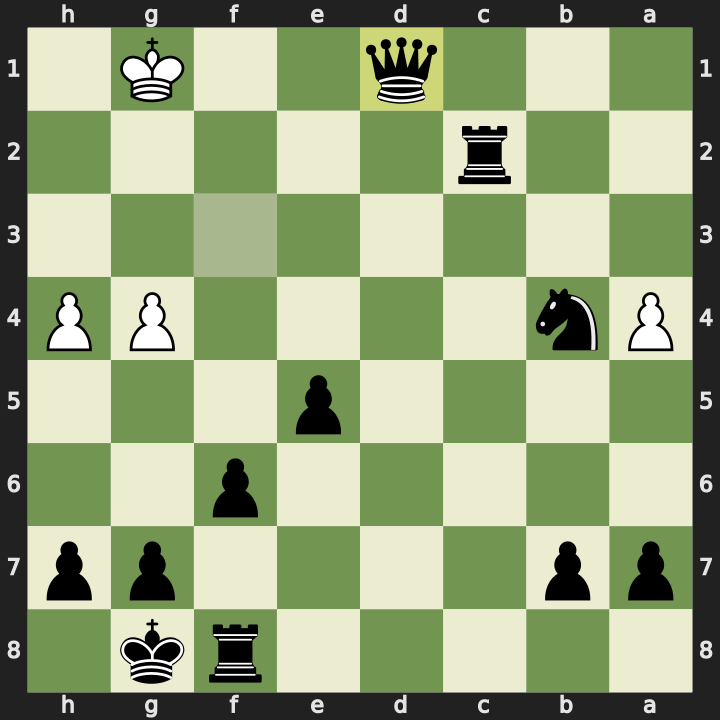
30. g4 Qxe3+ 31. Kg3 Qxf3+ 32. Kh2 Rc2+ 33. Kg1 Qd1#
When White played g4 I saw the checkmate sequence. Take the rook with the queen, then the pawn on f3 with check, and then it’s a ladder mate to push the king up to the first rank and win.
Engine Review
94.1% accuracy for me versus 76.5% for my opponent. Game rating of 1750 for me versus 400 for my opponent. No blunders, no mistakes, no inaccuracies for me. Two mistakes and four inaccuracies for my opponent.
There’s not much to say from the engine analysis other than White made some serious mistakes starting with Bf4, compounded with Qxd4, and then leaving the queen hanging with Bg5. From there it was pretty straightforward to play accurate moves because there were clear targets and some easily identifiable tactics that just led to taking material and having firm control of the initiative for the entire game. I might have been a little careless leaving my king in the centre and my rooks undeveloped for so long, but just playing with the queen, bishops and knight while White’s king was exposed and in the centre gave me plenty of material to work with.
Reflections
What went well:
- The opening went well. Spotting the e5 fork, the hanging queen, and the pin on the knight with Qa5.
- The tactical sequence from Nc3+ through Bb5+ and Qxc3+ to simplify and win both bishops was clean.
- The checkmate was satisfying. A nice ladder mate with the queen and rook.
What to work on:
- I’m going to keep practising the c5 variations of the Pirc Defence and King’s Indian Defence. Having a slightly more open position with play on the queenside is still an area where I’m getting more comfortable.
Full PGN:
1. e4 d6 2. d4 Nf6 3. f3 c5 4. Bf4 cxd4 5. Qxd4 e5 6. Qa4+ Bd7 7. Bg5 Bxa4 8. b3
Bd7 9. Nc3 Qa5 10. Ne2 d5 11. exd5 Nxd5 12. Kd2 Bb4 13. h4 Bxc3+ 14. Nxc3 Qxc3+
15. Ke2 Qxa1 16. Kf2 f6 17. Bd2 Qd4+ 18. Ke2 Nc3+ 19. Bxc3 Bb5+ 20. Ke1 Qxc3+
21. Kf2 Bxf1 22. Rxf1 Nc6 23. Re1 Rd8 24. Re3 Qd2+ 25. Re2 Qd4+ 26. Re3 O-O 27.
a4 Rc8 28. b4 Nxb4 29. c3 Rxc3 30. g4 Qxe3+ 31. Kg3 Qxf3+ 32. Kh2 Rc2+ 33. Kg1
Qd1# 0-1