Two Wins vs Lossupers (702)
| Time Control: 10 min (Rapid) | Rated |
Two rapid games against the same opponent. The first was a clean tactical win with a brilliant Nd6+ discovered attack winning the queen. The second was a much messier game where I had to survive an early attack, grind through a long endgame, and ultimately convert with passed pawns.
The biggest success for me in these games was actually defending early attacks. A few months back that was my biggest weakness: being unable to defend dubious early attacks from queens and bishops. With practice I’ve been able to find my way through those tricky positions and then rely on tactics to get into a winning position once my pieces are assembled.
Game 1: Queen’s Gambit vs Slav Defence
| Opening: Queen’s Gambit vs Slav Defence | Result: 1-0 (Resignation) | Opponent Rating: 702 |
The Game
1. d4 c6 2. Nf3 d5 3. c4 Bg4 4. Nbd2 Qa5 5. h3 Bxf3 6. gxf3 dxc4 7. e3 b5 8. a3 b4
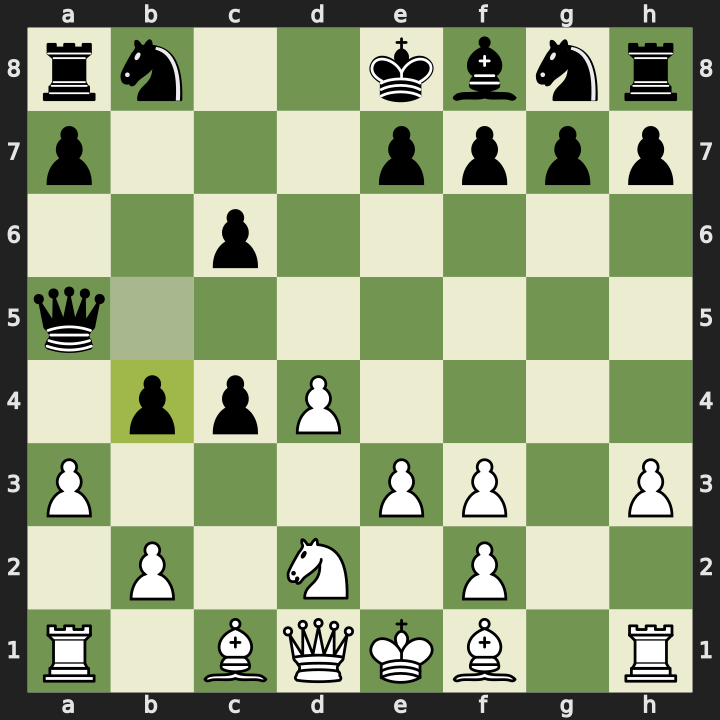
I played a Queen’s Gambit opening and my opponent went into a Slav Defence. This is an example of the danger of bringing the queen out early. On move 8 Black played b4, allowing me to take the pawn on c4 hitting the queen and preparing for the Nd6 move.
9. Nxc4 Qa6 10. Nd6+ exd6 11. Bxa6
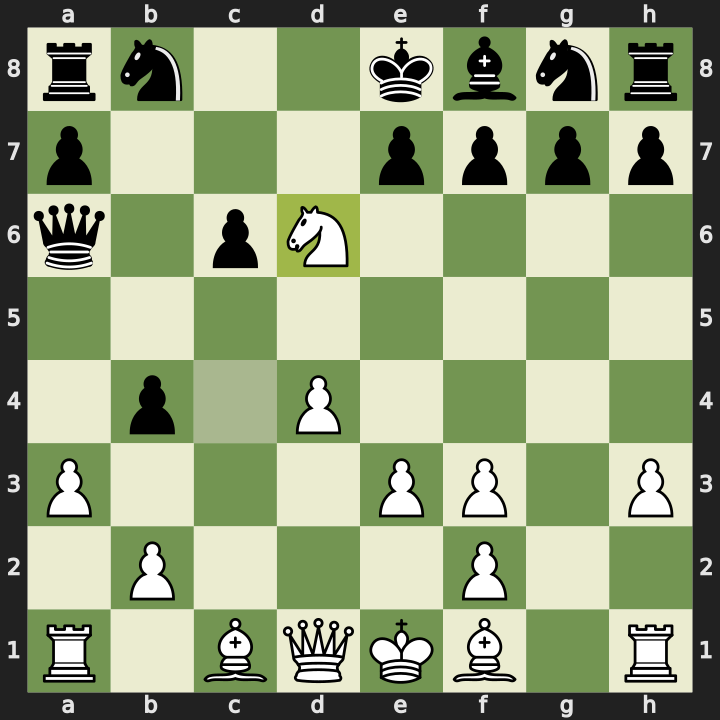
Chess.com awarded me a brilliant move with Nd6+ check. The knight check reveals a discovered attack from the bishop on f1 to the queen on a6. The queen is lost.
11…bxa3 12. bxa3 d5 13. Bb7 Nf6 14. Bxa8
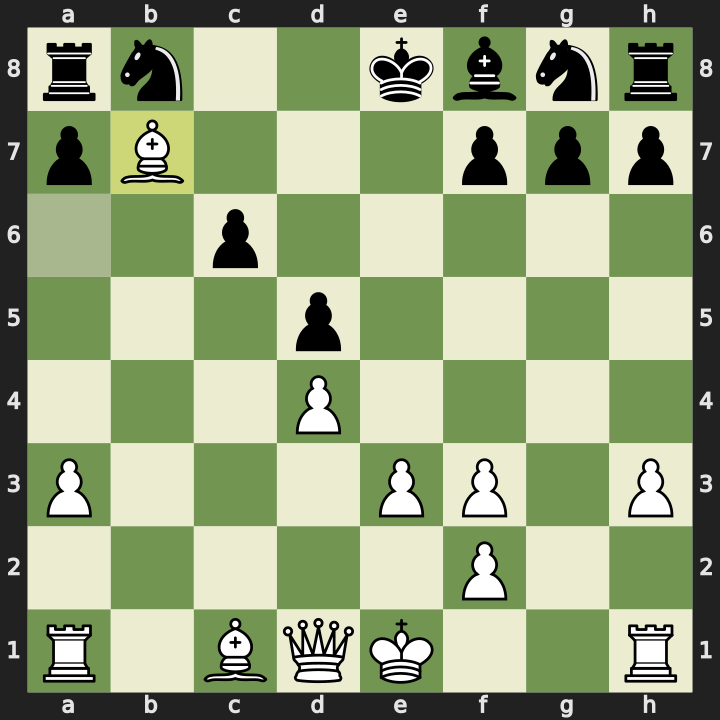
On move 13 I was able to get my bishop onto b7, collecting the rook next move. From here I continued to trade pieces and then on move 27 Black hung their last piece, moving the knight into the line of fire of my queen. After that they resigned.
Engine: 88.6% accuracy for me versus 74.1% for my opponent. Game rating of 1450 versus 950. The engine confirms b4 as the blunder.
Full PGN:
1. d4 c6 2. Nf3 d5 3. c4 Bg4 4. Nbd2 Qa5 5. h3 Bxf3 6. gxf3 dxc4 7. e3 b5 8. a3
b4 9. Nxc4 Qa6 10. Nd6+ exd6 11. Bxa6 bxa3 12. bxa3 d5 13. Bb7 Nf6 14. Bxa8 Bd6
15. Rg1 O-O 16. Rb1 Nbd7 17. Bxc6 Rb8 18. Rxb8+ Nxb8 19. Qc2 g6 20. e4 dxe4 21.
Bxe4 a5 22. d5 Bh2 23. Rg2 Be5 24. Bb2 Bxb2 25. Qxb2 Nxe4 26. fxe4 Nd7 27. h4
Ne5 28. Qxe5 1-0
Game 2: Colle System
| Opening: Colle System | Result: 1-0 (Resignation) | Opponent Rating: 703 |
The Game
1. d4 c6 2. Nf3 d5 3. e3 Nf6 4. Bd3 Bg4 5. b3 e6 6. Bb2 Bb4+ 7. Nbd2 Qa5
I went for a Colle System and again Black brought the bishops out to the fourth rank, solidified with the queen on a5. It was looking a little bit shaky. I had all my pieces in their normal squares but there was pressure on both knights and I wasn’t sure if I’d be able to get Ne5.
8. c3 Bxc3 9. Bxc3 Qxc3 10. Be2 Ne4 11. Rc1 Qxd2+ 12. Qxd2 Nxd2 13. Kxd2 Bxf3 14. Bxf3
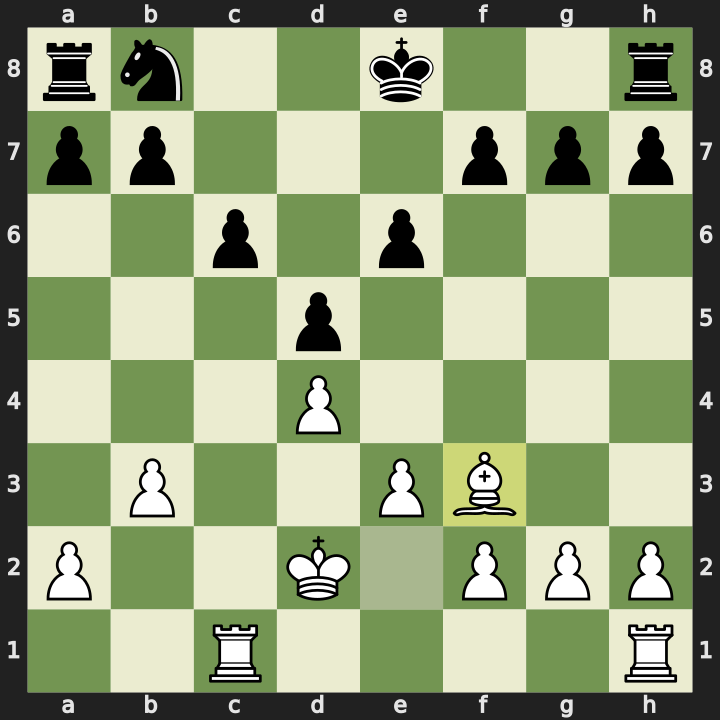
Then I played c3 to attack Black’s bishop and that triggered a sequence of trades that left Black up a pawn but really took the heat out of their attack. By move 14 I’m down a pawn but I’ve got a bishop, two rooks and a decent pawn structure. It’s still anyone’s game and I’d survived the opening attack. I decided my best plan was to push the pawns on the kingside while my king would guard the queenside since I’d already moved it to d2.
14…Nd7 15. h4 a5 16. g4 b5 17. h5 Ra6 18. g5 a4 19. b4 a3 20. Bg4 Ra4 21. Rxc6 Kd8 22. Rb1 f6 23. Bxe6
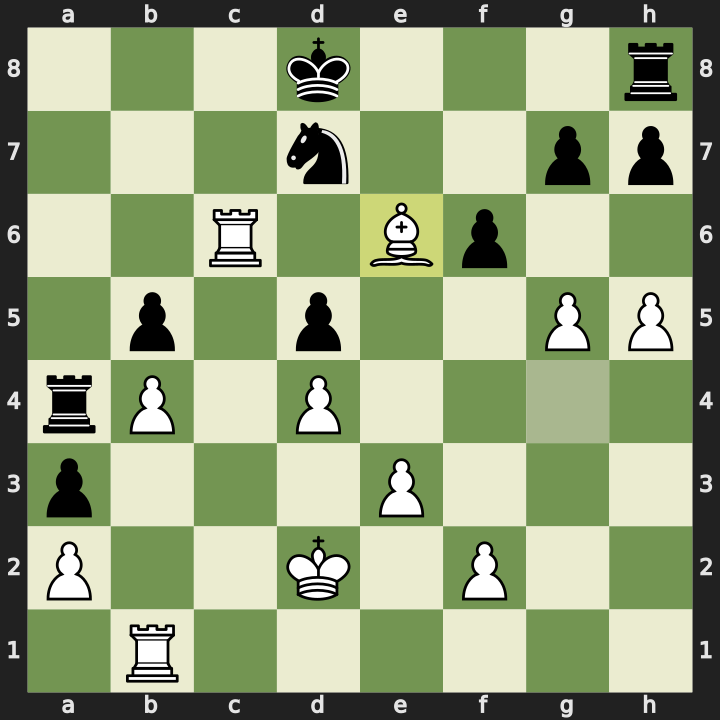
Black pushed pawns on the queenside and I was able to pick up the pawn on c6. When Black pushed f6 I was able to take on e6. Now I had two pieces getting close to the king. I felt like this was winning for me. My pieces were better placed than my opponent’s.
23…Re8 24. gxf6 Nxf6 25. Rd6+ Ke7 26. Rb6 Nxh5 27. Bxd5 g5
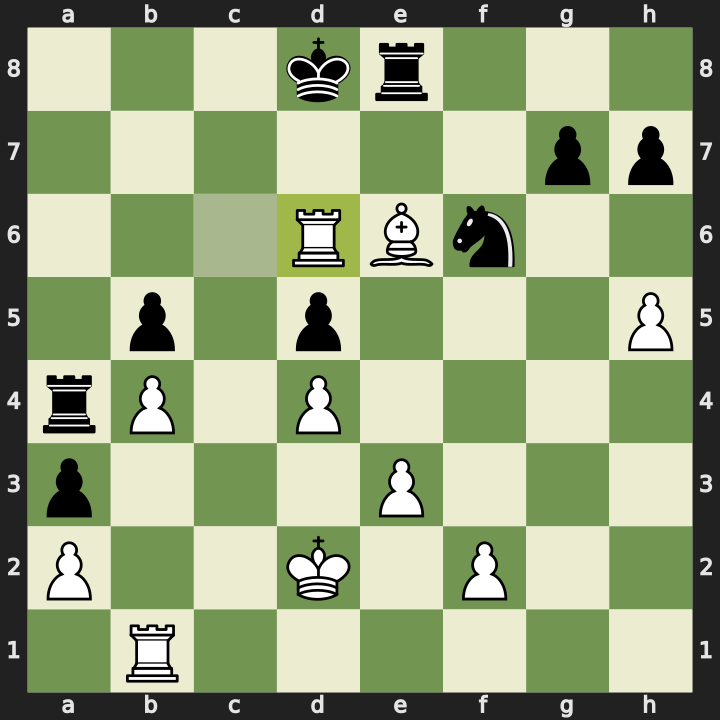
28. Rxb5 Nf6 29. e4 g4 30. Ra5 Rxa5 31. bxa5
We traded a few pawns and Black improved their position somewhat. Then I saw a chance to eliminate Black’s rook on a4 by boxing it in with Ra5. Black had to take, and I took back with my b-pawn, giving me an outside passed pawn on the a-file.
31…Nxd5 32. exd5 Kd6 33. Rb3 Kxd5 34. Kd3 h5 35. Rxa3 Kc6 36. a6 Ra8 37. Ke4 Kb6 38. Kf4 Ka7 39. Kg5 Rh8 40. d5 h4 41. Kxg4
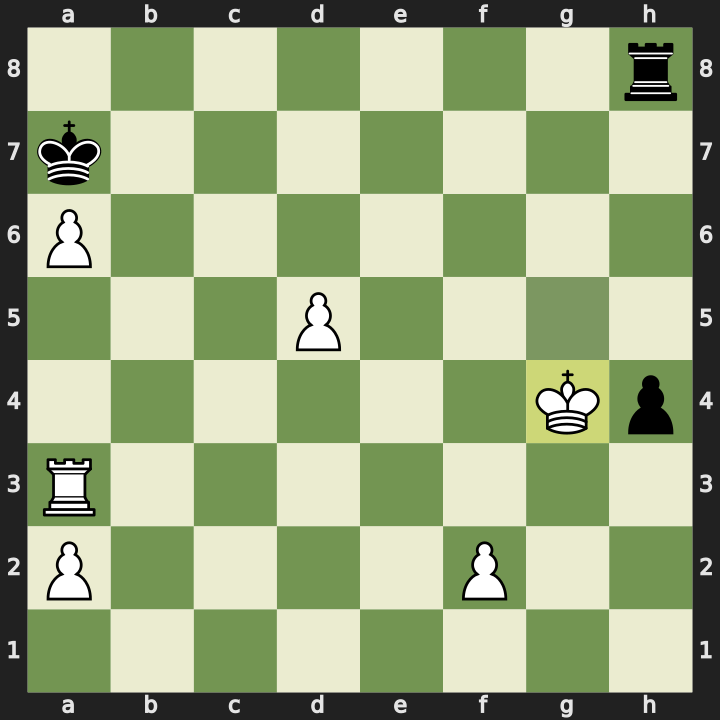
Black blocked my a-pawn’s advance with both their king and rook. I used the time to go and hunt down Black’s pawns on the h and g files. Black pushed their h-pawn to h3 but I was able to grab it and exchange rooks, leaving me up three pawns. That’s too many pawns for one lone king to defend against.
41…h3 42. Rxh3 Rxh3 43. Kxh3 Kxa6 44. Kg3 Kb7 45. Kf4 Kc7 46. Ke5 Kb6 47. f3 Kc7 48. f4 Kd8 49. f5 Ke7
I sandwiched my king between pawns on the d and f files and had another pawn ready to run on the a-file. Black resigned.
Engine: 67.4% accuracy for me versus 60.4% for my opponent. Game rating of 850 versus 400. A lot messier than our first game. On move 11 I missed a tactic: Black actually blundered the queen and I could have taken it with Nxd2. I’ll have to keep an eye out for that in future. Sometimes it’s hard to see that your opponent has made such a mistake with a strong-looking attacking move.
My Rd6+ was a blunder. If Black had played correctly they would have won a bishop. Lucky for me that didn’t happen. I wasn’t careful enough in calculating the Bxd5 line. I saw that the square was guarded by the knight on f6 but didn’t consider that if the knight takes the bishop on d5, there’s a rook check to then win it back, leaving White in a +4 advantage.
The engine doesn’t like my Ra5 simplifying move either. There was a tactic to win an exchange by playing Bc6 which x-ray attacks the rook on a4 and also attacks the rook on e8, so if Black saves the a-file rook then there’s Re5+ check to then take the other. I did see that double attack but figured I had enough material to win at that stage.
Full PGN:
1. d4 c6 2. Nf3 d5 3. e3 Nf6 4. Bd3 Bg4 5. b3 e6 6. Bb2 Bb4+ 7. Nbd2 Qa5 8. c3
Bxc3 9. Bxc3 Qxc3 10. Be2 Ne4 11. Rc1 Qxd2+ 12. Qxd2 Nxd2 13. Kxd2 Bxf3 14. Bxf3
Nd7 15. h4 a5 16. g4 b5 17. h5 Ra6 18. g5 a4 19. b4 a3 20. Bg4 Ra4 21. Rxc6 Kd8
22. Rb1 f6 23. Bxe6 Re8 24. gxf6 Nxf6 25. Rd6+ Ke7 26. Rb6 Nxh5 27. Bxd5 g5 28.
Rxb5 Nf6 29. e4 g4 30. Ra5 Rxa5 31. bxa5 Nxd5 32. exd5 Kd6 33. Rb3 Kxd5 34. Kd3
h5 35. Rxa3 Kc6 36. a6 Ra8 37. Ke4 Kb6 38. Kf4 Ka7 39. Kg5 Rh8 40. d5 h4 41.
Kxg4 h3 42. Rxh3 Rxh3 43. Kxh3 Kxa6 44. Kg3 Kb7 45. Kf4 Kc7 46. Ke5 Kb6 47. f3
Kc7 48. f4 Kd8 49. f5 Ke7 1-0
Reflections
What went well:
- Defending early attacks. Both games featured aggressive bishop and queen attacks from Black and in both cases I found my way through and into a winning position.
- Game 1: The Nd6+ brilliant move, a discovered attack that wins the queen.
- Game 2: Surviving the opening attack, pushing kingside pawns, and grinding out a long endgame.
What to work on:
- In Game 2, I overlooked a hanging queen on move 11. I need to not react so quickly to my opponent’s moves. Just check: have they made a blunder? It could happen at any time.
- I also made a blunder myself with Rd6+ that almost handed the game over to Black. Just because a move is check doesn’t mean the response won’t be a threat. I need to calculate more carefully before playing checks.
- The engine found a Bc6 double attack tactic that I missed. Even when ahead in material, I should be looking for forcing moves to close the game out faster.