Win vs DrSpaeck (1045)
| Opening: Queen’s Pawn (D02) | Result: 1-0 (Resignation) | Time Control: 3 days/move (Daily) | Rated | Event: 91st Chess.com Daily Tournament (1001-1200), Round 1 |
Game Overview
This was a fun game. I was a piece up before move 10, and with that material advantage I was able to mess up the pawns in front of the king and get a nice fork after which my opponent resigned.
The Opening (Moves 1-12)
1. d4 d5 2. Nf3 Nf6 3. Nbd2 e6 4. b3 Bd6 5. Bb2 Nc6 6. e3 O-O 7. Bd3 e5
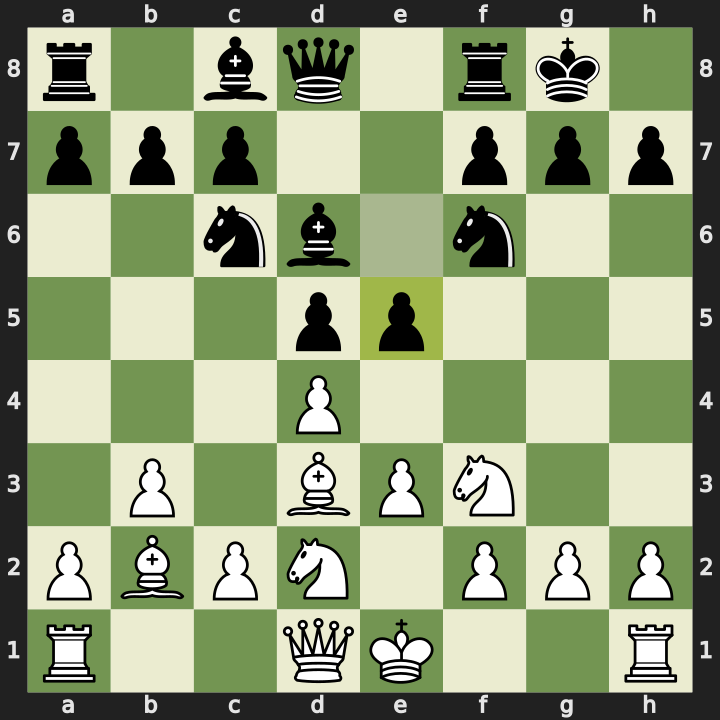
The game starts with a Queen’s Pawn opening and it’s fairly calm developing moves until move 7, when Black plays e5. In this position it’s already a mistake. The correct move would have been dxe5 forking the bishop and knight, but I know that I like to play Nxe5 in these positions so I sort of auto-piloted Nxe5. Luckily Black still miscalculated and continued trading.
8. Nxe5 Nxe5 9. dxe5 Bxe5 10. Bxe5 Re8 11. Bxf6 Qxf6 12. O-O
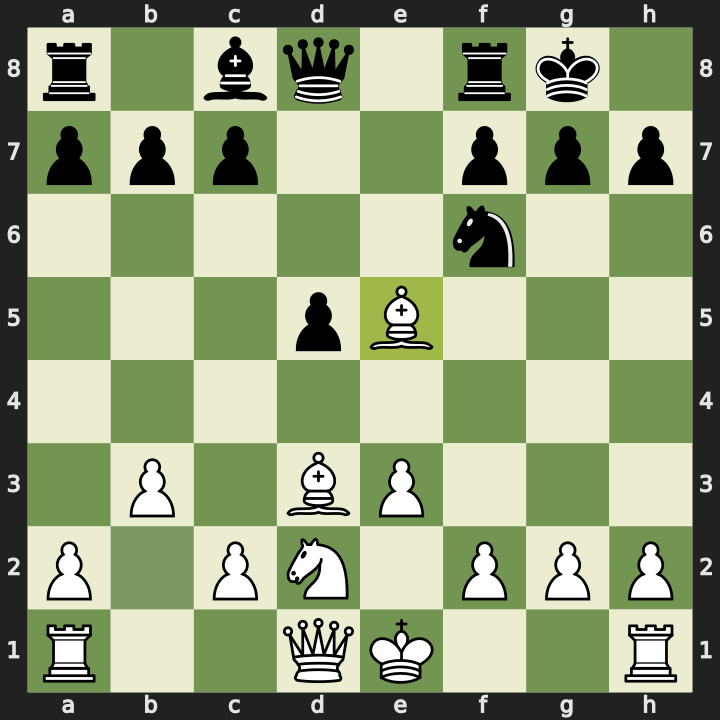
Black doubled down on the blunder when they took my knight with their own, giving me a chance to take back with the pawn. After Nxe5, Nxe5, dxe5, Bxe5, Bxe5, White has the last take and is up a piece on move 10. Once the dust settled I castled and started looking for ways to use my material advantage.
Dismantling the Kingside (Moves 13-19)
13. Qf3 Qg5 14. c4 d4 15. Ne4 Qe5 16. exd4 Qxd4 17. Ng5
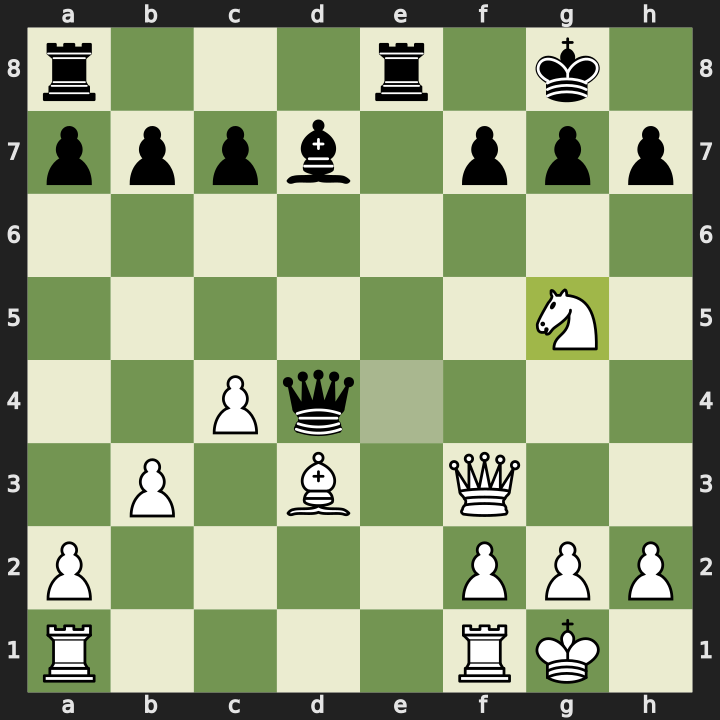
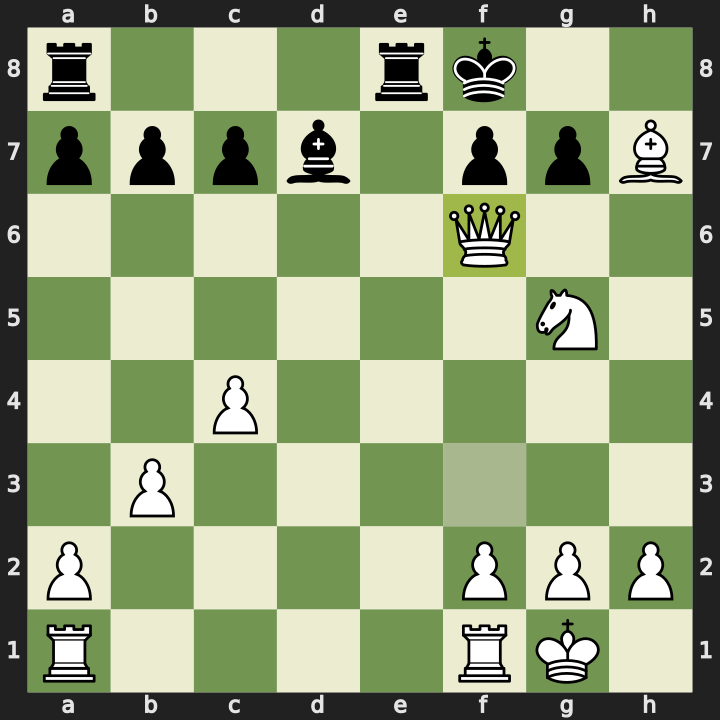
On move 17 I got to a nice arrangement of pieces with the knight on g5 pressuring the pawns in front of the king, bishop on d3 targeting h7, and queen on f3 targeting f7. It’s a dangerous combination that can dismantle the king’s defences, and it doesn’t even cost me a sacrifice because I won Black’s knights earlier. I can play Bxh7+ check, pick up the pawn and start poking holes in Black’s defences.
17…Qf6 18. Bxh7+ Kf8 19. Qxf6 gxf6
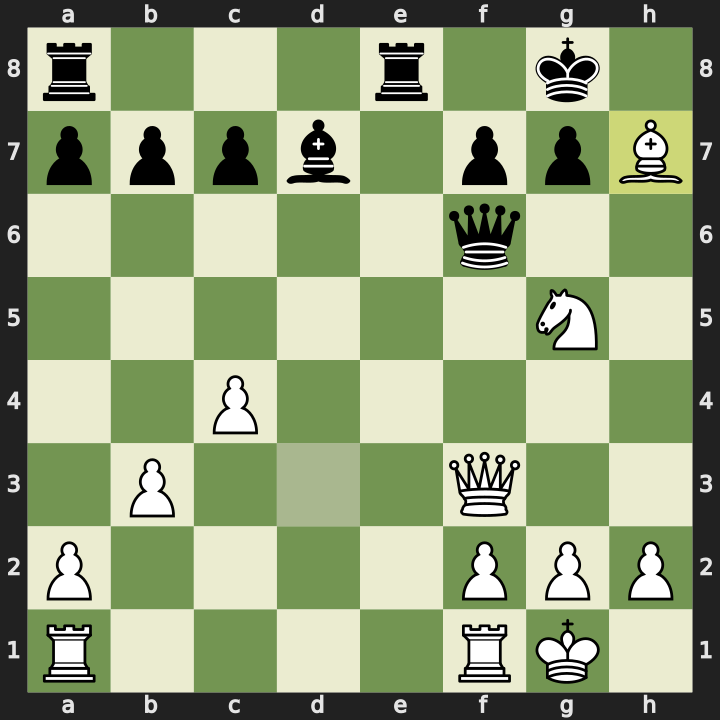
Black had positioned their queen on f6 in front of my queen. In hindsight it might have been better to play Qh5 here, but I saw an opportunity to trade that would further mess up Black’s pawn structure, so I went with Qxf6. Black recaptured with the pawn and now their king is hidden behind doubled pawns, exposed on both sides.
The Bishop Trap (Moves 20-26)
20. Nf3 Bg4 21. Nh4 Re5 22. f3 Bh5
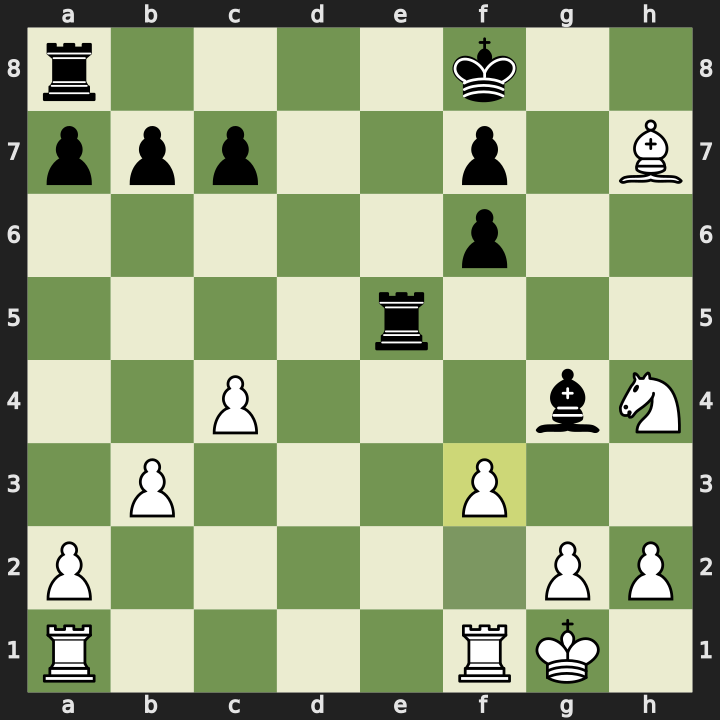
After retreating my knight to f3, Black attacked with Bg4. I think this is a mistake in this position because normally that’s the kind of move you play while a queen is still on d1, but there’s no queen there so it’s not pinning anything. I’m able to move my knight away and I start thinking about potentially trapping the bishop if it goes back to h5.
After a couple of preparation pawn pushes on f3 and h3, the trap is set.
23. Be4 c6 24. h3 Rae8 25. g4 Bxg4 26. hxg4
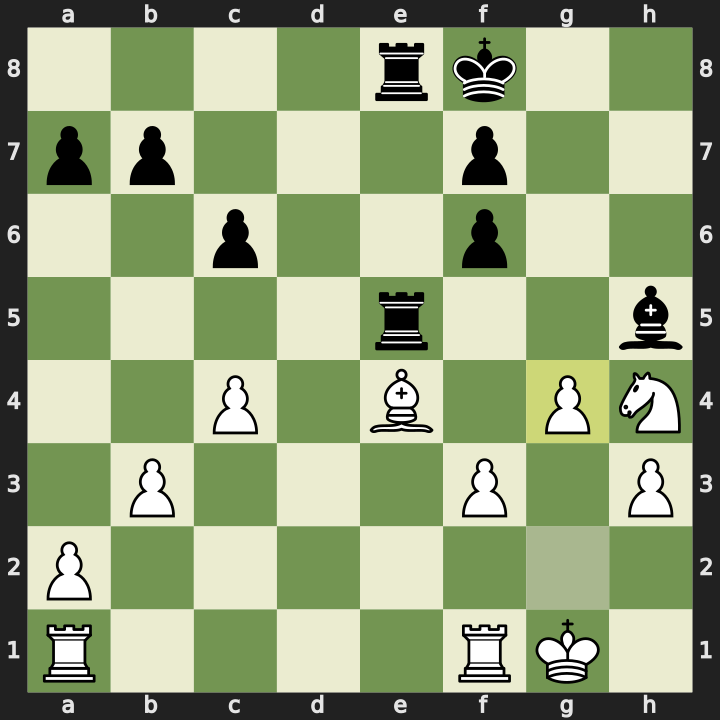
I trapped the bishop with g4. It could have moved back to g6, but from that position I can take it with my bishop, and then if Black recaptures with a pawn I can take the pawn with check using my knight and subsequently win the exchange on e5. So that’s also a losing line. I’m not sure if Black saw this but they chose to just exchange their bishop for the pawn, taking on g4.
Knight Blockade and the Fork (Moves 27-33)
27. Rf2 Ra5 28. Nf5
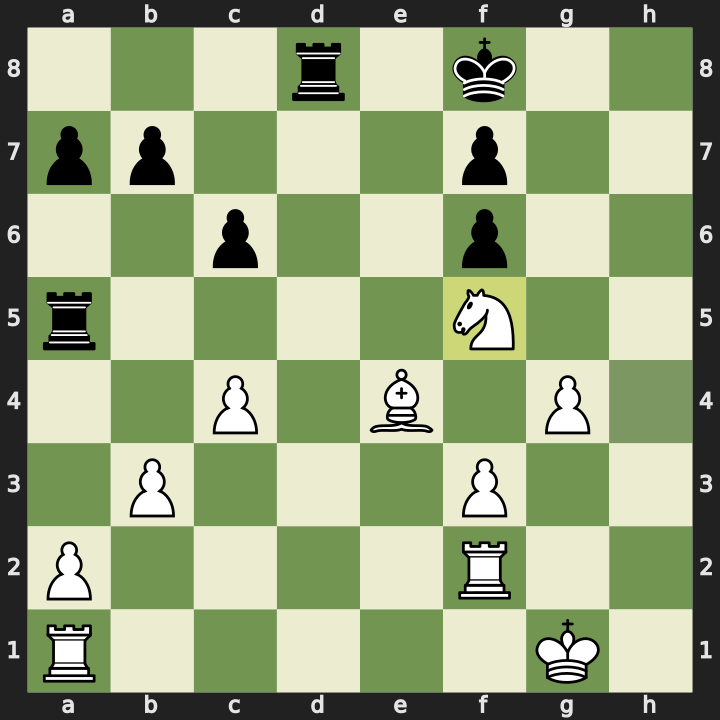
I got my knight to f5 in front of the doubled pawns. Now they won’t be able to promote or make any forward progress. Interestingly, in this position there is a checkmate threat. I don’t think I saw it immediately, but if I can get a rook on the eighth rank then it’s checkmate because the king can’t make any diagonal movements. Those squares are guarded by the knight. That’s an interesting pattern I’m going to try and remember from this game: a knight two squares away from a king that’s hiding behind a pawn can be quite dangerous.
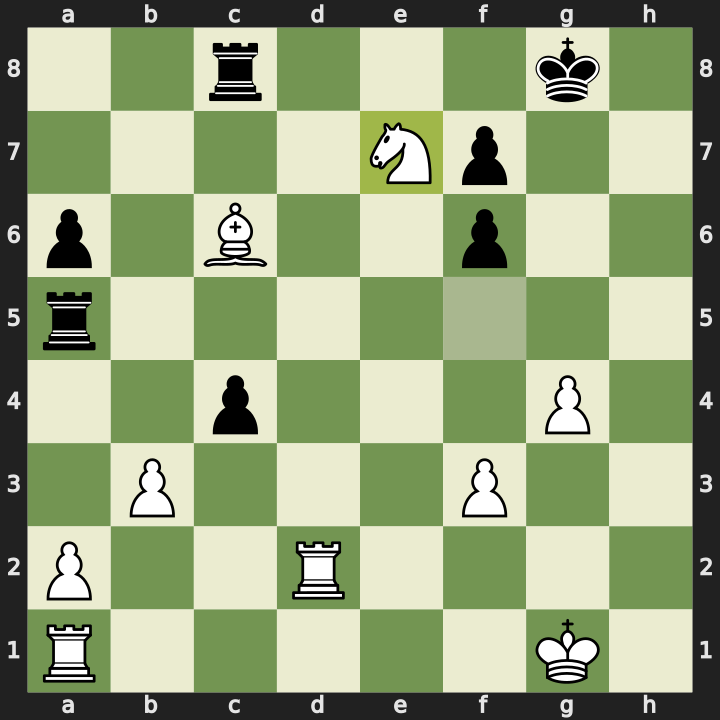
28…b5 29. Bxc6 a6 30. Rff1 bxc4 31. Rfd1 Rc8 32. Rd2 Kg8 33. Ne7+
I had the idea that I should attack the rook on d8 with one of my own rooks from d1, but I needed to get them both lined up so I played Rff1 preparing Rd1. Once I moved my rook to d1, Black saw through my plan and shifted their rook over to c8. I still saw a chance to follow the plan by doubling my rooks on the d-file, or perhaps if Black is tempted to take my bishop which I’d left hanging on c6, then I’d be able to checkmate with my rook on d8. But Black doesn’t fall for those tricks and instead plays Kg8. However, that combined with the last rook move allows me to fork the king and rook with Ne7+ check. Black is going to lose the rook and then be down 11 points in material with no real chance of recovery, so they resign.
Engine Review
87.2% accuracy for me versus 80.3% for my opponent. Game rating of 1800 for me versus 1500 for my opponent. No blunders and no mistakes for me. Two blunders and no mistakes for my opponent.
Black’s e5 on move 7 is a blunder, but my reply of taking with the knight is a miss. I could have taken with the pawn, which would have been safer. However, Black doubles down on the blunder when they take my knight with their own, giving me a chance to take back with the pawn for the bishop and knight.
No other real mistakes from me. It’s pretty much a winning position after being up a piece with well-coordinated pieces. The queen trade is fine. The bishop trap with g4 is excellent. Getting the fork with Ne7+ seals the deal at a +6.4 evaluation.
Reflections
What went well:
- The opening was fine, coming up a piece after Black blundered e5 and then continued trading.
- Staying calm and looking for tactics to convert the advantage into a win. The Bxh7+ pawn grab, the queen trade to mess up the pawn structure, and the bishop trap with g4 were all good ideas.
- The Nf5 blockade pattern is one I want to remember. A knight two squares away from a king behind a pawn controls the escape diagonals.
What to work on:
- Avoiding auto-pilot in the opening. Double check if going with a different move to what you might normally play in your repertoire, particularly when your opponent has made a mistake. dxe5 was better than Nxe5 and I should have spotted that.
Full PGN:
1. d4 d5 2. Nf3 Nf6 3. Nbd2 e6 4. b3 Bd6 5. Bb2 Nc6 6. e3 O-O 7. Bd3 e5 8. Nxe5
Nxe5 9. dxe5 Bxe5 10. Bxe5 Re8 11. Bxf6 Qxf6 12. O-O Bd7 13. Qf3 Qg5 14. c4 d4
15. Ne4 Qe5 16. exd4 Qxd4 17. Ng5 Qf6 18. Bxh7+ Kf8 19. Qxf6 gxf6 20. Nf3 Bg4
21. Nh4 Re5 22. f3 Bh5 23. Be4 c6 24. h3 Rae8 25. g4 Bxg4 26. hxg4 Rd8 27. Rf2
Ra5 28. Nf5 b5 29. Bxc6 a6 30. Rff1 bxc4 31. Rfd1 Rc8 32. Rd2 Kg8 33. Ne7+ 1-0