Win vs sahin3696 (730)
| Opening: Queen’s Pawn | Result: 1-0 (Checkmate) | Time Control: 10 min (Rapid) | Rated |
Game Overview
A really fun game where the feeling turned around completely. I thought I was in a losing position after giving up a pawn on c5, but an earlier pawn grab on a7 opened up the a-file and I was able to get a back rank checkmate in just 24 moves. It’s wonderful how chess can go like that.
The Opening (Moves 1-10)
1. d4 d5 2. Nf3 Qd6 3. Nbd2 Nc6 4. b3 Bg4 5. Bb2 Bxf3
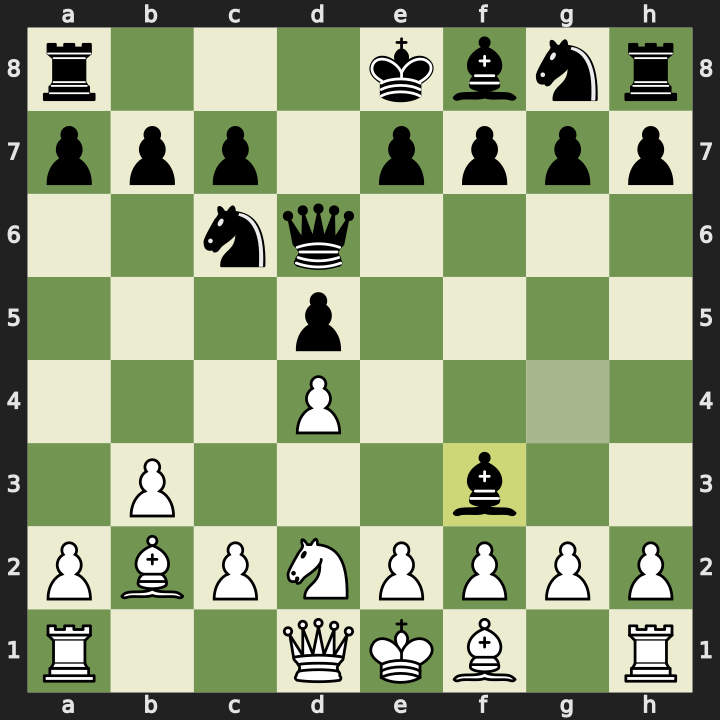
This one started with a Queen’s Pawn opening. I played d4 and Nf3 and Black played an interesting early Qd6 move which I felt was a mistake, but I wasn’t quite sure how to best exploit it so I decided to just make sure that my dark-squared diagonal was covered by my knight. After a few more developing moves Black willingly traded their light-squared bishop for one of my knights, which I think is a mistake, especially so early in the game. The knight wasn’t pinned. It was just a very eager material trade. I suppose it did open up the diagonal to my king, so maybe that was the idea.
6. Nxf3 e6 7. e3 Qb4+ 8. c3 Qd6 9. Bd3 O-O-O 10. O-O Nf6
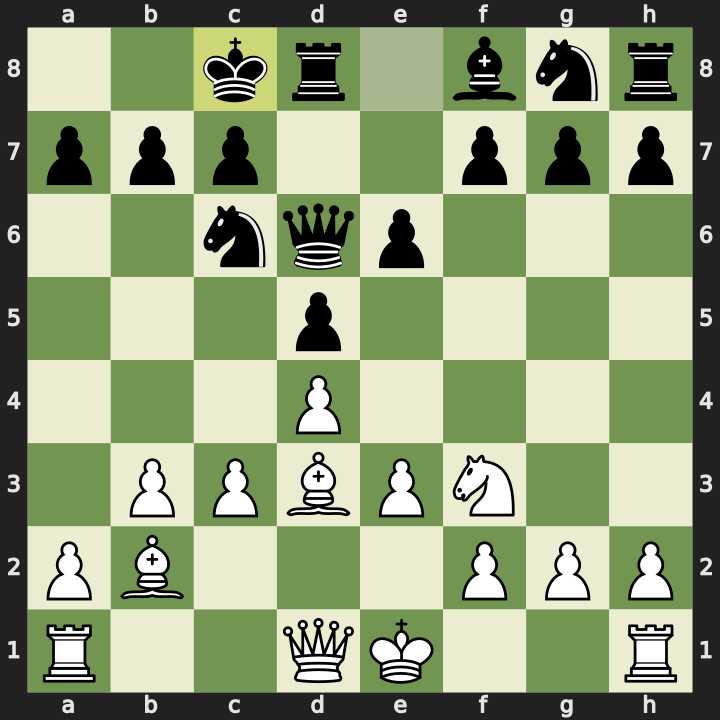
Black was able to get a check with Qb4+ but I blocked with the c-pawn and Black has to move their queen back, so they’ve just wasted a move. Black castles queenside, which isn’t how these openings normally play out, but it does put a rook and queen on the d-file so I have to watch out for that if the centre ever opens up. I also noticed that Black hasn’t developed any of the kingside minor pieces whereas mine have all been developed. I castled.
Counter-Attack (Moves 11-15)
11. c4 Ng4
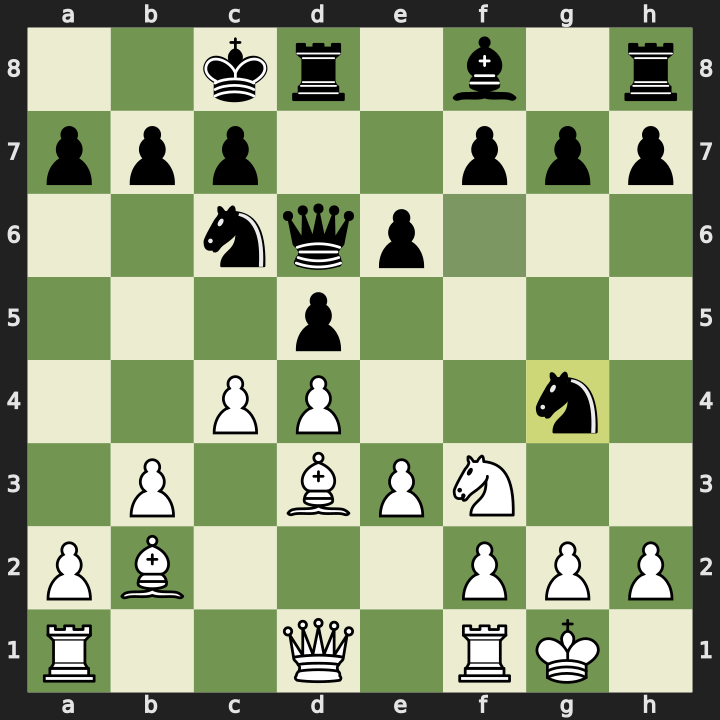
Black brings their kingside knight into the game with Ng4, combined with the queen on d6 looking for a quick checkmate with Qxh2. But there’s no real threat since I’ve still got my knight on f3 and there’s nothing attacking it.
12. c5 Qe7 13. h3 Nf6 14. Ne5 Nxe5 15. dxe5 Nd7
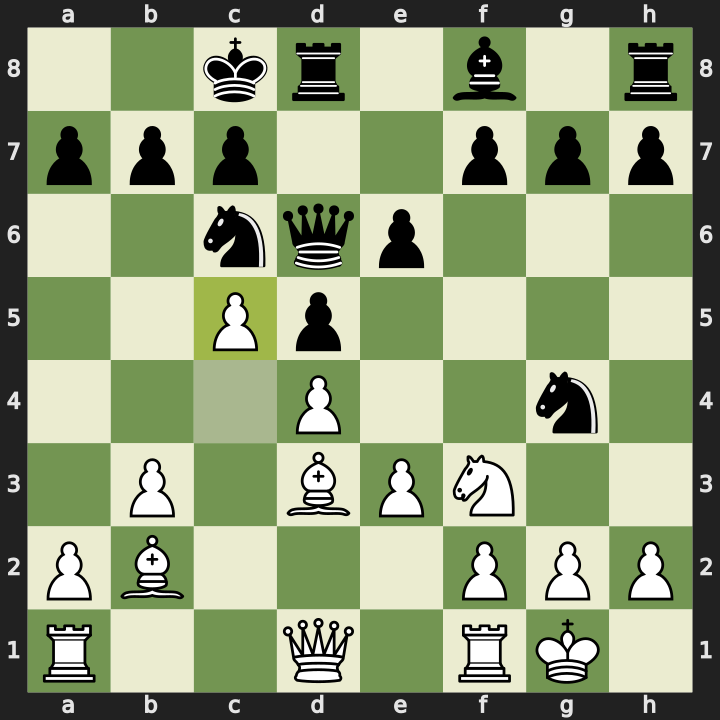
I pushed my pawn to c5 to hit Black’s queen and force it away, shutting down the checkmate threat altogether. I’ve been trying to avoid moves like h3 lately because I’m learning about how this weakens the dark squares around the king sitting on g1, but in this case it felt pretty safe because I had that knight nearby guarding h2.
I played Ne5 provoking an exchange of knights and opening up the centre. When I take on e5 with the pawn it threatens Black’s remaining knight, which hops back to d7.
The c5 Mistake and the a-file (Moves 16-20)
16. Rc1 Nxc5
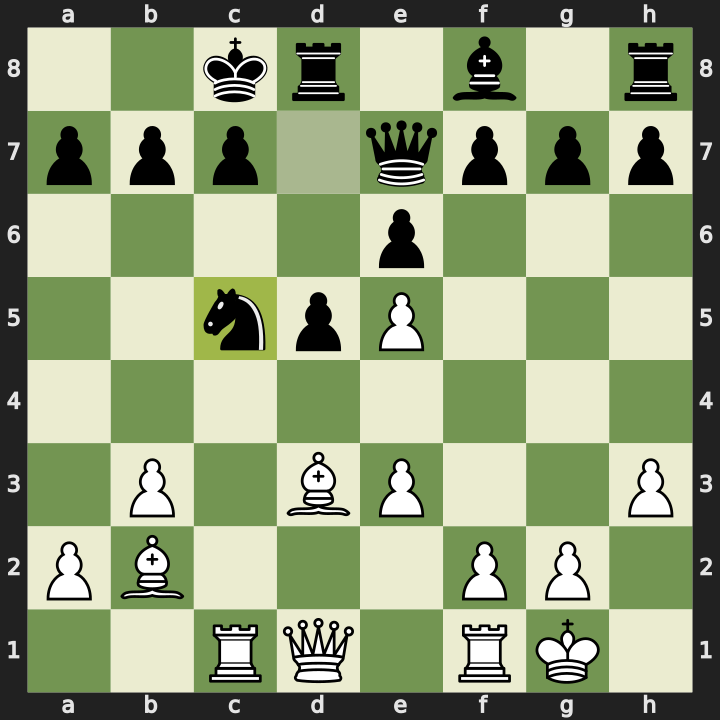
Here’s where I think I made a mistake. I could see that the knight attacks both the pawns on c5 and e5. The e5 pawn is supported by the bishop sitting on b2 so there’s no worry about that one, and I saw that the c5 pawn was undefended so without thinking too much more about it I played Rc1 thinking that would defend the pawn. But I didn’t properly evaluate the position because that c5 pawn has actually been under threat by the queen on e7 and the bishop on f8 behind it for quite some time. I can’t simply defend it with just a rook, otherwise that rook will be taken by the queen and Black will be up an exchange and a pawn. A bit of a mistake by me there, the correct move was to simply push b4. Black takes the pawn.
17. Be2 c6 18. Bd4 Ne4 19. Bxa7
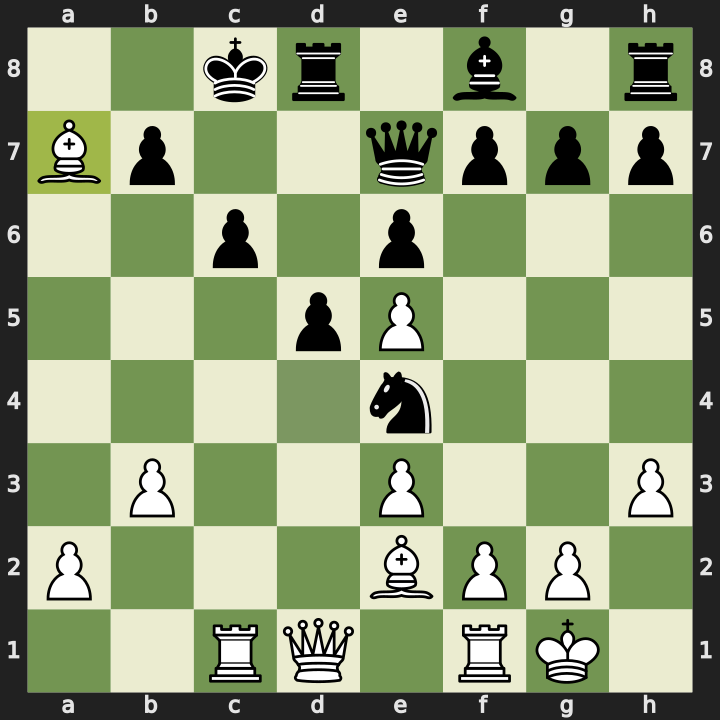
I had to retreat my bishop because it’s now under attack by the knight that has reached c5. I tried to add some pressure, bringing my bishop to d4. If I can take the knight then that bishop threatens the queen on e7. Black plays Ne4 guarding the c5 square, and I see an opportunity to open up the a-file. Black’s king never shifted over to b8 after castling so there’s a weak pawn on a7. I grabbed it thinking that I might be able to do something later, maybe bring my queen in or sacrifice a rook on c6 or something. Having an open file there would be good for me.
19…Qa3 20. Bb6 Rd7
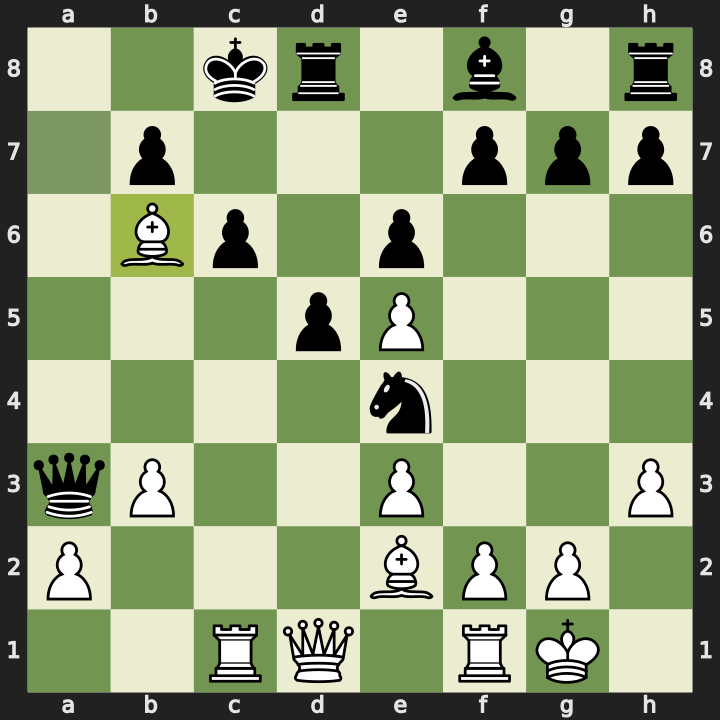
Black plays a good move with Qa3, double attacking the bishop on a7 and the undefended pawn on a2. I spent quite a bit of time trying to figure out what the best move was here and I settled on Bb6, threatening the rook on d8. I was hoping that threat would be enough to prevent the queen from taking on a2. Black just moved their rook to d7.
The Back Rank Checkmate (Moves 21-24)
21. f3 Ng3 22. Re1 Qxa2
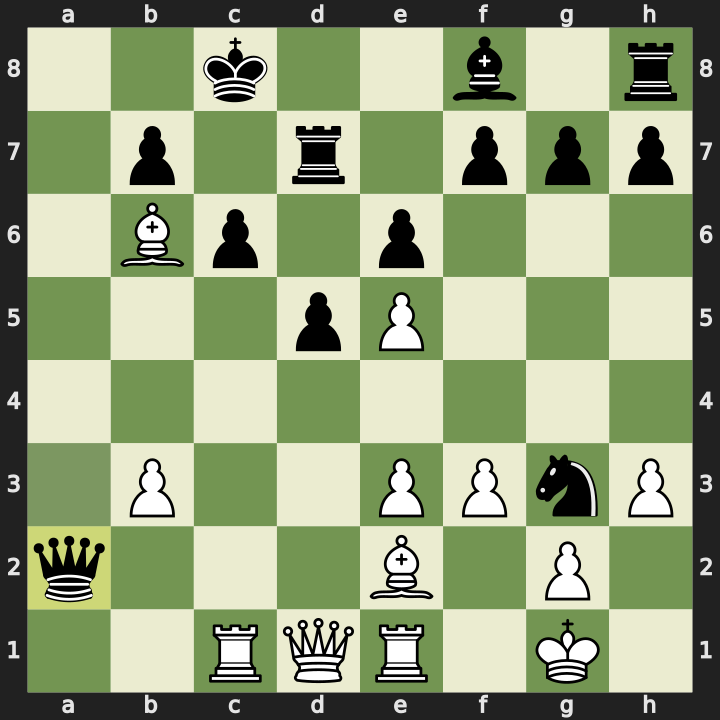
I still had to figure out what’s happening with the queen, so I again tried to go for some counter-play with f3. I know this isn’t a great move because it allows the knight to hop into g3, but I played it. I scooted my rook over to e1 to get out of the knight’s attack, and I was expecting the knight to trade itself for my light-squared bishop on e2. I didn’t mind that because it would give me a rook guarding a2 while my queen guards b3, keeping my pawns safe on the a and b files. Maybe the a-pawn can become a passed pawn later in the game.
But Black decides not to take on e2 immediately and instead plays Qxa2. In this position I realised that actually what I thought was a weakness in my position was actually a trap. By taking on a2, I’m now able to threaten the queen with Ra1.
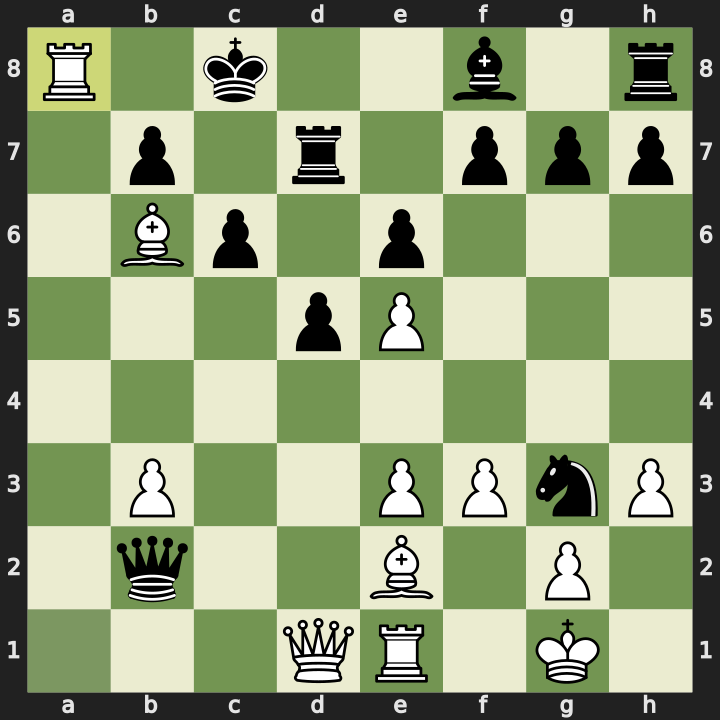
23. Ra1 Qb2 24. Ra8#
The queen has to decide to either take the rook and be recaptured by my queen, or retreat to b2 out of danger. But the real threat is actually the following Ra8 checkmate. And that’s how it went. The queen saved itself but that earlier pawn grab on a7 paid off and opened up the file that let my rook get in, while my dark-squared bishop on b6 and Black’s own rook on d7 prevented any escape.
Engine Review
77.8% accuracy for me versus 64.0% for my opponent. Game rating of 1300 for me versus 700 for my opponent. No blunders for me, one blunder for my opponent. One mistake and one miss each.
The engine prefers a Queen’s Gambit style opening after Black plays Qd6, with c4 rather than my Nbd2 move. I think the idea is that if Black takes on c4 then I can play Nbd2 and then Ne4 to challenge the queen anyway. The opening I played was fine.
I’m happy to see that pushing c5 to attack the queen was the right call rather than getting too worried about the checkmate threat with Qxh2 on move 12. This is something I’ve been practising: looking for counter-attacks and active moves that create problems for my opponent rather than being reactive or defensive unnecessarily. At this point in the game there’s a +2.94 advantage to White even with equal material.
One mistake that I did make was overlooking an opportunity to pin a knight. When that knight came in and took on c5, I wasn’t expecting it. I was too eager to retreat my piece and didn’t stop to think if there was a counter-attack tactic I could play. I should have played Ba3, pinning the knight to the queen.
Qxa2 was a blunder by Black, and my reply Ra1 was the best move. Black’s reply was also a mistake. If they wanted to stay in the game they had to play Nxe2+ check and they can trade their knight, queen and a rook for two bishops. They’d find themselves down in material but it’s not checkmate.
Reflections
What went well:
- The opening was solid. Grabbing the pawn on a7 and then parking the bishop on b6 was a good strategy that opened up the a-file for the decisive checkmate.
- Finding the counter-attack with c5 rather than worrying about the Qxh2 threat. Active moves over passive defence.
- The back rank checkmate was satisfying. The earlier pawn grab paid off in a way I didn’t fully anticipate.
What to work on:
- The missed pin on the knight with Ba3 after Nxc5. It leads to a much more attacking position that doesn’t let Black’s pieces onto my half of the board. That’s the kind of move I’ll need to be on the lookout for in future.
- I was able to win this game thanks to my opponent’s mistake, but it would have been even better to win it based on a tactic that forced it.
Full PGN:
1. d4 d5 2. Nf3 Qd6 3. Nbd2 Nc6 4. b3 Bg4 5. Bb2 Bxf3 6. Nxf3 e6 7. e3 Qb4+ 8.
c3 Qd6 9. Bd3 O-O-O 10. O-O Nf6 11. c4 Ng4 12. c5 Qe7 13. h3 Nf6 14. Ne5 Nxe5
15. dxe5 Nd7 16. Rc1 Nxc5 17. Be2 c6 18. Bd4 Ne4 19. Bxa7 Qa3 20. Bb6 Rd7 21. f3
Ng3 22. Re1 Qxa2 23. Ra1 Qb2 24. Ra8# 1-0