Win vs hqla (1158)
| Opening: Colle-Zukertort (D04) | Result: 1-0 (Checkmate) | Time Control: 3 days/move (Daily) | Rated | Event: 91st Chess.com Daily Tournament (1001-1200), Round 1 |
Game Overview
This was a really exciting game. I got to play some fun attacking moves and sacrifices and go for checkmate while queens are still on the board. That’s my favourite kind of win: checkmate despite my opponent still having material that they could have used to defend.
The Opening (Moves 1-13)
1. d4 d5 2. Nf3 Nf6 3. e3 Nbd7 4. Nbd2 e6 5. b3 c5 6. Bb2 Be7 7. Bd3 O-O 8. c4 h6 9. O-O a6 10. Ne5 Qc7 11. f4 b6 12. Ng4 Re8 13. e4
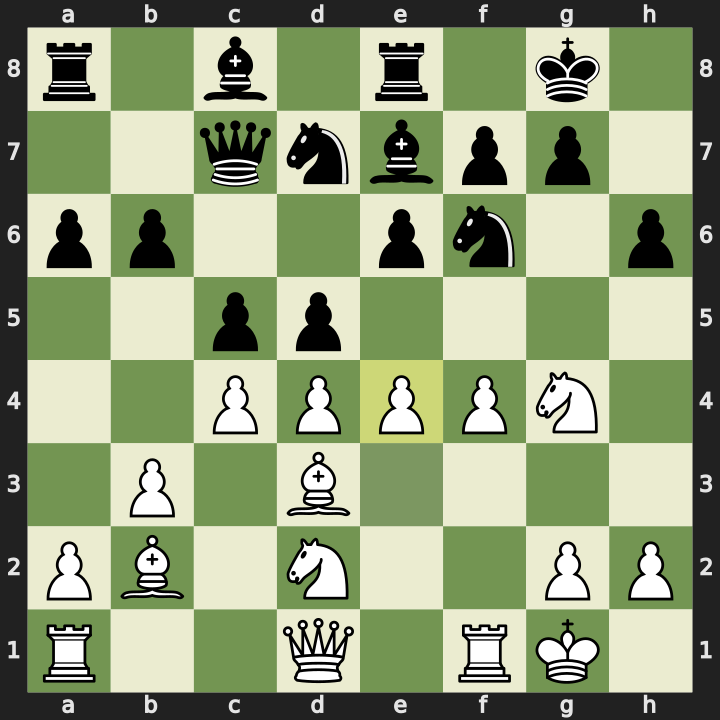
I played my standard Colle-Zukertort opening as White and this time I went for a c4 pawn push, inviting Black to take it so that I could open up the long diagonal for my dark-squared bishop. Black was very cautious and didn’t take those pawns, allowing me to get a very big centre with pawns on c4, d4, e4 and f4.
Opening the Diagonal (Moves 13-20)
13…Nxg4 14. Qxg4 Nf6 15. Qf3 dxc4 16. Nxc4
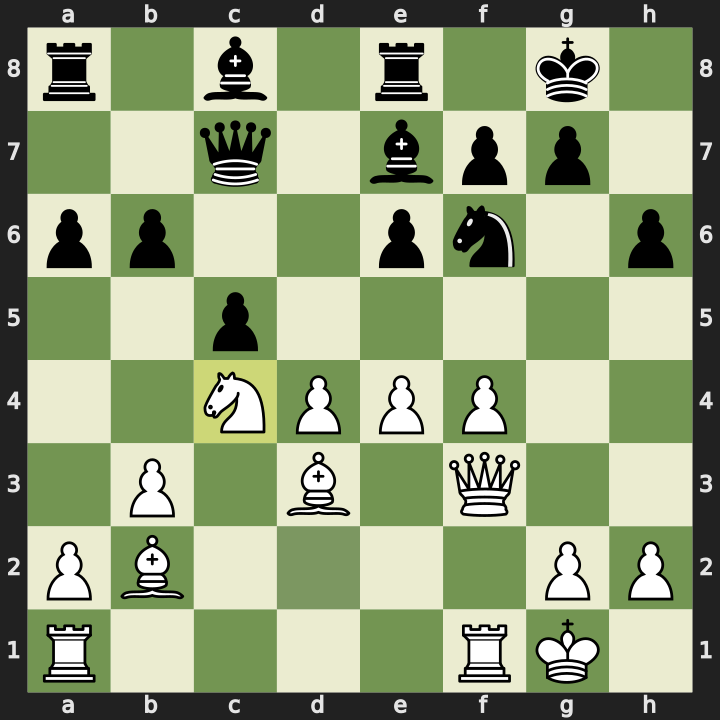
Eventually Black did take the c4 pawn, and I was able to bring my knight from d2 up to c4.
16…Bb7 17. Rae1 Rad8 18. d5
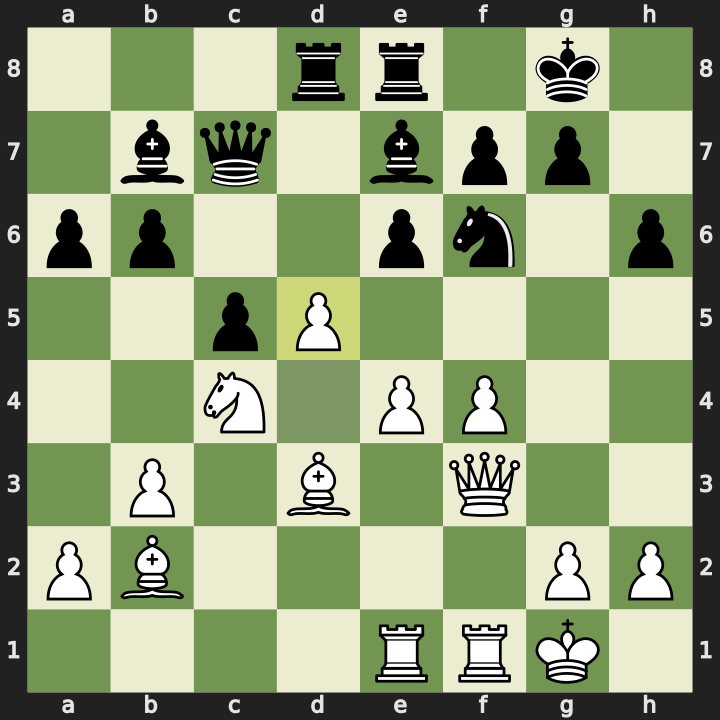
I was then able to get the d5 pawn push, opening up the diagonal that I’d been waiting for.
18…exd5 19. exd5 Bxd5 20. Qg3
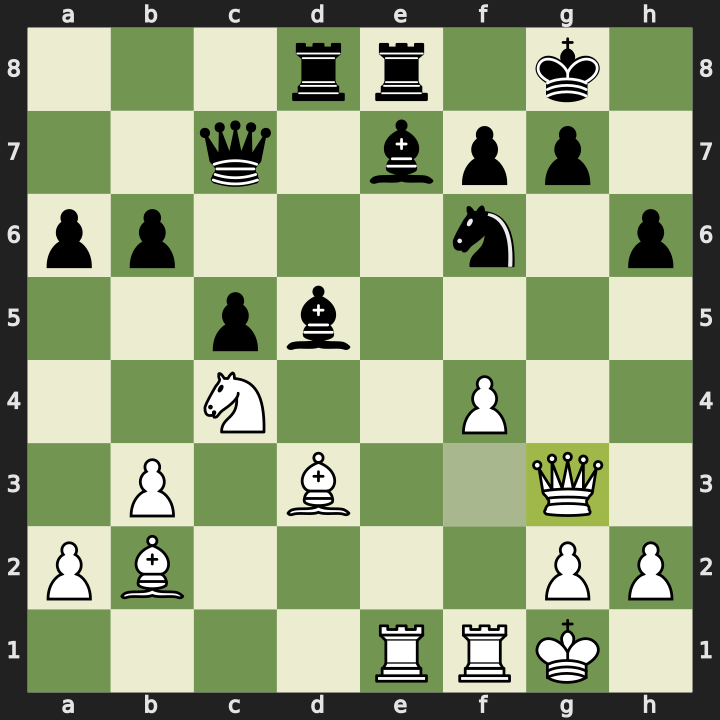
On move 20 things are looking good. I’ve got both bishops and the queen pointed at Black’s king. My rooks are ready on the e and f files where they can be sacrificed if necessary to take out defenders.
The Sacrifice (Moves 21-26)
20…b5 21. Ne3 g6
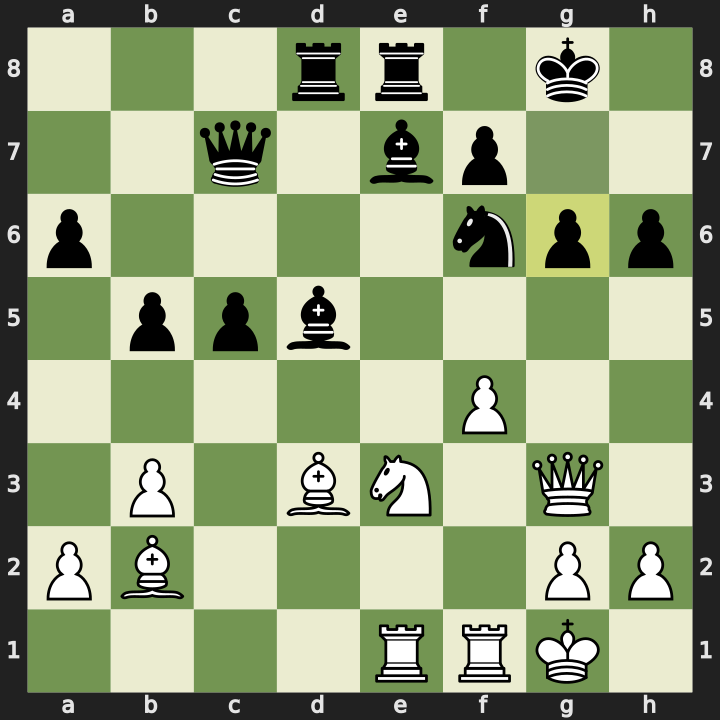
Black pushes g6 which weakens the kingside pawns.
22. Nxd5 Rxd5
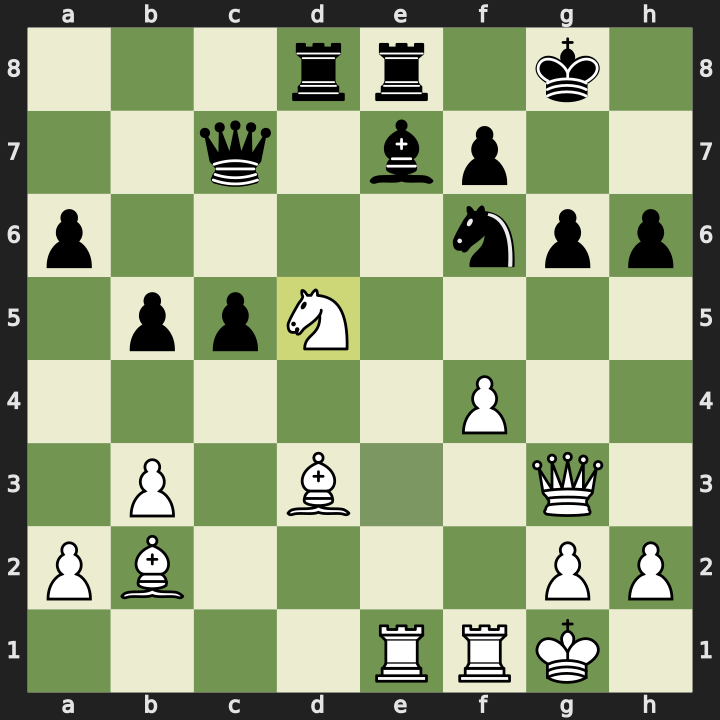
I traded my knight for Black’s bishop, clearing the way for what comes next.
23. Bxg6
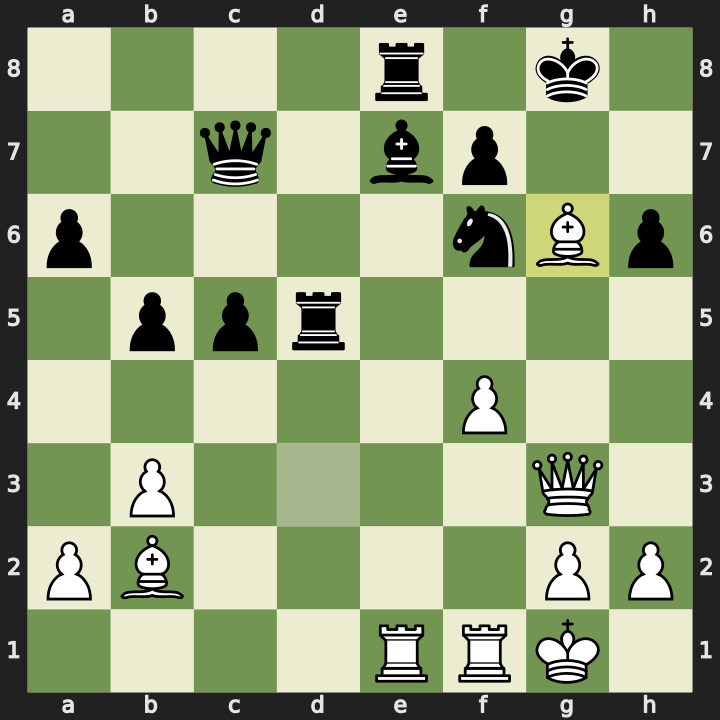
Then I smashed open the king’s defences with Bishop takes g6. What I love about this line is that the most natural looking response leads to checkmate. If Black takes back with the f-pawn, the queen comes into g6 with check and it’s over very quickly.
23…Kf8 24. Bxf6
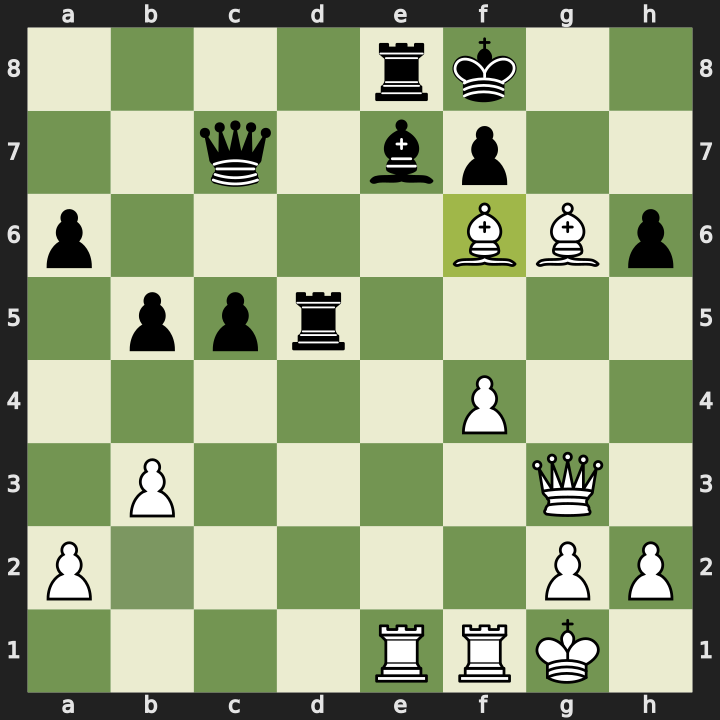
Black did the right thing and moved the king to f8. I then brought in my second bishop taking the knight that was sitting on f6.
24…fxg6
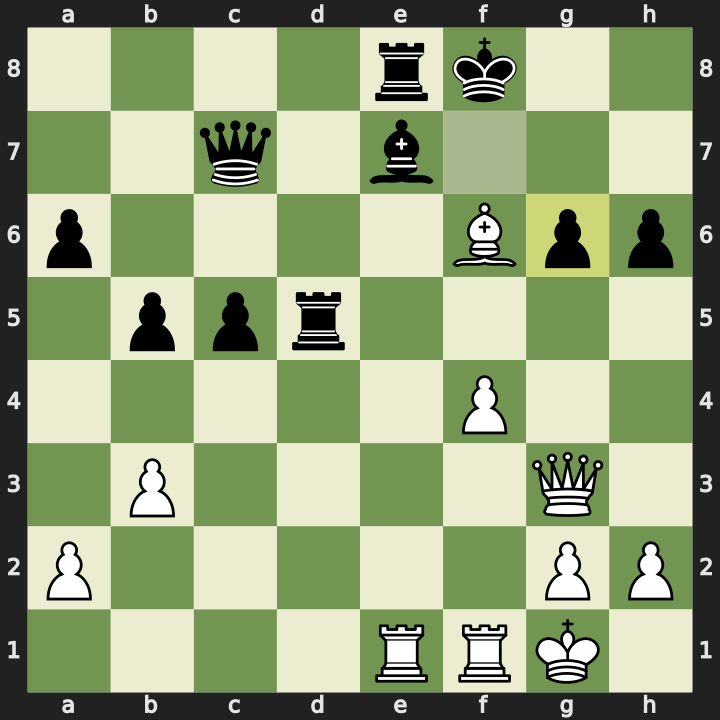
Black decides to take the g6 bishop with their pawn, which is a fatal mistake.
25. Qxg6 Bxf6 26. Rxe8#
It allows my queen to come into g6. Black then takes the f6 bishop, which opens up the e-file, and my rook delivers checkmate on e8.
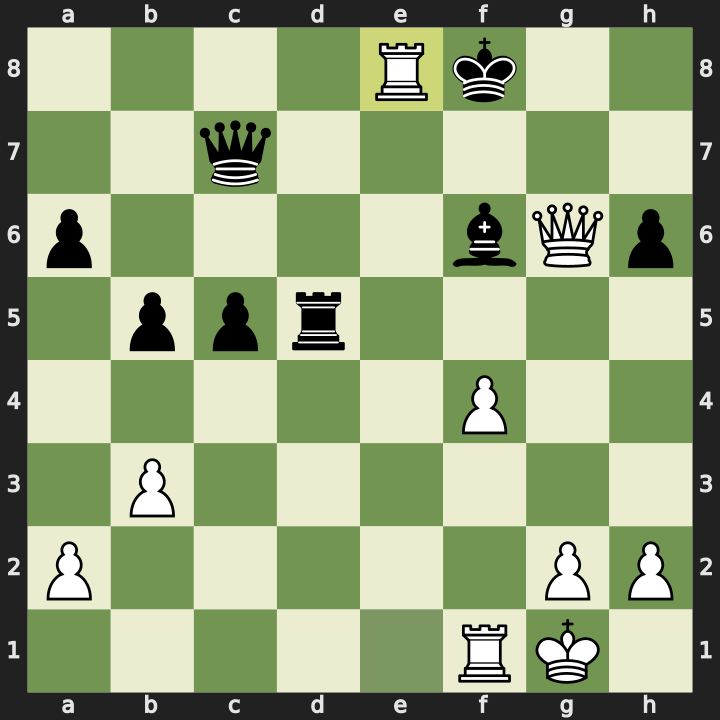
After playing logically and carefully at the start of the game, Black wasn’t able to hold back the pieces that I was willing to sacrifice to break up the kingside. This is exactly the kind of checkmate that the Colle-Zukertort opening is famous for: lining up the long-range pieces at the castled king, sacrifice, and mate.
Engine Review
85.4% accuracy for me versus 76.6% for my opponent. Game rating of 1750 for me versus 1300 for my opponent. One brilliant move, seven inaccuracies, and no blunders for me. Two blunders for my opponent.
The first 20 or so moves are very solid and Black even gets an advantage. They’re up a pawn and if they can defend, they have winning chances. But on move 21 the evaluation swings from -1.1 to +4.3 just from g6, a simple pawn push in front of the king.
The engine prefers to go for the bishop sacrifice immediately rather than first trading the bishop with the knight. I’m still okay with playing it that way because if Black had made the best move (recapturing with the knight, rather than the rook as they did in the game), it leads to a similar position where the bishop can be sacrificed on g6 and if Black recaptures with the f-pawn, it’s mate in two for White. So it was still a strong play.
Bxg6 gets the brilliant move award from chess.com.
The engine also classifies Bxf6 as an inaccuracy, preferring instead to play Qh3. If Black had played the best move, which was to first take the bishop on f6 before the bishop on g6, then they could have avoided the checkmate. It’s still a winning position for White because Black’s king is being hunted and Black is losing pawns, but the game would go on.
Reflections
What went well:
- The opening was solid. Using the daily game format to explore different lines and wait for the right time to attack.
- The sacrifice sequence starting with Bxg6. Lining up the bishops and queen at the castled king is exactly what the Colle-Zukertort is designed to do.
What to work on:
- It’s been quite instructive to see what the best defensive lines are so that I can better analyse whether it’s worth going in for an attack like this one, particularly when it involves sacrificing pieces. I need to be sure that I’m going to be in a good position even if the opponent plays the best defence. In this case I think it would have still been an advantage for White with fairly equal material and Black having poor king safety.
Full PGN:
1. d4 d5 2. Nf3 Nf6 3. e3 Nbd7 4. Nbd2 e6 5. b3 c5 6. Bb2 Be7 7. Bd3 O-O 8. c4
h6 9. O-O a6 10. Ne5 Qc7 11. f4 b6 12. Ng4 Re8 13. e4 Nxg4 14. Qxg4 Nf6 15. Qf3
dxc4 16. Nxc4 Bb7 17. Rae1 Rad8 18. d5 exd5 19. exd5 Bxd5 20. Qg3 b5 21. Ne3 g6
22. Nxd5 Rxd5 23. Bxg6 Kf8 24. Bxf6 fxg6 25. Qxg6 Bxf6 26. Rxe8# 1-0