Win vs hqla (1147)
| Opening: King’s Indian Defence (E60) | Result: 0-1 (Checkmate) | Time Control: 3 days/move (Daily) | Rated | Event: 91st Chess.com Daily Tournament (1001-1200), Round 1 |
Game Overview
One of the most enjoyable games of the tournament for me. I got to play a King’s Indian Defence, use a sacrifice tactic to open up the opponent’s king, and although I couldn’t find a quick checkmate I was able to get into a completely winning position, promote pawns and dismantle the opponent.
The Opening (Moves 1-7)
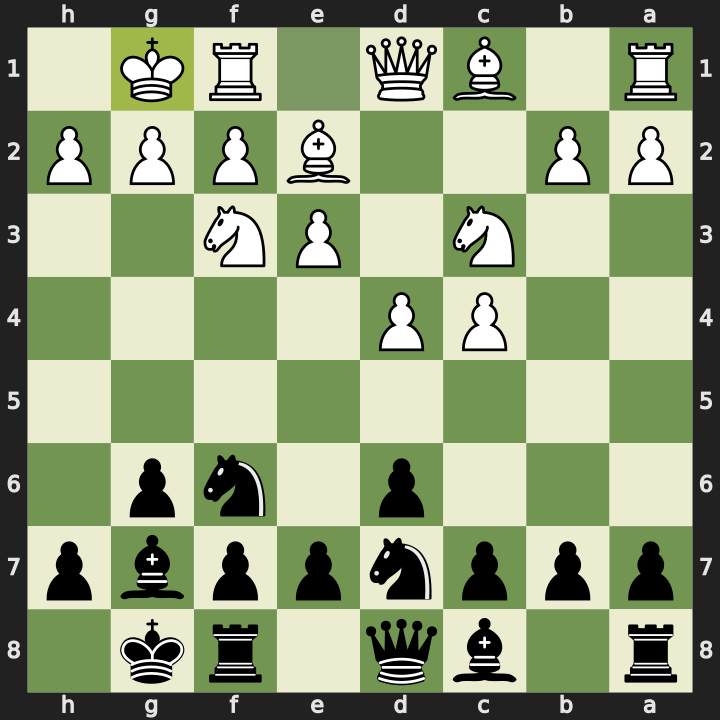
1. d4 Nf6 2. c4 g6 3. Nf3 Bg7 4. e3 O-O 5. Nc3 d6 6. Be2 Nbd7 7. O-O
The first seven moves were fairly calm. My opponent went for a Queen’s Gambit style opening with pawns on the c and d files, and I went with the fairly traditional King’s Indian Defence: kingside fianchetto, then d6, and preparing the e5 break with Nbd7.
Central Tension (Moves 7-15)
7…e5 8. a3 e4 9. Nd2 Qe7 10. h3 c6 11. b4 Nb6 12. c5 dxc5 13. bxc5 Nbd5 14. Nxd5 cxd5
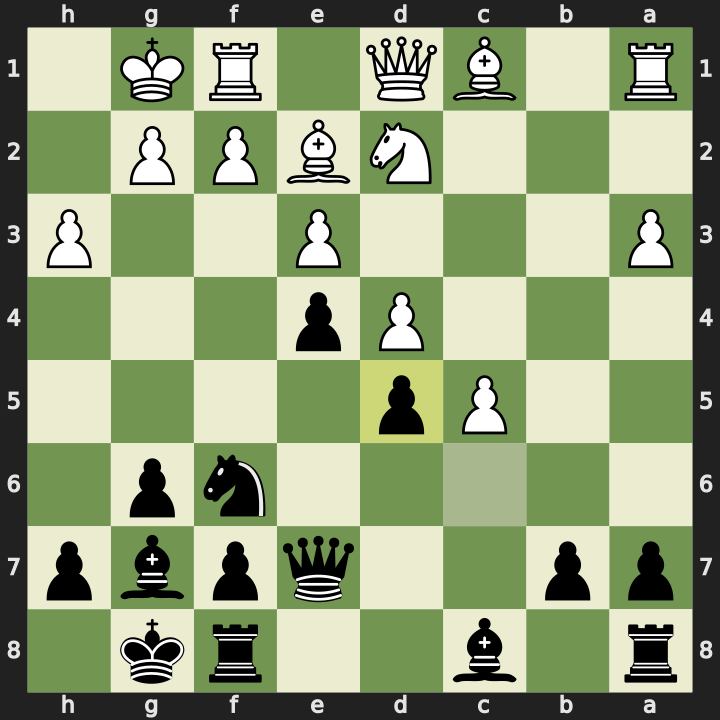
I pushed forward to e4 and then after some more pawn pushes and knight manoeuvring I was able to support e4 with d5. So I had a couple of fairly nice advanced central pawns giving me a bit of space, but I had opened up the c-file, which could become dangerous later.
Manoeuvring for the Attack (Moves 15-21)
15. Nb3 Be6 16. Bd2 Nd7 17. a4 Rac8 18. Na5 Qg5
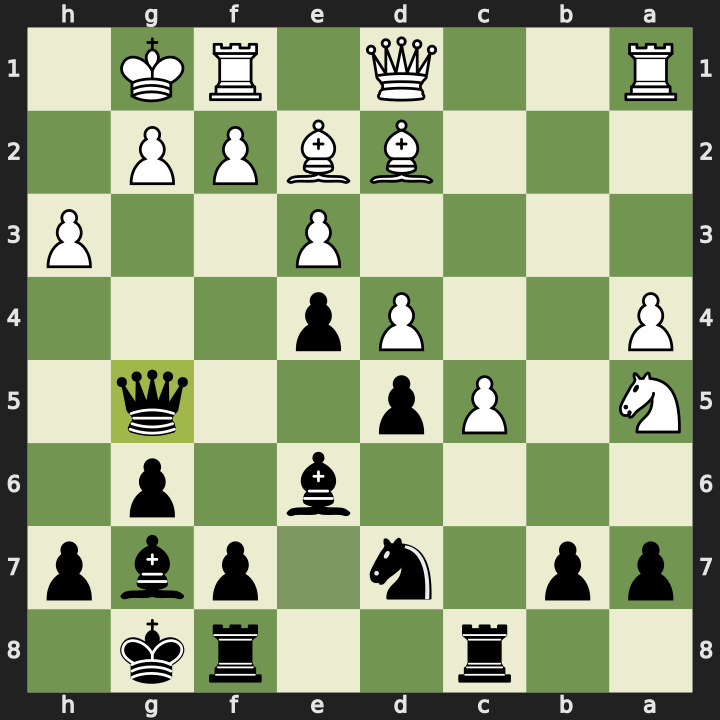
My plan from here was to attack the castled king using my queen and bishop, but first I needed to get my queen out from behind the knight on f6, so a bit of piece shuffling was required. After a few moves I got my queen to g5 and put my rook on the open c-file to block the oncoming pawn.
19. Kh2 Nxc5 20. Bb4 b6 21. Nb3 h5
My plan had been Bxh3, exploiting the pin on the g-pawn from my queen on g5 (gxh3 would expose the king on g1 to my queen). White’s response of Kh2 defended the h3 pawn and got out of the pin so the g-pawn could recapture. But then I saw a chance for a sneakier tactic: sacrifice the knight on c5 and then play Be5, checking the king that was now vulnerable on h2.
White didn’t take the bait when I offered up my knight as a sacrifice. Instead they pinned it to the rook that I had on f8. I gave the knight that they had sitting on a5 a kick with b6 and it hopped back to b3, looking like it was going to take on c5. I prepared my kingside attack by pushing h5.
The Brilliant Sacrifice (Moves 22-27)
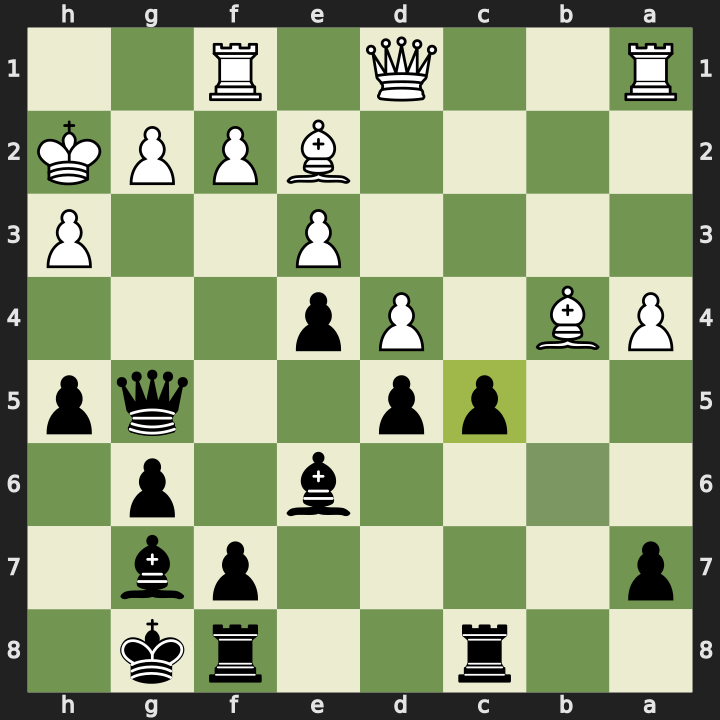
22. Nxc5 bxc5 23. Bxc5
White took with the knight on c5 and I really needed White to take back with the pawn, so I recaptured with my pawn, attacking the White bishop sitting on b4 and asking the question: do they want to take back with the pawn or the bishop? White chose to take back with the bishop.
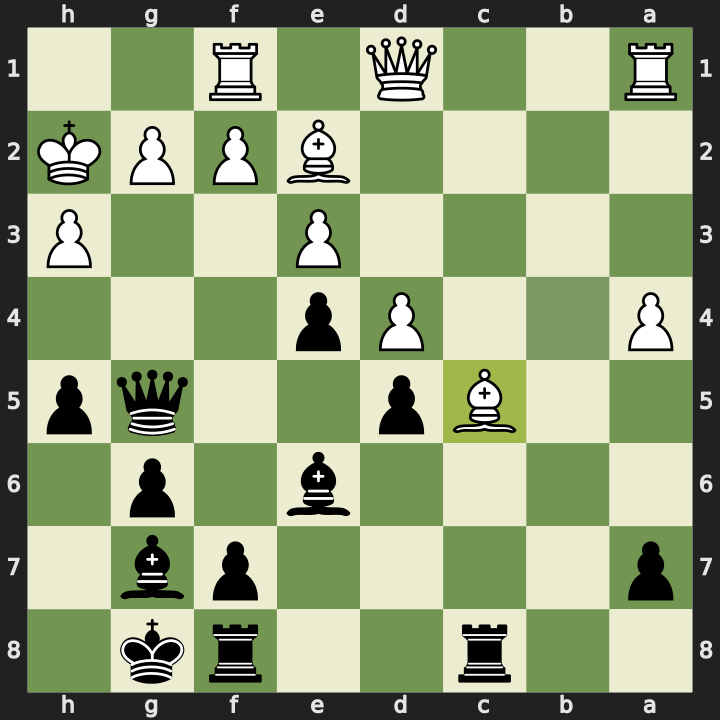
23…Rxc5 24. dxc5 Be5+
Now I was able to play the brilliant sacrifice Rxc5. Finally my bishop was able to get to the e5 square, check the king and set up a stronger attack. I knew that if the attack didn’t quite work out then that bishop was also pointing at a rook, so I’d be able to get material back and equalise with Bxa1 in the future if I needed to.
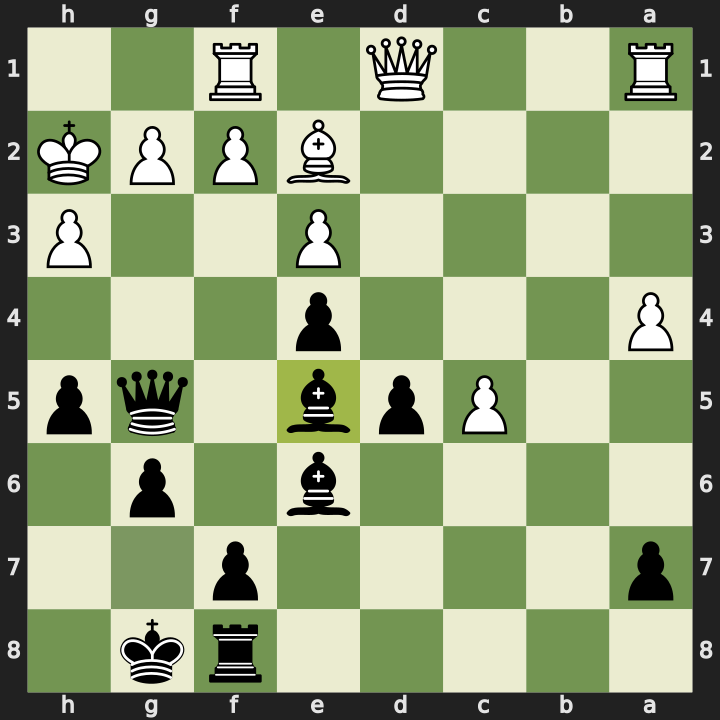
White isn’t yet in a losing position just because my bishop is on e5, but the most natural looking move for White is a blunder, which is why I played this position. If White were to try and stop the attack with a pawn block like f4, I could capture en passant and continue the attack with my queen and bishops.
25. g3 h4 26. Bg4 hxg3+ 27. fxg3
My opponent attempted to stop the attack with Bg4, hoping that I’d capture that bishop with my own bishop, inviting their queen to come in and leading to a queen trade that would simplify down to a fairly equal game if I could recapture the rook in the corner. My goal here was to absolutely keep the queen on the board.
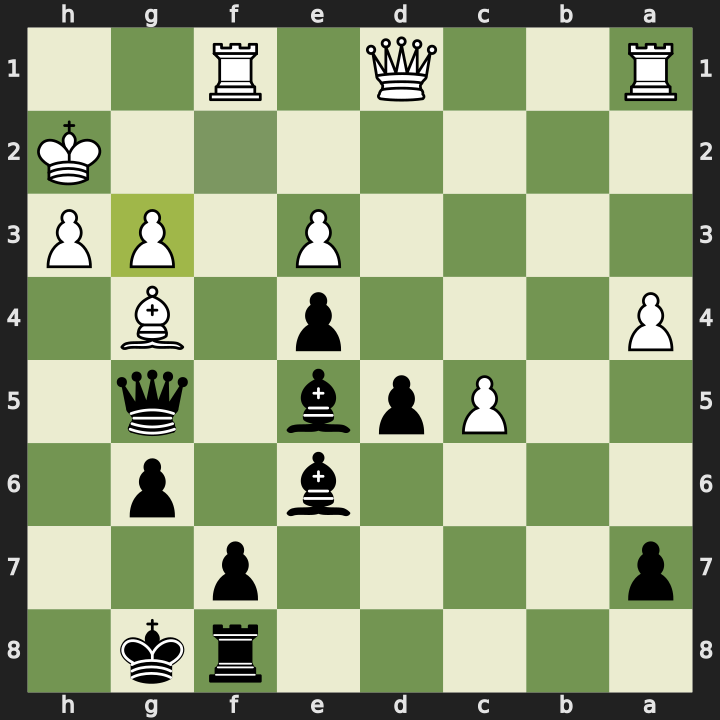
27…Bxa1 28. Qxa1 Bxg4 29. hxg4 Qxe3
I decided to play a slightly risky move, capturing the rook on a1 and inviting the queen to recapture, deflecting it away from the attack happening on the kingside. My opponent accepted the invitation and allowed me to capture the White bishop without allowing the queen in.
So my hopes of checkmating with bishop and queen didn’t work out, but what I had seen when planning this attack was that even if there wasn’t a checkmate, I’d still be leaving the opponent’s king exposed, pawns doubled, and my queen in a much better position ready to pick off White’s pawns. Meanwhile I’d have clean passed pawns on the e and d files which would be unstoppable if I could defend them from the rear with the queen and the rook.
Cleaning Up (Moves 30-48)
30. Kg2 Qxc5 31. Qa2 d4 32. a5 d3 33. Rf6 Kg7
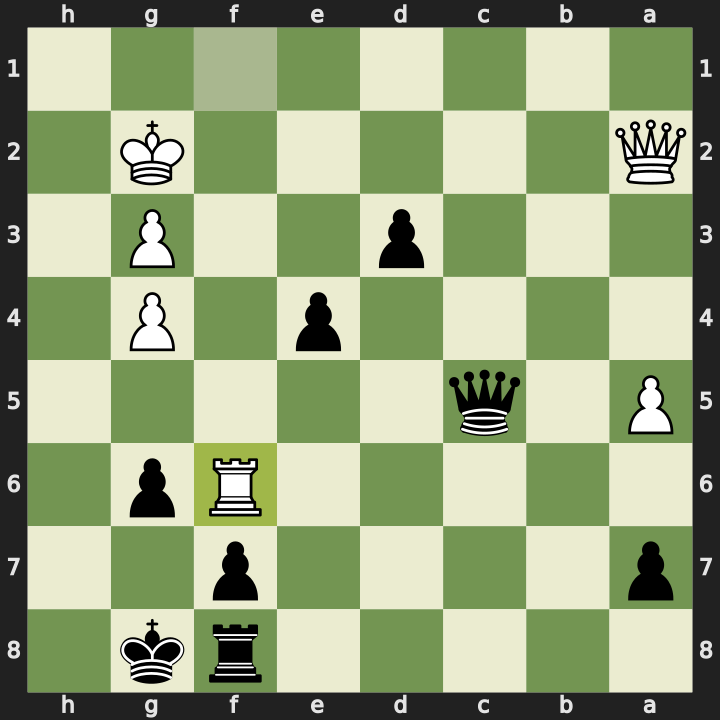
34. g5 Qd4 35. Qd2 e3 36. Qa2 d2 37. Rf1 d1=Q 38. Rxd1 Qxd1
Over the next few moves the plan worked perfectly. I traded one of the pawns for White’s rook, then I traded my queen for White’s queen, then promoted the other pawn to regain my queen.
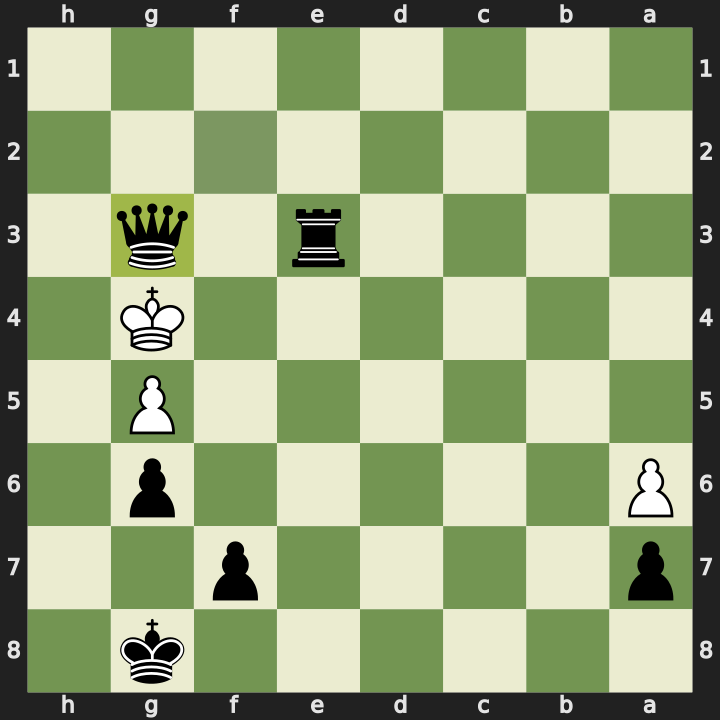
39. Qb2+ Kg8 40. a6 Qd2+ 41. Qxd2 exd2 42. Kf2 d1=Q 43. Ke3 Re8+ 44. Kf4 Qd4+ 45. Kf3 Re3+ 46. Kg2 Qd2+ 47. Kh3 Qf2 48. Kg4 Qxg3#
From there it was a simple matter of checkmating White’s lonely king with my queen and rook. This was a correspondence game and my opponent was showing no signs of resigning, so I actually programmed the last five moves in as conditional pre-moves using the chess.com interface. It was quite satisfying to wake up to a notification the next day that the game had been won by checkmate.
Engine Review
The eval chart tells the story: equal right up until my opponent makes a blunder, then a decline into victory for Black. 83.3% accuracy for me versus 76.3% for my opponent. Game rating of 1700 for me versus 1100 for my opponent. One brilliant move, three great moves, three mistakes and no blunders for me. One blunder for White.
The first seven moves were all book moves, so it was good to see that neither of us blundered the opening.
The engine really likes planting a knight on the d5 square supported by the pawn on c6. The first knight I got there was classified as a great move. However, after recapturing with a pawn to occupy that square it was considered an inaccuracy. The best move was to recapture again with my knight to have a centralised knight.
The engine really didn’t like my sacrifice idea. I guess it was a dubious move, but luckily my opponent wasn’t a chess engine. Playing Nxc5 was considered a mistake, and then leaving the knight on c5 while I played b6 was also considered a mistake. In both cases because the knight could be taken by a pawn. But after White accepted the sacrifice, the rook capture on c5 is brilliant: sacrificing the rook to open up the diagonal for the bishop.
With Be5+ White still has a tiny advantage, so the position is essentially equal. I’ve gone down an exchange just to give my opponent a chance of making a blunder. I’ve been noticing that this is actually a fairly reasonable strategy when playing against people: when the most natural obvious defensive move against an attack is incorrect, then it may be worth playing even if it’s not strictly objectively the best move. Opponents will make mistakes and you have to give them the opportunity to make those mistakes so that you can then capitalise on the position. This was one of those cases. g6 was a blunder by White, with h4 being the best response.
White’s attempt at stopping the attack with Bg4 was an inaccuracy. Instead of that, they could have protected the c3 pawn by playing Rc1.
My move hxg3+ was also an inaccuracy. I could have played f5 to win the White bishop. There are a few different ways it can continue, but if White retreats the bishop the only way to prevent checkmate is to give up material.
My move Bxa1 was also classified as a mistake for the same reason. Rather than allowing me to win an exchange and deflect the queen, the engine prefers to just win a clean piece, trade down, and then go for an endgame being slightly up material.
White’s choice to recapture my bishop on a1 was a mistake. It would have been stronger to simply capture my other bishop. The rook on a1 wasn’t really doing anything, and me moving my bishop over to the other side of the board to capture it was purely subterfuge. I only needed to get the queen out of the way so that I could capture the White bishop, forcing doubled pawns, and then move my queen to capture White’s central pawns giving me a nice easy endgame position.
Reflections
Overall this game went well. The opening defended against White’s initial queenside thrust, I saw a strategic opportunity and took a risk. I’m really happy that I tried something and in this case it worked out. Perhaps against a very strong opponent it wouldn’t have, but I’m really enjoying playing attacking chess.
What went well:
- Defending the queenside thrust with a solid King’s Indian setup.
- Spotting the tactical opportunity to sacrifice the knight on c5 to draw out the attack.
- The Rxc5 brilliancy opening the diagonal for Be5+.
- Using conditional pre-moves to finish off the game while my opponent declined to resign.
What to work on:
- There was one move that I was really surprised I missed during the game: the f5 pawn push to attack the White bishop. I must have been so focused on trying to get a checkmate that I didn’t consider that there was an opportunity to just be up a clean piece.
Full PGN:
1. d4 Nf6 2. c4 g6 3. Nf3 Bg7 4. e3 O-O 5. Nc3 d6 6. Be2 Nbd7 7. O-O e5 8. a3 e4
9. Nd2 Qe7 10. h3 c6 11. b4 Nb6 12. c5 dxc5 13. bxc5 Nbd5 14. Nxd5 cxd5 15. Nb3
Be6 16. Bd2 Nd7 17. a4 Rac8 18. Na5 Qg5 19. Kh2 Nxc5 20. Bb4 b6 21. Nb3 h5 22.
Nxc5 bxc5 23. Bxc5 Rxc5 24. dxc5 Be5+ 25. g3 h4 26. Bg4 hxg3+ 27. fxg3 Bxa1 28.
Qxa1 Bxg4 29. hxg4 Qxe3 30. Kg2 Qxc5 31. Qa2 d4 32. a5 d3 33. Rf6 Kg7 34. g5 Qd4
35. Qd2 e3 36. Qa2 d2 37. Rf1 d1=Q 38. Rxd1 Qxd1 39. Qb2+ Kg8 40. a6 Qd2+ 41.
Qxd2 exd2 42. Kf2 d1=Q 43. Ke3 Re8+ 44. Kf4 Qd4+ 45. Kf3 Re3+ 46. Kg2 Qd2+ 47.
Kh3 Qf2 48. Kg4 Qxg3# 0-1