Win vs Samiid07 (735)
| Opening: Pirc Defence (B07) | Result: 0-1 (Checkmate) | Time Control: 10 min Rapid | Rated |
Game Overview
This game is a good example of why I love the Pirc Defence. I got into a good position fairly early, and even though I missed a tactic here and there and my accuracy wasn’t great, I felt like I had the initiative for the bulk of the game.
The Opening (Moves 1-6)
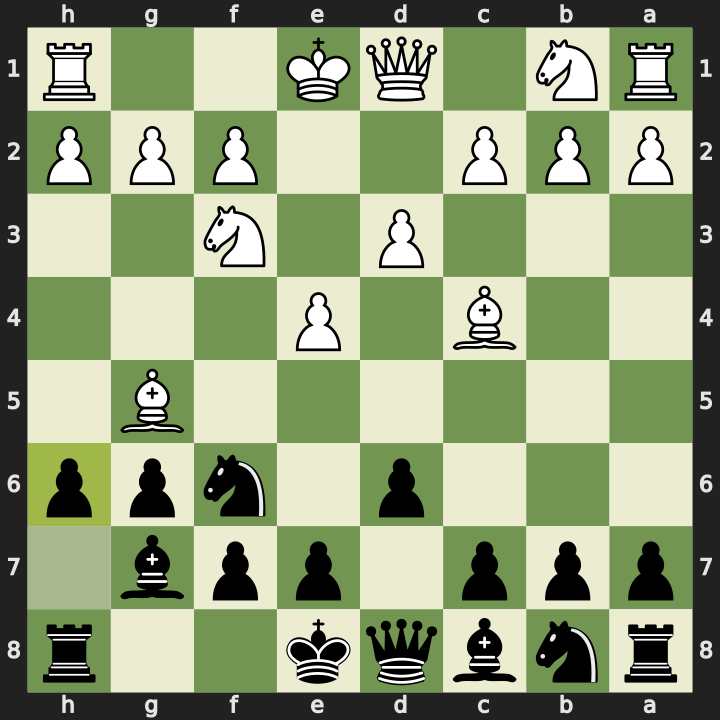
1. e4 d6 2. Bc4 Nf6 3. d3 g6 4. Nf3 Bg7 5. Bg5 h6 6. Bf4 O-O
It started with the fairly normal e4 d6 moves. When my opponent played Bg5 on move five I knew the right thing to do was immediately play h6. We’ve got to kick that bishop away before White gets a chance to form a battery with the bishop and queen.
A Missed Rook (Moves 7-10)
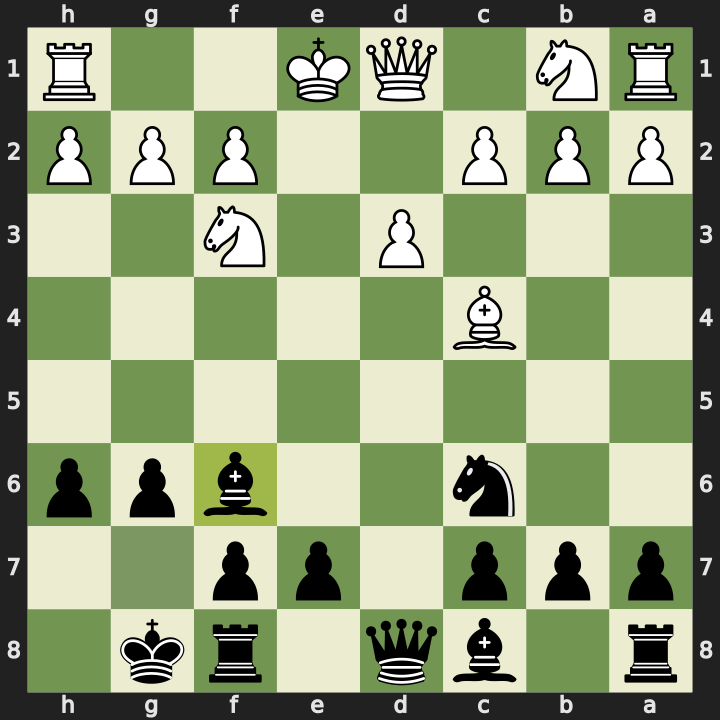
7. e5 dxe5 8. Bxe5 Nc6 9. Bxf6 Bxf6 10. O-O
On move seven White decided to go for the e5 pawn push, and I’m totally happy to take that. White then decided to trade their dark-square bishop for my knight on f6. I’m very happy to see this. When the opponent no longer has a bishop that can challenge my own bishop on that dark-square long diagonal, things are much easier.
Unfortunately in this position I missed Bxb2, setting up Bxa1 next move to win the rook in the corner. Something to keep an eye out for in future: whenever the dark-square bishop comes out to attack, it leaves b2 undefended and the rook on a1 in line for that long diagonal.
Setting Up the Attack (Moves 10-21)
10…e5 11. Nc3 Nd4 12. Ne4 Bg7 13. Nxd4 exd4 14. Qf3 Bf5 15. Nc5 b6 16. Nb3 c5
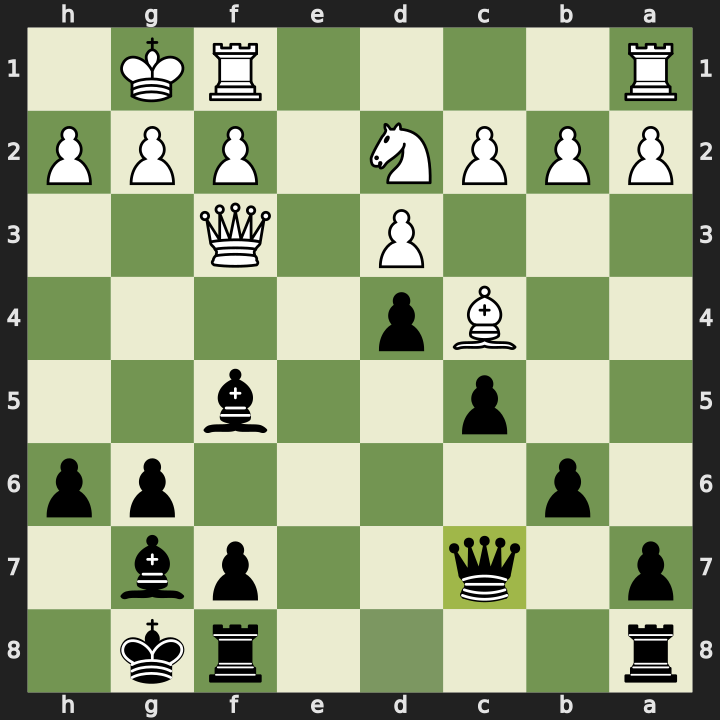
17. Nd2 Qc7
By move 17 I’ve got a nice pawn chain on the queenside and my queen on c7 eyeing h2. My plan is to play Be5, making a battery to target the white h-pawn and check the king. It’s not an immediate checkmate threat, but it weakens the pawns around the king and will lead to opportunities later.
18. Bd5 Rae8 19. Be4 Re5 20. Bxf5 Rxf5
White then uses their light-squared bishop to attack the rook, and I use the opportunity to bring my rook over to the e-file and then up to f5, directly threatening White’s queen on f3.
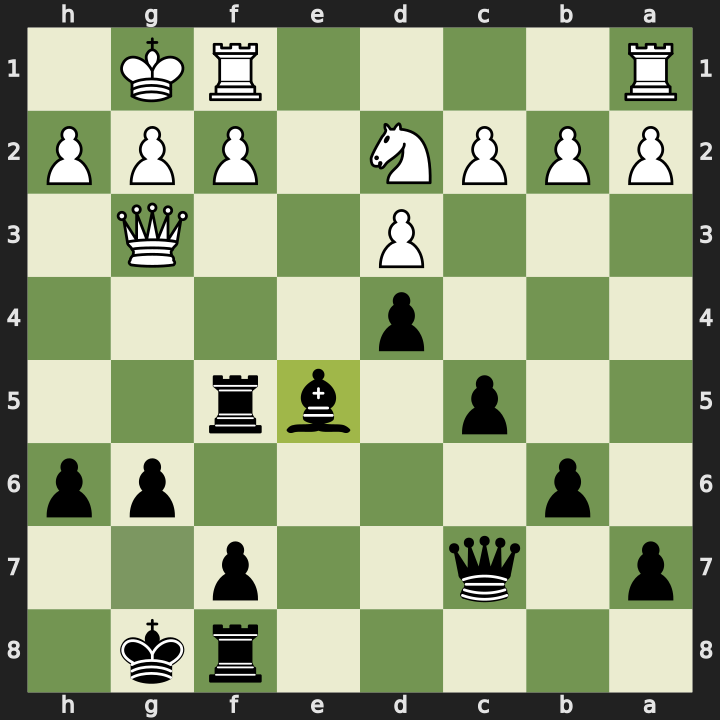
21. Qg3 Be5
White’s queen slides out of the way of the rook, but now I form my queen and bishop battery with Be5, targeting the queen that’s now on g3.
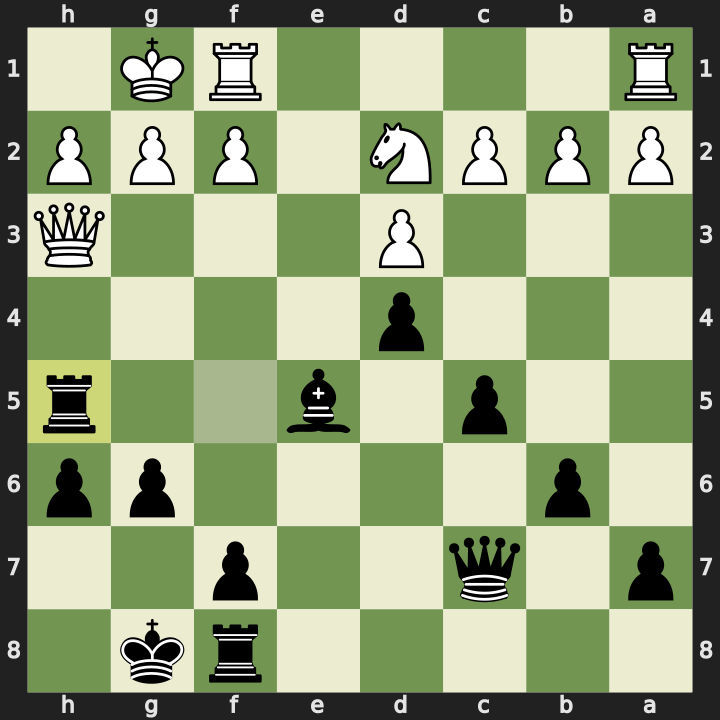
22. Qh3 Rh5
The queen moves over to h3 and I push my rook over to h5. In this position I’m feeling really good. White’s queen is in trouble, White’s king is in trouble. I should be winning this one.
The Bishop Picks Off a Knight (Moves 23-25)
23. Qg4 Bxh2+ 24. Kh1 Bf4+ 25. Kg1 Bxd2
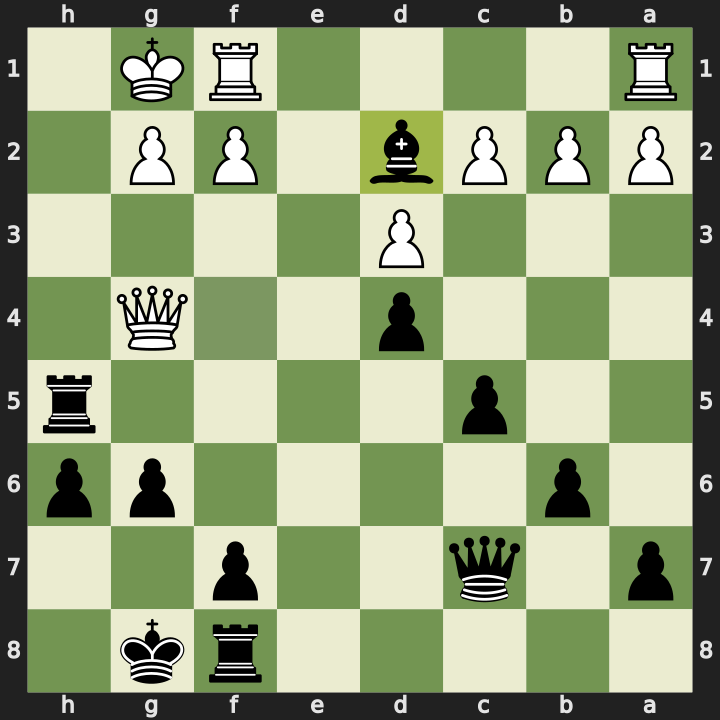
I get the Bxh2 check, and then after the king moves I can retreat the bishop back to f4 with check again. After the king goes back to g1, I win the white knight on d2 for free.
Trading the Bishop and a Near-Blunder (Moves 26-31)
26. f4 Bxf4 27. Rxf4 Kh7 28. Raf1 f5 29. Qg3 g5 30. Qf3 Qxf4
White played a good response: opening up the f-file for their rook. I must have miscalculated something here, because I took the pawn with my bishop, allowing White to take it with their rook. I was up a piece anyway so it’s not catastrophic, but it would have been much better just to check the king on e3 with the bishop.
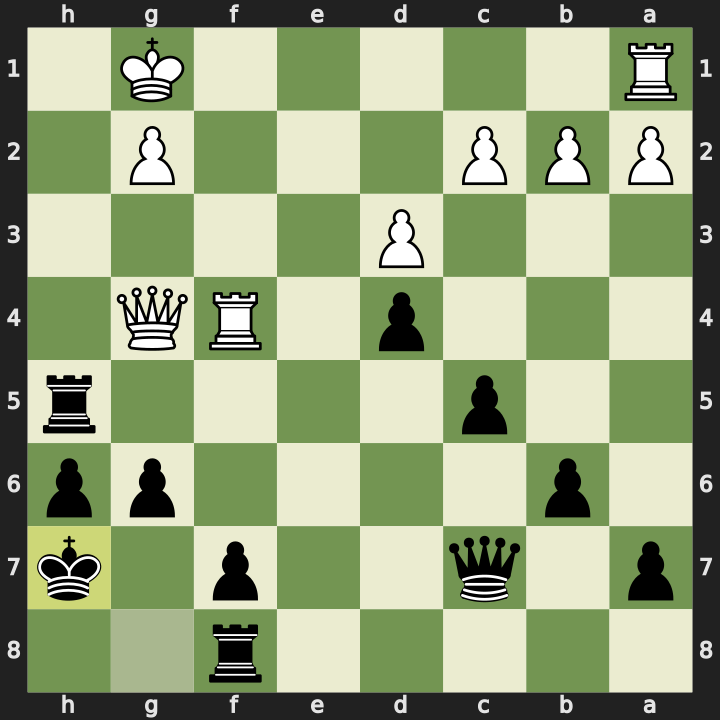
White forms an impressive rook-queen-rook stack on the f-file, and I calculate that the trades will be favourable for me. If I take the rook, White takes my queen, I retake with the pawn, and I’ve ended up winning a queen and rook for a queen.
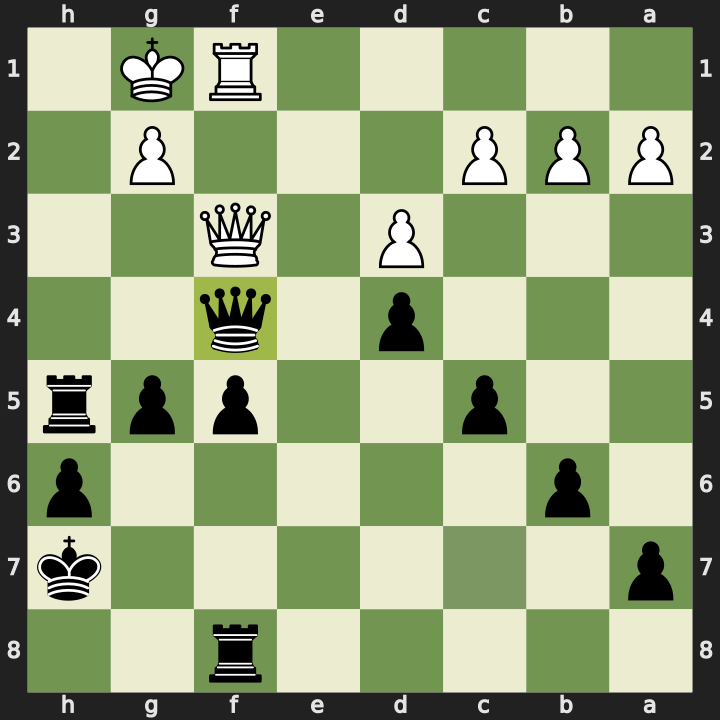
What I didn’t calculate correctly was that after I took the rook, White can check on b7, forcing me to move my king and then win my queen. Luckily for me, White missed this tactic too, and we ended up simply exchanging rooks.
Trading Down to a Winning Endgame (Moves 31-38)
31. Qxh5 Qe5 32. Qh3 Kg6 33. g4 f4 34. Qh5+ Kh7 35. Qh2 Qe3+ 36. Qf2 a5 37. Qxe3 dxe3 38. Re1 Re8
I built up a pawn chain on the kingside, so I’m up two pawns. While I don’t feel like I have such a commanding lead as I did before, I figure that if I can trade the queens and take this to an endgame, I should be winning. A protected passed pawn on the f-file should at least tie up White’s defending rook, and then maybe I can use my king to promote one of the others.
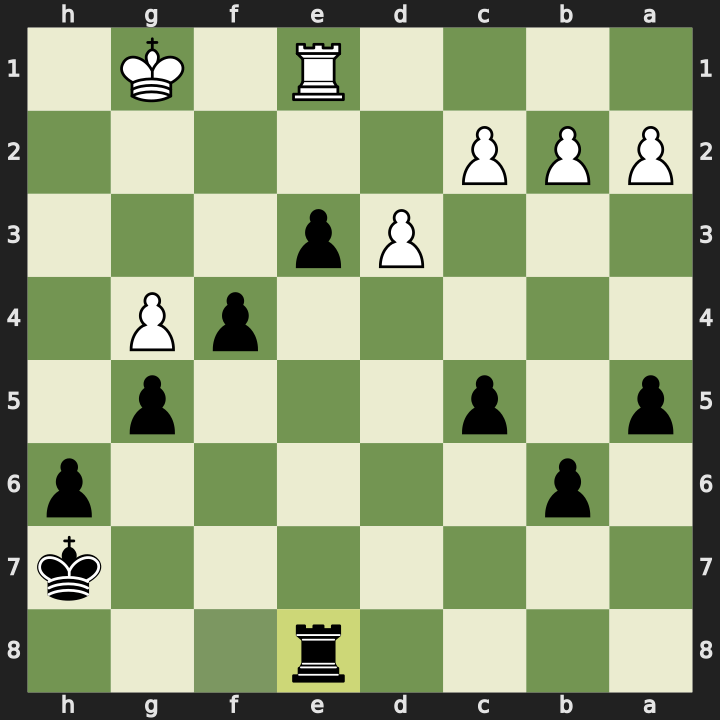
I offer a queen trade by playing Qe3, which allows White to take and me to take back with my d-pawn, giving me two beautiful passed pawns on the f and e files as well as the pawn chain going back to h6. This should be unstoppable.
The Pawn March (Moves 39-49)
39. Kf1 Kg6 40. c3 h5 41. gxh5+ Kxh5 42. Kg2 Kg4 43. d4 f3+ 44. Kf1 f2
I walk those f and e pawns up the board and bring my king in to support.
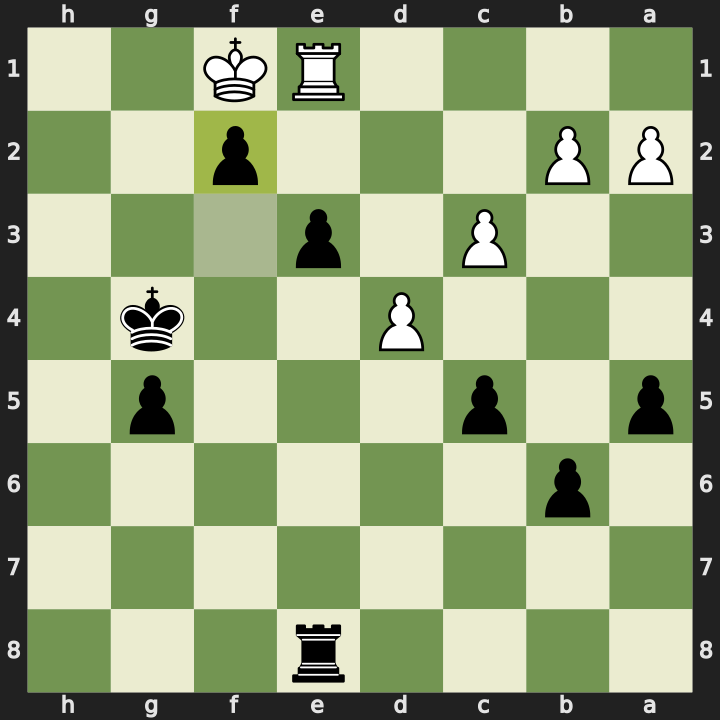
By move 44 I’ve got a pawn on f2 in front of the king, supported by another on e3 which is defended by the rook. After bringing my king to f3, I’ll have the g-pawn also marching up the board.
45. Re2 Kf3 46. dxc5 bxc5 47. a3 g4 48. b4 g3 49. bxa5 g2#
White makes a last-ditch attempt to push their queenside pawns forward, but it’s not fast enough. I bring in my king and push the g-pawn.
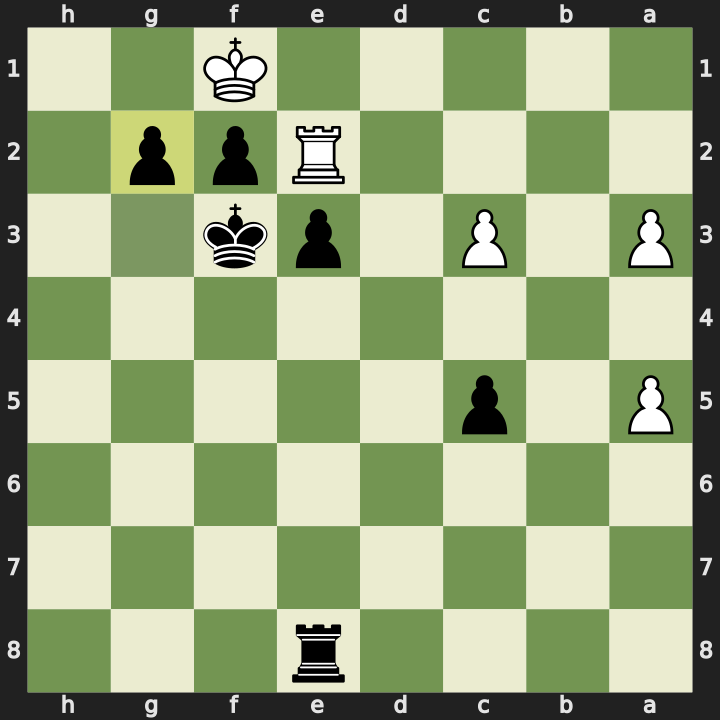
On move 49 it’s a pawn checkmate. Very satisfying.
Engine Review
As I said earlier, on move 10 I missed Bxb2 setting up Bxa1 to win the rook. Whenever the dark-square bishop comes out to attack and gets traded off, b2 becomes undefended.
Qg3 was the main mistake for White. From that point on, Black was in a winning position.
Bxf4 on move 26 was a mistake. There was no need to trade my bishop for a pawn just after I’d captured a free piece. I must have been playing fast here.
Qxf4 was also a mistake. I was calculating the trades but didn’t look to see if there were checks that the opponent could give. It’s a nice reminder: checks before captures.
When White agreed to the queen trade, it was a mistake. It created an additional passed pawn on the e-file.
Reflections
Overall a pretty good game. This is part of my attempt to get back into live games and I think I played okay.
What went well:
- Recognising the Bg5 setup and kicking the bishop immediately with h6 to prevent the queen-bishop battery.
- Spotting the Be5 battery idea against the kingside.
- The Bxh2+, Bf4+, Bxd2 sequence picking up a clean knight.
- Trading down into a winning passed-pawn endgame and walking the king up to support the march.
What to work on:
- A bit of a lack of tactical awareness at points: missing Bxb2 setting up Bxa1 to win the rook, giving up my bishop for a pawn on f4, and almost blundering my queen on f4. All mistakes that with a little more careful calculation and a bit more time per move I should have seen.
- Checks before captures. I knew this rule and still walked into a position where it nearly cost me the queen.
It’s a satisfying win, and I’m glad it was a rated game. I’m getting a few points back and aiming towards my short-term goal of getting to 800 on chess.com.
Full PGN:
1. e4 d6 2. Bc4 Nf6 3. d3 g6 4. Nf3 Bg7 5. Bg5 h6 6. Bf4 O-O 7. e5 dxe5 8. Bxe5
Nc6 9. Bxf6 Bxf6 10. O-O e5 11. Nc3 Nd4 12. Ne4 Bg7 13. Nxd4 exd4 14. Qf3 Bf5
15. Nc5 b6 16. Nb3 c5 17. Nd2 Qc7 18. Bd5 Rae8 19. Be4 Re5 20. Bxf5 Rxf5 21. Qg3
Be5 22. Qh3 Rh5 23. Qg4 Bxh2+ 24. Kh1 Bf4+ 25. Kg1 Bxd2 26. f4 Bxf4 27. Rxf4 Kh7
28. Raf1 f5 29. Qg3 g5 30. Qf3 Qxf4 31. Qxh5 Qe5 32. Qh3 Kg6 33. g4 f4 34. Qh5+
Kh7 35. Qh2 Qe3+ 36. Qf2 a5 37. Qxe3 dxe3 38. Re1 Re8 39. Kf1 Kg6 40. c3 h5 41.
gxh5+ Kxh5 42. Kg2 Kg4 43. d4 f3+ 44. Kf1 f2 45. Re2 Kf3 46. dxc5 bxc5 47. a3 g4
48. b4 g3 49. bxa5 g2# 0-1