Loss vs semanaqvem (778)
| Opening: Indian Game (A45) | Result: 0-1 (Resignation) | Time Control: 10 min Rapid | Rated |
Game Overview
This game was fun, but unfortunately I wasn’t able to convert the win. A blunder from me led to a pretty quick collapse in my position. Still a very enjoyable game.
The Opening (Moves 1-11)
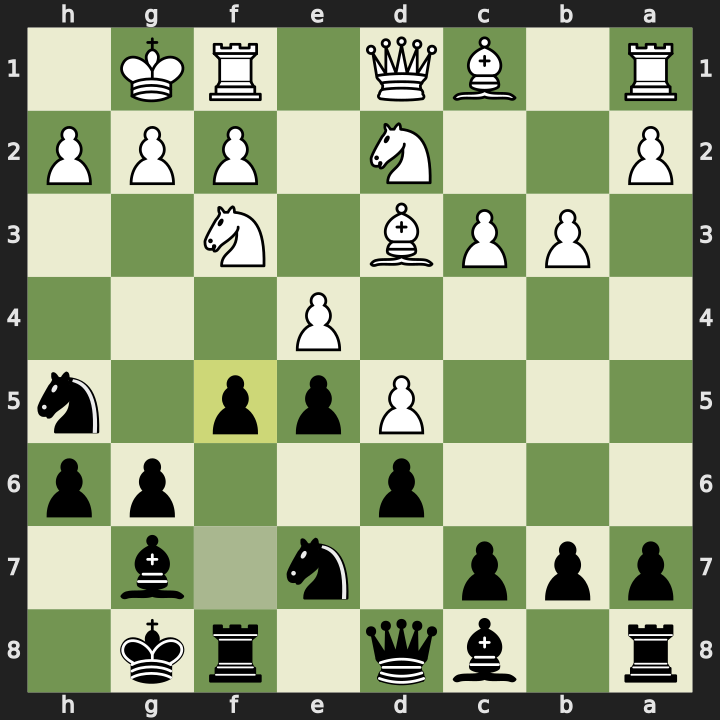
1. d4 Nf6 2. c3 d6 3. Nd2 g6 4. e4 Bg7 5. Ngf3 O-O 6. Bd3 Nc6 7. O-O e5 8. d5 Ne7 9. Ng5 h6 10. Ngf3 Nh5 11. b3 f5
The first 11 moves were pretty standard King’s Indian Defence mainline stuff. I was able to get e5 and f5 in, clearing the path for my rook on the f-file, and I was pretty happy with how things were going.
Building Up and the Knight Trade (Moves 12-17)
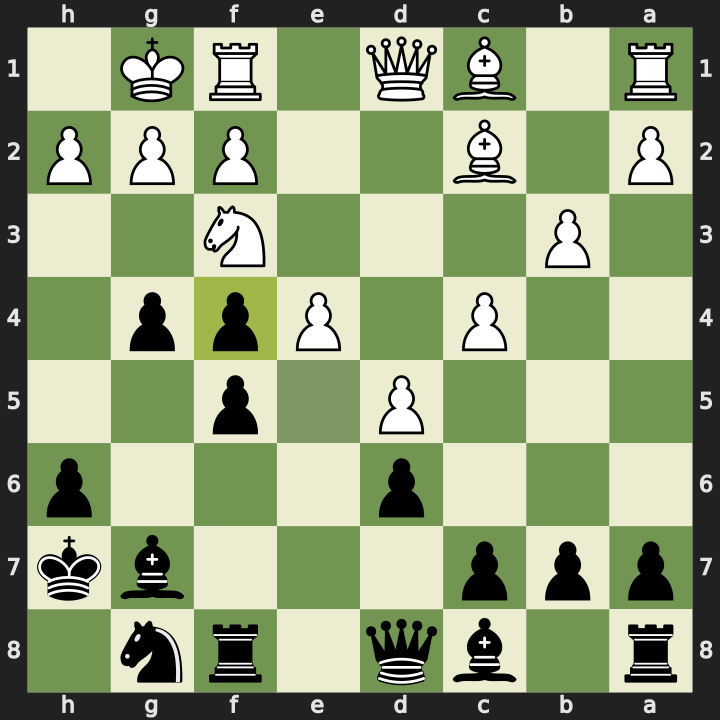
12. c4 Nf4 13. Bc2 Kh7 14. Nb1 Ng8 15. Nc3 g5 16. Ne2 g4 17. Nxf4 exf4
I traded a knight on f4 after building up a nice pawn chain.
The Bishop Trade (Move 18)
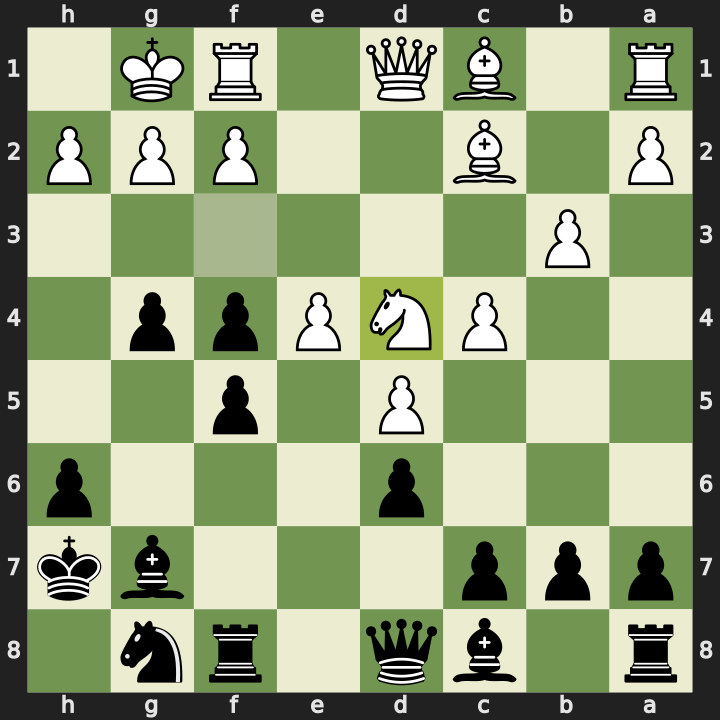
18. Nd4 Bxd4
White put their knight in the centre on d4. At first I thought it was undefended, even though it’s only a few squares in front of the queen. Not sure what was going on with my thinking there, but I exchanged it for my bishop.
White’s Battery and My Queen to h4 (Moves 19-20)
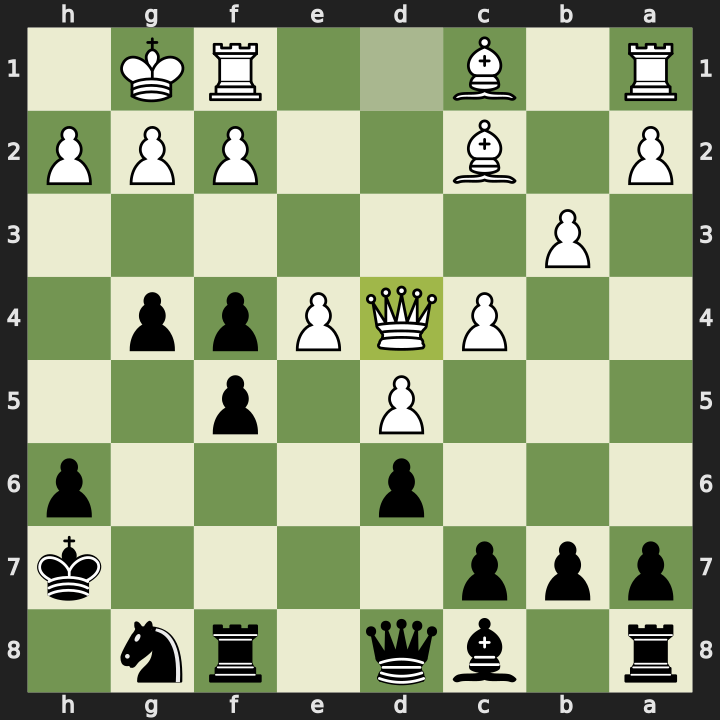
19. Qxd4 Qh4 20. Bb2 Nf6
White makes a checkmate threat with the queen and bishop battery aimed down the long diagonal at g7. I bring my knight to f6 to block the attack, and my queen is already on h4 looking to create a mating threat by pushing a pawn to g3 and then mating on h2.
Pushing Through on the Kingside (Moves 21-22)
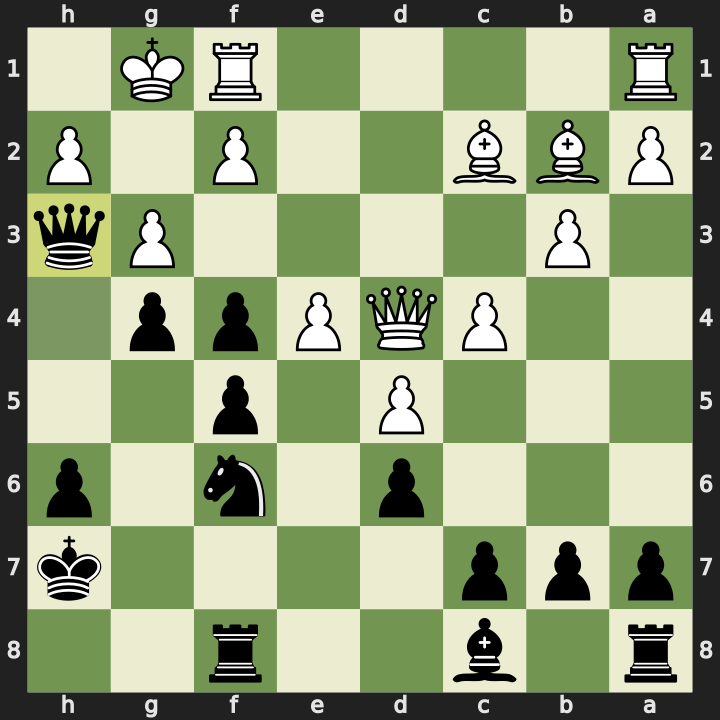
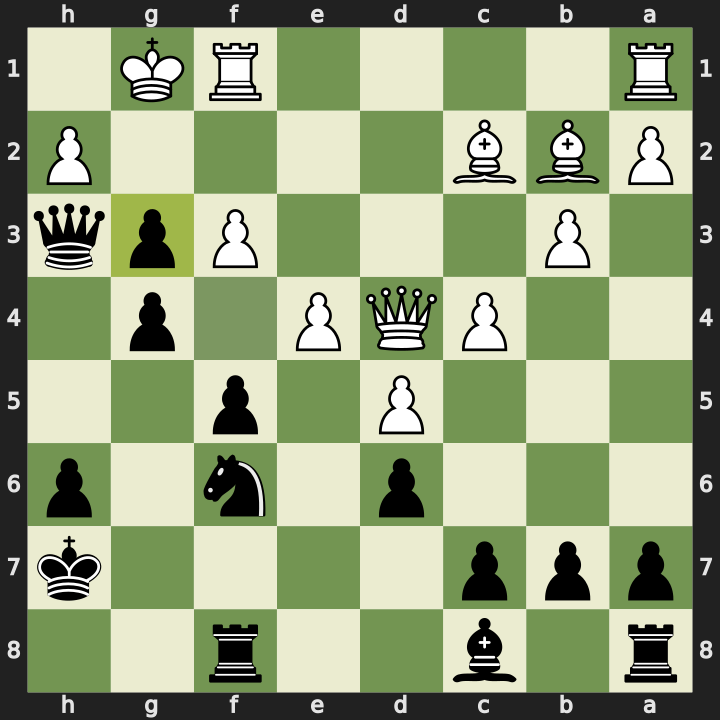
21. g3 Qh3 22. f3 fxg3
I had my queen on h3 and I just needed to break through with some pawns and there would be winning opportunities. I took on g3.
Losing My Nerve (Move 23)
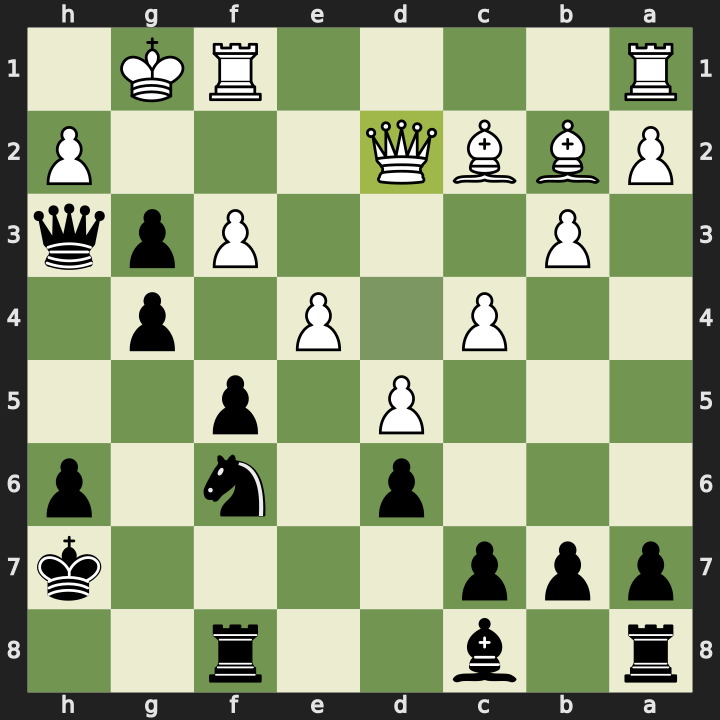
23. Qd2 gxh2+
White retreated the queen back to the second rank defending h2, and here I lost my nerve. I decided to take the h2 pawn with check and allow a queen exchange.
The Collapse (Moves 24-29)
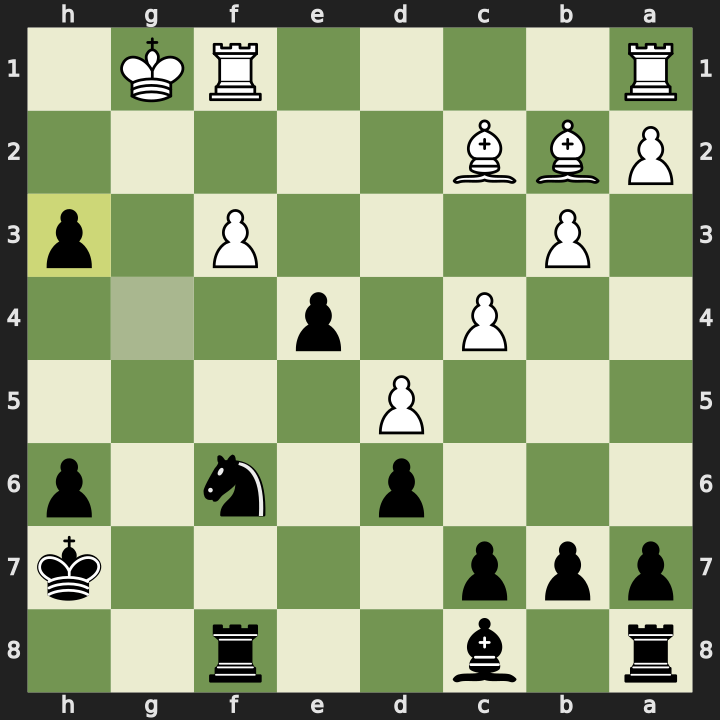
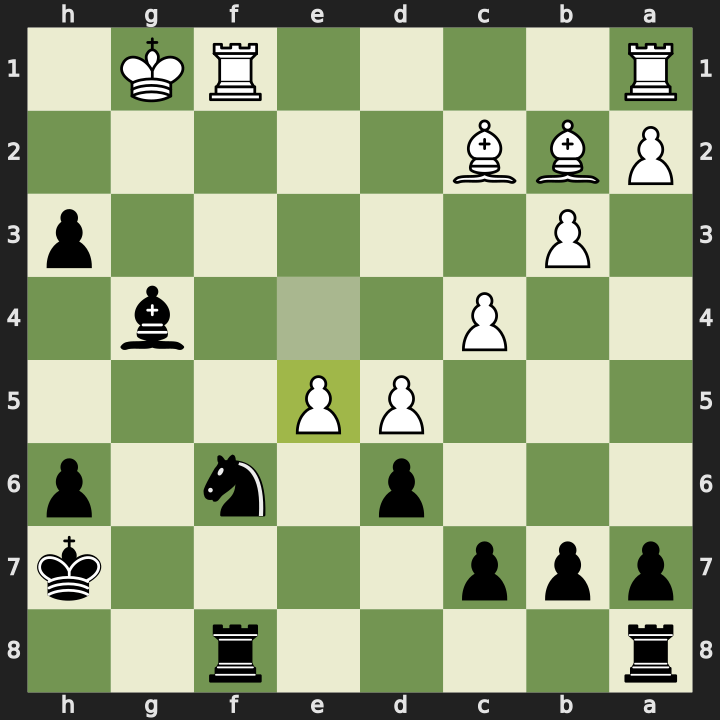
24. Qxh2 fxe4 25. Qxh3 gxh3 26. fxe4 Bg4 27. e5+
White then had a very nice discovered check, double-attacking my knight, and from there wins the game.
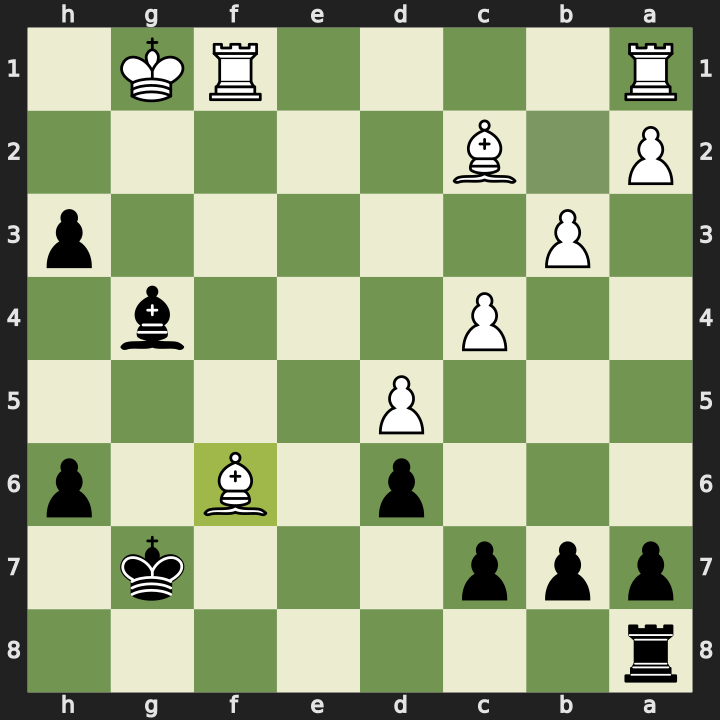
27…Kg7 28. exf6+ Rxf6 29. Bxf6+
The Rest of the Game (Moves 29-45)
29…Kf7 30. Bg5+ Kg7 31. Bf6+ Kf7 32. Bh4+ Kg7 33. Rf4 h5 34. Raf1 Re8 35. Rf7+ Kh6 36. R7f6+ Kg7 37. Re6 Bxe6 38. dxe6 Rxe6 39. Bg3 Rg6 40. Kh2 Re6 41. Kxh3 Re2 42. Bb1 Re3 43. Kh4 Kh6 44. Bf4+ Kg7 45. Bxe3
White picks up more material and I resign.
Engine Review
This was a pretty low accuracy game for me, and while I did eventually get into a strong position, there were several mistakes along the way.
Pushing the g4 pawn while the knight was on f4 was a mistake. It allowed white to capture the knight and forced me to break up my pawn chain. Exchanging my dark-squared bishop for the knight on d4 was also a mistake.
Despite these mistakes, on move 23 I had a -5 advantage. Rather than taking on h2, I had to take with the other g-pawn on f3. With best play, white still loses a rook to prevent checkmate.
Reflections
I think I’ve developed a few bad habits from playing too many games against bots. This game showed some carelessness, making moves without actually evaluating what my opponent’s best response was going to be. And then when it really mattered to calculate the path to a winning position, I lost my nerve.
Coming away from this, I’m going to really remember this game as one where the win slipped away because I didn’t stop and spend the time to evaluate the different candidate moves and find the line that leads to checkmate, or at least a winning advantage.
What went well:
- The opening setup. I got e5 and f5 in cleanly and built up a strong kingside structure.
- Spotting the mating idea with Qh4, g3, and Qxh2.
What to work on:
- Calculating before moving. Pushing g4 while the knight was on f4 cost me the knight and broke up the pawn chain. I needed to actually evaluate white’s best response.
- Calculating in critical positions. After 23. Qd2, I had a -5 position and a chance to win a rook if I took with the other pawn on f3 instead of grabbing h2. Slowing down and listing candidate moves would have found it.
Full PGN:
1. d4 Nf6 2. c3 d6 3. Nd2 g6 4. e4 Bg7 5. Ngf3 O-O 6. Bd3 Nc6 7. O-O e5 8. d5
Ne7 9. Ng5 h6 10. Ngf3 Nh5 11. b3 f5 12. c4 Nf4 13. Bc2 Kh7 14. Nb1 Ng8 15. Nc3
g5 16. Ne2 g4 17. Nxf4 exf4 18. Nd4 Bxd4 19. Qxd4 Qh4 20. Bb2 Nf6 21. g3 Qh3 22.
f3 fxg3 23. Qd2 gxh2+ 24. Qxh2 fxe4 25. Qxh3 gxh3 26. fxe4 Bg4 27. e5+ Kg7 28.
exf6+ Rxf6 29. Bxf6+ Kf7 30. Bg5+ Kg7 31. Bf6+ Kf7 32. Bh4+ Kg7 33. Rf4 h5 34.
Raf1 Re8 35. Rf7+ Kh6 36. R7f6+ Kg7 37. Re6 Bxe6 38. dxe6 Rxe6 39. Bg3 Rg6 40.
Kh2 Re6 41. Kxh3 Re2 42. Bb1 Re3 43. Kh4 Kh6 44. Bf4+ Kg7 45. Bxe3 1-0