Win vs 6hostii (1123)
| Opening: Queen’s Pawn Game (D02) | Result: 1-0 (Checkmate) | Time Control: 3 days/move (Daily) | Rated | Event: WCL2026 R8: Team Australia-Brisbane QLD vs Team Philadelphia, Board 12 |
Game Overview
A welcome win after losing my previous two daily games. This one was interesting because my opponent chose to give up their queen for a rook and a piece, leaving us with fairly equal material. But it was my queen, free to manoeuvre around the board, that ended up delivering the checkmate.
The Opening (Moves 1-11)
1. d4 Nf6 2. Nf3 d5 3. e3 c5 4. c4 Bf5 5. Nc3 e6 6. Be2 Be7 7. O-O O-O 8. b3 Nc6 9. h3 Qc7
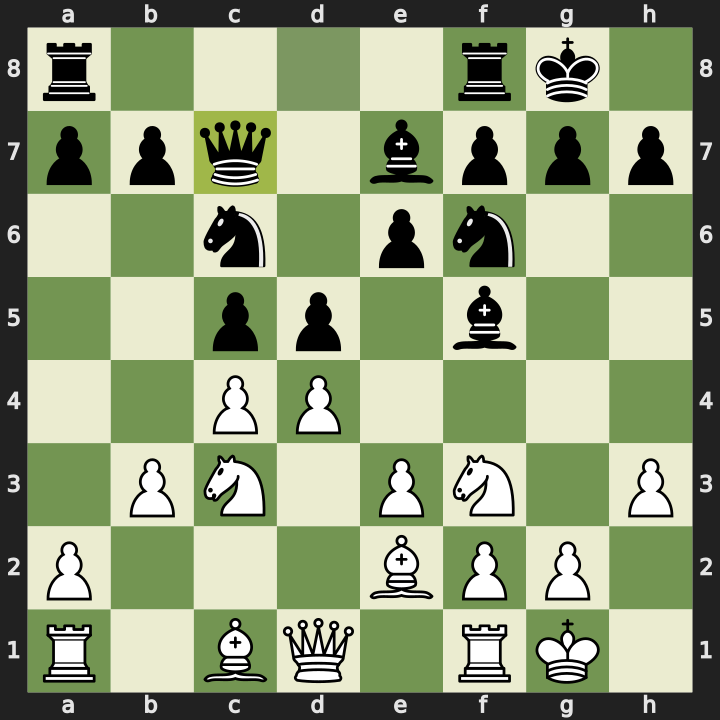
I’ve been trying out a few different d4 variations lately, because my favourite Colle-Zukertort so often has to transpose into a Queen’s Gambit when Black goes after the d3 square. Here I went with the early c4. The first ten moves were pretty calm, both sides developing with no contact.
10. g4 Be4 11. Nb5 Qd7
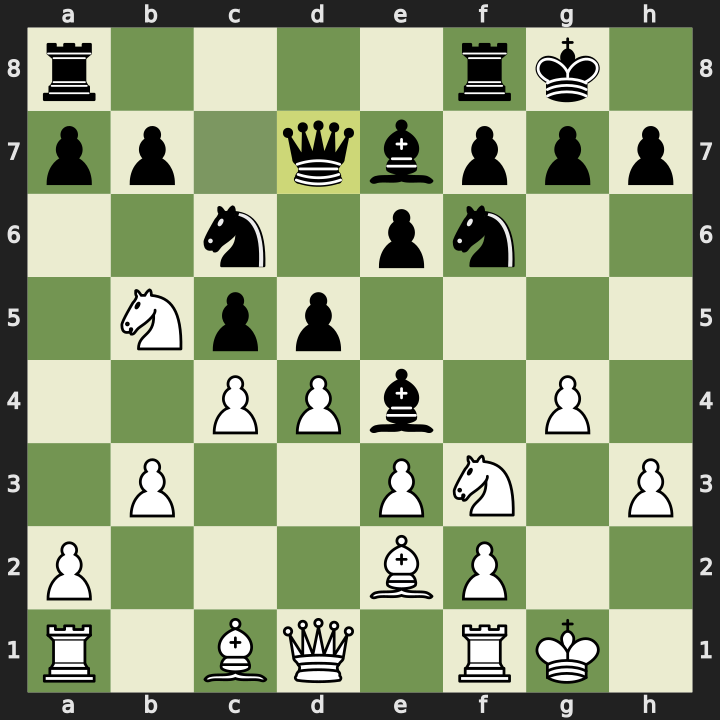
I pushed forward on the kingside and started poking at Black’s pieces, including the queen that had come out fairly early. With the knight jumping into b5, the queen had to step back to d7.
Knight to e5 (Moves 12-16)
12. Ne5 Nxe5 13. dxe5 Ne8
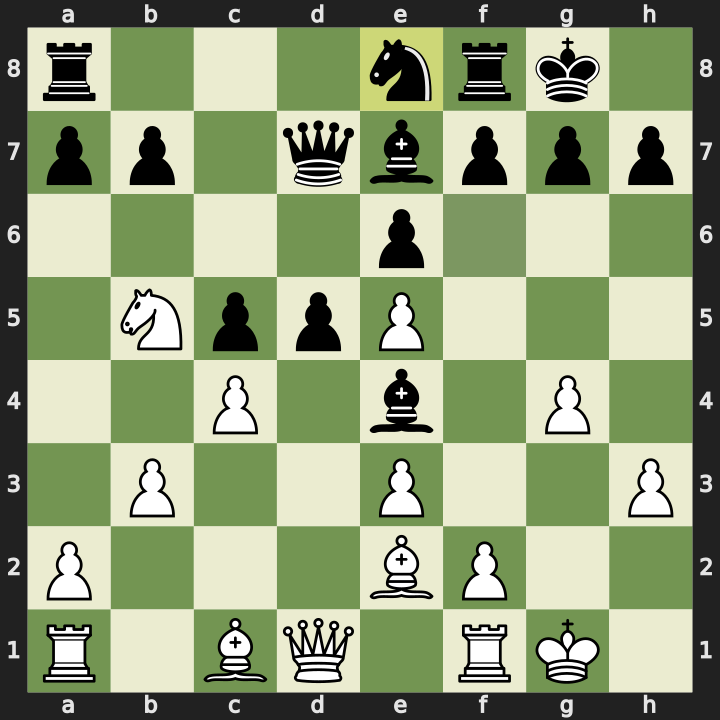
On move 12 I got to play 12. Ne5, planting the knight on a very powerful central square. Black captured it and I recaptured with the pawn, which left me a pawn sitting on e5 and Black’s f6 knight forced to retreat to e8.
14. f3 Bg6 15. Kg2 a6 16. Nc3 Qc7
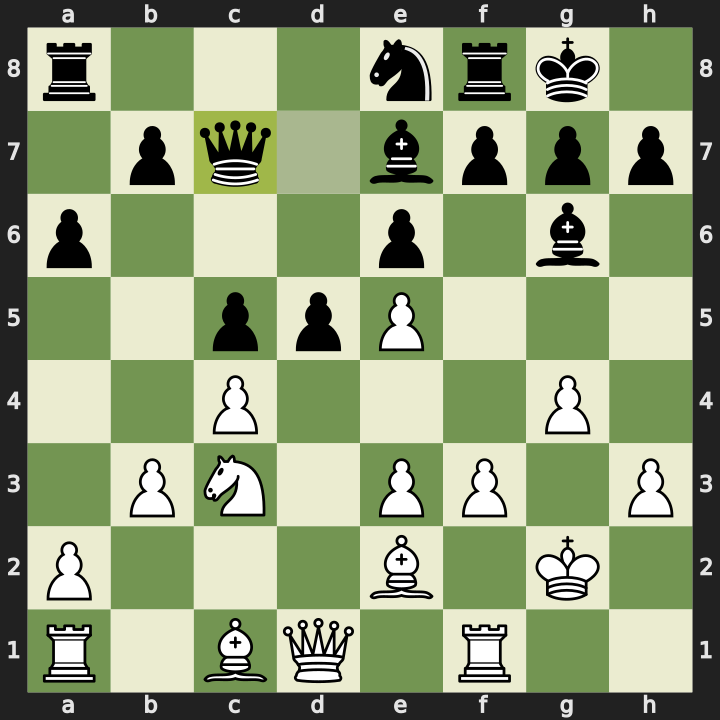
I spent the next few moves shoring things up and keeping Black’s pieces out of my half of the board. So far so good.
The cxd5 Slip (Moves 17-21)
17. cxd5 Qxe5
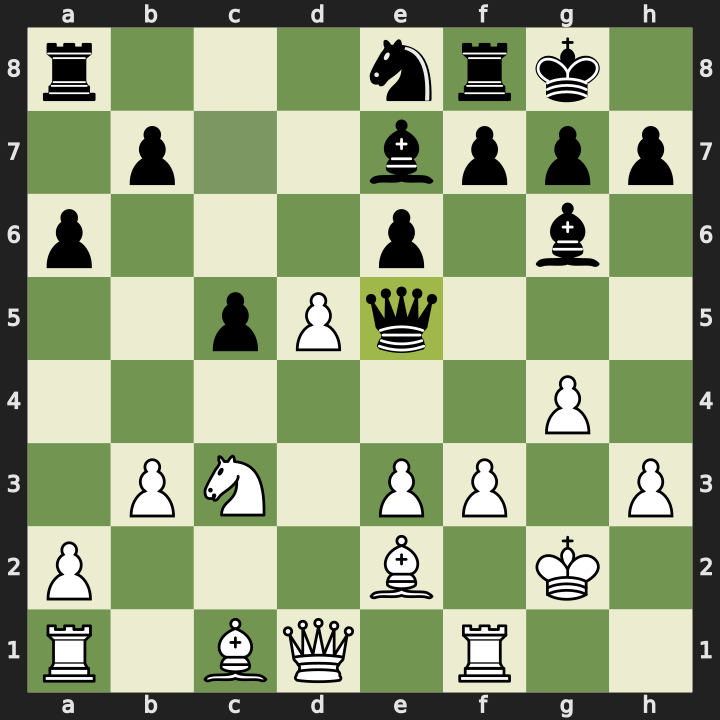
On move 17 I played 17. cxd5, and I think it was a mistake. I’d worked hard to keep Black’s pieces out of my territory, but I didn’t account for 17…Qxe5, which let the queen straight back into the position after all that effort.
18. Qd2 h6 19. f4 Qd6 20. Bf3 Bd8 21. Ne4 Qxd5
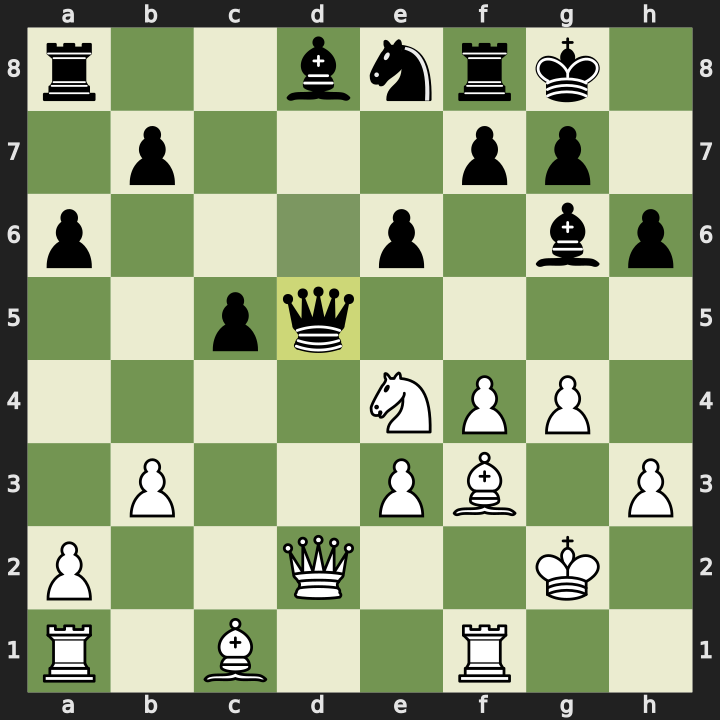
I chased the queen around and lined my pieces up, with the knight on e4 standing right in front of my bishop on f3. Black grabbed the d5 pawn, parking the queen on the bishop’s diagonal with only my own knight in the way.
Winning the Queen (Moves 22-23)
22. Nf6+ Bxf6 23. Bxd5 Bxa1
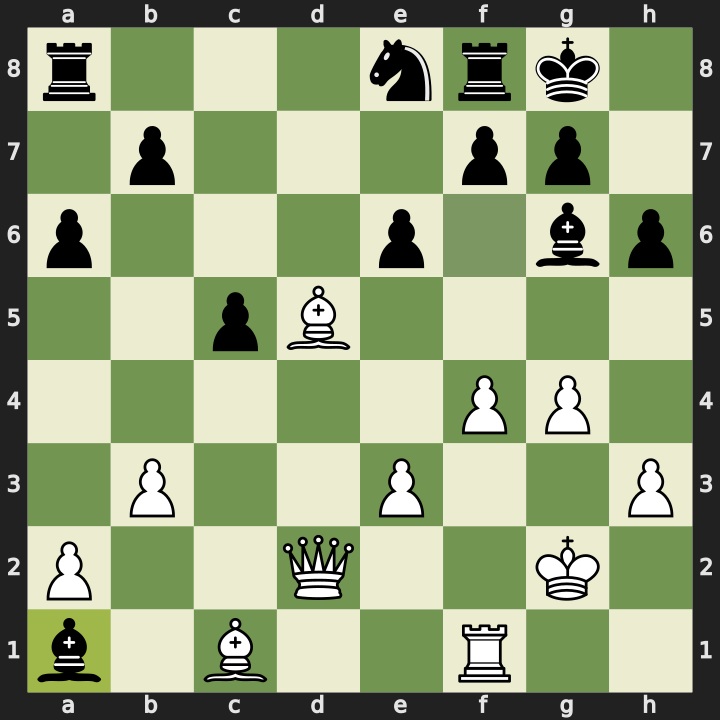
On move 22 I spotted a cool tactic: 22. Nf6+ is a discovered attack. Stepping the knight to f6 with check uncovered my bishop on f3 hitting the queen on d5. I don’t think this was a blunder by my opponent, because they had deliberately taken the d5 pawn the move before, so I suspect they were baiting me into this exchange. After I took the queen, Black replied by grabbing my rook on a1.
Once the dust settles I’m only up about a pawn. Black has two fairly active bishops and a very well protected king, while I have the queen. The main weakness in Black’s position is the c5 pawn, which I can target next.
Hunting the c5 Pawn (Moves 24-30)
24. Bxb7 Ra7 25. Bf3 Bf6 26. Ba3 Be7 27. Rc1 Rc7 28. b4 cxb4 29. Rxc7 Nxc7 30. Bxb4
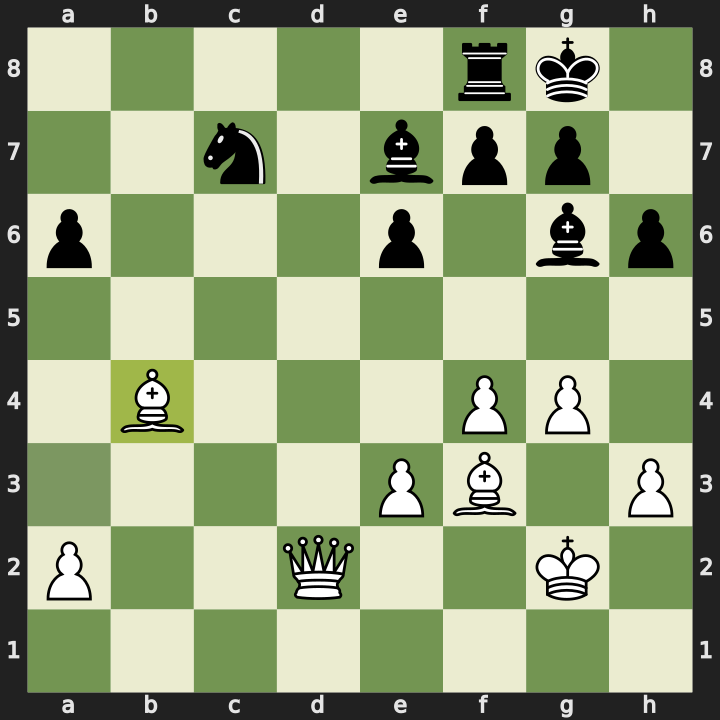
First I snapped off the b7 pawn, which also left the c5 pawn isolated. Then I lined up my rook and bishop against it and attacked it with a pawn of my own. Black took my pawn, I took Black’s rook, Black took my rook, and I went back and won the pawn on b4.
Opening the King (Moves 30-36)
30… Rd8 31. Qb2 Bh4 32. e4 f5 33. exf5 exf5
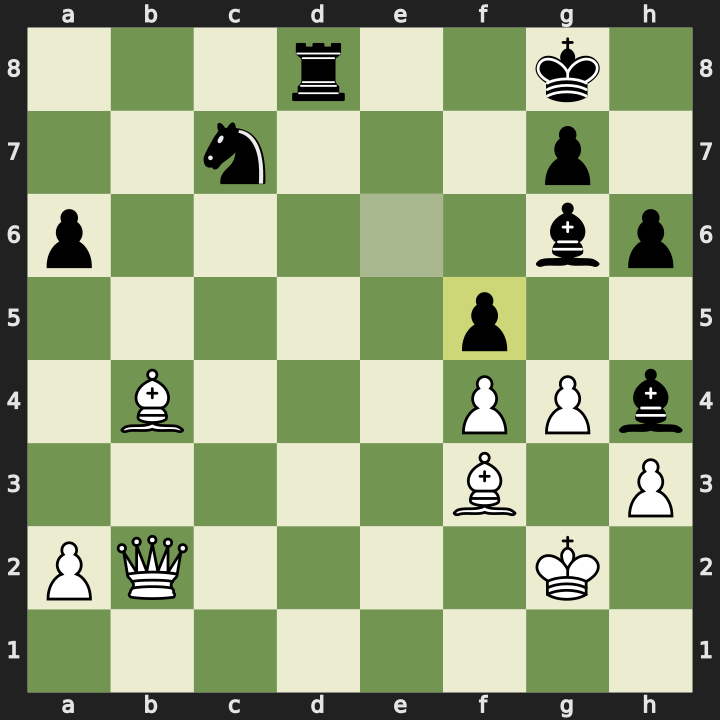
By move 33 Black’s king isn’t looking so safe. With the centre traded off, the light-squared diagonal leading towards the king is wide open. I have the queen and a pair of bishops, so I think there’s a real chance to come straight in on that diagonal.
34. Qe5 Rb8 35. Qxc7 Rxb4 36. Bd5+ Kh7
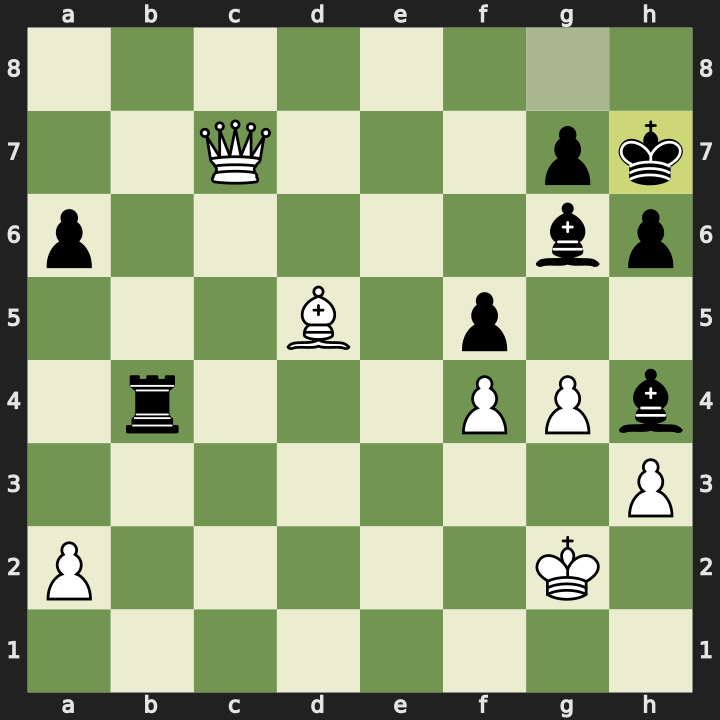
Black hit my bishop with 34…Rb8, but I had a better idea. The knight sitting on c7 was covering some key squares, so I let the bishop go and took the knight with 35. Qxc7. After Black recaptured the bishop, I checked with 36. Bd5+ and things were not looking good for Black.
The Finish (Moves 37-41)
37. gxf5 Bxf5 38. Qf7 Rb2+ 39. Kf3 Bxh3
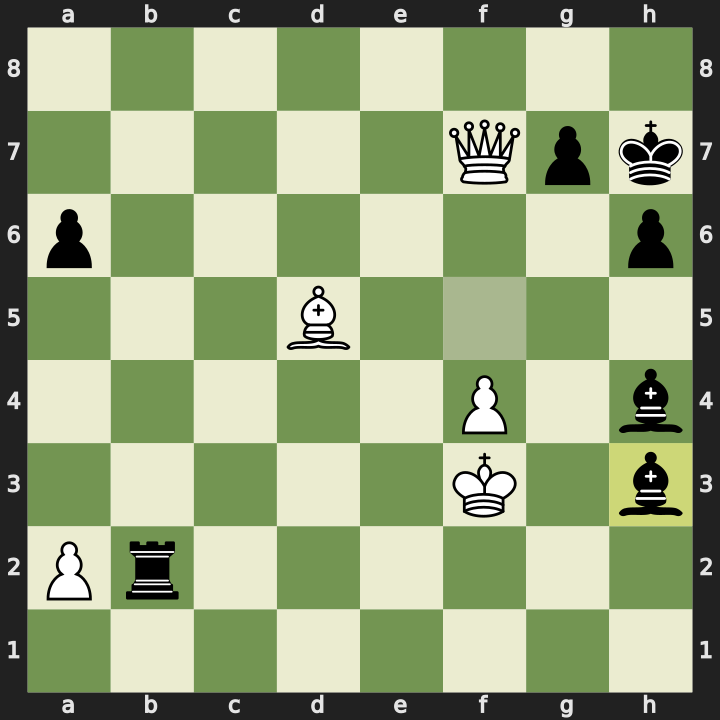
I played 37. gxf5, attacking the bishop on g6. The natural recapture looks obvious, but it’s the move that lets me in. After 37…Bxf5 I dropped the queen into 38. Qf7, forming a battery with the bishop on d5 aimed straight at g8. On move 39 my opponent made the decisive mistake: 39…Bxh3 grabs the pawn but leaves the e4 square undefended, which is exactly the square I need.
40. Be4+ Kh8 41. Qf8#
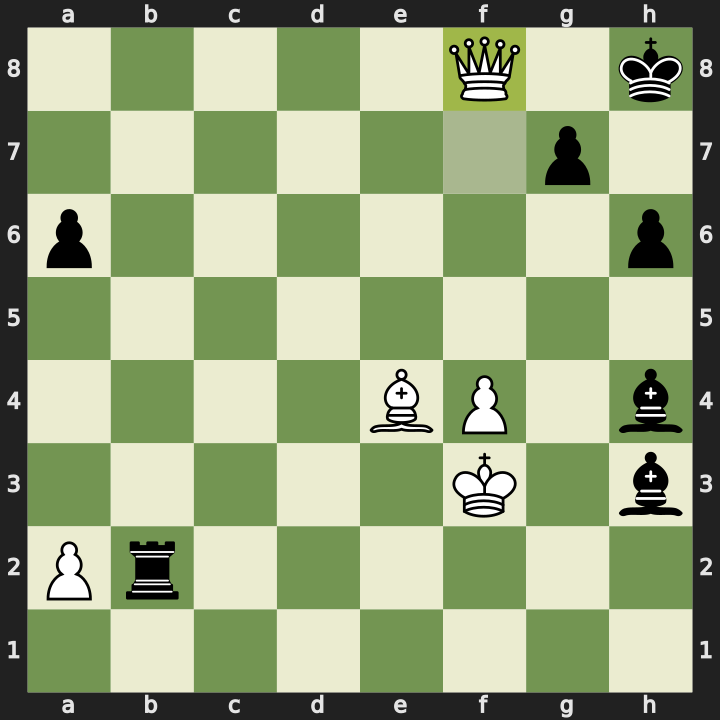
I slid the bishop into 40. Be4+, the king went to h8, and 41. Qf8# finished the game. As soon as Black took on h3 I could see the mate was there.
Engine Review
77.2% accuracy for me against 62.7% for my opponent, with a game rating of 1350 versus 650. One great move, sixteen best moves, and no blunders on my side. Chess.com gave my opening and middlegame the thumbs up, and the review reckoned I outplayed my opponent in the endgame.
The engine didn’t like 10. g4: it weakens the squares in front of my own king. It also flagged 15. Kg2 as a mistake, preferring to push the f-pawn, trade pawns in the centre, and then push the e-pawn, leading to a fork of the queen and the light-squared bishop where Black has to give up the bishop and I give up control of the centre.
On move 17, 17. cxd5 turned out to be the second-best move. It wasn’t bad, but 17. f4 would have been better, stopping Qxe5.
Moves 20 and 21 were the critical moment. My 21. Ne4, threatening the queen and offering a trade of my knight for Black’s light-squared bishop, was a mistake. The engine wanted me to solidify instead, clamping the light squares with pawns and chasing Black’s light-squared bishop back to h7.
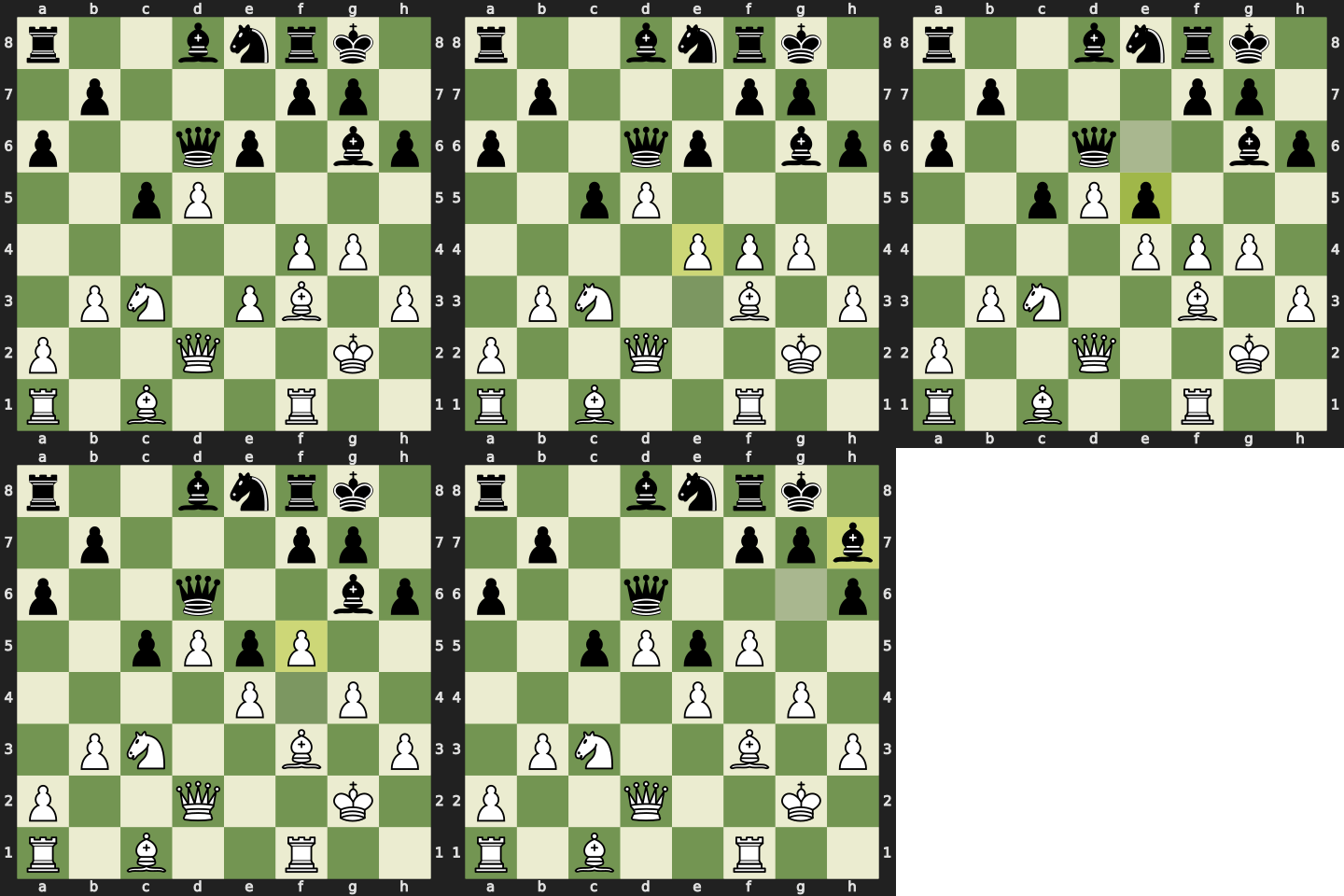
Black didn’t find the best reply to punish me, though. Rather than going for the trade, they played 21…Qxd5. From there the engine simply preferred taking the queen straight away with the bishop; my flashier 22. Nf6+ first was only second-best, because the knight check handed over my knight on f6 before I collected the queen.
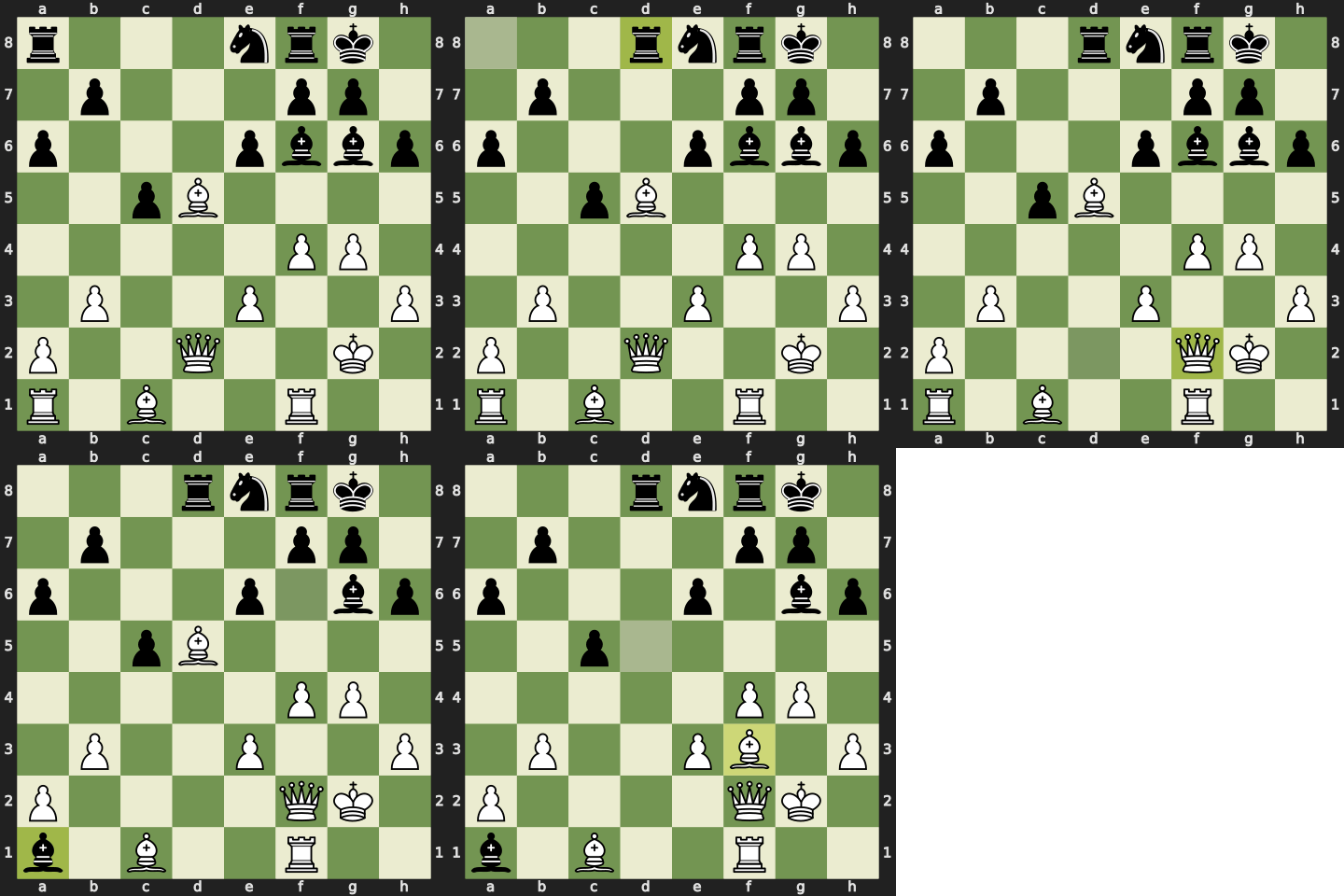
The engine line for Black on move 23 is fascinating. My rook is hanging on a1, but grabbing it straight away is a mistake. The stronger move is 23…Rd8, pinning my bishop on d5 to my queen first. I unpin with 24. Qf2, and now both the rook on a1 and the bishop on d5 are hanging, so Black takes the rook with 24…Bxa1 and I retreat the bishop to f3, keeping everything safe behind the pawns.
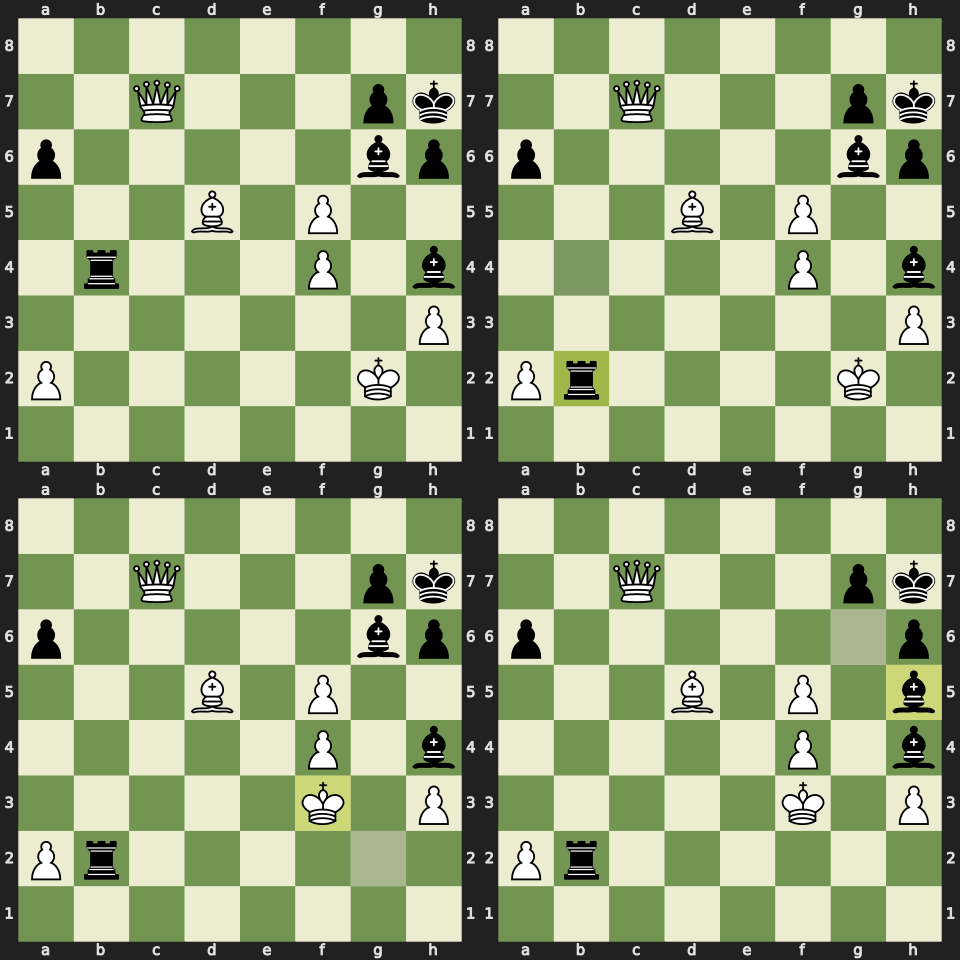
At the end, 37. gxf5 set the trap. Recapturing on f5 is the mistake: the accurate defence was to check with 37…Rb2+ first and then drop the bishop back to h5, keeping the f7 square covered. After Black took on f5 instead, the evaluation rocketed to about +5.6 in my favour even though I was only a single point of material ahead.
Reflections
What went well:
- I was happy with how I played the opening, keeping my opponent’s pieces out of my half of the board and finding the right balance between pushing my pieces forward and harrying the queen that had come out early.
- Spotting the tactic to win Black’s queen, even at the cost of an equal amount of my own material, while keeping my own queen on the board to do the work.
- Seeing the checkmate at the end, knowing that if Black made the natural recapture on f5 I had very good winning chances, and then playing the line all the way through. It’s a great feeling to see a line that leads to a win and then actually play it.
What to work on:
- The engine wasn’t keen on g4 and Kg2 early on. I want to look at the cleaner plans it suggested: the f- and e-pawn breaks, and clamping the light squares with pawns rather than jumping into Ne4.
- cxd5 let the queen back into my half after all the work I’d done to keep Black out. f4 first was the cleaner move.
Full PGN:
1. d4 Nf6 2. Nf3 d5 3. e3 c5 4. c4 Bf5 5. Nc3 e6 6. Be2 Be7 7. O-O O-O 8. b3 Nc6
9. h3 Qc7 10. g4 Be4 11. Nb5 Qd7 12. Ne5 Nxe5 13. dxe5 Ne8 14. f3 Bg6 15. Kg2 a6
16. Nc3 Qc7 17. cxd5 Qxe5 18. Qd2 h6 19. f4 Qd6 20. Bf3 Bd8 21. Ne4 Qxd5 22. Nf6+
Bxf6 23. Bxd5 Bxa1 24. Bxb7 Ra7 25. Bf3 Bf6 26. Ba3 Be7 27. Rc1 Rc7 28. b4 cxb4
29. Rxc7 Nxc7 30. Bxb4 Rd8 31. Qb2 Bh4 32. e4 f5 33. exf5 exf5 34. Qe5 Rb8 35.
Qxc7 Rxb4 36. Bd5+ Kh7 37. gxf5 Bxf5 38. Qf7 Rb2+ 39. Kf3 Bxh3 40. Be4+ Kh8 41.
Qf8# 1-0