Loss vs Tbjozi1 (1226)
| Opening: Pirc Defense (B07) | Result: 1-0 (Checkmate) | Time Control: 3 days/move (Daily) | Rated | Event: 92nd Chess.com Daily Tournament (1201-1400), Round 1 |
Game Overview
A pretty embarrassing one. I reached for my favourite opening, the Pirc, and then didn’t play it properly. I never fianchettoed the bishop and I never got my king to safety in any sensible way, and that left me weak from about move six onward. I tried to make something happen with a couple of queen checks while White’s king was still in the centre, and it felt clever at the time, but the engine tells the real story: I was just getting outplayed. It ended with my king hunted down and mated in the middle of the board.
The Opening: No Fianchetto, No Safety (Moves 1-7)
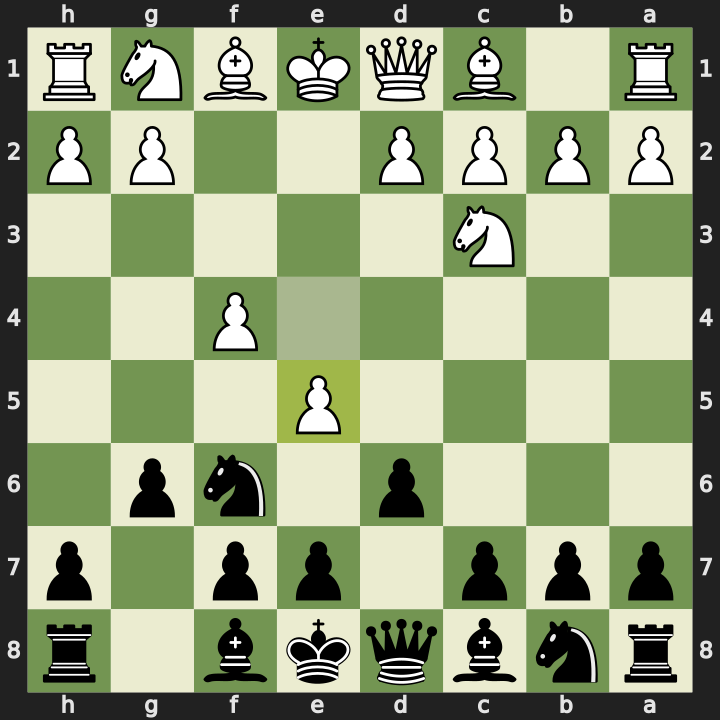
1. e4 d6 2. f4 Nf6 3. Nc3 g6 4. e5 dxe5 5. fxe5 Nd5 6. d4 Bf5 7. Nf3 e6
This is the Pirc, and White went straight for the aggressive f4 setup. The natural way to play it is to fianchetto: put the bishop on g7 and castle short behind it. I did neither. After 4. e5 hit my knight I traded on e5 and hopped into d5, which is fine, but then I got my light-squared bishop out to f5 and played 7…e6. That e6 shut my own bishop in and, more to the point, committed me to a passive setup with the g7 square empty and my king still sitting on e8. The plan that makes the Pirc work just never happened.
Bishop and Queen Skirmishes (Moves 8-12)
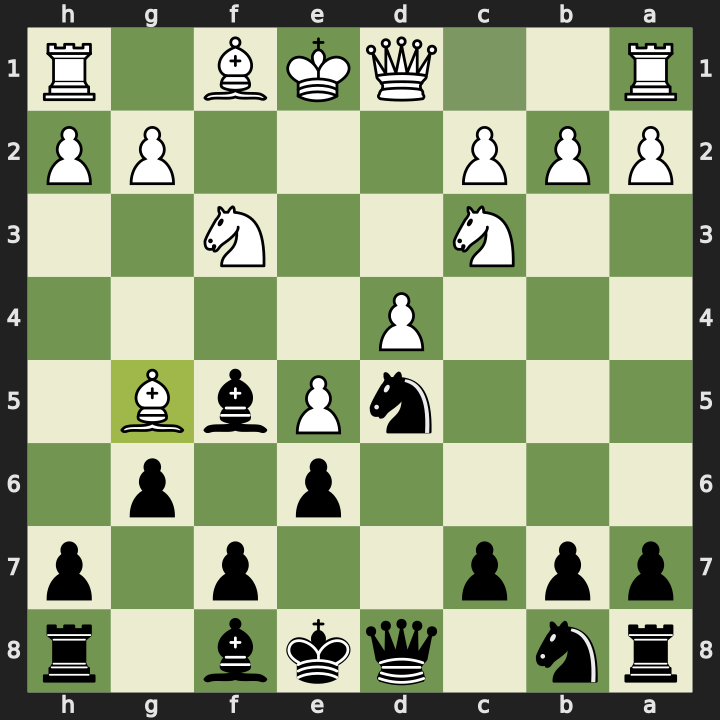
8. Bg5 Qd7 9. Nxd5 Qxd5 10. Bf6
White developed the dark-squared bishop to g5, where it stared down the diagonal at my queen on d8, so I stepped aside with 8…Qd7. After 9. Nxd5 Qxd5 my queen recaptured on d5, out in the open early. Then came 10. Bf6, the bishop pushing all the way in and hitting my rook on h8.
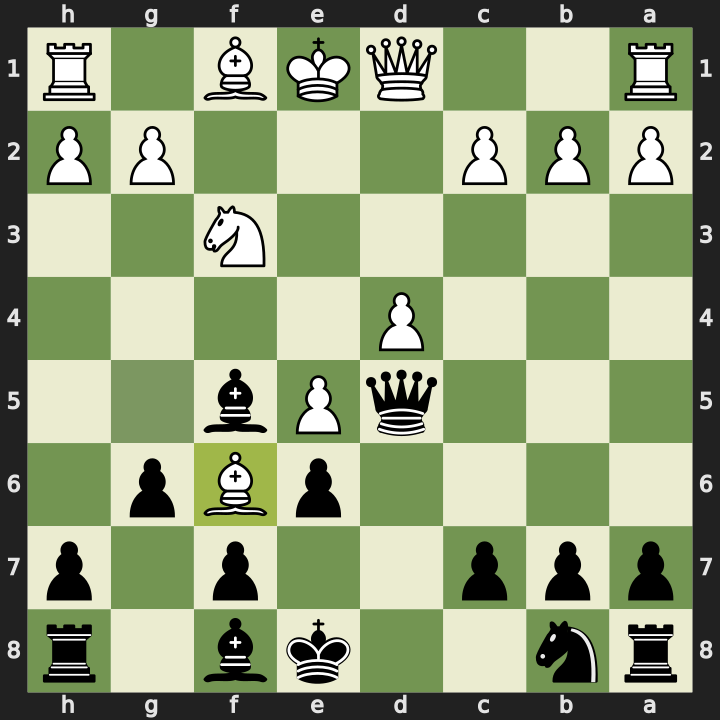
10…Qe4+ 11. Be2 Rg8 12. c3 h6
Here is where I thought I was being clever. White’s king was still in the centre, so I threw in 10…Qe4+, a check that felt active. White just blocked with 11. Be2 and I had to spend a move saving the rook anyway with 11…Rg8. The check didn’t achieve anything. It looked like I was attacking, but I was really just shuffling my queen around while White kept building.
The Queen Goes Wandering (Moves 13-16)
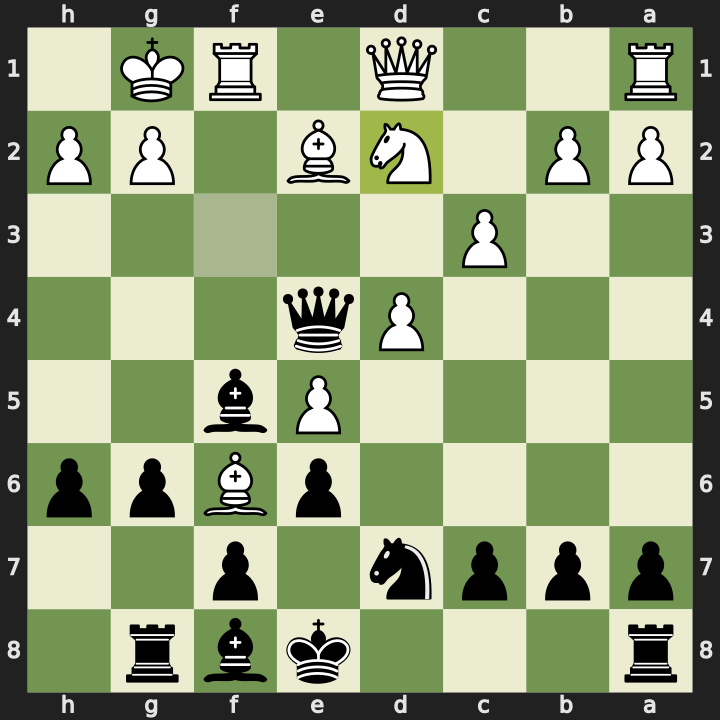
13. O-O Nd7 14. Nd2 Qe3+ 15. Kh1 Nxf6 16. exf6
White calmly castled with 13. O-O, which took the sting out of any king-in-the-centre ideas I had. I kept going with 14…Qe3+, another check that just bounced off: 15. Kh1 tucked the king away and my queen was now sitting deep in White’s position with nothing to do. I traded the annoying f6 bishop off with 15…Nxf6, but 16. exf6 recaptured with the pawn and left a White pawn wedged on f6, cramping my kingside for the rest of the game.
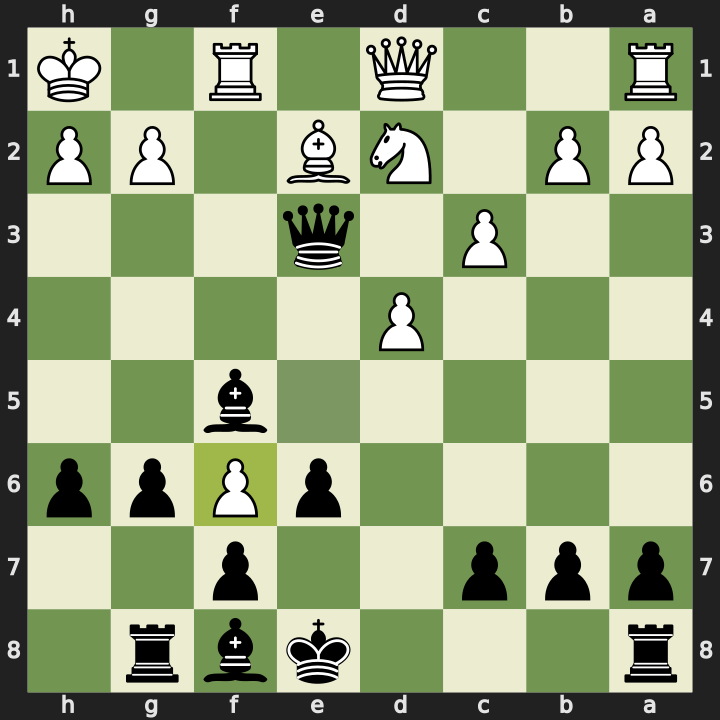
16…O-O-O
I finally castled, but long, and late. My king went to c8, which turned out to be exactly where the trouble was heading.
Cracks Become Chasms (Moves 17-19)
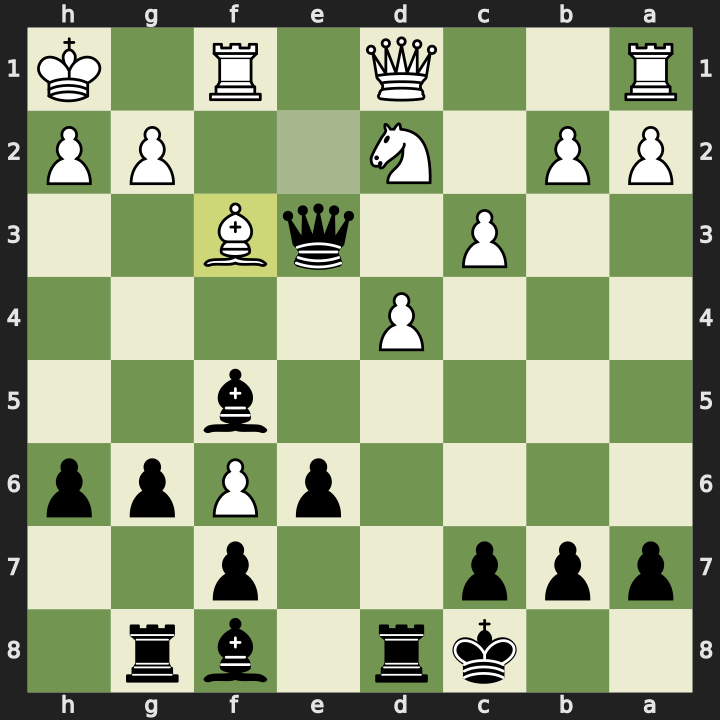
17. Bf3 e5 18. Qb3 c6 19. Qxf7
White developed the bishop to f3, aiming down the long diagonal at my queenside. I pushed 17…e5 to try to open things up, but it opened them up for White. After 18. Qb3 the queen hit f7 straight down the b3 to f7 diagonal, and I played 18…c6 without dealing with that threat. 19. Qxf7 grabbed the pawn and tore into the front of my position.
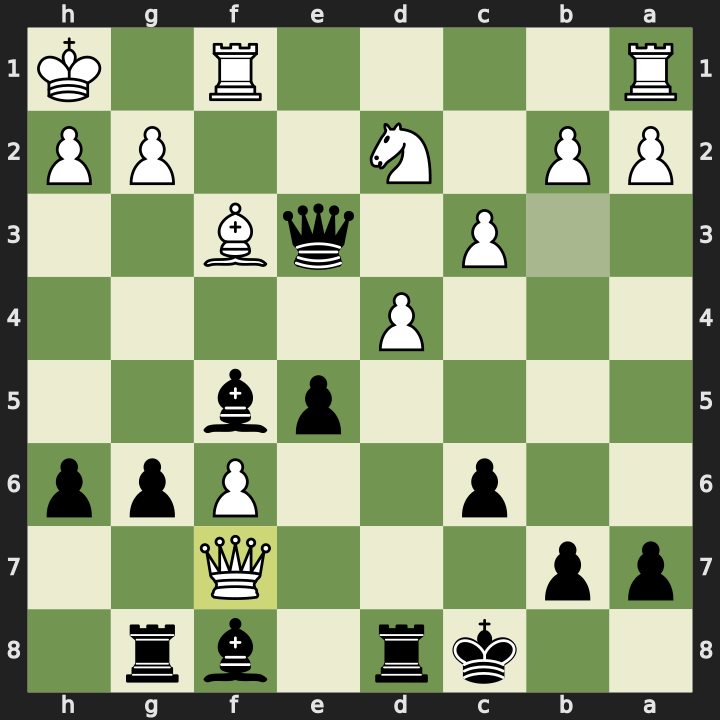
By now I was down material and my king had no cover worth the name. Everything from here was White converting.
The Queenside Collapse (Moves 20-25)
19…Rh8 20. Nb3 Bd6 21. Rae1 Qg5 22. dxe5 Rd7 23. Qc4 b5
I finally got my dark-squared bishop out with 20…Bd6 and tried to stir up something with 21…Qg5, but I was drifting and White was picking up pawns. Then 23…b5, meant to kick the queen off c4, was the move that opened the door.
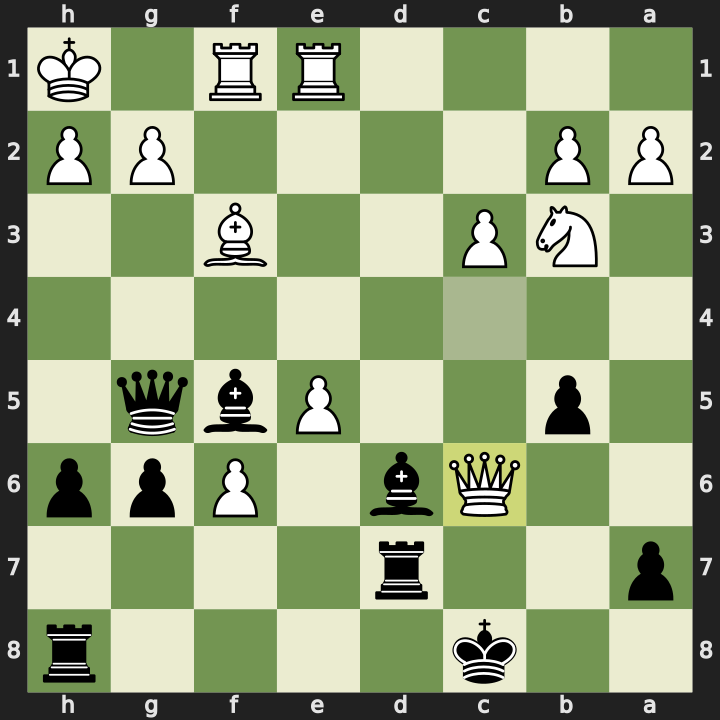
24. Qxc6+ Bc7 25. Nc5
24. Qxc6+ smashed through with check. I blocked with 24…Bc7, and then 25. Nc5 brought the knight in to join the hunt, hitting my rook on d7 and covering b7 for what was coming.
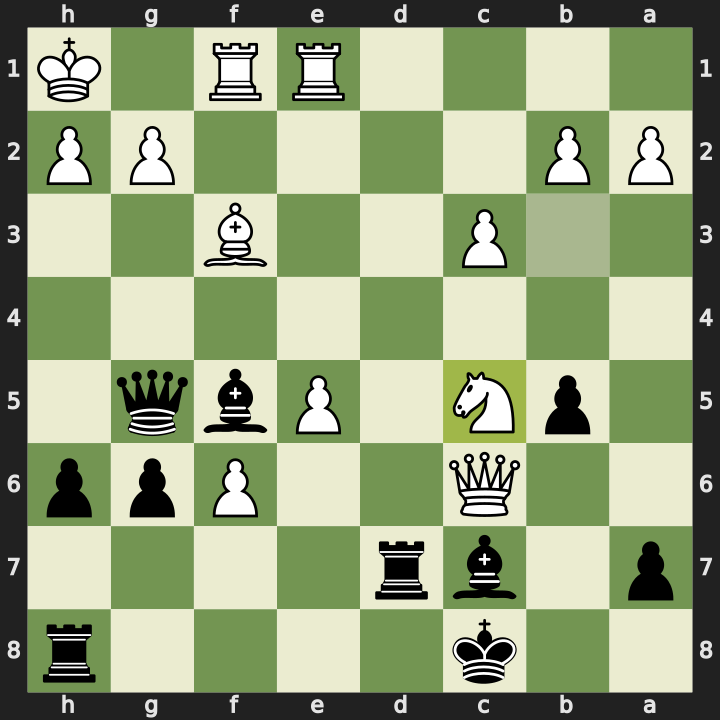
25…Rd2
I grabbed the second rank with 25…Rd2, but it was already too late to matter. There was no counterplay, just the shape of activity.
The Mating Net (Moves 26-29)
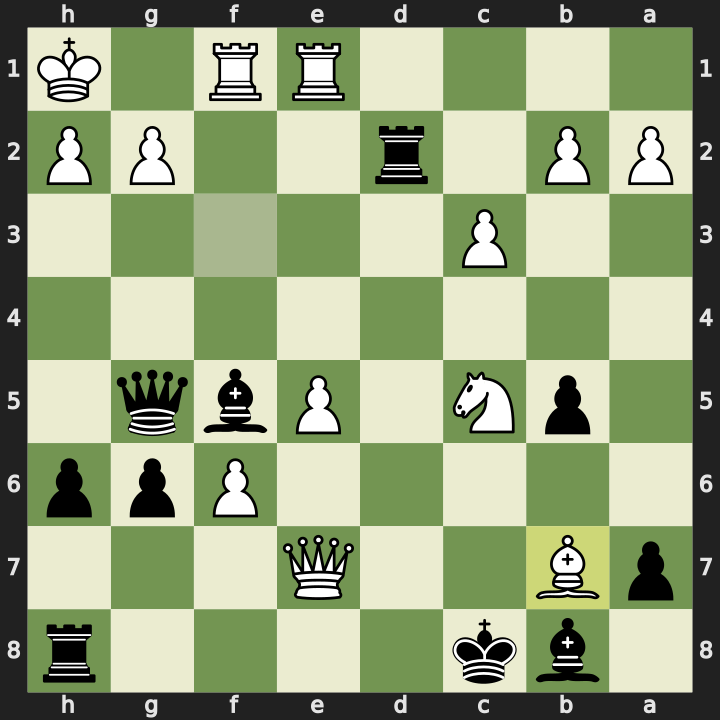
26. Qa8+ Bb8 27. Qb7+ Kd8 28. Qe7+ Kc8 29. Bb7#
White drove my king around with checks and then closed the net. 26. Qa8+ Bb8 27. Qb7+ Kd8 28. Qe7+ Kc8 herded the king back to c8, and 29. Bb7# was mate. The bishop delivered check from b7, the knight on c5 meant I couldn’t take it, and the queen on e7 sealed off d7 and d8. Nowhere to go.
Engine Review
I ran the game through Stockfish, and the evaluation graph is a fairly grim read from my side. It shows White (positive) climbing away almost from the start and never handing anything back.
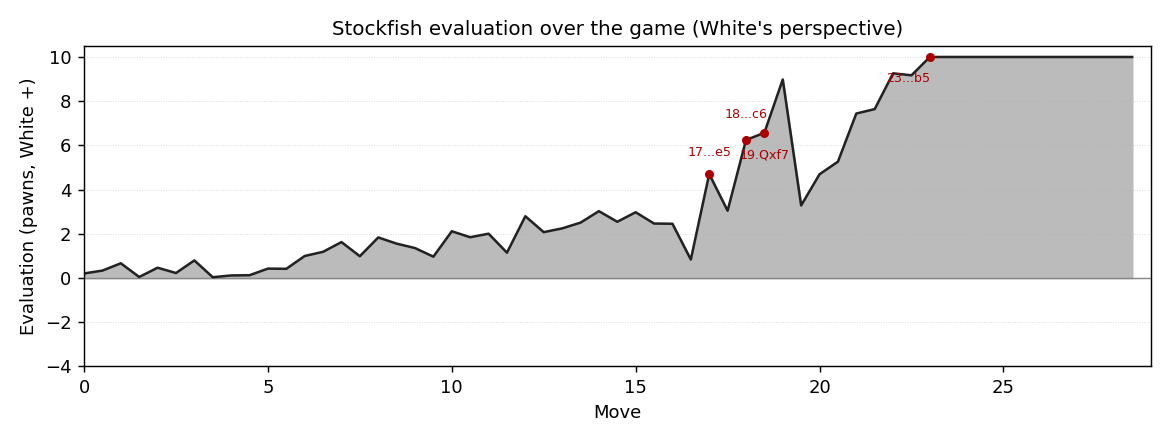
The story in numbers:
- By 7…e6 the engine already had White comfortably better, around +1.5. My opening had gone wrong before any pieces were traded.
- The queen checks made it worse, not better. After 10…Qe4+ White was up about +2. The “attack” cost me ground.
- I bounced along around +2 to +2.5 through the teens, worse but still fighting. White’s 17. Bf3 was actually a slightly loose move and the evaluation briefly dipped back under a pawn.
- 17…e5 threw that away, jumping the evaluation to roughly +4.5. Then 18…c6 ignored the threat to f7, and after 19. Qxf7 it was around +6 and climbing.
- 23…b5 opened the c-file for 24. Qxc6+, and from there it was a forced march to mate.
No single dramatic blunder that flips a winning game. Just a position that was slightly bad from the opening and got steadily worse every time I tried to force matters.
There is one exception worth pointing out, and it went in my favour. After 19…Rh8 White was close to +9 and basically winning, with 20. Nc4 the strongest continuation. Instead White played 20. Nb3, which the engine and chess.com both flag as a miss: it dropped the evaluation to around +3.4. The natural way to keep the game going from there was 20…exd4 21. Nxd4 Rd7 22. Nxf5 gxf5 23. Qc4 Kc7.
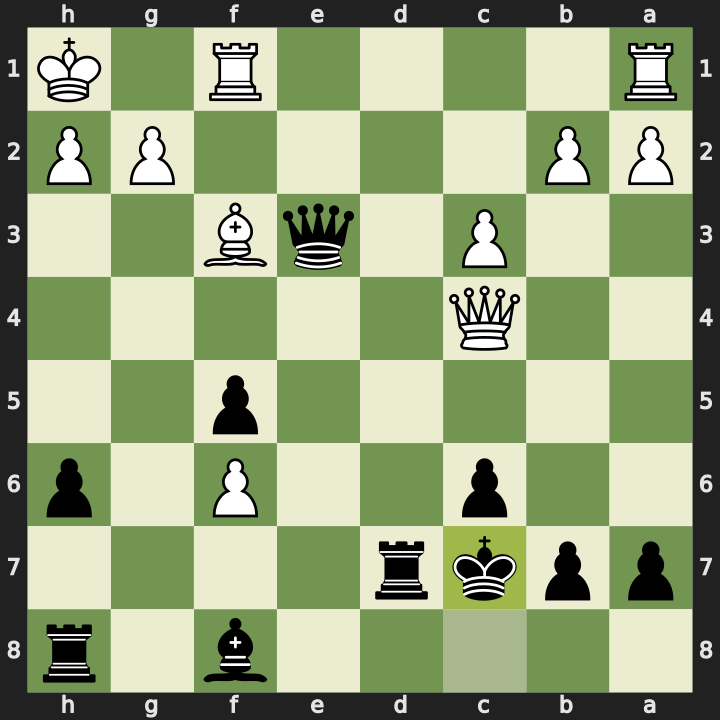
In that position White is only a pawn up on material. The rest of White’s edge is positional: the passed pawn on f6, the open central files for the rooks, and a queenside pawn majority to push. White is better and would push the queenside pawns and take over the central files, but it is still a game, and I would even get a chance to round up that f6 pawn with the bishop. I never reached this because I played 20…Bd6 in the game and then collapsed anyway, but it is a reminder that the position wasn’t lost by force at move 20. I lost it after that.
Reflections
What went well:
- Not a lot, honestly. Trading off the f6 bishop with 15…Nxf6 was reasonable, and blocking the checks at the end was forced rather than clever.
What to work on:
- Actually playing the Pirc like the Pirc. The whole point of this opening is the g7 bishop and a safe king behind it. If I’m not going to fianchetto and castle short, I’m just playing a bad version of something else. Fianchetto the bishop, get the king safe, then look for counterplay.
- Not confusing checks with a plan. Both 10…Qe4+ and 14…Qe3+ felt like I was doing something, but they were just my queen wandering into White’s half of the board while my development sat still. A check that the opponent blocks for free is usually a wasted move.
- Dealing with threats before making my own. 18…c6 ignored a queen aimed at f7. When the opponent’s queen is pointing at a pawn near my king, that comes first.
Full PGN:
1. e4 d6 2. f4 Nf6 3. Nc3 g6 4. e5 dxe5 5. fxe5 Nd5 6. d4 Bf5 7. Nf3 e6 8. Bg5
Qd7 9. Nxd5 Qxd5 10. Bf6 Qe4+ 11. Be2 Rg8 12. c3 h6 13. O-O Nd7 14. Nd2 Qe3+ 15.
Kh1 Nxf6 16. exf6 O-O-O 17. Bf3 e5 18. Qb3 c6 19. Qxf7 Rh8 20. Nb3 Bd6 21. Rae1
Qg5 22. dxe5 Rd7 23. Qc4 b5 24. Qxc6+ Bc7 25. Nc5 Rd2 26. Qa8+ Bb8 27. Qb7+ Kd8
28. Qe7+ Kc8 29. Bb7# 1-0