Win vs L_Kovacs (1259)
| Opening: Pirc Defense (B08) | Result: 0-1 (Checkmate) | Time Control: 3 days/move (Daily) | Rated | Event: 92nd Chess.com Daily Tournament (1201-1400), Round 1 |
Game Overview
A very exciting finish that could have gone either way. For most of the game I was actually worse, and by the engine’s reckoning White was completely winning at one point. But it came down to a knife edge, and when White made one wrong move I had a brilliant forced mate waiting. It felt like some of my puzzle training paid off to get the win. I was so happy with the finish that I had to share it with my chess coach’s WhatsApp group.
The Opening (Moves 1-10)
1. e4 d6 2. d4 Nf6 3. Nc3 g6 4. Nf3 Bg7 5. Bb5+
The game started the way a lot of mine do, with a Pirc Defense against e4. White did manage to throw in an extra check with 5. Bb5+, but I just blocked with c6.
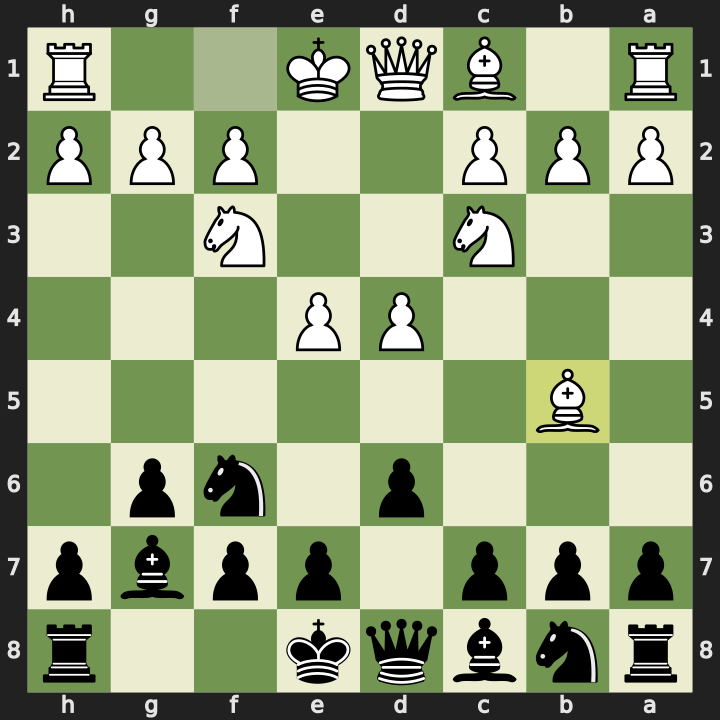
5…c6 6. Ba4 O-O 7. Bg5 Nbd7 8. O-O h6 9. Bh4
White brought the other bishop out to g5, but I was able to kick it away with h6, and then kick the other bishop as well with b5.
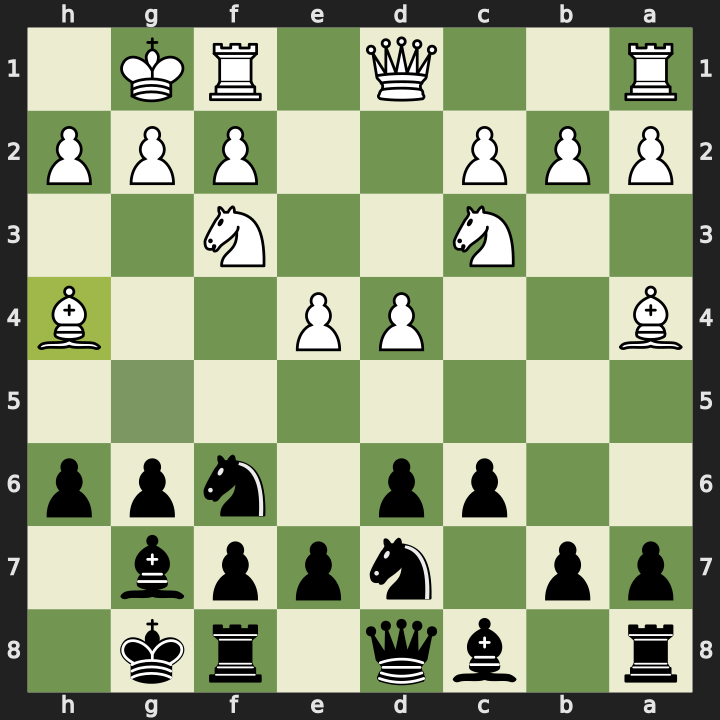
9…b5 10. Bb3 a5
The e5 Push and the Bishop Trap (Moves 11-14)
11. e5
White pushes e5. Rather than trade in the centre, I decided to allow White to take my knight in exchange for trapping their light-squared bishop. The theory was that my bishops would end up stronger than their knights.
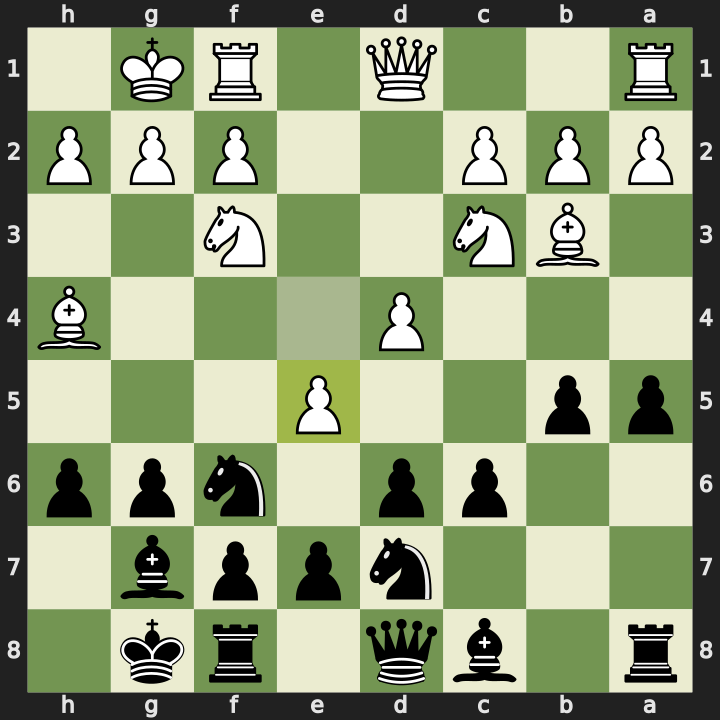
11…a4 12. exf6 Nxf6 13. Bxf7+ Rxf7 14. Bxf6 Bxf6
Two Bishops and a Queenside Chain (Moves 15-20)
15. Qd3 Bf5
After the trades I’ve got bishops on f6 and f5, White has knights on f3 and c3, and material is equal. I tried to gain some more space on the queenside, since I’d already advanced those pawns, and got a nice chain running from c5 up to a3. Even with the base of that chain a little weak, I could imagine breaking through and threatening a promotion.
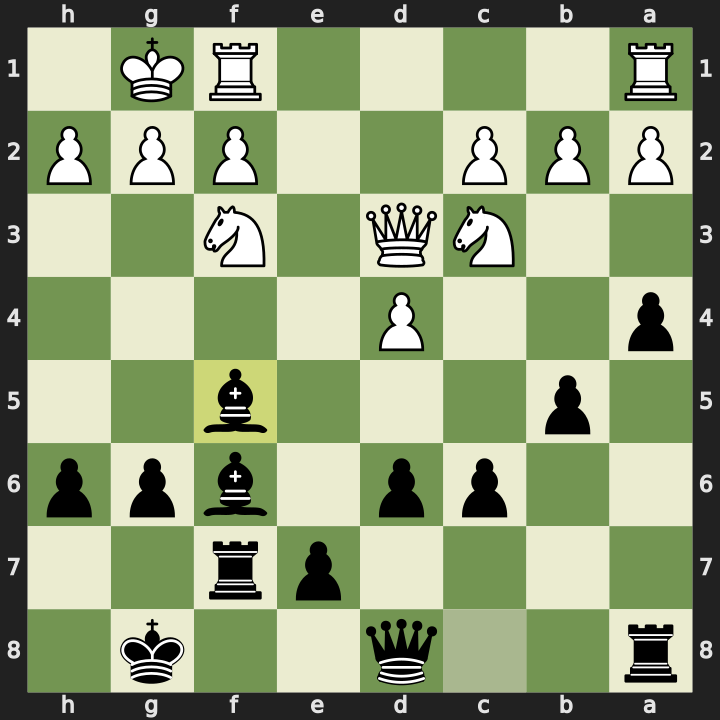
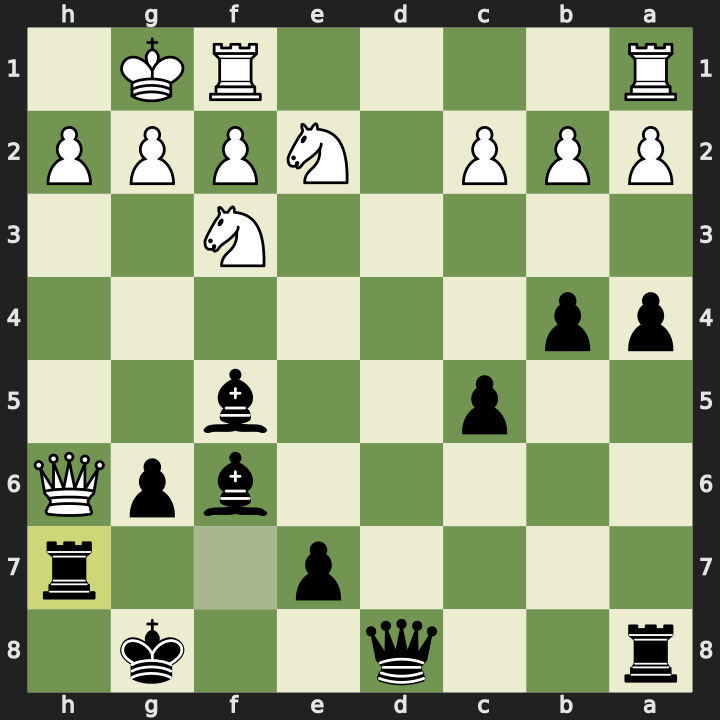
16. Qd2 b4 17. Ne2 c5 18. dxc5 dxc5 19. Qxh6 Rh7
White took the open d-file with a rook, and since I already had one on h7 with a half-open h-file, I pushed my king forward to f7 so I could slide the other rook in behind it and build a rook battery on the h-file.
20. Qe3 a3 21. Rad1 Qc7 22. b3 Kf7 23. g3 Rah8
The Rook Battery (Moves 21-24)
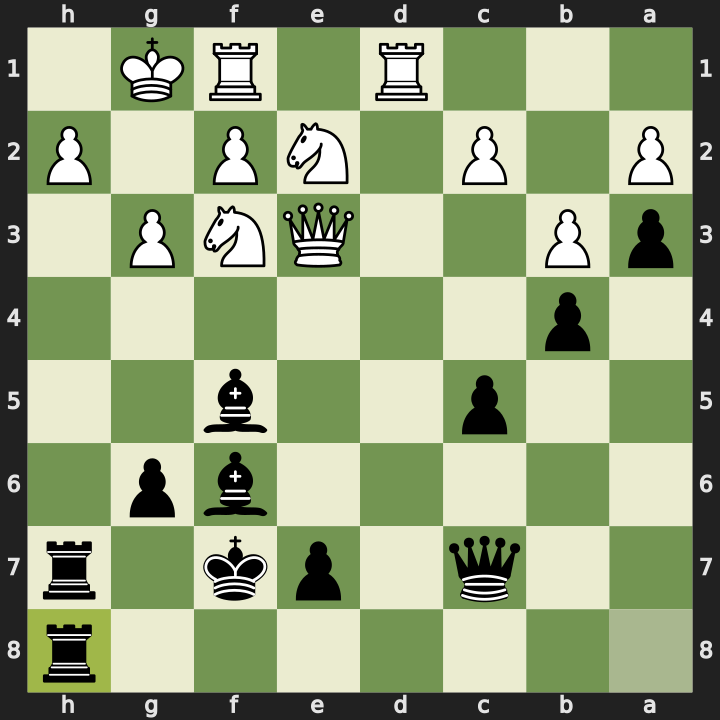
White had pushed the g-pawn to g3, creating a weakness in front of their king, so I put my queen on c6, just waiting for a chance to infiltrate on that diagonal. White used the knights to go after my bishops. I calculated a few different lines here and saw that there were several chances to attack the white king with the rook battery, the bishops and the queen. But my own king wasn’t particularly safe either, so it was a bit of a gamble.
24. Nf4 Qc6 25. Nd5
The Knight Comes to d5 (Moves 24-27)
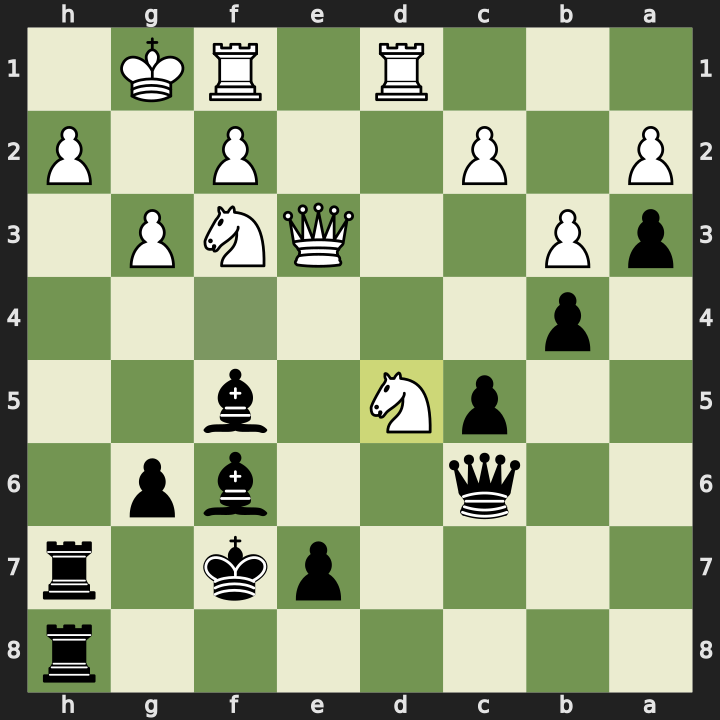
25…e6 26. Nxf6 Kxf6
White’s knight takes on f6, eliminating my dark-squared bishop, and I recaptured with the king.
27. Qg5+ Kg7
White checks with the queen, pushing my king back. I made sure to go to g7 rather than f7, predicting that the next move could be Nf5 attacking my queen.
The Critical Moment (Move 28)
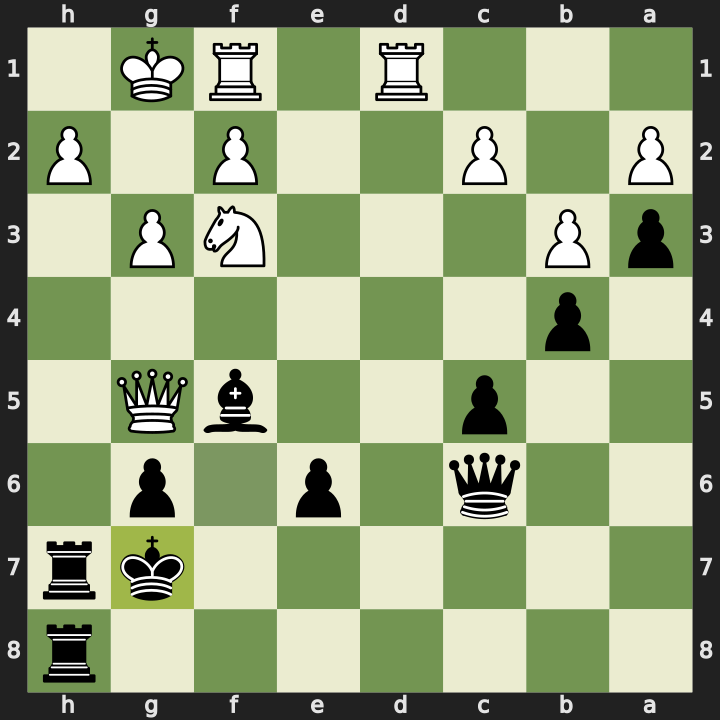
In this position I realised that most of my previously calculated lines could be refuted by a move like Qe7+, checking my king and forcing it over to h6 where it would block in my bishops. That would have been terrible for me. Then, after looking and looking, I saw there was a brilliant line if White ever moved that f3 knight.
28. Ne5
White plays Ne5, threatening my queen, not seeing what it allows.
The Queen Sacrifice (Moves 28-32)
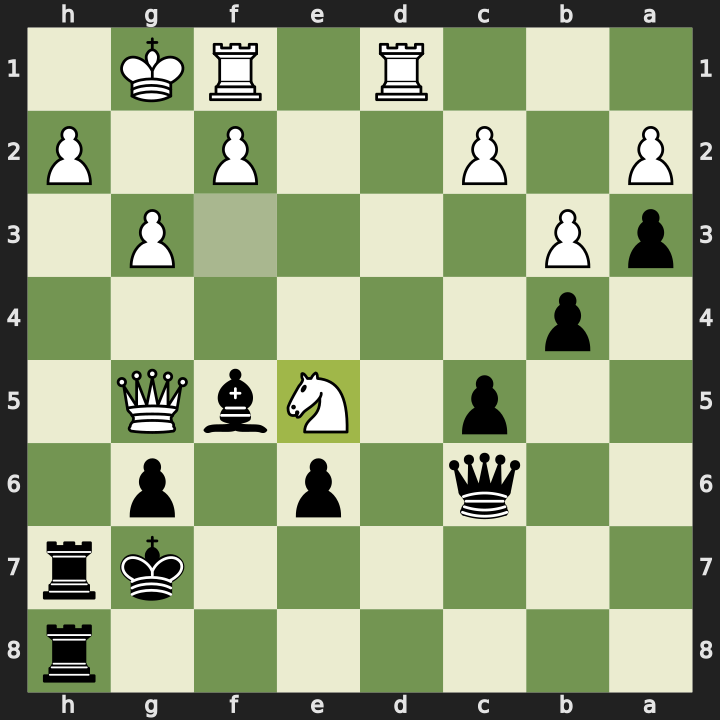
28…Qh1+
The queen sacrifice, forcing the king onto the h-file.
29. Kxh1 Rxh2+
Rook takes h2 with check. The only move for the king is g1.
30. Kg1 Rh1+
The second rook check. The only move for the king is g2.
31. Kg2 Be4+
The bishop comes in from the diagonal to make sure the king can’t escape. White can block with either the knight or the pawn, but either way it’s checkmate on the next move.
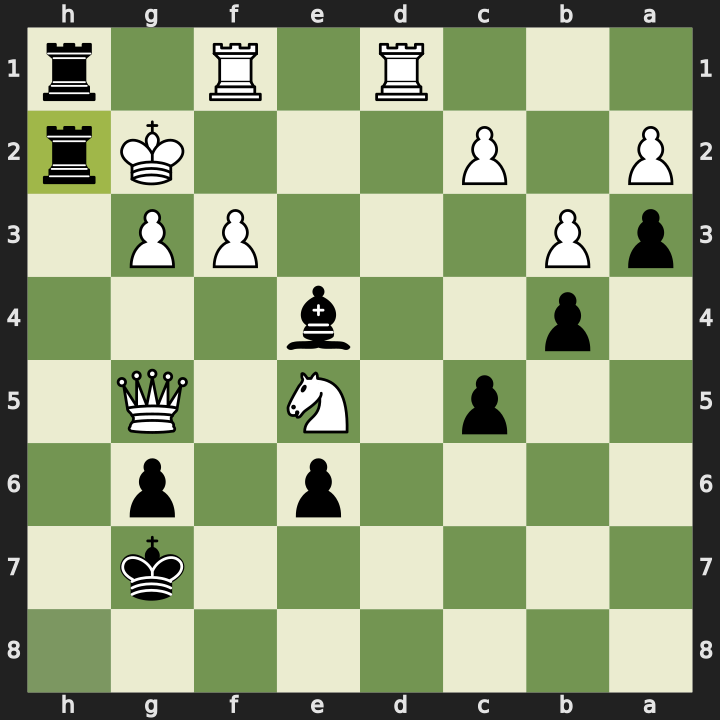
32. f3 R8h2#
The second rook drops onto h2 and finishes the game.
Engine Review
This wasn’t a very accurate game for me: only 77% accuracy and a 1350 game rating. It was enough to defeat this opponent, but the eval chart shows White was in an absolutely winning position. It was a knife edge, and one wrong move led to the brilliant forced mate in five that started with the queen sacrifice.
The opening and initial moves were actually pretty good. By move 19 I had an advantage of 1.3 even while being down a pawn.
The engine doesn’t like 19…Rh7, calling it a mistake. But it’s the mistake that gave me the rook battery on the h-file, which is what won the game, so I’m not too upset about it.
It also calls 22…Kf7 a mistake. I think that’s because it boxes in the rook on the h-file. If White had played h3, that rook would have been fairly useless and would have needed at least two moves to get to a more active square. But in the game White played 23. g3, which was a miss, and that let the rook on h7 play a critical part in winning the game.
The engine also really didn’t like my 25…e6 push, hitting the knight and provoking Nxf6. My whole strategy hinged on White eventually moving their knight off f3, which the engine can see is a blunder, but I gambled on my opponent not seeing the tactic.
Then on move 28, with White in an arguably completely winning position at around +5.8, they fell into the trap with 28. Ne5, threatening my queen and not seeing 28…Qh1+. The knight leaving f3 is the whole point: with the knight on f3 it guards h2, and there is no sacrifice. The engine’s preference was 28. g4, hitting my bishop on f5 while keeping the knight home to defend h2, and White stays completely winning. Running it through Stockfish, the main line is 28. g4 Rf8 29. Ne5 Qe8 30. Rd7+ Kg8 31. Rxh7 Kxh7 32. gxf5 Rxf5: I have to break up the h-file battery to deal with the bishop, White wins it anyway, and Stockfish has White at close to +9.
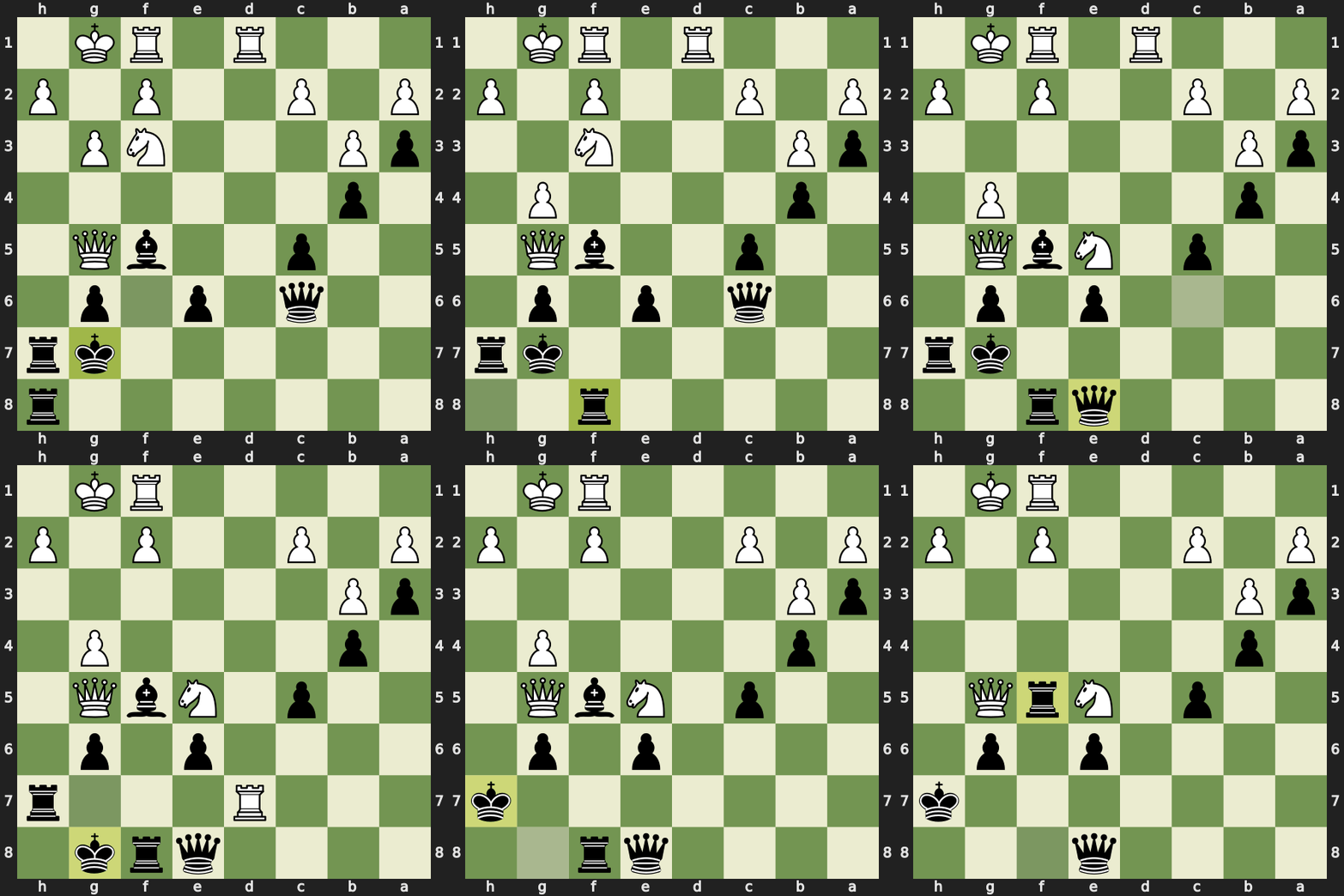
Once the knight went to e5, this felt like something out of a chess puzzle. There’s only one move for Black that isn’t completely losing, and it’s a forced mate in five.
Reflections
What went well:
- The mate-in-five queen sacrifice was clearly the highlight. It paid off to keep evaluating the line instead of stopping just because the queen was gone. Sometimes giving up the queen is exactly the move required to drag the king onto the right square.
- The opening and initial moves were solid. I was up 1.3 by move 19 even a pawn down.
- Predicting the Nf5 idea and choosing Kg7 over Kf7 to sidestep it.
What to work on:
- King safety. I clearly compromised my king to launch the attack, which was dubious and happened to work out this time. Against a stronger opponent it might not.
- The better play would have been to capitalise on the pawns on the c, b and a files that I spent time pushing forward and then largely abandoned in favour of just attacking the king. I had the bishops pointing at the opponent’s pawns still on their home squares, and I could have used that to break through and cause real trouble.
Full PGN:
1. e4 d6 2. d4 Nf6 3. Nc3 g6 4. Nf3 Bg7 5. Bb5+ c6 6. Ba4 O-O 7. Bg5 Nbd7 8. O-O
h6 9. Bh4 b5 10. Bb3 a5 11. e5 a4 12. exf6 Nxf6 13. Bxf7+ Rxf7 14. Bxf6 Bxf6 15.
Qd3 Bf5 16. Qd2 b4 17. Ne2 c5 18. dxc5 dxc5 19. Qxh6 Rh7 20. Qe3 a3 21. Rad1 Qc7
22. b3 Kf7 23. g3 Rah8 24. Nf4 Qc6 25. Nd5 e6 26. Nxf6 Kxf6 27. Qg5+ Kg7 28. Ne5
Qh1+ 29. Kxh1 Rxh2+ 30. Kg1 Rh1+ 31. Kg2 Be4+ 32. f3 R8h2# 0-1