Win vs Bhagya_Karia (628)
| Opening: Closed Sicilian Defense: Fianchetto Variation (B23) | Result: 1-0 (Resignation) | Time Control: 5 min Blitz | Rated |
Game Overview
One of the reasons I was originally a d4 player is that it let me avoid opponents playing the Sicilian. Now that I’ve switched to e4 I’ve had to learn how to get into a good position when my opponent plays the aggressive Sicilian. The system I’ve adopted is one where I fianchetto the bishop on the kingside and go for an f4 break.
There were a few mistakes on both sides in this game, but I got all my pieces into good positions out of the opening and then used a tactic that earned a brilliant move and won my opponent’s queen. A very satisfying win.
The Anti-Sicilian Setup (Moves 1-9)
1. e4 c5 2. Nc3 e5 3. g3 Nc6 4. Bg2 Nf6 5. Nge2 a6 6. O-O Bd6 7. d3 O-O 8. Be3 Nb4 9. f4
The opening was fairly calm. My whole plan with this setup is to get the bishop onto g2, the knight to e2, castle, and then break with 9. f4.
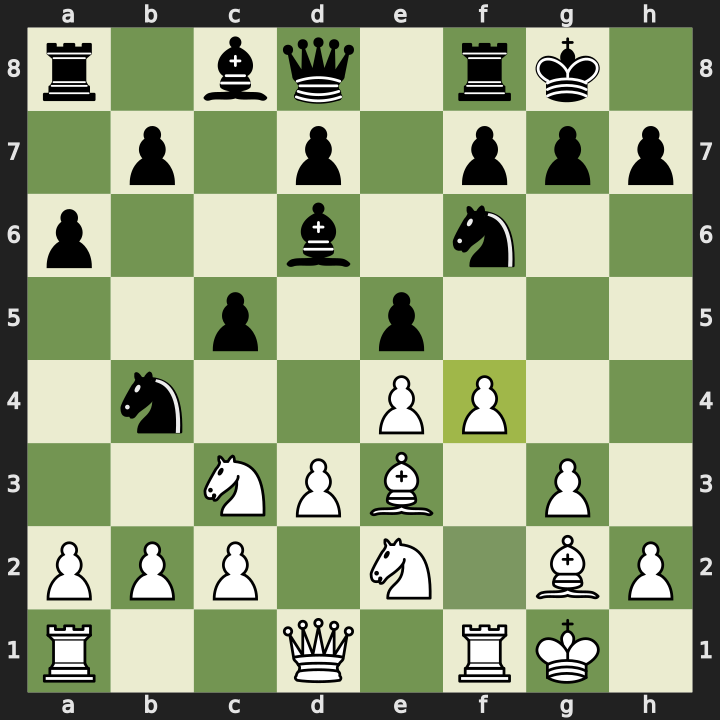
I think I’m slightly better here. Black’s light-squared bishop on c8 can’t develop, and the bishop on d6 is blocking in the d-pawn, which is what would let the c8 bishop out. So the dark-squared bishop is blocked on both diagonals by Black’s own pawns. I’m not sure if this is typical of a Sicilian setup, where these pawns will get cleared eventually, but right now both of Black’s bishops have no scope beyond defending pawns.
Trading Knights and a Missed Piece (Moves 10-15)
10. Nd5 Nfxd5 11. exd5 a5 12. c3 Na6 13. fxe5 Rxe5 14. Bf4 Re8 15. d4
We trade knights in the centre and I gain some more space. Then on move 15 I make a mistake.
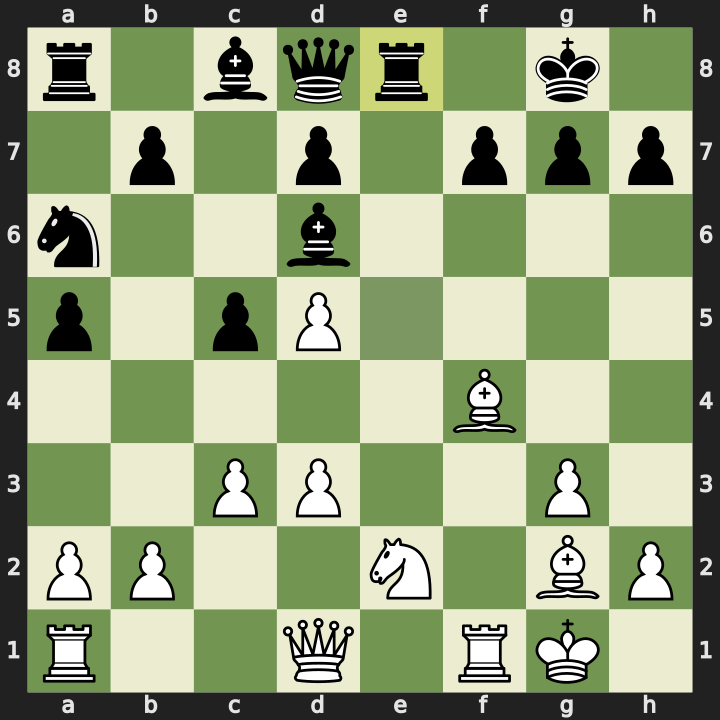
Black’s dark-squared bishop on d6 is completely undefended. The d7 pawn blocks the queen from covering it, so I could just take it with the bishop. Instead of taking it I played 15. d4, and after 15…Bxf4 16. Rxf4 it was only a trade. That’s definitely something to work on.
The Battery Idea (Moves 16-19)
16…Qe7 17. Re4
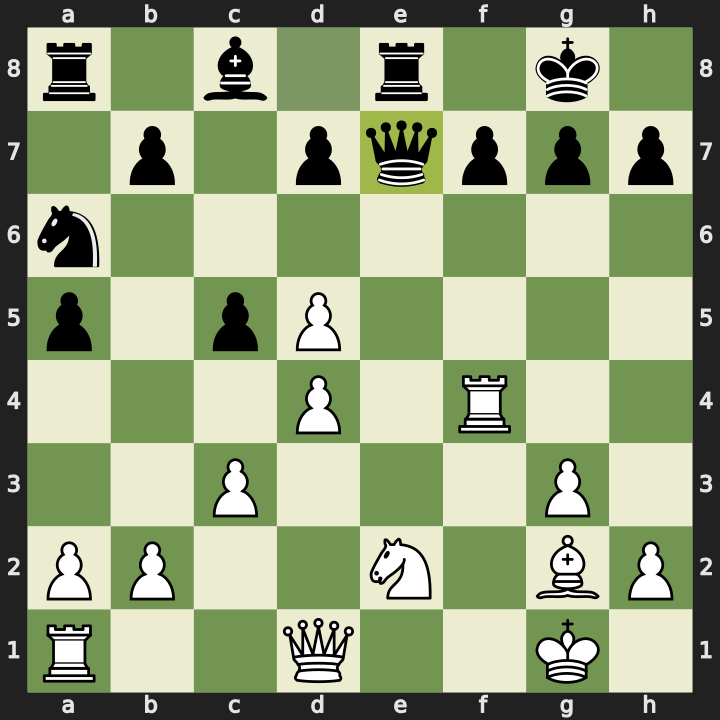
On move 16 Black moved the queen in front of the rook to create a battery on the e-file, but it’s a waste of a move. I’ve already lifted my rook to f4 and can slide it over to 17. Re4 to attack the queen, defended by my bishop on g2. The queen has to retreat.
17…Qd8 18. Qc2 d6 19. Rxe8+ Qxe8
At this point my plan is to target the h7 pawn and bring my a1 rook into the game. I play 18. Qc2 with the idea of bringing the bishop onto the same diagonal to team up on h7.
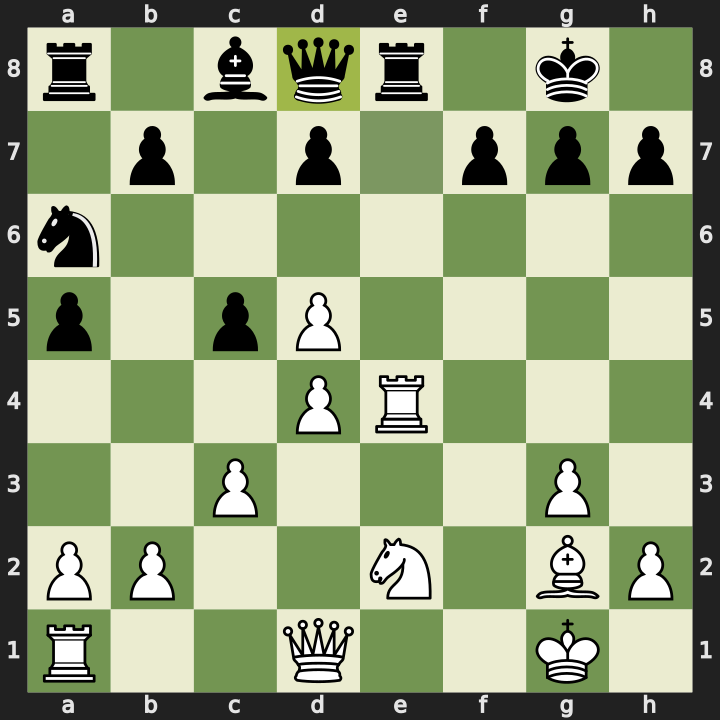
I trade rooks on e8, mainly to get my own piece out of the way. I’m not sure that was necessary, or whether there was somewhere else I could have placed the rook to keep it active, but it did eliminate one of Black’s attacking pieces. Meanwhile Black’s other rook stays very passively placed on a8.
Opening Up the King (Moves 20-23)
20. Be4 g6 21. Re1 b5 22. Nf4 b4 23. Nh5
The bishop comes out to 20. Be4 and Black defends the attack on h7 by pushing 20…g6.
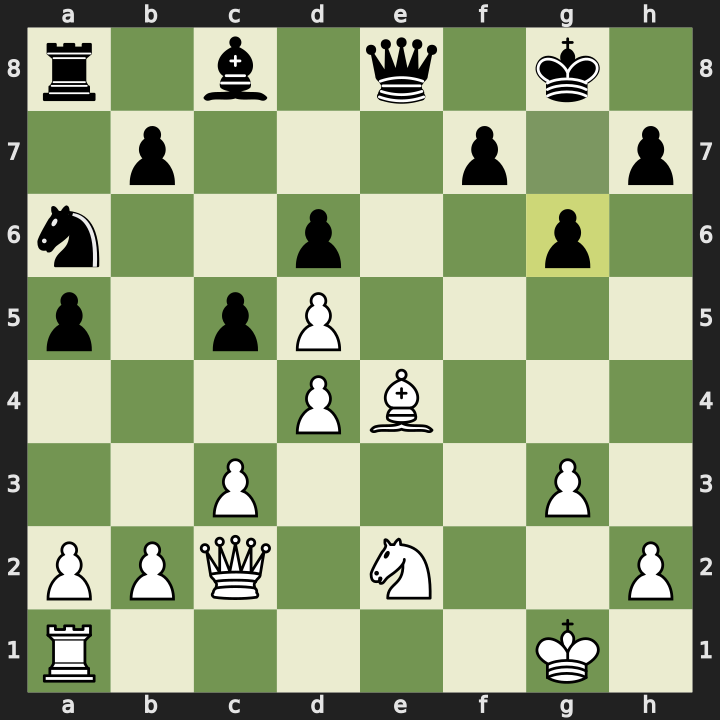
This is something I’ve been learning lately: how to exploit a position where the opponent pushes the pawns in front of their king. It often involves a sacrifice. So I’m considering sacrificing a knight to eliminate g6 and then going in with the bishop and queen battery. The knight hops forward to 22. Nf4. The tension builds with Black pushing 22…b4 on the queenside, and I decide to focus on my own attack.
23. Nh5!
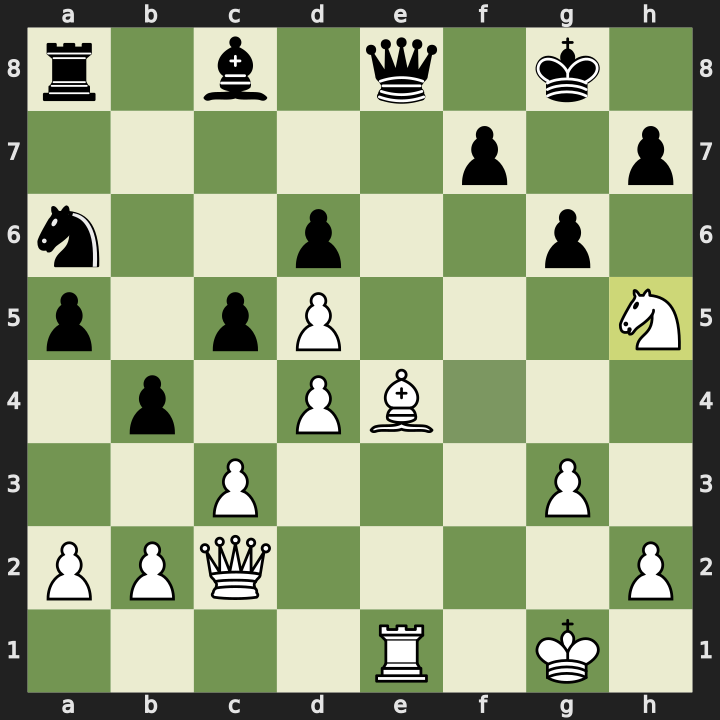
This is a particularly threatening position because the knight can access f6 from here, forking the king and the queen. My opponent’s immediate response is to take the knight. But taking it is a blunder, because the queen gets captured anyway with the follow-up check and discovered attack. I was really happy to see this line ahead of time and have it play out. As we’ll see in the analysis, this was actually a dubious sequence, but it worked out. I think I’m able to think like my fellow low-rated opponents and find positions where they’re likely to make a mistake.
Winning the Queen (Moves 24-25)
23…gxh5 24. Bxh7+ Kf8 25. Rxe8+ Kxe8
The bishop checks on 24. Bxh7+, supported by the queen. Crucially, moving the bishop off e4 uncovers the rook on e1 bearing down on the queen. Whatever Black does about the check, 25. Rxe8+ collects the queen. The king takes the rook, and it wasn’t exactly a cheap acquisition: it cost me a knight and a rook for the queen.
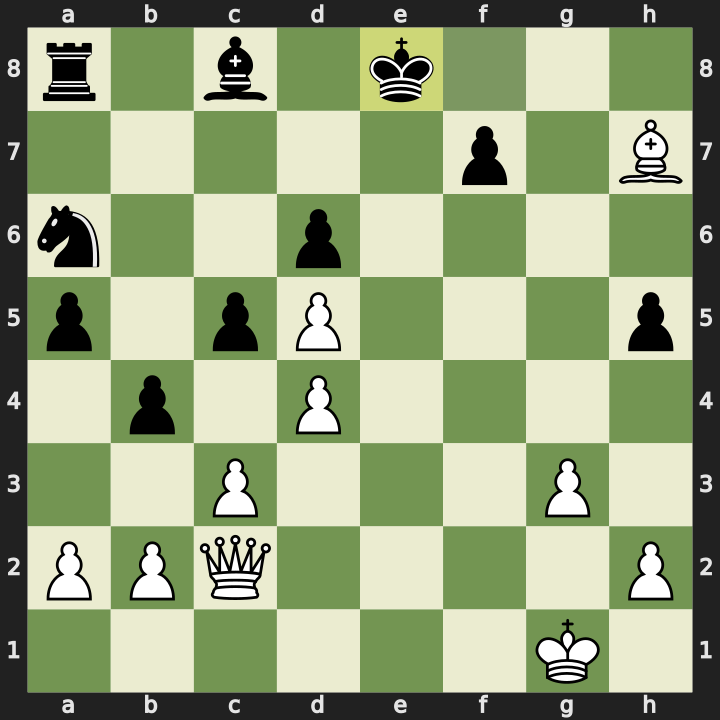
I’m confident I can simplify from here: exchange the light-squared bishops, then use my queen to eat as many pawns as possible and likely promote one of my g or h pawns.
Converting (Moves 26-37)
26. Bf5 bxc3 27. Bxc8 Rxc8 28. Qxc3 Kd8 29. Qxa5+ Kd7 30. Qxa6
My opponent started making more mistakes after losing the queen. The clock was getting a little low but I feel like they might have been experiencing some tilt. I capture the a5 pawn with check and then take the knight on a6 for free.
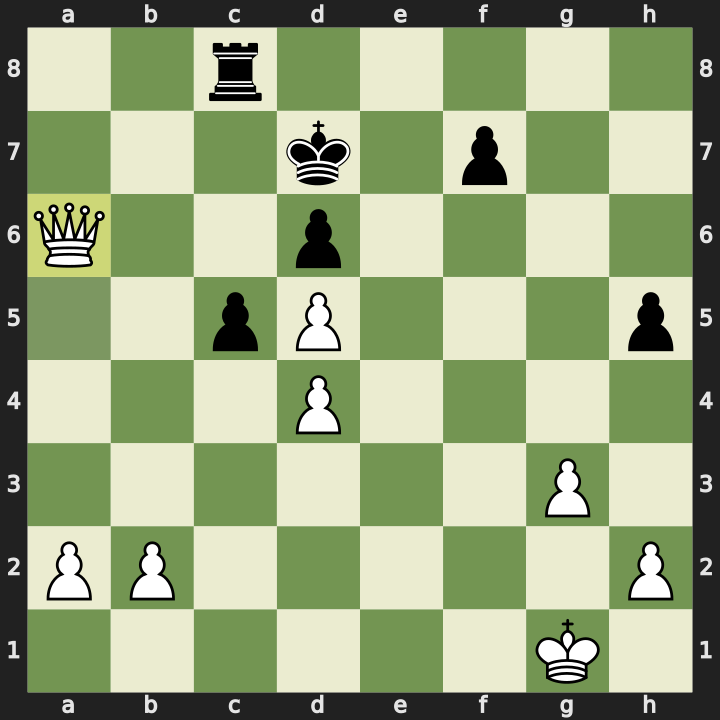
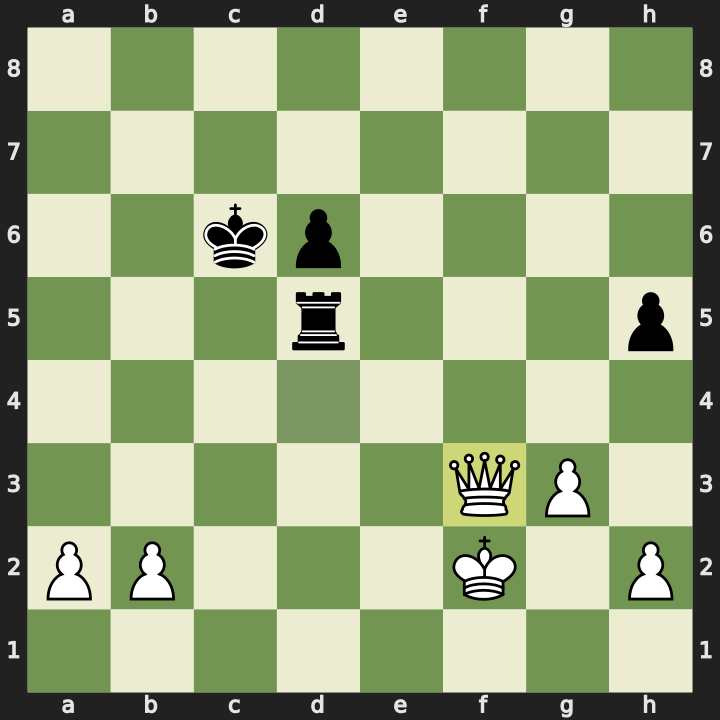
30…cxd4 31. Qd3 Rc1+ 32. Kf2 Rc5 33. Qxd4 Kc7 34. Qf6 Rxd5 35. Qxf7+ Kc6 36. Qf3
Black doesn’t give up, throwing in a check on 31…Rc1+, but there’s plenty of space for my king to step away. I turn my attention to the d4 pawn, then collect another pawn on f7 with check. Then Black lets the rook get pinned to the king with 36. Qf3.
36…Kd7 37. Qxd5+
Black makes a mistake with 36…Kd7 and I collect another freebie, taking the rook.
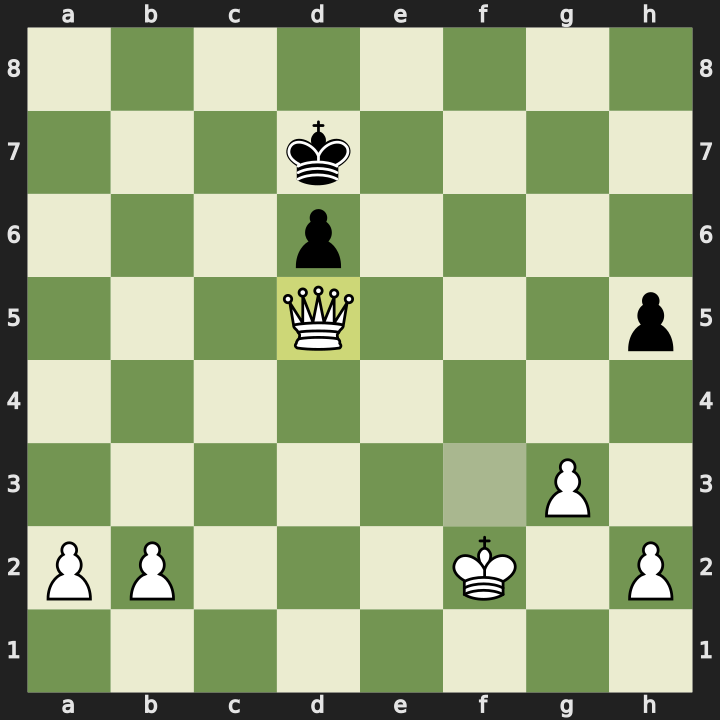
I’m about 11 points of material ahead, with two passed pawns on the a and b files and a two-on-one majority on the g and h files. With no hope, Black resigns.
Engine Review
Not a particularly high-accuracy game: 76.6% for me against 67.1% for my opponent, with a game rating of 1100 for me versus 650. I earned one brilliant move and my opponent had one blunder, with three mistakes for me versus five for my opponent.
I’m very happy with the position I got by move nine. It’s a 1.6 advantage for White and we haven’t exchanged any pieces yet. The engine doesn’t love 10. Nd5, though, preferring to open the f-file with fxe5 or kick the knight with a3.
With best play Black gets an advantage back, but it requires capturing on d5 with the backwards knight move 10…Nbxd5 rather than the more obvious Nfxd5. The idea is that after 11. exd5 exf4 White’s dark-squared bishop is attacked by both the rook on e8 and the pawn on f4, so it’s forced to retreat, and then 12…fxg3 grabs the g3 pawn. Black ends up a pawn ahead with White’s king less safe.
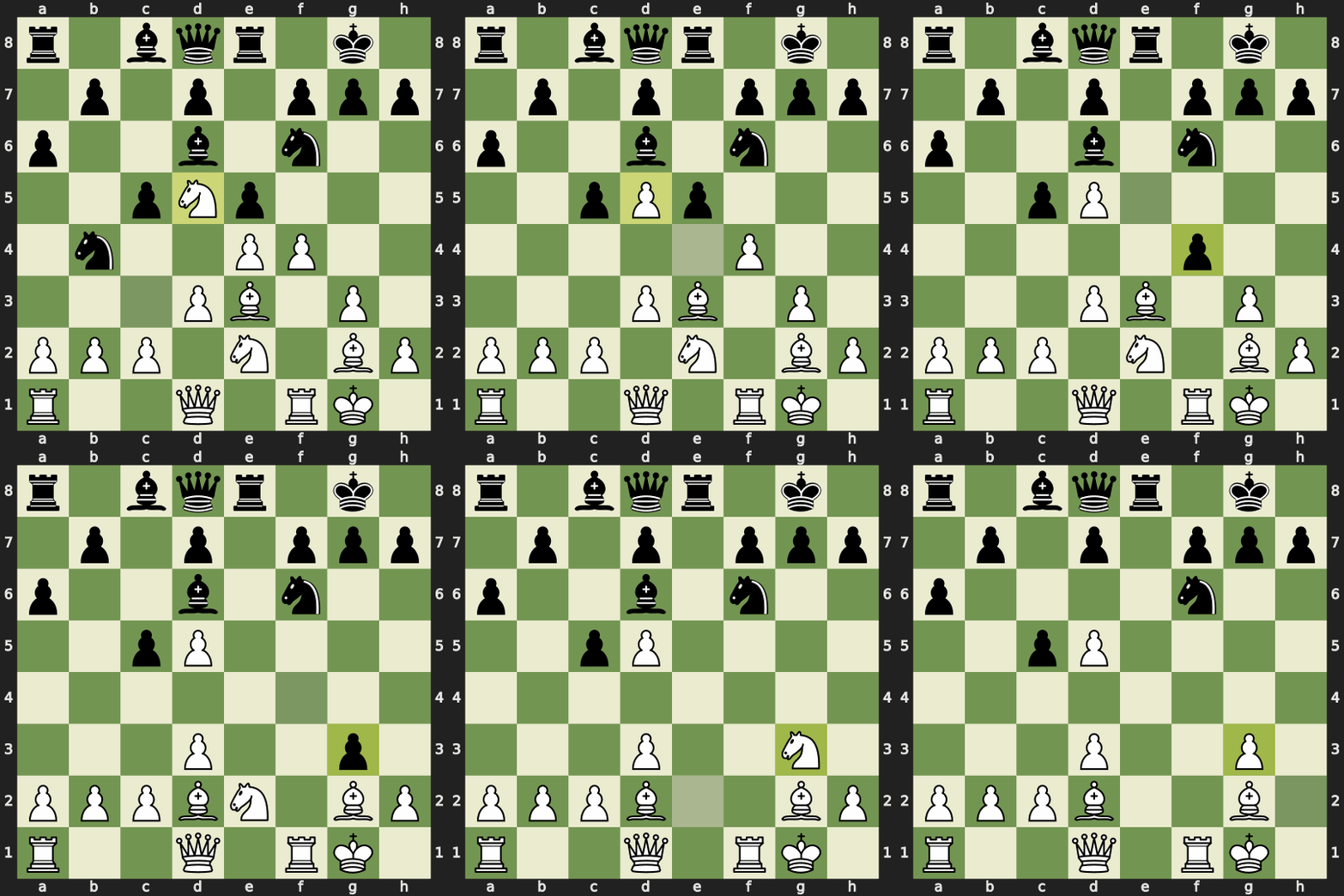
Then there was the move-15 miss I already mentioned: 15. d4 instead of taking the free bishop on d6, which the engine has at over +8. A whole piece left on the board.
The engine also shows that my attack was dubious from the onset, and that 18. Qc2 is a mistake. The plan of building the queen and bishop battery can be met by Black playing d6 and then pushing f5. Once White’s bishop lands on e4, that f5 break attacks it, and there’s no good way to hold onto the piece.
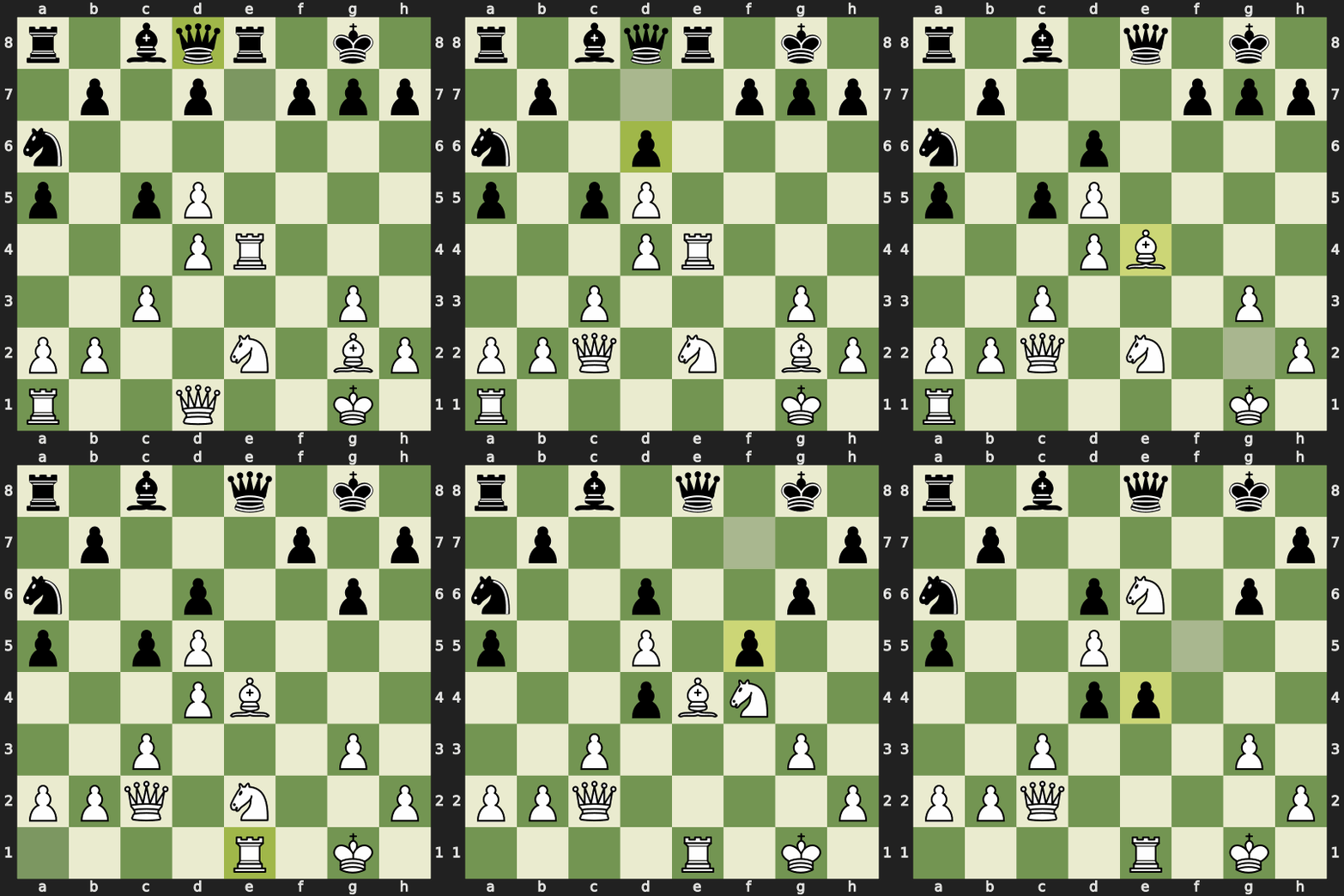
My opponent didn’t see that idea, so I continued. 22. Nf4 is also flagged as a mistake, because Black again has the f5 push as the best way to deal with the threat. But after they missed it and played b4 instead, 23. Nh5 really is the best move, and it earned the brilliant move award from Chess.com.
The follow-up isn’t completely obvious. Black has to play 23…Qd8 to avoid the fork, after which White sacrifices three pieces to win the queen: 24. Bxg6 hxg6 25. Re8+ Qxe8 26. Nf6+ forking the king and queen, the king moves to f8, and the knight takes the queen. But it comes at a cost. It’s a queen against a rook, bishop and knight, which is probably heading for a draw, unless White can promote the h-pawn. That pawn has a clear run to the back rank except for the rook on a8 guarding it, and White can probably trade the pawn for the rook or a piece and reach a good position from there.
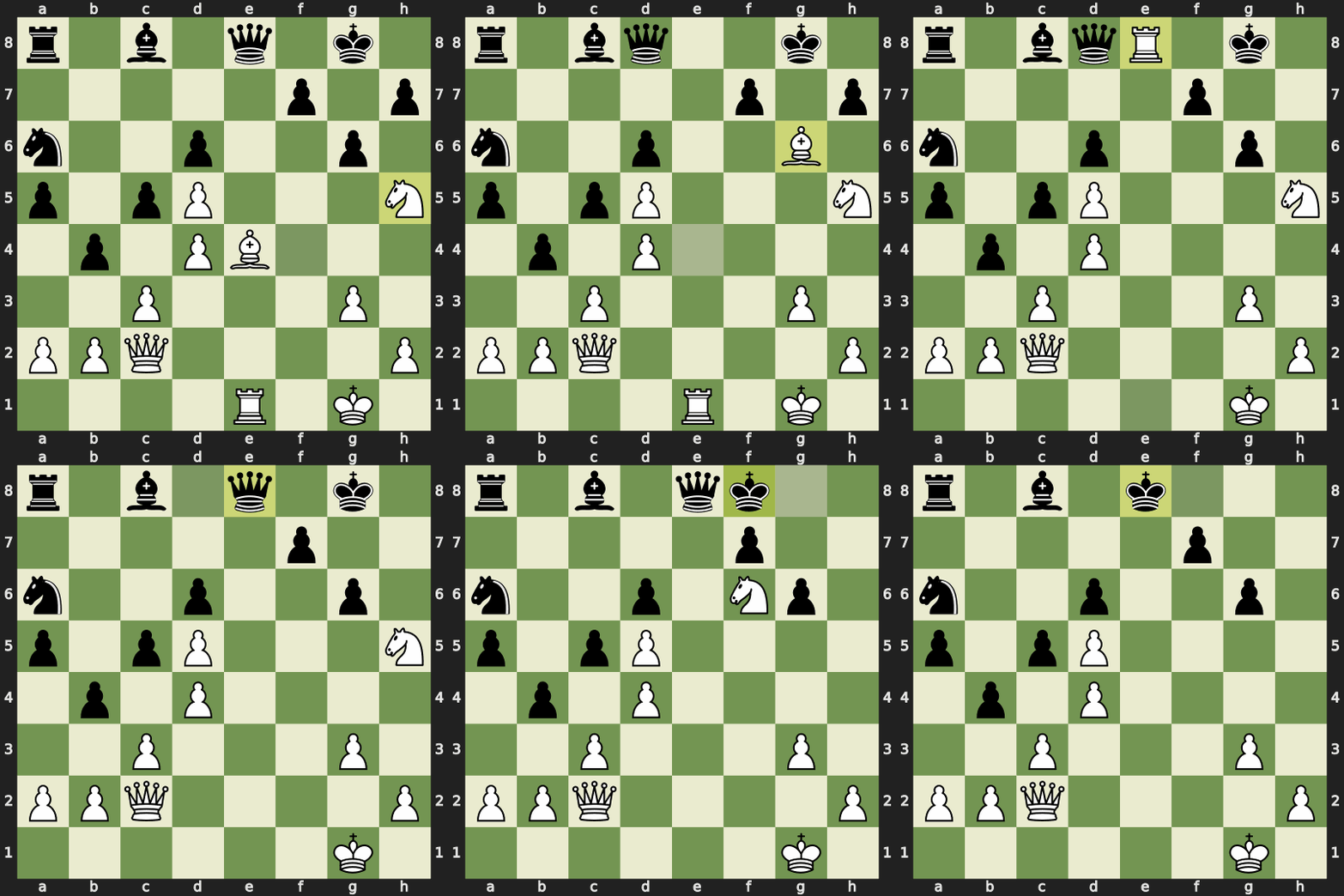
Once Black made several bad king moves that let my queen manoeuvre into checks that forked another piece, it was a fairly comfortable demolition from there.
Reflections
What went well:
- Really happy with the anti-Sicilian setup I’ve learned. I didn’t play it perfectly, but I got all my pieces onto their squares, which let me focus on middlegame tactics rather than losing in the opening.
- Seeing the line where I could sacrifice a piece to open up the opponent’s king. I’m glad I saw that, even if against a stronger player I would have lost. There’s something to be said for going for the attack rather than always playing it safe. I’d rather make a mistake while attacking than make a mistake while defending and lose immediately.
What to work on:
- The obvious one is the piece hanging on d6 that I didn’t take.
- One of the themes of my attacking games lately has been what happens when the opponent doesn’t accept the sacrifice. It applied again here. The best move after Nh5 was Qd8, and I didn’t really have a plan for what would happen if they declined the knight and kept their king closed up. That’s something for me to consider.
Full PGN:
1. e4 c5 2. Nc3 e5 3. g3 Nc6 4. Bg2 Nf6 5. Nge2 a6 6. O-O Bd6 7. d3 O-O 8. Be3
Nb4 9. f4 Re8 10. Nd5 Nfxd5 11. exd5 a5 12. c3 Na6 13. fxe5 Rxe5 14. Bf4 Re8 15.
d4 Bxf4 16. Rxf4 Qe7 17. Re4 Qd8 18. Qc2 d6 19. Rxe8+ Qxe8 20. Be4 g6 21. Re1 b5
22. Nf4 b4 23. Nh5 gxh5 24. Bxh7+ Kf8 25. Rxe8+ Kxe8 26. Bf5 bxc3 27. Bxc8 Rxc8
28. Qxc3 Kd8 29. Qxa5+ Kd7 30. Qxa6 cxd4 31. Qd3 Rc1+ 32. Kf2 Rc5 33. Qxd4 Kc7
34. Qf6 Rxd5 35. Qxf7+ Kc6 36. Qf3 Kd7 37. Qxd5+ 1-0