Win vs pedromholgado (1257)
| Opening: Queen’s Pawn Game (D02) | Result: 1-0 (Resignation) | Time Control: 3 days/move (Daily) | Rated | Event: 92nd Chess.com Daily Tournament (1201-1400), Round 1 |
Game Overview
This was an exciting one. Black came out of the opening strongly, developing quickly and pointing a lot of material at my king, and for a while I felt like I was just responding to their moves. But I got a bit of breathing room by trading off their light-squared bishop, remembered to counterattack in the centre rather than defend, and once Black castled queenside the game turned into a race to the opposite wing. From there I landed a knight on e5, sacrificed a bishop to drag the king into the open, hunted it down with the queen, and eventually promoted. A few more forcing blows in the endgame and Black resigned into a promotion mate.
The Opening (Moves 1-5)
1. d4 d5 2. Nf3 Nc6 3. e3 Bf5
Black played one of the more annoying replies to my d4. Putting the bishop on 3…Bf5 takes away the natural Bd3, so my light-squared bishop loses its best square.
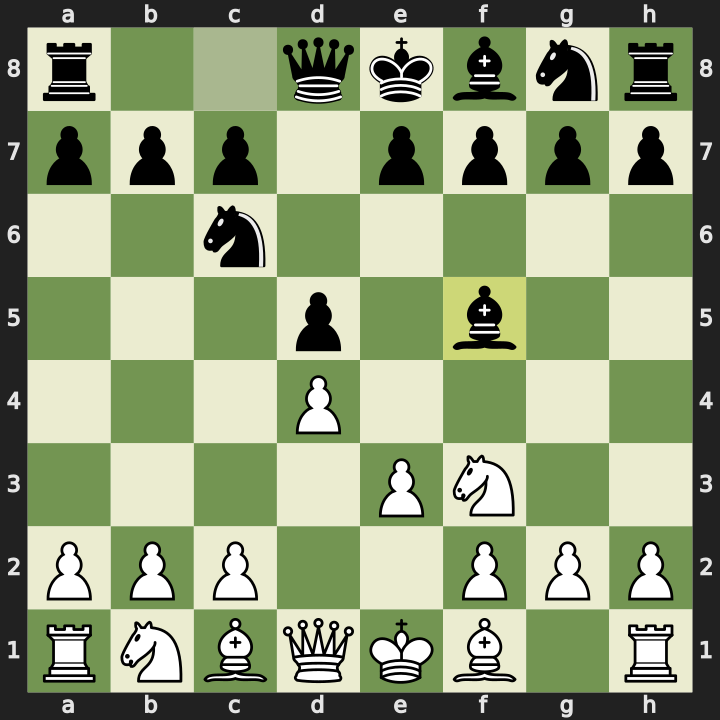
4. a3 e6 5. Be2
I settled for 5. Be2 to at least allow myself to castle, but I was already a little bit uncomfortable.
Under Pressure (Moves 6-9)
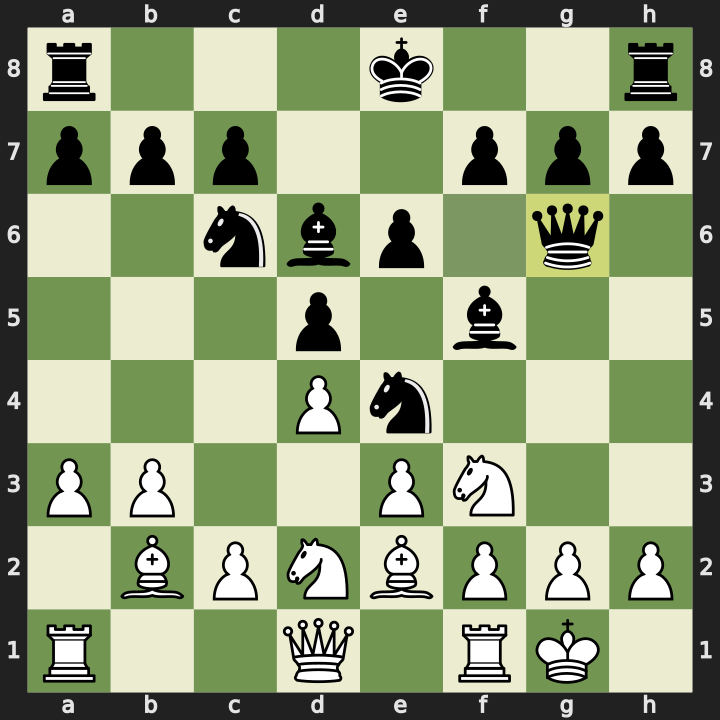
6. b3 Ne4 7. O-O Bd6 8. Bb2 Qf6 9. Nbd2 Qg6
By move nine Black had done well to develop the pieces. They’d delayed castling and it was safe for them to castle either side. They had a lot of material pointed in the general direction of my castled king, and I felt like I was responding to Black’s moves rather than controlling the flow of the game.
Trading Off and Turning to the Centre (Moves 10-13)
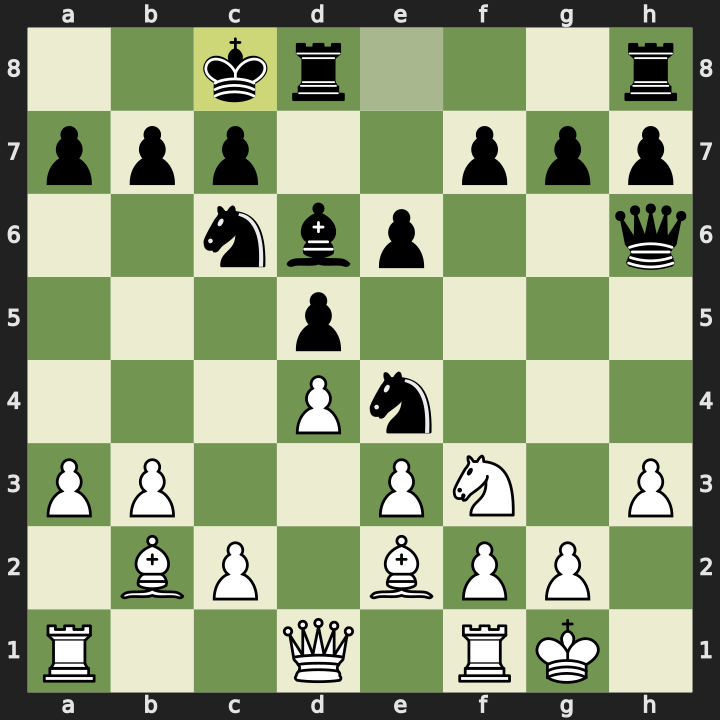
10. Nh4 Qh6 11. Ndf3 Bg4 12. h3 Bxf3 13. Nxf3 O-O-O
I got a bit of room to breathe by trading Black’s light-squared bishop for my knight. Then I remembered the principle that when the opponent is attacking on the flank, you need to counterattack in the centre. So rather than trying to concentrate all my pieces over on the kingside, I started looking for a central break.
Black chose to castle queenside, and I thought this gave me an opportunity. It reinforced the plan to counterattack the opposite side to my own king, as fast as possible, to take the pressure off Black’s attack.
Storming the Queenside (Moves 14-16)
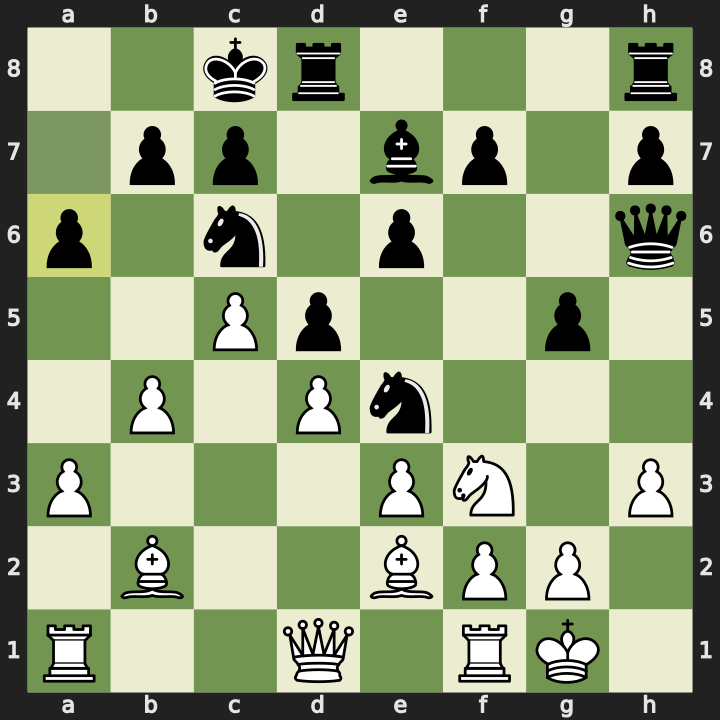
14. c4 g5 15. c5 Be7 16. b4 a6
I saw the chance to push 14. c4, break open the centre and go at the opponent’s king. Then I started storming the pawns forward with c5 and b4. I had some space on the queenside now, the light-squared bishop had a nice diagonal, and there was a path for my knight to come in via e5.
The Knight Lands on e5 (Moves 17-18)
17. Ne5
I got the knight to e5 and it was a powerful threat from there. It could go to f7 forking both rooks and the queen, so Black was obliged either to take the knight or to move their queen away to defend the f7 square.
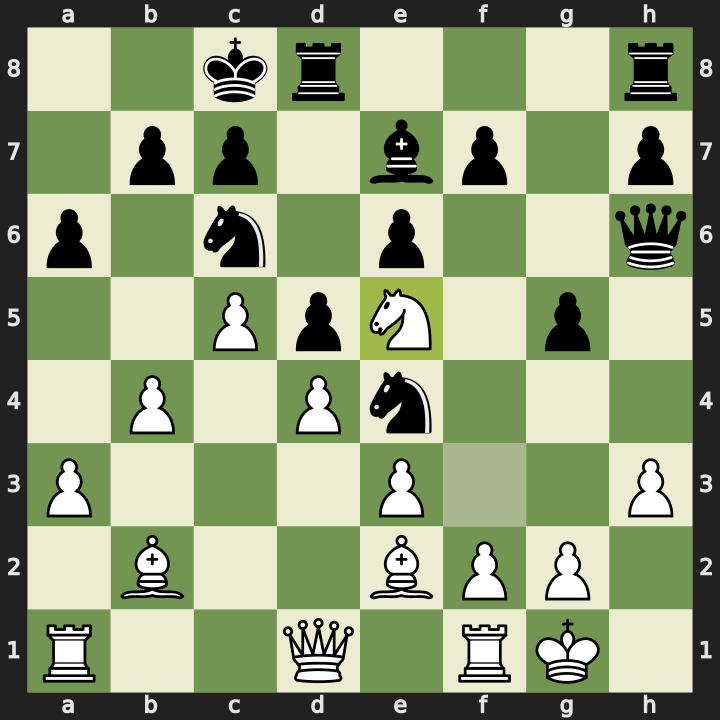
17…Qf6 18. Nxc6 bxc6
Black moved the queen to defend f7, which gave me a tempo to take the knight on c6 and damage the pawn structure in front of the king.
The Bishop Sacrifice (Moves 19-22)
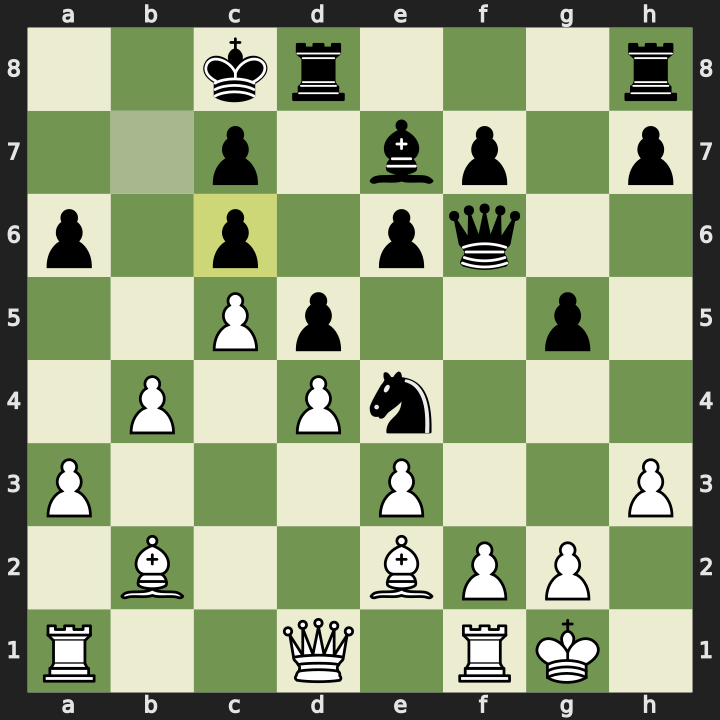
19. Bxa6+ Kd7 20. b5 cxb5 21. Bxb5+ c6
This was my chance. I could see 19. Bxa6+, and I also had a diagonal available to bring the queen over to a4 and hit the undefended pawn on c6. Black tucked the king in on d7, and I pressed the attack with 20. b5, inviting Black to take the pawn so that I could recapture with check.
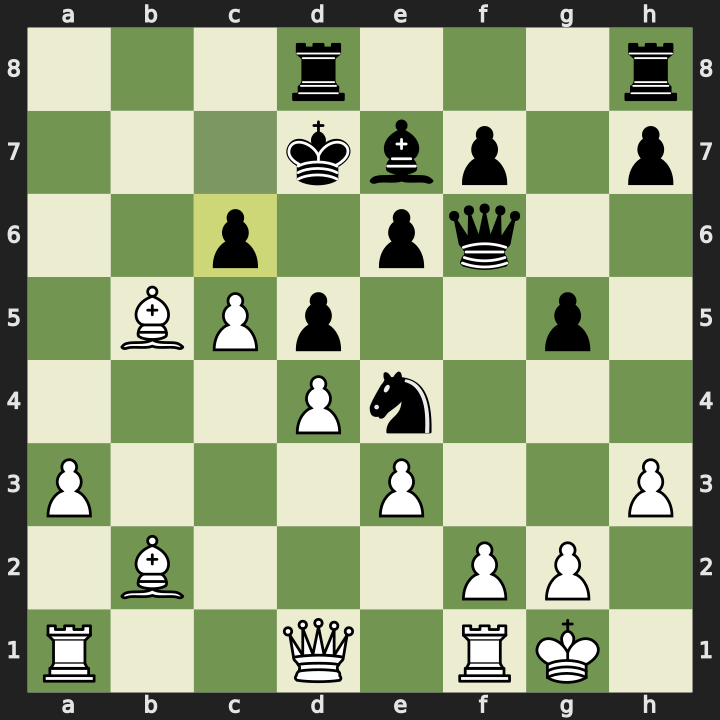
22. Bxc6+ Kxc6
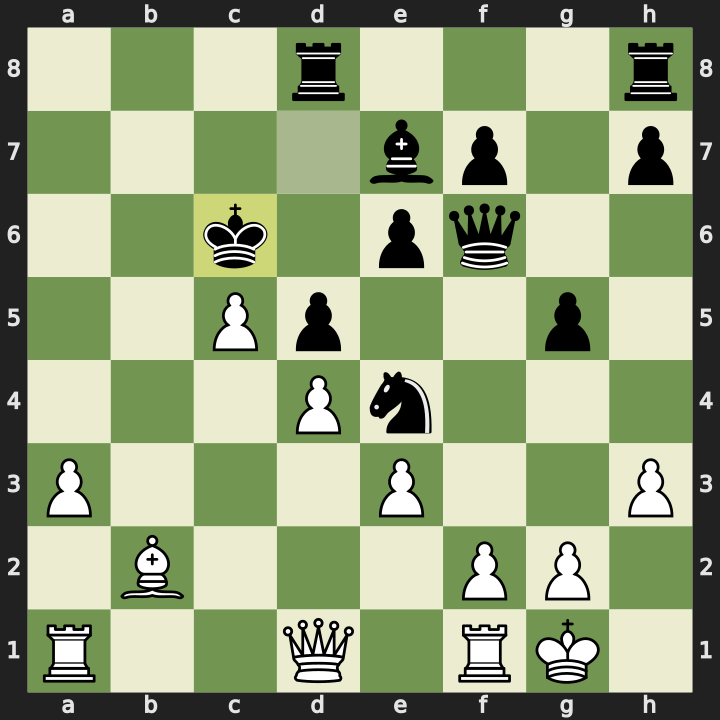
Here I’d calculated that if Black blocked the check with the pawn, I could sacrifice the bishop with check to draw the king back towards my queenside and keep up the attack. Black had to take, and the king was hauled out into the open.
The King Hunt (Moves 23-28)
23. Qa4+ Kc7 24. Qa5+ Kc8 25. Qa6+ Kd7 26. c6+ Ke8 27. c7
I gave a few more checks with the queen and started pushing the c-pawn. I could see that at the very least I was going to pick up a free rook and keep the king from running away.
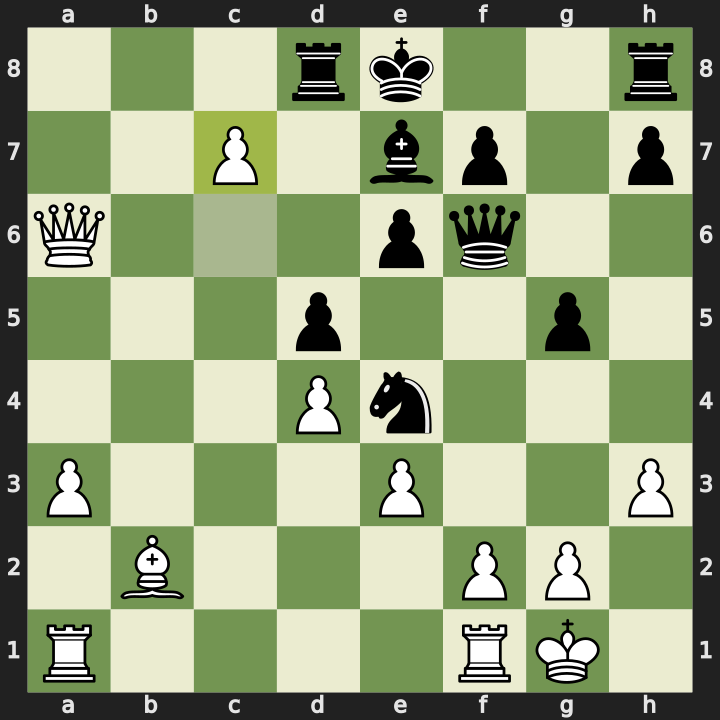
27…Nd6 28. cxd8=Q+ Kxd8
Black tried 27…Nd6 to cover the promotion square, but 28. cxd8=Q+ queened anyway and picked up the rook.
The Queen’s Net (Move 29)
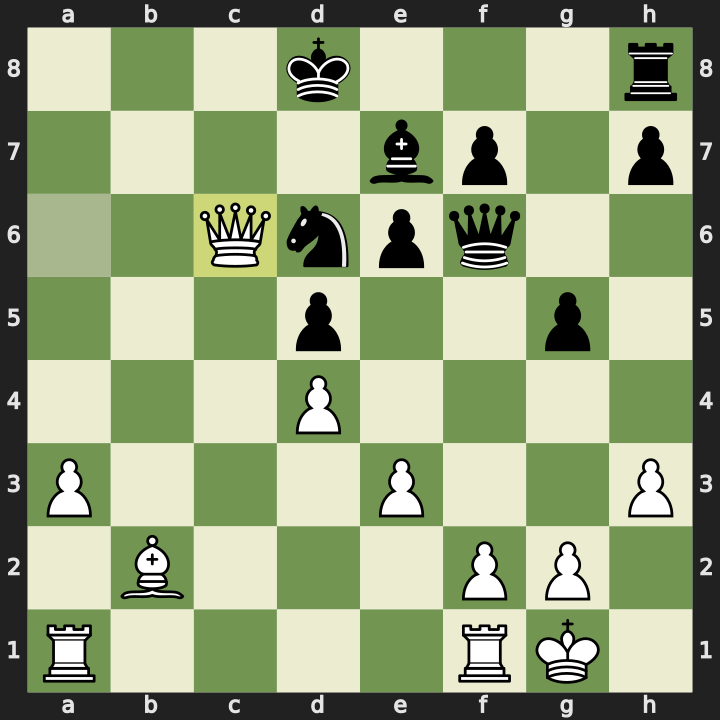
29. Qc6
I played 29. Qc6 with the idea that the black king couldn’t move anywhere. It was trapped within the squares my queen controlled. Now I just needed to bring another piece over to deliver checkmate.
The Exchange Sacrifice (Moves 29-32)
29…Nc4 30. Rac1 Bd6
Black did their best to free up the king with 29…Nc4 and 30…Bd6, but I had a nice tactic.
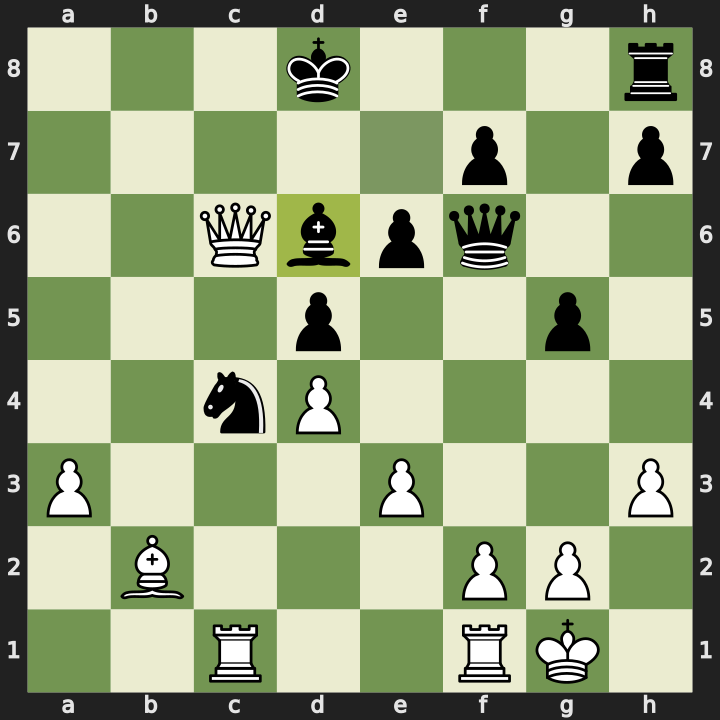
31. Rxc4 dxc4 32. Qxd6+ Ke8
I could play an exchange sacrifice, 31. Rxc4, temporarily giving up some material to grab the knight, and then win the bishop on d6 with check. Black slid over to e8 and once again the king was stuck within the squares controlled by my queen. If I could just get another piece into the attack, it would be checkmate.
Forcing the Queen Trade (Moves 33-34)
33. Qe5 Qxe5 34. dxe5
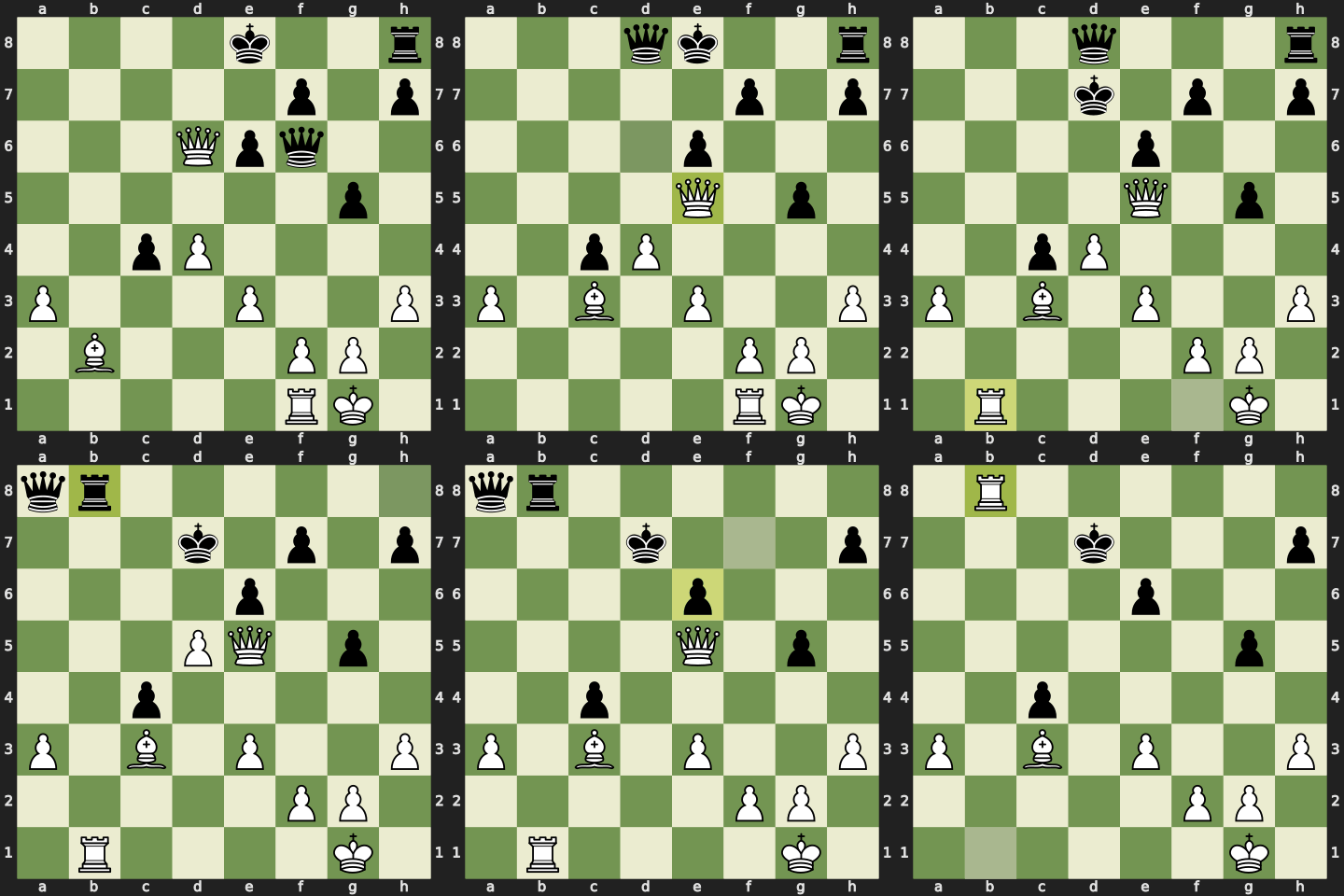
After some analysis I realised that Black could force a queen trade with something like Qe7. Given that I was up a piece with a passed pawn over on the a-file, I decided to force the queen trade myself with 33. Qe5, skewering the queen and rook on the diagonal, so Black was obliged to take. I could see a fairly straightforward path to victory even if it was a little imprecise. On reflection, Rc1 to target the pawn on c4 would have been a good move here.
Converting the Advantage (Moves 35-40)
35. a4 Rb8 36. Bc3 Rb3 37. Rc1 Ra3 38. a5 Kd7 39. Bb4 Rb3 40. Rxc4
After the exchange, Black brought the rook over to the b-file to attack my undefended bishop. This was a little disappointing, because I’d calculated this line and I should have played Bd4, giving the bishop a nice outpost, and then Ra1 to defend the pawn. Instead I played the still good but not quite as powerful 36. Bc3, which blocks in Black’s pawn but also gives Black enough time to bring the rook in and get behind my pawn.
I then found 39. Bb4 to target Black’s rook, and as Black moved the rook away I grabbed the pawn on c4 with 40. Rxc4. From here I was able to manoeuvre my pieces up towards Black’s king while Black’s rook was tied up targeting my pawn, trying to prevent a promotion.
The Finish (Moves 41-46)
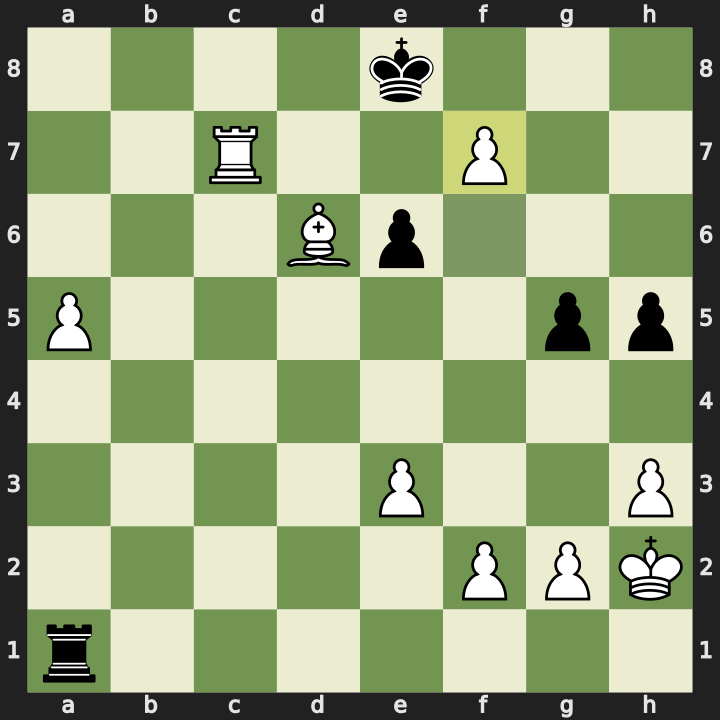
41. Bd6 Rb1+ 42. Kh2 Ra1 43. Rc5 f6 44. Rc7+ Kd8 45. exf6 Ke8 46. f7+
Black pushed 43…f6, targeting the pawn that was defending my bishop, but it was a mistake. I checked with the rook, 44. Rc7+, abandoning the defence of the a5 pawn, and then took on f6 with 45. exf6, threatening to promote the f-pawn.
Black made one final king move, 45…Ke8, trying to prevent the promotion, but I could push 46. f7+. The only move would be Kd8, as the f8 square was guarded by my bishop, leading to a beautiful promotion checkmate with f8=Q#. Black resigned.
Engine Review
Not a bad game from me on the numbers: 80.5% accuracy against 73.4% for my opponent, with a game rating of 1550 versus 1000. My opponent had two blunders and four mistakes, against just two mistakes for me, plus one brilliant move on my side.
The engine confirmed that my discomfort in the opening was justified. It flagged 11. Ndf3 as a mistake: Black could sacrifice the dark-squared bishop with 11…Bxh2+, and after I recapture with the knight, 12…Qxh4 wins the material straight back, leaving Black a pawn up with my king weakened. Neither of my knight moves, 10. Nh4 or 11. Ndf3, was the way to go. It would have been best to play 10. c4 and start cracking open the centre before I got drawn any further into Black’s attack.
Black’s first blunder was 17…Qf6. They needed to capture my knight with 17…Nxe5. My follow-up wasn’t completely accurate either: instead of 18. Nxc6, the engine liked 18. Qa4, swinging the queen across to prepare the attack. Black’s second blunder was 20…cxb5, which simply invited my bishop to recapture with check.
The brilliant move was 22. Bxc6+, sacrificing the bishop to open up the king. During the king hunt, 26. c6+ was a slight misstep: it let the king escape towards e8, whereas 26. Qa4+ would have kept it penned in.
In the endgame the engine likes my exchange sacrifice 31. Rxc4 as the best move in the position, which is nice to see. It was less keen on 33. Qe5. Rather than trade queens straight away, it preferred to keep them on with 33. Bc3, delaying the trade for a few moves and steering into an endgame where I end up a piece or two ahead once the queens finally come off. That fits my own feeling afterwards that Rc1, hitting the c4 pawn, was cleaner than forcing the trade. It also agreed that 36. Bd4 was a stronger square than the Bc3 I played.
Reflections
What went well:
- Surviving Black’s initial attack and then coming up with a plan of my own. Trading off the light-squared bishop for some breathing room, then counterattacking in the centre with c4 rather than trying to defend the kingside.
- The piece sacrifice and the attack that followed. Seeing the opportunity to sacrifice a bishop with 22. Bxc6+ to really open up Black’s king, and then pressing the attack with the queen and the passed c-pawn. That is the part that won me the game.
- The finish. Seeing that 46. f7+ forced the king to d8 and led to a promotion mate on f8.
What to work on:
- The opening. Those initial knight moves, 10. Nh4 and 11. Ndf3, just played into Black’s hand rather than improving my own position. I was uncomfortable and on the back foot, and I was fortunate Black didn’t press the advantage.
- Knowing when to push a pawn in front of my king. Here a pawn move to blunt Black’s pieces on the diagonals would have been preferable, even though putting a pawn in front of the king is weakening in itself.
- Precision in winning positions. 33. Qe5 was a little imprecise when keeping the queens on was cleaner, and 36. Bc3 instead of Bd4 gave Black’s rook time to get active.
Full PGN:
1. d4 d5 2. Nf3 Nc6 3. e3 Bf5 4. a3 e6 5. Be2 Nf6 6. b3 Ne4 7. O-O Bd6 8. Bb2
Qf6 9. Nbd2 Qg6 10. Nh4 Qh6 11. Ndf3 Bg4 12. h3 Bxf3 13. Nxf3 O-O-O 14. c4 g5
15. c5 Be7 16. b4 a6 17. Ne5 Qf6 18. Nxc6 bxc6 19. Bxa6+ Kd7 20. b5 cxb5 21.
Bxb5+ c6 22. Bxc6+ Kxc6 23. Qa4+ Kc7 24. Qa5+ Kc8 25. Qa6+ Kd7 26. c6+ Ke8 27.
c7 Nd6 28. cxd8=Q+ Kxd8 29. Qc6 Nc4 30. Rac1 Bd6 31. Rxc4 dxc4 32. Qxd6+ Ke8 33.
Qe5 Qxe5 34. dxe5 Ke7 35. a4 Rb8 36. Bc3 Rb3 37. Rc1 Ra3 38. a5 Kd7 39. Bb4 Rb3
40. Rxc4 h5 41. Bd6 Rb1+ 42. Kh2 Ra1 43. Rc5 f6 44. Rc7+ Kd8 45. exf6 Ke8 46.
f7+ 1-0