Win vs L_Kovacs (1268)
| Opening: Barry Attack (D00) | Result: 1-0 (Resignation) | Time Control: 3 days/move (Daily) | Rated | Event: 92nd Chess.com Daily Tournament (1201-1400), Round 1 |
Game Overview
This was a fairly straightforward one. I turned a small early edge into being up a pawn, then two, then finally three, and by the end my opponent had little chance of stopping me from promoting. It was strong positional play without much tactical excitement in the game itself, and it finished with a resignation. The one bit of fireworks was hiding in the engine lines, not on the board, and I have saved that for the end.
The Anti-Fianchetto Setup (Moves 1-6)
1. d4 Nf6 2. Nf3 g6 3. Nc3 d5 4. Bf4 Bg7 5. Qd2 O-O 6. Bh6
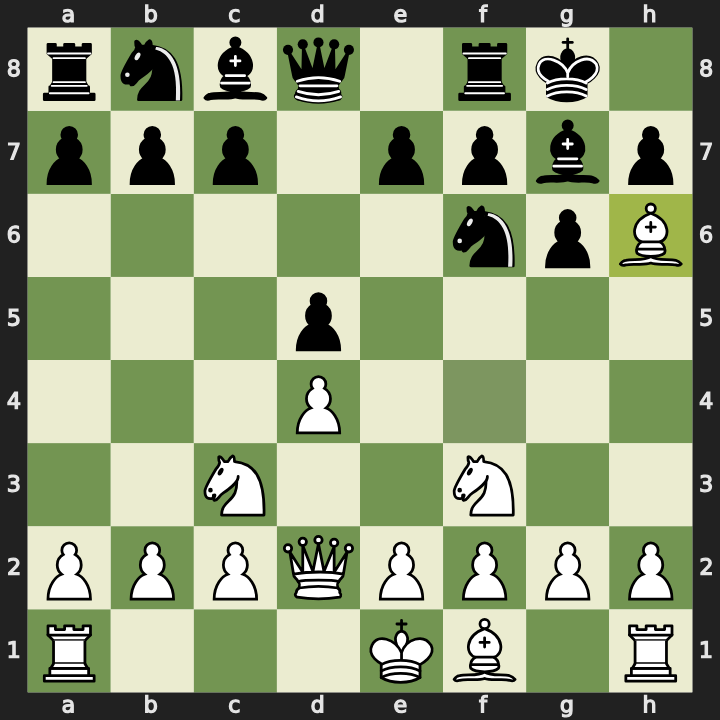
I started with my usual d4 and Nf3 setup, then noticed my opponent was going for some kind of King’s Indian style arrangement with the kingside fianchetto. I remembered there is a very annoying way of playing against that: bringing the bishop out to Bh6 supported by a queen on Qd2. It is a setup I personally find frustrating when I play the King’s Indian from the black side, so I thought this was my chance to play it from the white side.
Trading the Fianchetto Bishop (Moves 6-10)
6…Bg4 7. h4 Ne4 8. Nxe4 dxe4 9. Ne5 Bf5 10. Bxg7 Kxg7
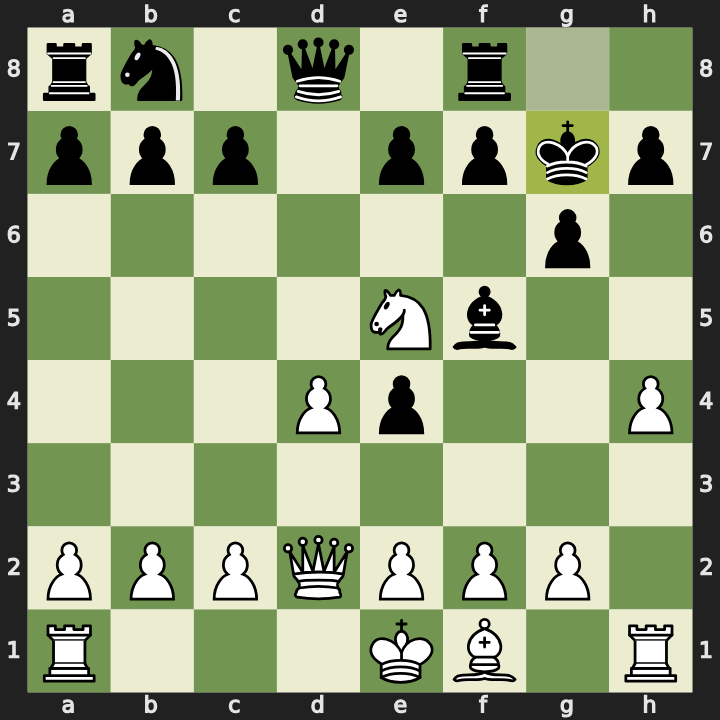
By move 10 I had succeeded in eliminating the dark-squared bishop on g7, which left Black’s king surrounded by weak dark squares. I had also pushed the h-pawn up to h4, which gives me a lever to try to prise open the h-file later on. My knight landed firmly on e5, right in the heart of Black’s position.
The Peak (Moves 11-13)
11. h5 Rh8 12. g4 e3 13. Qxe3
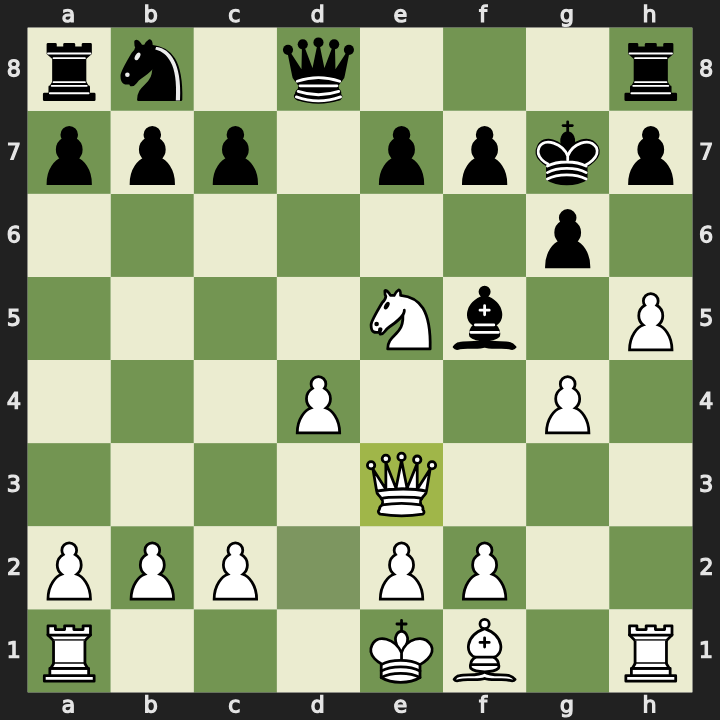
By move 13 things were looking pretty good. The only thing I did not love about the position was that my king was still in the centre and Black still had a queen on the board. Everything else was in my favour: better development, the knight firmly planted on e5, and pawns on g4 and h5 ready to storm forward. As it turned out I did not convert this directly into a quick win. I had to grind it out into a rook and pawn endgame, but I was happy to have this kind of position out of the opening.
Trades and the Queen Swap (Moves 13-19)
13…Bxc2 14. hxg6 Bxg6 15. Qh6+ Kg8 16. Nxg6 fxg6 17. O-O-O
Black grabbed the pawn on c2 while I turned to the kingside. 14. hxg6 opened the h-file, I checked with 15. Qh6+, and after 16. Nxg6 fxg6 I finally castled long with 17. O-O-O, tucking my king safely away on the queenside.
17…Qf8 18. e3 Qxh6 19. Rxh6
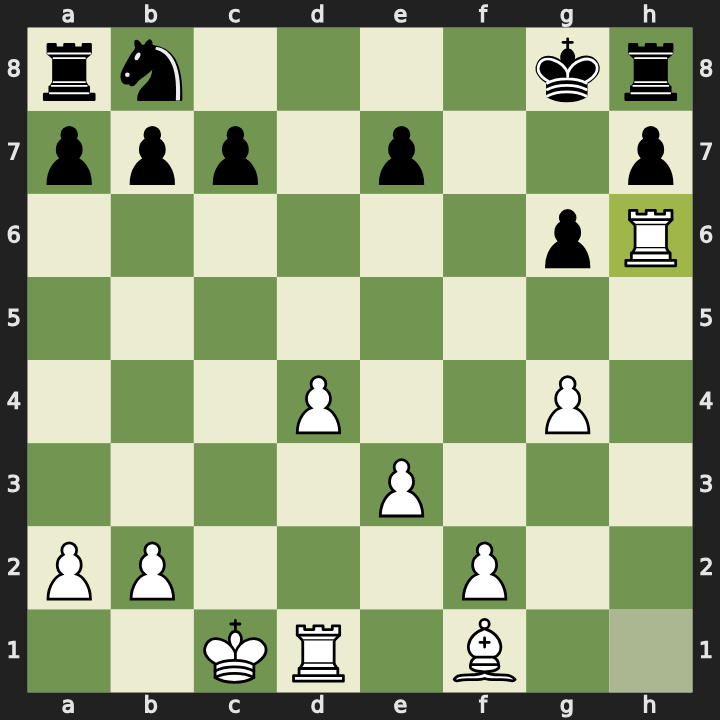
Then I played 18. e3, which invited Black to trade queens on h6. Black took the offer with 18…Qxh6, and I recaptured with the rook on 19. Rxh6. With the queens gone, the character of the game changed and it became a matter of technique.
Breaking the Centre (Moves 19-23)
19…Nc6 20. Bc4+ Kg7 21. g5 e5 22. Be6 exd4 23. exd4
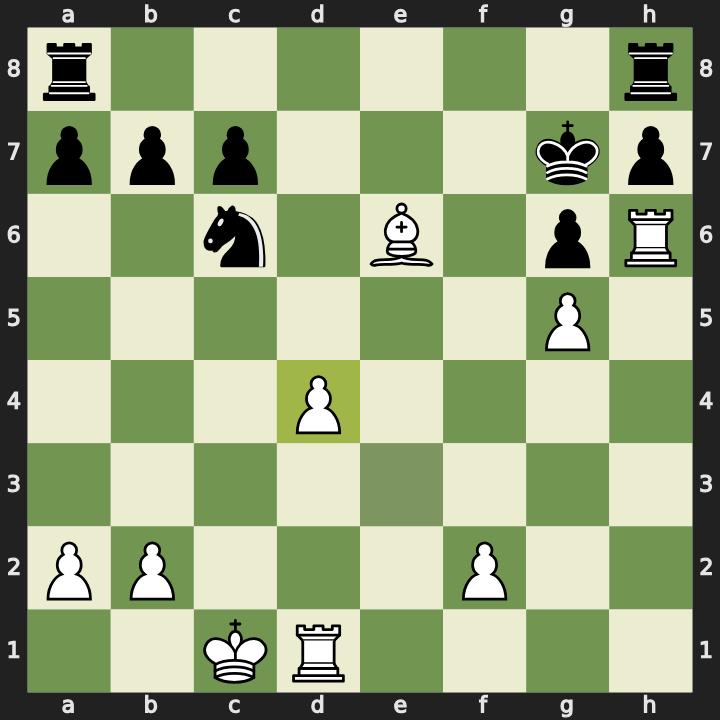
I developed the bishop to c4 with check and pushed 21. g5 to gain more space. Black struck back in the centre with 21…e5, and after 22. Be6 I allowed 22…exd4, which broke up the nice pawn chain I had running from f2 to d4. I recaptured with 23. exd4 to keep a pawn on that square.
Infiltrating on the Queenside (Moves 23-29)
23…Rad8 24. d5 Ne5 25. f4 Nf7 26. Rh3 c6 27. Rhd3 cxd5 28. Bxd5 h5 29. Bxb7
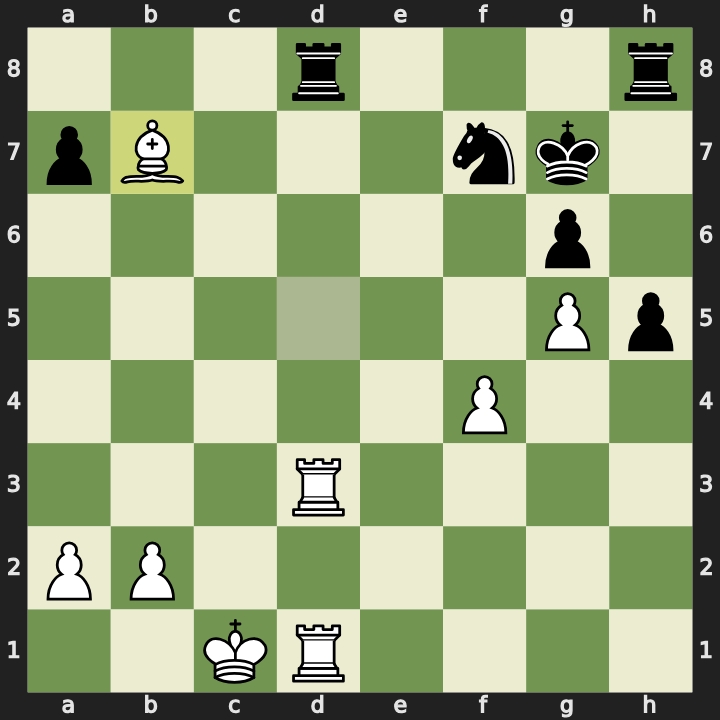
I pushed 24. d5 and Black rerouted the knight from e5 back to f7. Then Black played 26…c6 to attack the d5 pawn, but d5 was protected twice, once by the bishop and once by the rook, so hitting it just led to trades. After 27. Rhd3 cxd5 28. Bxd5, Black pushed 28…h5 and I swung the bishop across to take on b7 with 29. Bxb7, coming out a pawn up with my pieces the more active.
The Rook Endgame (Moves 29-34)
29…Rxd3 30. Rxd3 h4 31. Rh3 Nd6 32. Ba6 Kf7 33. Bd3 Nf5 34. Bxf5 gxf5
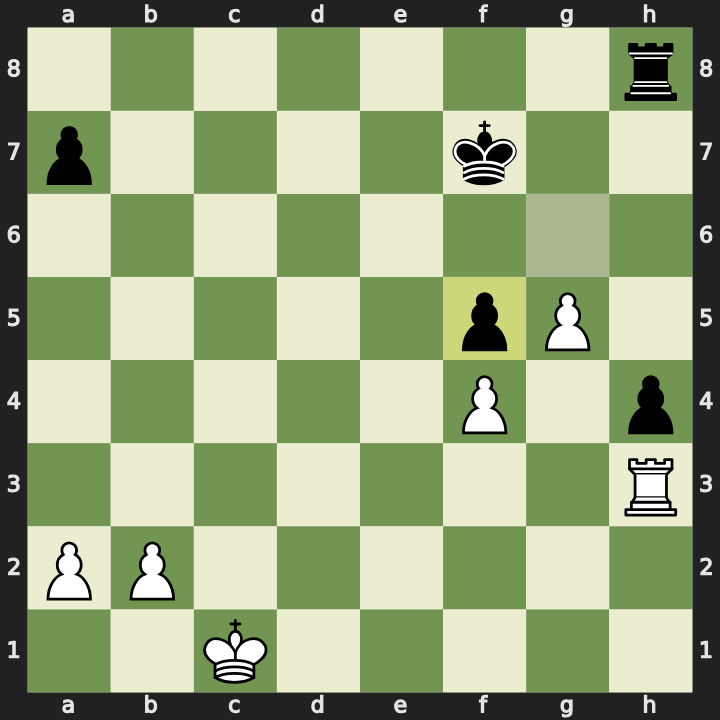
The rooks came off with 29…Rxd3 30. Rxd3, and Black pushed the passed h-pawn with 30…h4. I stopped it with 31. Rh3, then manoeuvred the bishop over with 32. Ba6 and 33. Bd3 before taking the knight with 34. Bxf5. Black recaptured 34…gxf5, and we reached a clean rook endgame where the f5 pawn was weak.
The King March (Moves 35-36)
35. Kd2 Ke6 36. Kd3 Kd5
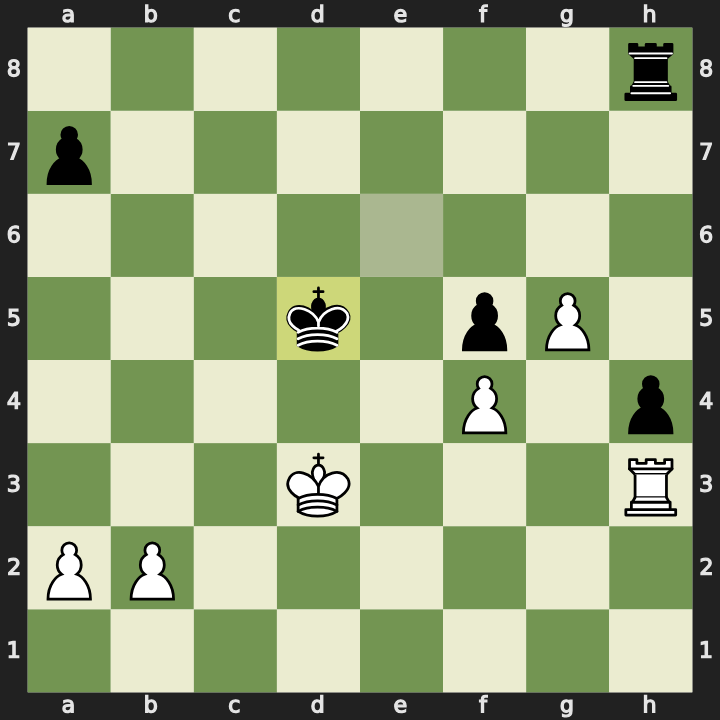
I started to activate my king with 35. Kd2 and 36. Kd3. Black brought his own king forward to d5, I assume to try to block the advance of my a and b pawns. But it was a mistake, because the f5 pawn became weak the moment Black’s king abandoned it.
Winning the Pawn (Moves 37-41)
37. b4 Kc6 38. Kd4 Kd6 39. a4 Kc6 40. Ke5 a6 41. Kxf5
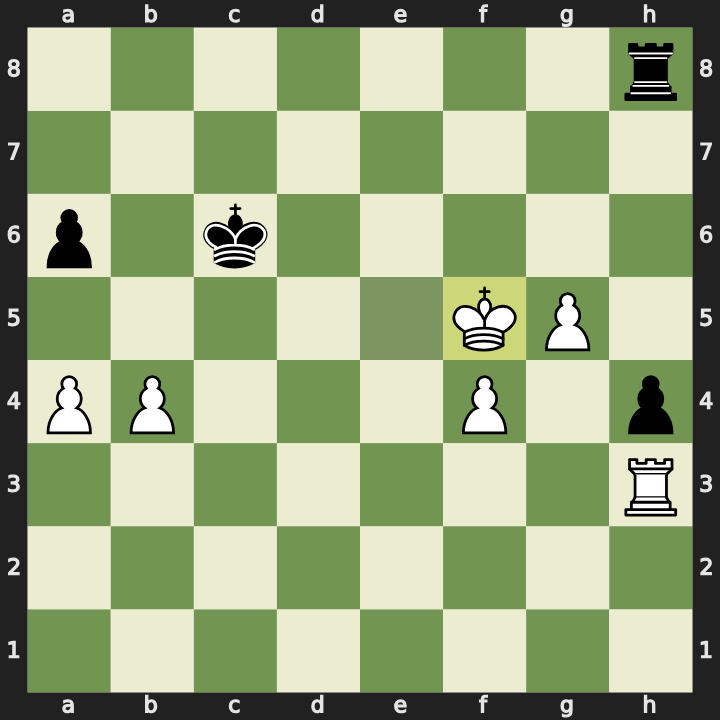
I pushed 37. b4 and 39. a4, and as Black’s king came across towards the queenside to try to defend those pawns, my king went the other way. 40. Ke5 and 41. Kxf5 picked up the weak pawn, and now I was two pawns to the good with a clear path forward.
The Finish (Moves 41-46)
41…Kd5 42. g6 Rf8+ 43. Kg5 Ke6 44. Rxh4 Rf5+ 45. Kh6 Rf6 46. Kh7
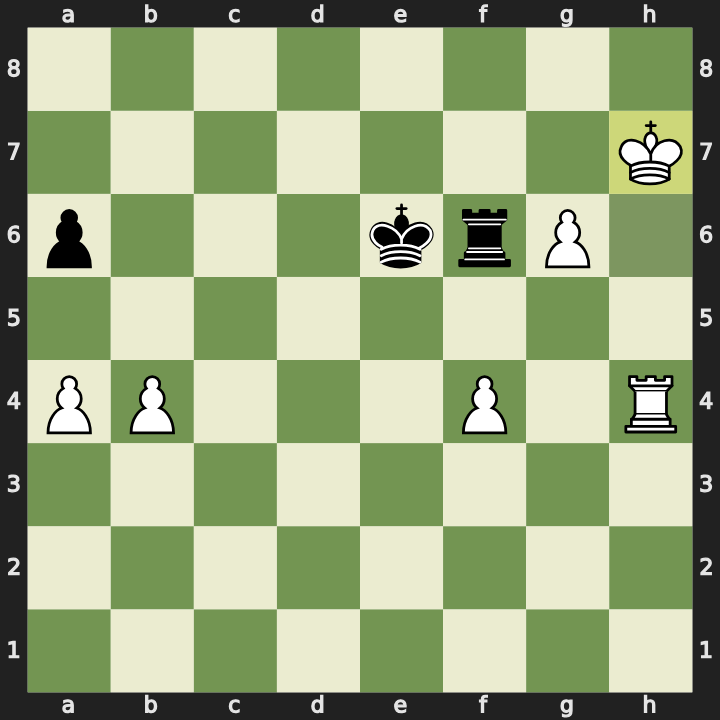
I pushed the g-pawn to 42. g6, and after 44. Rxh4 the last kingside pawn fell and I was three pawns up. From there the plan was simple: walk my king up with 45. Kh6 and 46. Kh7 to shepherd the passed g-pawn all the way to promotion. With no way to stop a new queen, Black resigned.
Engine Review
The engine liked my position from early on. Even with material level after the opening, it had me around +2.5 once the dark-squared bishop was gone, and by move 13 it was up to +4.5. That is where I should have been looking for a knockout, because the advantage did not survive the middlegame cleanly.
My first real slip was 18. e3, which handed Black the queen trade on h6 and dropped the evaluation back to about +1. Then 22. Be6 was a mistake too, letting Black take on d4 and bringing the position back to essentially level. The engine also flagged Black’s 26…c6: since d5 was defended twice, hitting it did not achieve much. The engine’s preferred plan for me there was to swing the rook back to the b-file to attack b7 straight away. In that line White wins the b7 pawn, infiltrates with a rook on the seventh rank, and the evaluation jumps to around +4.7, with a threat to win the knight with check supported by the bishop on e6.
In the endgame it did not love 31. Rh3. Rather than tie my rook down to blocking the h-pawn, it preferred 31. Bg2, keeping the bishop active on the long diagonal where it already covered the pawn’s path. Then 34. Bxf5 was a mistake that, with best play, the engine says Black could have held to a draw. To keep the win in hand I should have activated my king first with 34. Kd2 and started pushing the a and b pawns, leaving Black’s pieces tied to the kingside. Once Black’s king wandered off to the queenside and I picked up f5, the evaluation climbed back to +5.9 and the win was secure.
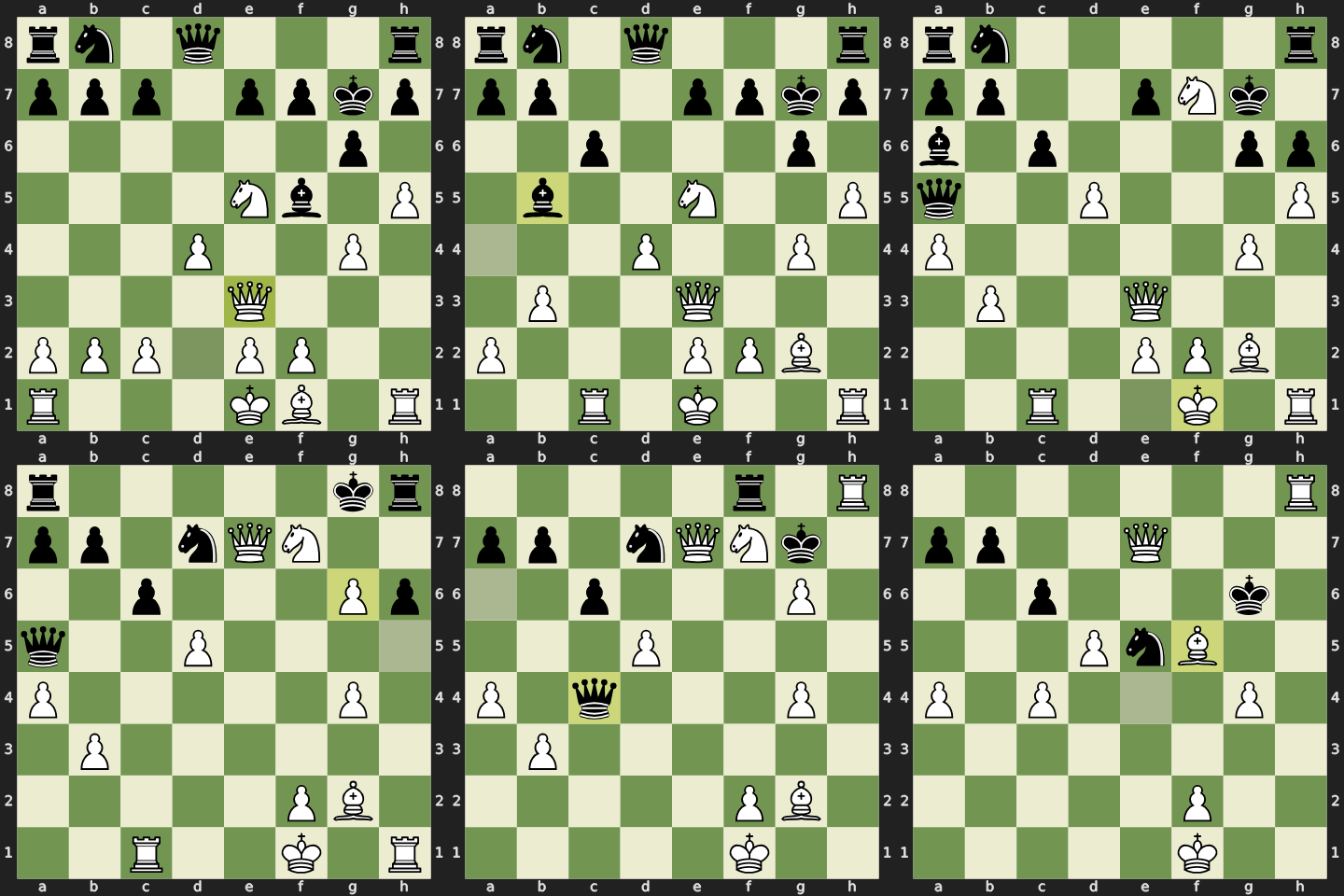
The most interesting part is what the engine found back at move 13. From that peak, best play leads to a forced checkmate by around move 30. Instead of recapturing the bishop on c2, White simply storms the kingside, and the whole thing is built around a brilliant knight sacrifice on f7. The king even walks to f1 rather than castling, because the attack down the open h-file is that strong. Beautiful stuff to look at, even if I never got the chance to play it.
Reflections
What went well:
- Recognising the King’s Indian style setup and getting to play the Bh6 and Qd2 plan from the white side. Trading off the fianchettoed bishop left Black’s king on a field of weak dark squares.
- The king march in the endgame. Sending my king across to the kingside while Black’s king was tied to defending the a and b pawns, then swinging back to win the f5 pawn, was the idea that opened the floodgates to a three-pawn advantage.
- Grinding the technical win. This one was never flashy, but I converted a rook endgame cleanly enough once I got the extra pawns rolling.
What to work on:
- Converting a big advantage more directly. I was winning at move 13 and then let it slip back towards level with 18. e3 and 22. Be6. A cleaner finish would have saved a lot of grinding.
- Not tying my own pieces down. 31. Rh3 blocked the pawn but left the rook passive, when Bg2 kept it active on the diagonal.
- Endgame precision. 34. Bxf5 could have thrown away the win entirely. Activating the king first and pushing the queenside pawns was the safer route to keeping the advantage.
Full PGN:
1. d4 Nf6 2. Nf3 g6 3. Nc3 d5 4. Bf4 Bg7 5. Qd2 O-O 6. Bh6 Bg4 7. h4 Ne4 8. Nxe4
dxe4 9. Ne5 Bf5 10. Bxg7 Kxg7 11. h5 Rh8 12. g4 e3 13. Qxe3 Bxc2 14. hxg6 Bxg6
15. Qh6+ Kg8 16. Nxg6 fxg6 17. O-O-O Qf8 18. e3 Qxh6 19. Rxh6 Nc6 20. Bc4+ Kg7
21. g5 e5 22. Be6 exd4 23. exd4 Rad8 24. d5 Ne5 25. f4 Nf7 26. Rh3 c6 27. Rhd3
cxd5 28. Bxd5 h5 29. Bxb7 Rxd3 30. Rxd3 h4 31. Rh3 Nd6 32. Ba6 Kf7 33. Bd3 Nf5
34. Bxf5 gxf5 35. Kd2 Ke6 36. Kd3 Kd5 37. b4 Kc6 38. Kd4 Kd6 39. a4 Kc6 40. Ke5
a6 41. Kxf5 Kd5 42. g6 Rf8+ 43. Kg5 Ke6 44. Rxh4 Rf5+ 45. Kh6 Rf6 46. Kh7 1-0