Win vs remoraid (576)
| Opening: Philidor Defense, Exchange Variation (C41) | Result: 1-0 (Checkmate) | Time Control: 5 min Blitz | Rated |
Game Overview
I was feeling a little rusty and dropped the first few blitz games to blunders and timeouts, but this one was the highlight of the session. It was a very high accuracy game for me and it finished with a quick checkmate. Black blundered a piece early, then castled straight into a queen and bishop battery aimed at h7. I peeled away the defender, opened the diagonal, and the queen crashed through for mate on move 17.
The Opening (Moves 1-8)
1. e4 e5 2. Nf3 d6 3. d4 exd4 4. Nxd4
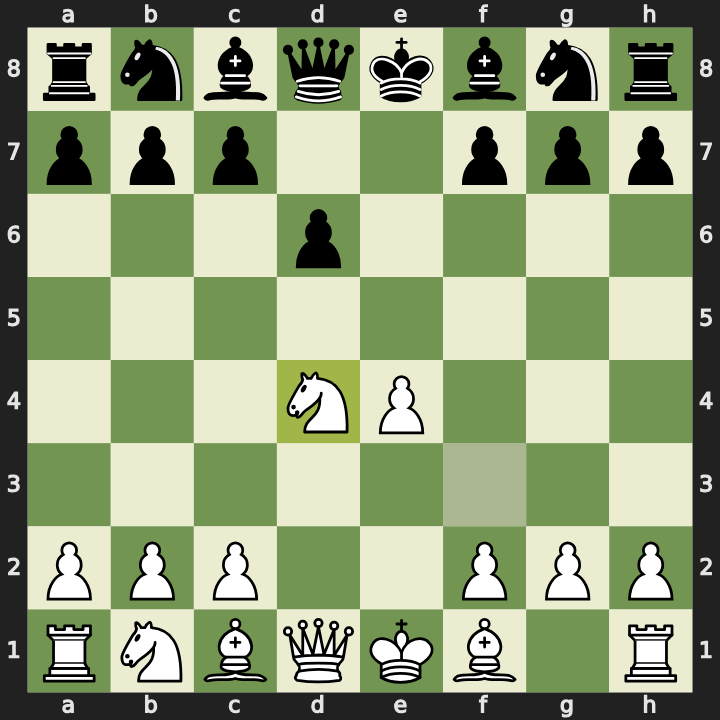
I was going for the Scotch-style d4 break I’ve been practising. Black met me with 2…d6, which makes it a Philidor. A true Scotch needs 2…Nc6, but I still got the open central position I wanted. After 3. d4 exd4 I took back with the knight and had a comfortable, open game to develop into.
4…Bd7 5. Bd3 Nc6 6. Nf3 Bg4 7. O-O Nf6 8. h3
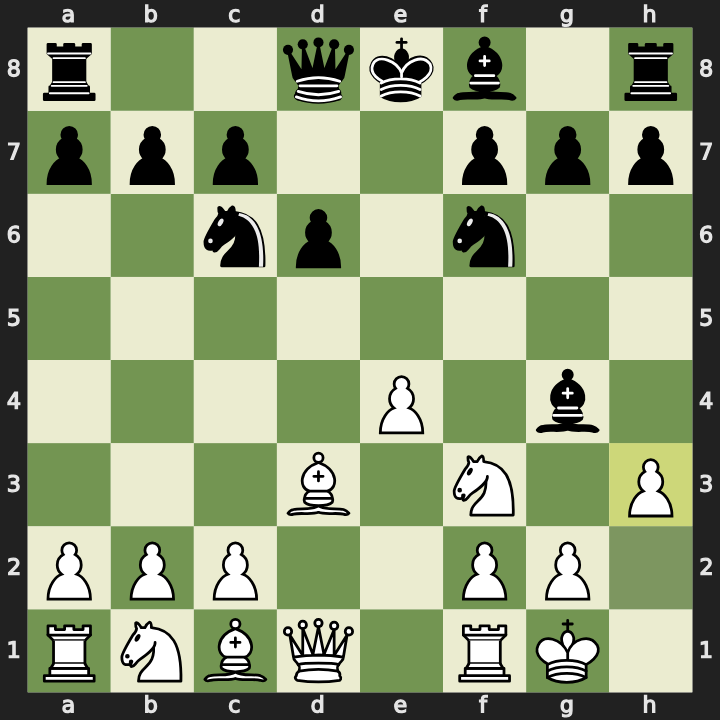
I was happy with how the pieces came out. The bishop went to d3, already sitting on the b1-h7 diagonal, I got my king castled, and I had a nice strong pawn on e4. Then I played h3 to take g4 away from Black: it put the question to the bishop that had come to g4 and denied that square to the knight on f6 at the same time.
Winning a Piece (Moves 8-11)
8…Bxf3 9. Qxf3 Nd4 10. Qe3 Nxc2
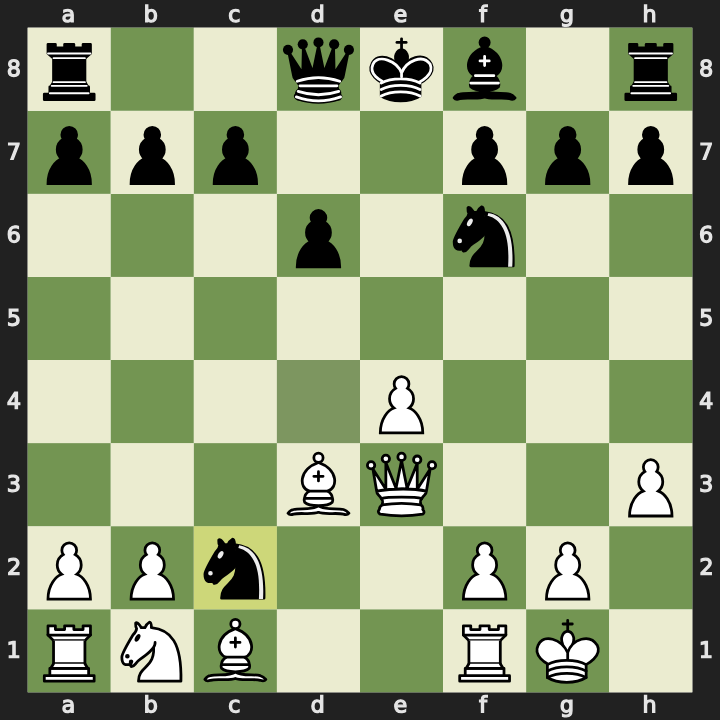
Black traded the bishop for my knight, dropped the other knight into d4, and then grabbed the pawn on c2. At first glance 10…Nxc2 looks appealing because it forks my queen on e3 and my rook on a1. The catch is that the knight is hanging: my bishop on d3 covers c2.
11. Bxc2
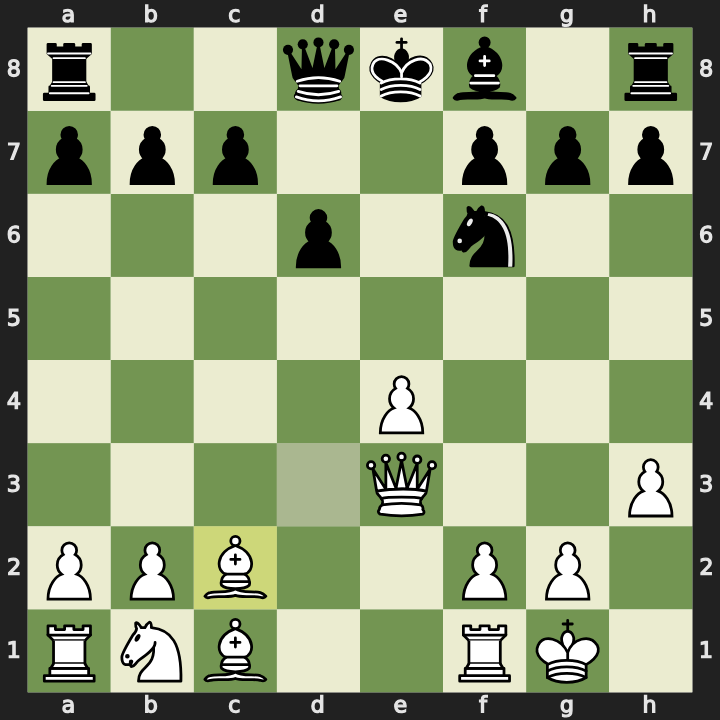
I took the knight and came out a piece up. As a bonus, the bishop landed on c2, right back on the b1-h7 diagonal and pointing straight at where Black’s king was about to sit.
Setting Up the Battery (Moves 11-15)
11…Be7 12. Nc3 O-O 13. Qd3
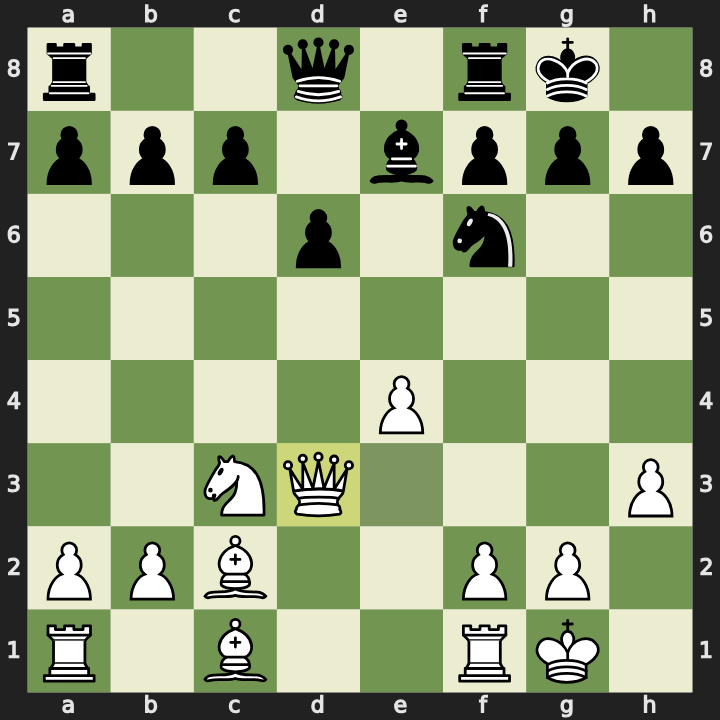
Two moves later Black castled, and I could already see the tactic. The bishop on c2 was eyeing the h7 pawn in front of the king. My queen was on the third rank, so it was a short hop to Qd3, dropping in front of the bishop to form the battery aimed at that weak h7 square. Before it could land, though, I had to deal with the knight on f6, which was guarding h7.
13…c6 14. Bg5
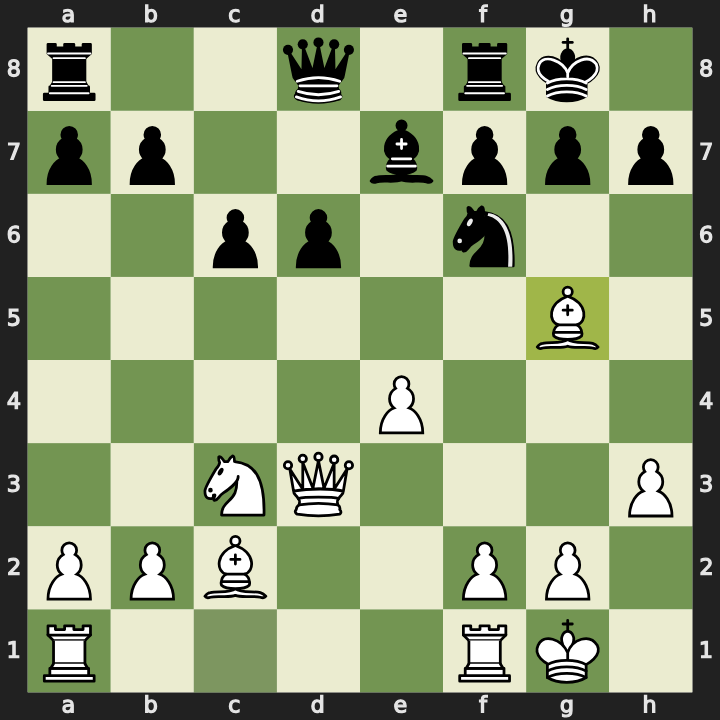
Bg5 went after the knight on f6, the piece holding h7 together.
14…h6 15. Bxf6 Bxf6
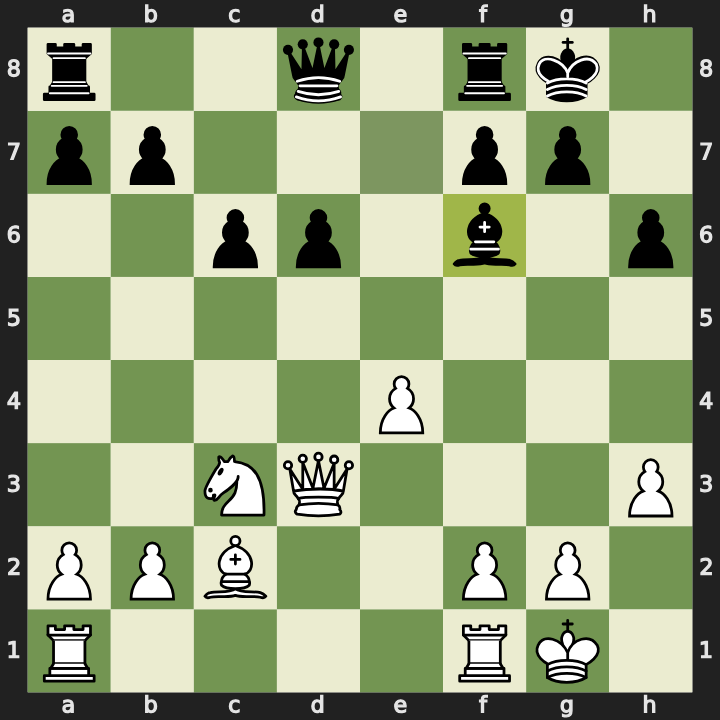
Black played h6 to kick the bishop, but I had no intention of keeping it. It was there purely to take the knight, so 15. Bxf6 removed the guard and Black recaptured with the bishop.
The Breakthrough (Moves 16-17)
16. e5
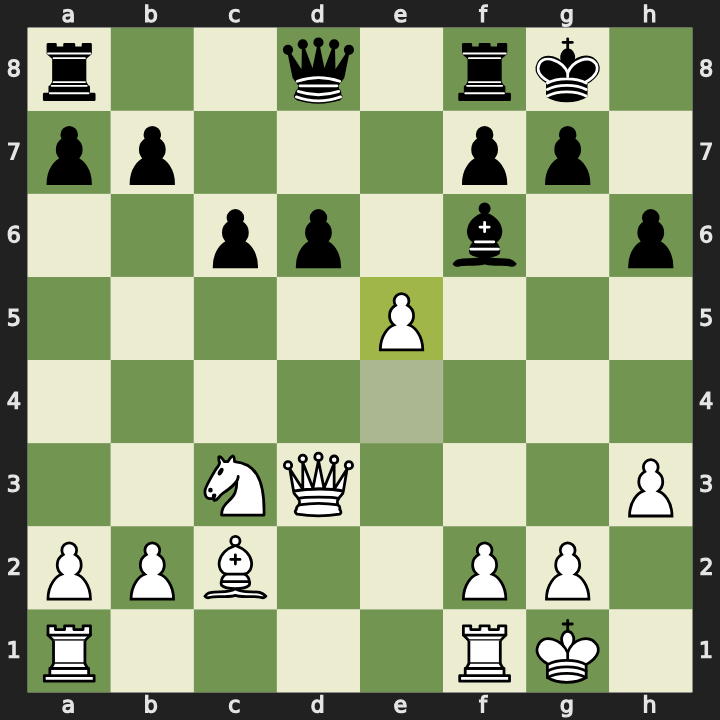
e5 cleared the way for the battery. On the surface it attacks the bishop on f6, but the real point is that it shifts the e4 pawn off the diagonal, opening the road for the queen to reach h7 with mate. To stay in the game Black has to give up the bishop.
16…dxe5 17. Qh7#
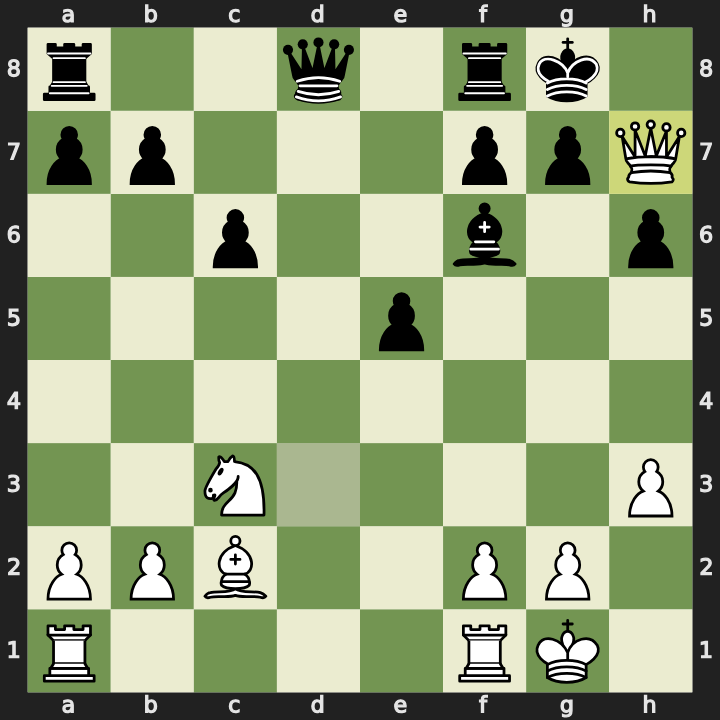
Black saved the bishop with 16…dxe5 and missed the threat entirely. 17. Qh7# finished it. The queen sits next to the king, defended by the bishop on c2, and there is no square to run to.
Engine Review
This was 95.6% accuracy for me, which I believe is a personal best, against 69.7% for Black. The game rating came out at 1350 for me versus 750 for my opponent. I had no misses and no blunders. Black had two mistakes and one blunder.
The blunder was 10…Nxc2, which dropped the knight. Beyond that, the game really turned on Black’s failure to defend against the attack, and the engine flags two moments.
The first was 14…h6. The engine prefers 14…g6, which makes sense: it blunts the whole attack coming in on the light squares from the queen and bishop. If Black had played g6, I would have had to change my plan and go after the dark squares instead.
The second was 16…dxe5. Here the engine gives only two moves that avoid an immediate mate in one. One is 16…g6 again, blocking the diagonal, which gives up the bishop and leaves me up two pieces with an overwhelming position. The other is 16…Re8, when after 17. Qh7+ the king can escape to f8 and the pawn takes the bishop on f6. That again leaves me up two pieces with the queen infiltrating on the seventh rank and a winning position. From there it would have been a matter of centralising the rooks and trading down the remaining pieces.
Reflections
What went well:
- This one was all about seeing the shape of the attack several moves ahead: the queen and bishop battery, eliminating the defender on f6, pushing the pawn to open the diagonal, and going for it. I don’t think there’s anything I’d play differently in this game.
- The accuracy. A clean game with no misses or blunders, and a personal best number to go with it.
What to work on:
- Warming up faster. I dropped the first few games of the session to blunders and timeouts before I found my rhythm, so I’d like to be this sharp from the first game rather than needing a few to shake off the rust.
Full PGN:
1. e4 e5 2. Nf3 d6 3. d4 exd4 4. Nxd4 Bd7 5. Bd3 Nc6 6. Nf3 Bg4 7. O-O Nf6 8. h3
Bxf3 9. Qxf3 Nd4 10. Qe3 Nxc2 11. Bxc2 Be7 12. Nc3 O-O 13. Qd3 c6 14. Bg5 h6 15.
Bxf6 Bxf6 16. e5 dxe5 17. Qh7# 1-0