Draw vs ironicman12345 (753)
| Opening: Scandinavian Defense (B01) | Result: 1/2-1/2 (Stalemate) | Time Control: 10 min Rapid | Rated |
Game Overview
An objectively terrible game from me. I blundered my queen from a winning position, which should have been the end of the story. But I kept playing on the clock to try and force my opponent into a mistake, and from a completely lost position I managed to secure a draw. There were some fun counter blunders from my opponent on the way to the finish. So I’m sharing it because scrambling half a point out of a lost game felt like a small victory, even if the chess was dreadful.
A Gift Against the Scandinavian (Moves 1-12)
1. e4 d5 2. exd5 Qxd5 3. Nc3 Qd8 4. Nf3 Nf6 5. d4 e6 6. Bf4 Nh5 7. Qd2 Nxf4 8. Qxf4 c6 9. O-O-O Bd6 10. Qg4 O-O 11. Bd3 Nd7
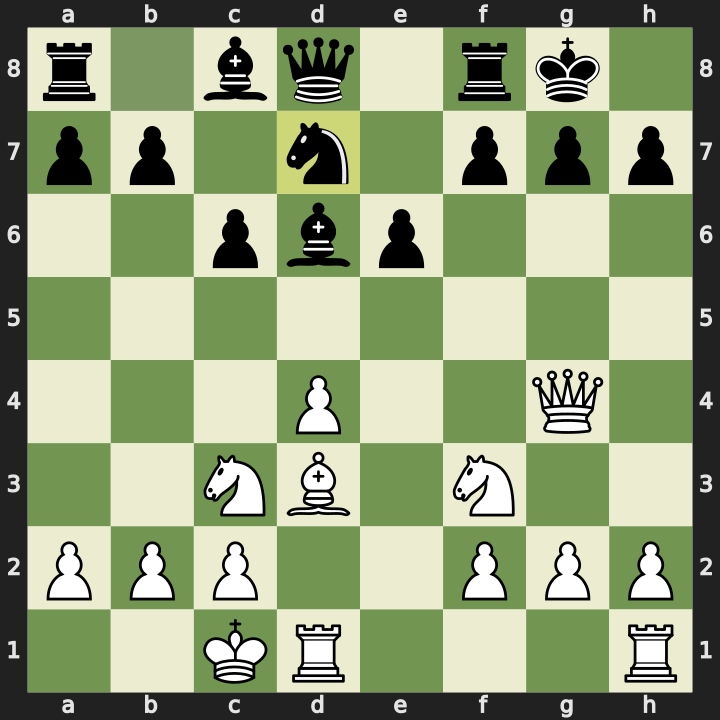
Black met my 1. e4 with the Scandinavian, and after the early queen came back to d8 I developed naturally and castled queenside. By move 11 I’d set up a really nice attack. The classic gift sacrifice was ready to go: my bishop was on d3, my knight was on f3, and my queen happened to already be sitting on g4. Everything was trained on h7. Black’s kingside knight had already been traded off earlier, so with no knight on f6 to guard h7 and Black having just developed with 11…Nd7, the gift was ready to go.
12. Bxh7+ Kxh7 13. Ng5+ Kg8
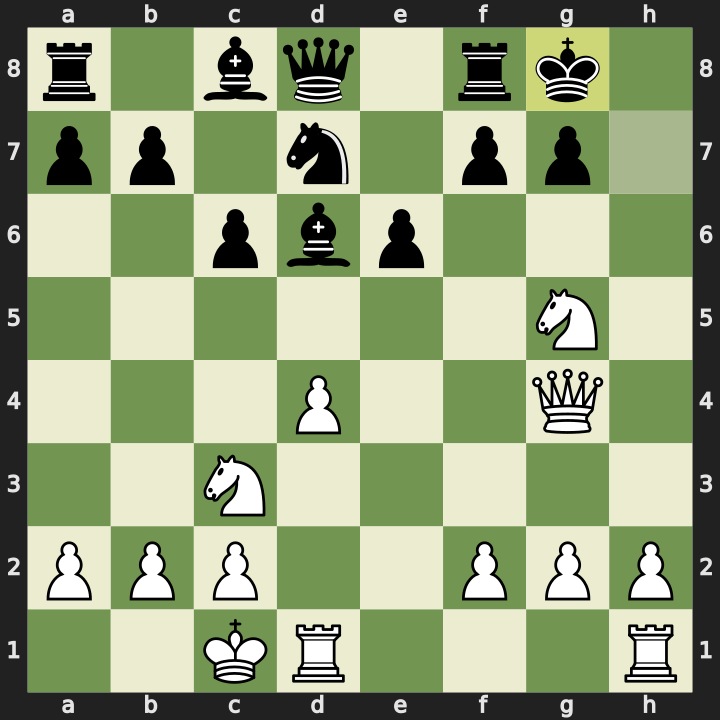
So I played 12. Bxh7+, and chess.com gave it the brilliant award. It’s a sound sacrifice with a concrete follow-up. Black took with 12…Kxh7, I checked with 13. Ng5+, and the king went back to 13…Kg8 to hide. All I had to do now was bring my queen into h7 to keep harassing the king.
The Wrong Square (Moves 14-15)
14. Qh5 Nf6 15. Nce4
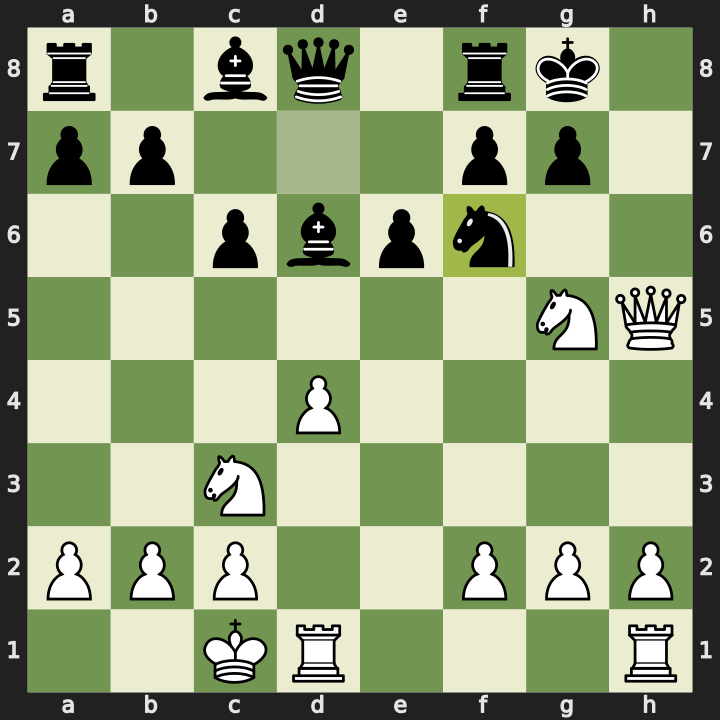
The correct move was 14. Qh4, threatening mate in one with Qh7#. Instead I played 14. Qh5, which invites 14…Nf6. That knight does two jobs: it defends h7 and it attacks my queen. I think I was too focused on the attack, because I answered with 15. Nce4, hitting the knight on f6 and completely leaving my queen hanging.
15…Nxh5
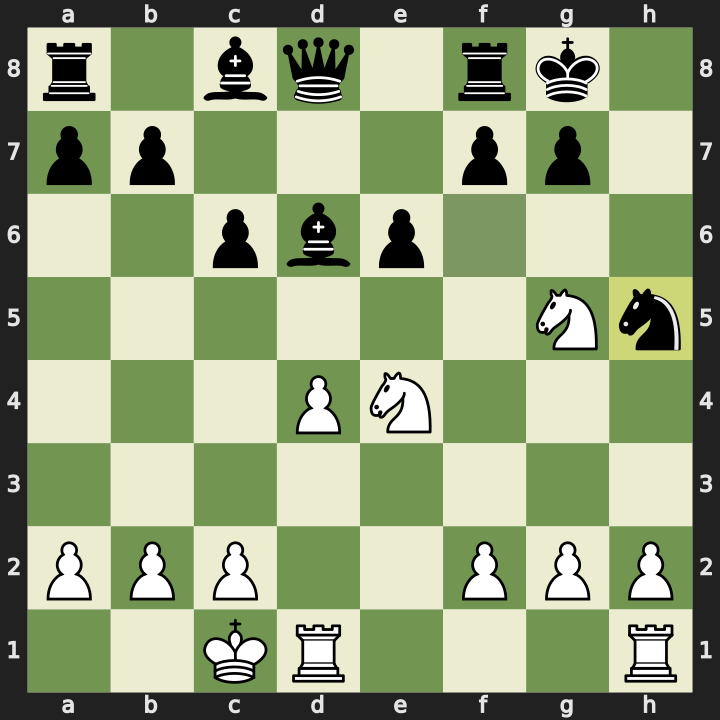
Black just took the queen with 15…Nxh5. From this point on it was Black’s game to win. All they had to do was trade pieces and convert, and I’d already thrown a bishop into the bargain on move 12.
Playing On (Moves 16-30)
16. Rd3 Nf4 17. Rg3 Ne2+ 18. Kb1 Nxg3 19. hxg3 f6 20. Nh7 Re8 21. Nhxf6+ Kf7 22. Nh7 Rh8 23. Neg5+ Ke7
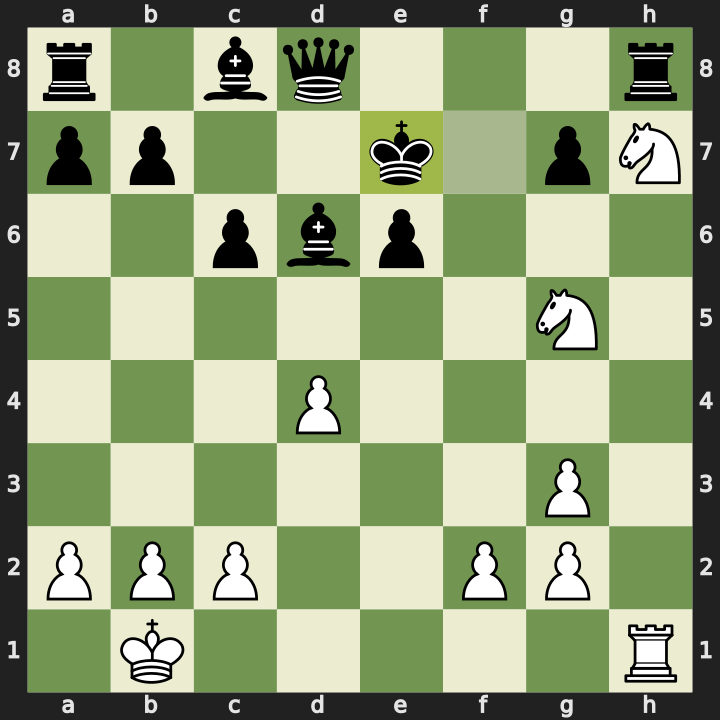
Down a queen and a bishop, the sensible thing would have been to resign. But I decided to play on and make Black earn it. My two knights dug into h7 and g5 and kept nagging the black king, which had to walk out to e7. None of it was sound, but every check was a chance for my opponent to slip.
24. a3 Bd7 25. f4 Qe8 26. f5 exf5 27. Re1+ Kd8 28. Rxe8+ Rxe8
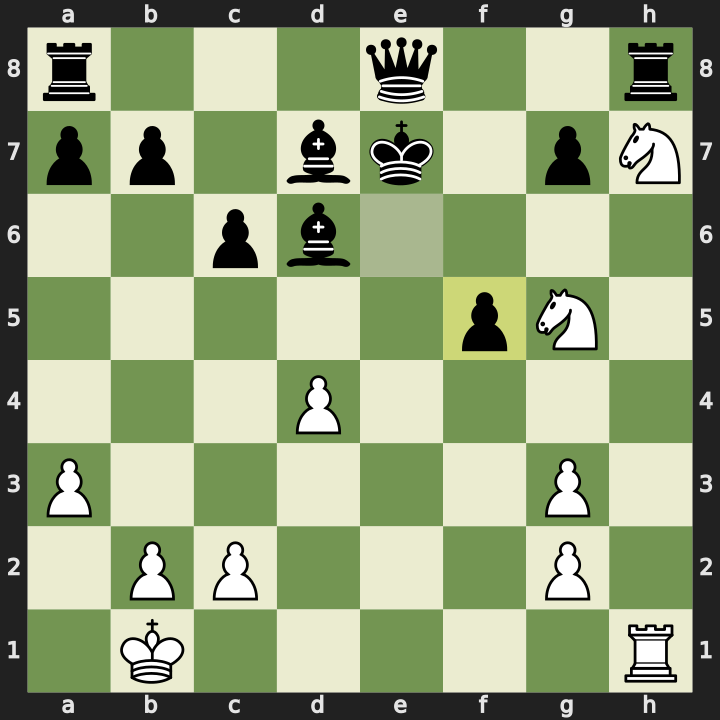
Then I got a bit of material back. When Black’s queen sat on e8 behind the king, I opened the e-file with 26. f5 exf5 and played 27. Re1+. The king had to step aside with 27…Kd8, and 28. Rxe8+ Rxe8 let me exchange my rook for the queen. Still losing, but the gap was smaller, and now I could keep playing fast and pushing the clock.
The Endgame Swindle (Moves 30-72)
29. Nf7+ Ke7 30. Nfg5 Bxg3 31. Nf3 Rh8 32. Nhg5 Rh1+ 33. Ka2 Be6+ 34. b3 Bf4 35. Nh3 Bc7 36. Nf2 Rf1 37. Nd3 Rd1 38. Nfe5 Bxe5 39. dxe5 g5 40. Nc5 Rb8 41. Kb2 f4 42. Kc3 g4 43. Nd3 f3 44. g3 Rd2 45. Kxd2 Rd8 46. Ke3 Rf8 47. c4 f2 48. Nxf2 Rxf2 49. Kxf2
The game gradually simplified. Pieces came off, pawns got traded, and I kept moving quickly so my opponent’s clock was always ticking down. By move 49 the queens and rooks were gone and we were into a pure endgame.
49…Kf7 50. Ke3 Kg6 51. Kf4 b5 52. cxb5 cxb5 53. a4 bxa4 54. bxa4 a5 55. Ke4 Bb3 56. Kf4 Bxa4 57. Kxg4 Kf7
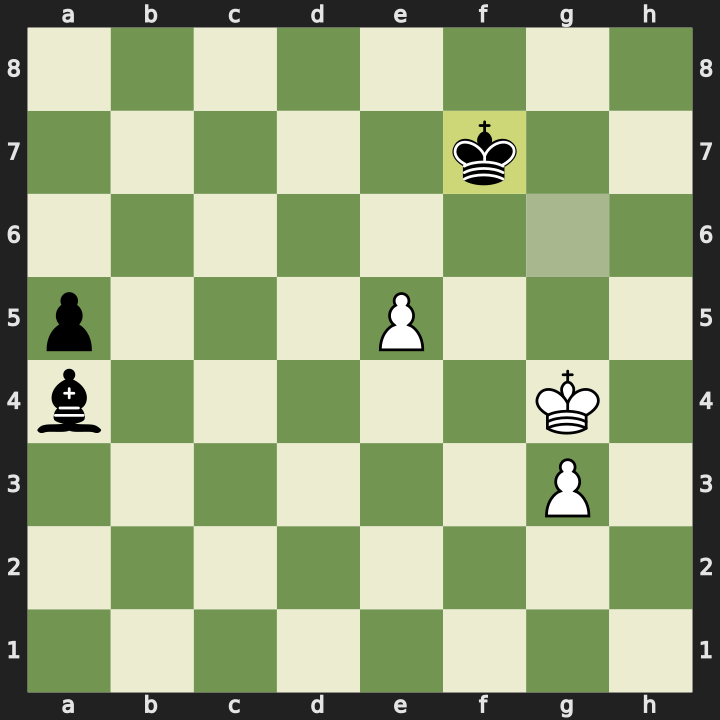
By the end it was down to a king, a pawn and a single bishop against my king and pawn. This is where the counter blunders came in. Black was still winning, but with seconds on the clock the technique started to wobble, and I had one saving trick on my side of the board.
58. Kf5 Bd7+ 59. Ke4 a4 60. Kd3 a3 61. Kc2 a2 62. Kb2 Be6 63. Ka1
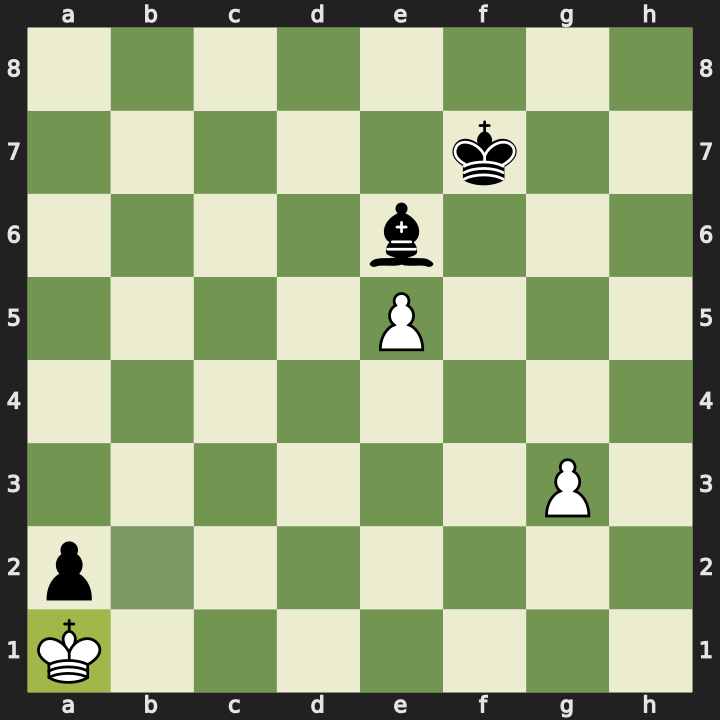
Here’s the saving grace. Black’s pawn is an a-pawn, and the square it promotes on, a1, is a dark square. Black’s bishop is a light-squared bishop, so it can never control a1 or help force my king out of the corner. I parked my king on a1 and there was simply no way through.
63…Kg6 64. Kb2 Kf5 65. Ka1 Kxe5 66. Kb2 Kf5 67. g4+ Kxg4 68. Ka1 Kf5 69. Kb2 Ke4 70. Ka1 Kd3 71. Kb2 Bc4 72. Ka1 Kc3
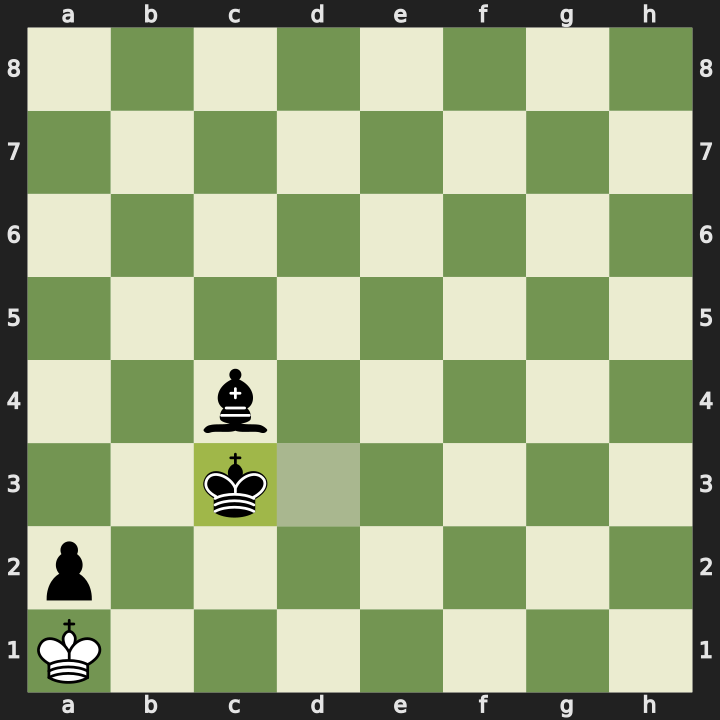
Black shuffled around trying to make progress and even grabbed my last pawns, but the corner held. On move 72 the black king stepped to c3, and my king on a1 had no legal move and wasn’t in check. Stalemate, and half a point rescued.
Engine Review
12. Bxh7+ was the real deal. The engine has it as the best move in the position, so the brilliant award was earned. The sacrifice is sound as long as the follow-up is accurate.
14. Qh5 was the mistake. The move was 14. Qh4, which threatens 15. Qh7# with the knight on g5 covering f7 so the king can’t run. On h4 the queen also can’t be hit by the f6 knight. On h5 it can, which is exactly what happened.
15. Nce4 was the blunder that lost the queen. After 14…Nf6 the knight defended h7 and attacked h5, so the queen had to move. Instead 15. Nce4 ignored the threat and 15…Nxh5 just took it. From here the engine has Black winning by a lot.
28. Rxe8+ clawed some back. Winning the queen for a rook left me still losing, but it shrank the deficit and kept practical chances alive under the time pressure I was creating.
The draw was a wrong-colour bishop. In the final phase Black had a bishop and an a-pawn. Because the a-pawn promotes on a1, a dark square, and the bishop only travels on light squares, it can never control the promotion square. My king reaches a1 and cannot be evicted. This is a known theoretical draw, and it’s the whole reason I survived. Black’s technique also slipped along the way: 57…Kf7 let the win slip toward equal, I gave it straight back with 58. Kf5, and 58…Bd7+ returned the favour before the position settled into the dead-drawn fortress.
Reflections
A game I had no business drawing, saved by one lucky structural feature and a refusal to give up.
What went well:
- The attacking setup against the Scandinavian was genuinely good, and the Bxh7 sacrifice was correct.
- Refusing to resign a lost position and playing quickly to put my opponent under clock pressure.
- Recognising that the a-pawn plus wrong-coloured bishop couldn’t win, and getting my king to the a1 corner to hold.
What to work on:
- The follow-up to the sacrifice. 14. Qh4 was mate in one territory, 14. Qh5 threw the whole attack away. When I’ve committed material to an attack I need to slow down and check that my queen is actually safe on the square I’m putting it on.
- Not getting so target-fixated. 15. Nce4 chased a knight while my queen hung. Always check my own pieces are safe before grabbing at the opponent’s.
Full PGN:
1. e4 d5 2. exd5 Qxd5 3. Nc3 Qd8 4. Nf3 Nf6 5. d4 e6 6. Bf4 Nh5 7. Qd2 Nxf4 8.
Qxf4 c6 9. O-O-O Bd6 10. Qg4 O-O 11. Bd3 Nd7 12. Bxh7+ Kxh7 13. Ng5+ Kg8 14. Qh5
Nf6 15. Nce4 Nxh5 16. Rd3 Nf4 17. Rg3 Ne2+ 18. Kb1 Nxg3 19. hxg3 f6 20. Nh7 Re8
21. Nhxf6+ Kf7 22. Nh7 Rh8 23. Neg5+ Ke7 24. a3 Bd7 25. f4 Qe8 26. f5 exf5 27.
Re1+ Kd8 28. Rxe8+ Rxe8 29. Nf7+ Ke7 30. Nfg5 Bxg3 31. Nf3 Rh8 32. Nhg5 Rh1+ 33.
Ka2 Be6+ 34. b3 Bf4 35. Nh3 Bc7 36. Nf2 Rf1 37. Nd3 Rd1 38. Nfe5 Bxe5 39. dxe5
g5 40. Nc5 Rb8 41. Kb2 f4 42. Kc3 g4 43. Nd3 f3 44. g3 Rd2 45. Kxd2 Rd8 46. Ke3
Rf8 47. c4 f2 48. Nxf2 Rxf2 49. Kxf2 Kf7 50. Ke3 Kg6 51. Kf4 b5 52. cxb5 cxb5
53. a4 bxa4 54. bxa4 a5 55. Ke4 Bb3 56. Kf4 Bxa4 57. Kxg4 Kf7 58. Kf5 Bd7+ 59.
Ke4 a4 60. Kd3 a3 61. Kc2 a2 62. Kb2 Be6 63. Ka1 Kg6 64. Kb2 Kf5 65. Ka1 Kxe5
66. Kb2 Kf5 67. g4+ Kxg4 68. Ka1 Kf5 69. Kb2 Ke4 70. Ka1 Kd3 71. Kb2 Bc4 72. Ka1
Kc3 1/2-1/2