Win vs maheeena (744)
| Opening: Pirc Defense (B07) | Result: 0-1 (Resignation) | Time Control: 10 min Rapid | Rated |
Game Overview
I’m back to my old tricks here with a Pirc Defense, and this was a fun one. I got the closed centre position that I really enjoy playing for the attack, won my opponent’s queen, and they resigned before move 20. Very satisfying, and a great way to get back into some chess after a busy week at work. I’d been feeling stressed out and not in the mood for playing, so I lost my chess.com streak and I’m starting back at one again after playing every day for about six months. Never mind, it’s enjoying the games that matters. Objectively White was slightly better for a good stretch of this game, which is pretty typical of the Pirc, but the fun of it is getting to attack even while playing the black pieces.
The Locked Centre (Moves 1-8)
1. e4 d6 2. Nf3 Nf6 3. Nc3 g6 4. Bc4 Bg7 5. O-O O-O 6. Re1 e5 7. d4 Nc6 8. d5 Ne7
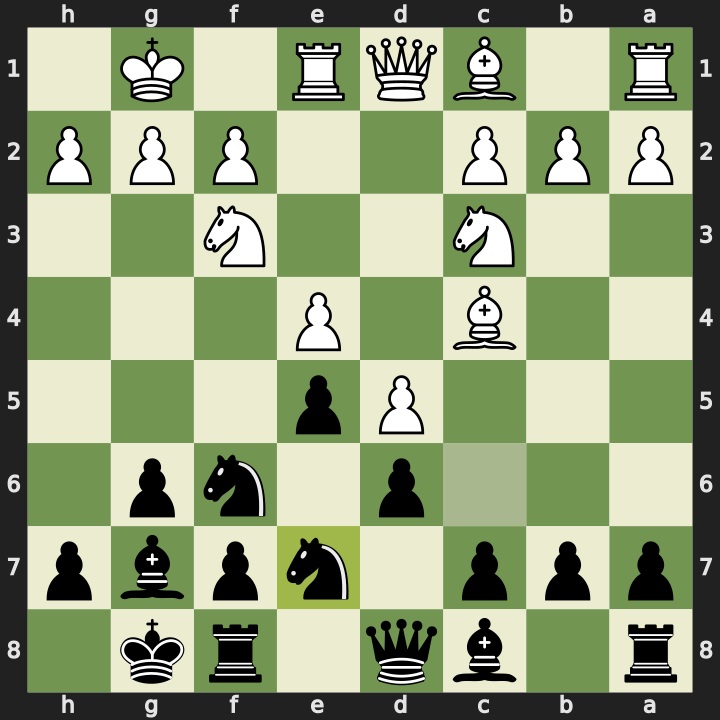
Pretty standard Pirc opening, and I got the locked centre I was after, with White pawns on e4 and d5 and my pawns on e5 and d6. I like this because it blocks out White’s light-squared bishop, which would otherwise be pointing at my king, and it gives my knight a chance to shine, jumping around the centre and navigating the closed position. The goal here is to go for an f5 pawn break and then throw as much as I can at the castled king.
The f5 Break (Moves 9-10)
9. h3 Nh5 10. Rb1 f5
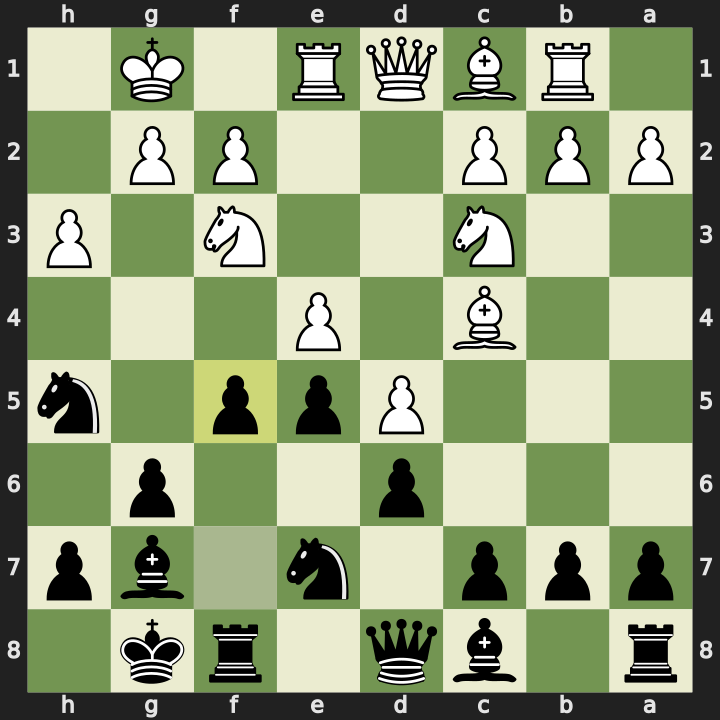
I brought my knight up to h5 and then got the 10…f5 break in. This is the plan in a nutshell: open lines on the kingside and start pointing everything at White’s king.
Trading the Dark-Squared Bishop (Moves 11-12)
11. Bg5 h6 12. Bxe7 Qxe7
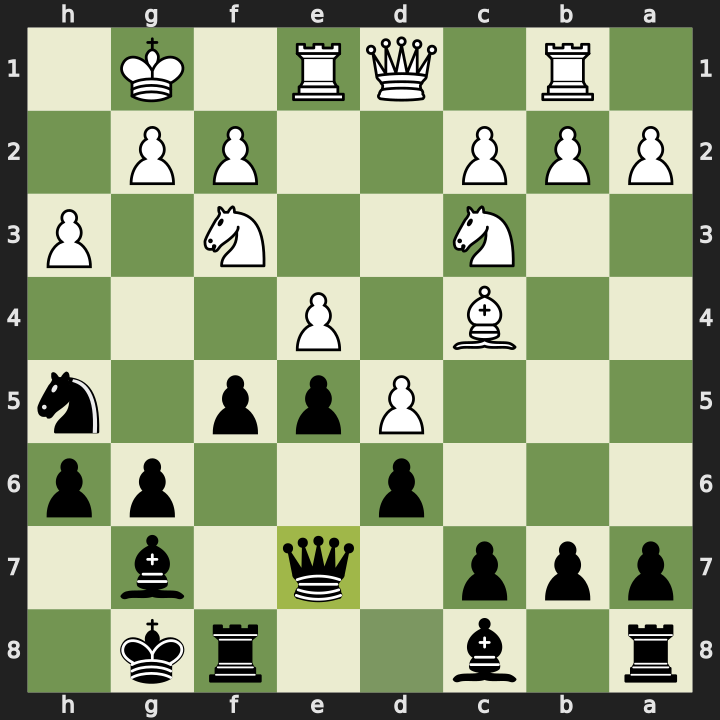
White chose to trade their dark-squared bishop for my knight, which I’m more than happy to allow. That leaves my own dark-squared bishop unopposed on the long diagonal and makes my king that much safer.
The Recapture (Moves 13-15)
13. exf5
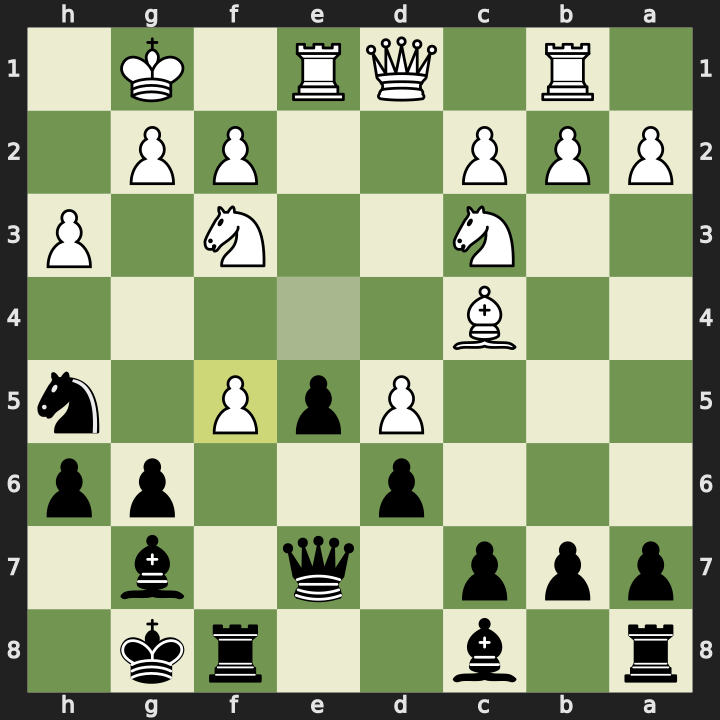
White recaptured on f5, and I took with the rook. In hindsight that was a mistake. Taking with the light-squared bishop in the first place was probably the better move.
13…Rxf5 14. Bd3 Rf8 15. Bxg6
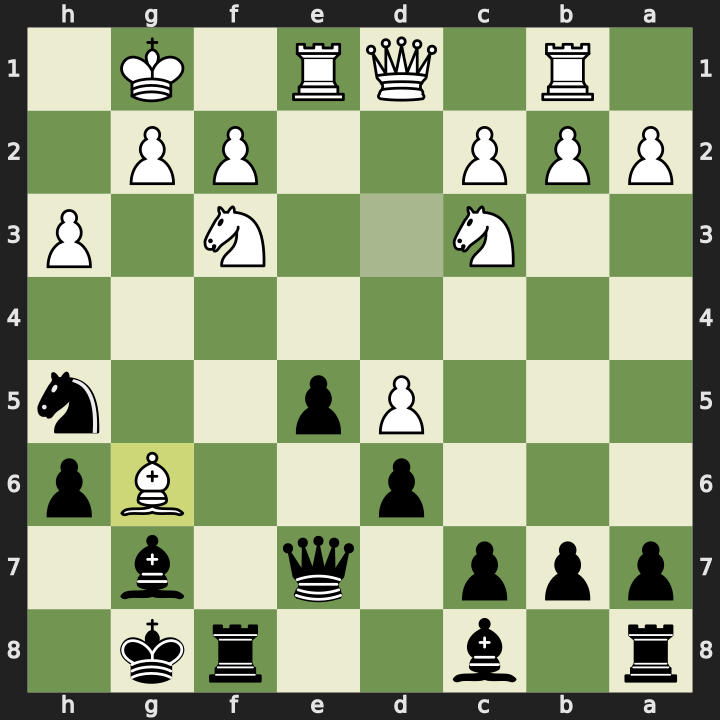
The problem with 13…Rxf5 is that White was able to attack the rook with tempo. When I retreated it, I took it all the way back to the eighth rank, and that left the g6 pawn undefended. 14. Bd3 hit the rook, I dropped it back to 14…Rf8, and 15. Bxg6 picked off the pawn.
The Knight Sacrifice (Moves 15-17)
15…Nf4 16. Nh4 Nxh3+
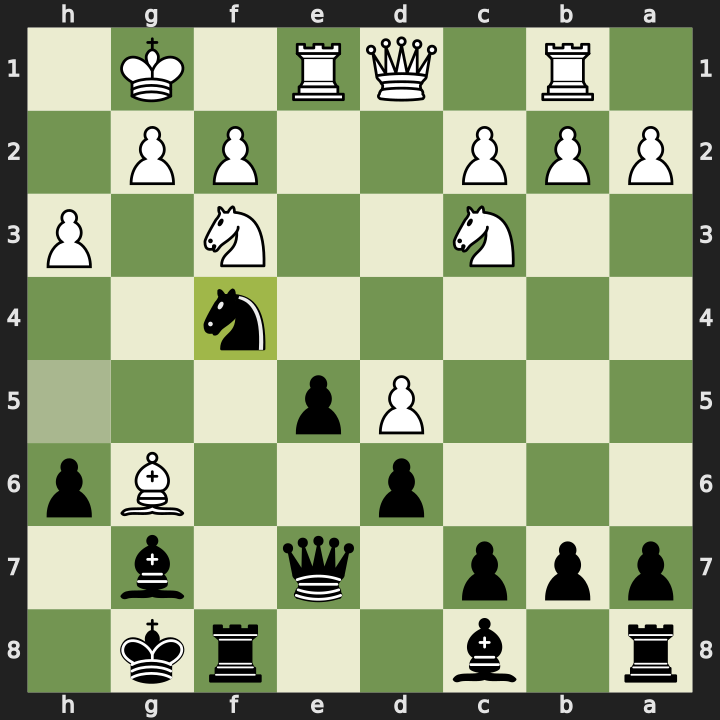
One of my favourite aspects of this style of game is that there’s often a sacrifice on the h3 square, leaving the king exposed when White recaptures with the g-pawn, and this game was no different. First the knight came into 15…Nf4.
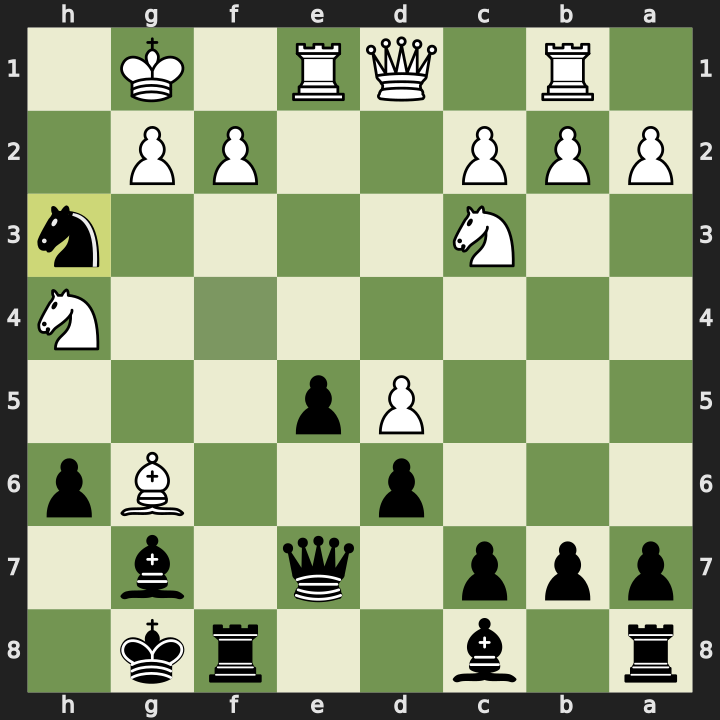
Then I played 16…Nxh3+. If White wants to take my knight, they have to open up their own king.
Opening the King (Moves 17-18)
17. gxh3 Qxh4
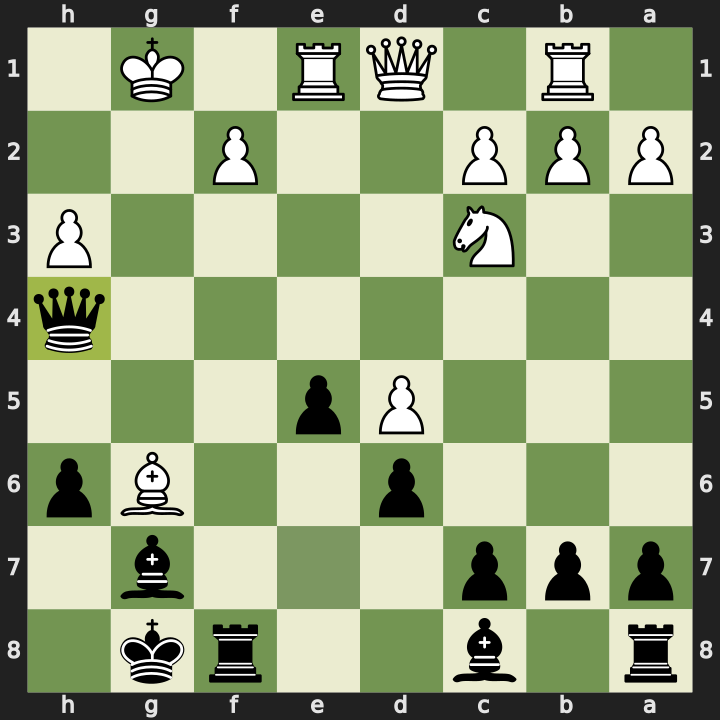
White took, and I grabbed the knight that was sitting underdefended on h4, planning to capture on h3 next move either with the bishop or the queen. I’ve also got my rook pointed at f2, which is only defended by the king, so it’s looking pretty bad for the white king at this point.
18. Re4
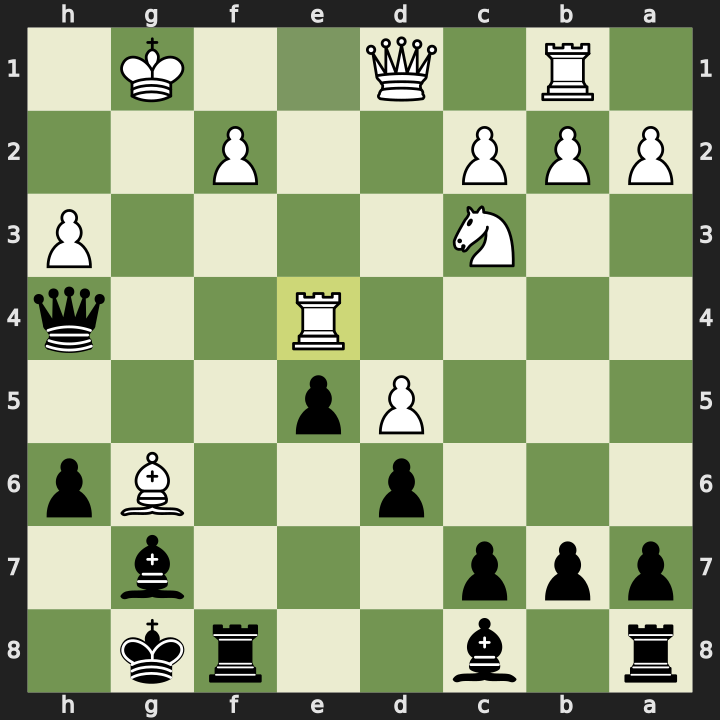
White left the king exposed, choosing to play 18. Re4 instead. I saw there was a free bishop on g6, so I could play 18…Qg5+.
The Finish (Moves 18-19)
18…Qg5+ 19. Qg4 Bxg4
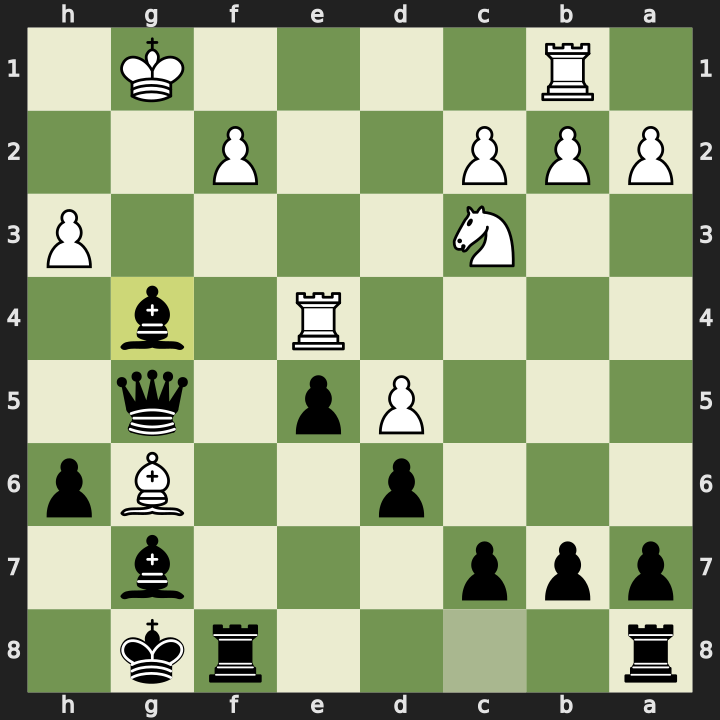
18…Qg5+ checks down the open g-file and hits the loose bishop on g6 at the same time. White tried to do something clever, perhaps hoping for a queen trade, and played 19. Qg4, failing to see that the queen was already guarded by my bishop that had been quietly waiting on c8 for its chance to join the game. 19…Bxg4 won the queen, and White resigned.
There isn’t a quick checkmate that I can see after 20. Rxg4, but Black is up a queen for a knight, and it’s simply a matter of using that material advantage to clean up the rest of the pieces.
Engine Review
Interestingly, White held a slight advantage for a good chunk of this game. Up to about move 15 the engine has White a touch better, in this case up a pawn after grabbing on g6. I think that’s pretty typical in these Pirc games where objectively White has more space, and in this position they were even a pawn ahead. They still need to be able to thwart the attack, though, and that’s what makes it so much fun being able to go on the offensive even with the black pieces.
The engine prefers grabbing the knight on h4 immediately rather than going for the sacrifice and then recapturing the knight next move. My knight sacrifice on h3 was fine, but the immediate 16…Qxh4, followed up with a bishop sacrifice on h3, was even better. After 16…Qxh4 17. Be4 Bxh3 Black goes for that different sacrifice, and if White recaptures with the pawn it’s a blunder leading to mate in seven.
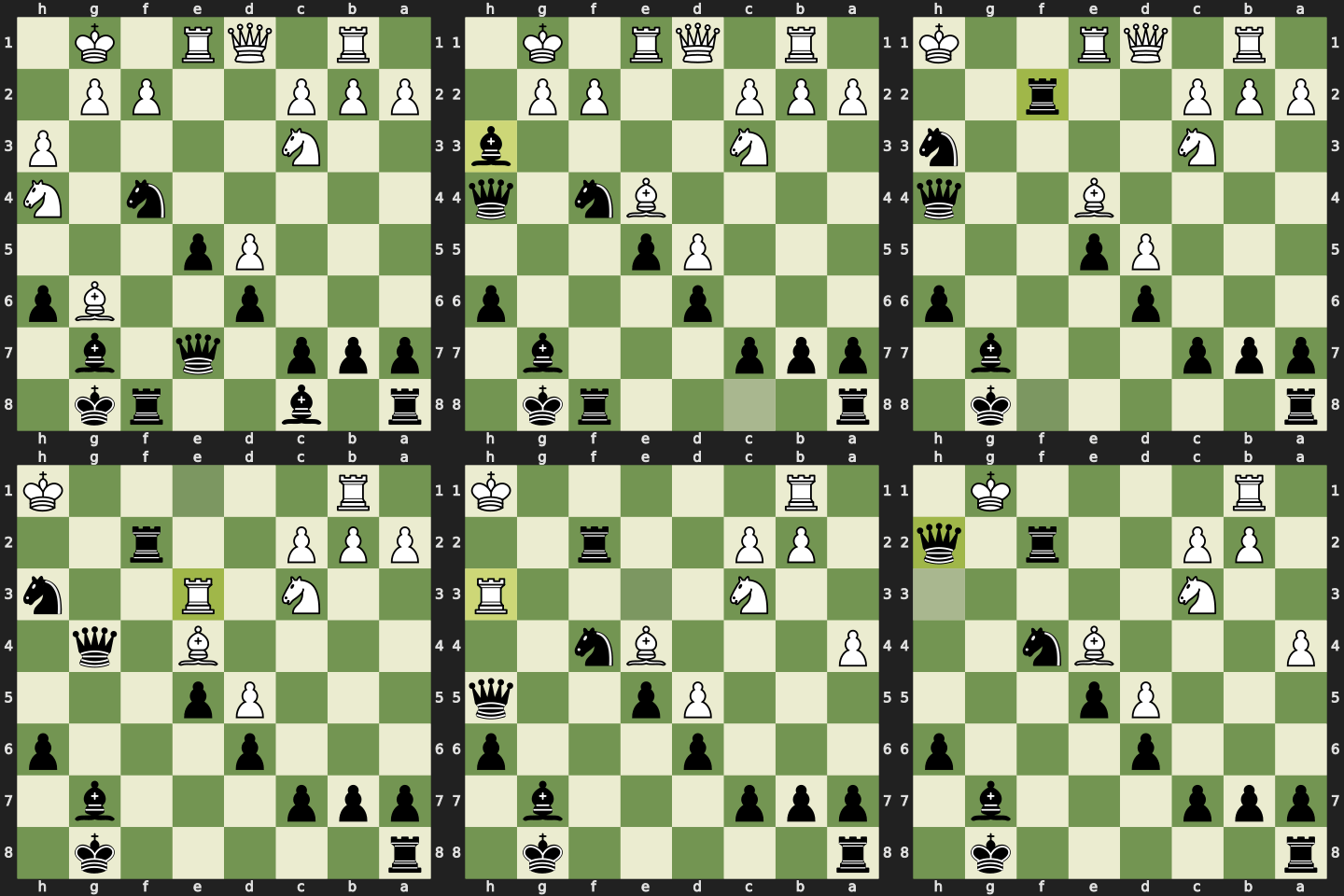
There was also a better line than the way I actually finished. Rather than checking and then winning the bishop, I could have played 18…Qxf2+, which leads to a devastating loss of material for White and eventually checkmate.
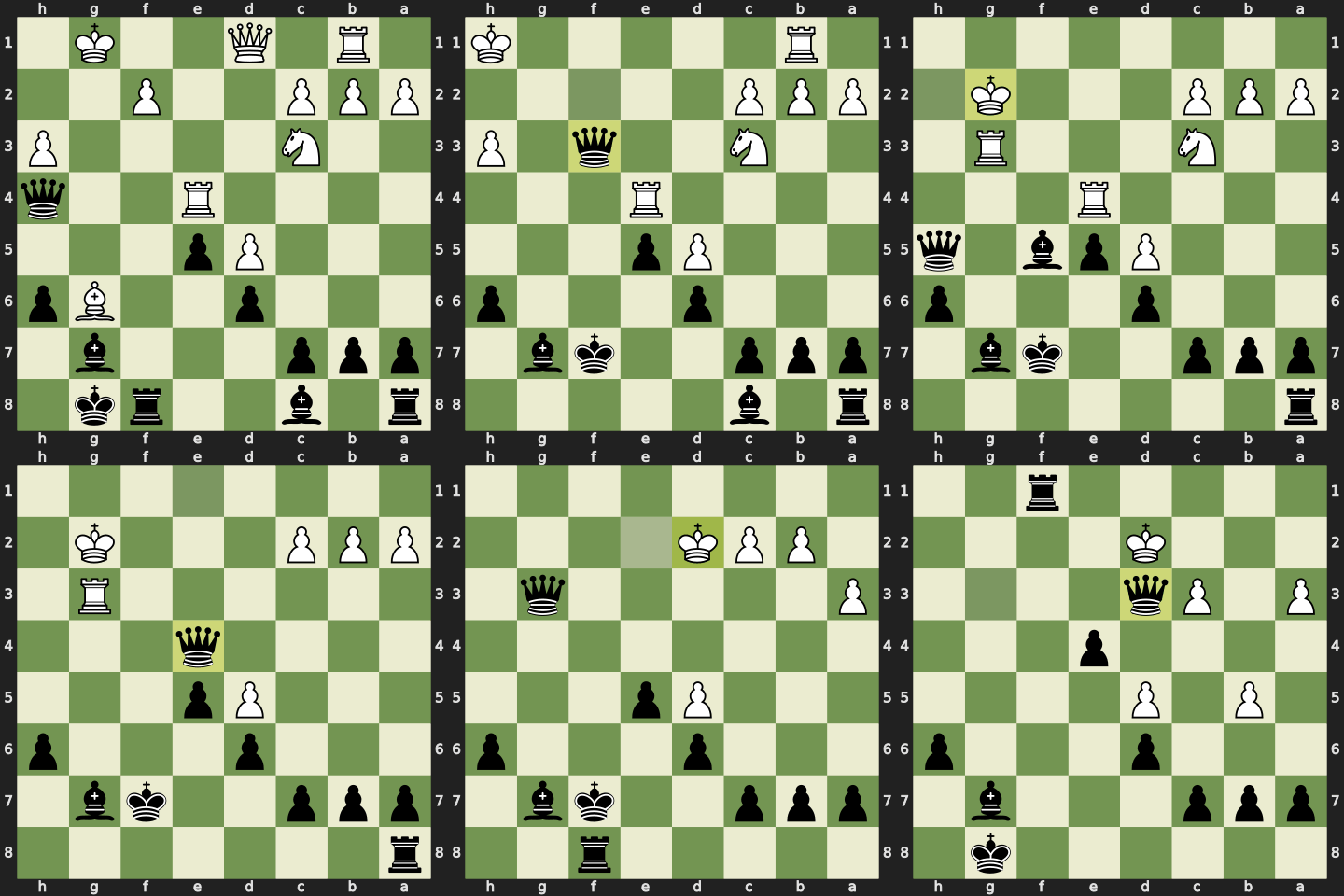
After the finish I played, there’s no forced mate, but the engine still puts Black at more than five points, up a queen for a knight, and it’s just a matter of converting.
Reflections
What went well:
- Getting into the locked centre position I enjoy so much, with the knight free to jump into active squares on the kingside.
- Building the attack and going after the h3 pawn to open up the white king.
- Winning the queen thanks to the c8 bishop that had been sitting quietly the whole game, guarding g4 at exactly the right moment.
What to work on:
- The old saying goes that when you see a good move, look for a better one, and that definitely applied here. My knight sacrifice on h3 was fine, but the immediate 16…Qxh4 and then the bishop sacrifice on h3 was even better, so I’ll be looking out for that in future games. The bishop sacrifice on h3 is very thematic in this style.
- The clean finish was 18…Qxf2+ rather than checking first and winning the bishop. Same idea of hunting for the sharper move.
Full PGN:
1. e4 d6 2. Nf3 Nf6 3. Nc3 g6 4. Bc4 Bg7 5. O-O O-O 6. Re1 e5 7. d4 Nc6 8. d5
Ne7 9. h3 Nh5 10. Rb1 f5 11. Bg5 h6 12. Bxe7 Qxe7 13. exf5 Rxf5 14. Bd3 Rf8 15.
Bxg6 Nf4 16. Nh4 Nxh3+ 17. gxh3 Qxh4 18. Re4 Qg5+ 19. Qg4 Bxg4 0-1