Win vs medo0oman (779)
| Opening: Indian Game: Pawn Push Variation (A45) | Result: 0-1 (Resignation) | Time Control: 10 min Rapid | Rated |
Game Overview
A fun one against an opening I hadn’t seen before. White pushed the pawn to d5 on move two, and it turned into a comfortable King’s Indian structure for me. The strange part is that I misclicked a knight move early on and thought I’d blundered a piece. I played aggressively for the rest of the game, threw in a couple of sacrifices, and after White returned the favour with a blunder of their own, it swung all the way back in my direction.
A King’s Indian in Disguise (Moves 1-7)
1. d4 Nf6 2. d5 d6 3. Nc3 g6 4. Nf3 Bg7 5. e4 O-O 6. Be2 e5 7. O-O
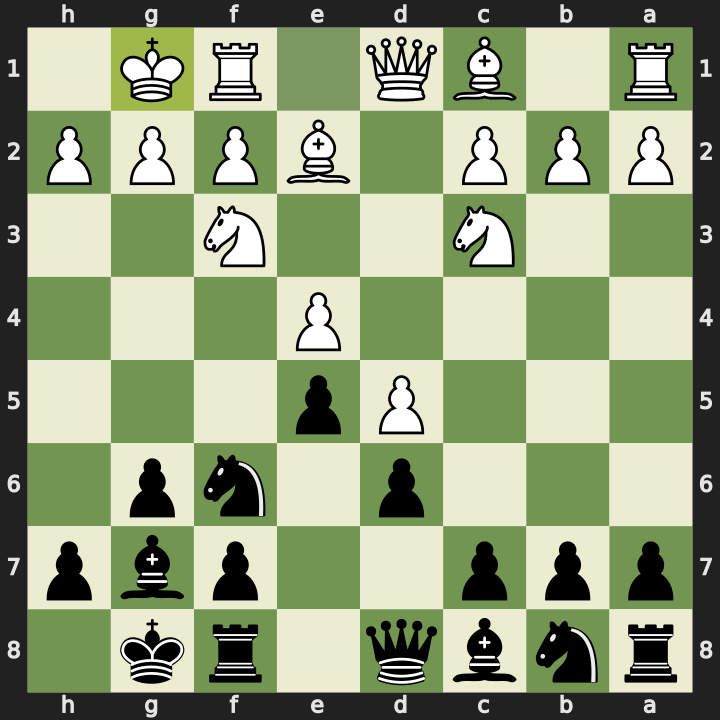
Chess.com called this the Indian Game, Pawn Push Variation, where White pushed the pawn to 2. d5 before I had a chance to meet it with a pawn of my own. That didn’t bother me, because I enjoy King’s Indian setups where I let White advance to d5 and lock the centre. That’s exactly what happened here. The first several moves transposed into a King’s Indian I was happy with.
Manoeuvring and a Misclick (Moves 7-10)
7…Nbd7 8. Bg5 h6 9. Be3 Ng4 10. Bd2
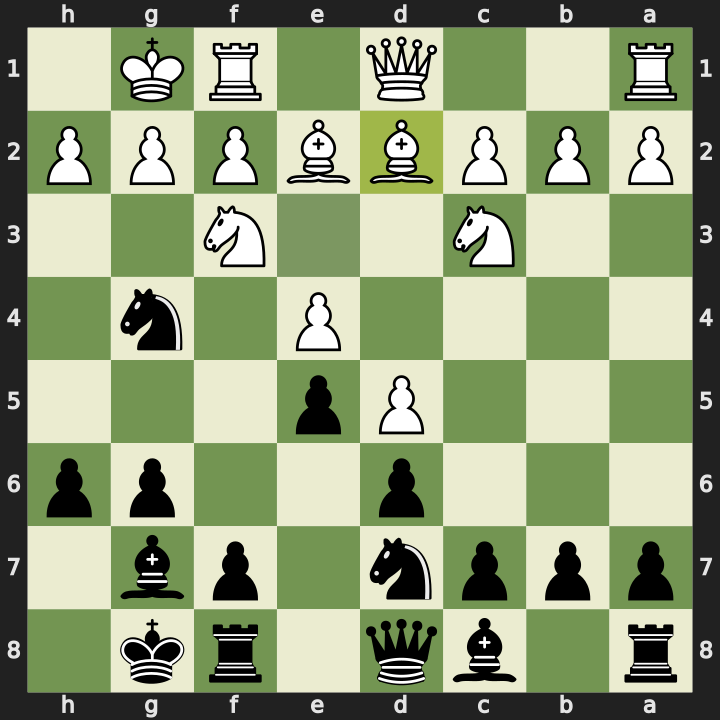
The centre is locked and my knight on d7 is trying to work out how to get the f5 pawn break in. If I play it right away, White captures on f5 and I recapture with the rook, but then the rook gets chased and has to drop back. I’d had a position much like that earlier the same day and it wasn’t very pleasant, so I went looking for a better square for the d7 knight first. I clicked the knight in the chess.com interface, and in trying to deselect it, I accidentally dropped it on f6.
10…Ndf6
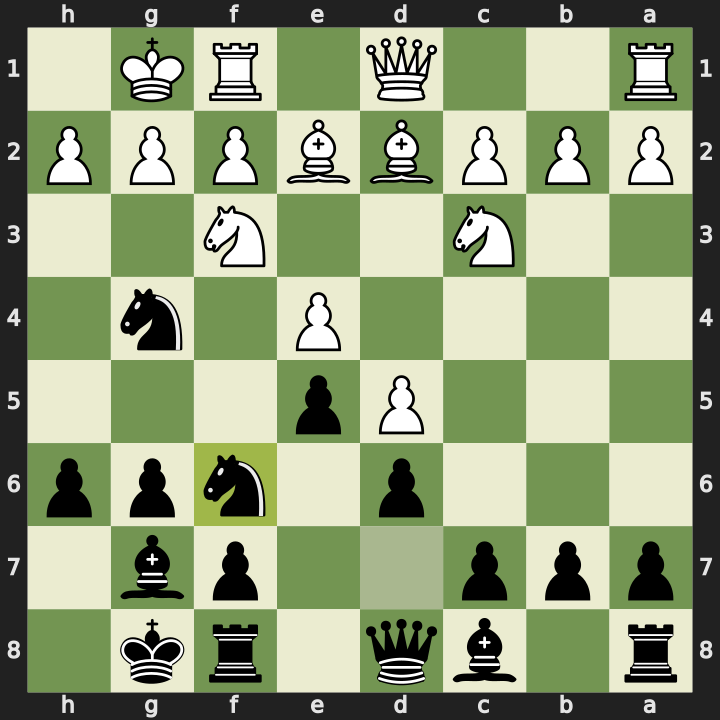
This wasn’t the square I wanted, certainly not before I’d played f5. But the move was made and I had to play on. White spotted the problem straight away: my knight on g4 now had nowhere to go.
Turning a Blunder Into a Sacrifice (Moves 11-14)
11. h3 Nh5 12. hxg4 Bxg4 13. Nh2 Qh4
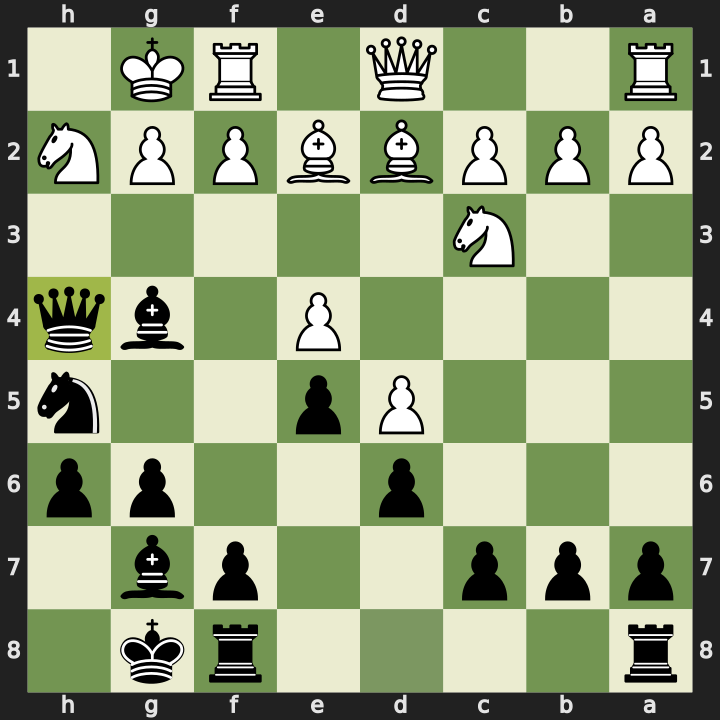
Rather than sit and lose the g4 knight for nothing, I decided to treat it as a sacrifice. I moved my other knight out to 11…Nh5 and let White take on g4, then recaptured with my light-squared bishop, 12…Bxg4. Now it looked more comfortable: I had a few pieces in the neighbourhood of White’s king and the centre was locked, so it was time to attack. White hit the bishop again with 13. Nh2, and with the knight on h2 and the bishop on e2 both trained on g4, and the queen sitting behind on d1, there was no holding the bishop. So instead of defending it I brought the queen in with 13…Qh4, using the moment to open more lines and keep the attack going.
14. Nxg4 f5
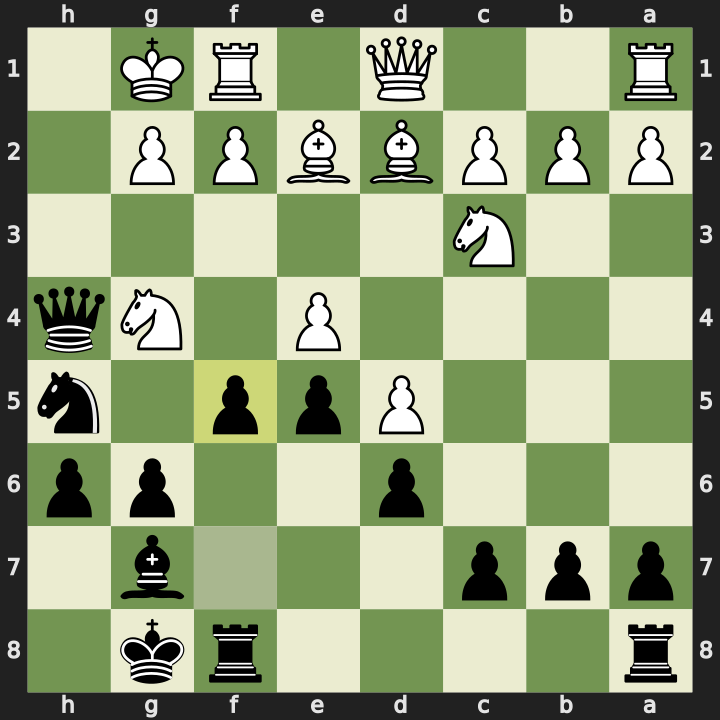
White took the bishop with 14. Nxg4, and now the f5 pawn break I’d been angling for finally came, 14…f5, hitting the knight and prising open the f-file toward White’s king.
Both Sides Go Hunting (Moves 15-17)
15. Nb5 fxg4 16. Nxc7 Rac8 17. Ne6
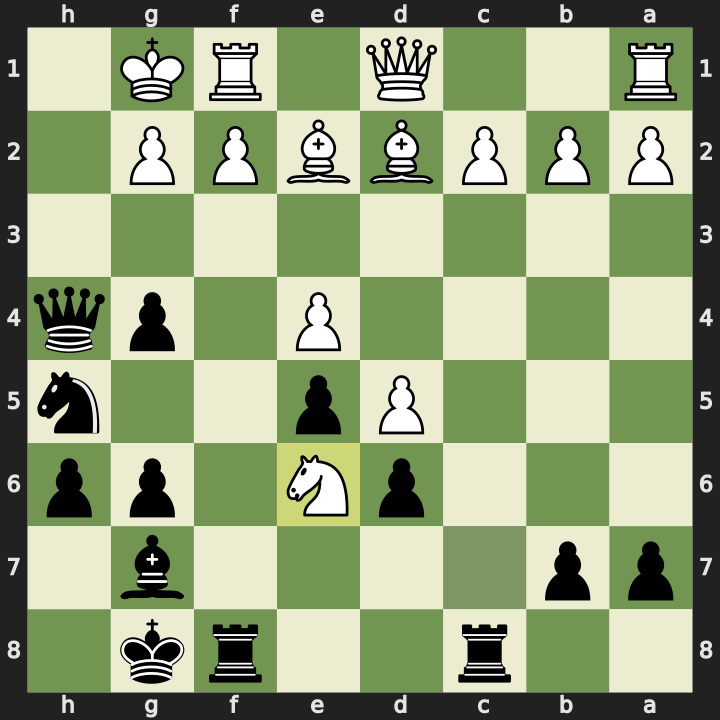
White sent the knight to 15. Nb5, heading for c7, and I grabbed on g4 with the pawn, 15…fxg4. White took the c7 pawn with 16. Nxc7, attacking my rook on a8, so I slid it to safety and hit the knight with 16…Rac8. White replanted the knight on e6 with 17. Ne6, forking my bishop on g7 and rook on f8. I decided to keep the attack rolling instead.
17…g3
I pushed the g-pawn to 17…g3, happy to give up the f8 rook because I could bring the c8 rook back into the same file and carry on.
The Fatal King Move (Moves 18-22)
18. fxg3 Rxf1+ 19. Qxf1 Nxg3 20. Kf2
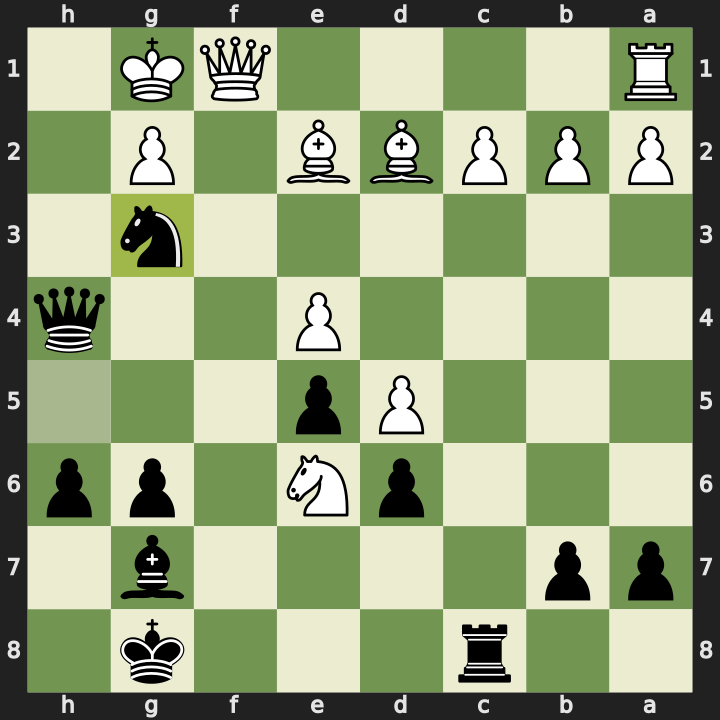
White took with the pawn, 18. fxg3, possibly thinking it won a tempo against my queen, but that let me check with 18…Rxf1+. After 19. Qxf1 I played 19…Nxg3, attacking the queen with tempo. Then White made a curious move. Perhaps worried about …Qh1 coming next, White played 20. Kf2 straight away, which simply hangs the queen.
20…Nxf1+ 21. Kxf1 Qh1+ 22. Kf2 Qxa1
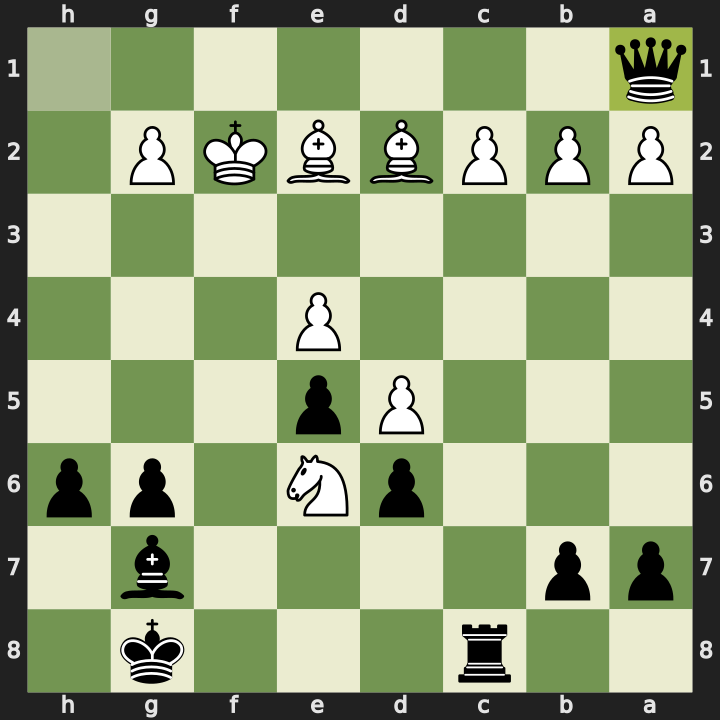
I snapped off the queen with 20…Nxf1+, and White recaptured with the king, 21. Kxf1. That let me get at the back rank: 21…Qh1+ 22. Kf2 Qxa1, collecting the rook in the corner. From here I was up a queen and rook for a knight and bishop, with a raging attack.
Mopping Up (Moves 23-26)
23. Nxg7 Kxg7 24. Bg4 Rxc2 25. Ke2 Qxb2 26. Kf3 Rxd2
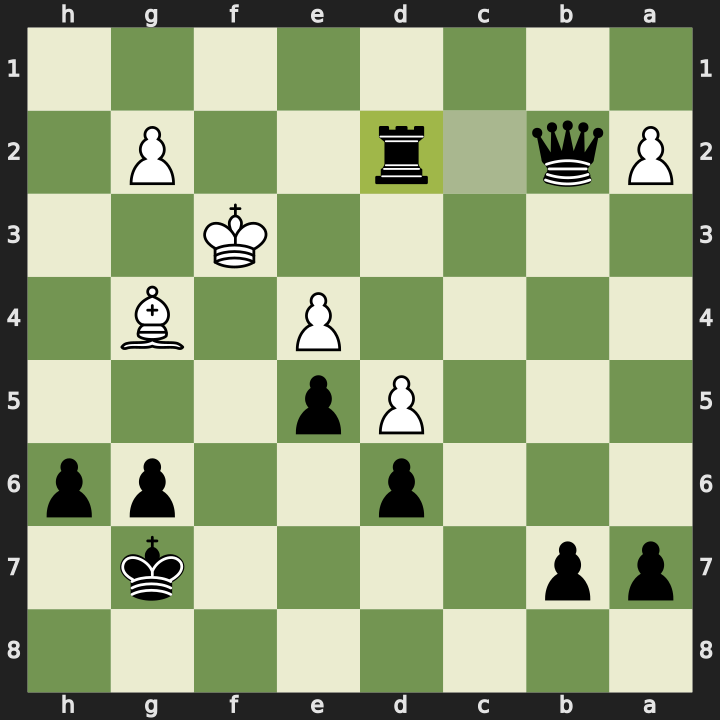
White took my bishop with 23. Nxg7 and I recaptured with the king. Then I got my rook onto the second rank and started collecting: 24…Rxc2, 25…Qxb2, and 26…Rxd2, picking up the bishop. With seven minutes still on my clock I’d have been content to take it slow, hoover up the remaining pawns and go for a ladder mate, but White had seen enough and resigned.
The Mate That Was Coming
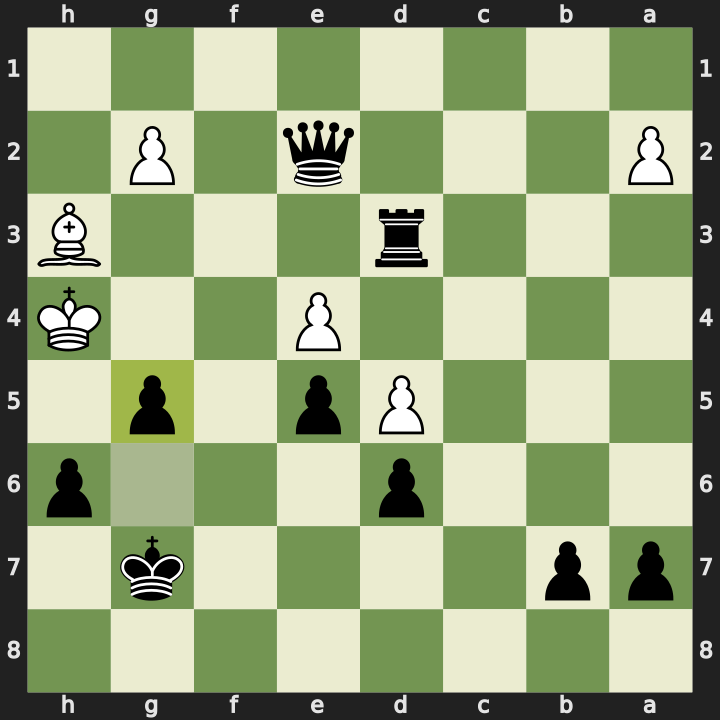
Looking at the final position more carefully, it’s closer to mate than I realised at the board. It’s mate in three. One line runs 27. Bh3 Rd3+ 28. Kg4 Qe2+ 29. Kh4 g5#, finishing with a cheeky pawn checkmate. 29…Qh5# does the job just as well. And if White tries a waiting move like 27. a4, then 27…Qc3# ends it on the spot.
Engine Review
The evaluation chart tells the story. After I’d sacrificed two pieces, White was winning by around +5.1, but converting that needed careful play. The single blunder of 20. Kf2 swung it all the way back to about -5.8 in my favour.
The misclick, 10…Ndf6, was indeed a blunder. It left my knight on g4 with no good square.
13…Qh4 was scored a mistake. It was designed to scare my opponent more than anything. If White had calmly taken with the bishop, 14. Bxg4, instead of the knight, I’d have had nothing. It was only because the f-file opened and my rooks got into the game that I had any attack at all.
I’m glad I played 17…g3 when I did instead of fussing over my rook. Chess.com agrees it was the best move in the position.
White’s decisive error was 20. Kf2, hanging the queen. The recapture 21. Kxf1 made it worse, letting my queen reach h1 with check and then take the rook on a1. Taking back with the rook, 21. Rxf1, would have kept the corner rook safe. Across the last fifteen moves or so White piled up inaccuracies and mistakes, and that gave me the room to come all the way back.
Reflections
What went well:
- Meeting an opening I didn’t know and steering it into a King’s Indian structure I was comfortable with.
- Attacking with the pieces I had, and recovering from the misclick instead of folding once I was down material.
- Playing 17…g3 and going on the attack rather than spending moves defending the rook.
What to work on:
- Not misclicking. The whole mess started with an accidental knight move to f6.
- Being honest about when a flashy move like 13…Qh4 actually works. It came off here because my opponent went wrong, but against accurate defence it gave me nothing.
Full PGN:
1. d4 Nf6 2. d5 d6 3. Nc3 g6 4. Nf3 Bg7 5. e4 O-O 6. Be2 e5 7. O-O Nbd7 8. Bg5
h6 9. Be3 Ng4 10. Bd2 Ndf6 11. h3 Nh5 12. hxg4 Bxg4 13. Nh2 Qh4 14. Nxg4 f5 15.
Nb5 fxg4 16. Nxc7 Rac8 17. Ne6 g3 18. fxg3 Rxf1+ 19. Qxf1 Nxg3 20. Kf2 Nxf1+ 21.
Kxf1 Qh1+ 22. Kf2 Qxa1 23. Nxg7 Kxg7 24. Bg4 Rxc2 25. Ke2 Qxb2 26. Kf3 Rxd2 0-1