August 20 Rapid Session: Trouble as White
| Time Control: 10 min (Rapid) | Games: 6 | Record: 3W / 1D / 2L |
Overview
Six rapid games, three wins, one draw and two losses. The ratings attached to the games ran 887, 895, 887, 895, 895, 903, so I finished the night a little higher than I started it.
The split was clean along colour lines. I had White three times and dropped material in the opening in every one of them: a knight on move 9, a knight and a bishop on move 10, and a pawn on move 12. I had Black three times and won twice with a draw in the third.
The two best games were both as Black, and both followed the same recipe. Trade the queens early, then hunt for loose pieces.
All Games
| # | Color | Opponent | Result | Moves | Comment | |
|---|---|---|---|---|---|---|
| 1 | ⚔️ | White | santa0700 | 0-1 | 36 | Loss. 8.Nb3 walked into 8...c4 and the knight had nowhere safe to go. |
| 2 | 🏳️ | Black | clintocki | 0-1 | 59 | Highlight. A three-move tactic on move 13 won a piece, then a fianchetto on b7 won the exchange. |
| 3 | ⚔️ | White | UmaeTeam | 0-1 | 50 | Loss. 10.Bd2 blocked a check instead of 10.Kf1, which wins the black queen. |
| 4 | ⚔️ | White | benjaminarnal | 1-0 | 29 | Win. My opponent missed Nxf2 three moves running, then 14.Qxg4 won a knight. |
| 5 | 🤝 | Black | DARKSEID_OTH | 1/2-1/2 | 63 | Draw. Two pawns up in a rook endgame, then 44...g2 gave it all back. |
| 6 | ⚔️ | Black | TheM4sterM1nd | 0-1 | 30 | Best game. Won the exchange with a pin on f2, then a ladder mate on the h-file. |
Game 1: Loss vs santa0700 as White
A French with an early c6. I pushed 4.e5 to take space and had a comfortable position out of the opening.
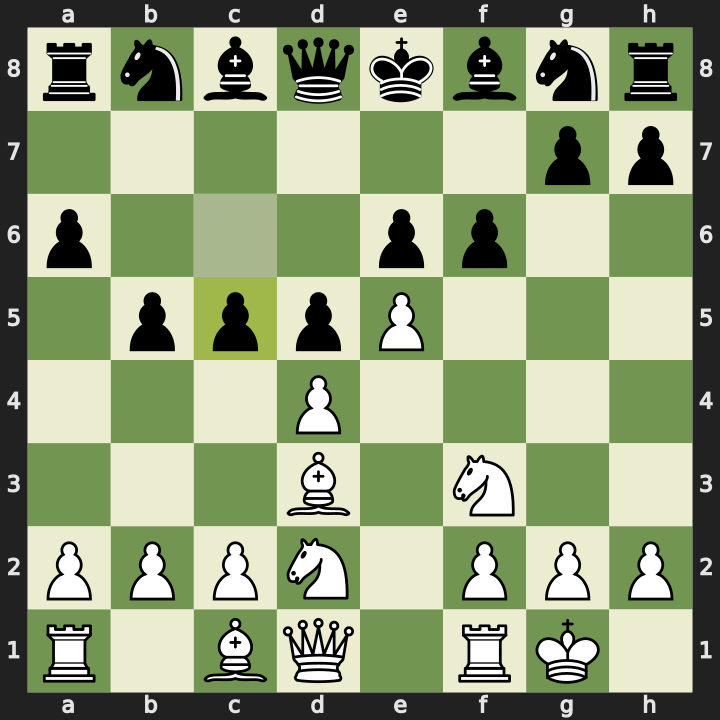
8.Nb3 c4 9.Na5 Qxa5
8.dxc5 was the move here. Instead 8.Nb3 put the knight on the one square the c-pawn could reach, 8…c4 hit it, and a5 was the only forward square left. It hangs to the queen on d8. Two moves took the evaluation from nearly two pawns in my favour to more than three against me. I played on for another 27 moves and got mated on move 36.
Game 2: Win vs clintocki as Black
White opened 1.g3, the King’s Fianchetto Opening. I played it like a typical King’s Indian Defence or Pirc.
1.g3 Nf6 2.d3 g6 3.Bg2 Bg7 4.c3 O-O 5.h3 d6 6.g4 e5 7.Bg5 h6 8.Bxf6 Qxf6 9.e4 Nd7 10.Qf3 Qxf3 11.Nxf3
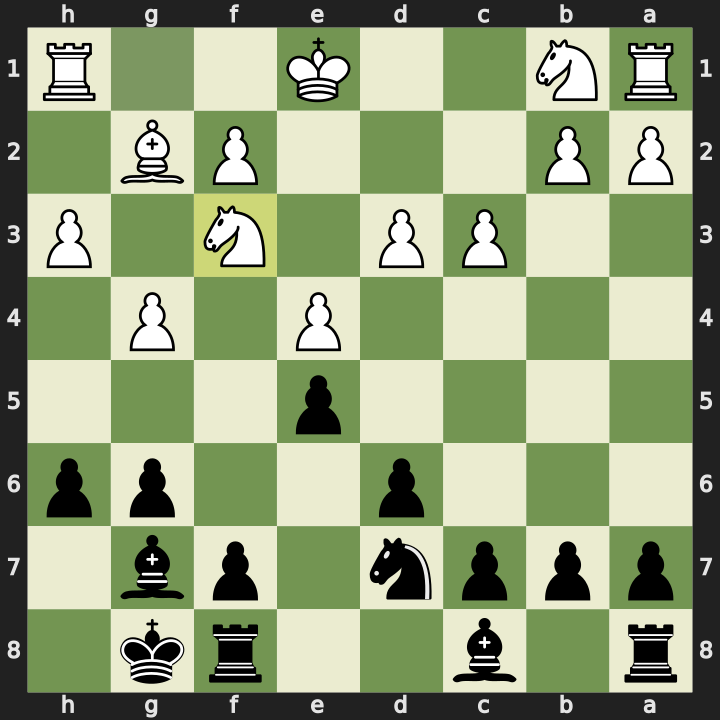
11…Nc5 12.Kd2 f5 13.b4
We traded queens early on f3. Material was equal, but Stockfish rated the position about 1.4 pawns in my favour. White had spent the opening pushing pawns and the king had no castling rights left.
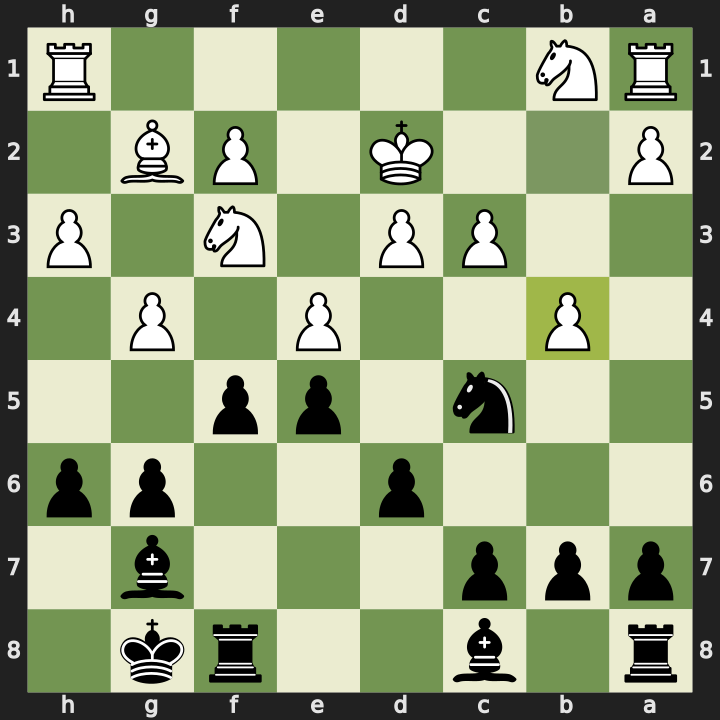
13…fxe4 14.bxc5 exf3 15.Bxf3 Rxf3 16.Ke2 Rf4 17.Na3 b6 18.Nc4 bxc5 19.Ne3
On move 13 I spotted a tactic. 13…fxe4 allows 14.bxc5, temporarily sacrificing a knight. 14…exf3 gains the knight back, and if White recaptures the pawn on f3 he loses the bishop to 15…Rxf3. White was careless with 15.Bxf3 and is now down a piece.
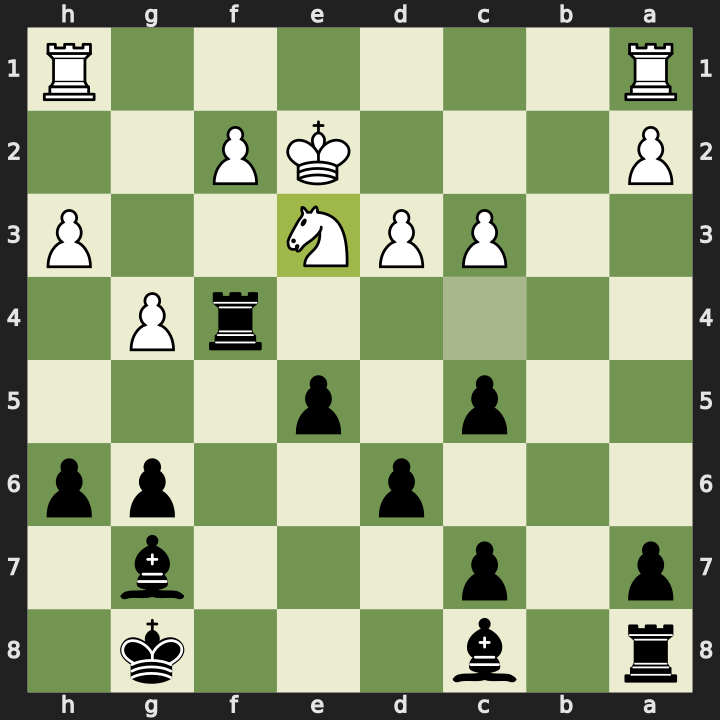
19…Bb7 20.Rab1 Bxh1 21.Rxh1 e4 22.Nd5 Rf7 23.dxe4 Re8 24.f3 c6 25.Ne3 d5 26.c4 dxe4 27.f4
My next idea was to activate the light-squared bishop. I went for a fianchetto on b7, targeting the rook on h1. White missed the idea and targeted my bishop with the a-rook. 20.Rab1 lost an exchange. The h-rook was the one to move.
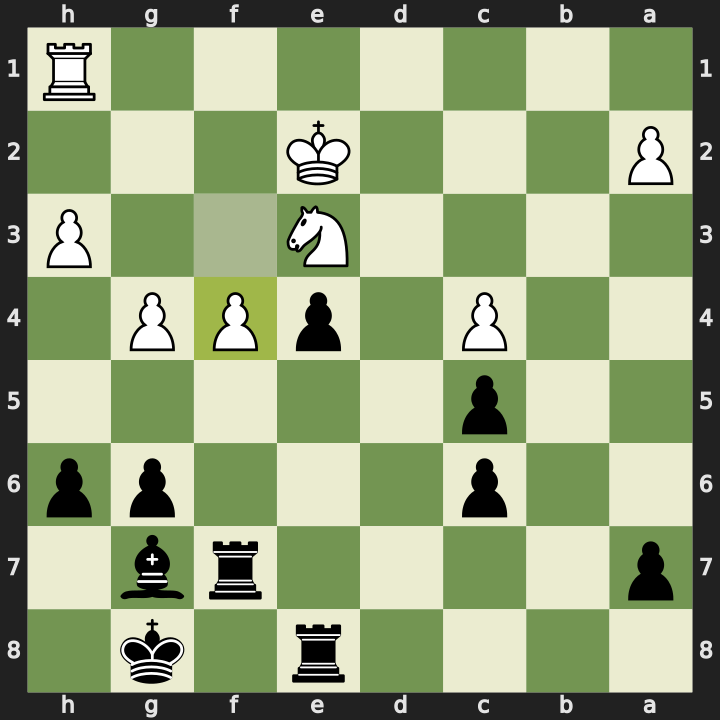
27…Rxf4 28.Rf1 Rxf1 29.Kxf1 Rf8+ 30.Ke2 Rf3 31.h4 Rh3 32.h5 gxh5 33.gxh5 Rxh5 34.a4 Rh2+ 35.Kf1 Ra2 36.Nf5 Rxa4 37.Ne7+ Kf7 38.Nxc6 h5 39.Nd8+ Ke7 40.Nc6+ Ke6 41.Nd8+ Kf5 42.Nb7
A few more pawn pushes and I traded White’s last remaining rook on f1.
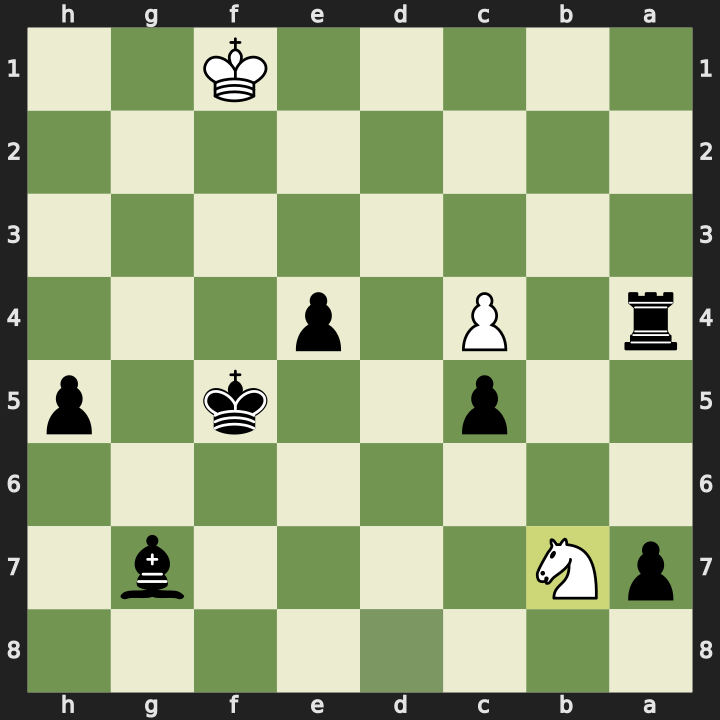
42…Rxc4 43.Nd6+ Kf4 44.Nxc4 Bc3
I got careless and fell prey to a fork, losing my rook for a pawn.
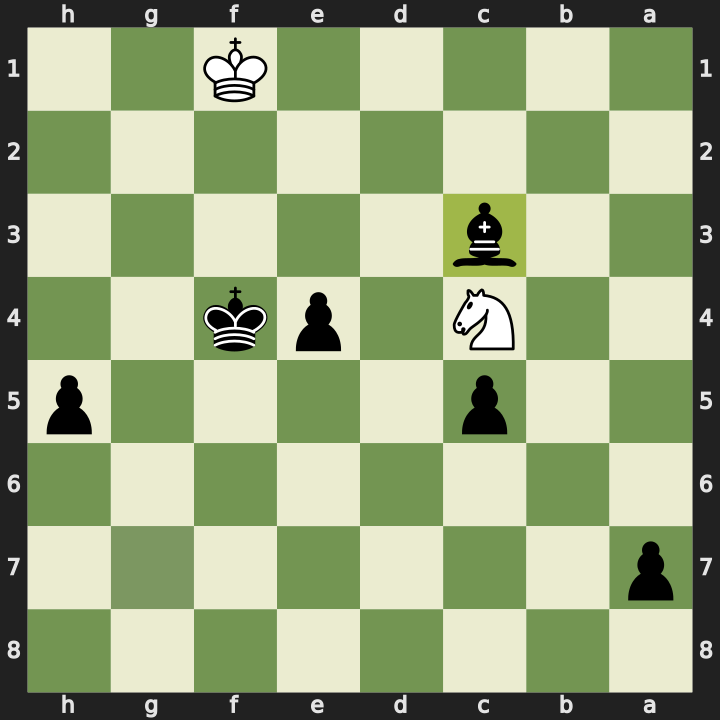
45.Ke2 a5 46.Na3 h4 47.Nb5 Bb4 48.Nd6 h3 49.Kf2 e3+ 50.Kg1 Kf3 51.Nf5 e2 52.Nh4+ Kg3 53.Nf5+ Kf3 54.Nh4+ Ke3 55.Nf5+ Kd2 56.Kh2 e1=Q 57.Kxh3 Qe6 58.Kg4 a4 59.Kf4 a3 0-1
With four passed pawns against a knight I was still comfortably winning. After promoting a queen and then pushing my other outside passed pawn, White resigned.
White’s position started crumbling on move 15 when he went down a bishop, and it went from bad to worse on move 20 losing the exchange. Chess.com calls the rook move that lost my rook a miss rather than a mistake. I consider it a blunder. I should not be walking into forks like that, losing a rook for a pawn. The rest of my game was solid.
Game 3: Loss vs UmaeTeam as White
A Scotch Game. Black grabbed the b2 pawn with 7…Qxb2 and I played 9.Rb1 to hunt the queen down.
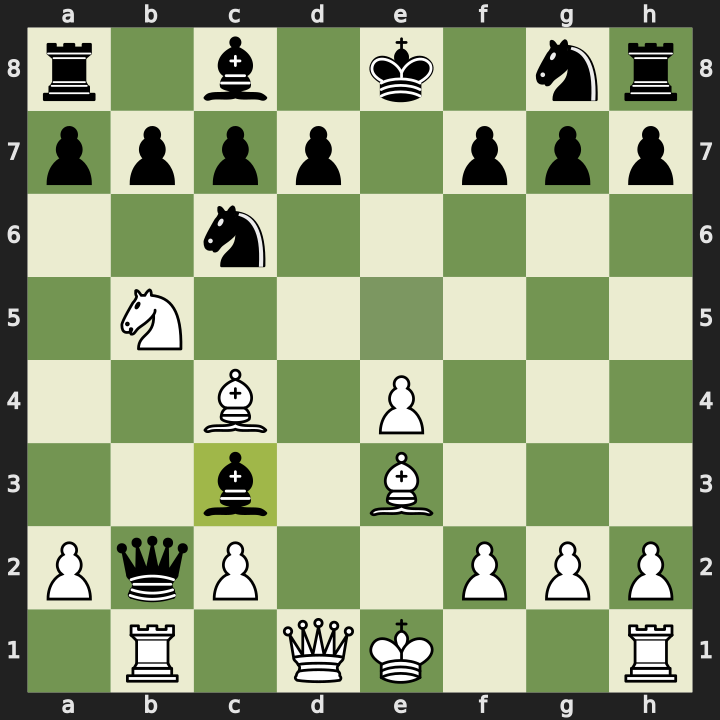
10.Bd2 Bxd2+ 11.Kxd2 Qe5
10.Kf1 was the move, and it wins the queen. The check disappears, the rook still attacks b2, and the best Black gets is 10…Qxb5 11.Rxb5, a queen for a rook and a knight. I blocked with 10.Bd2 instead and lost a knight and a bishop for one bishop. Three moves later 13.exd5 dropped the queen to 13…Bxg4. Mated on move 50.
Game 4: Win vs benjaminarnal as White
A French Advance. I had already dropped a pawn with 12.axb5 when this position came up.
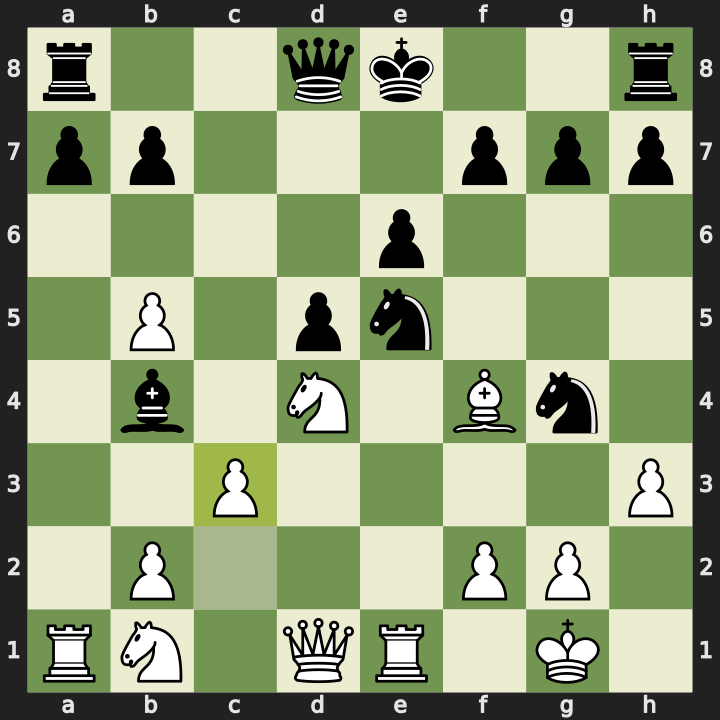
13…Nc4 14.Qxg4 e5 15.Bxe5 Nxe5 16.Rxe5+ Be7 17.Nf5
Black had Nxf2 available on moves 11, 12 and 13 and never played it. 13…Nc4 ignored the knight on g4 and 14.Qxg4 picked it up. After 16.Rxe5+ his king was stuck in the centre with the rook on h8 still at home. 17.Nf5, 18.Qxg7+, 19.Qxh8+ and 21.Qxa8 collected the rest, and I mated with 29.Rh6#.
Game 5: Draw vs DARKSEID_OTH as Black
A Pirc, Austrian Attack. I won the exchange in the middlegame and reached a rook endgame two pawns up.
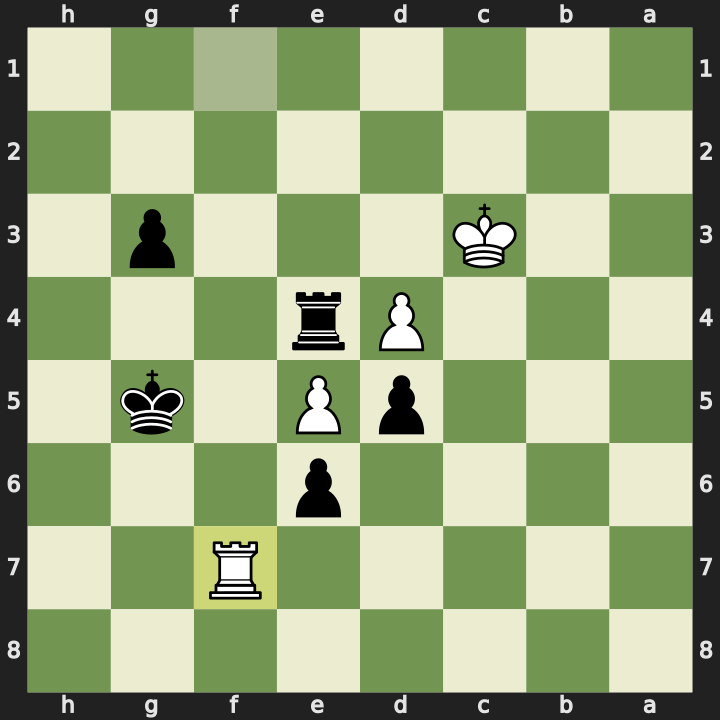
44…g2 45.Rg7+ Kf4 46.Rxg2
This was the turning point. The evaluation was over seven pawns in my favour and 44…g2 levelled it. Both 44…Rg4 and 44…Kg4 keep the win. It got worse on move 52: 52…Kxe4 loses outright to the pawn race, where 52…dxe4 draws. White then returned the favour with 59.Qf4, which let me promote with check and force the queens off. Drawn on insufficient material.
Game 6: Win vs TheM4sterM1nd as Black
The best game of the session. Another Pirc Defence.
1.e4 d6 2.d4 Nf6 3.Nc3 g6 4.Nf3 Bg7 5.e5 dxe5 6.dxe5
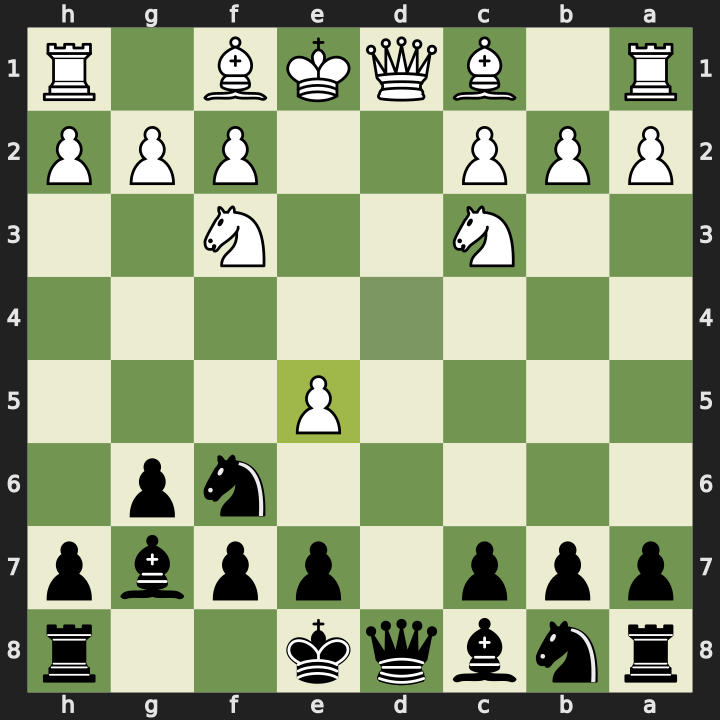
6…Qxd1+ 7.Nxd1 Ng4 8.Bc4 Nxe5 9.Nxe5 Bxe5 10.f4 Bg7 11.O-O O-O 12.Nc3 Bf5 13.Rf2
White recaptured on e5 with the d-pawn, which opened the d-file for a queen trade with check. 7.Nxd1 put the knight back on the first rank, 7…Ng4 attacked the pawn on e5, and I won it back with 8…Nxe5.
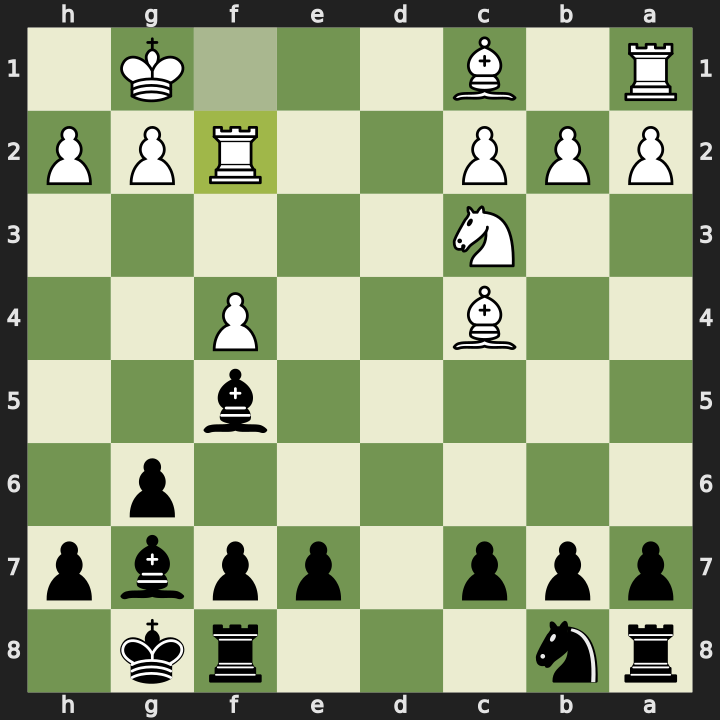
13…Nc6 14.Be3 Nd4 15.Bxd4 Bxd4 16.Nb5 Bxf2+ 17.Kxf2
By move 13 the centre had opened up, the queens had come off, and White had placed the rook where I could pin it to the king. I routed the knight over with 13…Nc6 and 14…Nd4. 15.Bxd4 handed me the diagonal. My bishop recaptured on d4, the rook on f2 was pinned against the king on g1, and 16…Bxf2+ won the exchange.
The engine wanted 13…Bd4 immediately, which wins the same exchange two moves earlier. 15.Nd5 was White’s better try.
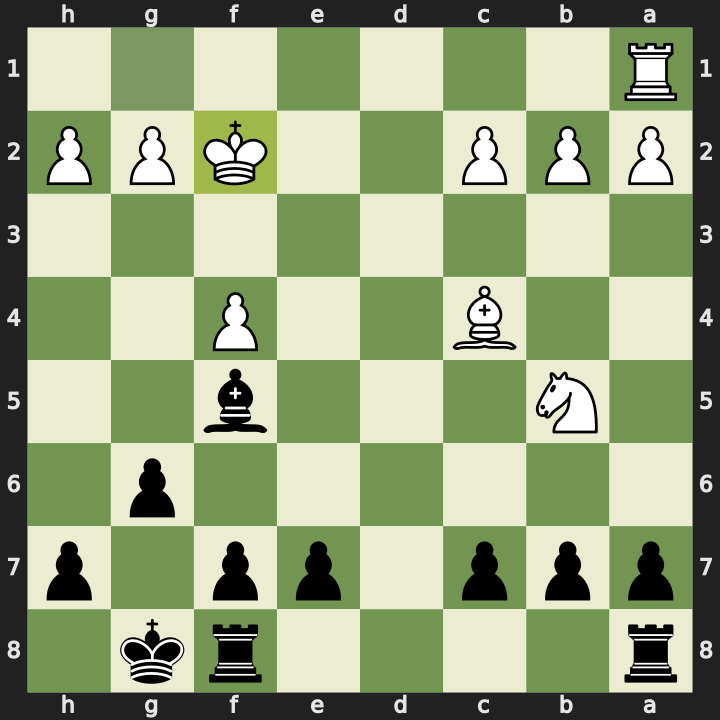
17…c6 18.Nd4 Rad8 19.Nxf5 gxf5 20.Re1
Up the exchange, I started looking for trades.
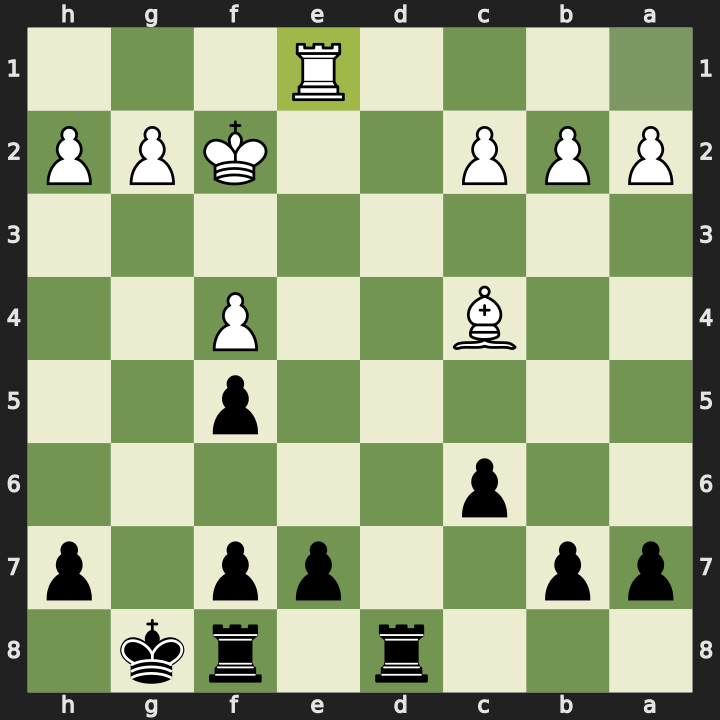
20…Rd2+ 21.Kf3 e6 22.g4 fxg4+ 23.Kxg4 Rxc2
I brought the rook to the second rank and grabbed a pawn. 22.g4 opened White’s own king and dragged it out to g4.
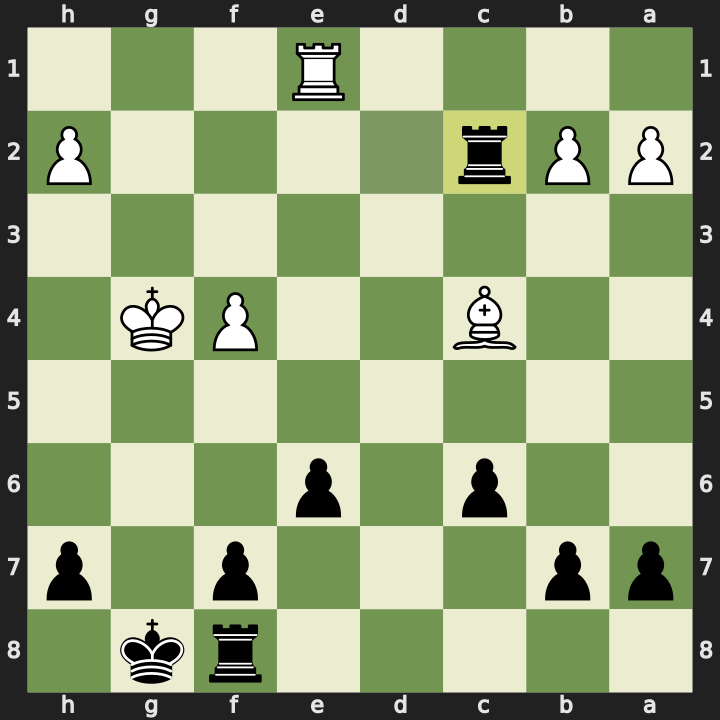
24.Rg1 Rxc4 25.Kh5+ Kh8 26.Kh6
White blundered with 24.Rg1, leaving the bishop hanging. He did manage a discovered check: 25.Kh5+ stepped the king off the g-file and let the rook on g1 hit my king. I moved the king to h8.
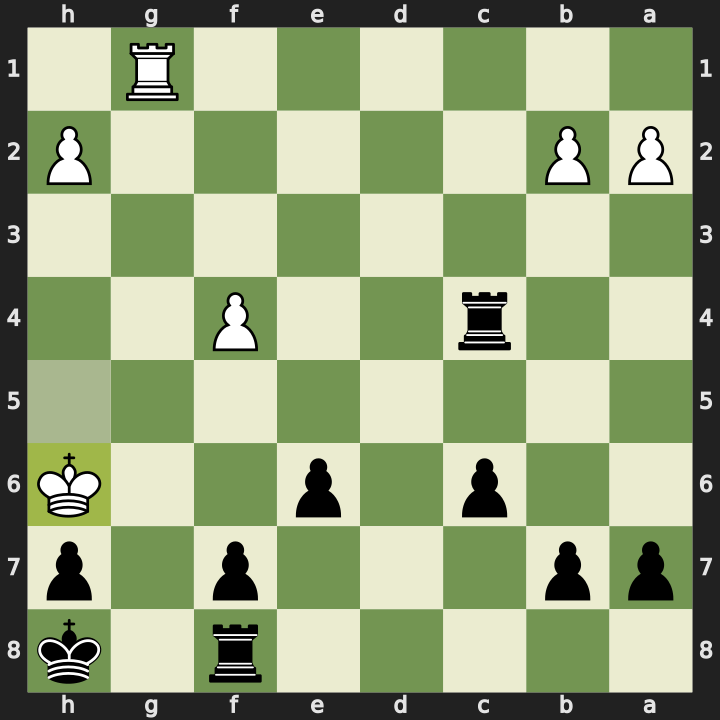
26…Rg8 27.Rf1
26.Kh6 threatened mate on g8, so I blocked the file and offered a rook trade. White declined with 27.Rf1. Taking on g8 was forced. It was still lost, but declining walked into mate.
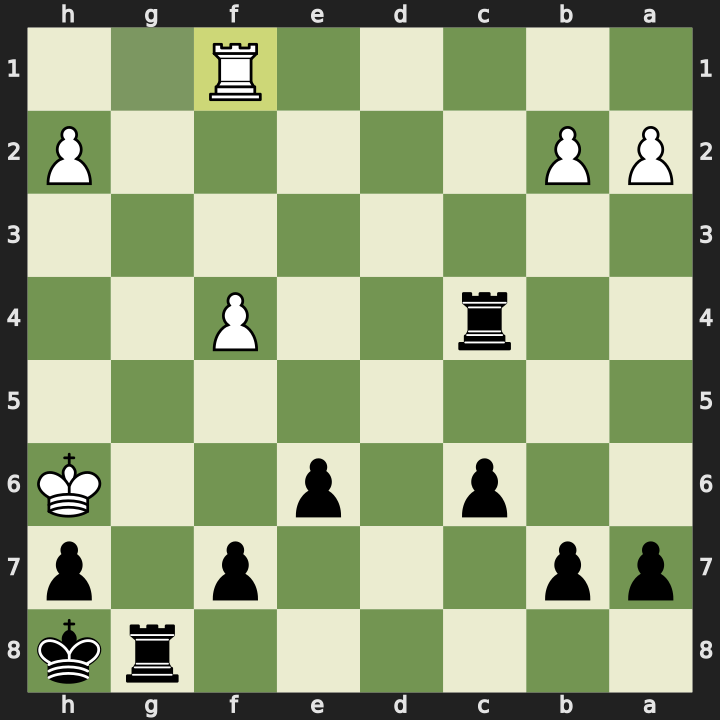
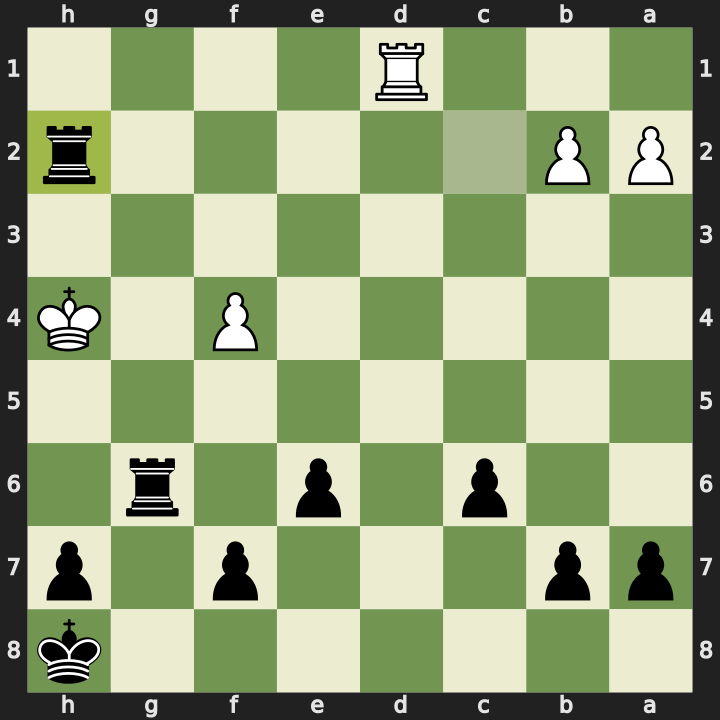
27…Rg6+ 28.Kh5 Rc5+ 29.Kh4 Rc2 30.Rd1 Rxh2#
A ladder mate on the h-file was a few moves away. The rook on g6 takes the whole g-file, the other rook drops to the second rank, and 30…Rxh2# finishes it.
Reflections
What went well:
- Both wins as Black came from the same recipe. Trade queens early, then hunt for loose pieces.
- Spotting the tactic on move 13 against clintocki. It runs three moves deep with a temporary piece sacrifice in the middle.
- The finish against TheM4sterM1nd. I saw the ladder mate coming and worked towards it instead of grabbing more material.
What to work on:
- The opening as White. I dropped material in the opening in all three White games. I only won the third because my opponent missed Nxf2 three moves running.
- Checking knight squares before I move a rook. 42…Rxc4 against clintocki walked straight into 43.Nd6+.
- Rook endgame technique. 44…g2 against DARKSEID_OTH turned a two-pawn win into a level position, and 52…Kxe4 was losing when 52…dxe4 draws.
Full PGN of Game 6:
1. e4 d6 2. d4 Nf6 3. Nc3 g6 4. Nf3 Bg7 5. e5 dxe5 6. dxe5 Qxd1+ 7. Nxd1 Ng4 8.
Bc4 Nxe5 9. Nxe5 Bxe5 10. f4 Bg7 11. O-O O-O 12. Nc3 Bf5 13. Rf2 Nc6 14. Be3 Nd4
15. Bxd4 Bxd4 16. Nb5 Bxf2+ 17. Kxf2 c6 18. Nd4 Rad8 19. Nxf5 gxf5 20. Re1 Rd2+
21. Kf3 e6 22. g4 fxg4+ 23. Kxg4 Rxc2 24. Rg1 Rxc4 25. Kh5+ Kh8 26. Kh6 Rg8 27.
Rf1 Rg6+ 28. Kh5 Rc5+ 29. Kh4 Rc2 30. Rd1 Rxh2# 0-1