Win vs Sallamabd-ulhai: A Pawn Push Turns the Tide
| Opening: Pirc Defense | Result: 0-1 (Resignation) | Time Control: 10 min Rapid | Rated |
Game Overview
This one was an amazing turnaround. I was a pawn down with my bishop against a knight from move 31, and then a simple pawn push blunder gave me the game. I took en passant with unstoppable promotion and my opponent resigned.
The Opening (Moves 7-10)
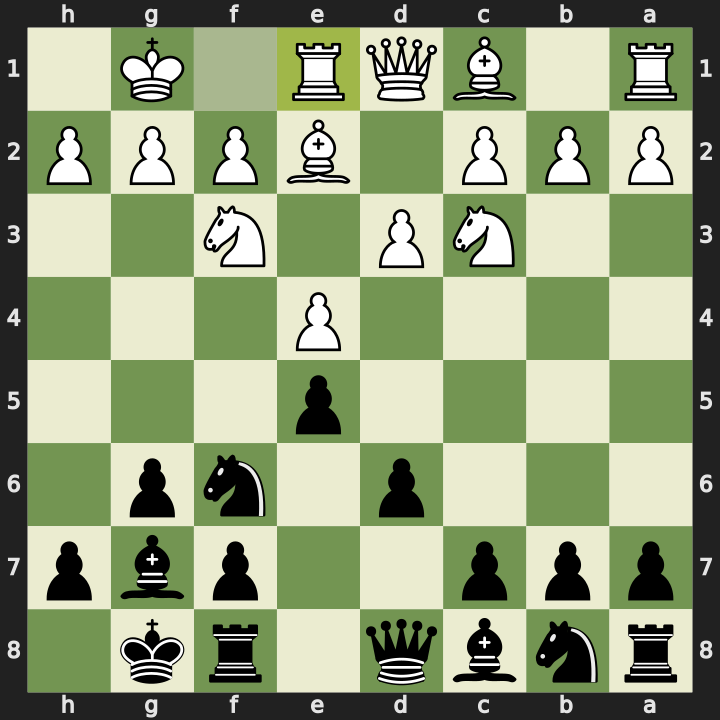
7…Nc6 8.Bg5 h6 9.Bh4 g5 10.Bg3
The game started with pretty typical Pirc Defense moves. When White brought the bishop to g5 I chased it away with 8…h6 and 9…g5.
Opening the Centre (Moves 10-13)
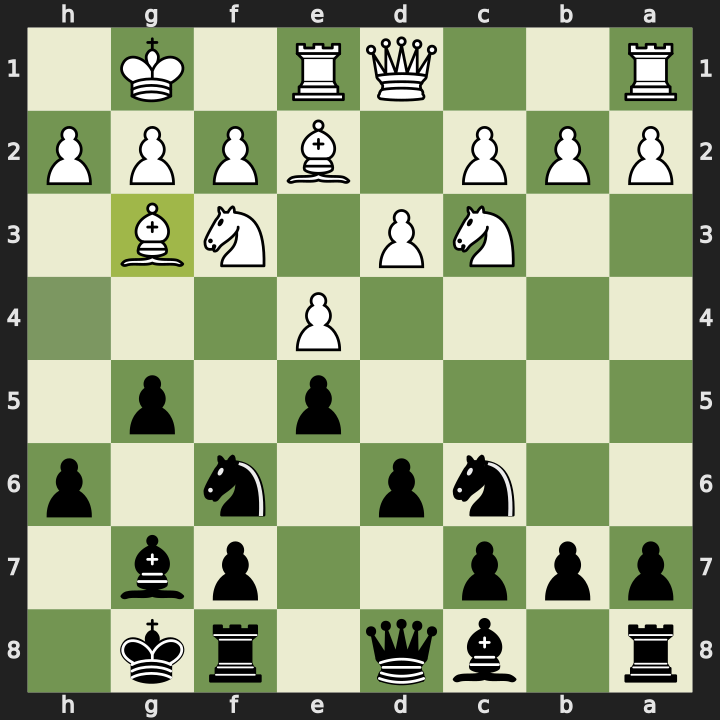
10…d5 11.exd5 Nxd5 12.Nxd5 Qxd5 13.c3
Then I didn’t see an obvious path forward, so I decided to open up the centre with 10…d5. The knights came off on d5 and I recaptured with the queen.
The e4 Push (Moves 13-17)
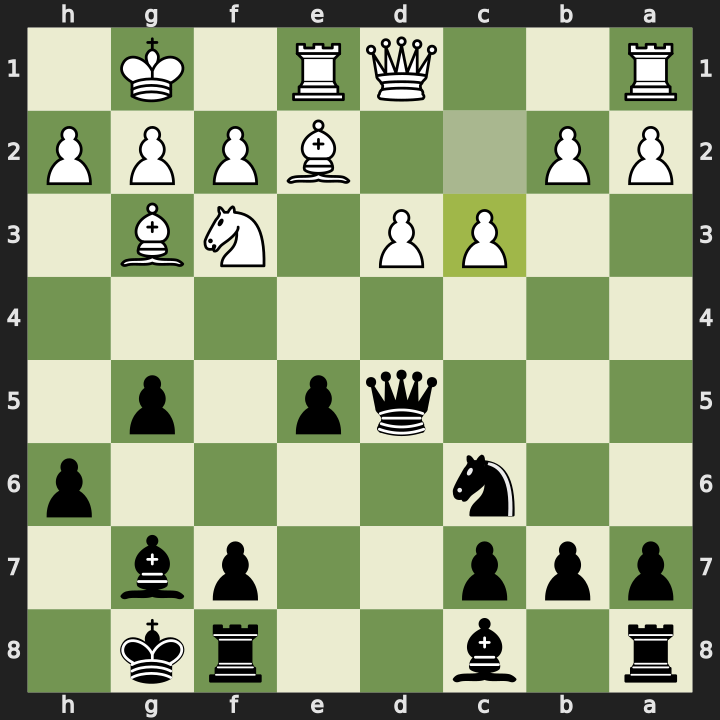
13…e4 14.dxe4 Qxe4 15.Bb5 Qf5 16.Bxc6 bxc6 17.Bxc7
I was going okay until I pushed 13…e4. This allowed White to trade a bishop for my knight and give me doubled pawns on the c-file. And then I lose the c7 pawn.
White Trades Down (Moves 17-20)
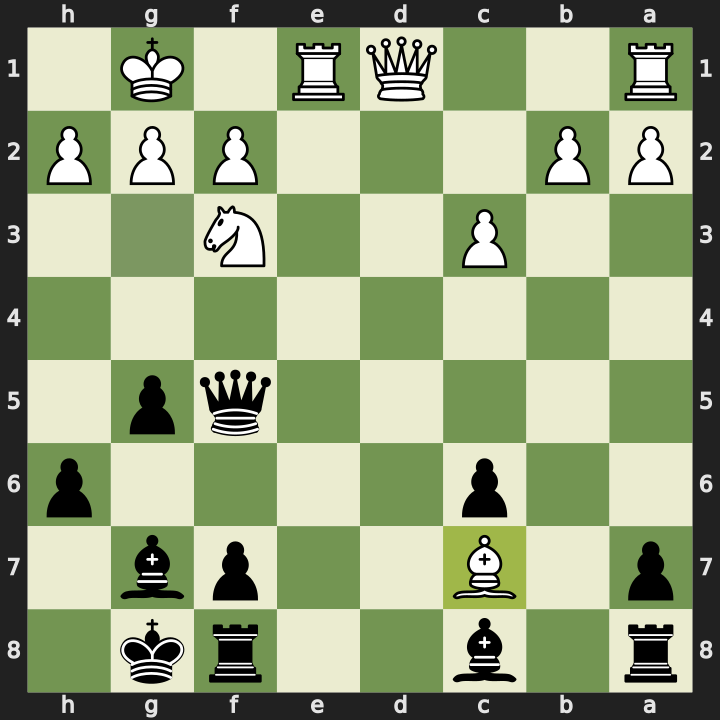
17…Be6 18.Be5 Rad8 19.Qc1 Rd5 20.Bxg7 Kxg7
White was then able to trade the dark-squared bishops.
Manoeuvring and the Rook Trade (Moves 21-27)
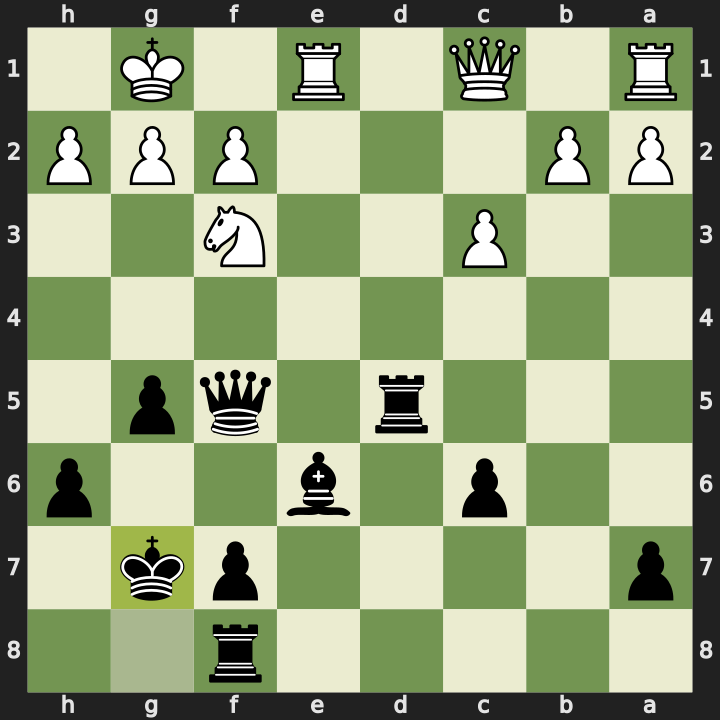
21.Rd1 Rfd8 22.Rxd5 Bxd5 23.Nd4 Qe4 24.f3 Qe5 25.Qe1 Re8 26.Qxe5+ Rxe5 27.Kf2
After some more manoeuvring we traded a pair of rooks, and then the queens as well.
A Pawn Down (Moves 27-32)
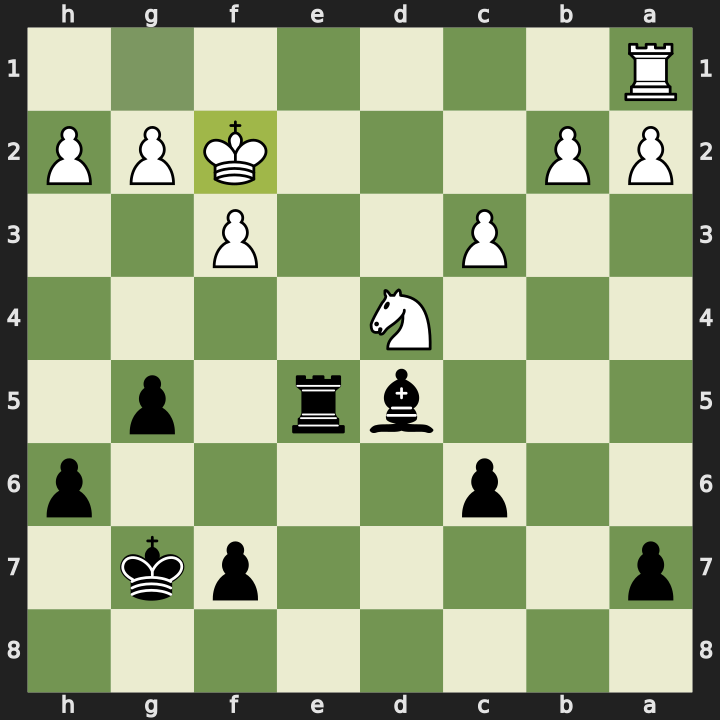
27…c5 28.Nb5 a6 29.Nc7 Bc4 30.Re1 Rxe1 31.Kxe1 Bxa2 32.Nxa6 c4
So by move 31 White has an extra pawn, and it’s my bishop against White’s knight.
The Pawn Push That Flips It (Moves 33-34)
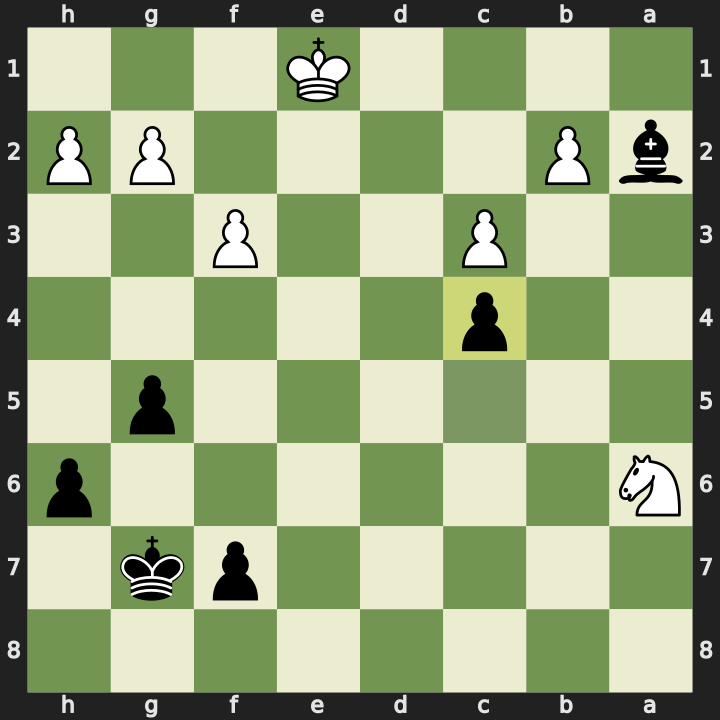
33.b4 cxb3 34.Kd1 b2
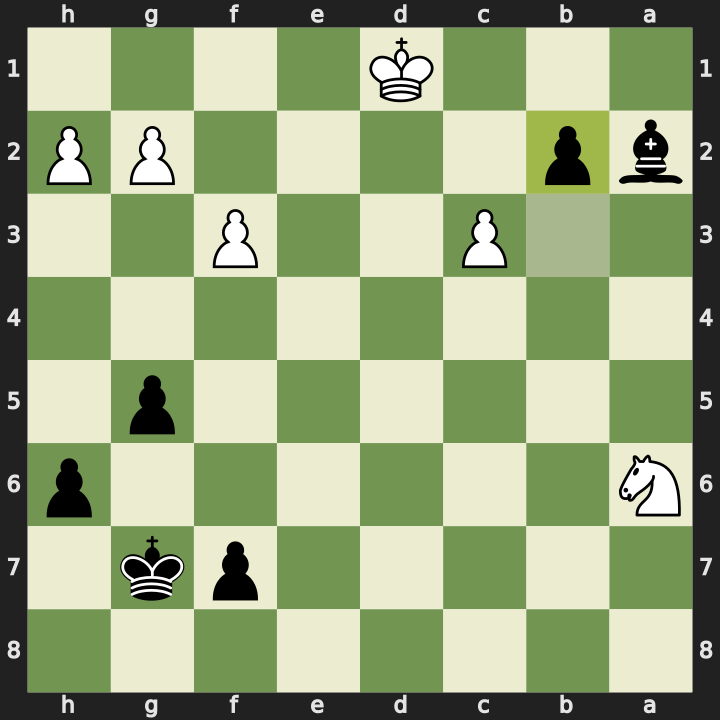
And then on move 33, a simple pawn push flips the story. 33.b4 pushes the pawn two squares past my pawn on c4, so I take on b3 en passant, supported by my bishop on a2. The pawn is going to make it to the promotion square.
Engine Review
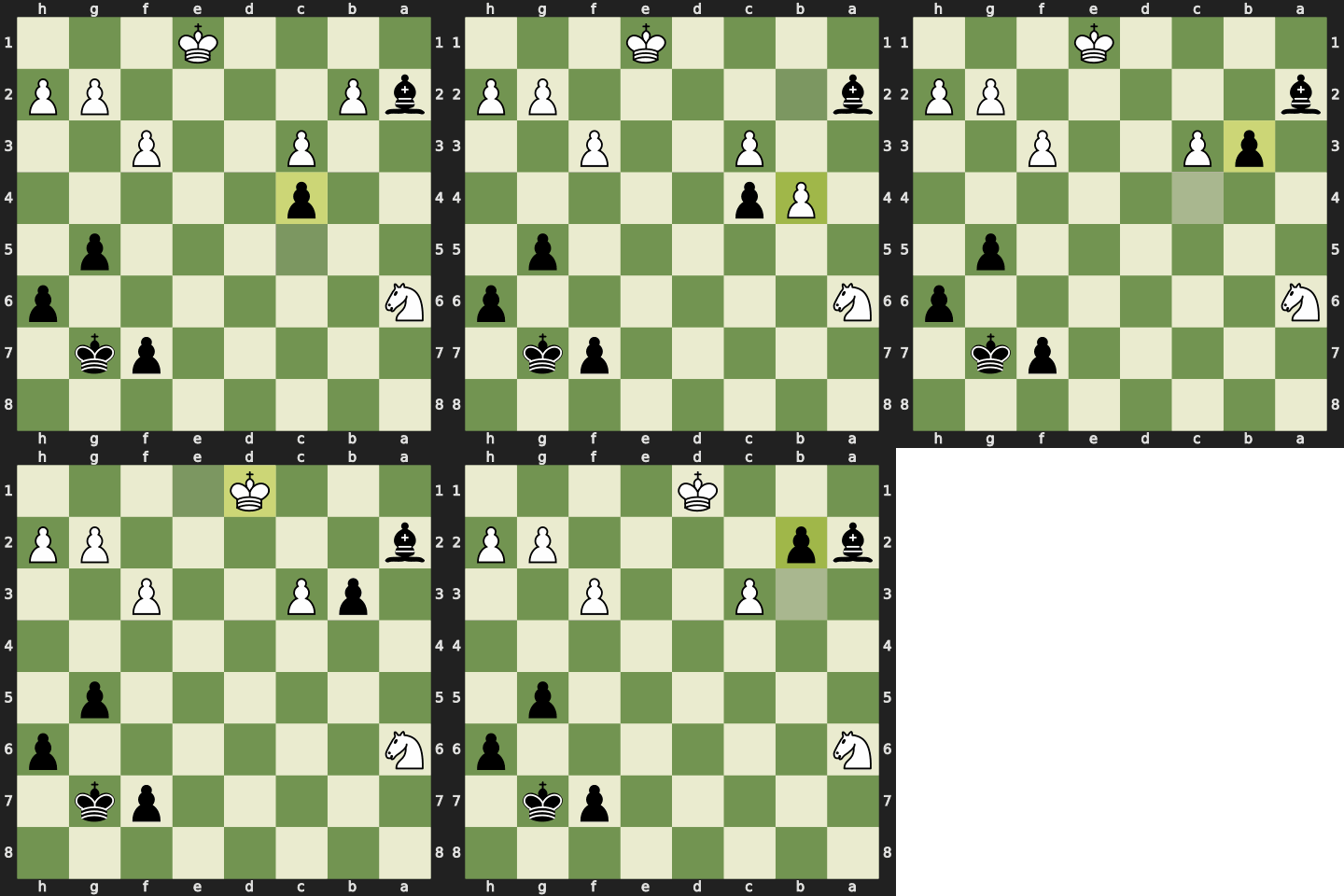
Once the pawn promotes to a queen it’s checkmate in fourteen according to the chess.com engine. Stockfish agrees: from the position where White resigned it gives mate in sixteen, which is the same count once you add the king move and the promotion.
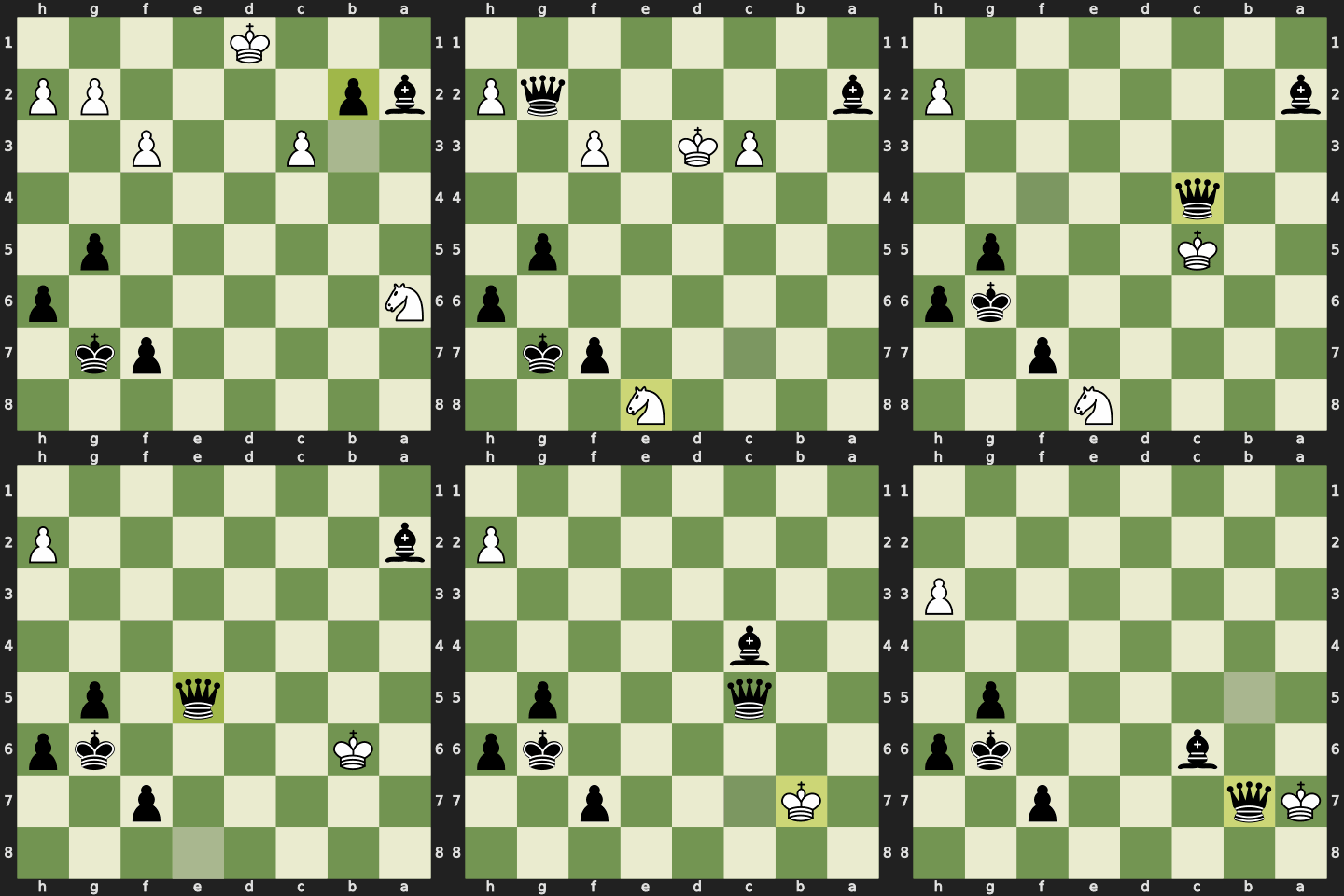
33.b4 swung the evaluation by nearly nine pawns, from 3.6 in White’s favour to 5.3 in mine. The move was 33.Nb4, which keeps White around four pawns up. The engine line runs 33…Bb1 34.Nd5.
My own worst move was 13…e4, which cost about two and a half pawns. Before it I was slightly better. After 14.dxe4 Qxe4 15.Bb5 the bishop hit the knight on c6, and once it came off with 16.Bxc6 bxc6 my c-pawns were doubled and the pawn on c7 had nothing defending it.
Reflections
What went well:
- Chasing the dark-squared bishop away with 8…h6 and 9…g5 in a standard Pirc setup.
What to work on:
- Pawn breaks. 13…e4 looked like it was opening lines for my queen and it just dropped a piece’s worth of pressure and then a pawn.
This game really goes to show that it’s never too late to lose from a winning position, and it doesn’t always look like blundering a high value piece. It can be a pawn push, or forgetting about en passant, that turns the tide of a game.
Full PGN:
1. e4 d6 2. Nf3 Nf6 3. Nc3 g6 4. d3 Bg7 5. Be2 O-O 6. O-O e5 7. Re1 Nc6 8. Bg5
h6 9. Bh4 g5 10. Bg3 d5 11. exd5 Nxd5 12. Nxd5 Qxd5 13. c3 e4 14. dxe4 Qxe4 15.
Bb5 Qf5 16. Bxc6 bxc6 17. Bxc7 Be6 18. Be5 Rad8 19. Qc1 Rd5 20. Bxg7 Kxg7 21.
Rd1 Rfd8 22. Rxd5 Bxd5 23. Nd4 Qe4 24. f3 Qe5 25. Qe1 Re8 26. Qxe5+ Rxe5 27. Kf2
c5 28. Nb5 a6 29. Nc7 Bc4 30. Re1 Rxe1 31. Kxe1 Bxa2 32. Nxa6 c4 33. b4 cxb3 34.
Kd1 b2 0-1