Win vs Lama-Sudah: Pawn Storm on a Locked Board
| Opening: Pirc Defense (B07) | Result: 1-0 (Resignation) | Time Control: 10 min Rapid | Rated |
Game Overview
This game was all about recognising that a locked centre meant a kingside pawn storm was safe. That included opening up the h-file and invading from the flank.
It was a pretty high accuracy game. I’m very happy with 85% from chess.com and a game rating of 1650. No blunders and no mistakes, but there is one missed opportunity that we’ll have a look at.
A Passive Pirc (Moves 3-7)
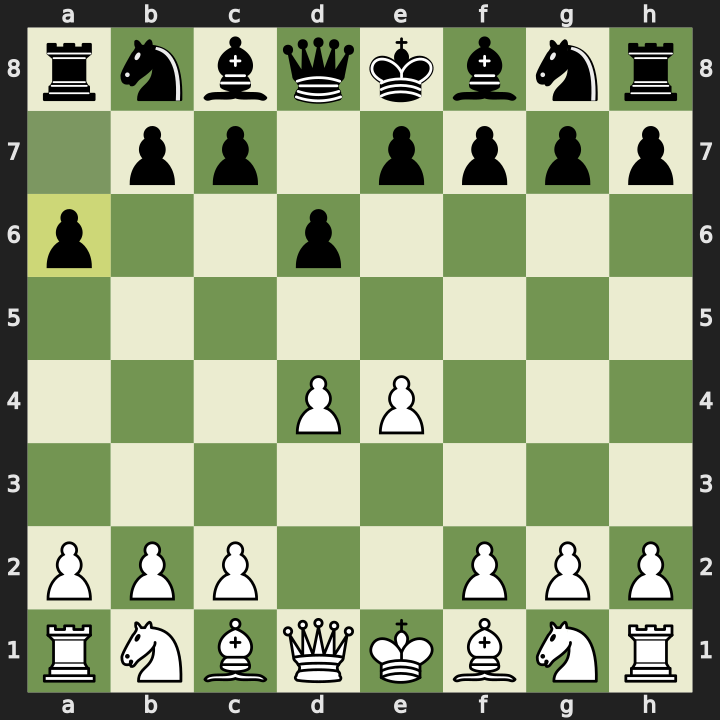
3.Nf3 c6 4.Bd3 Bg4 5.O-O e6 6.Nc3 Be7 7.h3 Bh5
Technically this was a Pirc Defense, because Black opened with 1…d6. It didn’t go into the Pirc lines I’m familiar with playing, because their second move was 2…a6, which is a super passive way to play it. They developed their bishops. I developed my knight and my light-squared bishop, and castled.
Offering the Lock (Moves 8-9)
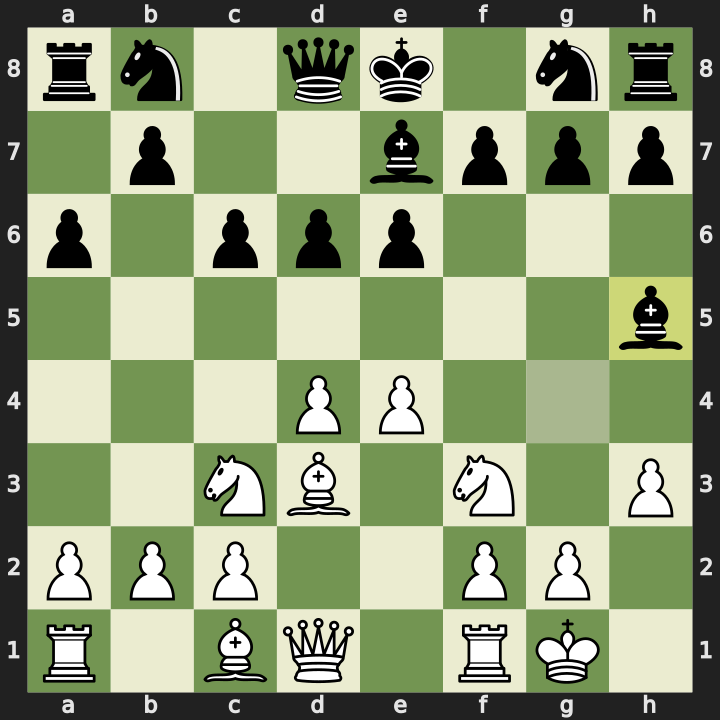
8.e5 d5 9.g4 Bg6
8.e5 offered Black the chance to either open up the centre or lock it. Black chose 8…d5, locking it. Then I thought that this is going to be fun. I played 9.g4, attacking the bishop that was sitting on h5, and started a pawn storm on the kingside to see what I could break open. The bishop retreated to g6.
Trading on g6 (Move 10)
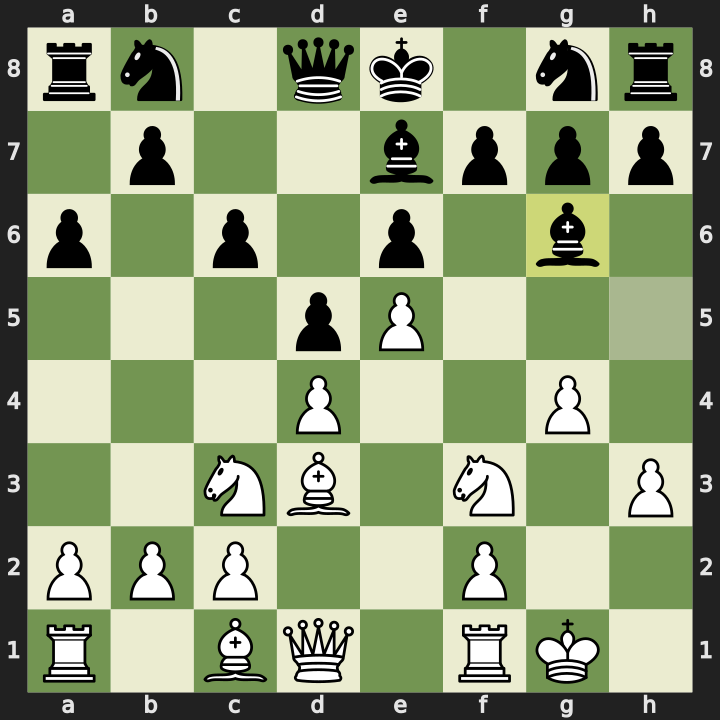
10.Bxg6 hxg6
I played the second best move here, immediately taking on g6 with my own light-squared bishop. I could see that this was going to require Black to recapture with one of the pawns, weakening the area where Black was probably going to castle. Black recaptured 10…hxg6, which cleared the h-file for the rook.
The Rook Comes In (Moves 11-13)
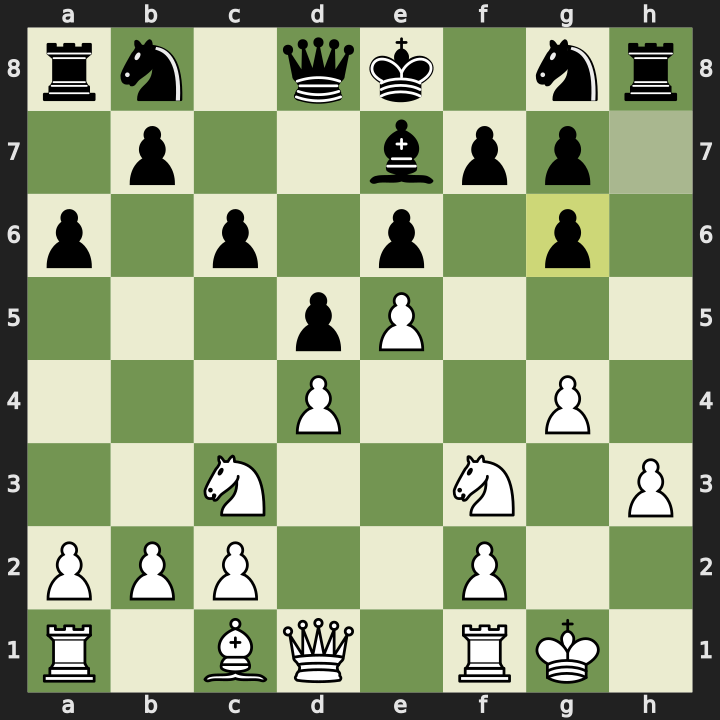
11.Bf4 Rxh3 12.Kg2 Rh8 13.Rh1
Black came in with 11…Rxh3. At first it looks like it’s my king that’s losing safety, but this is all part of the plan. I played 12.Kg2, allowing my rook, my queen, and eventually my a1 rook to scoot around the back rank and then invade on the h-file. The black rook went back to h8 and I put mine on h1.
The Knight on h6 (Moves 14-15)
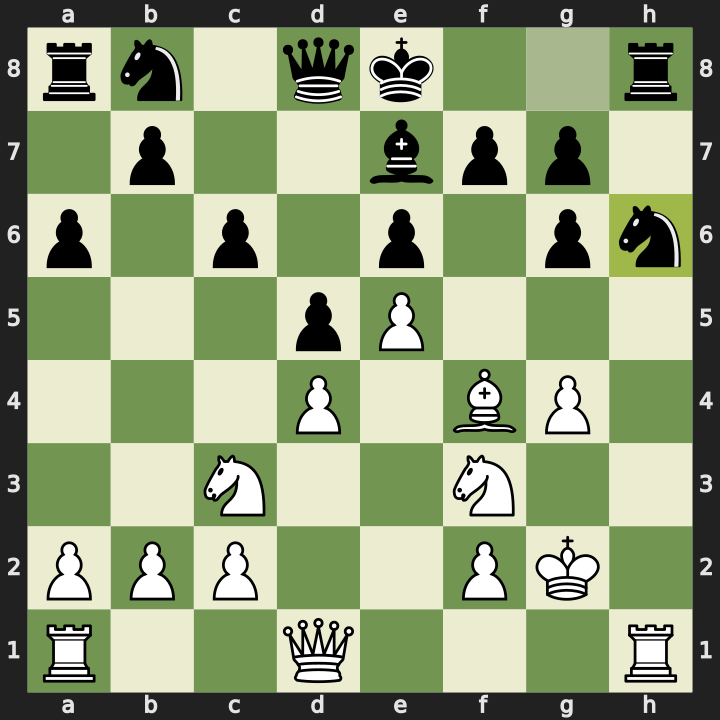
14.g5 Nd7 15.gxh6 gxh6
After putting my rook on h1, Black decided to block its access to the eighth rank by playing 13…Nh6. This is a mistake, because that knight can be attacked with a pawn push. I played 14.g5. Black gave up the knight, and I captured with the pawn, 15.gxh6. After the exchanges there was a pawn sitting on h6.
Bishop to g7 (Moves 16-18)
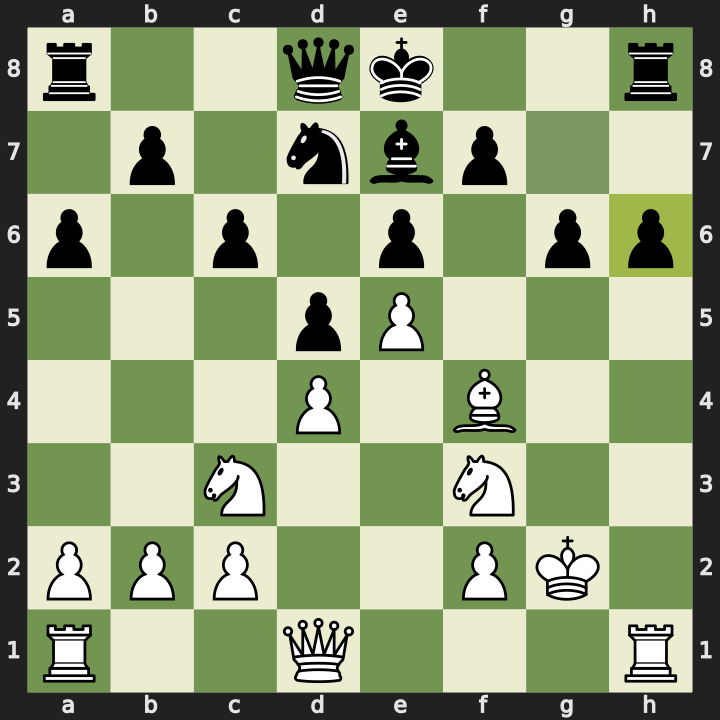
16.Bxh6 g5 17.Bg7 Rxh1 18.Qxh1
I decided to capture the h6 pawn with my bishop, inviting Black to take my bishop with their rook and allowing me to recapture with my own rook. Black didn’t capture the bishop, so instead I moved the bishop to 17.Bg7, attacking Black’s rook. Black either needed to exchange rooks and give up control of the h-file, or move the rook to g8, where I would be able to pin it on the eighth rank with Rh8. Black decided to exchange rooks, I recaptured with my queen, and there was a clear path for the queen to invade, getting to h8 with check.
The Missed Mate (Move 19)
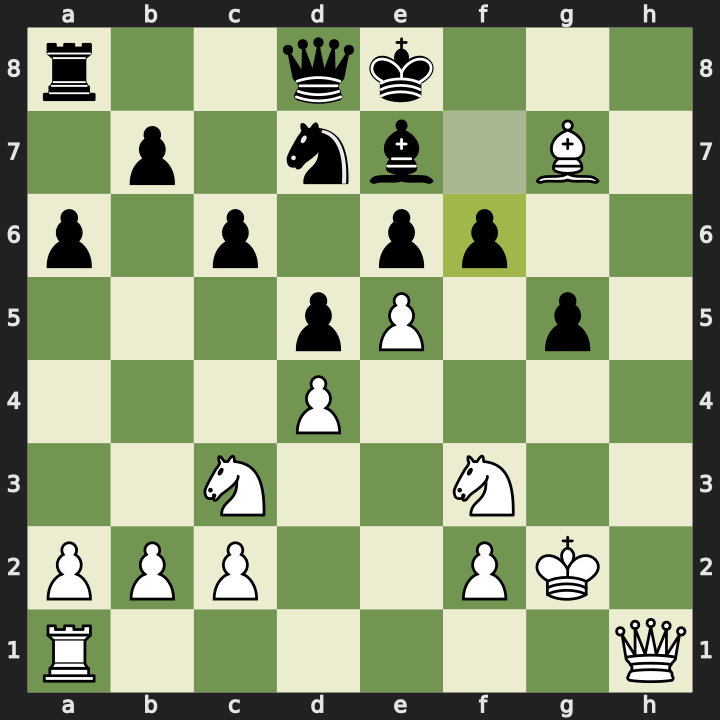
19.Qh8+ Nf8
On move 18 Black blundered checkmate in one, and I missed it. The correct move was 19.Qh5#. That would have won the game on the spot. Never mind. I played 19.Qh8+ and Black blocked with the knight.
The King Runs (Moves 20-22)
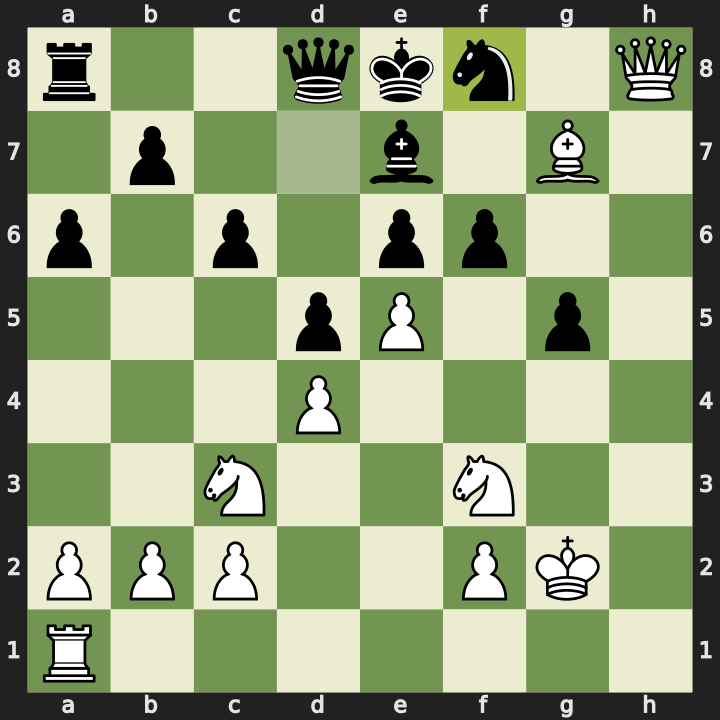
20.Rh1 Kd7 21.exf6 Ng6 22.Qxd8+ Rxd8
I decided I’d bring another piece into the attack, because I hadn’t quite calculated a checkmate sequence. The bishop on e7 seemed to be doing a good job protecting the king. Then the king started to run away, and I felt like maybe I’d been too slow. So I took on f6 with my pawn, looking to at least pick up some material. Black hopped the knight forward to g6, attacking my queen, so I went for the queen exchange.
Picking Up the Bishop (Move 23)
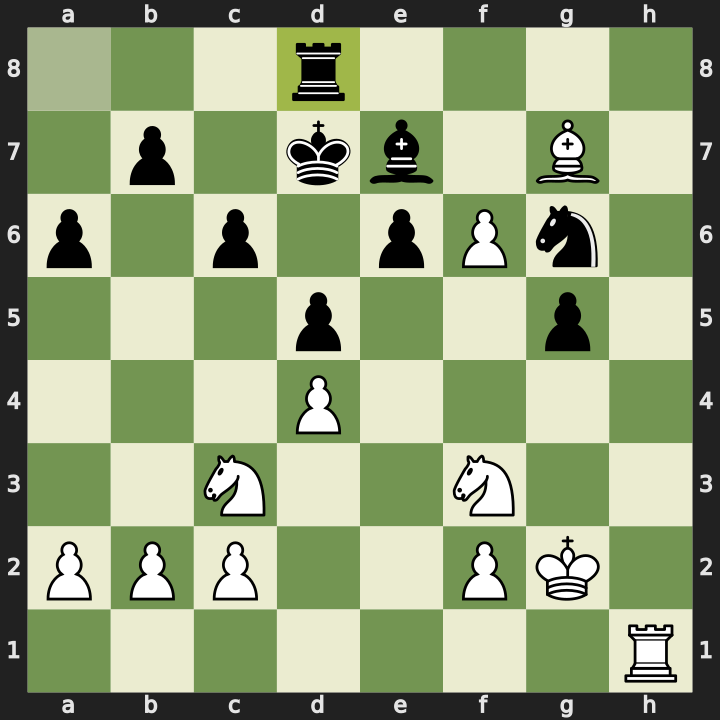
23.fxe7 Nxe7
The pawn took the bishop and the knight recaptured.
The Seventh Rank (Moves 24-26)
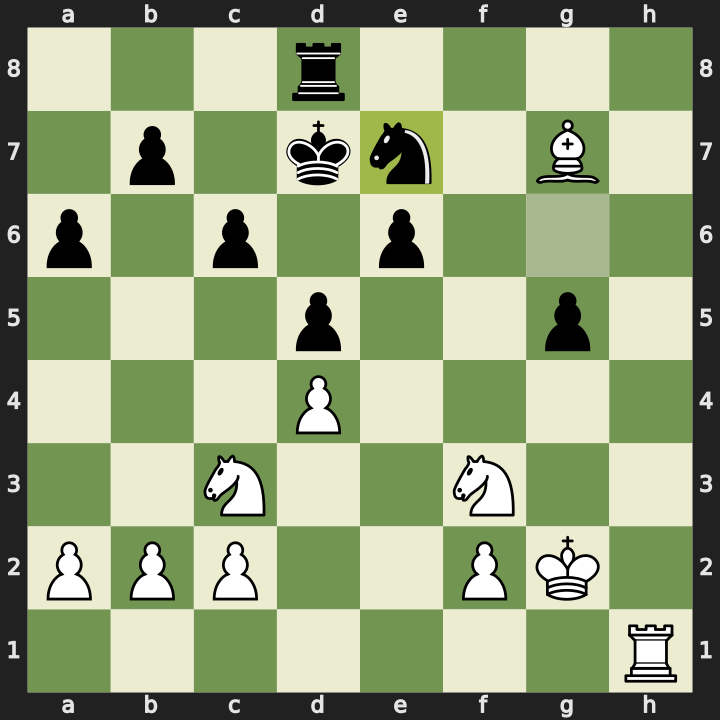
24.Rh7 Nf5 25.Bf6+ Kc8 26.Bxd8
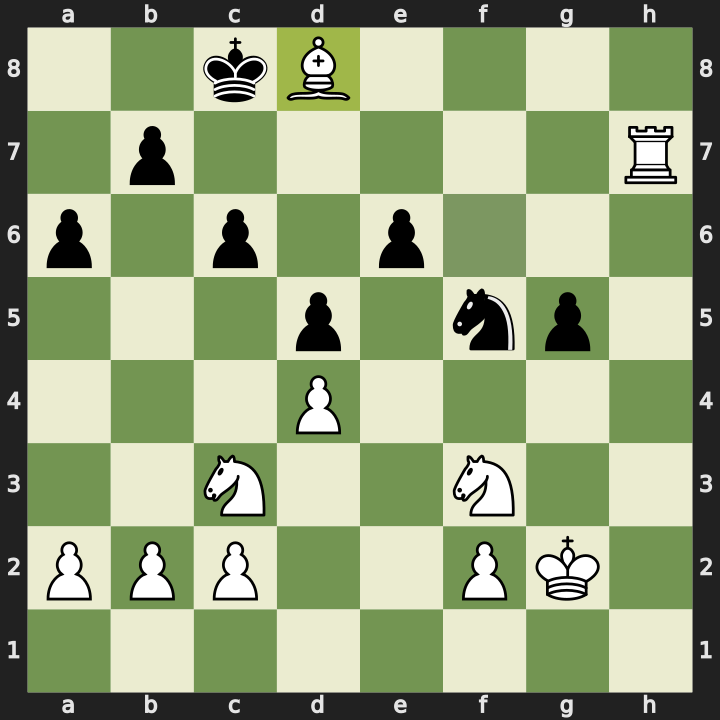
24.Rh7 brought the rook in on the seventh rank, aimed straight at the king on d7. My own bishop on g7 was the barrier in the way, which meant any bishop move would be a discovered check. Black moved the knight to f5, and 25.Bf6+ was the discovered check, attacking the rook on d8 at the same time. The king stepped to c8, I took the rook, and Black resigned. I was already up five points of material, and this took me to plus seven.
Engine Review
The computer analysis doesn’t really give much additional insight other than the missed checkmate in one.
The evaluation chart looks pretty steady right up until 13…Nh6. That’s where it started to fall apart for them. Then it completely crumbled when they played 18…f6, giving me the mate in one opportunity. With my queen on h1, the h-file completely empty and the f7 pawn now on f6, 19.Qh5 delivers mate down the h5-e8 diagonal. My bishop on g7 covers f8, and Black’s own knight and bishop take away d7 and e7.
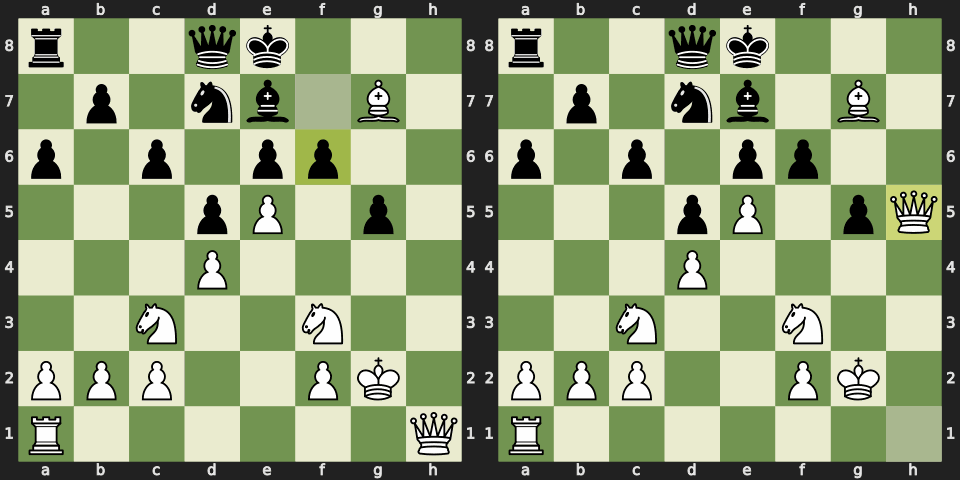
Even after missing it, it’s still +4.6 for me with a two point material advantage, in a very difficult position for Black to play.
Reflections
All in all this went well. The strategy of developing quickly, taking space in the centre, and not being afraid to attack once the pieces are developed is working really well.
What made this game special was having the confidence to push the pawns in front of my king where it was the right strategy, given the centre was locked and the opponent hadn’t castled yet. It looked like there was a good chance to invade and attack the king before they could even develop the queen.
What went well:
- Reading the locked centre and knowing the kingside pawn storm was safe.
- Forcing the recapture on g6 with a pawn, wrecking the squares Black wanted to castle into.
- Walking the king to g2 so all three heavy pieces could reach the h-file.
- The discovered check on the seventh rank to win the exchange.
What to work on:
- Look for all the available checks. In this game one of them was actually a checkmate.
Full PGN:
1. e4 d6 2. d4 a6 3. Nf3 c6 4. Bd3 Bg4 5. O-O e6 6. Nc3 Be7 7. h3 Bh5 8. e5 d5
9. g4 Bg6 10. Bxg6 hxg6 11. Bf4 Rxh3 12. Kg2 Rh8 13. Rh1 Nh6 14. g5 Nd7 15. gxh6
gxh6 16. Bxh6 g5 17. Bg7 Rxh1 18. Qxh1 f6 19. Qh8+ Nf8 20. Rh1 Kd7 21. exf6 Ng6
22. Qxd8+ Rxd8 23. fxe7 Nxe7 24. Rh7 Nf5 25. Bf6+ Kc8 26. Bxd8 1-0