Win vs Rajiv6290: A Battery for a Greedy Queen
| Opening: King’s Knight Opening (C40) | Result: 1-0 (Checkmate) | Time Control: 10 min Rapid | Rated |
Game Overview
This game was all about prioritising development and activity over material, particularly pawns. Black gave up the e5 pawn in the opening and then played an early queen attack line. That forced me to either give the pawn back or trade a knight for a bishop. I took the trade, and came out of it with two pawns in the centre and a knight developed while my opponent had nothing out but the queen.
It was pretty clear my opponent likes to play with the queen. Generally the way to punish that is to maximise development and go for an attack, so that’s what I did. The plan was simple: a bishop and queen battery on c2 and d3, then fire away at h7. By the time it landed I had happily given away four pawns.
Winning the e-Pawn (Move 3)
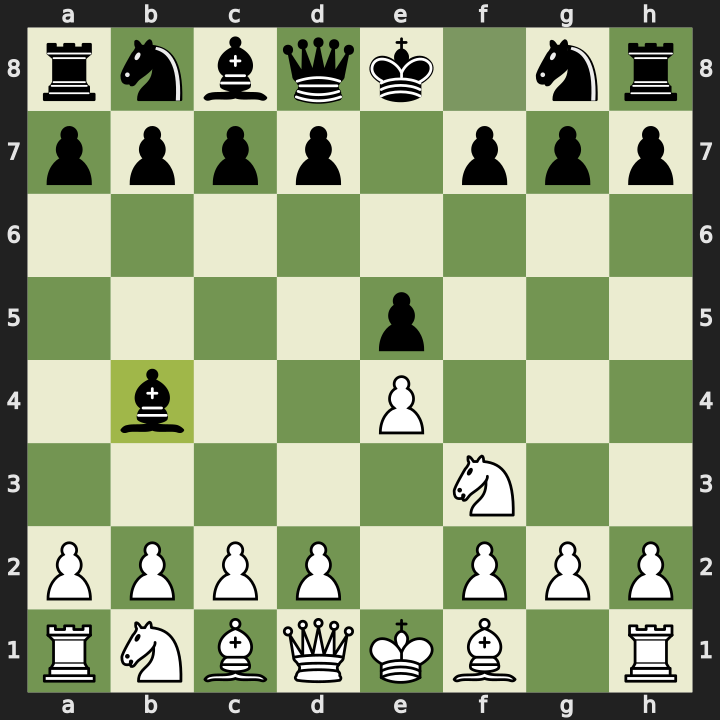
3.Nxe5 Qe7
The bishop came out to b4 and left e5 hanging, so I took it. Black answered with 3…Qe7, lining the queen up on the knight down the e-file.
Give the Pawn Back, or Trade? (Moves 4-5)
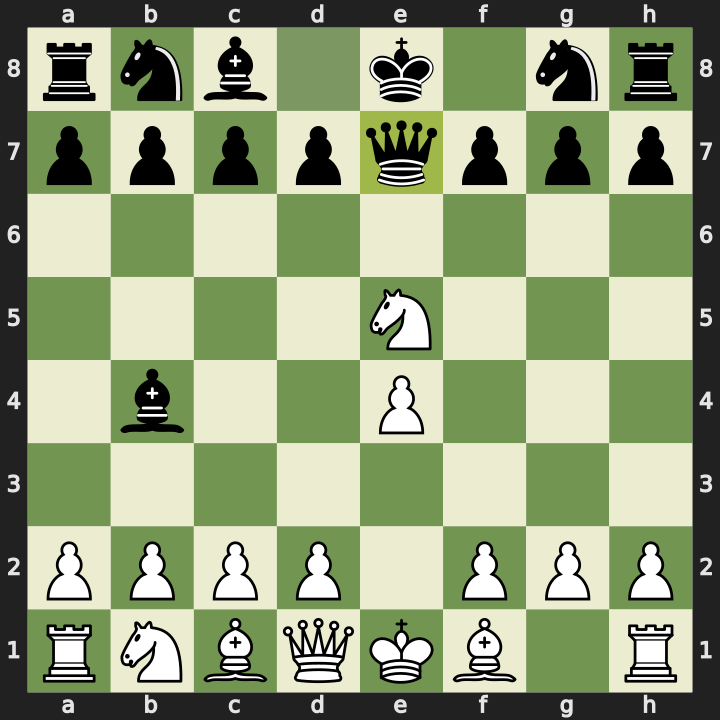
4.c3 Bxc3 5.Nxc3 Qxe5
The queen on e7 gave me a choice. I could retreat the knight and hand the pawn straight back, or I could exchange a knight for a bishop. I opted for the exchange. 4.c3 attacked the bishop, and after 4…Bxc3 5.Nxc3 my b1 knight came into the game on its way to the fight. Black took back on e5. Material is level: I traded a c-pawn for an e-pawn, which is generally a favourable swap. More to the point, my d-pawn is ready to come to d4 and give me the centre.
Two Pawns in the Centre (Moves 6-9)
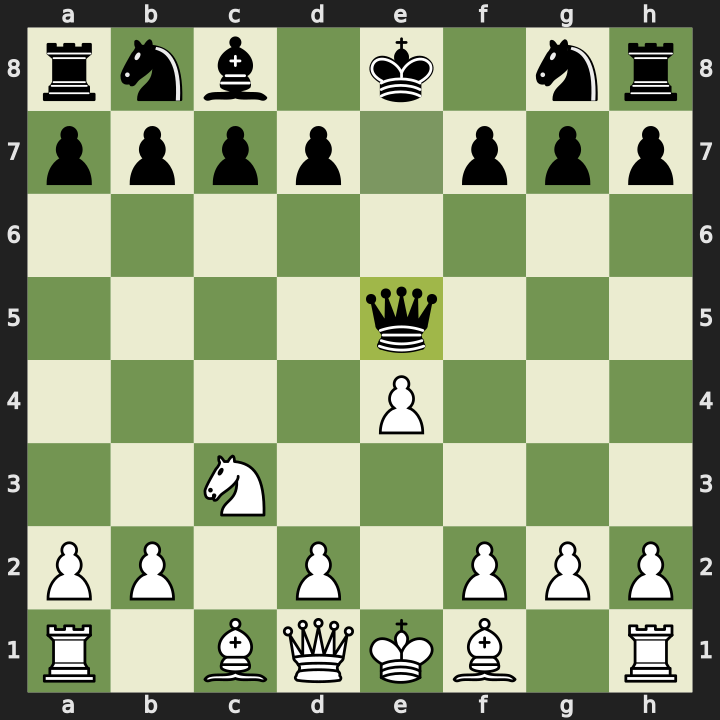
6.d4 Qa5
6.d4 hit the queen and gave me the second pawn in the centre. The queen went to a5.
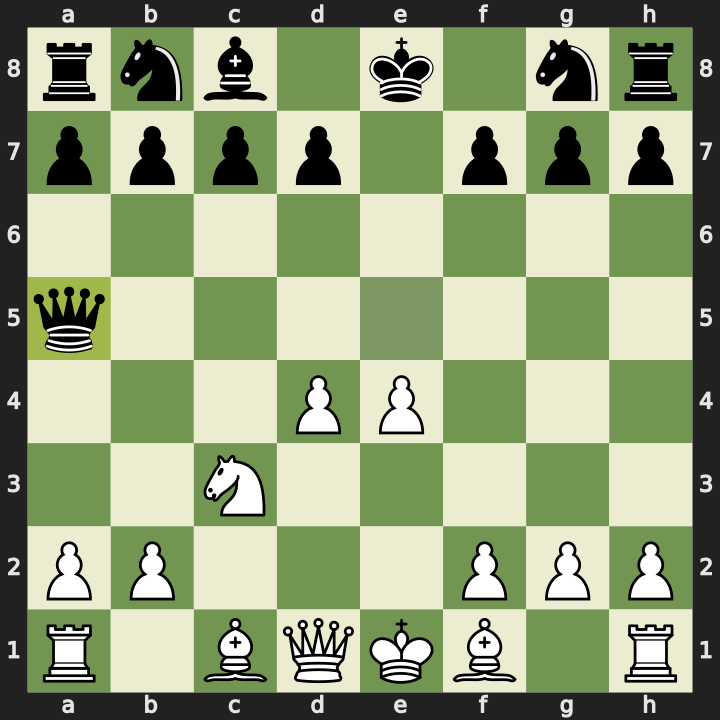
7.Bd3 Nf6 8.O-O O-O 9.h3
Two nice pawns in the centre, a knight developed, and my opponent had brought out only the queen. 7.Bd3 put the bishop on the diagonal I wanted it on, and we both castled.
The e5 Push and the Knight Trade (Moves 10-11)
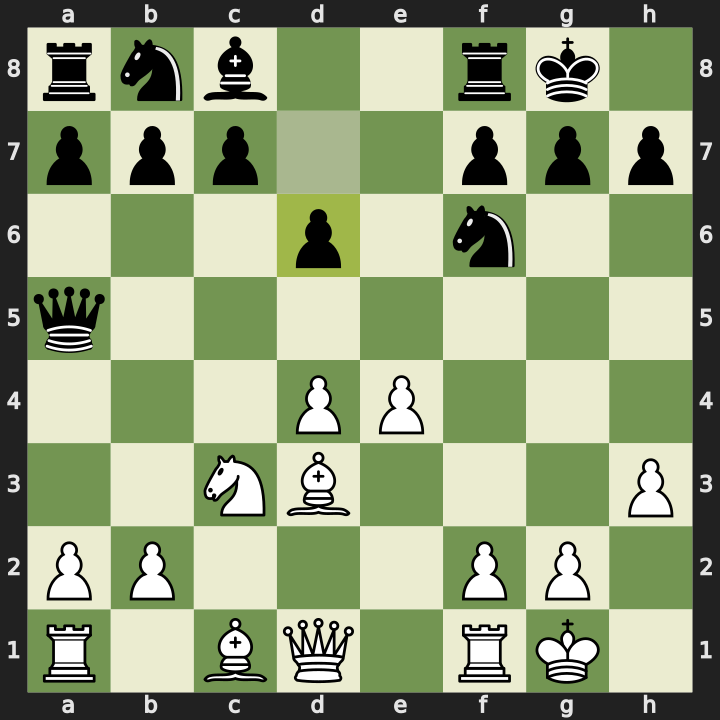
10.e5 Nd5 11.Nxd5 Qxd5
I pushed 10.e5 at the knight, it jumped to d5, and we traded knights there. Again, my opponent had no pieces developed, just the queen. Meanwhile I had two bishops active and still had pawns in the centre.
The Queen Goes Pawn Hunting (Move 12)
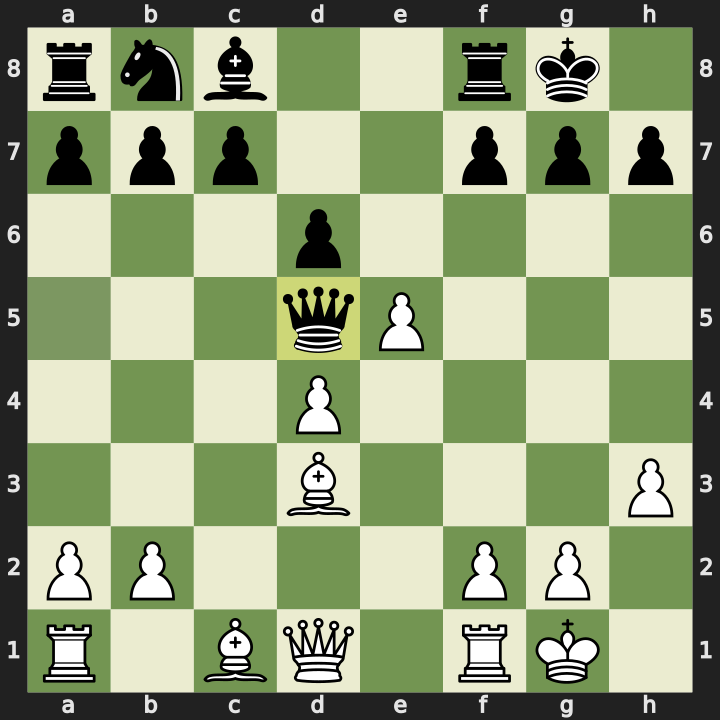
12.Bf4 Qxd4
12.Bf4 brought out the last minor piece. Black took the d4 pawn, which also attacked the bishop on f4 along the fourth rank. That’s pawn number one.
Four Pawns for the Attack (Moves 13-14)
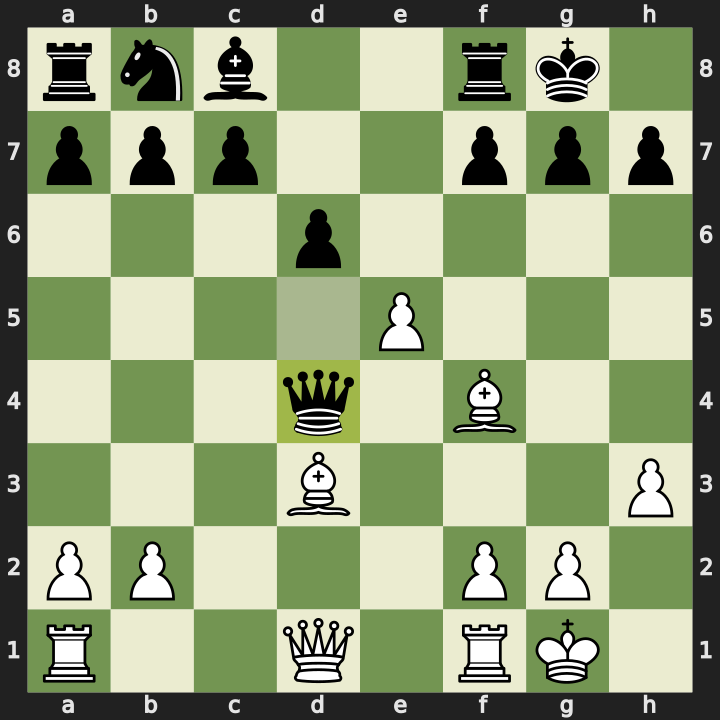
13.g3 dxe5 14.Be3 Qxb2
13.g3 defended the bishop with a pawn. Black recaptured on e5, hitting the bishop again, so it stepped back to 14.Be3 and Black’s queen swung across to take on b2. That’s three pawns gone and Black still had a knight, a bishop and both rooks sitting at home.
The Battery (Moves 15-16)
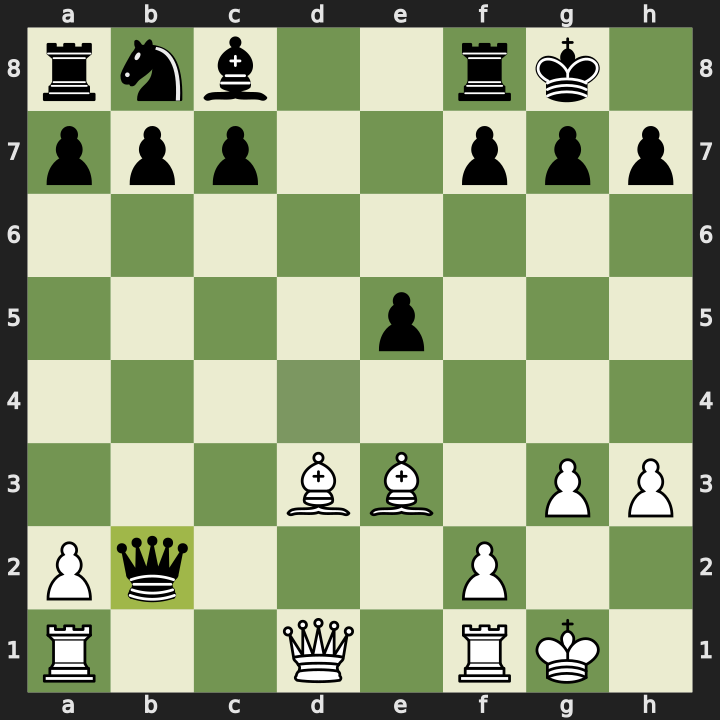
15.Bc2 Bxh3 16.Qd3
15.Bc2 dropped the bishop back so the queen could come to d3 behind it. My opponent finally brought their bishop out, to take the pawn on h3. That’s four pawns.
16.Qd3 completed the battery on the b1-h7 diagonal, with both pieces aimed at h7.
Checkmate (Move 17)
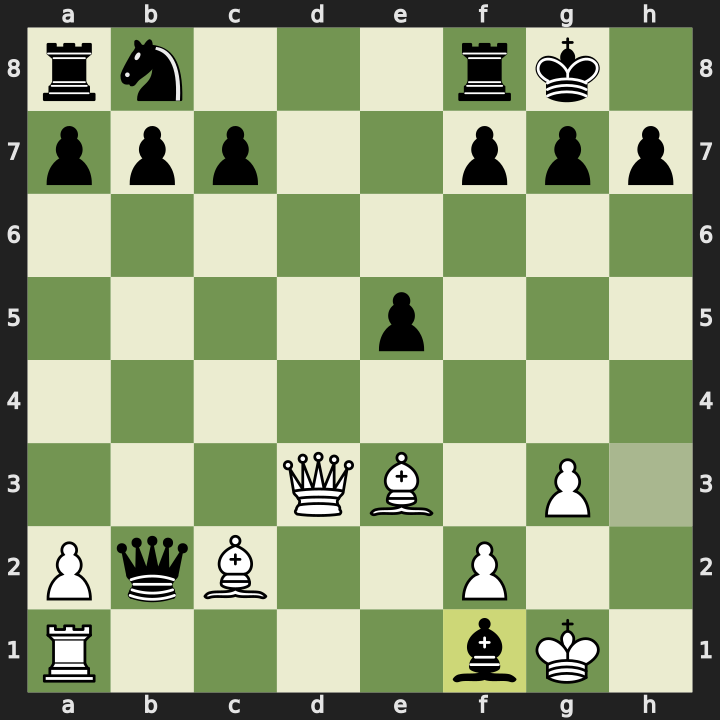
17.Qxh7#
Black took my rook on f1. I ignored it, because it’s checkmate in one. The queen took on h7 supported by the bishop on c2, and the king had nowhere to go.
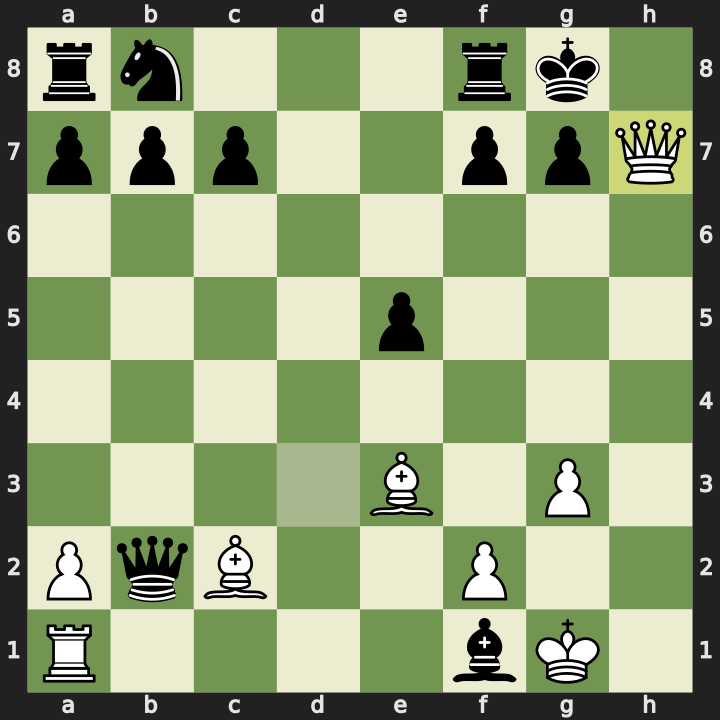
At the moment of mate I had a queen, a rook, two bishops and three pawns against a queen, two rooks, a knight, a bishop and six pawns. Eight points of material down, and it didn’t matter.
Engine Review
The analysis doesn’t think this was a very accurate game at all. In fact it’s one of the lowest ratings I’ve seen: 250 for me against 150 for my opponent, and 46% accuracy for me against 35% for my opponent.
I did miss a chance to win my opponent’s queen outright. When the queen took on d4 I could have played 13.Bxh7+ immediately. The bishop leaves d3 with check, which opens the d-file for my queen on d1, and after 13…Kxh7 14.Qxd4 the black queen is gone.
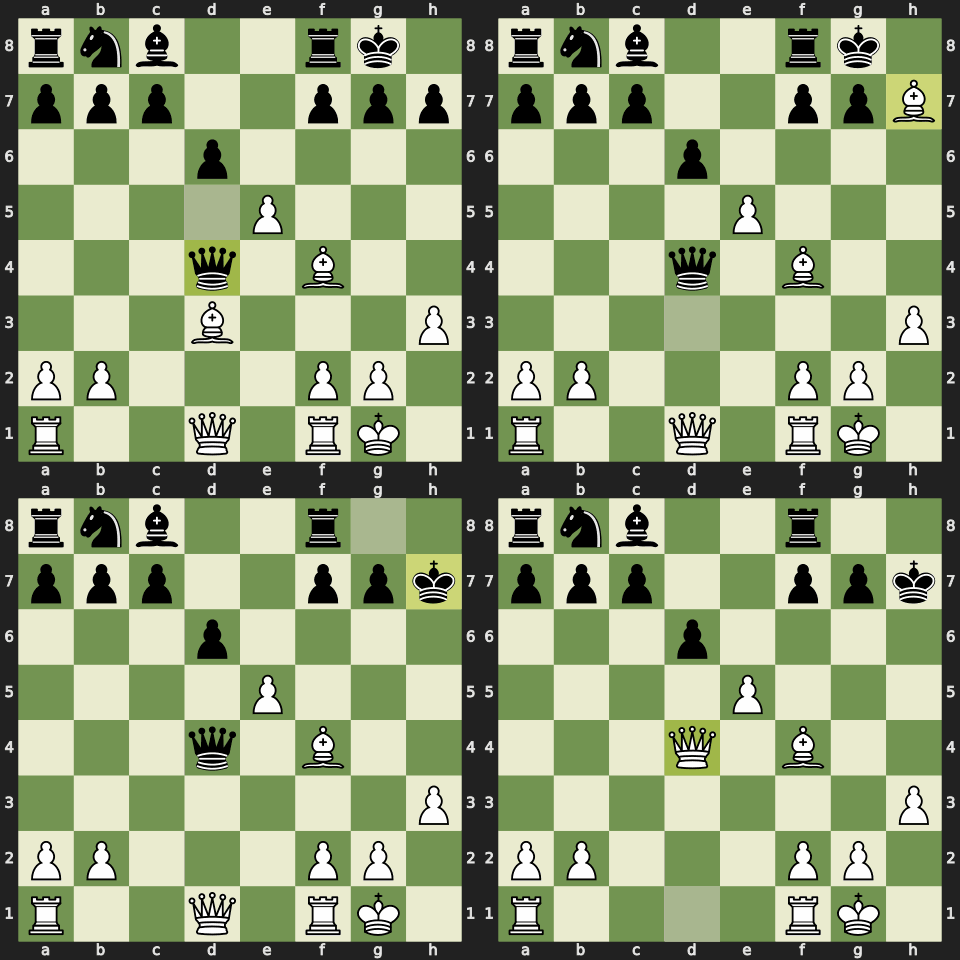
Stockfish puts that line at 6.1 pawns for White. The move I played, 13.g3, drops it to 1.3 in Black’s favour. That’s one I’ll need to keep an eye out for.
The battery itself was sound. At move 16, Qd3 is Stockfish’s first choice in the position. What lost the game for Black was 15…Bxh3 followed by 16…Bxf1. Grabbing the h-pawn cost about a pawn and a half of evaluation, and taking the rook allowed mate in one. 16…g6 holds the position and leaves Black comfortably better.
Reflections
I’m actually happy with this game despite the engine rating. I think the engine just really doesn’t like this style of play: gobbling up pawns with the queen while the other pieces are undeveloped, and sacrificing pawns to go for an attack. It was the first real game of the day and I came away with a win, so I’m really happy.
What went well:
- Reading the opponent’s habit. They wanted to play with the queen, so I maximised development and attacked.
- A simple, concrete plan. Bishop to c2, queen to d3, fire at h7.
- Giving up four pawns without flinching, because activity was worth more than the material.
- Ignoring the threat to my rook on f1 when there was mate in one on the board.
What to work on:
- Bishop checks on h7 that clear a file or a diagonal behind them. 13.Bxh7+ won a queen and I walked past it.
Full PGN:
1. e4 e5 2. Nf3 Bb4 3. Nxe5 Qe7 4. c3 Bxc3 5. Nxc3 Qxe5 6. d4 Qa5 7. Bd3 Nf6 8.
O-O O-O 9. h3 d6 10. e5 Nd5 11. Nxd5 Qxd5 12. Bf4 Qxd4 13. g3 dxe5 14. Be3 Qxb2
15. Bc2 Bxh3 16. Qd3 Bxf1 17. Qxh7# 1-0